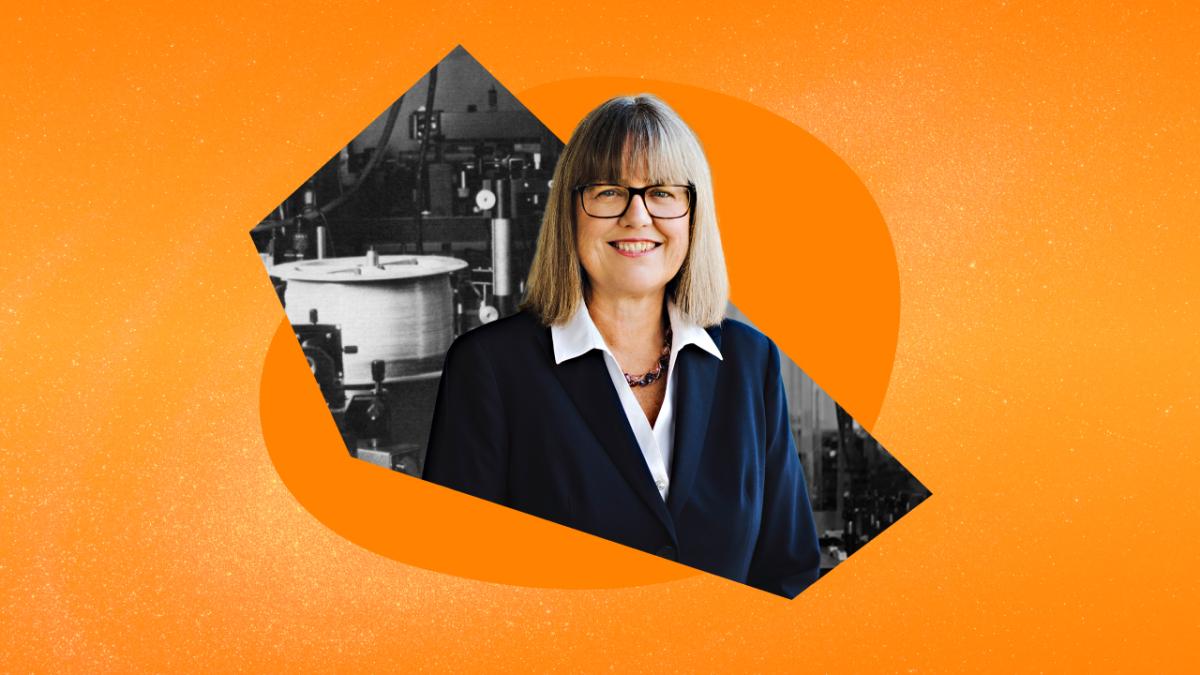
Donna Strickland: Laser Jock
ALLOCATION EXHAUSTED
Nobel laureate Donna Strickland | Tegan Taylor
In 2018 Donna Strickland became the first woman in over 50 years to win the Nobel Prize in Physics, and only the third woman in history.
Her award-winning work however began decades earlier. While undertaking her PhD Donna developed chirped pulse amplification – a unique way to amplify ultrashort laser pulses. This breakthrough paved not only the way for safer and more precise laser eye surgery but also improved mobile phone technology and is now helping to advance quantum science.
Join Donna in conversation with the ABC’s Tegan Taylor, as she shares the early curiosity that fuelled her love of physics, the joy of discovery and how she became a ‘laser jock’.
This event is co-presented by the UNSW Centre for Ideas, UNSW Science, UNSW Engineering and the Australian Institute of Physics, as a part of the International Year of Quantum Science and Technology.
LIVE EVENT & VENUE INFORMATION
Leighton Hall is located inside the John Niland Scientia Building at UNSW Sydney's Kensington campus (G19). Please note this is a live event only, and will not be available via livestream.
TICKETS
ACCESS
Wheelchair Access
The closest accessible drop off point to Leighton Hall is via Gate 11, Botany Street. More information on getting there can be found via our interactive accessibility map available here.
Assisted Listening
Leighton Hall has hearing assistive technology available. Patrons wishing to utilise this service must collect a Roger™ inductive neck loop receiver from the venue staff, and this system can be used with a hearing aid or cochlear implant with a T-coil, or with headphones.
Auslan & Captioning
Auslan interpreting services and/or live captioning can be provided for selected talks upon request.
Contact
To book and discuss access services, please call the Centre for Ideas on 02 9065 0485 or email centreforideas@unsw.edu.au.
PUBLIC TRANSPORT & PARKING
Leighton Hall (John Niland Scientia Building) is easily accessible via public transport. The closest light rail stop is the UNSW High Street (L2 line) and the closest bus stop is UNSW Gate 14, Barker Street (303). For more information please call the Transport Infoline on 131 500 or visit transportnsw.info.
Free parking is also available in the Botany St Car Park (Gate 11) from 5.30pm. For access to free parking, event patrons must park in the UNSW Permit Holder bays, available on all levels. The Botany St Car Park (Gate 11) parking station is located here.
Paid casual and visitor parking is offered via the CellOPark App and ‘pay by plate meters’ in all other UNSW car parks. The Botany St Car Park (Gate 11) parking station is the closest to the venue, and is located here. For more information head here.
PROGRESS FOR ALL
In 2025, Australia faces multifaceted challenges including critical skills shortages, productivity challenges, income and intergenerational inequality, health and education inequities, the cost of living and housing affordability. Recent years have accelerated the increasing wealth gap across the globe.
UNSW’s ultimate objective of Progress for All is born of our founding purpose to advance the economic and social prosperity of NSW and Australia. We carry that objective into this Strategy and recognise that one of the most direct ways that a university can advance prosperity is through the teaching and learning activities we provide alongside our research and innovation. We are unconditionally committed to increasing higher education access and success for groups that are traditionally underrepresented at university.
We will continue to develop relationships with industry, the not-for-profit sector, governments and the broader community that deepen our understanding and enable evidence-based, robust and viable solutions to the current economic and social challenges our society faces. We reaffirm our role as a university for the whole of NSW, just as we embrace the unique challenges and opportunities of being a world-leading university in a global operating environment.
You can read more about our objectives in our UNSW Strategy: Progress for All.
CONTACT
For all enquiries, please email centreforideas@unsw.edu.au or call the Centre for Ideas on 02 9065 0485.
The Centre for Ideas is happy to receive phone calls via the National Relay Service. TTY users, phone 133 677, then ask for 02 9065 0485. Speak and Listen users, phone 1300 555 727 then ask for 02 9065 0485. For more information on all other relay calls visit here.
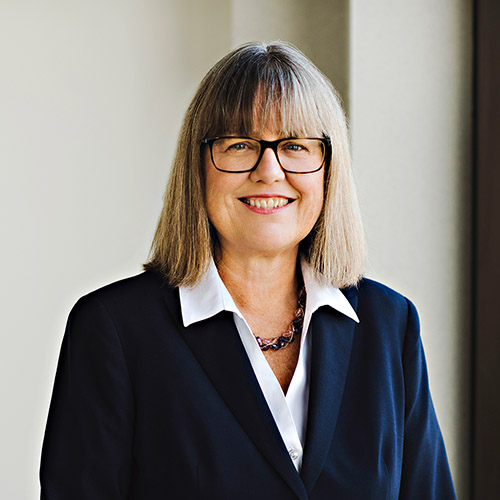
Donna Strickland
Donna Strickland is a Professor in the Department of Physics and Astronomy at the University of Waterloo and is one of the recipients of the Nobel Prize in Physics 2018 for developing chirped pulse amplification with Gérard Mourou, her PhD supervisor at the time. They published this Nobel-winning research in 1985 when Strickland was a PhD student at the University of Rochester in New York state. Together they paved the way toward the most intense laser pulses ever created.
Strickland was named a Companion of the Order of Canada and was named a recipient of a Sloan Research Fellowship, a Premier’s Research Excellence Award and a Cottrell Scholar Award. Strickland served as the president of the Optical Society (OSA) in 2013. She is a fellow of OSA and SPIE, the Royal Society of Canada and the Royal Society. She is an honorary fellow of the Canadian Academy of Engineering as well as the Institute of Physics. She is an international member of the US National Academy of Science. Strickland earned a PhD in optics from the University of Rochester and a Bachelor of Engineering from McMaster University.
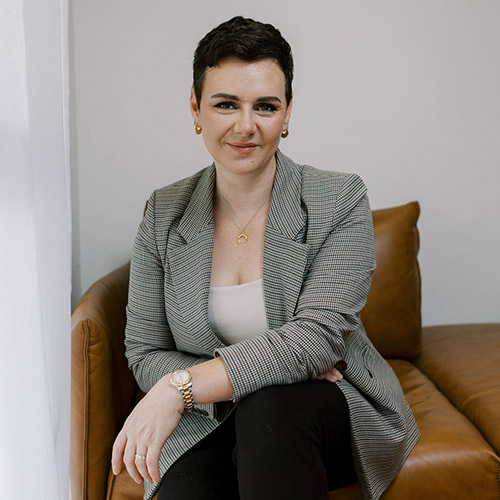
Tegan Taylor
Tegan Taylor is a multi-award-winning broadcaster for the ABC with a strong interest in health and science. She hosts Life Matters on Radio National as well as the cheeky health podcast What’s That Rash? Previously, she’s hosted Radio National’s Health Report, Quick Smart, Ockham’s Razor and Coronacast. She’s received a Walkley Award, the Eureka Prize for Science Journalism, and her work has appeared in the annual Best of Australian Science Writing anthology, of which she was the co-editor in 2025.