Adding the Chemical Dimension to Lithography at All Scales
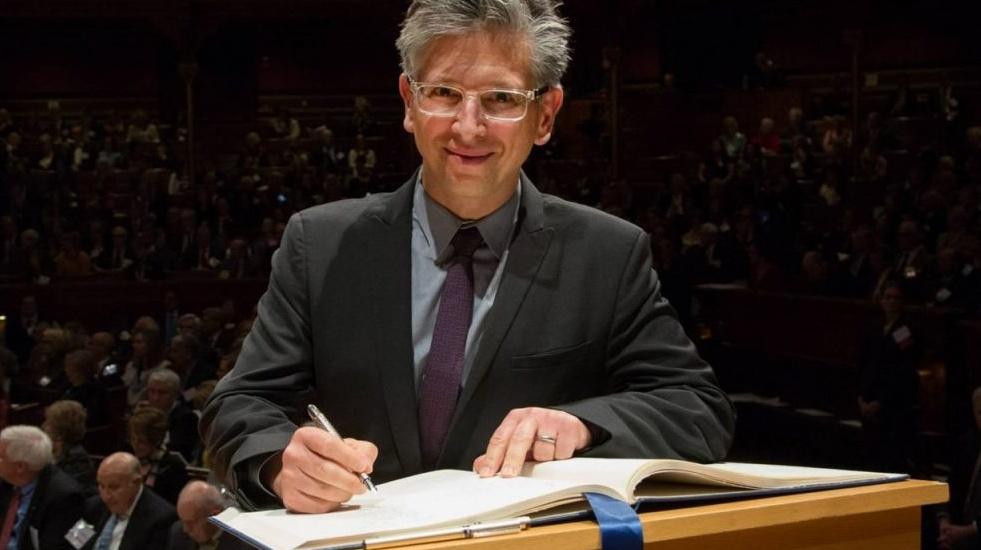
Professor Paul Weiss on 'Adding the Chemical Dimension to Lithography at All Scales: Enabling Cellular Therapies & Other Adventures in Biology and Medicine.'
By controlling the exposed chemical functionality of materials from the submolecular through the centimeter scale, we have enabled new capabilities in biology, medicine, and other areas.
Professor Paul S. Weiss will discuss current and upcoming advances and will pose the challenges that lie ahead in creating, developing, and applying new tools using this capability. These advances include using biomolecular recognition in sensor arrays to probe dynamic chemistry in the brain and microbiome systems. In other areas, we introduce biomolecular payloads into cells for gene editing at high throughput for off-the-shelf solutions targeting hemoglobinopathies, immune diseases, and cancers. We circumvent the need for viral transfection and electroporation, both of which have significant disadvantages in safety, throughput, cell viability, and cost. Mechanical deformation can make cell membranes transiently porous and enable gene-editing payloads to enter cells. These methods use specific chemical functionalisation and control of surface contact and adhesion in microfluidic channels.
Speaker: Professor Paul S. Weiss, UC Presidential Chair and distinguished Professor of chemistry & biochemistry and of materials science & engineering at UCLA.
The talk will commence at 12pm sharp at K-F10-M17, please be on time. Lunch will be served from 1pm outside M17. For further information, please email acn@unsw.edu.au