Who's the man?
When women get taller, we all get taller, right? I don't think you trade off one or the other. It was like when you give someone a voice, it doesn't mean other people don't have a voice.
Within today's social media landscape, a finely tuned content algorithm is serving up often unhealthy and sometimes extreme views on masculinity. For boys, in particular, the injection of vitriol into playgrounds, classrooms, backyards and wider society has turned the question of what it means to be a man on its head. This is also having far-reaching consequences for young girls and women.
So what do we do when influencers co-opt masculinity for clout? As the dawn of the social media ban for young people rapidly approaches, is this a chance to reframe what it means to be a man?
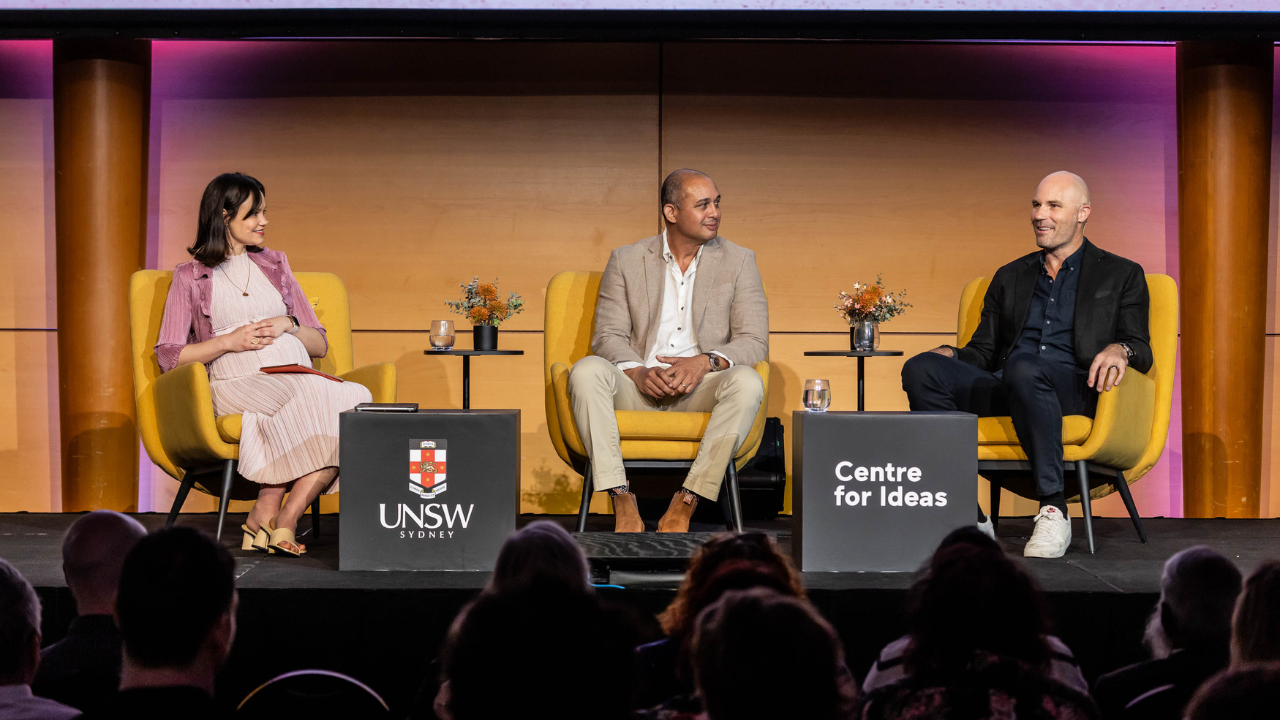
Hear ABC presenter Siobhan Marin as she explores this topic with award-winning author, human rights advocate and Indigenous leader Thomas Mayo, former Aussie Rules player and Sydney Swans Chief Executive Officer and newly appointed Chief Operating Officer for the AFL, Tom Harley.
Transcript
UNSW Centre for Ideas: UNSW Centre for ideas.
Siobhan Marin: Good evening and welcome to tonight's event. Who's the man? My name is Siobhan Marin. I'm a journalist and a documentary maker for the ABC, and earlier this year, I made a programme called Hijacking Adolescence. Yes, it's a nod to the Netflix hit adolescence, which explored the rise of misogyny in classrooms around the country and online and really spoke to some of the things that we're going to be tackling here tonight. Firstly, I would like to acknowledge the Bidjigal people who are the traditional custodians of this land, and I'd like to pay my respect to their elders, both past and present, and extend that respect to other Aboriginal and Torres Strait Islander people who are with us this evening.
Siobhan Marin: Tonight, we are joined by the award-winning author, human rights advocate and Indigenous leader. Thomas mayo, hello.
Thomas Mayo: Thank you.
Siobhan Marin: And we also have a former Aussie Rules player, Captain for Geelong and Sydney Swan, CEO who's now the chief operating officer for the AFL. Tom Harley, hi.
Tom Harley: Thank you.
Tom Harley: Thomas Tom. I'll try not to get that confused. Thank you both for being here.
Tom Harley: If my answers aren't right. You refer to me as Thomas.
Siobhan Marin: Of course, you can hand ball to one another. Now to address the elephant in the room, I'm a couple of weeks away from having my first child, who's going to be a boy. And so tonight's topic and timing couldn't have come at a better point for me personally, and I'm really keen to hear your thoughts about being fathers and parents, as well as getting into masculinity and the role of misogyny in our world, starting with parenthood, our conceptions and our misconceptions often come from our own homes. What our dads and our mums sort of brought us up believing. Thomas, you've dwelled on this in your writing your book, Dear Son, features letters that celebrate First Nations manhood. But I actually want to read a quote from a piece he wrote in the Saturday paper. “Men are undoubtedly influenced by their father figures. My misconceptions of what it was to be a boy and a man compelled me to tell my son how to dress, what sport he should play, and how he should withhold his feelings and empathy, lest he be thought of as soft.” Now you've had five kids over two generations. How did you manage to unlearn those beliefs that you were taught and perhaps unwittingly pass on to your eldest son and really change the way that you modelled masculinity and practice parenthood later on.
Thomas Mayo: Yeah, I think it wasn't a matter of me working out these things by myself, much like I write there about the influence of father figures being so important. I think the influences of the trade union movement, you know, becoming a union official helped me to learn a lot, because I was mixing with people that were progressive, that were talking about these things, fighting, you know, in the front line for for change. And so to be completely honest, it's not something I worked out myself. It actually took influence of others, the influence of others, to say, you know, to help me to see, to unlearn what I'd learned from my own father. And then, you know, over time, I guess, having the benefit of being a father of two generations, my children are ranging or 2827 and 25 the first lot with my first partner and my wife and I now have a 12 and 10 year old, and so becoming a writer and having that opportunity to communicate, not just with my own boys in a more in another way, but with others. You know, that's what I tried to pass on, how I was able to unlearn some things and continue to learn to share the mistakes and that I felt that I had made, and the things that I had learned that were wrong and try and help the next generation be better.
Siobhan Marin: But also there were parts of your dad's parenting where he was trying to protect you right and perhaps not doing it the best way, but he he wanted his son to be safe from a society that's not always welcoming to Indigenous Australians.
Thomas Mayo: Yeah, I think I'll just give a bit of background to help on this. The you know, my father was Torres Strait Islander man, one of the first of his generation to leave the you know, like after the Chief protector had complete control over our people's lives. He was a young a young man, about 17, when he left the Torres Strait with a whole lot of other islanders to start to build some generational wealth for the first time, you know, to earn a decent quid. Was hoping to just to make enough money to buy a fishing boat back home, but he met my mum, and, you know, settled down on Larrakia country in Darwin, and that's where I was born and bred. He, he was a particularly harsh man, though, and in the process of writing Dear Son, I really thought about why he was so unfair to me. And it wasn't that he was a bad man, it wasn't that he was abusive or anything like that, but, but I he was just trying to protect me from, you know, a world that was that, you know, wouldn't love me like he did. And so I mimicked those things when I became a father, you know, I the sort of, you know, things like saying, Don't be soft. Don't be like a girl. That sort of thing is what I did to my son. Then, when he was born, I was barely 20 years old when I had my first child. So, you know, he was a good man. But I think we have a responsibility to take the lessons from what we know are wrong as things progress and do better.
Siobhan Marin: Tom, you grew up with two brothers. What did being a man mean to you as an adolescent, before you became a football player?
Tom Harley: Can I first start by saying it's a privilege to be here and public service announcement, not an expert at anything, and certainly not, certainly not fatherhood and being a man. So really, really appreciate the opportunity to have a conversation about this and a quick background for me. I'm from Adelaide. Anyone know where Adelaide is?
Thomas Mayo: Straight down the Stuart Highway from Darwin.
Tom Harley: That’s right. So I'm a parochial South Australian, and my mum had three boys under three. And it's not until you're a parent yourself that you realise that's, you know, that's, that's a seriously good effort for all intents and purposes, a very privileged upbringing. So three boys, three boys, I went to a private school in the leafy suburb from Adelaide, and then went to university and played professional football. So it's, they're my experiences going back to growing up, I guess, and hearing Thomas talk about his old man, one of the great things I've loved about growing up is having an adult conversation with my father. And you know, as a kid growing up, my parents separated when I was 11, and seeing the impact of that separation on me as an 11 year old and my brother, who was 18 months older, I think, has been really interesting, and alcohol has just stripped shreds off at my family, and so living growing up in that environment has fostered, I think, some of my very best traits and some of my worst traits that I'm very critical of, but I look back at my time on as a young boy growing up and have nothing but fond memories about the role that my father played with me and with my brothers, and it's not until you're an adult and you can have these conversations. I vividly remember one when I would have been 27 and I've just met my future wife, who's now my current wife, mother of my three children, having a conversation with dad about love and about raising children and all of these sorts of things when you just assume as a kid growing up that your dad has his stuff sorted and he was just putting one foot in front of the other, dealing with a marriage breakdown and raising three boys very close together. So to bit to Thomas's point. From that point on life has unfolded the way it has for me, and that's presented me with this whole series of situations. And every situation is an opportunity to put those experiences into your kit bag that now I'm starting to pull out as a parent of a 12 year old, a 10 year old and a seven year old.
Siobhan Marin: Yeah, I wanted to ask how becoming a parent influenced not just the type of man you wanted to be, but the type of men that you want to see modelled through the AFL.
Tom Harley: Yeah, similar. So, so I think one, and we can unpack this, either in this conversation or questions from the floor, but one of the great experiences I've had, if I go back to, if I go back to growing up in Adelaide, I went to a private went to a private school, and my life was probably laid out for me. Meet a girl from the girls school down the road, go to the University of Adelaide, study commerce, maybe have a gap year and live in the leafy suburb of Adelaide. That's a very sheltered existence. And one of the great things about sport and Australian rules football, which I'm obviously connected to is the game is great, the athletic pursuits are great, but the lessons with regards to conflict resolution, teamwork, confidence are terrific. But it also you're exposed to the whole of Australia. And one of the things I've loved in my roles, whether it be a captain of a football club or a CEO and. Having the same conversation at the same level with the street sweeper and the Prime Minister, and that's that's they're not experiences that everyone gets. So I think a lot of a lot of my evolution as a man has come through the prism of sport. And the other absolute silver bullet for me in my development as a man was marrying my meeting my wife, who was the eldest of four, three girls and a boy and a very strong, strong female, and her influence on me as an individual has been profound, and her influence on me as a father, fathering boys in particular has been really profound. And I've certainly tried to share my experience, my personal journey and experiences as a man, which may be juxtaposed to the stereotypical AFL footballer, to a new generation of footballers coming through.
Siobhan Marin: And I definitely want to touch back on how the AFL and other sporting codes perhaps have changed as well. But many of us here will have heard the name Andrew Tate. Hands up if you've heard the name Andrew Tate. Yes, in my reporting, I found that he's not necessarily the influencer that all Australian teens are watching on social media, but there's actually a whole ecosystem of content makers locally and abroad who depict a very specific, often very problematic version of masculinity. It's something that's concerned you. Thomas, how do these influences capture the attention of our boys and young men and play on their fears and insecurities?
Thomas Mayo: Yeah, I think, I think as boys and even as men, you're sort of looking for, you know, you're looking to understand what it is to be a man. We're influenced by by other men, undoubtedly. So I think when there is not that strong male figure, you know, or mentorship, then boys can be led to be influenced by people like Andrew Tate. And it just goes to show just how important it is in society, that we have good, strong male role models available, you know, to our boys, not just at home, but in schools and in sport. I mean, talking about sport. I was a rugby league player. I played until I was 31 you know, I got some bad influences amongst my mates, you know, playing rugby league, but also some good lessons about, you know, leadership and strength and dispute resolution and all those sorts of things. It really does. It's really important. I think that that people like us are consistently calling out bad behaviour from men to make sure that we give our kids, all Australian kids, a better chance of having those right those right influences, you know, the proper influences.
Siobhan Marin: And the thing is, most parents probably aren't seeing this type of content when they go online, because it's a completely different algorithm for you than it is for you know, 12 year old, 15 year old, either of you have you been worried about that for your own kids, what they're seeing and you're not even aware?
Thomas Mayo: Well, that's that's why I wrote that article in late 2024 it was in December the last edition of the Saturday paper, and it was because I had seen what my boy was watching, even on YouTube kids, and I saw, you know, and on my own feed as a progressive male, these sort of not blatant. There was a blatant stuff, but then there was also the subliminal sort of messaging about boys being hard done by because women have rights. Messaging that was trying to say to our boys that women are particularly conniving, you know, and trying to do them over, you know, these sorts of things are what what boys and men are seeing online, and we really need to be aware of it and do something about it.
Tom Harley: I was, I was on reflection, quite unaware of that online content. And let's see if we say that it was, it was blown up in lights with adolescence on on Netflix, and that was where I sort of first came across it just, just through work and through so many things coming at me in terms of parenting and work and trying to look after my physical and mental well being, and our generation, our Johnny come lately is to social media. I've had a couple of moments, and I'm in one of the moment where I'm just off it and no notify notifications coming through phones and those sorts of things. But also I appreciate that I'm of a generation that can turn the switch off and often say to have it, we might have a conversation about social media influences to young players, boys and young boys and girls and men and women coming through the AFL professional ranks, and so it doesn't land if someone like us just says, just, just get off social media. It's like telling our parents not to read the newspaper or. Or the six o'clock news back in the 80s. It's that's that is, that is their world, and so, so in saying that, I, for whatever reason, I've still been reluctant to to live in, in that, in that world, but you're right absolutely around the influence that comes through with kids. And we were talking in the green room, and I appreciate when we had these sorts of conversations. There aren't too many things more annoying than when the panellists say, Oh, we were talking about this in the green room. It always happens. But we were, we were talking about screens, and we were talking about the evolution of screens and how pervasive they are in young people's lives now, and the role that we have to get them off screens and out into the fields and out into community and out into sport to experience other things. And so that's certainly been a very conscious thought for both my wife and I with our kids growing up. Because the reality is it, once you start getting into that sort of web of of online it can get pretty frightening pretty quickly.
Siobhan Marin: Yes, absolutely. Now the social media ban for young people comes into effect very soon, 10th of December. Do you think this is a circuit breaker that might help stop young people from coming across these misogynistic views that are being thrust upon them in many cases or given, kids are really great on technology. Always find work arounds. Is it just a band aid for a bigger problem? Thomas, we'll start with you.
Thomas Mayo: Look, I don't know. I support it because I think it just shows that we're trying. You know, we there is a problem, there is a risk. We know that our kids are vulnerable, and we've got to do something about it. Now, is it the right thing? I don't know. I think we need to just keep thinking, you know, and working through any issues that come up. I know, I've seen there's some young people putting forward their reasons why they think that it's not a good thing, you know, such as I saw recently, you know, people from certain groups, like trans people and that that are in, you know, regional, remote, sort of towns, and that's how they communicate with with community, basically, you know. So I know that it's imperfect, and I know that there are problems, but I think it, at least it's, it's a, you know, we're trying to do something as a parent. It gives me the opportunity to say, actually, you know you might go to jail if, if I let you have snap, whatever you call the you know, it certainly helps as a parent, you know that there is a law that says that they can't, and I think as long as, as long as we're helping them to be amongst community and having places where they can mix with other kids and, you know, in a safe way and everything, then it's a good thing. I know that when you know my both of my sons, three of girls and two are boys, they were obsessed with the PlayStation, and everything they did was strategizing, how can I get more time on the PlayStation? It was amazing how smart and how they negotiated and all that sort of thing. But when they were banned, you know, after a day or two, you know, they come good, and it was like they were completely different boys. And so it's not all bad to not have social media up until you're 16. I think as well.
Tom Harley: I agree with Thomas, I certainly are on the side of doing something. And one thing that I would hate for it to become is a political hot potato and a policy that that one side of politics might argue for the sake of political gain. I If you look at across the board, you know, really significant social change, it starts with something and something Affirmative, more often than not, is it perfect? We'll find out. Will the will, the young folks find loopholes in 100% they will, but, but it's, but, it's a start and and I'd have to be convinced otherwise that it's not a positive thing for the mental and physical well being of our young people.
Thomas Mayo: I think, I think an important point here is that shouldn't be the only thing that we're doing to keep our kids safe from, you know, what forces are out there, those dark forces online, you know, and in the world politically, that are trying to convince our boys of these things, you know, that somehow, that somehow it's unfair that women have rights for a political reason, you Know. And we've seen what happened in the United States. And we were talking about this in the green room as well.
Tom Harley: Who was there? Should we go back to the green room? Haha.
Thomas Mayo: There was a strategy in the United States to radicalise men and boys, to make them think it supports the strong man type of politics that we've seen in the United States, I think we should be aware that there's a political reason that people are trying to radicalise our boys as well.
Siobhan Marin: And there's research that's come out just this month, actually, from the adolescent man box survey, which speaks to what you've just said. They canvass the views of 1400 14 to 18 year old. Olds. And one finding I found really interesting was, although you know, most girls and boys are really supportive of gender equality, 42% of boys agreed that in Australia today, boys have it harder than girls, which is quite interesting. Tom, what do you think might be behind that belief.
Tom Harley: I'm sure there would be, when you talk about algorithms and social media, there'd be, there would be some perpetual nature to the feeds of some of those boys. On the flip side, forget about the number of 42% there would there would be some I can understand if there are teenage boys in society at the moment who are feeling maybe a little lost, a little confused, boys and girls. For that matter, it's a it's a tricky time for life. And then perhaps this I'm hypothesising on the spot, so please don't hold me to anything I'm about to say, but perhaps that is being interpreted as tough and hard because it because it probably is, so I'd need to think a bit more deeply about that, but, but other than to say, I think growing up regardless, regardless of the generation that you're Growing up in those years are tricky and challenging, but what what young people are exposed to these days are is different and potentially more impactful and more more harmful than perhaps it was the only experience I've got was when I was growing up. I can't comment beyond that, yeah.
Siobhan Marin: It was tricky question to put you on the spot with, and I suppose it does speak to the fact that there is research that shows boys are falling behind girls in academic achievement and in the search for high skilled jobs, but also what they're seeing online, and perhaps that's a narrative that you know girls are coming for your opportunities and taking them the other interesting thing I found in this study was that over half of the boys and young men felt pressure to live up to rigid norms of manhood, such as emotional stoicism, toughness and even disdain for femininity. Thomas, society has progressed quite a far way. But why do you think these beliefs are managing to persist?
Thomas Mayo: Well, I mean, I think on the previous one, hasn't it been forever, in a day that people say, I've got it harder than you Jack sort of thing, you know? I think, I think they're persisting. Look, I don't know either, but what I do know is that we have made a lot of ground, I think, you know, and there's a long way to go, and it's similar to in a lot of areas. I just made this observation, you know, like Aboriginal and Torres Strait, Islander rights, there are, there are people that want to take us backwards, you know. And I think that there, it's not a conspiracy, that there is a real political movement that is trying to do this in the world. Social media has been such an important tool to those that are trying to do that, you know, again, towards strong man politics, it's about creating fear and distrust of everyone. So it's actually bigger than, you know, men and women. It's any opportunity that these people have. They are trying to cause us to fear our neighbours, you know, and to think that someone's trying to take something away from us. So we saw in the referendum, people voted no, not because they didn't support Aboriginal and Torres Strait Islander people, I believe most Australians, wanted to vote yes, but it's when they thought that they would lose something personally, it's the same tactic being used towards our boys and men. You know, women have something more than you. You have it harder than than women do. So I think that's an important thing for us to understand and how we can combat what they're trying to do. And it ultimately is, it is an attack on our democracy as well.
Siobhan Marin: We're seeing this reflected Yes. Here that's yeah. It's something we're seeing reflected in the US, as you pointed out, but also in the UK, with their politics around immigration and people coming in and taking your opportunities. So it's yeah, it's resounding in all these different areas, including in how young men and boys are being made to feel about themselves?
Thomas Mayo: Yeah, I made this point in that Sunday paper article, because when you think about it, you know, we are, we do have, I guess, a gender role to want to protect our families, right? Because we're bigger and stronger and we, you know, I think there's a whole lot of sort of that's, that's what we as men, I think, and I don't think there's any apologising for this, that we want to protect our families, we want to protect our communities. We don't want nasty people coming in and causing harm and and all that sort of thing. And that's something that's being exploited in this as well. I mean, when we look at the immigration, you know, the march for Australia, types. Stuff that is just trying to, you know, attack again, say to Australians that you're losing something because there's these brown immigrants here, right? They by removing any empathy for the other. This is targeted our men. And I think if you look at the demographics of who's turning up to these protests against immigrations that aren't really considering the whole picture. You know, it plays into that as well.
Tom Harley: I agree with that. No, I think, I think it's this. This may not be as educated a response or comment, but there is a lot of, there is a lot of tension in the world at the moment. It's right and wrong, it's left and right, it's man, and when it's gay or straight, and there's not a lot of empathy or compassion for the middle ground. And I tried, and I try, to look at things just through the prism of what's right and what's wrong. And this is when we forget, if we go down, if we go down to the the role that we we can play, forget about the label of being a father or a male or a leader or whatever the case may be. Just focus on on justice, which is doing the right thing at the right time. And if you take this might be too simplistic, but if you take that lens to most situations, let's put it over the lens of the manosphere. What's happening in the manosphere is clearly wrong. And so we can, we can tie ourselves up in knots and get into a debate, but I think we need to invest the time create the space and the opportunities for young people, boys and girls, to be exposed to more people in real life, touch and feel and see what doing good and doing right actually looks like. And one of the one of the things, I think, is a red flag why I am absolutely supportive of the social media ban, or anything for that matter, to have kids spend less time on screens. And I heard a stat the other day over a 10 year period, it's gone from something like an hour a day to five and a half hours a day. So let's look at those four and a half hours, how we can potentially better spend that time, and that is, that is having exposure to community groups. So we can, you know, we are, we are human beings, which is about being connected and feeling a sense of belonging to something. That's why, you know they'll know there are some swans fans in the room. And that's our church. It's a very red and white church. And if you're not on board, get on board. But, but, but that that can that connection piece of being part of something. And so how do we create the time and space in everyone's life to be able to have physical and human interactions so that we have at least the chance to see what good human physical interactions looks like.
Siobhan Marin: Kids look up to social media influencers, but they also look up to sports people. You've been you have more than 28 years of experience in the AFL across all levels of the game, in the boardroom as well. How much has the culture changed, and how far do we still have to go?
Tom Harley: Yeah, I think it's changed. I think it's changed enormously. I remember coming in to the professional AFL landscape in the late 90s, and to be frank, to fit in, was actually less about what you did on the field, it was more about probably what you did off the field. And that's, that's that's going to the nightclub and taking as many drink cards as you possibly can and and having what you thought at the time was a good time. But there was a significant shift. And the shift came in and around the professional era, I think, in the early, sort of 2000 I vividly remember a time at the football club that I was at the time, a lot of the stories. And the great things about being part of a club is that, you know, the stories and the friendships and the camaraderie and all those sorts of things. They were often told in the spa. And there were these moments. There was it was almost like a it clearly wasn't just a day, but there was a switch that got flipped when it moved from what happened after the game at the nightclub to the relationships that you're in. And the guys were starting to talk about love, and guys were getting married and having kids and all these sorts of things that I think it coincided with professionalism. I genuinely do believe that. And then, then I think the the environment has accelerated very quickly and in the right direction. And I do remember when so my wife's a Sydney girl, and had no affiliation to the AFL at all, and we met down when she was on a work project down in Victoria, and she came back, and she was telling her family and friends that she'd met a footballer, and it was just like, Oh, my God, Felicity, what are you what are you doing? What are you doing? This a disaster. And I was walking into a hostile environment when I was meeting these people for the first time. But I looked, I'll be honest, I look at the players that are coming through now in the My prism is through is the professional ranks, where there's a lot of education. They're professional athletes, all these sorts of things, and for the most part, certainly a better representation of broader society. If my daughter brought one of the players home, I'd be, I'd be absolutely wrapped with that. Absolutely wrap with that. But. But, but not, not for that, not for the fandom, but for the facts that I think the professional sports have worked really hard and diligently for the right reasons on developing the athlete off the field as much they do on the field.
Thomas Mayo: I think I observed my own Rugby League club back home. There's a change in the attitude. Even the drinking culture, I think, is much less, you know, we used to go on a bender for days. And, yeah, a lot of guys, even straight after Grand Final, weren't even drinking, you know, but I think, and I was just thinking about this on the stage earlier, to one of the earlier questions I was, I think that women in the clubs, you know, in rugby league and in Aussie Rules, has had an influence as well. And I remember back when I was playing, you know, when women first came into the club and, you know, you were on the field, you were sort of equals on the training paddock and everything like that. I think that's probably had a really good influence. So, you know, I think supporting women in these male dominated codes is a really important thing as well.
Tom Harley: And the other advancement, I guess, when you're talking about sport, has been this, this rise of women's sport. And speaking about my wife, she was a she is a journalist, and used to work for a magazine called women's health, and one of the things she did, championed about what are we probably 13 or 14 years ago, was a campaign called I support women in sport. And the key statistic that drove her to launch that campaign was horses got more media coverage than female athletes in mainstream mainstream media, which was something like 9% for horses and 3% for female athletes. That was, that was only 1010, years ago, and so that. So you know, the rise of the Matildas. And from an AFL point of view, the rise of AFLW, and seeing how impactful really strong female athlete role models are on young boys who are playing the game. And I reflect on my my kids, the first under five football coach that my son had was Rachel, and that was just so not. That is just so normal. So, yes, can we have we come a long way? Yes, have we got a long way to go? Absolutely, we do. Are the building blocks now in place for that next journey to be really, really impactful.
Siobhan Marin: Absolutely, and I think it's great we can see there are some boys and young men in the audience tonight. Very glad to have you here. I wanted to ask both of you, before we go to the audience questions, what advice you have for young men navigating quite a complex world that we now live in?
Thomas Mayo: I think the main advice that I have given my sons and I did so in Dear Son as well, is just to consider other people's perspectives, you know, I try and do what I didn't do with my first son, and I talked to him about it today, which is, it's okay to have feelings, you know, and to express those feelings, and that's that's not a sign of weakness, it's a sign of strength, and I think it's also a sign of strength. It's a masculine thing to do, to say to your mates when they're saying the awful wrong things, hang on. This isn't on. You know, I think that's stronger than staying silent or going along with it. And that's what I tell my son and I, you know, I travel a fair bit, but, you know, there's been times when I have learnt about things in this space where I've just like, I just can't wait to get out of this meeting or this forum and just ring my son and have a chat about it.
Tom Harley: I'd be similar, always loath to pass on advice, but really happy to share experiences that I've had. And my oldest is 12, and then 10, the two boys and so they're not quite at that teenage lumpy period that I vividly remember. I don't really remember being a 12 year old. I certainly remember being a 1415, year old. So I'd probably say this too shall pass. But the perspective is absolutely important and be kind to yourself to understand that you're going to be presented with situations where you don't have the answers, and actually not having the answers is okay, but one thing you are always in control of other choices that you make, and you'll make some choices that have consequences, where you look back and go, geez, I can't believe I did that, or that that decision has led me down that path, and that's the path I don't want to go down. And equally, you'll you'll make choices where you'll pull the right rein and you'll say, that was great. That's validation. If I'm presented with that same situation again, I'm going to make the same choice, but never lose sight of the fact that you are the owner of those choices, and be acute, acutely aware of that.
Siobhan Marin: Actually something that I was really grappling with when I was making the programme hijacking adolescents, was the need to tackle these really serious issues, to call out misogyny and sexism when you see it, but also not to entirely alienate or shame boys and I wanted to get your thoughts on the need for making them feel proud in their skin and the self love sort of element that's required in growing into becoming good men.
Thomas Mayo: Yeah, something that was so important to my when I was growing up was that I knew my identity, you know, so I've, you know, obviously, I think a lot of you know, I've led big campaigns, and I've been attacked by the online trolls and all the rest the resistance that I had to that was knowing my culture and, you know, standing firm in all of that, you know, practised Island dancing, you know, and hunting and and all those sorts of things. They couldn't reach me that way. So I think, yes, for Indigenous boys and men, I think that is something that is really important to their development and their ability to have good, full, healthy, prosperous lives where they're good to their families, is to have that strength of who they are, their culture, to have that pride against everything that's going to be thrown at them. It's such an important thing, but talking about the manosphere, I think we also need to, you know, when we say the manosphere is bad, what is bad about the manosphere? You know, we've got to be able to educate ourselves and do better at these conversations with boys about what it is, because you don't want to give fuel to those that are, you know, flaming this fire of it, the world is against you because you're a man, you know, and a boy. We've got to be able to articulate these things better.
Tom Harley: And just to build on that point, just turning off a tap and say the social media ban to your point, Thomas is not the entire solution. You know, the reality is, as you get older, by definition, you will experience more and more things. And when you're talking about fatherhood or leadership more broadly, that's an absolute privilege. It's not a right. And if, if we are fortunate enough to be in those positions, where we can share those experiences along the way with compassion and empathy and knowing that you haven't always got it right, with with with the next generation coming through that's that's a that's a very privileged responsibility that we should all take extremely seriously.
Siobhan Marin: So I really want to hear from all of you in terms of what you'd like to tease out further with Thomas and Tom. This is a really lovely one to start with. How can a single mother without positive male influence, ensure her son has positive male role models around? I think that's really important. Thank you for asking that question. Thomas?
Thomas Mayo: I think sport is one of those places being conscious of, you know, the leadership of those places, if your son will play sport? It's a tough question, because, you know, you don't know what opportunities are available to you, but yeah, I think, I think sport, schools, you know, it's a hard one to answer.
Tom Harley: Yeah, totally agree. I think we've, we've through those community groups, and if there's a general, general understanding or belief that sense of connection and belonging is really important, we should encourage young people to be a part of that. But equally, we need to encourage good role models to be a part of those communities as well. And there's a fair bit of research around at the moment that the barriers to being community coaches or scout leaders, or teachers preventing some really good men in particular in joining those communities. So I think there's, there's, there's a couple of things that we need to look at there, but, but absolutely, look for those opportunities where your kids will be exposed to different role models outside of clearly, in the case of a single mother outside of herself. But even if you're you're a family of a father and a mother, I would still encourage you to look at opportunities for your kids to see other role models in action as well.
Thomas Mayo: I also wonder if it's, I think your son will find his people as well. And probably don't feel like you know if it's, if it's difficult, you know that that's all on you, if you know what I mean. And by the sounds of it, I mean the person's here listening to listening and learning, and you're probably, you know, the best role model that your son can have. You know what I mean.
Siobhan Marin: Now the next question is also really fascinating. So thank you for these high calibre questions. You're putting me out of a job, but it actually speaks to something I did want to ask you. Tom about the AFL. I mean, we have seen these huge cultural shifts, Sydney Swans March and the annual Mardi Gras parade, but there are other elements that homophobic remarks that slip through that we hear from players and people in the sport. So it's hard to have that, that tension. And even though progress is being made, there is still some individuals who might be holding the sexist or transphobic or homophobic beliefs. Now somebody's asked. How can we ensure our positive masculinity efforts are inclusive, such as LGBTQIA plus individuals or young men with disabilities? Can you speak to that?
Tom Harley: Yeah, I think, I think any any group is will generally be a subset of community, more broadly, and obviously in an elite sport, an AFL team, the Sydney Swans, that lights shine on them, and rightly so. I talk about that privileged position, that it's privileged position for a whole host of things, and one of the one of the things, one of the privileges, is to have voices in conversations where others probably can't. Now that doesn't mean that your club's view as an example is representative of everyone involved in that, in that club. But a lot of these things, and interested in Thomas's view on this, certainly through his work with the unions, is, and I don't want to try to simplify it too much, but a lot of these things come down to to leadership and influence and the courage and conviction of leaders to drive agendas for one of a better way of saying it, so when you're talking about LGBTI, QA plus inclusion in sport, whether it's the captain of the men's team, not just, not just the captain of the women's team, because there's a high proportion of that community in the women's team, it's the senior coach, the CEO, that can stand there with real courage and with real conviction, Sorry and say, no, no, this is going back to what is right. This is the right. We're on the right side of history, and we're going with this and trying to create and foster an environment of inclusivity. I think, I don't think there's a silver bullet. I don't think a player coming out will, as has happened in the AFL. Mitch Brown as the first openly bisexual player who played in the AFL that was that had an enormous impact. But it's not that doesn't mean that it's all of a sudden, like that, the safest environment going around. So I do, I do think it's progression. I do think it's, it's contemporary leaders, and I don't think those leaders need to have the conviction of what's right and what's wrong? Yeah.
Thomas Mayo: I mean, we're a long way off right after all these years of Aussie Rules being around, the first one that's come out, I mean, it says a lot today, like in these times, it's just there's a lot of work to be done. And I agree with you, Tom that it's about leadership. You know, people should be safe to say who they are, proudly they shouldn't cop discrimination. And if you know the leaders of the AFL and the rugby league or a union or a company, it's just, it's about them showing that leadership and saying it's absolutely unacceptable. You know, absolutely unacceptable.
Siobhan Marin: Now we have a question. Thank you.
Audience Member 1: I'm not saying it's a good thing or a bad thing, but generally speaking, any advantage comes with some disadvantages. Any positive comes with negatives. For example, women have been getting taller. I mean metaphorically, they're learning more. They're getting more educated, which is a great thing in response, men are not staying the same. They're getting shorter because they see the privileges they think they once had are being taken away from them. They feel that they're not it's not worth trying, and they don't want to get married, they don't want to date, they don't want to have children and so on. Which affects not only the women who say that they have difficulty finding partners, but also it affects the economy, because people without children, men without children are likely to earn less than men with children, so they're making, I think, a cost benefit analysis. They don't think it is because of manosphere. Manosphere is simply a result of it, rather than the cause of it.
Siobhan Marin: Thank you for that comment. Yeah. Interesting take.
Thomas Mayo: I think I'll use a metaphorical answer, that when women get taller, we all get taller, right? You know. So I don't think it's, you know, you trade off one or the other. You know. It was like when you give someone a voice, it doesn't mean other people don't have a voice, you know. So I don't think we should be concerned about women having equality as something that diminishes society. I think it's something that lifts our society and makes the world a better place.
Siobhan Marin: We have another question.
Audience Member 2: I just wanted to take it back to the social media aspect, because that's where I see it. As a young person every day, I just wanted to bring up the point and ask about the sort of way people post their opinions on social media, and the fact that people tend to radicalise, or, like, use their own opinion, like, increase the craziness of their own opinions for engagement. And I just wanted to know how what you guys think about how that affects. Young men, what they see online, and how that affects what they are, what they're thinking in their day to day lives.
Tom Harley: Yeah, I'd love to flip the question and ask you how what you see and what you feel, if you're in that in that world?
Audience Member 2: What I see, and I get frustrated about a lot, is that when a young person goes online and sees something like that, when they go to check what other people are saying about it, they'll get comments that reinforce that, and they're not seeing the more reasonable opinion on it. They're just seeing like, who's it been recommended to? And that person sort of shares the same opinion and gets validated by that same opinion. So it creates kind of a loop of negativity. And I think young men who see that and maybe have a small thought about a radical opinion in that space that, like you were mentioned before, that they feel like they're hard done by or feel like their lives are harder than women if they see people reinforcing multiple people reinforcing that, I think it makes this problem a lot worse.
Tom Harley: Yeah, it's, it's really thank you for sharing. Thank you for sharing, because a bit to the point I've never lived in that, in that world, and so I was really keen to see how it plays out from your point of view, and the thing that I wrestle with, and if we're talking specifically about online and what's perpetuated and the algorithms and the sort of snowball and doom scrolling and all those sorts of things, is unless, unless someone can, can come with an elixir that sort of fast tracks your development and your experiences, your awareness, your maturity. I'm at a bit of a loss as to how you can fast track that with this generation, because you'd love to just say, as someone, you know, we've lived a bit different lives, but we've had experiences, been fortunate enough to have experiences, so don't worry about it. Just back yourself in Be true to yourself, understand in your own heart of hearts, that what's being perpetuated there is absolute rubbish. That's what I'd love to say in answer to that, but I know that's not the answer. Do you know? Do you know what I mean? How do we, how do we share our experiences to ultimately, to ultimately, deliver that same message?
Thomas Mayo: Thanks for the courage. Yeah, I agree. Thanks for courage. I think, I think that it's important that social media is difficult to work out, right? Do you? Do you get engaged and, you know, go down this rabbit hole of this comment war with someone I through the referendum. I sort of learned this from my observation when it comes to social media, if you're on it and you and you like to get involved in that sort of thing, I think it's beneficial for us to make a comment in response to some awful, you know, misogynist, horrible thing, right or racist thing, but then don't continue down there, just put something out there for other people to see. And I think that helps. I think also, switching off from whoever that is or whatever platform that is online is a really good thing as well. The block button is really important. And some of those that get pushed on you through your feed, when I see something that is obviously, like the Courier Mail or something like that, for example, that's pushing this stuff, you know, two GB and you know, the horrible right wing that are fanning these flames of division, I just say I don't want to see this anymore, because that helps the algorithm if you are even looking at these things anyway. That's a bit of advice that I have. But thanks for the courage as a young man to get up and ask about these things.
Siobhan Marin: Great advice. Thomas and I would say, you know, just as young people are fantastic with scepticism when it comes to AI, I think apply that scepticism to everything you're seeing from a content creator, because, as you mentioned, they get more extreme with their views. They just want to make money, and they're getting it through eyeballs. So they're weaponizing your attention for cash, because they obviously might not care about ethics or morals as deeply as all of us here tonight do, and we have another, young man, I'd love to hear your question.
Audience Member 3: Thanks so much. Love both your work. Obviously you're at AFL, HQ now, Tom, and I'm curious about, how do you balance cohesion success in a team, whilst also having to kind of put your neck out and call out that being wrong or inappropriate behaviour, when often in these environments, you do need cohesion for success.
Tom Harley: Yeah, that's a great, that's a great, a great question, and I feel like I'm answering the same. Same way to multiple questions around over my journey and over over a journey you're exposed to situations that ultimately continue to define who you are, but I appreciate and even going back to the question from the floor over here, it takes a level of, firstly awareness, but then courage to be really strong about who you are. And so to talk about the team cohesion part, someone said to me, really, there's a really profound bit of advice when I was starting out my career, once I'd finished, if you're ever in that fortunate position to choose who you work for, choose really wisely. And so I've taken that lens to the groups that I've been involved, involved in going going forward. And so now, working with the AFL I've been I love the game, but what I love kicks, marks and handballs are great. It's a great spectacle, all those sorts of things. But what I love more than anything else about the game is the power that it has to connect people. And so the conversations that I'll be involved in that might necessarily that my views might be contrary to others views I'll be looking at through the lens. How do we create an environment where we connect people so they can love and connect with the game? Would I've had the courage and convictions to do that and say that as a 28 year old? Probably not so. Again, a bit the same point over there, there's just allow, if you're in those situations, allow yourself the time to to experience things, and in time, you will develop courage and conviction of your own views. And then, if you're in those positions like I'm in now, I feel really comfortable, a, standing for what I stand for, and B, expressing my views of what I stand for with others.
Siobhan Marin: question that's come through, which I think is really important to address. You're both fathers of daughters as well. How do we talk about the manosphere with our daughters? How do you prepare them for tackling misogyny?
Thomas Mayo: I just encourage them not to take shit, you know, from their brothers. I guess that's the first learning ground, yeah, and support them. It's the same thing I had to learn I wasn't as good with my first daughters about these things. So yeah, just encouraging to be strong and not be told what to do by anyone you know, as far as the men that's trying to control their lives or be ourselves to them.
Tom Harley: Yeah, it's really interesting. I've been reflecting a bit on we were driving so family went down to wedding on the weekend. We my wife went down with our daughter on the Friday night, Friday morning, and I drove the two boys down on Friday night. And the reflection that I had is often in our family. We say, Oh, the boys are doing that, and the girls are doing that, and and it was, it was the kids were choosing who they drove home with on the weekend, and my daughter went with my wife, and the two boys came with me. That's the way they chose. It was a reflection point for me to say, I need to frustrate that a little bit. I need to, you know, I love the fact that the boys want to hang out, and we would talk about the things that they're really interested in, but I've made a conscious it was a conscious reflection to involve myself more with my daughter. And it's not that I'm consciously not doing it. It's just the relationship that my daughter has with my wife is beautiful, but I would like a bit more balance in our family with that so and then when you're talking about the dynamic between the boys and my daughter, that's right, stand up. Maybe it's not the right language. Be strong, boys, you know, be kind all those sorts of things. Yeah, it is a beautiful it is a beautiful relationship. When, when those kids, well, certainly, my experience has been when those kids are working out who they are and how they enter in, how they relate to each other, and certainly relate as brothers and sisters.
Siobhan Marin: Yeah, yeah. And I would say once kids get into teenage years, we are seeing, unfortunately, misogynistic tendencies play out in some schools. It's a very small minority, but it does happen. It might be comments, it might be jokes, and so the girls are often needing to listen to this, and in the interviews that I've done with young women, they might not want to call it out, because they don't want to become the next target, which can quite easily happen. So it's, you know, incumbent on all of us to not just focus on rearing good men, but yeah, having that the conversations, the important conversations, with the young women in our life as well. I think we have a question here.
Audience Member 4: I also reading the adolescent man box report last week, something that really stood out to me as both like a point of sadness and a point of hope, was there's this massive disconnect about people's personal both boys and girls, personal endorsement. Like these rules of rigid masculinity and what it means to be a man, and they're perceived kind of how often they think other people perceive those rules to be true. And I would just love to hear your thoughts on, how do we bridge that gap, and how do we start those conversations that spark more positive social modelling.
Tom Harley: That's a great, that is a great. I had the same reflection actually reading, reading the report. And it's interesting. One of the sort of byproducts of of, I guess, a more inclusive culture, is that there's less homogeneity, if you like, across the group. And one of the traps you can fall into is, oh, so and so. Is that so and so? Is that so and so and so is that? And then, by doing that, you actually run the risk of actually having more division than when you started. So for I don't have it, I don't have an answer. But had the site had the same, had the same reflection when reading the report?
Thomas Mayo: Yeah, I think we need to consistently and publicly call out those messages that are trying to say to boys and men, you know about masculinity, that it, that it involves somehow diminishing women’s place in this world. And we need that leadership at all levels, you know, in government, making legislation that's, you know, that supports these things at the top of organisations. I've already mentioned that, but the front lines of, you know, supporting women when they're facing threats and violence police need better education, because they're really important when, when these, when these situations happen. And I've seen some things recently where they're just not it's just, they're just not cutting it either. So I don't know if that answers your question, but I think the big picture is important there.
Siobhan Marin: Thanks. We'll go to this question. Thank you.
Audience Member 5: Thank you. I was kind of umming and ahring for a while during the presentation about whether to actually kind of share this information, and I do have a question at the end, but I thought so much of the conversation this evening has resonated with me. I played AFL UNSW. I studied as a solar energy engineering student at UNSW, and I wanted to touch on the online influence. So like my best mate, still to this day, and I met about 15 years ago, like year seven. For context, I'm 26 and we grew up together, very philosophical. And once we left home, we're like, studying it, studying at university, and kind of finding our own identities in the world. And eventually we were exposed to that online influence. I know who Andrew Tate is. I don't agree with basically anything that he stands for, but something that became quite prolific was something called men going their own way, and that was just something that I felt the influence from, and that is present in, like, online communities. And so you can fall into this echo chamber of, like, a lot of guys around your same age. They're also your friends, are also your role models, and it's who you spend a lot of your time with and that shapes you as a person immensely. And it actually took an incredibly strong woman, my girlfriend, to kind of help shape me and pull me out of that, like give me really clear distinctions of what is and isn't okay. For context, I'm a single child, like I didn't have a lot of female influence growing up, and then I was able to, like, discuss these things with my mates, who we used to share this other, you know, online information between each other and kind of, like, pull each other out of it. And that was huge. And I like, idolise, I speak to dad about this stuff he hasn't, like, been involved in online communities. He played AFL as well. That's where I got it from. Swaney supporter, big time. And yeah, I actually looked to my girlfriend's brother, who has both a mother and a sister and like other surrounding family members to help to understand, like, who he is and how the women around him have shaped him, and how that juxtaposes to this, like online movement of men going their own way, and young men encouraging other men about or teaching other men about the world when we really don't know very much about it. So yeah, I just wanted to highlight that. And so in my story, kind of is a sense that I'm moving in the right direction. But, you know, I want to be a father eventually, and that is a privilege that really struck me, not not a right. So, yeah, I just want to be the best father and like future husband that I can be. And I have to highlight the incredible impact of having a very inclusive workplace. I work in a progressive job, and the people that you spend a lot of time with in the workplace are like people you're not always exposed to in your everyday life with just friends or family members. So that's a huge impact. And another pillar of the people. We can shape you. So that was it. I was just kind of wondering, do you have any like thoughts on that, and what's next possibly?
Tom Harley: Thank you. Thank you. What's your name? Eden. Eden, thank you for sharing one thing that if I had my time again, yeah, I would have read more. I would have, I would have read more books. And so it's not online. It's not scrolling through its physical page and turn the page. And I came to reading a lot, probably late 20s, and become a voracious reader. And what one of the things that that does is keeps you curious. And if, if I could give my younger self some advice, it would be be curious about what else is out there in the real world, and that is beyond your own network of friends, because then that gives you perspective to meet your girlfriend and potentially future wife, to be the mother of your children, to be a fantastic father. But it does take again, courage and conviction, these sort of these, these words. I've been using some courage to extend yourself beyond that, and then maybe you'll find yourself in the conversation with your mates when they talk about man going their way off in line. I've never, I don't that's, I don't know what that means.
Siobhan Marin: We'll all be Googling afterwards.
Tom Harley: You know what? I read this. I read this, I read this about this and that, and then bring that to the conversation.
Audience Member 6: Hi. So a conversation that I've had with a fair few of my friends is the idea that if someone asks, like, the qualities of femininity, people often list a lot of things really quickly. Where, if you ask, what are the qualities of masculinity, people really struggle without falling into those, like, I don't use the word toxic because I hate toxic masculine. It doesn't like it's not a helpful term, I think, in conversation. But the things that sort of the entry takes of the world sort of put forward, and they're not really helpful for society. Thomas Tom, I'm curious, like, what are the values or pillars that make up your personal definitions of masculinity?
Siobhan Marin: Great question.
Thomas Mayo: I then it for me, brother, it just goes to being a good human being, you know, like it's like, as they say, do unto others, as you want for yourself, sort of thing. Like, as soon as you start to think, how would I feel if someone was treating me like this, you know, and you can put yourself in someone's shoes and feel something that's, that's, I think that's the crux of just being a good man as well, right? Those are the principles that I have, just as a human being, but as a man as well. And that's what I try and teach my sons. It's what I try and teach my daughters. It's what I try and say to people with my opportunities to speak to audiences like this and to speak to a good young fellow like you that has the courage to get up and ask a question like that, you know, let's just be good to each other, you know, and treat people how we want to be treated.
Tom Harley: I would echo. The men that I really look up to are the ones that do the right thing at the right time for the right reason, and they have an air of confidence about them that is, that is not arrogant. It's not overtly masculine. And I think if you had to sum it up, I think Thomas has summed it up perfectly, perfectly that put yourself in people's shoes and always look at the way you relate to people through that lens. Thank you very much.
Audience Member 7: Yeah, look for me, I think the reason why a lot of these toxic male influencers are actually as popular as they are is because they're actually relatable, right? So to me, I just, I honestly, don't really understand this, this ban, I think it could solve other problems, this social media ban. I think could solve other problems, but the problem in question that we're talking about tonight, I don't think it will solve and it feels as if there are no real conversations going on about trying to relate to the people who are relate to the men who are really stuck in this hole, right? Help me understand why you're watching this content. Help me understand why you idolise these people doesn't really feel like there's a whole lot of conversation around that area. Just feels like we're trying to create or impose a ban. Doesn't really make any sense to me. So just want to understand why you think this band will have any value, and why we're not trying to actually talk to these these men. Try to understand why they're actually watching the content that they're watching, right? I mean, if I was a chronic alcoholic, right? If I went to AA, they would try to sit me in a room, right, with a whole bunch of other people with chronic addictions to alcohol, try to have conversations, to try to help understand, or help understand, why? I'm addicted to alcohol, or why I've got a chronic alcohol addiction, right? It wouldn't Well, I mean, they obviously would try and force me off of trying to drink alcohol, right? They'd ban that, yes, but they would try and build some relatability there, so some common ground, which I don't feel as if there's a lot happening right now.
Siobhan Marin: That’s a good question. Thank you.
Thomas Mayo: Yeah, I don't disagree with you that this ban is going to stop toxic masculinity, you know, and all those terrible behaviours, mate, you know. I mean to your analogy, we don't let children drink alcohol either, you know. I mean, I know they're different things, and it's not a perfect analysis, but, you know, I think to go a bit deeper on the social media thing, because that's what seems what you're interested in is that it's, it should be more than a band. It might not be the answer, but these people that are running these social media companies, you know, massive billionaires, these, what do they call it, the tech bros, you know? I mean, they've got a responsibility as well. They know what this their platforms are doing, and they know what's being shared on there. And this is what I talk about when governments should take responsibility, they should do something about them, not just the government in Australia, but all around the world, because it is being used to polarise, you know, and divide and to set men against women, you know, colour against colour, and all this sort of stuff, you know. So I think I agree with you, it's not the answer. Social media has a lot to answer for though, as far as how, how they're brought into line to make sure that they're not going out there and harming kids and the world and democracies and all the rest.
Siobhan Marin: I'd agree. And investigating this sort of area, it really is the tech companies that are profiting on this hatred that's being spread, and content makers are influenced by it. They're wanting to make money, so that's why they tend to rage bait, etc. For the programme Hijacking Adolescence, I spoke with a young, healthy men's advocate, and his content does not do that well online compared to Andrew Tates of the world. So I think there's a few factors at play. It's the algorithms, but it's also that spreading hate, no matter the algorithm.
Thomas Mayo: Who designs the algorithm?
Siobhan Marin: And unfortunately, we do have a tendency to want to engage with content that's just making us angry. So thank you.
Tom Harley: Adding that to the question. It's not, it's not an A it's not an either, or it's an end, yes, which is, I think, the point you're really sort of diving into there. So this is, this is part of an imperfect solution at this point in time that hopefully becomes a perfect solution down the track. Nothing, nothing will replace exactly the types of conversations that you're that you're talking about. What? Why are you on that? And then, why are you sort of perpetuating Then, why are you scrolling even further down that? If we take that away, that doesn't mean you're still not having those same conversations.
Siobhan Marin: Yeah. Well, thank you all for joining us. Who's the man? Thanks especially, of course, to Thomas mayo and Tom Harley for taking part in this important conversation and sharing your own personal stories. I think we've all appreciated that. Before we finish up, I want to take a moment to reflect on tonight's discussion. This is just a starting point. Hopefully this is something that you can continue with your friends, your family. We're entering the festive period, so no doubt we're all going to be around the dinner table, and there might be some uncomfortable comments that are made. So perhaps it's a jumping off point to sort of unpack that and to have those tricky chats with the kids in your life, whether it's boys or girls. There are also excellent resources out there. There's Netflix's adolescence, which I think put this issue on the agenda for many of us. You could watch the programme hijacking adolescents on iView, if you so wish, or you could, of course, read Thomas's book, Dear Son, don't be afraid to have these uncomfortable conversations. This is so important, and it's something that affects all of us in this room. So thank you for coming tonight and really appreciate all the wonderful questions that you had. And here goes to a brighter future. Thank you.
UNSW Centre for Ideas: Thanks for listening. This event was presented by the Sydney Writers Festival and supported by UNSW Sydney. For more information, visit UNSW Centre for ideas.com and don't forget to subscribe wherever you get your podcasts.
-
1/4
-
2/4
-
3/4
-
4/4
Thomas Mayo
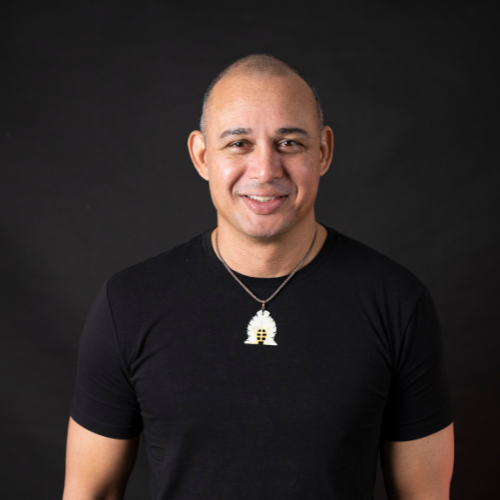
Thomas Mayo is an Aboriginal and Torres Strait Islander man who lives on Larrakia land in Darwin. He is the Assistant National Secretary of the MUA, and an award-winning author, essayist, orator and a signatory to the Uluru Statement from the Heart. His advocacy and leadership for worker’s rights and for justice and recognition for Indigenous peoples spans over twenty years. His book, Dear Son, invited 12 contributors to write letters to their sons or fathers in celebration of First Nations’ manhood. Thomas is currently on the board of the Indigenous Literacy Foundation and is on the steering group for the First Nations Clean Energy Network.
Tom Harley
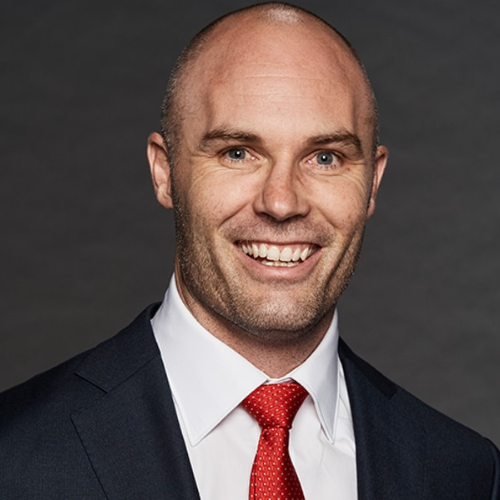
Best known for his decorated career with Geelong, Tom Harley is a veteran of 198 AFL games. Appointed captain of Geelong in 2007, he led the team to three successive grand finals and two premierships, in 2007 and 2009. Holding a Bachelor of Commerce degree from Deakin University, Harley moved to Sydney to be with his Sydney-based wife, Felicity, and from then has held numerous roles within the football industry. Following four years as Sydney’s General Manager – Football, Harley transitioned to Sydney Swans Chief Executive Officer in January 2019. Most recently, he was appointed Chief Operating Officer for the AFL. Driven by old school values, Tom is motivated and energised by working with teams that share a common purpose and cause.

Siobhan Marin
Siobhan Marin is a presenter and producer with ABC TV's Compass and Radio National. Along with hosting the popular weekly podcast Quick Smart, she’s made several documentaries, including the award-winning Walk in My Shoes. Her most recent Compass program, Hijacking Adolescence, investigates the rise of teen misogyny in Australia, and explores how schools, parents and communities can address this issue, without alienating boys or pushing them further into the ‘manosphere’. Siobhan has a background in religion and ethics reporting and is the creator of the ABC web series Faith and Fornication and podcast series Face Value.