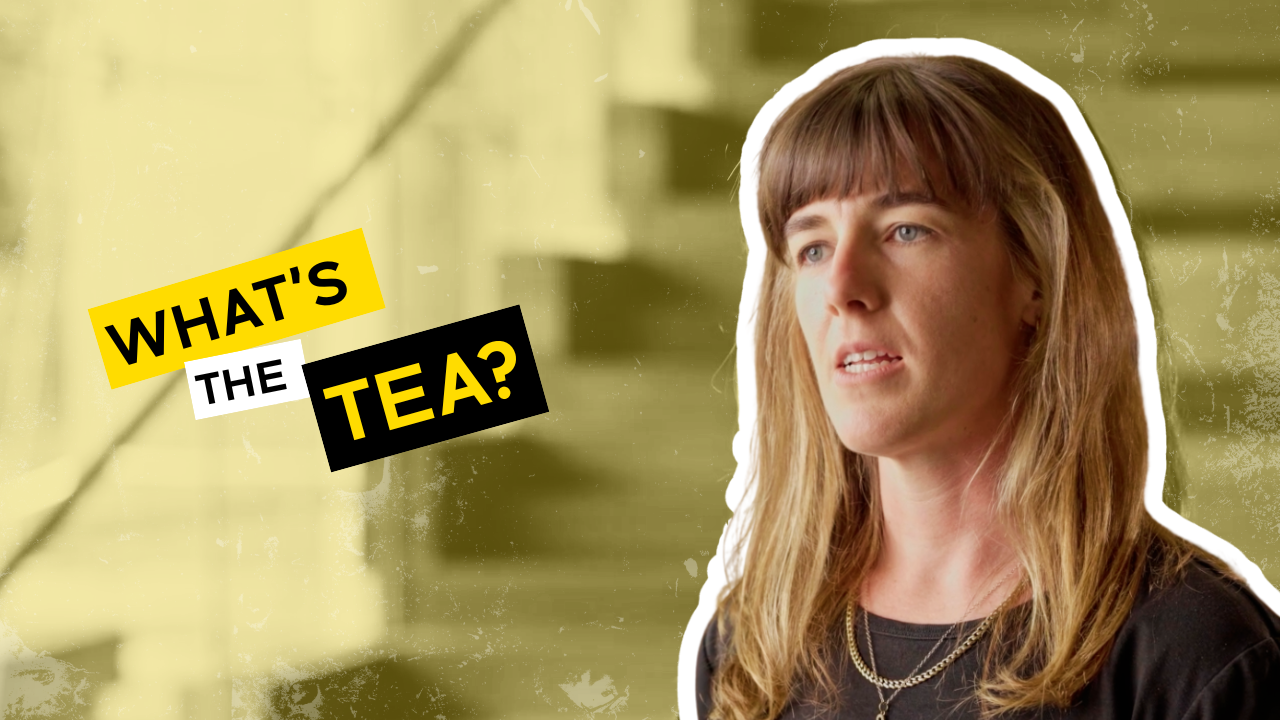
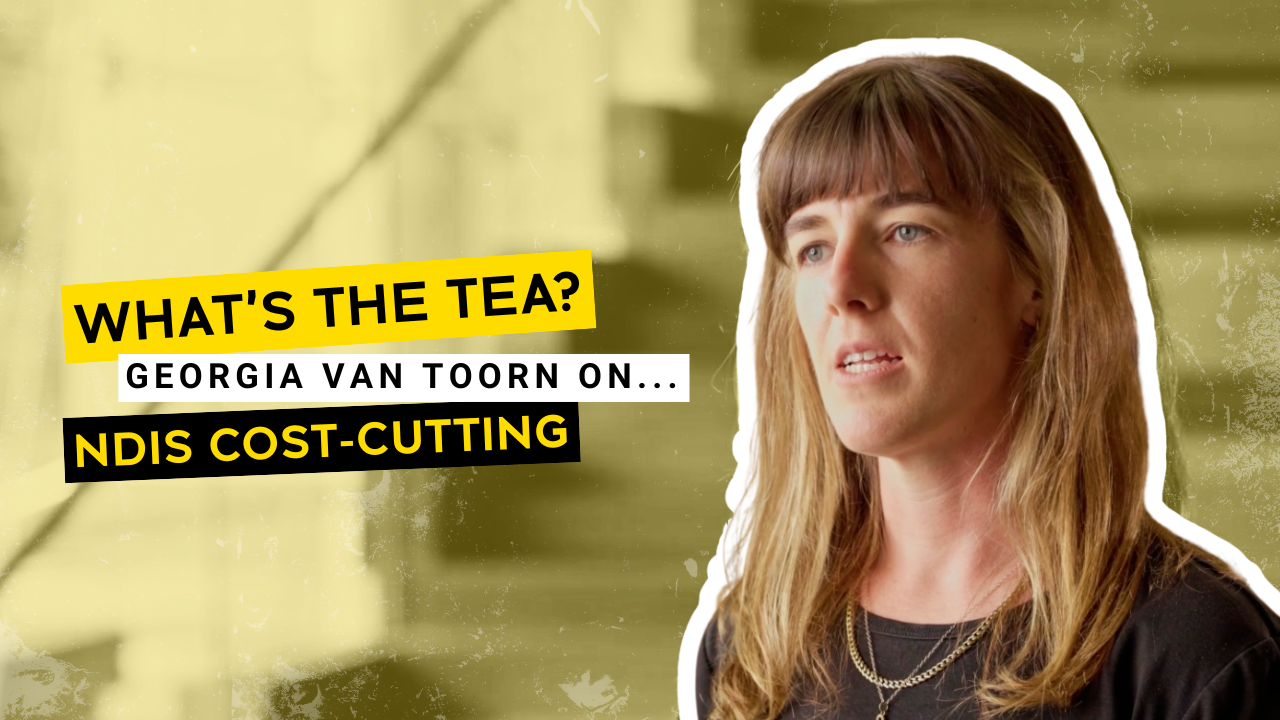
Georgia van Toorn on NDIS cost-cutting
The purpose of the NDIS is to afford people with disability access to supports and services that help them live a full and dignified life.
Australia’s National Disability Insurance Scheme (NDIS) is a world-first system of support for people under the age of 65 with significant and permanent disability. With the NDIS estimated to cost upwards of $50 billion in 2025, there has been increased pressure on the Federal Government to slow down spending. But critics argue that behind this cost are people who genuinely need the money to support their daily lives and alleviate the labour of care often placed on families.
In mid-2026, major changes to the NDIS will mean recipients no longer need to spend time or money gathering evidence from healthcare providers. Instead, their needs will be assessed by a National Disability and Inclusion Agency assessor, using a test called the Instrument for the Classification and Assessment of Support Needs version 6 (I-CAN) to create automated care recommendations.
Changes have been wrought with concern from experts, NDIS participants and advocacy groups around the lack of meaningful input from key stakeholders, as well as concerns that the shifts in funding could lead to less care coverage. Tune in to UNSW’s Georgia van Toorn on how the NDIS is changing and why standardisation[MG1.1] is important but not at the expense of people’s dignity and autonomy.
Transcript
I think a fact that people would be surprised to learn about with the NDIS is the economic benefit it brings, as well as the social benefits.
Over the past 10 years, we've seen an expansion of jobs in the care sector to over half a million, and we know that 20% of those people are actually people that didn't have employment previously.
The purpose of the NDIS is to afford people with disability access to supports and services that help them live a full and dignified life. And the way that's done is by providing people with disability with access to funding through an individualised budget.
Since the scheme originated in 2013, we've seen this exponential growth in the disability service sector and in the spending on disability services by governments. But one of the issues has been that inconsistency in the allocation of funding so we see that people with similar support needs, similar disabilities, often end up with different types of funding levels. And that inconsistency has led to some people calling for a simpler, fairer, more standardised system.
At the moment, we have a process where support planning rests on a combination of human and computer based tools, and we’re moving more and more towards a system where computers make a recommendation and those algorithmically generated recommendations are then either accepted or rejected by the NDIA staff member. But really, that is the extent of their role.
The new assessment process, starting in mid-2026 will rest on a new assessment tool called the I-CAN. So the I-CAN is a standardised questionnaire that seeks to collect data on an Individual's needs arising from their disability and it collects data across a range of domains from things like mobility, community access, mental health, and then it transforms that data into a budget instead of the needs assessment process relying on medical evidence submitted by the NDIS participant.
What will be different is the new assessment process will only rely on NDIA collected data, including data collected through the I-CAN, to make its decisions and its allocations of budget. The most important change is that people will no longer be required to submit their own medical reports as evidence of their disability. In fact, the National Disability Insurance Agency will no longer have an obligation to consider that evidence when it's doing its support planning.
Yes, I mean, standardisation is a good thing in terms of being able to provide people with similar needs and similar experiences of disability with similar levels of support. And I think what we need to do is just really listen to people a little bit more carefully instead of presuming that we know what they need. Or even worse, deferring to algorithms to suggest that for us. I think what we're doing right now is acknowledging that it is people with disability that ultimately have the closest knowledge of what they need and what it takes for them to live a good and full and dignified life.