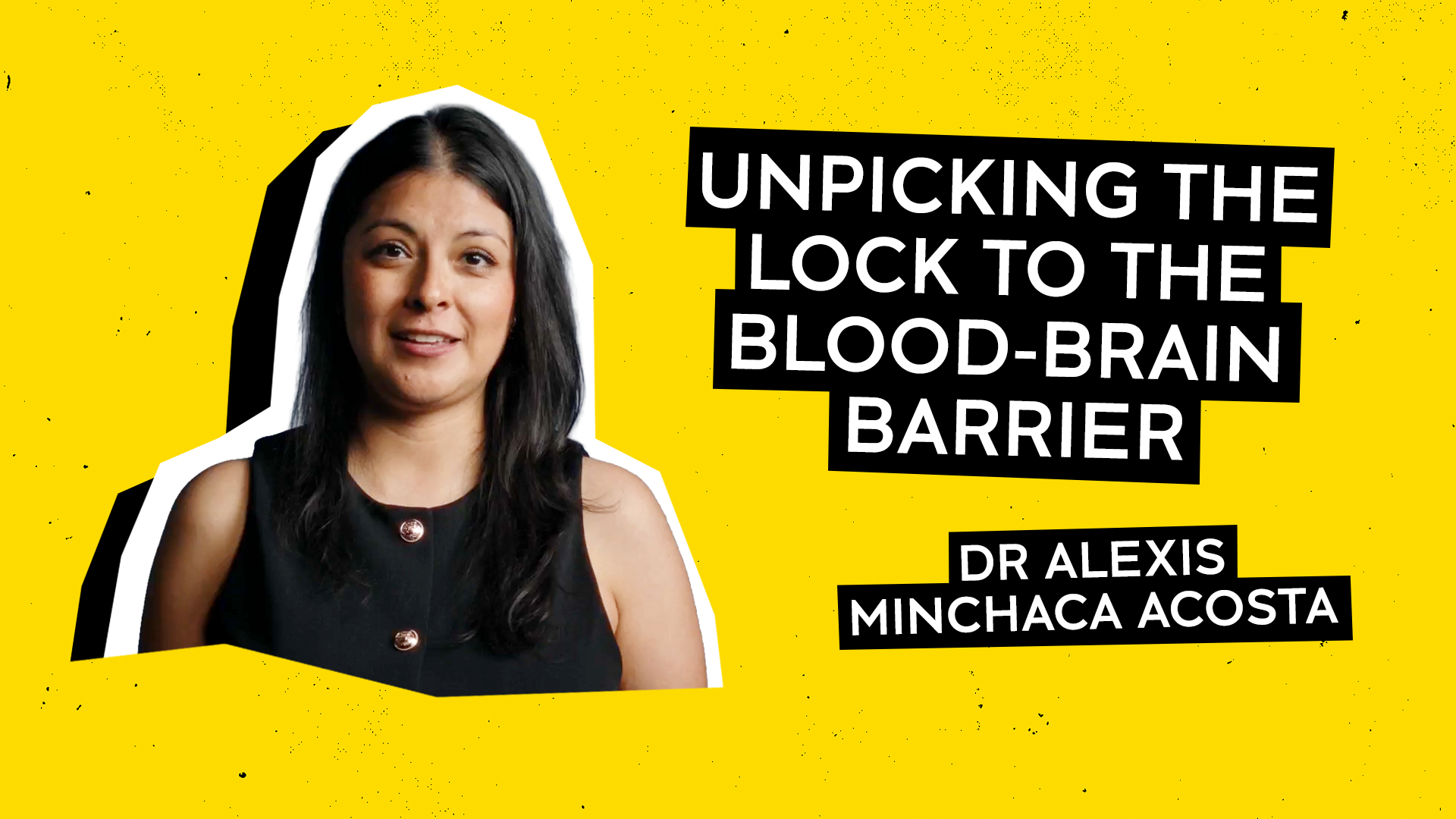
Unpicking the lock to the blood-brain barrier with Dr Alexis Minchaca Acosta
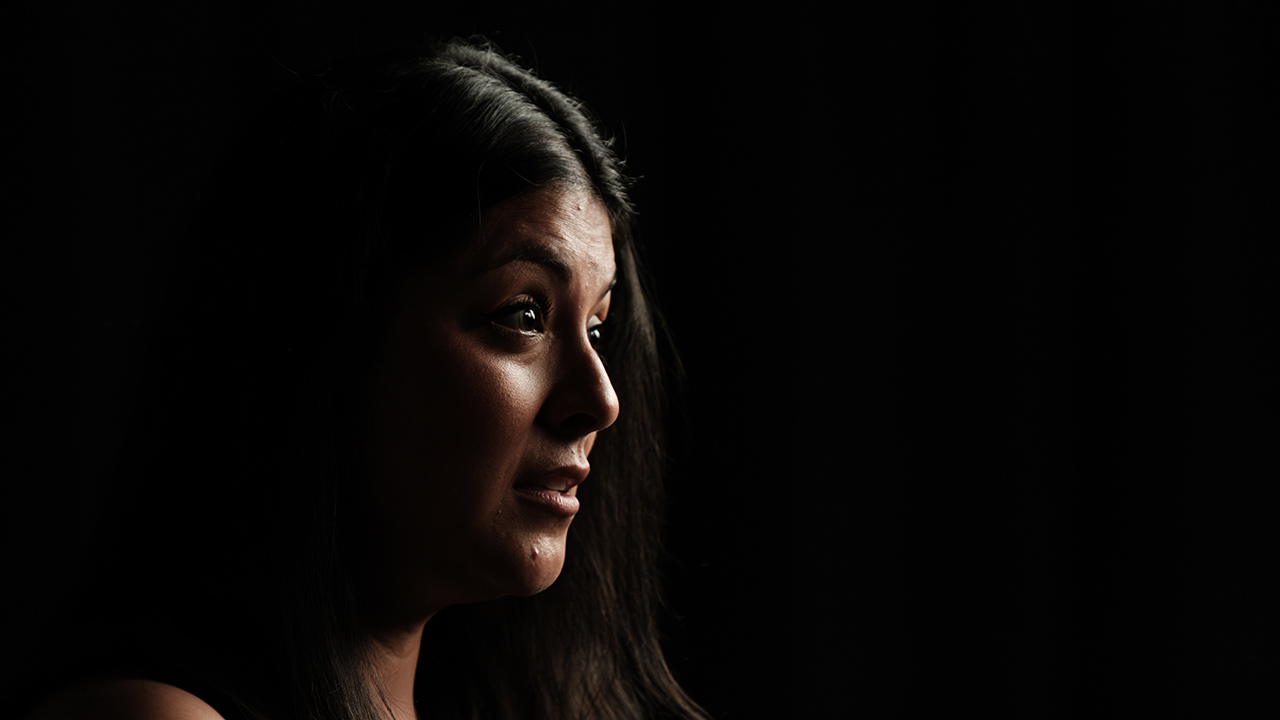
Not surprisingly, our brain is incredibly well protected. There is a structure called the blood-brain barrier, that acts as border security. It is like having a locked door with no key. To make that key, that drug, we first need a really good testing system that recreates the lock.
The blood-brain barrier prevents 98% of medicines from reaching the brain. This prevents the effective treatment of neurological disorders, from cancer to Alzheimer’s. If we knew how to create drugs that could pass through this barrier, then we’d be able to create targeted, effective treatments. But doing so requires a lot of trial and error, and there aren’t a lot of effective, ethical, targeted treatments. Until now.
Tune in to learn from Dr Alexis Minchaca Acosta, a Research Officer at the Children’s Cancer Institute, on how her work in lab-made blood brain barriers could change the game for neurological disorders.
Transcript
Alexis Minchaca Acosta: So I always like to tell my friends I do mini brains in the lab, but in reality, I do very tiny models of this blood brain barrier. My days, I wouldn't call them typical at all, but basically, very often, what I'm doing is I take different cells of human brains that actually make this barrier. And early in the morning I would arrive, look at my cells, check that they are happy, they are healthy, and then I just I put them together. And what's really fascinating is that they just exactly know where to go, what to do, how to assemble, to form a structure that resembles the blood brain barrier. So then, when I have these little balls that we call 3D spheroids made, I can just use them to test different drugs that my colleagues are working on to see if we actually get the right key.
Benjamin Law: G'day. You're listening to One Big Idea presented by the University of New South Wales, Centre for ideas. I'm writer and broadcaster Benjamin law, and I can't wait to talk to seven incredible women whose research and ideas are changing the game in fields from the environment to education, quantum physics to cancer research.
Now, First Nations people on this continent have been sharing ideas and knowledge for 10s of 1000s of years. They're humanity's first astronomers, first agriculturalists, first architects, first inventors, and together, those indigenous nations constitute the oldest continuing civilization the planet has ever known. So we're really grateful to the elders of the Gadigal, of the Eora nation, where we're recording this podcast, that we can continue sharing knowledge here on Aboriginal land. And if you're a listener who's Aboriginal or Torres Strait Islander, we extend that gratitude to you too.
The seven incredible women from UNSW I'm about to meet have recently completed the One Big Idea programme. This is the ninth year of the programme designed to showcase the university's innovative approach to some of the naughtiest issues of our time. Every episode, I'll be interviewing a different UNSW academic, learning more about the person behind the big idea. And today I'm sitting down with a research officer at the translational cancer nano medicine group at the Children's Cancer Institute, and CO joint lecturer at the Faculty of Medicine at UNSW. She completed her PhD in 2024 and that focused on paediatric aggressive brain tumours.
And today we're going to discuss how most medicine never reaches the brain due to the blood brain barrier, but how, with the right key, we could unlock the solution to treating brain cancer. Dr Alexis Minchaca Acosta, welcome to One Big Idea.
Alexis Minchaca Acosta: Hi Ben, thank you so much, and thank you for having me.
Benjamin Law: Oh, I'm so happy that you are here. Look, you have quite a remarkable field of research that you belong to and I'm wondering, like, when you're at a dinner party, say, and you're meeting a stranger for the first time, how do you describe the work that you do.
Alexis Minchaca Acosta: Well, like you said, I'm cancer researcher, so I usually start with that, but to get a little bit more into detail, I guess I would start with a little bit of background about brain cancer. So we, in the group that I work, we are really interested in brain cancer as a disease. These cancers are still considered highly difficult to treat, and one of the reasons for these is the presence of these biological structure known as the blood brain barrier.
So to make this term a bit more simple, like its name suggests, this barrier, it's actually like a border security and it's deciding what can come from the blood into the brain and what stays out of it. So like you were mentioning in the introduction, unfortunately, most of the medicines that we have are unable to cross this barrier. They are blocked, which means that most of our treatments are unable to reach cancer cells and kill them. So what we are really interested about is in understanding this barrier like how these this barrier works, and the way that I usually like to explain it is to imagine it as a lock door. So this blood brain barrier functions as a lock door. And with the medicines that we have, like they don't have the right key combination to actually open this log and get through it, but to really be able to make the right key so the right drug, we need to understand how this lock actually looks like. We need to be able to really model this, this lock, and the models that we have currently experimentally in the lab, they are just not really representing this lock. So it's like trying to make a key without really being able to know the lock.
Benjamin Law: So when you're talking about the blood brain barrier. It really sounds like a barrier to treating cancer as well. It's like a literal barrier, and it's a metaphorical barrier. And I'm wondering how many kids need this door to be unlocked? How many kids are affected by these kinds of cancers that you're talking about?
Alexis Minchaca Acosta: So the blood brain barrier is a structure that is present in every human brain we all have, like in our blood vessels, we all have these brain cells that are tightly, tightly, tightly packed. So every child that's affected with brain cancer will be facing the, I'm gonna say, obstruction of this barrier.
Benjamin Law: You said, the cells know how to get into formation, they almost intuitively, are doing what you need them to do, which is mind blowing. What does that tell us about ourselves and about the human body?
Alexis Minchaca Acosta: It is really mind blowing. I always get very amazed of how perfectly every time I make these spheroids, the cells go and create the same shape and structural organisation. It is, I'm definitely simplifying this, but it goes hand by hand with the external factors that we give these cells. So in this food, as I was calling this media, we include different components that help telling them where should they go, but definitely it talks to us about how specialised each different cell type that we have in our body is how they know exactly what they are doing.
Benjamin Law: That is very, very cool as we learn more about the blood brain barrier. What we're trying to look for, what you're trying to look for, are not only keys, but customizable keys. Say we reach a point where we are able to find those keys and to customise them. Will there be applications for other kinds of problems that we're looking at right now?
Alexis Minchaca Acosta: Yeah, no, definitely. Getting a better knowledge of the blood brain barrier is not restricted to brain tumours. If we can find out how to better open and close this barrier, we can also be tackling other diseases from the brain, like, for instance, I'm thinking of neurological neurodegenerative diseases like Parkinson's, Alzheimer's, that we also need treatments for. So definitely, there's other applications and benefits from getting to completely understand how this blood brain barrier works and how can it be modulated.
Benjamin Law: And how many kids are affected by brain cancer?
Alexis Minchaca Acosta: In Australia, around 120 children are diagnosed with brain cancer each year.
Benjamin Law: And right now, I guess, like there's the shock of the diagnosis of cancer, but brain cancer is another type of shock. And then dealing with the logistics of brain cancer and having this barrier sounds like another huge impediment as well.
Alexis Minchaca Acosta: Definitely, and like I was mentioning initially, as a highly difficult cancer to treat these brain tumours, especially the aggressive type, have very low survival. So in Australia, 120 years are affected by brain cancer each year. And unfortunately, with the most aggressive type of brain cancer, for instance, the survival it's, on average, around nine months, and just less than 2% will make it beyond five years after the diagnosis was made.
Benjamin Law: Wow. So I really feel for those 120 kids per year and their parents as well. That's a really, really sad state of affairs that we have right now. So obviously that gives me an idea of how important this research is that you're conducting.
Alexis Minchaca Acosta: It is a really devastating disease, and we definitely need to find better models of this barrier that let us design better drugs so find the right keys to actually reach brain cancer and kill it.
Benjamin Law: Okay, I'm interested in the work that you do. What does that look like? Is there such a thing as a typical day? How do you go about finding this key to a lock to a really, really horrible door? What? What's involved?
Alexis Minchaca Acosta: So I always like to tell my friends I do mini brains in the lab, but in reality, I do very tiny models of this blood brain barrier. My days, I wouldn't call them typical at all, but basically, very often, what I'm doing is I take different cells of human brains that actually make this barrier, and early in the morning I would arrive. Look at my cells, check that they are happy, they are healthy.
Benjamin Law: It's like the garden that you've got, but it's but it's brain cells.
Alexis Minchaca Acosta: It's like my kids, yeah, like I have, they need to be fed, need to be kept warm. And then I just, I put them together. And what's really fascinating is that they just exactly know where to go, what to do, how to assemble, to form a structure that resembles the blood brain barrier. So then, when I have these little balls that we call 3D spheroids made, I can just use them to test different drugs that my colleagues are working on to see if we actually get the right key.
Benjamin Law: So this sounds like a huge process of trial and error. Let's try this. Let's try this. Let's try this. And you're documenting what the effects are.
Alexis Minchaca Acosta: Yes, but also to make better trials or to make more assertive tests, part of my job involves studying the composition of this barrier. What proteins do I have at the surface, like what processes are happening when it's in contact with the drug? So that we can get the information that we need for a rational design of the drugs. If that makes sense.
Benjamin Law: Can I ask a really silly question? Maybe it's not silly, what do you feed brain cells when you say you're feeding them, what are you feeding them?
Alexis Minchaca Acosta: So the scientific, boring answer, we have liquid that's called culture media, but in lay terms, is basically like a super-rich of nutrients. It has a lot of glucose, a lot of vitamins, growth factors, in this case, that signal them to keep growing, or be these or that type of cell. That's fascinating. It's a liquid,
Benjamin Law: Liquid gold.
Alexis Minchaca Acosta: Yeah, exactly, Soup.
Benjamin Law: Human fertiliser
Alexis Minchaca Acosta: And each of them need like different in this case, the brain cells that I work with, like each have their own specific requirements, their own specific food like I was calling it.
Benjamin Law: We talked before about trial and error, process of deduction, how most of the information will be that didn't work, that didn't work, that didn't work. What does a day look like when something works? What does a breakthrough look like? What does a breakthrough feel like?
Alexis Minchaca Acosta: Are you gonna ask also my colleagues, how do I look like when something works? I usually get very excited. And I guess it can also be a bit overwhelming, because then you can you start brainstorming like so all the possibilities of what's next. So it's really, yeah, it's really exciting.
Benjamin Law: Can you tell me about the last time or last day that happened?
Alexis Minchaca Acosta: I remember one very clearly. I'm not sure if that was the last one, but I do remember one where I was working on an experiment for about three months, something like that, and nothing was going well the way it's supposed to, and that day, when I finally finished these experiments, usually take long just to make the 3D spheroids. For instance, it's 48 hours. So by the time you get experiments and the results completed, it can be a week, two weeks, right? So yeah, I remember looking at these results, and I literally screamed inside the lab, ran outside, looked for my boss, Maria Kavallris. And I was like it, “it worked!’
Benjamin Law: So yeah, oh, that sounds satisfying. What do you do to celebrate when something works?
Alexis Minchaca Acosta: A glass of wine is never a bad option outside of the office, of course,
Benjamin Law: Now there are a lot of setbacks. It sounds like are those moments of breakthroughs, of excitement, the things that keep you going? What motivates you in this work?
Alexis Minchaca Acosta: Yes, definitely. But I think my main motivator are the families and the children that we are working for that we are trying to help at CCI, it's like every certain time we get in contact with families, either of children that have survived because of treatments that The Institute has recommended, but also families of children that didn't make it, and hearing those two sides of the story is always so motivating, like it makes me want to keep doing the job that that I do, knowing that I might be helping in treatment for these children.
Benjamin Law: They sound like very sobering conversations. There's the work that you do in the lab, you're feeding your brain cells, but what are those conversations like with the parents that you're talking about?
Alexis Minchaca Acosta: Well, like a lot of the families, are interested in knowing about our work, so we would usually take them around. On the lab to see how a day of a researcher actually looks like. But also it's a very human conversation, right about their experience with their children. I guess it's also for us, it's also really interesting to hear what is actually needed out there, like what they feel it's needed from us researchers.
Benjamin Law: You talk about the idea of unlocking the blood brain barrier is like finding a key, yeah, to a door. Do you get a sense of how close we are to finding that key, or the keys, plural, that are needed to unlock that door?
Alexis Minchaca Acosta: I'm not sure if I have a clear answer to that, but I think science is really making some progress. Unfortunately, the door is not the only problem, right?
Benjamin Law: What are the other problems?
Alexis Minchaca Acosta: Well, for instance, brain cancer is very heterogeneous. What that means even in one patient? Well, let me begin with. It's very heterogeneous. What that means is that from patient to patient, the same type of tumour can look really different, but also within one patient, all the cells that make up this tumour can also be different from one another.
Benjamin Law: Oh, so what does that mean? Like, you might find a key, but the keys need to be custom made as well.
Alexis Minchaca Acosta: Exactly.
Benjamin Law: Huh.
Alexis Minchaca Acosta: Yes. So that's a field known as personalised medicine, and part of my group also is focusing on that part. Like I mentioned, I what I'm providing is the model to represent these logs so that we can try the keys, and my colleagues make the keys. But sorry. To get back to your question, I think, yeah, it's definitely an ongoing effort, but I don't think there's a very simple answer, and I do feel the way that it will end up going is more towards personalised treatment, so a treatment tailored for each children.
Benjamin Law: That makes sense when you're having those conversations with people at a party, what are they most surprised about with the work that you do?
Alexis Minchaca Acosta: The one question that I get asked often is if, when I say that I take cells from a human brain. Are they really coming from a human brain?
Benjamin Law: Are they?
Alexis Minchaca Acosta: Yes, that's the short answer is yes, they do come from different donors. But it's not like I get a brain, because I feel that's what people imagine, that I get a brain, smash it up and get myself from there. Not in this case, I have like, we can buy there's the same way. There's shops for clothes. There are shops for human cells.
Benjamin Law: Wait a minute. So who's supplying the human cells? You mentioned donors before.
Alexis Minchaca Acosta: Yeah.
Benjamin Law: And are these donors, like living donors? Are they donors who have donated their bodies to medicine, what, how and how. How do they donate?
Alexis Minchaca Acosta: Yeah, usually it's post mortem, or even it can be from blood chord...
Benjamin Law: Like a placenta or umbilical cord, yeah, umbilical cord,
Alexis Minchaca Acosta: Yeah, sorry. So usually they are post mortem donors. Or it can be from the umbilical cord, for instance, cells like that, but yeah, like that. There's companies dedicated to take the cells. Obviously the donor has to consent live for the parent. If that's the case...
Benjamin Law: Are there enough donations? Do you have everything you need in terms of donations?
Alexis Minchaca Acosta: Yes, because we are able to keep these cells growing for like we are able to keep them alive for in big batches that will last years and years.
Benjamin Law: Let's forecast into the future. You're doing this research right now, and I'd love to know where you think we'll be at with the research, where you'll be at with your research, in 10, 15, 20 years from now, what do you anticipate and what do you hope?
Alexis Minchaca Acosta: So, I anticipate models that better mimic the human body, what's happening really in humans will be more common and more accessible to us, which I hope that translates into better treatments out there.
Benjamin Law: We started the conversation by talking about how you introduce your line of work to complete strangers. Have you ever had a conversation with someone you've just met where you tell them what you do and they've had an emotional reaction, because we're talking about pretty high stake stuff, people's family situations, and I'm sure that people have had children or known children that they've lost two cancer. Have you had those conversations?
Alexis Minchaca Acosta: Yes, it has happened, and not necessarily brain cancer in children. But I think we all know someone that's been affected by cancer, and I think it's common that when I talk about my research, a new person or a stranger like you said, will feel identified by the disease like will feel emotional about it. So I do hear very often like “thank you”.
Benjamin Law: And how does that make you feel?
Alexis Minchaca Acosta: I feel I need to contribute more, you know, like I still don't feel I deserve the Thank you. But of course, it's also like a motor to keep going. Well.
Benjamin Law: Dr Alexis Minchaca Acosta, I would like to say thank you as well, because it sounds like to me that you're doing a lot of the work that's necessary. Thank you so much for sharing your one big idea with
Alexis Minchaca Acosta: us. Thank you. Thank you so much for having me.
Benjamin Law: Thanks for listening. This episode was brought to you by the Centre for Ideas. For more information, visit UNSW Centre for Ideas.com and don't forget to subscribe wherever you get your podcasts. You.
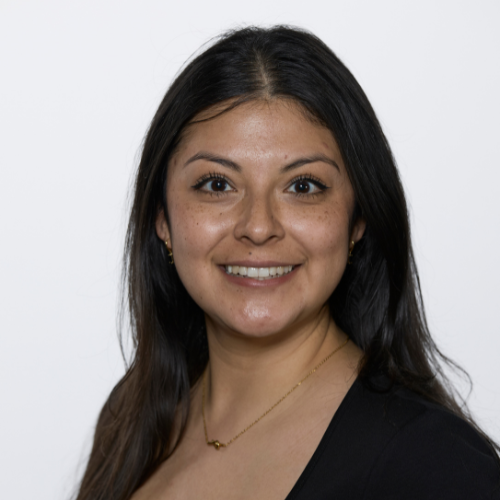
Dr Alexis Minchaca Acosta
Dr Alexis Minchaca Acosta is a Research Officer at the Children’s Cancer Institute (CCI) and Conjoint Lecturer at the Faculty of Medicine, UNSW, Sydney. She completed her PhD in 2024 at CCI, focusing on unravelling the composition of the surface proteome in adult and paediatric aggressive brain tumours to identify novel therapeutic targets. Currently, her research efforts are focused in developing advanced in vitro models of the blood-brain barrier for high-throughput drug screening to improve the delivery of therapeutics to the brain.