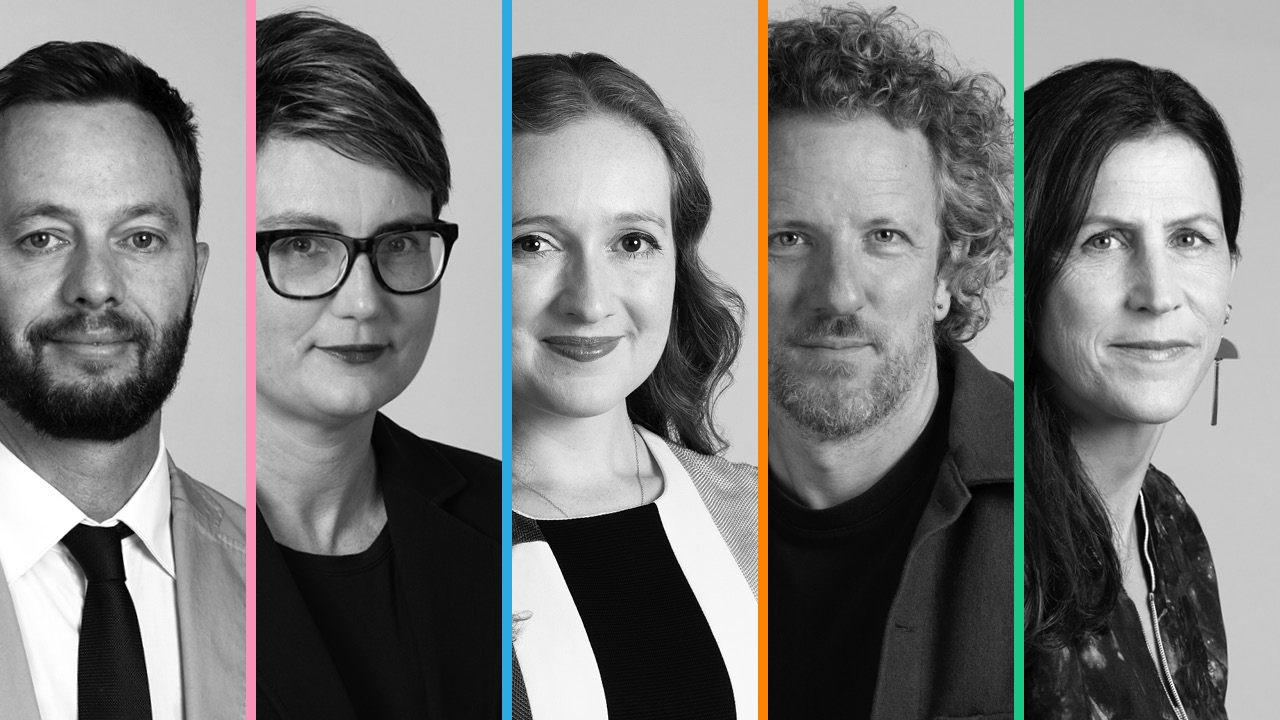
Sherine Al Shallah and Lucas Lixinski on Cultural Objects
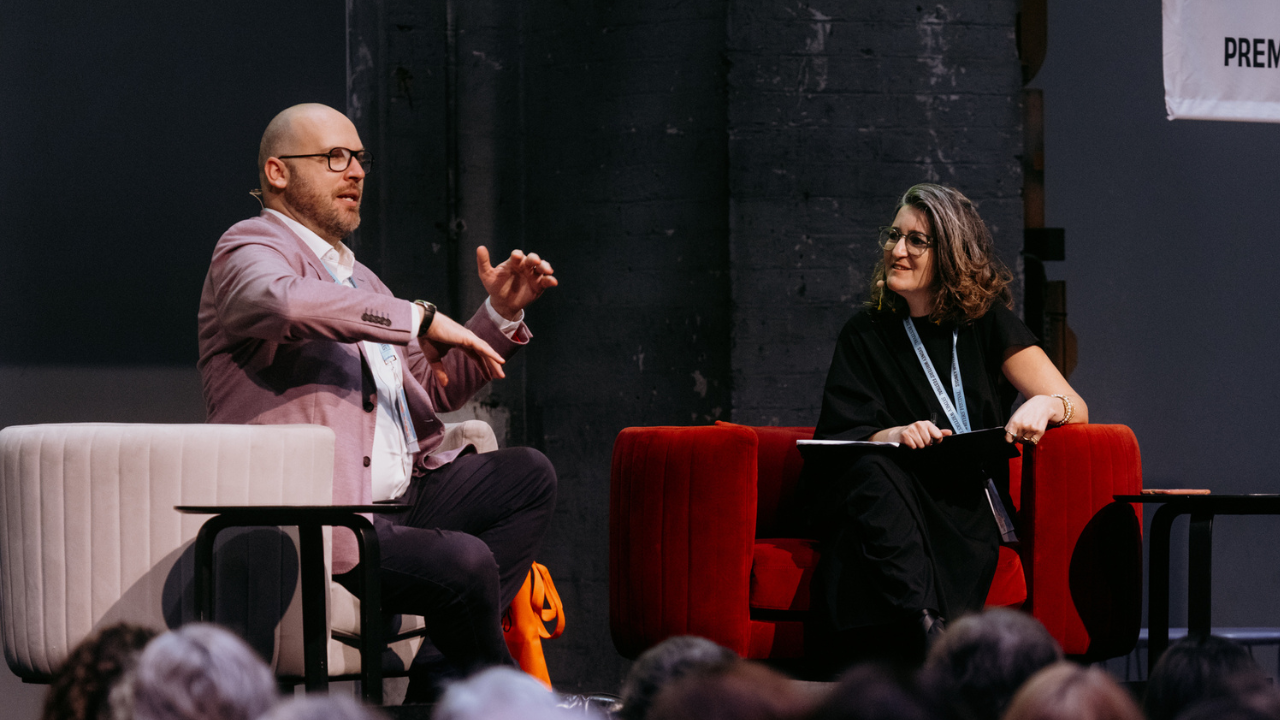
The idea of a cultural object is passing it on to future generations as an evidence of who you are, and you know what rituals you have and the traits of your culture and your nation. So it's important also to think of protection as broader than just preservation.
The Parthenon Marbles. The Benin Bronzes. Grandma's jewellery that she smuggled in her clothes, never to return. What if taking an object is the best way to keep a community's culture alive?
Legal experts Sherine Al Shallah and Lucas Lixinski engage with old and new arguments about cultural objects. Bringing together perspectives from decolonisation and refugee practices, Sherine and Lucas dare us to think beyond our preconceived notions, showing that ‘whether’ to return can be an even more complicated question than we thought.
If we think about cultural objects not as objects, but as conduits for human connection and identity, they argue, then we may have a chance of solving these complex ethical problems.
This event was presented by the Sydney Writers' Festival and supported by UNSW Sydney.
Transcript
UNSW Centre for Ideas: UNSW Centre for ideas.
Lucas Lixinski: My name is Lucas everyone, and this is Sherine. So we're here to talk to you a little bit about cultural objects. Of course, whenever we talk about cultural heritage in this country, it comes to mind the fact that we all are currently and we all live on unceded lands of various indigenous peoples. Indigenous peoples are not only about culture, but they certainly are very much about culture, like we all are right. Culture is what brings us together.
So I'd like to acknowledge that we are currently meeting on unceded indigenous lands and over sovereignty, over which is still contested. Unfortunately, Australia did not take the opportunity it had in 2023 to go a long way towards remedying those issues, but hopefully next time, we will do better. Sherine.
Sherine Al Shallah: thank you, Lucas. So today we're in conversation with each other and with you around cultural objects. And I'll start by asking Lucas a very important, I think, question, which I'm giving Lucas the difficult questions here, what is a cultural object?
Lucas Lixinski: Right? So a cultural object? I'm a legal scholar, right? I'm a lawyer. So for me, it's whatever the law says a cultural object is. And if you look at legal definitions out there, a lot of them have to do with objects that say something about the nation state, right, about our national identity. So in Australia, we would be looking at things like the archives of the Mabo archives, files of the founding of the Labor Party. Those are all listed under the UNESCO Memory of the World programme, which has to do with archives. We're also looking at furniture that is at least 100 years old. We're looking at musical instruments. Human remains count as cultural objects under the law, but effectively, we're talking about any artefact with which we have a relationship, right? Something that says something about who we are and how we sit with others, what makes us a group? Does that make sense?
Sherine Al Shallah: To me, yes. So the second question is, and you just mentioned the law, so what does the law what's the role of the law? Actually, when we talk about cultural objects, where does it come in?
Lucas Lixinski: So lawyers want to control everything and tell everyone what to do, but so the law not only defines objects and cultural heritage and more broadly, right? And cultural heritage can also mean sites, underwater things, song, songs, stories, all of all sorts of things. But the law not only tells us what they are, but it also tells us what to do to protect and safeguard them, right? So when it comes to cultural objects, one of the big things that the law does is determine the rules for which we can trade objects.
So, for instance, in Australia, nothing can leave the country right. You cannot export a piece of art if it is above a certain amount or above a certain age without authorisation. If you do that, you can actually you lose, you forfeit that property. You lose the title to it. The government keeps it. And the idea is that we want to keep certain objects in the country because they are important to how Australia defines themselves. That's what the law currently does. One of the problems with the law, though, is that it doesn't address issues of colonialism or ancient kind of takings of cultural objects.
So we all know about, or I assume we've all heard about, the Parthenon marbles. Yeah, so the Parthenon marbles, they're actually not covered by international law, because they were taken before the current rules were in place, and the only way in which countries would agree to those rules is if they were made non-retroactive, which means that they don't apply to past situations. So there's a whole issue here with the law, in that it kind of glides, or, you know, it kind of ignores the Parthenon marbles to try to prevent new things from being taken but it doesn't actually address things that had already been taken. And something else that is important to think about, the law when it comes to objects and the work that it does the law, at least in theory, it tries to remind us that it's not just the object itself, right? It's not just the Parthenon marble that is very pretty. It's not just the Benin bronze that is very pretty. The value of that thing, it's because it says something about who we are, right? So it ends up being about people, right? Or it should be about people anyway. So that kind of gets me to you, how do we make it about people?
Sherine Al Shallah: So, so for me, also, I look at the cultural object, it's important because it is important to someone. So for example, if we think of an icon, a religious icon, which is a cultural object, it's important because someone uses that in a religious ritual, and then, by extension, so it's important for the right to practice that religious ritual, and then It's therefore important to the human right of that person to practice their religion. And so we can always go from the object. Right to the subject, and even if we subvert it, then we can think we could go from the subject to the object. So if we have a duty to protect the person, then we have at least, let's not go to legal duty, at least a moral and ethical duty, to also protect the object that is meaningful to that person. And I think it's amazing. You mentioned that the nation state. Because when we think of cultural objects, we think of states, right? So we think of Parthenon marbles, we would think of Greece, United Kingdom, whereas actually the link is to the nation. It's to the people, right? And it's this assumption that we have nation states that makes us jump or leap from the person to the state, whereas actually it's the people, it's the nation. So it's important to keep this in mind, because then it takes us to the other question, which is, what is protecting a cultural object? Is protecting a cultural object saving it underground, in storage? Or is protecting a cultural object actually just keeping it with the people who care about it? So, you know, they can look after it. They can perform rituals appropriately with it. So what is actually protection?
Lucas Lixinski: Right? So it's important to bear in mind, just for a bit of context, that when you walk into a museum, the stuff that you see on display, it's usually only about 10% of what the museum actually owns. Most of it is actually in storage in basements or even outside units. A lot of it is because just a matter of space, and I'll be able to show everything, but a lot of it actually museums do on purpose, because they do what they call the Research Collection, which are less meaningful objects, quote, unquote. But that, you know, when Look, when you look at a bunch of them, it tells a story that a single object will not on its own right. So it serves like archaeologists, it serves anthropologists.
But of course, it's a whole different ball game. If all of a sudden what you see there is something that happens to be in your grandmother's living room when you were growing up, and grandma was in Austria in the 1930s and all of a sudden that painting was not there anymore, because they had to flee the country in a hurry. And and then, you know, those objects got confiscated and then get put in an Austrian museum or a German Museum, right? I'm talking about Nazi looting. So there's this mismatch between what museums can do and this focus on people. And as I said, you know, cultural heritage lies about the nation state, but the nation state not is it's all fun and games when the nation state really represents the people. What happens when the nation state is actually trying to persecute people, when there's a mismatch?
Sherine Al Shallah: Exactly. So. So I look, I research refugee cultural heritage, which exactly entrenches this mismatch. So if we think of heritage and objects as we have a state and we have a territory, and we have people, and they are all together in this one paradigm, refugees break this paradigm completely, yes, because they are persecuted or at a risk of being persecuted by the state, and they've left the territory, and so you have this break. So what happens then? It's not the obvious answer. Also, because refugees are not all leaving to go to the same place. And the other thing is that there's a higher risk for that, for those objects actually, because when the refugees are being persecuted, more often than not, the objects are going to be destroyed. And again, in the meaning of destruction, which is broader than just attacked, they could be pillaged, they could be looted, they could be trafficked, they could also be used inappropriately, and so so this places them at the higher risk. And it's very important to think of that because those objects, we may think it's a privilege for refugees to be thinking of cultural objects, but it is a way to make sense of who you are a cultural object.
I will go to a personal experience. I grew up in Civil War Beirut, and I remember we had this small pouch which was white and pink with frills, and we put in it all of our jewellery and passports and a few small things we could fit in it, and we put it in the couch, and we knew that if we had to leave the house, we will grab it and we will go, and it will be something that is ours, that we could take with us, and we will always remember who we are. And I think so it's not really a privilege. It is a necessity to be human beings and to humanise ourselves and each other. Is these objects. So even if these questions are difficult to ask in some contexts, like a refugee context. It doesn't mean we shouldn't ask them. I think this is exactly where we should ask the questions and try to answer them.
Lucas Lixinski: Can I ask a follow up? So when you were talking about, you know, the little pouch that you had to put in the couch and all of that, do you remember how you chose those objects. Was it the stuff that you could sell more easily and was worth more in terms of cash? Was it a stuff that had more sentimental value? Or was it what cultural heritage would suggest we do something that has intrinsic value?
Sherine Al Shallah: So it was a mix of all of those things, but mainly it was sentimental objects, like these pearls I'm wearing. Wearing today. They were in that pouch. So they're my grandmother's pearls. So probably, like, I remember, we used to say these may even be plastic, we don't know, but we just love them so much. And this is we remember wearing them in the family, and then they are very meaningful for us. And that's, that's a great question, because then, you know, the value of the object is actually very different for the people who the object is attributed to, you know, that nation, it means something completely different for them. It's not about monetary value, it's it's the association that you make with that object,
Lucas Lixinski: Right. Okay, yeah.
Sherine Al Shallah: So I'll ask you, so I talked a lot about the refugee context, and do you see any other context where it's quite complex? This question of, you know what the cultural object is and who it belongs to, and what drives are there?
Lucas Lixinski: Yeah. So look, I already mentioned the Parthenon marbles, right? And a lot of the dispute around them has to do with when they were taken, when they were removed from the Parthenon. It was this whole conversation about what is now Greece was part of the Ottoman Empire, so they were dominated by what is now Turkey, and that's a whole who invented the yoghurt kind of thing that still goes on to this day, you know? So the Ottomans kind of gave the authorisation to a British person to allegedly only take, make sketches and moulds of the personal marbles, but not necessarily to take them all the way back to England, right? That's one of the theories. The other theory is that, yeah, the authorisation was to just kind of take it, right? The Ottoman Empire Emperor kind of sold it. And I say theories because no one can find the document anywhere. It's not in the archives in Athens. It's not in the archives in Istanbul. It's nowhere in the archives in London. So we don't know what happened. We just have kind of people's words for it.
And then he kind of gets to the UK. Lord Elgin essentially went bankrupt because of the marbles. Ended up selling them to the British Museum. And then the British Museum has this rule that says they cannot de accession, so they cannot take anything out of the collection once it has been incorporated. And that's what they use now as an excuse or as a reason why they cannot send the marbles back, because the law doesn't allow us to, except that you can change the law right, at least in that respect. But they, you know, they use that excuse that are very formalistic about it.
But you know, opinion in the in the UK is shifting towards their return. So that's kind of one context which is like a historic colonial relationship. And as I said, the law doesn't apply because these things happened too long ago. And another context is just broader colonialism, right? Whether it is taking indigenous shields from Australia to the UK, and now Australia is asking for a lot of those things back. Human remains, because there was this whole idea, and there still is this idea in many circles, right, that indigenous human remains, they are objects of science, whereas in other contexts, even in Australia, human remains are they have honour, right? They have dignity.
So looking in Australia, the regime for war graves veterans have dignity. We protect those human remains tooth and nail, and how dare you even talk about moving them. But when it comes to indigenous remains, until fairly recently, the Australian position was, yeah, they're important for us to understand the evolution of the human race, so they're fair game for science. And that's a weird kind of mismatch. It's weird in the first instance to even talk about them as objects rather than as people, but then ironically, the law actually is better for these human remains if they are treated as objects, because if they are treated as people, the most you can get is an apology, and you get no real compensation for the harm done to these people. They actually need to be treated as property for you to able to get financial compensation, which is, we don't have time for that, because I wanted to mention a third thing, which is colonialism in kind of the African sort of context as well.
So the Benin bronzes, I assume we've all heard of them, or most of us have heard of them. So they were taken from the kingdom of Benin, which is now part of Nigeria. At the time they were taking it was a quote, unquote punitive expedition by the British, which means they were actually trying to harm the people of Benin, and their morale, their spirits, break them. They did it. And these objects are now all over the world. A lot of them were actually given to soldiers as rewards for their performance in the war. And then these soldiers kind of sold them or donated them to museums, but now there they are. And then there's a whole question about when we talk about returning them, whether we return them to the country Nigeria or to the kingdom of Benin, which still exists as an almost symbolic or ceremonial kind of capacity.
So the Oba of Benin would be the king of Benin. Benin is a part of Nigeria, not the country Benin. It gets confusing. So there's this whole conversation as well in there. And then in all of that, we forget, or we don't learn, that people are still making Benin bronzes today. Right? We tend to think of Benin bronzes as something that belongs in the past. No, they're still being made today, so there's a continuity, and there's a living culture around it as well, which gives the people of Benin a sense of pride and of belonging.
Sherine Al Shallah: And I'll add on the Benin bronzes, something which I think is quite makes the debate even more complex, is that descendants of slaves in the US, of Nigerian slaves, actually say we don't want to return the Benin bronzes to Nigeria, because these are ours, and we want to be able to enjoy them and access them and go and see them at the Smithsonian. We don't want them to go back to Nigeria. So it is a very complex question. It's not that “yes, definitely. Let's take them back”. Which is Yeah, which is exactly the questions we need to be asking.
Lucas Lixinski: Yeah. And that's a good version of that argument, right? There's a worse version of their argument, which is countries like Portugal, but also the UK, Italy, lot. They're all in Europe saying that they should not return these objects because the countries of origin won't know how to take care of them. They're not worthy of those objects, which is insulting, first of all, but also neither here nor there, right? These objects are they don't belong to Portugal. They don't belong to France in the first place. So why are they being the gatekeepers of where these objects go? Right? They mean something for people in Chad or Mozambique or what have you, right?
So there's also this thing that the law kind of allows us to ask, because we tend to focus in the process of restitution, of returning to these objects, we first ask where they are, right? And we ask the people of where the object is, what are the rules for which you would allow these objects to be sent back, as opposed to asking the people from where the objects were taken, what are the rules that you think should be in place for you to get your objects back, for you to validate that these objects are yours. So it's a very different logic. It's somehow flipped, partly because of that idea that possessions is nine tenths of the law. But it is also kind of, I was perpetuating this idea that we as white people in the West know what to do with other people's identities better than those people themselves. And that's weird,
Sherine Al Shallah: Yeah. And I think also it's going back to what protection is. Protection is not Preservation, not locking up in a box and adding chemicals. Protection is this. It is the not the only the object. It's everything you associate with the object that you need to protect and safeguard and look after. And this is what the law actually says.
And the idea of a cultural object is passing it on to future generations as an evidence of who you are, and you know what rituals you have and the traits of your culture and your nation. So it's important also to think of protection as broader than just preservation.
Lucas Lixinski: Yeah, exactly, yeah.
Sherine Al Shallah: And then it means maybe restitution is protection. I don't know. In each context, it would maybe be a different answer
Lucas Lixinski: Yes to all of that, but there's a different way of thinking about protection, right? Part of what allows that conversation, that people in Guinea Bissau won't know what to do with these cultural heritage or people in Ethiopia, has to do with the fact that we focus too much on the object, on the thing, whereas the thing is a conduit, right?
We need to think less about the thing as an end in itself, and more about what the thing does for us and for those people, right? So that's what we need to be protecting that relationship, not the thing
Sherine Al Shallah: Exactly, the people,
Lucas Lixinski: Yeah, the people, yeah, at the end of the day, the people, right? But it is people in a slightly different way, because look, especially in the refugee context, right, but also in a disaster context, or even a war kind of context, we tend to think that the people come first and yes to that, but then in terms of what people need, we tend to think in a very immediate terms, right? People need food, shelter, healthcare, yes, absolutely. They need all of that, but they also need culture, right?
The thing that makes us go from a bunch of people to a community is the culture that we share. If we destroy that culture, that community disperses, right?
And study time and time again has shown that a community that keeps its culture, that protects its culture, they do better with adversity. They are more resilient, and they bounce back from that adversity much more quickly, right? So even if we're talking about people experiencing war or people being persecuted and having to be forced migrants or refugees, to allow them to take their culture with them, to allow them to keep practising their culture and protecting those objects will make them better. Will make for a refugee group. It will make them settle better in the new country, if they have some connection to home, right? And all those things, and we forget that.
Sherine Al Shallah: And if we want to think of the future, maybe I will answer the question about the future, and then I throw it to you. Do in terms of, you know, where do we go from here? What are we thinking like? Again? For me, I go back to thinking about the refugees. We live in a world where we have more than 122 million people who are forcibly displaced. We have over 38 million refugees. So we cannot keep thinking about culture linked to a state and a territory. These people are running away from their states, and so how one can we keep them as communities and as people? It is very essential. So we need to ask those questions of how we can protect the cultural objects outside the paradigm of of the state.
And I also wanted to add that the cultural object doesn't have to be beautiful or aesthetically pleasing, at least it could be anything that you know you value as a community, as a people, that's your cultural object. So, and that's, I think, very important also to note that, and maybe it's related to your question about value, whether it's intrinsic or extrinsic, is important that, yes, any object can be a cultural object. Yes, it depends on the setting and the context that we are in.
So how do you see the future? Or where do we go from here?
Lucas Lixinski: I think the future will be better if we understand that cultural objects are not the past, or they're not just about the past anyway, right? They are about how we select heritage, which is something from the past, yes, but based on what we feel in the present, and, very importantly, based on who we want to be in the future, and we tend to forget that, right?
We kind of get into this mode of almost being a hoarder of heritage. Because, you know, sure, because some insert name of that king here was slapped in this place, therefore this place is a heritage site now, that's lovely, but what if that can turn out to be a really bad person? Do we still protect that place, but then we kind of tell the story of, you know, look, this is not just a place to be glorified. It's also a warning for something bad happening here. Or do we just kind of allow someone else to build different memories in that place, right, and replace that so that's one, one dimension of it, right, thinking about the future, and part of that is even in the context of making reparations for colonialism and colonisation. Giving stuff back is great, if the people ask the support of stuff back. So that's something that was actually really interesting. I was talking to this woman. She was the first black woman to ever be elected to the Portuguese parliament. She was originally from Guinea Bissau, which was on one of the countries that Portugal was colonised. And at the time, Portugal was kind of doing this thing of saying, “oh, we can't send stuff back first we need to do this very extensive inventory of everything”. And I was really annoyed. I was like, surely, they're just doing this to buy time. And she turned around to me and said, “No, no, that's actually for many of us, that's more important than setting the stuff back, because doing the inventory forces Portugal to admit that they took these things, that they are keeping these things from us, and if we decide to that these things could should stay in Portugal, it will always be a reminder of what Portugal did, not because we want to hold lord it over Portugal forever, but because we want to make sure it doesn't happen to anyone else”, right? So there's also this sense that maybe sending things back is not the only game in town when it comes to cultural objects. And at any rate, it's not for me to decide. It's not for any of us to decide, right? We need to remember to ask the people who created these objects and for whom these objects mean the most, what they want to do, because the other day, it's all about them. So that's kind of the future I want to see.
But Sherine, you're much more eloquent than I am. What does the future look like for you?
Sherine Al Shallah: I think, like, it's important also to re imagine, like maybe also talking about objects, even though we said it doesn't have to be aesthetically pleasing, doesn't have to be but maybe we're always we're thinking of vases and jewellery. It could be anything like I was in Poland, in the Warsaw Museum, they have frescoes from a church. It's on the border between Egypt and Sudan for us, and they've reconstructed the church basically there. And you walk in and it's like a church. And so, you know, objects could recreate a place. So, you know, this is something we could think of, rather than, you know, this possession and property rights around the object.
How can if people want to access and enjoy and want to hold on to their heritage and who they are and their identity, you know? How can we do this? There are many ways to do this so. So that's the future I see. Is, Where can we go from here objects, maybe, in terms of cultural heritage, at least they could move. So this is a first good first step. They are. They could delink from territory in that way. And so where could we take that? And you did bring up, you know, people are objects, or is culture that important?
Like, I remember when in 2015 when ISIS went into the National Museum of Iraq and was destroying the statues. The minister at the time Haider al-Abadi was crying on TV saying, these are not just statues. This is who we are. This is us. We come from these statues. And so I think also objects, when we are protecting them, like when they're destroyed, I think the people who care about them the most, they feel the most heartbroken. But when we protect them, we protect them for everyone. Okay, so we will all have those objects, and we will all have that culture. And this is what humanity is contributing to the world. So it is really very important for us to be thinking of, you know, protecting cultural heritage for all of us, cultural objects for all of us.
Lucas Lixinski: So I think the big lesson is, protect the objects. When in doubt, protect the objects. But if you can check with the people to whom those objects matter the most, because it might actually be that they want to let those things go, rather they are too painful, that they stop meaning anything, and then they want to do something else with their culture, right? They want to reinvent themselves. They want a better a different version of themselves, hopefully a better one. But yeah, any final thoughts?
Sherine Al Shallah: No, I also think yes, it's important this point of you choose in a way. You could choose your cultural heritage like a refugee could be different from a migrant, because a refugee has been persecuted, and maybe there are certain cultural objects or cultural heritage of the state that they actually want to actively dissociate with. And that's of course, we are all free. This is part of our freedom and our dignity as human beings, is that we can choose that, yes, and just thinking of the value to the people gives us this ability to choose that, rather than imposing on us a cultural stereotype.
Lucas Lixinski: All right, everyone. Thank you. This is Sherine Al Shalla, PhD candidate at UNSW Sydney.
Audience Applause
Sherine Al Shallah: and this is Lucas, Professor of Law at UNSW Sydney.
Audience Applause
Lucas Lixinski: Thank you very much.
UNSW Centre for Ideas: Thanks for listening. This event was presented by the Sydney Writers Festival and supported by UNSW Sydney. For more information, visit UNSW Centre for ideas.com and don't forget to subscribe wherever you get your podcasts, you.
-
1/4
-
2/4
-
3/4
-
4/4
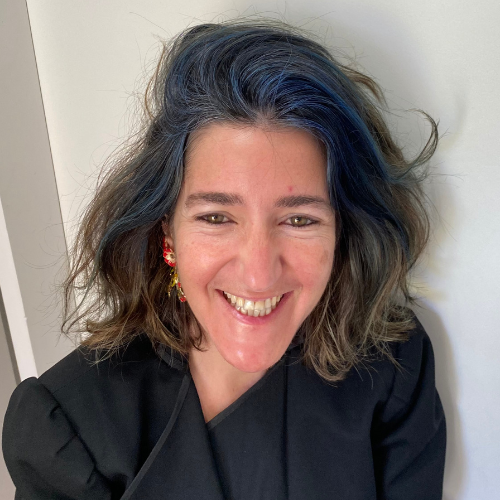
Sherine Al Shallah
Sherine Al Shallah is an economist, solicitor and teaching fellow, currently pursuing a doctoral research project at UNSW Sydney in affiliation with the Kaldor Centre examining the international legal frameworks for the protection of refugee cultural heritage. She has been a visiting researcher and guest lecturer at the University of Milan-Bicocca, Jagiellonian University and Politecnico di Torino, and has appeared in international media (France 24, Deutsche Welle) as an expert on cultural heritage issues. Sherine has published in the International Journal of Cultural Property, International Journal of Heritage Studies, The Conversation, Demos Journal, Kohl Journal for Body and Gender Research and The Guardian.

Lucas Lixinski
Dr Lucas Lixinski is a Professor in the Faculty of Law & Justice, UNSW Sydney. His work analyses how the law shapes identity via cultural heritage protections. His latest book, Legalized Identities, argues that cultural heritage law helps us redefine our societies in the aftermath of a war or dictatorship in deeper ways than we usually acknowledge. The book also argues that racist monuments to the past should not remain unchanged.