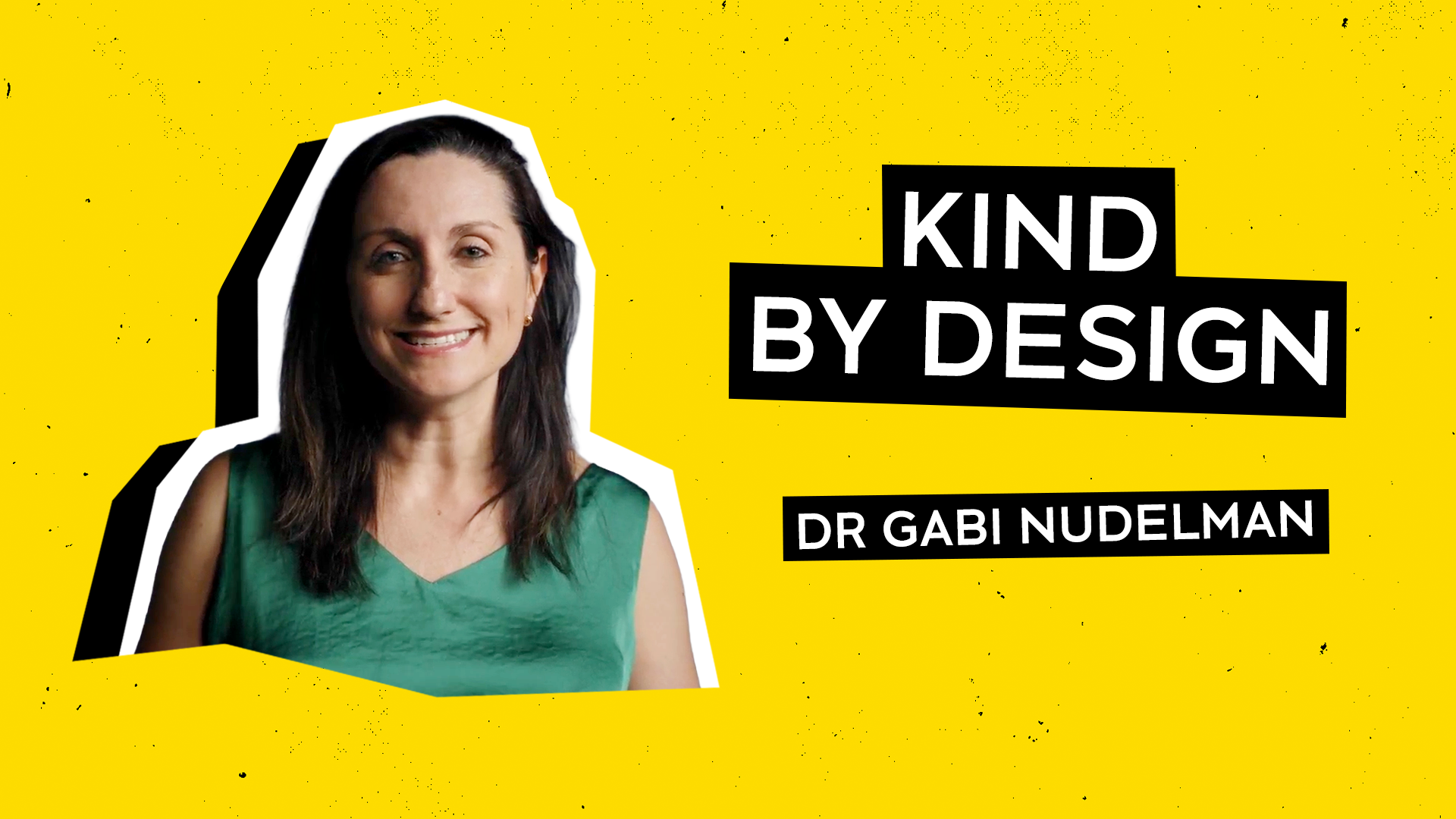
Kind by design with Dr Gabi Nudelman
Employers consistently rank empathy, collaboration, and emotional intelligence as the most valuable skills in graduates, more valuable than technical knowledge alone. When we practice kindness in universities, we're doing more than just being nice - we're preparing graduates for success.
In an era of increasing productivity, efficiency and automation it’s important not to lose sight that education – the learning and teaching that we all pursue – is about human connection and transformation.
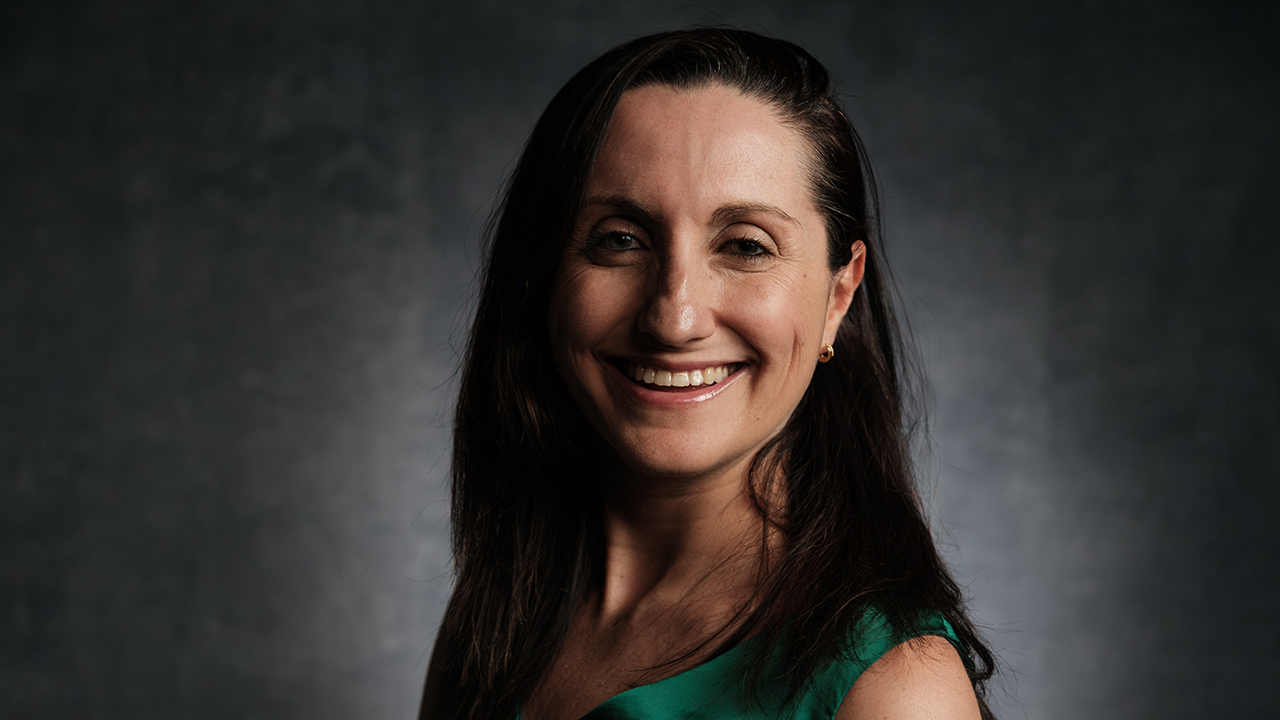
Tune in to learn from Dr Gabi Nudelman, a Senior Lecturer in business sustainability and ethics, on how kindness could be our secret weapons against disconnection in our work and school environments.
Transcript
Gabi Nudelman: There's so much that is changing in education at the moment, and it feels like we're really on the precipice of something new, which is really hard to know what that is, especially with the impact of generative AI, I hope that we can retain those human elements of education, for me, that building of relationships with people and building of relationships with students and making them understand that they're seen, and making them understand that they're safe. That is just such a core part of what makes education possible and what makes education amazing. And that's what I want to keep and grow. Even though all the systems, all the structures, are moving towards more automation, more data driven stuff, I want to make sure that we're not losing that humanity and that we're actually finding ways to amplify it.
Benjamin Law: G'day, you're listening to one big idea presented by the University of New South Wales, Centre for ideas. I'm writer and broadcaster Benjamin Law, and I can't wait to talk to seven incredible women whose research and ideas are changing the game in fields from the environment to education, quantum physics to cancer research.
Now, First Nations, people on this continent have been sharing ideas and knowledge for 10s of 1000s of years. They're humanity's first astronomers, first agriculturalists, first architects, first inventors, and together, those indigenous nations constitute the oldest continuing civilization the planet has ever known. So we're really grateful to the elders of the Gadigal, of the Eora nation, where we're recording this podcast, that we can continue sharing knowledge here on Aboriginal land. And if you're a listener who's Aboriginal or Torres Strait Islander, we extend that gratitude to you too.
Every episode, I'll interview a different UNSW academic learning more about the person behind the big idea. And today, I'm sitting down with a senior lecturer in the School of Management and governance in UNSW Business School. She holds a PhD in higher education studies from Rhodes University in South Africa, and her research focuses on teaching and learning in higher education, with a growing interest in kindness as a critical values-based practice. And I can't wait to find out how kindness costs nothing and can be potentially transformative with Dr Gabby Nudelman, welcome to One Big Idea.
Gabi Nudelman: Thank you. I'm so excited to be here
Benjamin Law: Now. Dr Nudelman, how would you describe what you do in your work and research to a complete stranger at a party?
Gabi Nudelman: I am an education focused lecturer in the UNSW business school, so that means that while I do do research, as you mentioned, and I'm sure we'll talk about later, my main focus, of my role here in the business school is teaching and developing knowledge and expertise and skills around effective teaching, because that's definitely one of UNSW core focuses.
So I teach in the school of management and governance, and at the moment, my main teaching area is around ethics and sustainability in business. So I teach a course primarily called responsible business professionalism. And as I always tell my students, we teach them that the business of business is not only business. So we try to get them to think around the ethical sustainability, human, relational, ongoing impacts of their business, work that they're doing.
Benjamin Law: I like what you've just said, the business of business is not only business, because when we think of business, we often think of the bottom line. Businesses can be cutthroat as well, about maximising profit and effectiveness. But what you're interested in is kindness. Kindness as a critical values-based practice. And I'm wondering how business and kindness intersect, or how people learning about business need to be aware of kindness.
Gabi Nudelman: I think that happens on a few different levels. I think the one is that I integrate kindness very much into my teaching, which helps students connect to the content, connect to me, get more enthusiastic, more motivated about the business content that they're learning. So I'd say that's one way that it works. I think another way that it works is that when they see myself, my team of tutors, other fantastic UNSW academic academics, teaching and carrying themselves and interacting with kindness. Hopefully that's something that they want to model as well.
So I'd say that's the second level that they go out then, and that perpetuates in their interactions as human beings, whatever context, however, including business. And then I would say the third place where that fits in is the fact that kindness can be a fantastic tool in business for getting people on side, to pulling together teams, to helping to counteract burnout and developing psychosocial safety, which we know is such a big issue in Australia at the moment.
So we also like to place kindness as a core business competency as well, and hopefully that's one which I'm not at all subtle about it when I teach it, but hopefully that's one that our students walk away with as well.
Benjamin Law: You mentioned psychosocial safety, and I'm just wondering briefly, like, what do you mean by psychosocial safety?
Gabi Nudelman: When we talk about psychosocial safety, we are talking about the extent to which people feel safe in the workplace. But we're not talking physical health and safety like tripping over wires and dropping things on themselves. We are talking about emotional, social safety. So the extent to which people feel like they're safe to be themselves at work, the extent to which people feel that they can communicate openly and clearly, that they can be authentic, that they won't be bullied, judged or edged out. That's what we're talking about when we say psychosocial safety.
Benjamin Law: That's what I want in my life. I want psychosocial safety. Yay.
Gabi Nudelman: We all do,
Benjamin Law: Gabi, I've heard you speak before, and one thing that really struck out and stuck out at me when you were talking is that there is a difference between kindness and niceness. What's the difference between kindness and niceness?
Gabi Nudelman: I will definitely answer your question, and I'm glad you asked, because it wasn't it's one that comes up a lot when we talk about kindness. You know, we get people saying, “Oh, it's just being nice. What's the point of that?” So I will answer your question, but first I want to say that, for what it's worth, I do think there's some value in being nice person. I'm a nice person. You seem like a nice person. And I think that there's a it's just a nice way of taking our attention and kind of building initial connection. So I'm not discounting nice old…
Benjamin Law: No, but most people think of them as synonymous with each other, that kindness is niceness and niceness is kindness. You see it differently?
Gabi Nudelman: Well, I think that kindness goes a little bit deeper. So as I say, niceness is quite superficial. Niceness, you know, it placates people. It tells them what they want to hear. It strokes egos. It's always happy, cheery, you know, superficially Smiley. I called it decorative niceness, performative tokenism. Kindness goes a bit deeper than that.
Kindness is about hitting at a core truth. It's about telling people what they need to know, even if it might not be exactly what they want to hear. When my fellow colleagues and I are practising kindness with students, you know, sometimes it might mean telling them a hard truth, telling them something that perhaps they haven't been successful, sending them off to do something that maybe they don't necessarily want to do. However, ultimately, that's going to be the best choice and the best action for them.
So for example, if a student is a week late with an assessment and they hand it in and you know, the nice thing to do would be, oh, that's fine, no problem. I'll go ahead and grade it. However, maybe the kind thing to do would be to really engage with the student and explain that deadlines are important, and that there are many other stakeholders involved with this grading of an assessment, and that they can't keep on this pattern here at University or when they go out in the world. So as a practice, as practices, kind practices, are often very different from nice practices.
Benjamin Law: I want to talk more about those projects and the models that you're exploring at the moment, but before we do big picture wise, as I talk to you, it sounds like when you're talking about kindness, you're reacting or trying to remedy a status quo that might already exist in higher education business on the campus, perhaps, is that fair to say, like, what is the what is the thing that we're trying to shift away from?
Gabi Nudelman: So I'll start off by saying that I do find UNSW a very kind institution. And I've only been at this university for under three years, and when I first arrived, I was full of, you know, the academic cynicism about systems and all these big problems. But I have to say that my experience here has been really enlightening and very positive. So that said, let's look at its systems more broadly. And, you know, I mentioned the systemic problems before, and the more pedagogic problems. And I think we can see a lot of systemic problems in higher education all over the world, whether we look at things like freezing people who are unfortunately losing their jobs at different institutions. If we look at tensions and conflicts on campus, if we look at issues, particularly in the States, as you mentioned around DEI on campuses, and the impacts that that's having.
I heard someone say higher education is not a very kind place to be and that's backed up by statistics. Apparently, 73% of professional and academic staff in Higher Education report poor working conditions.
Benjamin Law: That's a lot of people.
Gabi Nudelman: That's a lot of people. So that's clearly a systemic issue as well, and a lot of unkindness going on there as well. And then, I think pedagogically, we don't always see academics being kind to their students. We, a lot of academics, are pushed by the need to produce a lot of research. And that's, I guess, a systemic issue as well, and that can mean that often teaching is the second or the third or the fourth thing that's on their priority list. It's something they just need to do. They go and they do it. They leave, but without necessarily forming connections with their students and building those relationships and really bolstering their students and building them up.
Now, do all academics need to be the same? Absolutely not. And there are many different styles that people can have students relate in different ways to academics, so I'm absolutely acknowledging that as well. But we've seen that when students are treated with kindness, they thrive. And that thriving happens, it shows in their motivation, it shows in their efficacy, it shows in their enthusiasm around their courses. It's like a blossoming.
So myself and my kind community here at UNSW, we're constantly thinking about, what can we do to build up that kindness as a practice here? How can we get people more on board? How can we make it really easy for people to be kind fellow academics, even when they're doing so many different things at the same time? And we have to acknowledge that the workload for academics is very huge as well. So we want to make it an extra burden. We want to actually build it in. And I've mentioned it. I framed it as a strategic design challenge before as well, and that that's hopefully how we the impact that we're wanting to make as a community.
Benjamin Law: You mentioned the kind community here that you've helped forge at UNSW. What is that?
Gabi Nudelman: It's one of my favourite things about UNSW and beyond. So about a year and a half ago, we were on this big university call. I can't even remember what the topic was about it, but the presenter said something about kindness. And I sort of typed in the chat, oh, I'm obsessed with kindness anybody else. And a couple of people answered and taking a step back to say I was very new here. I didn't really know anyone. I didn't know who I was in the system, so I was quite desperate for company, too. So when they had replied, and they said that there was few people said they were interested.
Okay, so I set up a meeting for us. I think there were probably six or seven of us, people I'd sort of seen around. I didn't know them very well, but we came together over this really shared value around the potential of kindness here in higher education, and unbelievably, that community just keeps growing and growing and growing. More and more people hear what we say. They're excited about it. They want to be part of it. They want to meet with other people forge ways forward. So I think we're on about 70 people now with the kindness network here at UNSW. And what I love about it is the diversity of people in this group. We have everybody from associate lecturers all the way up to full professors. We have all the faculties. We have a lot of professional staff who are so integral in making this university run and keeping these systems going. We have some PhD students, postdoc students, and to me, what a fantastic community of diverse people coming together.
One of the things about higher education is that we're often really siloed in our disciplines. I remember at my previous university, we were I was in the engineering faculty, interestingly enough, and we were down a corridor I don't think I ever knew the people like one corridor down right? You’re very siloed. So to me, to be a part of building this community is an absolute, real privilege, and I've made amazing friends and colleagues.
Benjamin Law: So you're building this beautiful image in mind, probably the listeners minds as well, a kindness community made up of different people, diverse people from across the board, at UNSW, academics, wherever they are, at their career, at least 70 of you meeting up. What's happening? Are you talking about kindness? Are you talking about best practice? Are you being kind to each other? What is happening when you when you meet?
Gabi Nudelman: I have to say that's a fundamental baseline is the kindness to each other, and there is a lot of love, and there's a lot of mutual respect and a lot of building up of each other. So that's a beautiful thing that's happened. And then we've done other things as well. We've written a couple of blog posts, which have got fantastic traffic, people really relating well to it. We've run a couple of workshops focusing on different aspects of kindness. We've done one very focused on pedagogy of kindness. We've done one very focused on building kindness in a more systemic way, from different perspectives, bringing in different voices and approaches. And every time we do those, they're really well received. But something that I'm very excited about is that we've actually built an app. We haven't launched it yet, all right, so this is really kindly sponsored by the UNSW SDG showcase here, where they are trying to shine a light on projects that reflect the United Nations SDG - Sustainable Development Goals. So our project, our app, which we've launched, very much supports the SDG for I believe, which is about developing well being. So what we are going to do the app is called Be Kind, and it allows people to share acts of kindness that people have done for them. So when somebody does something nice or nice or kind, they will grab the key, they can grab the QR code, and you can go in and share who did this kind thing for you, what was the kind thing that they did and do you? Would you like the system to send a thank you to somebody for doing that kind thing for you? And then what we're hoping to do is just create a beautiful repository of the kinds things that we know are happening every day here on campus, where people within our network, but very much without including students, are championing kindness and practising it, and we can't wait to see all the things that people say which will absolutely feed into our understanding that kindness is a is really a focus of so many people here.
Benjamin Law: The Daily News is so focused on conflict, because that is what the news is, and it's a very grim timeline that we live in right now. It really sounds like what you're doing has the opportunity and potential to, I don't know, help people have their faith restored in their fellow humans. Is that part of the motivation there?
Gabi Nudelman: I would absolutely say that. But also, I would say to just shine a light on fellow humans, because I think we're moving more and more to automation, to artificial intelligence. Our lives are getting busier. We're sitting in our offices, tap, tap, tapping on our computers. And we're hoping that this can remind everybody how kind, how caring, how warm people here within this campus can be, which is amazingly affirming, to remind us that that is here as something that we can tap into if we need to.
Benjamin Law: Can I ask a personal question? Yes, absolutely. You said earlier on in our conversation that you are obsessed with kindness, and there are so many things to be obsessed by, but I'm really interested in where your obsession with kindness as a concept, as a practice, as a philosophy even comes from?
Gabi Nudelman: I don't think I've ever thought about that. That's an excellent question. I'm a very, very passionate educator. It's my absolute favourite thing to do. I've once said that I would teach anybody anything, ideally, it's I love that connecting. I've taught I've taught various subjects. I've taught little kiddies in primary school all the way up to PhD students, is what I love to do. And I really care about my students. And I would say that it was from that kernel of care, that kindness came out. I think kindness can be a tool to kind of activate that care in a practical way as well. And there's a lot of meanness around there's a lot of negativity, and I don't want to live like that. I don't want that to be the whole of my picture, and how we can start to alter that, I think, is by taking action, by changing our thinking, by exposing ourselves to the great things that are happening, because they are and for me, again, kindness is sort of an activation strategy to make that happen.
Benjamin Law: Your work is focused on kindness at the same time it's also work, and that requires energy and effort from you, and work can be frustrating. Work can bring up challenges. It's strange to think of it in this way, but I'm wondering, are there difficulties? Are there challenges you face in your work that's focused on kindness?
Gabi Nudelman: Stop asking such good questions.
Benjamin Law: Stop it - like for instance, for instance, when you talk to people about kindness, when you want them to engage in kindness, are you ever met with a lot of cynicism?
Gabi Nudelman: I know that my practices around kindness are deeply embedded in my value set. So I know that when I talk about it, it is very authentic. It comes from a place of authenticity, and I'm hoping then that when I talk about it, people can see that it's real, and I'm very much a relationship, building person, relational person. So my hope is that that cynicism doesn't come out. However, that's it. I will say that this is not everybody's cup of tea. You know, my obsession is not everybody's obsession, and that's okay, because I feel like this community that we're building, wider community of my colleagues, I've managed here at UNSW to create those really affirming, building up communities, which for me, will counter the hardest stuff. You know, I mentioned, I'm an education focused academic. We teach every term. We don't stop we get the large classes, and that, for me, is a privilege, but it's workload, and then when you come in with the kind stuff that often creates extra emotional labour. I mentioned care, right? Caring takes time, following up with students. That all takes time and effort. Big classes that can be a challenge, but for me, it's a challenge that's definitely worth doing again, I think because it's value based and tied with who I am as a person, it kind of feeds me. So of course, there are challenges everything. As you say, work is work. It's never ideal. It's not idyllic. But I do feel, again, very, very validated by the UNSW structures here, which have created space for me to do this. Work to make it part of my everyday practice and not a struggle.
Benjamin Law: You've built a pretty tight community in what sounds like a relatively short amount of time, and I can only imagine it's going to grow and do different things as time progresses. It also sounds to me like as much as you're modelling kindness and creating a community here at UNSW that you're creating a template that other disciplines, that other fields, that other workplaces can take up. So I'm wondering, in places to do with sports, the arts, politics, even other realms of science, how could you see what you've learned so far working in other fields?
Gabi Nudelman: I can totally see it. Spreading kindness, fundamentally, is about seeing people, really seeing them, acknowledging them, respecting them, valuing them, not just for their output, not just for what they're going to give you, but who they are as a human being. And for me, that's a completely transferable lesson across every context. So I'm here in higher education. This is my locus of influence. I believe we'd say if I was being posh, this is this is my sphere. These are my people. This is what I know. You know, my studies were in higher education. This is where I can make a difference. But the more I talk about this to people, the more people are excited by that within University and also without. So I'm hoping that that fundamental message, and I'm definitely not the only pioneer. You know, this is these conversations are happening everywhere, but I love to see kindness spread. I was going to say, like a virus,
Benjamin Law: like a meme,
Gabi Nudelman: yeah, exactly, exactly bacterial.
Benjamin Law: Is there such a thing as a typical day in the work that you're doing around kindness right now?
Gabi Nudelman: There probably is. One of the joys of being an academic is that we get a lot of flexibility to focus on the projects that we're passionate about. So I do my teaching. That's, of course, a part of my day with the kindness embedded. Aside from that, though, I'm working on some really exciting projects with people in different universities around kindness. So we've got some really exciting research happening there. So couple of online meetings around that. We hold our kindness network community meetings. We do that as well. A lot of connecting with colleagues, going through running workshops. So it's all very hands on, and it's all you know. When I first arrived in Australia and I first started at UNSW, you know your new job, new country, new acronyms. I kind of don't know what's going on, and I just sort of jumped on different projects. And I did something here and something there and something there, and then there was this beautiful day when I realised actually it all kind of fits under an umbrella of student well-being and caring about those around us. And so although I'm working on many different things, I do feel like they all come together within the theme of kindness in different ways.
Benjamin Law: You're spearheading so much around this work. At the same time, you're creating a community that's sharing knowledge and experiences and stories around kindness what's been the most interesting, mind blowing or transformative thing that someone else has told you that you've learned from them.
Gabi Nudelman: This is a fantastic tip that somebody gave me. They said that before students come into your class and meet you, what do they do? They go onto the site, online the outline, and they download your course documents, and they look through what are their assessments? What do they need to do? So somebody suggested incorporating a kind of tone into those materials. So, you know, I started off with a warm of course, no one has extra time to learn, but I went through and I've got a lovely welcome. I explained to my students that I'm a care about their learning. I literally say that. So I did that, and I went through, and I took out like any angry bold capitals, exclamation marks, red text. I changed that. I softened the language. So for me, I love that. It's such a small win, but I think it creates a good impression of me before they've even met me.
Benjamin Law: Absolutely and what does that do for the student? I mean, like thinking of me if I was a student in your class receiving those materials, I think I'd be a little bit less intimidated. It feels like I'd build a connection with you more easily. What else are you trying to achieve?
Gabi Nudelman: I'm really trying to explain to my students that I think they're amazing, and I do to end up at a university like UNSW, a top university in the world, to get here is not easy, whether you're coming here through the Australian system, whether you're an international student who's managed to hustle to get the grades, to get the funding, to figure out life in a new city or a new country. That means that once they end up in the class in France with me, they are truly amazing. So I want them to know that I'm not lying. I mean, so to build that, to start building that from the beginning. And I think the course materials is a great place that that could that sort of process can begin.
Benjamin Law: Have you had any feedback from your students in terms of how they felt or how they received those materials?
Gabi Nudelman: Not particularly those materials, but I'm very lucky to get fantastic feedback from my students. I think that they feel really seen, and when I get my feedback at the end of term, that's often something that they say. I teach large classes. My classes have between 30-150 students, and consistently, students say that they felt like even though the cohort was so big, they felt like I saw them, that I recognised them, and how good that made them feel enthusiastic about the course as well. So I do know that my methods resonate with them, and I'm, again, really just so grateful that I get to practice a profession where I can put my values into action every day in like, a really authentic way.
Benjamin Law: It's so important at the campus level, isn't it, because it is an intimidating environment, as you said, whether you're an Australian student or you've come from somewhere else, coming into a university environment, it's huge. It can be overwhelming. Kindness really is important, terrifying.
Gabi Nudelman: I mean, I felt that when I started 100% so when I start every lecture with a check in, I ask my students how they're feeling today, and the thumbs up or thumbs sideways, thumbs down, and then I give them a little feedback on how I'm feeling as well. I share a bit of what's going on with me, and I also share resources. At the beginning of every lecture, we've got a beautiful slide where we outline, you know, if you're struggling with mental health issues, reach out to this person. If you're struggling with logistics of living in Sydney, reach out to this department, and I share them at the start of every time. And you know, I know they've probably by the fourth lecture, they're a bit sick of seeing it, but I really think, if I can, if there's one student who was thinking of dropping out, and then they see a department, and they reach out to them, and that keeps them there. I've absolutely done my job.
Benjamin Law: And they'll pass that information on to other people as well, even if it's not for them.
Gabi Nudelman: Exactly. And let's talk about those ripples of kindness coming back to that because if that student was going to drop out, and then they don't, and they stay here, something changes. They stay in the system. They end up mentoring other students who come from their communities and who might be coming to university, they might go off, they graduate, they find fantastic jobs, they build their own families, they contribute to their communities. You know, those are the completely unknown ripples that kind acts can have. Will it always happen? Absolutely not. But if my actions, and I know that I can speak for my fellow kindness network members in saying if what we do impacts even just a handful of students, you know, we've changed the world. And how cool is that? What other professions can necessarily say that?
Benjamin Law: Yeah, you forge this network. You forge this community. You're integrating kindness into your own work and sharing information with other people about how they can do the same say this community, this network, continues to grow, as I imagine it will, over the next 10 years. What do you want to see that's different about the way that education is done? How do you want the data shift?
Gabi Nudelman: There's so much that is changing in education at the moment, and it feels like we're really on the precipice of something new, which is really hard to know what that is, especially with the impact of generative AI students abilities to do work in a completely different way to how we've understood it before. Even five years ago, students were saying, when they tell me they didn't understand something their lecturer said, so they just went home and watched another lecturer said on YouTube. You know, it's all of these, and that was five years ago, so we can just imagine what's happening now.
You asked me, “What do I want to change?” I'm going to actually answer, what do I want to retain? And I hope that we can retain those human elements of education. I'll talk about higher education, because that's my field. But again, I've said the word relational so many times here, but for me, that building of relationships with people, and building of relationships with students and making them understand that they're seen, and making them understand that they're safe. That is just such a core part of what makes education possible and what makes education amazing. And that's what I want to keep and grow, even though all the systems, all the structures are moving towards more automation, more data driven stuff, more technology. I want to make sure that we're not losing that humanity and that we're actually finding ways to amplify it.
Benjamin Law: Finally. Dr Gabi Nudelman, you were talking about this app that you're in the process of making where people are going to be able to log random acts of kindness, it sounds like, and to be able to share and disseminate those final question for you. When was the last time someone was kind to you in a random or unexpected way?
Gabi Nudelman: I had a wonderful thing happen. The other day. I gave a lecture. It was a long lecture. It was a two hour lecture. The first one so the students didn't really know me, and it was introducing the course. And there's a lot. Sort of slog stuff to get through. These are your assessments. And I know, you know. And afterwards, a lot of students came to ask me questions. So there was, like, a long queue of students, and they were just waiting. And I was getting through one query at a time, one query at the time. That was the guy was at the back of the line, one student, and I could see him there. I knew it was going to take ages anyway. He waited. I mean, it must have been solid 10-15 minutes. And they finally got to him, and I said, right, can I help you? And he said, I just want to tell you there was a really good lecture. And you know, when you hear something like that, it's just makes everything worth it. That's nice and kind. I know that just that, just like carried me through for a couple of days afterwards.
Benjamin Law: So well. I hope people listening to this are able to take that energy and to transfer it to someone else that they encounter today, whether you know them or not. Dr Gabi Nudelman, thank you so much for sharing your knowledge and for being kind to me today.
Gabi Nudelman: Oh, wonderful. Thank you so much for having me.
Benjamin Law: Thanks for listening.
This episode was brought to you by the Centre for Ideas. For more information, visit UNSW Centre for ideas.com and don't forget to subscribe wherever you get your podcasts.

Dr Gabi Nudelman
Dr Gabi Nudelman is a Senior Lecturer in the School of Management and Governance in UNSW’s Business School. She holds a PhD in Higher Education Studies from Rhodes University, South Africa. Her research focuses on the development of students' employability skills in higher education, with a growing interest in kindness as a critical, values-based practice. Gabi integrates systems thinking, ethics, and structural change in her work, and teaches into large, diverse postgraduate classes.