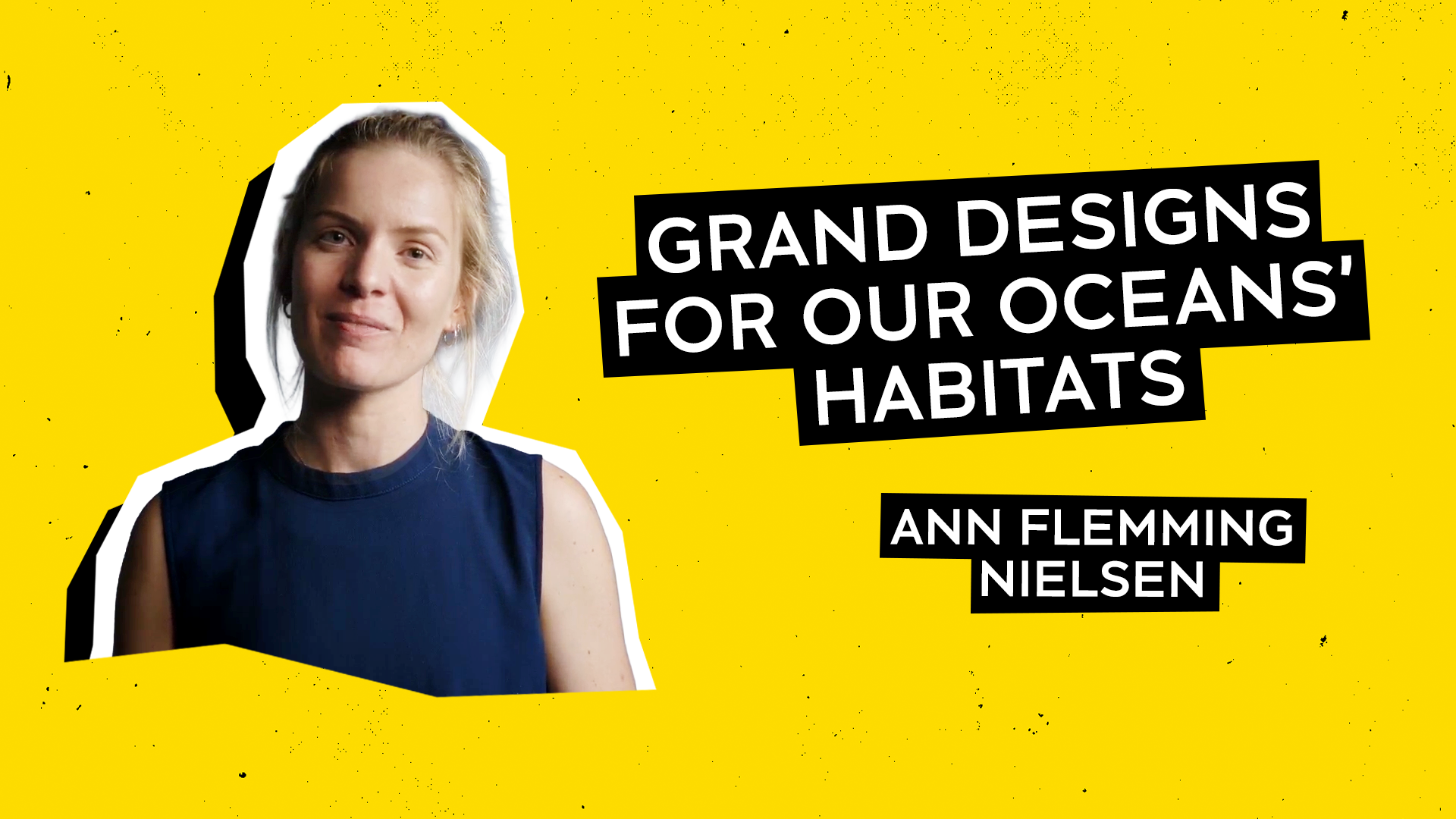
Grand designs for our oceans' habitats with Ann Flemming Nielsen
There is a tragic irony at play. In the pursuit of building the homes we live in, the cities we meet in, and the infrastructure that connects us, we have caused severe declines of ecosystem engineers, which function as exactly that for the underwater world. But there is another side to this irony...
Our coastal marine habitats are suffering from the man-made degradation of climate change. From coral reefs to seagrass meadows, oyster reefs and kelp forests, these ecosystems are vital nurseries for marine life and natural coastal buffers against storms and we’re losing them at a rapid pace. But all is not lost. We have the tools and the know-how to restore these environments.
Tune in to learn from Ann Flemming Nielsen, a PhD student at the Centre for Marine Science and Innovation, on how we can use human engineering to build back the coastal environments in severe decline and give nature a chance to recover.
Transcript
Ann Flemming Nielsen: The work that I'm focusing on is we have an area where we know that there used to be a habitat, reef or sea grass meadow, and then we want to bring it back, but the conditions might not be quite right for the habitat to come back. When the original seagrass was there, the meadow that was formed would sort of be able to stabilise the sediment or dampen the waves that would be doing all of these things that just creates an environment that really facilitates that new shoots will grow, and then it's gone. All of those things that it did like are kind of gone with it. So now we have sediment that moves around, or, you know, you have really a lot of wave action as well, which means that new sea grass shoots cannot grow, and you kind of get these feedback loops. And it's that interface that I'm really interested in working with, because I'm trying to see if it's the lack of a meadow being there that means that the sea grass shoots cannot come back. Knowing what we know about how to stabilise sediment and how to dampen waste, which we have a lot of experience in doing in our urban environment, when we're building harbours or when we're building coastlines. Can we use that knowledge to try and mimic what the meadow is doing? Is that when we put out seagrass shoots, the conditions are right for the shoots, and that means that they can establish and they can grow roots, and eventually they will grow into a meadow that can then do these functions again, and at that part we can take our hands off of it and say, okay, the meadow is back.
Benjamin Law: G'day. You're listening to One Big Idea presented by the University of New South Wales, Centre for Ideas. I'm writer and broadcaster Benjamin Law, and I can't wait to talk to seven incredible women whose research and ideas are changing the game in fields from the environment to education, quantum physics to cancer research.
Now, First Nations people on this continent have been sharing ideas and knowledge for 10s of 1000s of years. They're humanity's first astronomers, first agriculturalists, first architects, first inventors. And together, those indigenous nations constitute the oldest continuing civilization the planet has ever known. So we're really grateful to the elders of the Gadigal, of the Eora nation, where we're recording this podcast, that we can continue sharing knowledge here on Aboriginal land. And if you're a listener who's Aboriginal or Torres Strait Islander. We extend that gratitude to you too.
Every episode, I'll be interviewing a different UNSW academic learning more about the person behind the big idea, and today, I'm sitting down with a PhD candidate at the Centre for marine science and innovation in the Faculty of Science at UNSW with a background in Environmental Engineering, she has worked on reef restoration around the world, and her research aims to improve restoration of marine habitats. And I can't wait for her to tell me how urban engineering could help bring back our coastal marine habitats by mimicking their functions in restoration designs. Anne Fleming Nielsen, welcome to One Big Idea.
Ann Flemming Nielsen: Thank you so much. Ben, excited to be here.
Benjamin Law: I'm excited to hear from you, because the work you do sounds really cool. You know, I think a lot of young people grow up thinking they want to work with the ocean. They want to be a marine biologist, they want to be an environmental scientist. How do you describe the work that you do to a complete stranger at a party?
Ann Flemming Nielsen: Um, that's a good question. I think what I'd say I do is that I work with the habitats that we have in the oceans. I work with the species that we know are forming these habitats, and I'm trying to figure out methods that we can improve their restoration. So when we try and restore these species, the success rate is not always very high. It's cost a lot of money, it's a lot of effort, and it's not always successful. So I'm trying to find new methods for us to better restore these species, and particularly trying to restore these species in areas where, at first glance, you might say, this is not an ideal place to restore. It's going to be really difficult to do it here. That's where I want to say, “All right, what's making it difficult? How can we bring it back here?”
Benjamin Law: I want to know more about what that work looks like and what that involves soon, but before we move on to that, I'd like to know more about you actually, and how you got into this work and why this work appeals to you, like were you always an ocean kind of kid growing up? Were you fascinated by the environment? What kind of kid were you?
Ann Flemming Nielsen: I think I was absolutely an ocean kid. I come from Denmark, where there is a lot of ocean. You're always very close to the ocean.
Benjamin Law: Very different oceans to here.
Ann Flemming Nielsen: Very different indeed, they're quite a bit colder, but they actually do have, like, when it comes to the habitats that we're looking at or the habitats that I'm researching, they are quite similar, like they have sea grass as well, and they have, you know, macro algae forests as well. But similarly, are experiencing problems with the state of them. Yeah, I loved being in the ocean. I have a my my dad was very much water person as well. My mom, not so much, but she's, she's slowly getting there.
Benjamin Law: I respect that, because, as you said, the water is cold, right?
Ann Flemming Nielsen: The water is indeed very cold. And, yeah, I've just, I've always wanted to get below the surface see what's there. As a kid, would just love to collect seashells. Was ironically terrible at swimming, but I learned it eventually, yeah, and I think I've always wanted to work with nature. I find that very fascinating.
But I really, I got into engineering because I really love the concept of, like, trying to be very solutions oriented. Like, what knowledge do you have, and how can you apply that to something very specific and try and work out solutions? So I got into environmental engineering because that's how you use engineering to sort of try and fix things around nature.
Benjamin Law: A lot of us go through a big marine biology phase. A lot of people might be listening to this thinking, Oh, that's the kind of career I want to be down there in the sea. A 12-year-old is listening to this thinking, I want to work in environmental engineering. What kind of advice would you give those, especially young people, or maybe people thinking about a career pivot into your field? What do you want them to know?
Ann Flemming Nielsen: I think the important thing to stress is, like, there's so many different ways that you can work in the ocean. So if you're really interested in working with the ocean and improving sort of the conditions of the oceans, I'd encourage people to try and figure out what they are passionate about and what they what kind of things that they love doing, because there are many different ways that you can work with the ocean if you really love like working out problems at the computer or writing code and or software like there are many ways in which that skill can be applied to things that the ocean needs.
Or if you really love working with people and advocating, you can be someone that, like, arranges, beach cleans, or there's just depending on what types of activities that you really love to do, you can find a way to see like, Oh, but I also really care about the ocean, and I want to work with the ocean, then you can absolutely find a place where those two overlap.
Benjamin Law: Can we delve into that? Because for a lot of people who think about environmental restoration, environmental protection. We might not necessarily think of engineering as something that is an intersection of those kinds of projects. Can you tell us what environmental engineering actually is?
Ann Flemming Nielsen: Environmental engineering is a very broad field. It works with all sorts of different things, like it can work with waste management, drinking water supply, waste water cleaning. It can also work with pollution, which is where I specialised, so that can be air pollution, water pollution, soil pollution. So it's basically just trying to figure out it's very much working at like the interface between nature and humans, and particularly like our societies and our cities, how do we best exist at that interface and trying to work out the solutions to some of the problems that might occur when we are being in nature.
Benjamin Law: That makes sense to me. It also sounds really tricky when you're working in environmental engineering and the sea or the water. Do you know what I mean? Because, like, that is always going to be such an interesting challenge. Tell me what that looks like, that world of environmental engineering with water, add water?
Ann Flemming Nielsen: Yeah, absolutely. Well, I think, actually, for a long time, I wasn't sure that link wasn't necessarily very obvious to me. So I got more into marine science when I between I was doing my studies, and I wanted to have, after my studies, a bit of a I wanted to go in the field, and I wanted to go more out into the world. And I had some projects where I was working a lot in the lab, and they were very exciting, but I wanted to be in the environment. So a bit spontaneous, I decided to travel to the Seychelles to work on reef restoration there, and reef monitoring, and that was just work of diving every day, monitoring the reef, seeing how they were doing.
And that was such amazing work to be at a reef every day, to dive every day, but it was also slightly heartbreaking, because that was really where I saw the impact that we could have on the ocean, and it was hard to sort of monitor all of this every day, and just seeing that it doesn't look that good.
Benjamin Law: You get to spend a lot of time underwater. Can you guide us through? Paint us a picture of what it looks like down there when you're doing your research and work? Yeah.
Ann Flemming Nielsen: So in a normal day of work, we we get on the boat, and we put on our scuba gear, and then we jump into the water, and then you're just met with this beautiful green meadow that just have these amazing leaves, and it's full of life, full of fish, small squid. And then you just, you dive down and. Then you start your restoration work, and then then that is your day.
Benjamin Law: Full of squid, full of fish. What about other kind of creatures that might be more scary? I know a lot of people have an aversion to going into the water because of sharks, manta rays, stingrays. Have you ever had any gnarly experiences or run ins with the inhabitants down there.
Ann Flemming Nielsen: I've had a few well, we live in we live in this. We're obviously going into this space where this is the home of other inhabitants, and we, of course, want to respect that life as like as much as we can. And sometimes we have little run ins with them. I have tried. We work in estuaries. And obviously bull sharks like estuaries as well,
Benjamin Law: Right
Ann Flemming Nielsen: I've never had a direct run in with one, and I would appreciate to not have that.
Benjamin Law: Yeah, if any bull sharks are listening,
Ann Flemming Nielsen: Yeah, you can, you can just stay, stay a safe distance. Now we, we did see some like the we saw the fins of some not too far from our site right before we had to dive and, and we had a really good we obviously phoned our dive officer, who's in charge of safety and we have shark shields that we can put on that provide a bit of safety. And then we have a great chat on the boat. Was like, Are people comfortable going in? And obviously they were far away. So we did take a lot of safety measures into account. But then we also came to the conclusion that we are in their home. They have always been here. We just happened to see them that day, but we're still like, we accept that we are being in the same space as them. And it's actually like an amazing thing, like they are, they are living there. That's their home. It's doing what it's meant to be doing.
I think another one is, a lot of the work that I do is digging into the sediment. And there are a lot of animals that live there, and they can be very hard to spot.
Benjamin Law: What in the sediment itself?
Ann Flemming Nielsen: In the sediment itself there. It's full of life. And I'm digging a lot, because I'm obviously digging down the mats and stuff. And I got shocked by, like, an electric ray.
Benjamin Law: What? You got an electric shock from from an electric ray. Like we've heard of electric eels. Yeah, what's this other creature that I have not encountered and don't want to
Ann Flemming Nielsen: Yeah there are coffin rays and numb rays. They can give like quite a powerful electric shock, and they're very hard to spot. So obviously, if I see one, I would not want to disturb it. I had not seen this one, and it gave me quite a powerful shock. And it's not the most comfortable thing, but obviously I was intruding on its space. That's what can happen.
Benjamin Law: You sound very comfortable, maybe too comfortable with what happens you got stung like an electric shock from from a marine creature. Does that leave quite a wound?
Ann Flemming Nielsen: No, I it was quite interesting, actually, because I could feel it in, like, I got stung in one hand, and then it kind of like travelled through and I could feel it in the other one. And then, because I was wearing, like, my compass was a bit tight, so, like, my one hand swelled up a bit. But, you know, we just it was right at the end of the dive. So, you know, we surfaced right after, and I was able to get on the boat, just monitoring for a bit. And I was like, No, that's fine. And then we went back in.
Benjamin Law: Wow, you're so casual about that your career sounded so dreamy to me until you brought up rays that could shock you with electricity.
Ann Flemming Nielsen: It's definitely...I find it a very interesting part of my job, and it means that it's absolutely not boring.
Benjamin Law: So lead us through what you were actually seeing. You know, you get down there, and it sounds like a beautiful way to, you know, spend your work and research life down in the sea. But in terms of what you were witnessing, I think a lot of us hear about coral reef decline. What were you seeing?
Ann Flemming Nielsen: I was seeing areas that had experienced quite a bit of bleaching and then coral decay. So that is, you know, if they're bleaching, that is an event that they can recover from. But if they bleach for so long that they actually pass away, or, like the corals die, then that way you'll start to see this deterioration of the reef. So it's basically just it crumbles. You get the corals die and a storm comes in. So it's just like this crumble of coal, rubble everywhere. So it can be very disheartening to
Benjamin Law: It sounds like a graveyard.
Ann Flemming Nielsen: Yeah, it really does. It has, like, it has a bit of that ambience as well, because you'll see, like, a few fish that are still hanging around. But it's not the life that you just kind of feel like you knew used to be there. So I think witnessing that my I just really wanted to do something about it. One is really important to monitor these things, to see how it's going. But I could feel that I really wanted to work with, how can we change this trajectory? How can we work with these areas that are in decay or used to be full of life and now aren't? How can we bring that back?
And I think that's when I was like, oh, that's how I want to apply my environments engineering, if I can find a way to guide it towards marine science, and use, like, the engineering mindset and the engineering ways of doing things, and apply that to ocean restoration. That was sort of just like it was a bit of a light bulb moment. I was like, oh, that's what I want to be doing. And then that's how I got into this field where I see that you can work with, like ocean restoration. And. In science from an engineering perspective.
Benjamin Law: So how can we change this trajectory? Because we know from the news and those of us who live close by the water that reefs and ocean habitats, they are degrading, but here you are from an environmental engineering background, saying that there can be interventions to help. So with your PhD research at the moment, what's that focusing on? And how are you shifting the trajectory?
Ann Flemming Nielsen: There are heaps of ways, or heaps of different things that you can do for example, like marine protected areas or reducing some of the stresses that are causing this decline. But the work that I'm focusing on is we have an area where we know that there used to be a habitat that used to be some sort of reef or sea grass meadow, and then we want to bring it back, but the conditions might not be quite right for the habitat to come back, and that can be for many different reasons.
But one reason might be that when the original habitat, let's say sea grass, the meadow that was formed, would sort of be able to stabilise the sediment, or it could, like, dampen the waves that come in from storms. It would be doing all of these things that just creates an environment that really facilitates new shoots will grow, and then once it's been removed, and that removal can be because we built something, or there wasn't a time with where the water was a lot more polluted, and then it's gone. All of those things that it's did, like, are kind of gone with it. So now we have sediment that moves around, or, you know, you have really a lot of wave action as well, and the conditions have then sort of changed, which means that new sea grass shoots cannot grow, and you kind of get these like, feedback loops of like, well, you can't put in new seagrass shoots because the meadow is not there, but you also need the shoots for the meadow to actually come back.
And it's that interface that I'm really interested in working with, because I'm trying to see if, like, if it's the lack of a meadow being there, that means that the seagrass shoots cannot come back knowing what we know about how to stabilise sediment and how to dampen waste, which we have a lot of experience in doing in our urban environments, when we're building harbours or when we're building coastlines. Can we use that knowledge to try and mimic what the meadow is doing? Is that when we put out sea grass shoots, the conditions are right for the shoots, and that means that they can establish and they can grow roots, and eventually they will grow into a meadow that can then do these functions again. And at that part we can sort of take our hands off of it and say, like, okay, the meadow is back, and it's doing its thing.
Benjamin Law: You know, as you're describing this and as you're describing the degradation of the meadow, once the sea grass kind of gets removed or degraded, it creates a feedback loop where it's actually hard for it to come back. I imagine that a lot of us think, when it comes to environmental protection, the instinct is, well, leave it alone and then let it just do its thing. But what I'm hearing from you is that there is a role and a responsibility for environmental engineers to play a part in not just leaving it alone, but what an intervention to help it? What does? What does that intervention look like?
Ann Flemming Nielsen: Yeah, I think there are definitely areas where living alone and just completely hands off is a really good solution. We see that in many marine protected areas where hands off is just a great way to get these areas to bounce back,
Benjamin Law: To let it heal,
Ann Flemming Nielsen: To let it heal, let fish come back. That can be a really, really powerful intervention. But we also do see areas where even when we do take hands off, it just does not quite come back and it, or at least it does not come back in a time frame that kind of works from like, from what we're seeing with like, loss of nature and loss of biodiversity.
So in that case, I feel like we have, in everything that we have built and like our cities and infrastructure and stuff, we have caused a lot of decline in nature. And I think if we can use the same skills and knowledge that we learned there to apply that to help bring back nature again. I think that can be something, I think if we can use the knowledge and skills and sort of take on a responsibility of bringing back nature in these areas, particularly very close to our cities. Because I think sometimes we get this idea that it's like, it's cities or nature, yeah, and I think that it would be a lot more beautiful if we can have nature in our cities. And we are learning so much about how to do that on land, we're quite good at, like, finding ways to bring nature into our cities on land.
But it would be incredible to also see that nature is able to co-exist with us, even in our cities and in our in our seas and our oceans.
Benjamin Law: So let's get more specific with the PhD project that you're working on at the moment. What's the focus there? And what kind of intervention are you looking at for that?
Ann Flemming Nielsen: So I'm working with many different many different ones. I'm working with one where I'm trying to stabilise the sediment. That's an area where we have identified that moving sediment is what is making the sea grass just not come back. Because that's very important. Obviously you need to identify what specifically is causing a lack of recovery. So I'm working with these structures that are designed to stabilise sediments. There are different ones. One of them I'm using is, like coconut mats. So they they sort of just mimic this, like, dense root system that the sea grass is making underneath the sediment, which is obviously not there when we put in the little shoots.
So I dig in a coconut mat, and that can, like, stabilise the sediment. In some cases, a lot of the interventions that we can work with is like mimicking some of the physical aspects, like sediment movement, wave action. But I'm also really interested in seeing, because the reef does so much more. There's a lot of biogeochemistry going on in the reef, and I'm really interested in seeing, can we actually mimic that as well? Can we mimic more than its structures, like more than just the leaves and the roots? Can we actually mimic some of these biogeochemical functions and some of the like nutrient cycling and stuff?
And so we've recently started a new experiment, when it where we are working with using biochar, which is a form of charcoal. So we're trying to see if we can use this product, which has been used in, you know, on land, for improving crop yields and stuff. Can we introduce this to our sea grass as a way of improving the sediment quality and see if that improves growth as well? So there's really, like, a lot of different ways where we can try and figure out what functions can we mimic of a reef, and which ones would be beneficial for reestablishing them.
Benjamin Law: And how does that, how does that help? Essentially fake seagrass, is what I'm hearing. How does that help the meadow? Or how does that help the species in the meadow?
Ann Flemming Nielsen: So we're interested in trying to see if we could potentially, like, put out this artificial sea grass. Have that be a bit of a break wall if you have areas where wave action means that sea grass is not really establishing well. And then we can put, like the little artificial sea grass, either behind them or among them.
Benjamin Law: Right, so this kind of sea grass, astroturf, in a way, is kind of forming a shield to help the actual sea grass to its thing
Ann Flemming Nielsen: Absolutely so it can just decrease the wave action, so that the new shoots are really just sheltered as the meadow would normally do. But it's also because if you want to shift these areas back the areas that are kind of stuck in conditions that's not quite right, what you can do is just re establish at a really high density. Like, if you were like, if we can bring back the entire meadow, that would be great, but that's a lot of work, and we don't always have the donor material, because we need the shoots from somewhere, and taking that from another meadow, we want to limit that impact as much as we can, because we don't want to move the problem from one side to another. So instead, we want to take as little donor material as we can. But if you plant them really sparsely, they're really vulnerable, because they're very exposed. But if we can artificially increase the density of what we're putting in, we suspect that they would have a bigger chance of survival. And then once they've, like, well established we can remove the artificial sea grass, and then they could take it from there.
Benjamin Law: Wow, it really sounds like the work that you and your colleagues do involves, I don't know, using your bodies, but also using a lot of creativity as well, like thinking laterally. If someone wants to get into your field, what kind of skills or traits do you think they need to bring into this realm?
Ann Flemming Nielsen: That's a good question. I think absolutely you're right. Creativity is a big thing. I think there are many ways of being creative, but absolutely being a scientist, I think is one of them, because the whole idea is that you have to come up with solutions for things that we just don't know. So you really have to be quite creative and very curious.
It's like one of those things where if you find out that there's something that is not known, but it would be helpful to know, if you get that like spark to want to go and find that out, then I think that's absolutely like a scientist kind of mind. I will also say, I don't know if it's like a requirement, but I will say I work with some absolutely amazing people, and I think one of the personality traits that I see across people that are in this space is that there's just a big like positivity, people are very optimistic and also very like energetic and just really with a big passion to solve some of these problems that we're facing.
Benjamin Law: That's really interesting to hear positivity and optimism, because when I think of what's happening to marine habitats. It would be really easy to sink into despair, you know, reading scientific reports, reading news articles about what's happening to our oceans as well.
Ann Flemming Nielsen: Yeah.
Benjamin Law: How do you keep yourself from feeling that despair or lack of optimism?
Ann Flemming Nielsen: Once you feel like you can do something about it, it's harder to fall into despair, because instead you've you fall into action. So you hear about these problems, and you're like, Yeah, that's a problem, but I feel like I can do something about it. And then you just become motivated instead, and it gives you that drive.
Benjamin Law: That feels like a good lesson for your line of work, but a good lesson for life in general, right?
Ann Flemming Nielsen: Yeah,
Benjamin Law: Is there such a thing as a typical day in the line of work that you're doing.
Ann Flemming Nielsen: Oh, the days are very different. I'll say, like a typical there are typical desk work days where, you know, I'll be at my desk and I'll be looking at all the data that I've collected. I'll be looking at all the different like health metrics that we're measuring for the sea grass and other species. And we're trying to figure out, does this treatment work better than the other treatment. And then I'm trying to analyse that and use that to say, like, well, where should we go from here?
And then there is the normal in the field days. Which are my favourites.
Benjamin Law: This is you in a meadow.
Ann Flemming Nielsen: This is me in a meadow. This is me with scuba gear on underwater. That's my happy place. That's very cool. Those are very they're very long days. Usually get up very early, and then we get all the gear ready, all the equipment. There's a lot of equipment with this, like active restoration work. Then we get all the diving gear. We get the boat out, and then we're probably ready to dive at our first dive, around eight o'clock. And then we have, throughout the day, sometimes more than six hours in the water, like more than six hours, is underwater that entire day.
Benjamin Law: You're beaming. As you say this, you obviously love this part of your
Ann Flemming Nielsen: I love this part of my work. It's the best.
Benjamin Law: And when was the last time that you were doing work, either at the desk or in the field where you're like, Oh, I think we've just had a breakthrough moment. Something cool has just happened.
Ann Flemming Nielsen: I guess, like my recent trip to where I'm doing all of this restoration, was we've had one line of experiments that sadly did not work when we are restoring in areas where they are going to be difficult to restore. There are going to be a lot of times where you set up an experiment and it does not work, and then you need to get back on, back to the drawing board. But on our last trip, when we had switched from one structure to using these mats, it did look quite promising, and suddenly we're like, oh, we're not seeing as much burial as we use to. So I was like, Oh, I feel like we are perhaps on the right track. That's always an amazing to see, like, oh, we might actually be onto something here. And then also, sometimes I will see that a little sea grass inhabitants are moving into my artificial sea grass that we’re using.
Benjamin Law: Oh, you've built a house, and the tenants have come.
Ann Flemming Nielsen: I know that is, that was, I've seen a little like a little seahorse that was hanging on to an artificial leaf. And that was like, oh, I might be doing something right, if it, if it feels at home, and it saw these artificial leaves, and I was like, because they hang on to the leaves with their with their little tail, and it's so adorable, and it's just hanging on to that leef. I was like, Oh, well, if you think this fits, then then it might actually fit.
Benjamin Law: What I hear is, you're solving the housing crisis.
Ann Flemming Nielsen: The Marine housing crisis. We've seen, like a few different ones, little pygmy leather jackets as well, are hanging around in there. So I'm like, I'm so happy. You guys love hanging out here. It was very interesting with the little seahorse, because the artificial leaves are black. They're made of plastic, which is good because then they last a long time, and we obviously remove them when we're done with the experiment. And that's like, that's quite dark. And so the seahorse had, like, changed its colour to match this darker sea grass, which is very sweet.
Benjamin Law: Oh, that's very, very cool. It sounds like a big motivating force as well, to see things like that happen.
Ann Flemming Nielsen: Absolutely yeah. And also just to see like when, when you... another really motivating thing is when we do restore these patches, even though it's it, it's small patches at a time this, this work takes a really long time and a lot of effort and a big team as well, but to start your day with these shoots that need to be planted and to put them out into a patch, and then at the end of the day, you see that there was not sea grass here when I started, but there's sea grass here at the end of the day. That is such a motivating factor like then, then that's just a very good day.
Benjamin Law: Can we forecast into the future, so say, in 10 years from now, and of course, by then you'll be Dr Ann Flemming Nielsen, what would you have liked to have seen change? How would you have liked your work to have changed the situation?
Ann Flemming Nielsen: I think I would love if my work can contribute to how we can just be better at living at this interface between humans and nature.
If our cities, and even our quite big cities, can just co-exist with nature in a more obvious way, where we design cities in a way that really works for us humans and also works for nature, because obviously we're really dependent on nature.
So if you can just find ways to co exist in a way that's very obvious, like you design this harbour in a way that works for humans, and you design it in a way that works for nature as well. And obviously the importance of existing in a way that works for nature as well. It's not new, it's, it's, it's something like that's like deeply rooted in many indigenous cultures, and where it's so obvious that, of course, we rely on nature, and of course, everything that we do should take nature into account.
But I feel like that is, in some areas, a lost art, and it's something that we need to bring back, especially into our major cities. So I would love if that if that's where my work would be heading.
Benjamin Law: Well Ann Flemming Nielsen, thanks for reminding us that cities don't necessarily need to be in opposition to nature, that they can be, hopefully the same thing. Thanks for sharing that vision with us and for your time as well.
Ann Flemming Nielsen: Thank you so much. Ben,
Benjamin Law: Thanks for listening. This episode was brought to you by the Centre for Ideas. For more information, visit UNSW Centre for ideas.com and don't forget to subscribe wherever you get your podcasts.
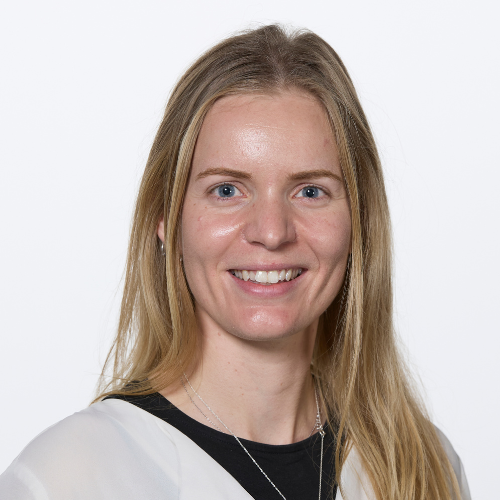
Ann Flemming Nielsen
Ann Flemming Nielsen is a PhD candidate at the Centre for Marine Science and Innovation, at the School of BEES, in the Faculty of Science at UNSW. She has a background in environmental engineering and has worked on reef restoration around the world. Combining these two, her research aims to improve restoration of marine habitat forming species in areas of severe decline, by designing and testing innovative solutions that augment how natural habitats act as ecosystem engineers.