In conversation with Peter Doherty: Nobel laureate in Medicine
What you should get if you’re in a good science lab is friends, open discussion, open dialogue, and challenge. Science is moving forward… as much about refutation as anything, showing you’re wrong.


2026 David Cooper Lecture
Peter Doherty was made famous worldwide when he won the 1996 Nobel Prize in Medicine with Swiss colleague Rolf Zinkernagel, for their discovery on the way the body recognises and rejects foreign molecules through killer T cells. This revelation has led to ongoing improvements in treating cancer and organ transplants. Peter is also recognised and respected for his ongoing efforts to share his love of science and impart his insatiable curiosity for learning with the world.
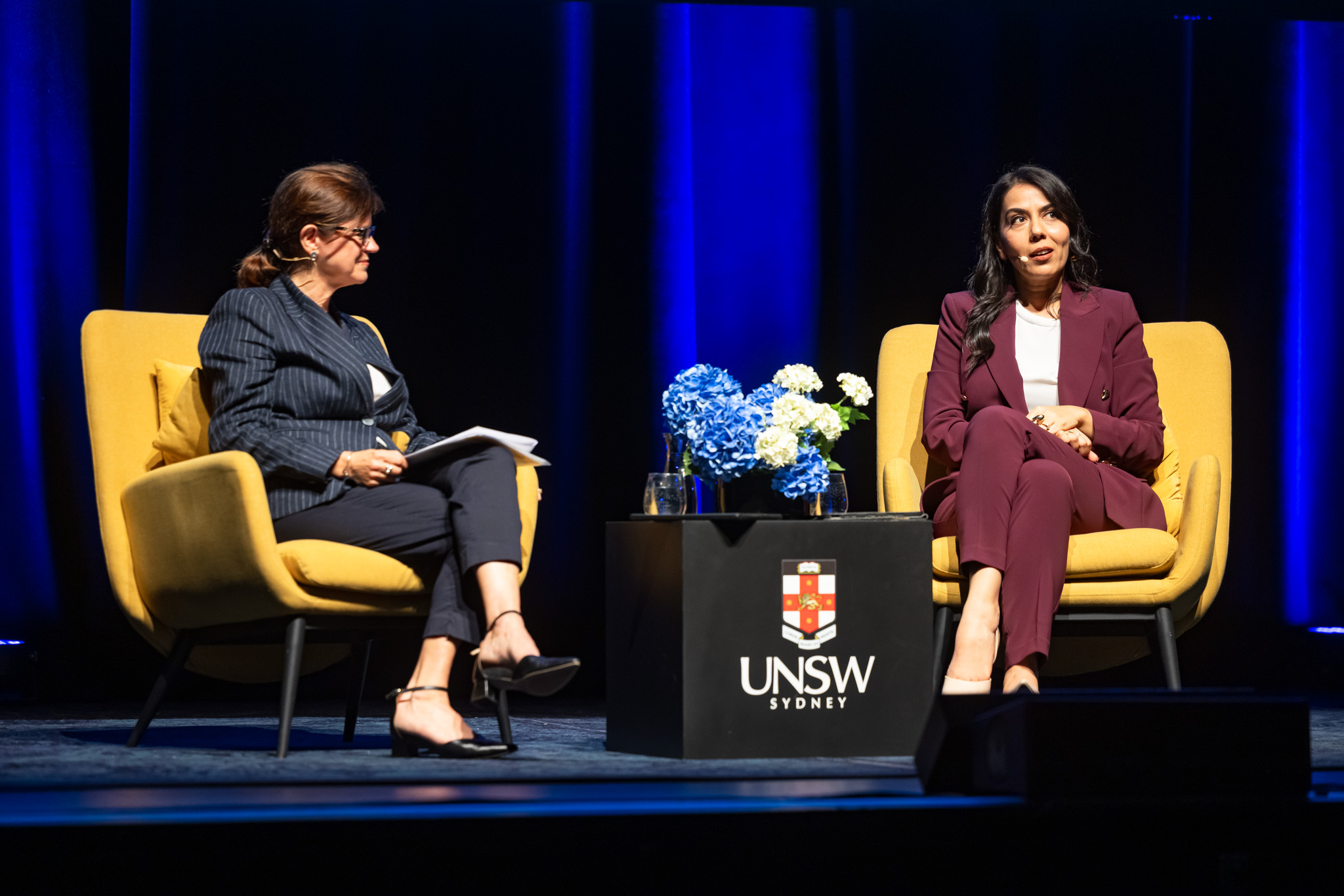
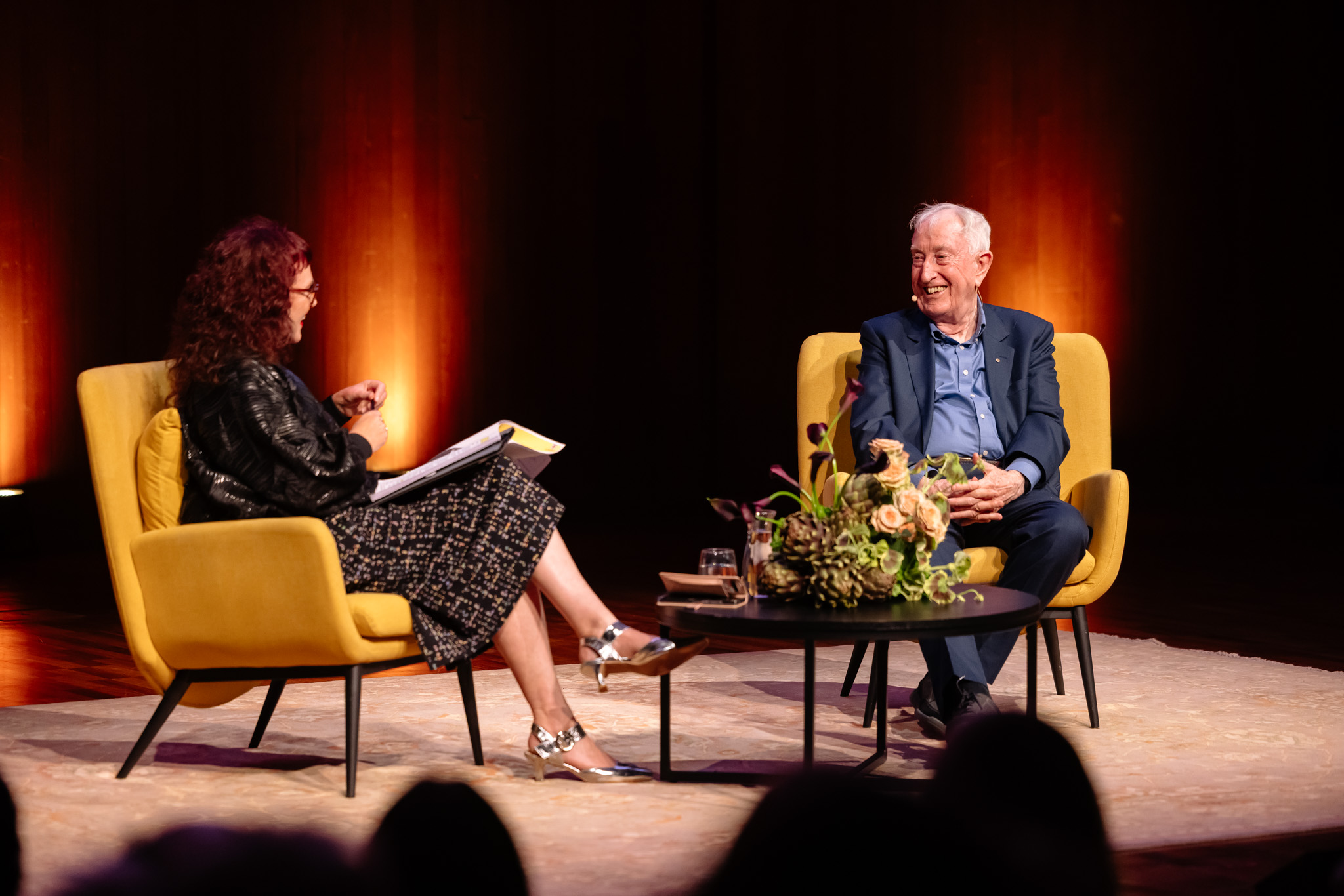
The 2026 David Cooper Lecture celebrated the 40th anniversary of the Kirby Institute by hosting Australian immunologist and Nobel laureate Peter Doherty in conversation with journalist and presenter, Natasha Mitchell. Together, they discussed the most challenging medical issues of our times, Peter’s fascinating career and inspirations and how any citizen scientist can follow in the footsteps of this renowned laureate professor with an evidence-based worldview.
Transcript
Natasha Mitchell:
Look at you all, what a beautiful sight. How are you feeling tonight? Feeling good? Are you ready for a fine conversation? It's a very special event indeed.
Good evening and a very warm welcome from me to the special event that is the 2026 David Cooper Lecture.
Tonight is brought to you by a mighty trio of institutions here on this wonderful campus. The UNSW Centre for Ideas, the Kirby Institute and UNSW Medicine and Health.
My name is Natasha Mitchell. Some of you might know me as host of the daily live event show on a radio network called ABC Radio National. It is called Big Ideas. You can find it on the ABC Listen app.
And we are here to share big ideas, to share stories, to share knowledge. And by doing that, we are, I think, continuing a fine tradition that has happened in this place, on this country for over 60,000 years by traditional custodians, the first scientists, the Bidjigal people who continue to build a living, evolving, growing body of knowledge. And I pay my respect to their knowledge keepers, holders, elders, and to all Aboriginal and Torres Strait Islander people here tonight and forevermore.
I'm super delighted to be in conversation tonight with our special guest, Professor Peter Doherty, who I'll introduce a little more fully soon. He's won a few accolades for his science, yes, but he is also one of Australia's finest storytellers of science. He is a fabulous communicator.
So, we're in for a fun night. Tonight's event also honours the legacy of another Australian leader, a trailblazer in science, in infectious disease, and its elimination, the scientist and HIV clinician, the late Professor David Cooper. David was founding director of the Kirby Institute.
The research he led and the institute he helped create and build and grow has saved countless lives here in Australia and worldwide. And tonight, we are celebrating its 40th anniversary. So, to kick us off, the Kirby Institute's current director, Scientia Professor Anthony Kelleher.
He's only the second director in the Kirby's four decades of existence. He took over from his longtime colleague and friend, David Cooper. Tony is also an internationally renowned clinician scientist whose career is dedicated to addressing the clinical challenges in HIV through research in immunology, in vaccines, in clinical trials. He's an extraordinary scientist and leader. Please give Tony a very warm welcome.
Anthony Kelleher:
Thank you very much. Good evening and welcome. It's a pleasure to welcome you here to this 2026 David Cooper Memorial Lecture, which will be delivered by Professor Peter Doherty.
As you just heard, my name's Tony Kelleher. I'm the current director of the Kirby Institute. I'd like to acknowledge our co-hosts, the Centre for Ideas and the Faculty of Medicine and Health here at UNSW and thank them for their partnership in bringing this important occasion together.
I'd like to welcome the Honourable Michael Kirby, our patron, the Honourable Peter Baume, a life governor of the Kirby Institute and the Chancellor of UNSW, Warwick Negus, along with many other distinguished guests who join us tonight. It's a particular pleasure to welcome Ilana Cooper, David's daughter, who is in the audience this evening. 40 years ago, David Cooper, the inaugural director of the Kirby, and a small group of clinicians and researchers began to build the Institute in response to confronting what was then the poorly understood HIV-AIDS epidemic.
David's approach to that challenge was before its time. It was grounded not just in scientific excellence but in compassion and genuine partnership with those most affected. This approach has become the foundation of the Institute.
Today, the world presents medical research with new and evolving challenges. Climate change, inequitable health systems, discrimination, misinformation and an increasingly tight research and foreign aid funding landscape, which shape not just the infectious diseases threats we face but also how we confront them. Despite knowing how to treat and prevent a range of infectious diseases like HIV and HPV-driven cervical cancer, these diseases are now at epidemic proportions in our region.
Our researchers at the Kirby are working with health systems and community partners in places like PNG and Fiji to help develop effective responses. This work carries on David's vision. It also reflects UNSW's commitment to progress for all.
Hearing from Peter Doherty tonight could not be more timely. His intellect and generosity can inspire us to keep pushing the boundaries in response to complex challenges. His work in 1973 with Rolf Zinkernagel that won him the Nobel Prize was only possible because of his and Rolf's ability to think outside the box and not be bound by convention or expert opinion.
I first met Peter about 20 years ago when he was visiting the University of Melbourne from St. Jude's. I was a relatively junior researcher at the time and I'd been invited with David Cooper to go to Melbourne Uni to meet with Peter to start putting together a large grant. David had cancelled at the last moment and so two hours after getting on the plane and getting the message from David, I was in a small tute room at Melbourne University with a bunch of impressive senior scientists and Peter Doherty.
After a quick round of introductions, Peter turned to me and said, okay, Tony, what are we going to do to get this grant across the line? So, there I was in this little tute room with chalk covering a blackboard in diagrams. He was this Nobel laureate I'd met five minutes earlier getting straight into science with a junior researcher, asking questions, testing ideas.
He gave me an opportunity. He respected my opinion and he challenged me. Over the years I've seen Peter do this with others many times.
Peter's discoveries and scientific acumen are undeniably inspiring, but he is inspirational in many other ways. He is a brilliant scientist and an extremely generous person. His reflections at this particular time are bound to provide us with guidance.
So please join with me in welcoming Peter Doherty to the stage along with Natasha Mitchell.
Natasha Mitchell:
Just your average fireside chat environment. Great to have you here.
Peter Doherty:
Well, thank you. I think we should reassure the audience that the lecture is our conversation. You're not going to get another hour on killer T-cells after this. So relax.
Natasha Mitchell:
We get to have a lovely chat. For those of you who haven't seen Peter Doherty speak before, he is an immunologist and pathologist with a career spanning more than 60 years. He is a laureate professor and patron of the wonderful Doherty Institute at the University of Melbourne, which of course also had a starring role in many of our lives during COVID.
Peter won the Nobel Prize for Physiology and Medicine with his Swiss colleague Rolf Zinkernagel in 1996 for work they did as young upstarts right here in Australia at the ANU in the early seventies, as we heard. And I shared a stage with them both earlier this year and it turned out that Rolf was into singing opera and no one else wanted to share a lab with him. So, this is how Peter and Rolf got together.
Peter obviously had a tolerance and a love for opera perhaps, I think. And so it was that they pursued what became their Nobel Prize winning discovery, the radical and transformative discovery of the way our immune systems, killer T-cells, recognise and target foreign molecules in our bodies, like viruses, and also distinguish between self and other in our bodies. Such a fundamental discovery, much more to it, of course, but it did transform our understanding of our immune system in incredibly powerful ways that subsequently has had an impact on vaccinations, cancer treatments, organ transplants, and so much more.
That was foundational knowledge. And Peter also got to have the glory of being Australian of the Year back in 1997 and really embraced that role to become a public communicator as well. So, I commend his books to you, like The Beginner's Guide to Winning the Nobel Prize.
Who's an early career scientist here? That is a book I commend to you. A Life in Science, that was it.
Sentinel Chickens, What Birds Tell Us About Our Health and the World. Pandemics, What Everyone Needs to Know. The Knowledge Wars, an excellent book which I think we'll unpack a bit tonight.
The Incidental Tourist; An Insider's Plague Year. And more recently, and this is just an indication of what an incredibly polymath mind he has, Empire, War, Tennis, and Me.
Peter Doherty:
I'd buy the latter one. It's more fun. If you're going to buy any one, not The Beginner's Guide.
Natasha Mitchell:
You knew David Cooper?
Peter Doherty:
I knew David Cooper. He was a colleague, and as Tony said, we met really because of starting, David's insistence, though he didn't turn up to that initial meeting, developing a big grant together on virus infections and viral immunity. I was in influenza more, David in HIV, and Tony, of course, is David's successor.
He's a wonderful guy, David, a great doctor, empathy, generosity, enthusiasm, and a kind, kind man, and also a terrific scientist, and he died too soon.
Natasha Mitchell:
All traits that you're known for, I have to say. Not dying too soon, though. You're not going anywhere.
Peter Doherty:
Only the good die young.
Natasha Mitchell:
I was thinking about traits. I remember talking to the great Harvard scientist, Jerome Kagan, who did the foundational work around temperament, and I don't know whether you've caught the latest episode of 7 Up, which is, for those who haven't watched 7 Up, documentary tracks children from age 7 to age 70, and they've just released the 70-year-old document, you know, where they've all hit 70. An incredible social experiment on our screens, and so I'm curious to know, do you recognise the boy that you were in the man that you are now?
Peter Doherty:
Well, I'm not sure I recognise the man I am now, but I think the boy I was then was probably a bit of a pain in the neck, really, very opinionated, all-knowing, but also, in other ways, quite shy. It's a different territory, really. Do we recognise our younger selves?
Natasha Mitchell:
Tell me about the boy you were.
Peter Doherty:
Well, I grew up in a working-class suburb of the west of Brisbane, near where that red-headed lady in politics emerged with a fish-and-chips shop, so I understand a little of what she's about, I think, because I know that culture. The local pub, for instance, had a sign up on the lounge bar, "gentlemen must wear singlets in the lounge bar". It was a classy place.
I went to -
Natasha Mitchell:
Public school educated.
Peter Doherty:
- Public schools, and this was just after the war. I mean, I'm born in 1940, and we used the same textbooks my mother and father had used, quite frankly, all jingoistic for the empire, and then I went to a state high school, first year the school ever started.
I went to a school with no older kids, but that was a big improvement on the primary school, and I learned a bit of science.
Natasha Mitchell:
But as a boy, you weren't allowed to study biology. What was that about?
Peter Doherty:
It just wasn't offered as a course.
Natasha Mitchell:
So, only girls – oh, it wasn't offered, right.
Peter Doherty:
Well, I've always said facetiously that boys were physical and girls were biological, but I had the sense that maybe that wasn't taught in Queensland because the people who ran Queensland that were somewhat conservative may surprise you, and they would be terrified of how that would inflame the male sentiment to learn biology. Now, I only learned by a start of biology at university, and I immediately fell in love with it. It's just so fascinating and so complex.
Physics, physical systems obey the laws of physics. Biological systems evolve, and so they're built on pre-existing systems, which gives it enormous complexity and not necessarily predictable in any sense. That suits me.
Natasha Mitchell:
It's a constantly evolving story. You found your way to biology, though, via becoming a vet, and you could have at this point in your life been a retired country vet in Queensland. You would have spent your career with your arm up a cow's backside.
Peter Doherty:
I did that for about three months in Queensland when I started out. I was a government veterinary officer because I'd gone through the course on a government scholarship, and I had to work for them for five years. My initial job with some other people was to do an enormous bovine infertility survey, which meant palpating the ovaries and the uterus.
It was very hot, and we didn't wear gloves.
Natasha Mitchell:
No!
Peter Doherty:
So, I ended up – I mean, you know, cow poo is pretty clean, actually. It's just grass. And I ended up with one arm being impregnated with chlorophyll, so I had a green hand.
My hand was green, and it was the first time I ever had any money to take girls out for food. I ate a lot of Chinese food with my left hand, actually.
Natasha Mitchell:
I did not plan that question before.
Peter Doherty:
It is true.
Natasha Mitchell:
So, I'm getting some hint as to why you didn't spend the rest of your career as a vet.
But also, from way back, that was never really going to be your path. You were always drawn to science, but also you were drawn to literature. You were drawn to history.
So why science?
Peter Doherty:
Well, you know, I grew up as a very pale-skinned kid in Queensland, and I still have the fact that I have to go to a dermatologist every few months to get stuff burned off. It's the legacy of that. So I couldn't really spend a lot of time outside in the summer, particularly because there were no sunblocks.
They hadn't been invented. And my dad had a product which he painted on the skin which consisted of shellac, Friar's Balsam, and meth spirits. It turned you brown, turned you stiff, because you'd been shellacked.
But it didn't stop you getting sunburned. So, I read a lot. I read anything and everything.
And I read from a very early age. And I just love reading and all sorts of romantic stuff. So I fell in the Scarlet Pimpernel, all the Lorna Doone.
I mean, you may, some of you who are ancient may know some of these books. And then I got into, I was reading simultaneously, about age 15, I was reading simultaneously Jean-Paul Sartre, Ernest Hemingway, Albert Camus, and Aldous Huxley. Huxley had science. He was writing novels about science. His grandfather was the great T.H. Huxley, who defended Darwin. He was Darwin's bulldog. He was offered, he applied for a chair at the University of Sydney and they didn't give it to him, which was very good for science because he defended Darwin back in England.
Natasha Mitchell:
But I mean, right there you're getting the power of story.
Peter Doherty:
Yeah, yeah, absolutely.
Natasha Mitchell:
And how powerful stories about science can be.
Peter Doherty:
So Aldous Huxley then went on to sort of messing around with psychotropic drugs and so forth, which didn't interest me.
Natasha Mitchell:
And you didn't.
Peter Doherty:
But they were important. So it kind of, I was thinking of, my best subject at school was French, but I'd never met anyone French and I didn't see a lot of use for that. And I thought of even pursuing a career in journalism, which would have been at the Brisbane Courier-Mail, which is a Murdoch paper.
So if I'd done that, by now I'd be dead or an alcoholic and totally destroyed.
Natasha Mitchell:
Okay. So becoming a vet it was, but you really wanted to go into research, didn't you? There were problems that you wanted to see solved.
Peter Doherty:
You know, it was the time that people were talking about mouthless and all this sort of stuff and the world wouldn't have enough food. So I decided I didn't want, I was interested in medicine, but I didn't think I wanted to sit, I hadn't, I was 15 years old, I had zero empathy, not to the extent of Donald Trump, but you know, zero. And I couldn't see myself sitting around the doctor's office, as I put it at that time, listening to people whine.
And so I thought, and I went to an open day at the veterinary school. They had an open day where they, you know, they showed you all the stuff. And here was this room full of stuff in bottles that looked fascinating.
No idea what it was. It was the embryology museum, actually, veterinary embryology. And there was a very cute young woman.
It was summer and she looked as though she just had a very short lab coat on and nothing else. And I thought, this is for me. She married one of the lecturers, actually.
She was a very nice woman. And I was just, I wouldn't have even known how to talk to such a person.
Natasha Mitchell:
You end up in Scotland, but let's fast track now to the ANU. You come back to Australia and you...
Peter Doherty:
After five years in Scotland with a wife, a PhD from Edinburgh University.
Natasha Mitchell:
And two, sheep neuropathology.
If you want to know about the disease of the brains of sheep, I'm probably at least as good as anyone else in the room. And it's a very small specialty, I tell you. But give me a sharp knife and a sheep and I can have its head off in about 10 seconds.
It's a bit difficult getting the brain out of, if it has big horns.
Natasha Mitchell:
Still, I mean, dissecting brains is an amazing thing. I remember recording for radio, get this, a brain surgery. Go figure.
But I did. And the drill going into the skull, the most incredible audio for a radio documentary, I have to say. You come back to Australia, you end up at the ANU, you meet Rolf.
This Nobel Prize winning science business, there was a lot of serendipity involved.
Peter Doherty:
Oh, absolutely. I was taking two years off before joining the CSIRO Division of Animal Health, which is where I thought I'd spend my career, studying virus diseases of domestic animals, productive animals. And that's located in Melbourne.
The building's still there, actually. And, in fact, the high security lab, which is down in Geelong, it's the Australian Centre for Disease Preparedness now. It used to be an Animal Health Laboratory, is where I would have ended up.
And I probably would have retired at age 60 and played a reasonable game of golf by now, but that's not what happened. So, I went to the ANU. I was coming back to a senior position.
And I contacted the guy I was supposed to go and work with and said, I'd like to just take a bit of time and learn a bit more immunology. I'd worked with viruses and pathology and various things like that, but I didn't know anything about some aspects of immunology. And I knew there was a very good group at the ANU.
So I said, would you mind if I can find some money somewhere where I'll spend a couple of years there and then come down and work with CS. And that's where we made the big discovery. So, you know, I had no intention of going into an academic biomedical research career.
I was going to work with animals. And we made this big discovery quite serendipitously. And we just, we kind of discovered why we have a transplant system, why we have graft rejection and the nature of what's called immunological surveillance, which is what we see coming through in these new cancer therapies, in fact.
Natasha Mitchell:
Describe the discovery for us, for those who aren't familiar with it.
Peter Doherty:
I won't go into detail about the actual experiment.
Natasha Mitchell:
A little bit of the story, because it was serendipitous. I mean, it involved you having access to a strain of mice that just happened to be available to you.
Peter Doherty:
I got very interested in Edinburgh in what's called inflammation. This is cells rushing in to a tissue. And of course, as anyone who thinks about inflammation now, we know a lot of chronic disease problems are due to chronic inflammatory problems, rheumatoid arthritis and so forth.
I was interested in acute inflammation and how these cells that rush into an infected organ, clear the virus and how they work. And what part of that was specific, that is part of what we call adaptive immunity, the type of immunity we prime with vaccination. That's what I was interested in.
I was working with a fascinating virus system. It's a virus called lymphocytic pyromeningitis. I won't go into detail, but the virus itself doesn't kill the mouse.
The immune cells do. When they try to get rid of the virus, they get rid of the mouse. So, I was studying that.
I did some really interesting experiments, I think. And then Rolf turned up. He'd started training in surgery, but didn't like that.
He'd done an immunology course in Switzerland. He came out to Australia. He was looking around.
No one was interested in employing him. But then he met the professor there, a man called Gordon Ada, Fort Street High School boy, actually. And Gordon said, well, if you can find some money, we'll have you come and work with us.
And so he got some money from the Swiss and came out to Australia. And when he got there, he was very Swiss-German. He'd just come out of the army.
I joked with him, and I don't know if it's true, but when he confronted the professor in the Europe entry, he would click his heels. I've joked with him for years that he had special clicking shoes. I got him out of that.
Natasha Mitchell:
Incredibly, you only worked together for about three years or something?
Peter Doherty:
Two and a half years. And he did sing opera. And the labs were small, and the others found that just too obnoxious.
But I didn't mind. I like opera. I was raised with classical music.
Natasha Mitchell:
But three years of work produces Nobel Prize-winning work. And there's a great question from the audience, and it just was, is it hard to get a Nobel? And it sort of says it all, really.
Peter Doherty:
It's a lot easier to get Nobels, I can tell you. But basically, you don't do science to win a Nobel Prize. I mean, if you do, you go completely nuts.
And I know some of these people, actually. I'll tell you what, the Nobel Prizes started in 1901. We got the Nobel Prize in 1996.
That was 100 years after Alfred Nobel's death. He left a somewhat ambiguous will about setting up these prizes to promote. He was interested in promoting peace.
And he thought the culture of science and literature would promote peace. He thought that nitroglycerin, I think it was the explosive he developed, was so terrible there would be no more war. Well, good luck with that.
Then there was the Literature Prize. And so the Peace Prize, which is awarded in Oslo, and they don't like being lobbied, actually, as we can see. And then there was Physics, Chemistry, Medicine, and Literature.
Each of those prizes go to a maximum of three people. Peace Prize sometimes goes to Red Cross or Committee for Nuclear Disarmament or something. And then in the 1960s, they created the Swedish Bank's Prize for Economics in the name of Alfred Nobel.
So, the economists bought their way into the Nobel Prize. The Swedes still aren't sure about that one, but it was great because it became worth a lot more money. But in all that time, from 1900 to now, if you take all those prizes, it's just over 1,000 individuals who'd be awarded a Nobel Prize.
So, you don't aim to win a Nobel Prize. They're too scarce. They're too rare.
Natasha Mitchell:
But only one vet.
Peter Doherty:
I'm the only vet that have won. No dentists have won.
Natasha Mitchell:
No dentists.
Peter Doherty:
No dentists.
Natasha Mitchell:
No dentists.
Peter Doherty:
So, if there's a young dentist in the audience, go for it.
Natasha Mitchell:
Well, speaking of young scientists in the audience, what was it about the environment that you occupied, the culture that you occupied, to do the work you did, and how does it compare to the reality of young scientists today?
Peter Doherty:
Totally. It's a world that no longer exists. It was an era before molecular medicine really took hold.
And all the things, many of the things that will be talked about now in the general population just hadn't been discovered at all. If you've heard of cytokines and chemokines and recombinant DNA technology, monoclonal antibodies, none of these things existed. So, it was a very simple world which suited me fine because you could think about things and the journal editors who reviewed the journal couldn't say, well, you can go back and do that experiment, but because you couldn't do the experiment, which was great.
So, for the young scientists who may be trying to write scientific papers now for Nature, say, the standard publication mechanism was a letter to Nature. This is very high prestige. That's where Watson and Crick published their findings on DNA, where Rosie Franklin co-published with them.
The Nature letter was, I think it was 1,000 to 1,500 words, four displayed pieces of data, and that's it. So, the work that won the Nobel Prize, the key experiments would now take up about 10 pages of a scientific journal. So that was in several of these Nature letters, a hypothesis article in The Lancet, which is the world's oldest medical journal, I think, and we put it together.
We did some simple experiments. We got some spectacular results, and we argued it from the results from the data and we speculated and we got it right.
Natasha Mitchell:
Did you understand what the impact of your finding could be, would be, in subsequent decades? Like at that moment, you knew you found something important, but how important?
Peter Doherty:
The graft rejection, the transplant, organ rejection, we're all familiar with the fact if you graft an organ from one person to another, it's rejected because we're all unique. Our true uniqueness is not in our winning smiles or our charming or our intellect. It's in our major histocompatibility complex gene products on ourselves because we've got six different ones, potentially three from each parent.
And we discovered that these molecules, nobody knew why we had this system. Why would it that a species where the mother carries the fetus in a uterus and there's a possibility the mother might react against the fetus or vice versa, why would it have a graft rejection system? What sense did it make?
It made no sense. People speculated about it. We found out what it was for.
It's actually not about recognising other, different, it's about monitoring self because these so-called transplant molecules get changed in an infection or in a cancer and they're what the killer cells, the cells that go around the body bumping off other cells, recognise so they can bump off the cell that's damaged. And that's what we discovered. We discovered what's called, the nature of what's immunological surveillance and why we have a transplant system.
Natasha Mitchell:
And what changed after that?
Peter Doherty:
Not much. Well, we had a lot of fun. We argued a lot. Everyone argued.
There were two different explanations.
Natasha Mitchell:
Yeah, I mean, it was perceived to be a maverick finding at the time.
Peter Doherty:
Americans were working with a somewhat different part of this transplantation genome, what they call the, we now call class two. We were working with what we now call class one. And they were working with that and they had an idea that was actually totally wrong.
There was a separate receptor to recognise the transplant molecule and to recognise the virus. Well, it wasn't virus. They were working with other things.
But we argued that, but we discovered the first, the experiment, why it was so exciting is we were mapping an effect in mice that have been selected to map these transplants. There was a whole study of transplantation that went on in mice from the 1930s, where a guy called George Snell in the States had been crossing and brother system mating, back crossing mice, doing classical genetics to isolate the various genes and these transplant genes in different strains of mice. We were able to work with those strains of mice and show it mapped to the transplantation system.
And nobody had ever mapped anything to that system other than graft rejection. So, I mean, I know this is obscure and difficult.
Natasha Mitchell:
So, that's how hard it is to win a Nobel Prize.
Peter Doherty:
Yeah. Yeah. But it cracked the whole thing open.
Natasha Mitchell:
It cracked the whole thing open.
Peter Doherty:
We said the T cells recognising altered self, that our own self molecules are modified and these cells are recognising it. And most people in immunology did not accept that. Ten years later, three other groups came along almost simultaneously with different experiments and showed that it was right.
Natasha Mitchell:
Let's step out of the lab and into the wider world. And science is, there's ethical quandaries, there's political quandaries. Many young Australian scientists leave this country because they see more opportunities in the USA for science.
That has changed. Science in the US is under attack quite emphatically. And so, I wonder if you think that represents a bit of an opportunity for a reverse brain drain.
Can we bring some of those Australian scientists back? And how do you see the situation in the US right now? You've got an anti-vaxxer running the health department.
Peter Doherty:
Well, we lived more than 20 years in the United States, in Philadelphia and in Memphis, Tennessee, very different parts of the country at different times. And it's a great and wonderful and crazy country. It always, the US always runs on the edge of chaos.
And now it's been taken over by chaos. But it'll come back. I mean, I think it'll come back.
But President Trump has been, we've got to give him this, he's a transformative president. He has transformed that country. And just as after the Second World War, the countries that ultimately probably came out best from the Second World War were actually Japan and Germany, because they totally rebuilt everything.
And this may be a great chance for the US to rebuild and to rebuild things better in various ways. We'll see. We don't know what's going to happen, obviously.
Natasha Mitchell:
You sound optimistic.
Peter Doherty:
One has to hope. We don't know what's going to happen.
So, we are getting a lot of applications and we've got some really extraordinary American scientists who want to come and work here. But of course, we don't have that much money around here either. But the US, it's not just the federal government.
You know, the state of Texas has 30 million people. You think of Texas as a reactionary place, which in some ways it's very Republican. But in fact, University of Texas Medical Branch in Galveston has just been given an enormous amount of money to develop a new program in neuroimmunity from state money.
So, there can be a lot of state money around.
Natasha Mitchell:
State money, federal money, but massive philanthropy money.
Peter Doherty:
Also, a lot of philanthropy.
Natasha Mitchell:
A real culture of philanthropy.
Peter Doherty:
It's part of the system. We, as Australians, we kind of, because of the way our country evolved, we expect government to do it. Why don't they, we say a lot of the time.
Americans don't on the whole say, why don't they say, why don't we?
Natasha Mitchell:
What could we learn from that?
Peter Doherty:
I think we are learning from it, and we have learned from it because a lot of us have worked in the US and in Europe and stuff. And I think, I mean, there's a lot of effort here to build a culture more with philanthropy. It's, you know, what people who make a lot of money do with their money is obviously their business.
But quite frankly, I've been to, I was in Monaco once. We were at an event in Monaco. I've never seen so many super rich people who were so incredibly bored and boring, quite frankly.
They were bored out of their skulls. They were all into tax avoidance. And, you know, they'd go insane to win a favor at a dinner and they had billions of dollars.
I mean, you know, nuts. You know, I met other Americans particularly who'd put 20, 30 million into a new startup and wouldn't worry them if they burnt it. That was small beans for them.
So.
Natasha Mitchell:
Thinking about political attacks on science, you have always been prepared and certainly since you became Australian of the Year to take a stage, to speak out publicly about aspects of science, but also beyond your brief. So, you really became very outspoken about sustainability, about environmental health and wellbeing and climate change. Now, I guess, is that partly also because infectious diseases and climate change are so intimately connected?
Peter Doherty:
It's also because I trained as a vet. My veterinary training was about, a lot about animal, producing animals in rural pastoral systems. That was state of Queensland at the time.
When we have these big bushfires, you can get 600,000 cattle deaths, for instance. You can lose enormous numbers of wildlife and nobody much is talking about it. In fact, there's a wonderful woman, veterinary practitioner in Brisbane, Jeanette Kessels, very successful businesswoman, who's actually taken this charge and she's actually built what's now called the World Environmental Veterinary Alliance.
When you think about it, human doctors deal with humans, vets deal with the rest. Part of my concern about climate change, I'm not concerned about climate change from the point of what happens to the rocks as long as they don't fall down and kill us or block a river or something the way it happened in Nepal. I'm concerned about the effects of climate change on biological systems.
I've often been attacked because I've talked on climate science, but I spent a lot of time with climate science. I spent, for five years, I chaired the Climate Systems Science Group, led by Andy Pitman at the University of New South Wales. Actually, fantastic group of people.
Natasha Mitchell:
But of course, with a warming climate comes increasing infectious diseases.
Peter Doherty:
So, Tony Abbott, for instance, is a Sydney member of parliament or was, nobody could ever get him to talk to a climate scientist. He would not talk to a legitimate climate scientist.
Natasha Mitchell:
What's that about?
Peter Doherty:
It tells you they don't want to know. They don't want to hear. They don't want to know.
I mean, Tony Abbott's an intelligent guy and if he sat down and he talked seriously, talked it through seriously from what the science is, what's happening, he wouldn't be able to take that position. So, you don't talk about it. So, that's Trump's solution to climate change.
He's abolished the agency that measures it.
Natasha Mitchell:
Yeah, which has consequences for all of us because we rely on that data.
Peter Doherty:
Absolutely.
Natasha Mitchell:
Do we need more scientists inside the political arena, inside those corridors of power, not just as lobbyists or campaigners, but also as politicians, as bureaucrats?
Peter Doherty:
Yeah, to some extent. You need people who can listen and can think and sometimes it's not necessarily the scientists who do the best job in the political arena because there's a lot of other skill sets here. I'm not negative about politicians.
People go into politics with a genuine dedication. I mean, that can be subverted, but that happens with anything, I think, that can be subverted. And they work hard and they try.
So, I think talking, but the dialogue sometimes doesn't work. And, you know, of course, presently all governments are under almost enormous economic pressure. So, that's problematic.
Natasha Mitchell:
Climate scientists who spoke publicly about their science, and there might be some of you in the room, for a certain period there, that was a very dangerous thing for them to do. And climate scientists received death threats. They needed security.
You know, it was a very serious issue for many climate scientists. I hope that is somewhat diminished now. But you have taken a really active interest in speaking publicly, but also in the way in which disinformation, misinformation, conspiracy theories, anti-vaccination sentiment has spread with a fever pitch.
You know, it's at a fever pitch now and it's spread like wildfire, just to mix my metaphors.
Peter Doherty:
Well, we're sort of watching the experiment that's being done in the United States with measles. I had measles as a kid. The kids of my generation, we all had measles and we all had mumps.
There were no vaccines. Measles, bad disease. I mean, measles gets in through your mouth.
It grows firstly in the mucosal cells, just inside your mouth or your nose. I mean, that's probably a respiratory infection. And then it gets into what's called the lymph nodes, the lymphoid aggregates, grows again there.
Then it gets into the blood. It goes all around the body. So, in that initial phase, you don't even know you've got it.
Then the virus goes all around the body and that's where you get all the spots that's disseminated from the blood. But it can also go into your middle ear and kids, their hearing will be spoiled. It'll spoil their schooling.
You can get it going into your lung. You can have long-term emphysema problems in later life due to damage at that stage. And it can go into your brain.
About one in a thousand kids with measles get encephalitis.
Natasha Mitchell:
And yet it's being allowed to spread. What's at the heart of that, do you think?
Peter Doherty:
It's insane. I mean, it's basically, there was this paper by this guy called Wakefield that said the MMR vaccine, measles mumps rubella vaccine causes autism. Terrible paper with very few authors.
He wasn't hostile to measles vaccination. He was hostile to the triple vaccine and hundreds and thousands of dollars were spent trying to look to see whether that was true. No one could ever find that it was true.
But now it's got into people's minds.
Natasha Mitchell:
And that research paper was not, that was scandalous, that research paper.
Peter Doherty:
It was scandalous. Yeah, it was terrible. But now we've got this, we've had at least four or five people die in Pennsylvania from measles.
And if it gets into, you know little babies can't be vaccinated when they're too young. So if you've got herd immunity, all the other kids are vaccinated, they won't get infected. But if you lose your herd immunity, they'll get infected.
And an unvaccinated small child who gets measles has about a one, I think it's one in 300 chance of developing what's called subacute sclerosing panencephalitis, where you're, you have the measles as a little baby. And then at age 14, your kid will suddenly go into a coma and will either die, or it'll be a vegetable for the rest of it’s life. I mean, you know, you can't, but it's trying to explain this.
Natasha Mitchell:
This is the thing, even with these stories, even with this information, even with the facts, that's not enough right now.
Peter Doherty:
Not enough, no, not enough. Well, there's all these conspiracy theories that are all, I mean, I've just been reading this book, Stupid Idiot, so it's just come out. Read it. It's a very short read.
It's by a philosopher. You can find it in Amazon or wherever, I'm sure, on the bookshop. I mean, it adds to the other great philosophical book about science and about, and actually, though it was written well before, about our present situation, which is On Bullshit by Harry Frankfurt at Harvard.
Harry's now gone, but in 2004, he published this very short book On Bullshit that says, bullshit is worse than lies. The liar knows they're lying. They may feel guilty about it and so forth, but the bullshitter just doesn't care.
You may think of, you know, someone like that.
Natasha Mitchell:
When you wrote The Knowledge Wars, that was five years before the pandemic, before COVID. Things have gone very, very crazy since then in relation to conspiracy theories.
Peter Doherty:
I was writing The Knowledge Wars to write about climate change disinformation. What it's about was, I wrote about science from the point of view of an insider in medical science, which I know well because I've, you know, been around it for a long time, and from an outsider in climate science whose science information is imperfect because it's from reading and talking to people and so forth, but have a reasonable understanding. I wrote about all the things in science, fraud, about things that people do wrong and, you know, and the reasonable amount of fraud has happened in the medical science, particularly in the sociological sciences.
None that I know of in climate science, quite frankly. It's not fraudulent. It's very good.
They're very good scientists. The ones who actually study the cause are physicists and mathematicians and oceanographers. These are the top kids at school.
They're the brightest of the bright, and they're really motivated professional scientists.
Natasha Mitchell:
And yet their science doesn't cut through with a subset of the population. So, I wonder, doctors, medical researchers feel powerless in the face of the onslaught of disinformation, misinformation, conspiracy theories on social media. There's been this phenomenal amplification.
Peter Doherty:
It's an amplification that's happened through social media.
Natasha Mitchell:
And so, how do you feel about that? What do you think we can do about it?
Peter Doherty:
I really don't know, and I was due to retire in 2019. I was 79 years old, due to retire, and maybe I'll have learned to play golf eventually. And our big grant was just ending, and then January, we have COVID.
And so, suddenly, we're into it. Our institute is totally into it because we have both academic, and we are unique in Australia, the Doherty Institute. We have academic immunology with the university department and virology and all that in the university department.
We also have all the state labs, the virus diagnostic lab, bacterial diagnostics, World Health Organisation Influenza Centre, one of five worldwide, and HIV clinical doctors who care for patients have offices in our building. So, we were right across it, right across from the basic science.
Natasha Mitchell:
And the first team to sequence.
Peter Doherty:
To the community.
Natasha Mitchell:
Yeah.
Peter Doherty:
We're a lab. We weren't making policy.
Natasha Mitchell:
Yeah.
Peter Doherty:
That's government.
Natasha Mitchell:
Well, you were right at the frontier of the early sequencing of COVID.
Peter Doherty:
We had a PCR test running within days of getting the gene sequence. First patient comes in in late January. He was diagnosed with the PCR test.
We isolated the virus, provided the virus worldwide because we had had trouble getting other viruses, and we took it from there. But all my colleagues who are running all these operations, they're incredibly busy. I mean, they're not only doing this work in the face of a pandemic with a virus we don't understand, and we're trying to counter they're also on committees.
They're on committees in Europe and the United States. So, they're spending half the night up on committee work as well. So, I took on the job of doing the science communication, the low level stuff.
I did a lot of talkback radio. I did heavy metal radio. That was fun.
And I was kind of zooming because of the Nobel Prize. I was zooming all over the world to Argentina, Russia, Korea, and so forth.
Natasha Mitchell:
There was no way you were going to retire in a pandemic.
Peter Doherty:
No, but it just about killed me, actually. And I was also tweeting.
Natasha Mitchell:
Yes.
Peter Doherty:
And Twitter was fantastic.
Natasha Mitchell:
Who remembers the tweet?
Peter Doherty:
Yeah.
Natasha Mitchell:
Dan Murphy opening hours.
Peter Doherty:
That made me famous. Nobody had ever heard of me before that. So, but I ended up with about 120,000 Twitter followers.
Natasha Mitchell:
I love that moment. I think that goes down in one of history's greatest moments, that one tweet.
Peter Doherty:
When Twitter became X, it just became totally toxic.
Natasha Mitchell:
Yeah, it's really tragic because it was a great way of bringing scientific community together.
Peter Doherty:
And you would try to – you didn't know whether you were trying to reason with a bot or with a person.
Natasha Mitchell:
Yeah, and it's full of trolls. What did we learn from COVID? Have we learnt the lesson from COVID that we needed to?
Peter Doherty:
I think it's made a lot of things more difficult, actually, because people got very angry about the lockdowns, which in Victoria probably went on a bit too long. But they saved a lot of lives. We had, I think, about certainly less than half the deaths per head of population in the UK and in the USA, which are about the same, interestingly.
Natasha Mitchell:
But are we prepared for the next pandemic? Have we changed our behaviour in relation to our proximity to other species, our natural environment and its destruction? These are all massive risk factors for what might come next.
Peter Doherty:
It's pretty unlike – I mean, the risk factor for that transmission is particularly in Southeast Asia. It's because you have people and animals living in very close proximity. We do have a problem here with animal carers and so forth and being in close proximity to animals.
It's mainly the multi-drug-resistant staffs and so forth that can be problematic. But we probably don't have the population concentration. We don't have live animal markets.
We don't have live bird markets, which are really quite dangerous. It's always possible something will jump across.
Natasha Mitchell:
Bird flu?
Peter Doherty:
Bird flu.
Natasha Mitchell:
Bird flu has arrived on our shores.
Peter Doherty:
Bird flu kills birds. It kills seals. It kills elephants. It kills whales.
It kills tigers. It's absolutely deadly for cats. And it kills humans if they get a big dose, if they get up close to a chicken and they get a big dose.
It'll kill humans, but it hasn't spread. It's been around now since really since the late 90s, and it hasn't transitioned into here.
Natasha Mitchell:
What would it take?
Peter Doherty:
Well, I don't want to get too technical, but flu viruses have their genome in eight segments. If you get a cell infected with two different flu viruses at the same time, rare event, but it can happen, they can repackage. And that's probably what happened with the swine flu of 2009.
It was two swine viruses that got together somewhere in the US. It was an American-European swine virus and an Asian one. How the Asian swine virus got to the US, whether it was a pig on a package holiday or something, I've no idea.
But somehow or other, they reassorted and they gave a virus which spread very readily in humans. And actually, it had some of the characteristics of the old 1918 virus, the one that was so terribly lethal, that had been... Flu viruses go backwards and forwards between pigs and humans easily, no problem at all.
And those American state fairs where they show a lot of pigs are really dangerous from that point of view.
Natasha Mitchell:
There you go. A lot of people submitted questions prior to today's event, and we're going to reach out to you for audience questions. A lot of people have asked questions about AI and what it means for science, pros and cons, what it means for humanity.
I'm reflecting that... Is anyone a mathematician in the audience? Mathocopalypse.
There's one up there, the Mathocopalypse. I can't actually say that. But this month, ChatGPT, OpenAI, published a trove of hundreds of solutions to long-running mathematical problems.
And it put the fear of God into mathematicians, because this is their life's work, a massive existential moment for mathematicians. Now, in some cases, they've sort of drilled into the detail of what's been published, and it's pretty messy and sloppy, as we'd expect. But some are wondering whether they have a future, whether the future of human intelligence.
Peter Doherty:
Also, the whole creative class. I mean, the publishers are terribly worried. I mean, they're worried our government is going to sell them out, quite frankly, that they won't be getting return for their creativity, the musicians, the writers and so forth.
Natasha Mitchell:
But what about the very intellectual effort that it takes to do science, to do math?
Peter Doherty:
Well, you know, AI, well, math particularly. I mean, I had a conversation with a very prominent guy. His son is a very good mathematician.
He was offered $400,000 a year to go and work for Anthropic. So, he's living in London, and he's not earning that sort of money. But he quickly realized that they would use him for three or four years, they would get whatever he knows, and they'd be out of a job.
He was just going to be there to train the AI. On the other hand, in our area of science, I don't know, did any of you see the wonderful Georgina Long talking about melanoma and the new results they've got there, which are really fantastic results.
Natasha Mitchell:
A really significant breakthrough.
Peter Doherty:
So, trying to work that out, AI will be an enormous advantage. And already, I was talking with some of the young scientists here today who were at the Kirby and talking about how they're using AI to try and find out how this works, what the targets are, how we can refine that sort of process. So, in biomedical research, where we deal with currently, which is so different from when I started out, where we're doing simple experiments, we're now dealing with enormous datasets, putting those datasets together, and trying to pull out of them the linkages and the synergies.
I think AI will be very, very powerful.
Natasha Mitchell:
So, it allows us to observe patterns in huge datasets.
Peter Doherty:
Yes, I do expect that we're going to see real advances, particularly in the cancer area. Infectious disease, possibly some better understanding. If we could go outside the infectious disease perception that just we're looking at the infection, but we could look better at the human, say, and say, what is it in the human that signals that this is going to be severe and dangerous infection?
What's being made there? And there are some instances there. So, I think discovery in the medical sciences.
The problem, though, is, of course, with the medical science, all the discovery that's happened, which is even without AI, has become immensely powerful, is cost. I mean, we just can't spend our whole budget on medicine or on new therapies and so forth. So, it's interesting.
Natasha Mitchell:
We live in interesting times, hey?
Peter Doherty:
That is a great curse.
Natasha Mitchell:
That's right. The pros and cons. I'm interested in what it does mean, though, for the sort of effort of our intellect.
The joy of being human is being a cognitive being.
Peter Doherty:
Well, I'm just starting to write another book. And I just wonder whether it's AI could write the book. I don't think so, because I think my books are so irrational and weird that...
Natasha Mitchell:
I don't know, some of the stuff that AI, you know, ChatGPT and co spits out is...
Peter Doherty:
I do link things. My whole scientific career has been spent linking things that other people don't link. And when I write, some people find that intensely annoying.
Natasha Mitchell:
Come on up and ask a question. We'd love to hear from you. We'd love the question.
And don't be shy. This is your chance. I'd love to hear from students, scientists, researchers, members of the public, anything.
This is your chance to ask a Nobel laureate absolutely anything. And as you hear, he's totally up for any question about it. Thank you very much. Coming to number two.
Speaker 1:
Hello. Thank you so much.
It was so good hearing about your early experiences as a vet. I'm in my final year of veterinary medicine, and I can confirm we're still doing those cow infertility exams, unfortunately. And this time they do give us some gloves, which is exciting.
I was just wondering whether you had any advice for a veterinary medicine graduate who wants to get into biomedical research following graduation.
Peter Doherty:
Yeah, it's not the obvious path for a veterinary degree. And the veterinary profession is a wonderful profession, especially I think rural veterinary people have been so important. And I mean, you just have to take a step back and learn the science trade.
You have to learn how to be a scientist and come into a lab, do some work, do some experiments. And in the end analysis, your veterinary degree will give you some advantage in that you understand what we think of as pathogenesis, the disease process. You will have a much better understanding of that than the average science graduate.
And you will be possibly better trained in those sort of areas than the average medical graduate because they have to deal with so many defined conditions, I think, at a high level. So, there's definitely a place for vets in the research thing, but you don't want to sort of be paid a lot. Veterinary medicine, though, is not particularly well paid, as you know.
I mean, there's a great shortage of vets, which seems strange because when I graduated from veterinary school, there were only two vet schools in Australia and New Zealand. Now there's about seven, I think.
Natasha Mitchell:
I think the unbeaten path is a really good thing to do. Life's short. Get on with it. Experiment. Have a go. I did an engineering degree and now I'm a radio broadcaster.
Peter Doherty:
I love engineers.
Natasha Mitchell:
Back in the day. Thank you.
Peter Doherty:
Engineers are the best people. They solve problems.
Natasha Mitchell:
Yeah. I mean, many paths to roam, hey? Thank you.
Number one.
Speaker 2:
Hi, Peter. First of all, thanks for all the contributions that you have made to the community. My name is Vignesh.
I'm a management student. I know this question is not going to be too technical. It's very general, but I just wanted to have an answer for this one.
So you have spent decades studying viral immunity and you have spent a lot of time in Doherty Institute through major health crises. What do you see as a single biggest blind spot in global health preparedness for the next pandemic?
Peter Doherty:
Well, I think things we have to work on in Australia with respect to the next pandemic are getting the states working better together. We did really well, I think, with COVID-19. We could do better.
And the new CDC, which is going to, I think, have a linking effect. You know, Australia's health system is all state-based and we had some problems with that, with interchanging information. We find it difficult to do a national trial, for instance, because of that.
And I hope the new CDC will help with that. You know, after the Boer War, 1901, the Australian soldiers who went to the Boer War all went as Queenslanders or Victorians or as South Australians or whatever, and they all came back as members of the Australian Armed Forces. We didn't do that with health.
I wish we had. But then globally, though, the United States has withdrawn from WHO, the World Health Organization, which is enormously important in pandemic situations. So that creates a problem.
The situation in the US, which I don't expect will continue, I'm hopeful that we'll see.
Natasha Mitchell:
Well, I mean, interesting times this week if you look at Serbia and you look at Brazil.
Peter Doherty:
Well, next week are the American midterms too. But I think we'll see the US come back as a substantial player again. But at the moment, it's a bit dysfunctional, quite frankly.
So that's a problem. You know, the fact that we've got this Ebola outbreak in the Congo, I wonder how much that is because of the cut in American aid, because the first people in there in the Congo would have been American aid people and CDC people. And they're very effective, very good people.
I've known a lot of them. They've all been out of a job. So, I do think it's more dangerous because of the withdrawal of the US.
And no other country is really stepping up. European countries don't have the money. China will do things differently.
It'll do things in its own way. So, there are dangers there. I really don't know how, whether, I hope the Chinese are really monitoring those live animal markets and live bird markets and things very closely.
I don't know. The Chinese is very good and we collaborate with them and we're good friends and have good colleagues. But I'm not sure about that aspect.
I think we benefited very much from having CEPI, which was a vaccine initiative that was there to try and make vaccines. We need the same thing for drugs against viruses. When it comes to the pandemic threat, I still worry a lot about the coronaviruses.
If we had a new flu pandemic, we're actually pretty good at dealing with flu, actually, and we have a lot of antiviral drugs and stuff. But I worry about another coronavirus because we've seen that you can't really make a sterilising anti-coronavirus vaccine. Actually, we knew that from the veterinary world.
There's been a great lack of success there for many years.
Natasha Mitchell:
I also want to acknowledge that the US pulling out of USAID, pulling out of HIV, is relevant to the Kirby Institute too.
Peter Doherty:
Well, also Voice of America.
Natasha Mitchell:
That's had a massive impact on areas, especially across the African continent.
Peter Doherty:
The loss of Voice of America has had an enormous impact.
Natasha Mitchell:
And Voice of America. Yes, so many things we could talk about. We have another question over there.
Thank you.
Speaker 3:
Hi, Pete. My name's Sarah. I'm a third-year PhD student at the Kirby Institute.
I met Phil Hodgkins recently, and he actually told me to ask you about this.
Natasha Mitchell:
Just for the benefit of the audience, tell us who that is.
Speaker 3:
A really great immunologist.
That's all I have to say. But I heard that there was this thing that you and Rolf used to do called Bible Group, where the Bible was the central dogma of science.
Peter Doherty:
Oh, Bible class.
Speaker 3:
Do you think that was, I suppose, well, I assume it's beneficial, but did that really help promote a lot of ideas?
Peter Doherty:
The Bible class.
Natasha Mitchell:
Yes, great. Thank you. Challenging orthodoxy at Bible class.
Peter Doherty:
The Bible class. Well, Bible class, I was brought up in evangelical Methodism. Not my parents, my grandmother actually was into this stuff.
Young folks, old folks, everybody come to our Baptist Sunday School and have a tot of rum. The Bible class was at the Australian National University. The professor was Gordon Ada, and we had this meeting every week where people would come in and they would just talk about from all the different labs and talk about their latest results and what they thought about them and what was happening.
Gordon called it the Bible class. It was actually terrific. It was great.
So, the thing about, I mean, what you should get if you're in a good science lab is friends, open discussion, open dialogue, and challenge. Science is, moving forward in science and being famous in science is as much about refutation as anything, showing you're wrong. If you show I'm wrong, you make yourself more famous because I'm supposed to know something.
So, it's great. It's a great culture.
Natasha Mitchell:
Another question. Thanks.
Speaker 4:
Hi, I'm Tahita.
I'm still currently a high school student, but since year seven, I've always been so interested in bio so much so that I think we're not taught enough in school, and I end up on Wikipedia rabbit holes at 3 a.m. So, about the very things that you discussed today in your lecture, which I was so passionate about, and I was so excited to hear about.
Natasha Mitchell:
So, you're in high school?
Speaker 4:
I'm still in high school, yeah.
Natasha Mitchell:
What year?
Speaker 4:
I'm in year 12. My chem exam's this Friday.
Natasha Mitchell:
Oh, my God. You're here. I love it. She's in year 12. Her chemistry exam is on Friday. She's about to graduate. And your question, just keep it really brief.
Speaker 4:
Yes, I'm so sorry. My question is, how would you go about self-teaching yourself chemistry, bio, and medicine in general when you aren't taught enough anywhere else? How would you go about teaching yourself, essentially?
Natasha Mitchell:
So, this is about self-directed learning. If school's not delivering the goods in bio, in chemistry, in medicine, how do you go about directing your own learning if you don't have a good teacher? No disrespect to teachers in the room, but I had a crap physics teacher in year 12.
Peter Doherty:
Get out of school and go to good university. Unfortunately, science classes at the University of Melbourne, for instance, first-year sciences, they're enormous classes. It's a bit unfortunate.
They're a bit soulless, but I think quality is okay. But I don't really know the answer to your question. I'm not really a university teacher.
I've always been a researcher. But I think go where the quality is and it's work. Chemistry's chemistry.
I'm not sure that's very good advice.
Natasha Mitchell:
And also, there's some great teaching resources, learning resources on YouTube. Now, as you know, because you're the YouTube generation, right? Eddie Wu, what a fantastic mathematics teacher right here in New South Wales who became a cult figure because of his YouTube channel, his WuTube channel, I should say.
We'll take a couple more questions.
Peter Doherty:
A strong background in chemistry is great for biology.
Speaker 4:
Cool. Thank you so much. Appreciate it.
Natasha Mitchell:
That's good. Good luck on Friday.
Speaker 4:
Thank you.
Natasha Mitchell:
Thanks for being here. So, we've run out of time, but I'm going to take a couple more questions in a row. I'd just love you to keep them really brief with a nice tight question mark on the end, and that would be great.
I might just take a couple in a row, and I'll write them down and then we'll respond to them.
Go for it.
Speaker 5:
I have no connection to science, but I've worked for an MP at the Parliament of New South Wales. Yeah.
So, my partner actually is a scientist. She's a cancer scientist and she's a young scientist. She's just started her career.
She's just got a PhD. Yeah. The question is that, so you were talking about how philanthropists could also put in money.
How do we actually do that in Australia? Because you said that in the US, philanthropies actually play a huge part. Apart from state and federal, it is also the philanthropist.
Natasha Mitchell:
Okay. So works for an MP in New South Wales. His partner is a scientist, cancer scientist, just done her PhD. Is concerned that, yes, the US had built a thriving ecosystem for scientists.
What about Australia?
Peter Doherty:
Well, I don't know how well the US system is doing at the moment, but certainly you could be a congressional intern and so forth. And that was a great experience for a young scientist. I think we did have a little bit of that, but not much of it.
It would be a great thing to institute though, to have young scientists in parliamentary offices. I don't honestly know.
Natasha Mitchell:
It's also a question about building the Australian scientific culture. What do we need to do?
Peter Doherty:
What do we need to do and how do we fund it and so forth?
Natasha Mitchell:
Yeah. It comes down to funding. Another quick question.
Thank you.
Speaker 6:
Hi, Peter. You briefly touched on literature. So, I was wondering, how did literature affect you or made an impact on you professionally?
And is there a writer that you would recommend?
Natasha Mitchell:
I love this. How did literature impact you professionally and is there a piece of literature that you'd recommend? And I'm really interested in this question because it's about scientists being fully rounded humans, isn't it?
Fully engaging with the arts.
Peter Doherty:
In fiction, we probe things and state things and create things and ask questions that you don't really do to the same extent in biography, I think. Biography can be fascinating and interesting to read, especially if it's an interesting person. But in fiction, we can create tensions and things.
So, I value fiction very much. But literary fiction is in terrible shape. I mean, nobody's making a living of it, practically, even though we give Nobel Prizes and so forth.
I mean, at the moment, I mostly read crime fiction.
Natasha Mitchell:
You read crime fiction. There you go. We were expecting Proust or something.
Peter Doherty:
Crime fiction always has a great narrative. There's always a story and it's a bit formulaic.
Natasha Mitchell:
So, we just ran the top 100 Australian books on Radio National. Who voted in that? Did anyone vote in the room?
Yes, a few of you. What would be at the top of your list, an Australian book that you think people should read?
Peter Doherty:
Well, nobody's going to read it anymore. I thought Patrick White's The Tree of Man was an enormously important book, actually, when I read it.
Natasha Mitchell:
Someone agrees with you.
Peter Doherty:
I think some of Tom Keneally, basically, but mainly I'm actually reading people, The Dry, for instance.
Natasha Mitchell:
The Dry, crime fiction.
One more question. Thank you.
Speaker 7:
Thanks so much to both of you. It's been a wonderful evening. My question is, given you both are clearly masterful science communicators and storytellers, what are the top three tips that you have to help people from a technical background and policy background get that cut through?
Natasha Mitchell:
There's a need for science communicators, but what about for scientists? What are some of your top tips for scientists to get cut through with their work, with those multiple audiences, the public, the politicians, the funding agencies, the granting bodies, yeah?
Peter Doherty:
Well, I think particularly for young people who are using social media probably, generating, say, I met young people who were sort of making YouTube videos in science and sort of actually making money out of it because you pick up advertising if they're used widely. So, I think talking to people, using modern communication skills, which my generation, of course, we're not naturally in that in the same sense. So, I think talking about science in general and just talking respectfully and so with two people and don't slam them down, sort of try to lead them through things.
But it's hard. I mean, and it's hard to get people to concentrate and focus. It's politicians.
A lot of them are educated on the literary side. Some people are educated on the literary side. You mentioned science and their brains immediately turn off.
Natasha Mitchell:
I would say there are some really fantastic opportunities and it's just developing the confidence of learning how to talk to multiple audiences. So, it's things like there's the Superstars of STEM initiative for women in science that was run by Science and Technology Australia. There's things like the Top Five, ABC Top Five, where post-PhD scientists come into the ABC and learn about communicating to the public.
But another thing that I've seen really work for scientists, because it makes you exercise some muscles around how to communicate your work to multiple audiences, do schools visits. It's a really, really powerful thing because it really tests your mettle.
Peter Doherty:
Yeah, actually, I don't do it anymore because I'm too old. I'm a dinosaur. But actually, yeah, some of the most challenging questions I've ever had are from sort of grade four.
Natasha Mitchell:
Kids, yeah, do it.
I highly recommend go back and see if there's a schools program or ring a local school in your community and say, hey, do you want to, you know, I'm a woman in science. I'd love to talk to kids. Get a working with children's check and go for it.
Peter Doherty:
And the other thing is nothing better than a great science teacher, really. And, you know, they can make an enormous difference.
Natasha Mitchell:
Hear hear, so agree. Hey, we're now going to be joined, Peter, by the Dean of Medicine and Health at the University of New South Wales, Professor Cheryl Jones, who is a world-renowned paediatric infectious diseases physician, clinician, scientist and health and medical educator. I just want to tell people about your research into childhood encephalitis, vaccination, mother to child transmission of infections, significantly contributed and influenced global health policy.
And she is your Dean. And she's also a great advocate for her field and for the whole field of medical research as Director of the Australian Medical Council on the Executive Council of the Australian Academy of Health and Medical Research and director of the Ramsay Healthcare Research Foundation. There are multiple directions you can take your science, and Cheryl Jones is one of those.
Thanks for being here.
Cheryl Jones:
Thank you, Natasha. So good evening, everyone. And it really is a privilege to be Dean of Medicine and Health here at UNSW, which is Australia's number one university.
So, Peter and Natasha, thank you for that conversation. That image of the green hand will stay with many of us for a very long time, I think. But there's a couple of other thoughts I wanted to pick up.
UNSW, our strategy is progress for all and tied in very much with that is where can we most have impact on society? One of the key themes I'd heard in our conversation tonight was the importance of bringing all disciplines together to tackle some of the world's most complex problems. And you spoke yourself, Peter, of the fact that you yourself are widely read in literature, as well as being an incredible scientist.
And I think that's a very key philosophy we have here at UNSW. The other thing that you talked about was the importance of really planetary health. It's not just operating in silos of human health or animal health, but how very much the impact of the climate and our environment has on our health.
And that is something that is one of our pillars of our strategy as well. You'd reflected on the role of Australia and how we saved many lives from our responses, public health response, our scientific response, our human response to COVID-19. That's not the first time Australia's had that incredible response.
And the other time was the incredible response we had to the HIV-AIDS pandemic. We are here celebrating the Kirby Institute's 40th year. And this was the other time that this Institute responded in that way, bringing together again justice, the Honourable Justice Kirby, politicians, Neal Blewett, scientists, the incredible humanitarian, the late Professor David Cooper, to tackle the HIV-AIDS pandemic.
And those changes had meant that our response was very, very different to many other places in the world. The David Cooper Memorial Fund also helps carry on David's legacy and bringing it forward by supporting the next generation of research leaders here at the Kirby Institute. And as you've heard tonight, now more than ever, we need those incredible minds tackling some of the problems that are new, but also re-emerging infectious diseases in communities where we need them most.
UNSW Medicine and Health has really been delighted to co-host the event this evening with UNSW Centre for Ideas, but also with the Kirby Institute. And this evening has given us a chance to remember the incredible humanitarian Professor David Cooper and reflect on the work that is still to be done. In that spirit, thank you, Peter.
And thank you, Natasha. And that's reminding us why that work still matters very much and for inspiring us to keep going. And thank you all for joining us this evening.
Natasha Mitchell:
Thank you so much, Cheryl Jones, Professor Cheryl Jones. And that is where we round off our night to just acknowledge the wonderful team that have put together tonight's event. Happy birthday to the Kirby Institute, an institute that, like Peter, brings together science and humanity, expertise and humanity, as Justice Kirby has spent his career doing as well.
You can get involved in more UNSW Centre for Ideas events. They have a massive program throughout the year. You can sign up to their newsletter.
Thank you to all those who have supported tonight's event. You have a great night, and we'll see you next time. Bye for now.
And thank you to Peter Doherty.
-
1/8
-
2/8
-
3/8
-
4/8
-
5/8
-
6/8
-
7/8
-
8/8
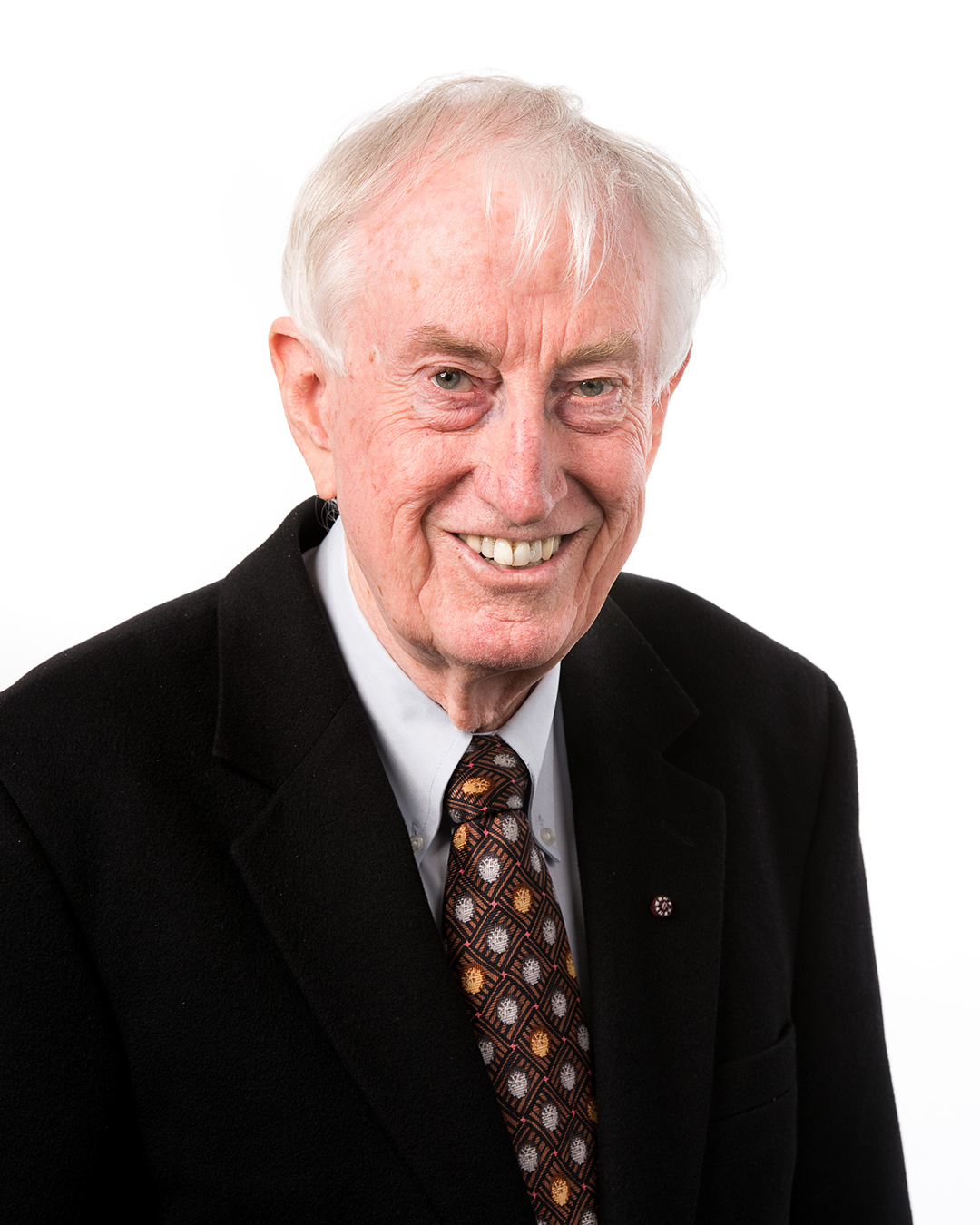
Peter Doherty
Immunologist, Pathologist, Nobel laureatePeter Doherty is an Australian immunologist and pathologist who received the Nobel Prize for Physiology or Medicine with Rolf Zinkernagel in 1996 for illuminating the nature of immune surveillance and the biological role of the transplant system. The Nobel award, along with being the Australian of the Year in 1997, led to an increasing involvement in public science communication, both in his own area of viral pathogenesis and immunity and in topics related to environmental sustainability and climate change. After working on infection and immunity for 60 years, he moved to emeritus status at the University of Melbourne in July 2023.
Peter is the author of many books, including The Beginner’s Guide to Winning the Nobel Prize: A Life in Science (2005), Sentinel Chickens: What Birds Tell Us About Our Health and the World (2012), Pandemics: what everyone needs to know (2013), The Knowledge Wars (2015), The Incidental Tourist (2018), An Insider’s Plague Year (2021) and most recently Empire, War, Tennis and Me (2022).
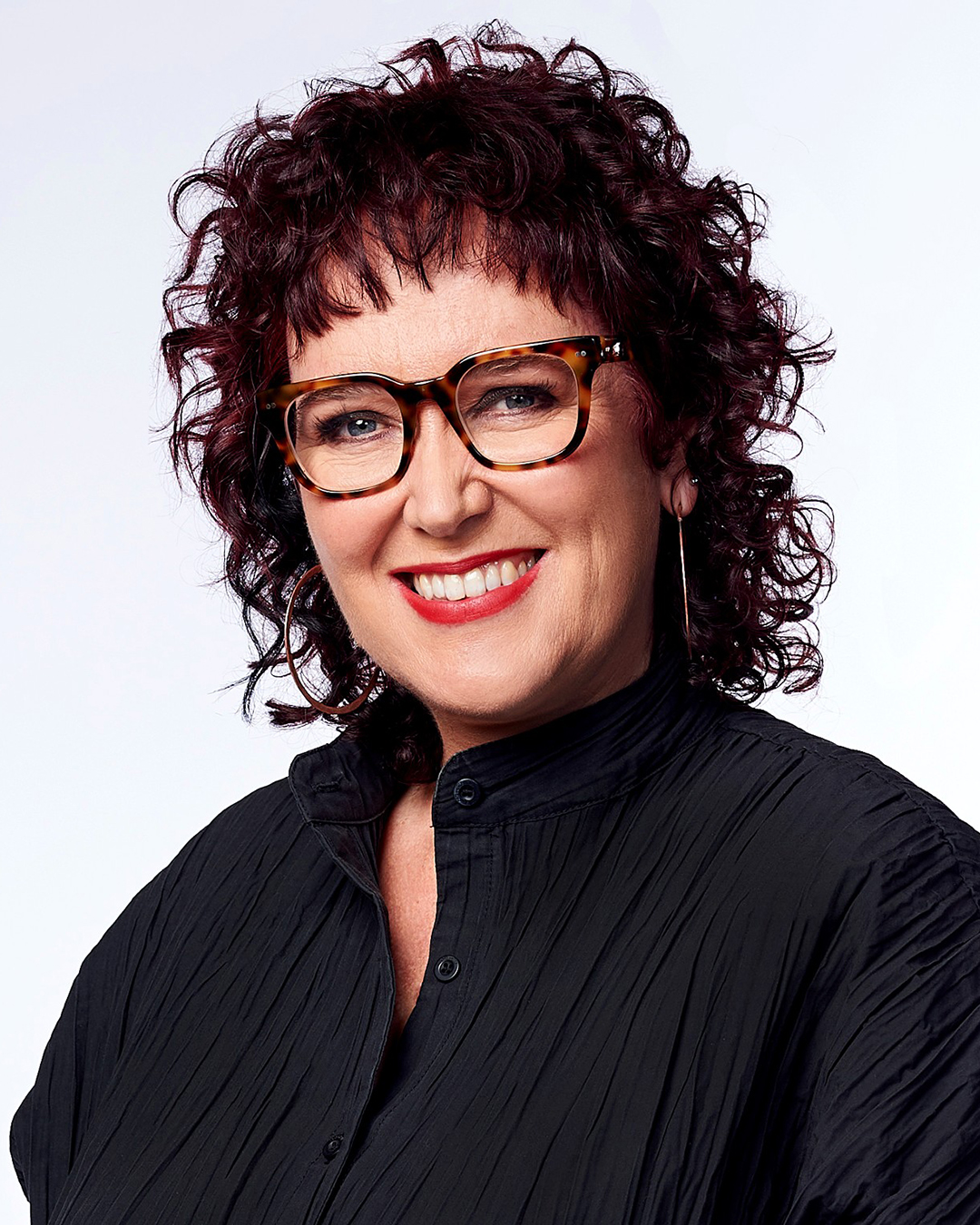
Natasha Mitchell
Journalist, radio presenter, podcaster, documentary makerNatasha Mitchell is a multi-award-winning journalist, radio presenter, podcaster, and documentary maker. She is host of ABC Radio National's flagship live events program and podcast BIG IDEAS, and is the originator of some of the ABC's most trailblazing and innovative programs – including the blockbuster radio show and one of Australia's first podcasts, All in the Mind, which she hosted and produced for a decade, and Science Friction, for which she was awarded Best Science and Medicine podcast at the Australian Podcast Awards. She was presenter of ABC's long-running daily social affairs program Life Matters.
Natasha served as vice president of the World Federation of Science Journalists, was a founding committee member of the Science Journalists' Association of Australia, and co-editor of Best Australian Science Writing. Natasha has an engineering degree with first-class honours from Monash University and a postgraduate diploma in science communication from ANU.