Mariam Veiszadeh: Advance Australia fair?
A fairer Australia is one that tells its migration story honestly as a source of national pride, not a problem to be managed, whose parliamentarians, boardrooms, newsrooms and courts reflect the country we already are.


2026 Kaldor Centre Oration
Australians pride themselves on living in a country where anyone can have a good life and feel they belong. But is that the reality for those who have to start from scratch with a new language, new culture and new home? At a time when political grandstanding and immigration scapegoating spill over into everyday attitudes, how can we build a society where people forced to leave their homeland can get a fair go?
At the 2026 Kaldor Centre Oration, Mariam Veiszadeh reflected on her journey from fleeing Afghanistan as a young girl, to building a life in Australia as a lawyer, advocate and human rights champion. Across countries, cultures and languages, Mariam’s story is a powerful testament to resilience and paying it forward.
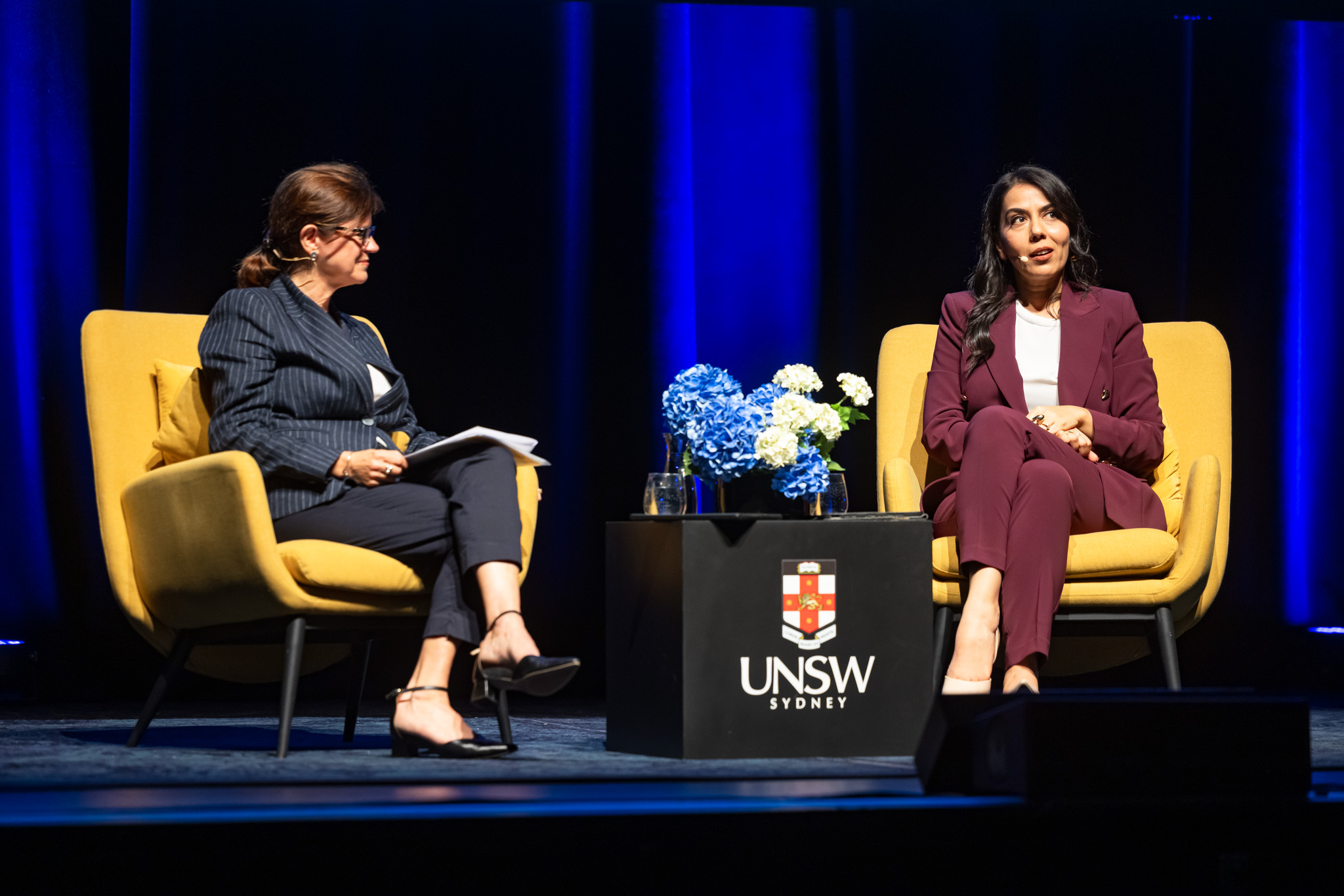
In a keynote talk and conversation with host Nicole Abadee, Mariam shared her views on how we need to reframe the debate on belonging – and what it might take to ensure all Australians have the same opportunities.
Transcript
Nicole Abadee:
Good evening and welcome to tonight's event, the Kaldor Centre Oration on the topic Advance Australia Fair, to be delivered by Mariam Veiszadeh. My name is Nicole Abadee, I'm a journalist and event moderator.
Tonight's event is co-hosted by the Kaldor Centre for International Refugee Law and the UNSW Centre for Ideas. I'd like to begin by acknowledging the Bidjigal people who are the traditional owners of this land. I pay my respects to their elders past and present and extend that respect to other Aboriginal and Torres Strait Islander people who are with us here tonight.
Tonight we have the very great privilege of hearing Mariam Veiszadeh, an award-winning anti-racism advocate, former lawyer, diversity and inclusion practitioner, and social commentator, deliver the Kaldor Oration. Mariam came to Australia as a refugee from Afghanistan and has spent more than a decade working in anti-racism, belonging, and cultural diversity, including as a spokesperson for the Afghan Australian Advocacy Network during the fall of Kabul. She is currently Executive Director at Mind Tribes, founder and chair of the Islamophobia Register Australia, former inaugural CEO of Media Diversity Australia.
She's a TEDx speaker. If you haven't heard her TEDx speech, I highly recommend that you listen to it. She's had over 1.5 million views or listens, and an experienced non-executive director. In 2023, Mariam was named the 2023 Most Influential Asian Australian of the Year. So, we'll be hearing from Mariam first as she delivers the Oration, and then I have the very great honour of being in conversation with her after that.
The Andrew and Renata Kaldor Centre for International Refugee Law is the world's leading research centre dedicated to the study of international refugees, and its contributions to public policy have had a global impact. The Centre for Ideas is UNSW's leading thought leadership program.
Please join me now in welcoming Daniel Ghezelbash, Professor and Director of the Kaldor Centre for International Refugee Law, and an internationally recognised scholar of international refugee and migration law.
Daniel Ghezelbash:
Good evening, everyone. And thank you, Nicole, for that kind introduction and for hosting tonight's important conversation. I'm Daniel Ghezelbash, Director of the Kaldor Centre for International Refugee Law at UNSW Sydney, and it's my great pleasure to welcome you tonight to the Kaldor Centre Oration.
We are delighted to be co-hosting tonight's event with the UNSW Centre for Ideas, who share our commitment to bringing people together to engage thoughtfully with the pressing challenges of our time. This commitment reflects UNSW's Progress for All strategy, creating positive change beyond our campuses through education, research, partnership, and public engagement. I add my respects to Bidjigal people, to traditional custodians of the land on which we meet, and to elders past and present.
I recognise the distinctive role First Nations people have played and continue to play in welcoming people who come to this continent seeking safety and a new beginning. I also acknowledge those here tonight who, like my own family, have experienced a forced migration. That includes our founding donors, Andrew and Renata Kaldor.
We are deeply grateful to the Kaldor family for their vision, generosity, and enduring commitment. And thank you too to everyone who supports the Centre, be it through philanthropy, collabOration, or attending events such as this one. I also want to take a moment to say that our thoughts are with Helen Haines and her family following yesterday's horrific attack.
At a gathering dedicated to the thoughtful exchange of ideas, we affirm that everyone should be able to participate in public life without fear or violence. At the Kaldor Centre, we work to shape humane and sustainable responses to forced migration. We bring rigorous research into policy debates, grounding our work in the rights and experiences of people who have experienced forced displacement.
But sound policy depends on a sound public conversation. That's why we work to counter misinformation and to strengthen public understanding about refugees and people seeking asylum. The Oration is a very important part of that work.
It's a space for ideas that challenge easy assumptions, for stories that deepen understanding, and conversations that help us imagine a more just and generous society. And this space matters especially now. Refugees and migrants have become convenient political targets, blamed for economic and social pressures they did not create, while the underlying problems go unaddressed.
Political scapegoating can too easily spill into public attitudes and everyday encounters, shaping not only debates about refugee and migration policy, but also how newcomers are received in our communities. Which brings us to the question at the heart of tonight's Oration. What would it take to ensure that refugees and others forced to flee their homelands are afforded a genuine fair go?
As we explore that question, we recognize these issues are complex and deeply felt, and for many in the audience, connected to personal experiences of both pain and resilience. Part of this forum's role is to create a space for conversations that may be uncomfortable. Our aim is not to resolve all differences in one night, but to model respectful engagement.
Disagreement is allowed and even expected, but our hope is that through thoughtful exchange and listening, we can find common ground and move the conversation forward. If at any point the discussion becomes overwhelming, there's a quiet space available outside in the foyer, and we also have our fantastic partners from the Refugee Trauma and Recovery Program available on hand if you need support, and they're stationed at the exits wearing UNSW yellow badges. We are so fortunate to be welcoming Mariam Veiszadeh to share her story this evening, both personal and professional.
The question of belonging is one that I've been grappling with my whole life growing up in Australia, both through the positive experiences of inclusion and opportunity, but also experiences of overt racism, and those quieter moments of second-guessing whether my race or appearance influenced the way someone interacted with me or made a decision made about me. And I'm also conscious of my own reluctance to name those experiences “racism” or to call them out, and that's what makes me especially appreciative of the courage it takes to speak openly about racism and to challenge it, and it's one of the many reasons I'm so pleased we'll be hearing from Mariam tonight. The question of a genuine fair go asks us to consider how we move beyond double standards that leave some people constantly having to prove their worth to a society where everyone has the opportunity to belong, to contribute, and to flourish.
Please join me in welcoming Mariam to the stage.
Mariam Veiszadeh:
Good evening, everyone. I'm honoured to be here. I will begin with a few words spoken in Farsi, so please bear with me.
به مردم «بیجیگال» (Bidjigal)، مالکان اصیل این سرزمین، ادای احترام میکنم. به بزرگان آنان و به تمام مردم این سرزمین که امروز در اینجا حضور دارند، ادای احترام میکنم.
What I have just said in my Farsi, and perhaps butchered at that, my first language, is an acknowledgement of the traditional custodians of the land on which we gather, the Bidjigal people, and I paid my respects to their elders, past and present.
I wanted to begin in Farsi deliberately because language is how we first learn to belong. Every migration story in this room, mine included, sits inside a far older story, one that is at least 65,000 years old. Thank you to the Kaldor Centre for International Refugee Law and the UNSW Centre for Ideas for inviting me to deliver the 2026 Kaldor Centre Oration.
It is an incredible honour. I do want to acknowledge my family who are here tonight. I'm really grateful to my husband and my kids for their incredible support, and kids, this is why mum wasn't able to hang out with you on several weekends. Sorry.
I also want to acknowledge the Kaldor family as well who are here tonight, the incredible support. It is a great honour to be able to do this.
I stand here tonight amidst a very challenging political time. News broke just yesterday of Independent MP Helen Haines, and Daniel alluded to this, the fact that she's been critically injured, lost her leg in fact, when a car rammed into her twice in what the PM has described as a deliberate attack. Now, the motivations are still unknown, but it has sparked a discussion about political violence.
This afternoon, the last time I checked, ABC reported ASIO Chief Mike Burgess is saying “the elevated levels of grievance, intolerance and polarisation have continued to create a permissive environment of violence.” Now, in that environment of dread, I've also had some internet abuse resurface in the lead up to this Oration. So, the truth is I headed here tonight with a little trepidation, but I'm incredibly moved as I look around this room to see so many of you here tonight.
So, I'm going to begin with my story. I was born in Kabul, Afghanistan in 1984 during the Soviet war. This was the same year Advance Australia Fair became our national anthem.
Now, as the title of my Oration implies, I'll seek to answer the question of whether we are in fact fair as a country. There are many common threads between my story and that of Andrew and Renata Kaldor, who both came to Australia as child refugees.
Now, when I was four, my family fled Afghanistan. Amongst many other factors, we were a persecuted minority. So, my parents had to make the hard decision to leave their otherwise successful lives to flee across the border. My siblings and I actually split, my older siblings heading to other countries and my brother and I accompanying our parents.
We paid a people smuggler to get us out from Kabul and we made our way to India, then to the Czech Republic as it's now known, then to Germany. And in 1991, we were granted asylum in Australia under the Refugee and Special Humanitarian Program. I was seven. I didn't speak a word of English. I was rolled into ESL, so English as a Second Language, at Penrith South Public School in Western Sydney with a teacher called Mrs Patricia Brown. She made us all feel welcome.
I actually tweeted about her years ago and we became reunited through the Twittersphere as someone sent her my tweet. And we are now Facebook friends, and she comments on all my photos, much more than my own family members. And I was, we've been in touch recently over email and she's gutted that she wasn't able to be here tonight, but she called the Centre today and as I got here, I was surprised with flowers that Mrs Patricia Brown organised. So, I'm just incredibly moved. Yes, I promised to send her this video, so she will really appreciate that and we're going to make time to see each other.
For almost my whole adult life, my identity, however, has been politicised. I can be both immensely grateful to this country for the privilege to be able to call it my home, and I am, whilst also confessing at the same time that the racism I've had to endure has actually left me psychologically and physically sick over the years of my advocacy work. I faced horrendous online abuse for my advocacy that's lasted several years and at the height of it in 2015, I did have police patrolling outside my house and my work at the time had to beef up my security given the very credible death threats that I was receiving. Now, I wrote about it at the time, and my experiences are now documented in several books about cyberbullying and a fun fact, Wikipedia cites me as a case study on the topic of trolling.
I've also encountered overt racial slurs about my refugee background in professional workplace settings. These incidents are not outliers. One gives permission to the next, from social media to the Senate floor, from breakfast television to the playground, from the comment section to the workplace.
Now, I founded the Islamophobia Register in 2014 as a not-for-profit. It's a secure platform for reporting Islamophobic and anti-Muslim incidents. The research that we've done over the course of the last 12 years very much echoes some of these sentiments that I speak about.
Now, I stand here tonight with privileges that I did not have when I arrived in this country aged seven and yet, even with all of that, I still hit ceilings. You'll know the term “glass ceiling”. Well, for marginalised folks like us from intersectional backgrounds, it's double-glazed or triple-glazed at times, which is why I wear heels like this to try and crack through it, but even then, I'm still struggling, folks, so if you've got any other recommendations, do send them my way.
The ceiling is only part of it, though. Every day, in every public interaction, on every stage, and in every social media post, I navigate a set of unwritten rules. These rules are ones societies quietly signal to people that look like me how far we can go, how loudly and truthfully we can speak, and how grateful we must remain while we do it.
So, tonight, I want to name those rules and the frame that I believe has quietly failed us, and I want to offer an alternative. I'll then close with a vision of an Australia that lives up to its claim of being fair. Now, the frame I'm referring to is the deficit lens.
The deficit lens sees refugees and migrants primarily through what they lack, as objects of pity, as a burden that a generous nation might agree to carry if it happens to be feeling kind. It carries a colonial undertone, charity flowing from the powerful to the grateful, rather than obligation flowing from responsibility. Now, I confess that I have used this deficit frame that I'm about to critique.
Months after Kabul fell in February 2022, I joined a delegation of veterans, faith leaders, and advocates, including Reverend Tim Costello, to speak to the then-immigration minister, Alex Hawke, to increase the humanitarian intake. In those conversations with then-minister, in every media interview I did around the time, we were using deficit language. We were pleading.
I remember telling the minister of the harrowing ordeal that my own extended family members who were trying to flee had been enduring, including the abduction of their father by the Taliban. We were focusing on the deficit lens, perhaps in sheer desperation because we thought we could appeal to his humanity. And you know what?
In one sense, it did work. Weeks later, the federal budget included additional places for Afghan refugees. The deficit lens, however, fails us for three reasons.
First, pity is conditional. It can be withdrawn the moment the mood shifts, the moment a headline turns, the moment a cost-of-living crisis arrives. Pity can be withdrawn.
Obligation and responsibility, however, cannot. Second, it invites a sorting exercise. Who's deserving?
Who's genuine? Who is a good refugee? And that question is often answered by people who've never had to flee their homeland, whose lives have never been in danger.
And that public sorting exercise, sorting us between mediocre and exceptional, is rarely applied to people who are viewed as, quote, real Australians, which at times feels like a designation reserved for people who are of an Anglo-Celtic background or thereabouts. Third, it hides the real question. Not how generous should we feel, but what do we owe?
The deficit lens even shapes how we contribute and how we celebrate. I wrote an article for Women's Agenda on how we should be seeking to celebrate refugees, not only when they're winning. Reflecting on Socceroo star and former refugee Nestory Irankunda, who was widely celebrated during the FIFA World Cup, I'm sure you remember that moment, I made the point that people of this background were nine times more likely to be searched by Victorian police than Anglo-Saxon people in 2024.
The same community that is celebrated when it scores goals is over-policed when it walks down the street. There is a script this country has written for refugees and migrants. I describe them as rules, but they are both.
The rules are: be grateful, be exceptional, be unthreatening, the good refugee, be the model minority. But as numerous examples have shown us, that script has a shelf life. The moment Irankunda has a bad game, makes a public mistake, voices a political opinion, or simply stops being useful to the national narrative, we will see how thin that welcome perhaps was.
Because the good refugee and the model minority, they're not permanent designations, folks. They are conditional. These are often withdrawn the moment the person stops reflecting well on us. Belonging shouldn't come with a performance review. We've seen it happen repeatedly. Just ask former Australian test cricketer, Usman Khawaja, celebrated for his runs until he wrote, “all lives matter”, on his cricket shoes in the colours of the Palestinian flag.
Ask my friend, Nyadol Nyuon, former member of the Kaldor Centre Advisory Committee, a celebrated lawyer and OAM recipient, who came here as a refugee and has often been held up as a success story, until she spoke about institutional racism at a Victorian-based university. She was subsequently vilified after comments she made on the ABC about the racism hiding behind our immigration debate. Her comments were, of course, taken out of context and weaponised by certain parts of the media and certain influences.
If you can, please show her some love on social media. There are many examples. I have known courageous people who have made the calculation to stay silent because the cost of speaking was simply too high.
And if I'm honest, I've made that calculation myself. I've always self-censored and I think about that. This is what past experiences of structural and interpersonal racism does.
It teaches people that naming the harm will cost them more than absorbing it, even if it makes them physically sick, as it has for me. And I know I'm far from alone. A study of refugees and asylum seekers resettled in South Australia found that nine in 10 of those who had experienced discrimination had said that it had harmed their health.
That echoes a review of nearly 300 studies led by Australian researchers, which found that racism is linked to poorer health and most strongly to depression and anxiety. Now, I've been diagnosed with both, as well as PTSD. All of that is related to racism.
That script and frame I spoke about, it didn't arise by accident. It's produced, it's reinforced. This now brings me to rhetoric.
Opposition to migration and refugees in this country is not new. The loudest voices on migration and refugee policy have rarely been driven by evidence. It has always been about politics.
Right now, our major parties are jumping over each other in a competition on how low to push net overseas migration in a shameful race to the bottom to out Hansen each other. Somewhere along the way, that debate morphed into a referendum about people and their identities. In the pursuit of some arbitrary migration number, we strip the people behind those numbers of their humanity.
Some in the political media class have used legitimate public concerns, such as the cost of living and the housing crisis, as Trojan horses for racism. Ideas that were once fringe are now treated as mainstream debate, and that normalisation has consequences for who feels safe in public, as this week has shown. In June, in a National Press Club address, Senator Pauline Hansen said “Australia's a multiracial society but must be monocultural”.
Now, I'd be here all night if I cited the rest of her blatantly racist remarks. I won't. I'm sure you know them.
In April, the opposition leader, Angus Taylor, called for refugees who fled Gaza to be reassessed and warned of “bad people from bad countries”. We should all be uneasy when people are judged not by what they have done, but from where they are from. I was pleased, however, to read former Liberal Premier of Tasmania, Peter Gutwein's opinion article just over a week ago, in which he expressed deep disappointment about his former party's political stance, referring specifically to the announcements in the reduction of the net overseas migration numbers.
He called it economically weak and socially irresponsible. Now, here's my central claim. When people with power and platforms speak about migrants and refugees in derogatory terms, they give everyone else a permission slip to do the same.
Words uttered in Parliament and on podiums, they don't stay there. In September 2025, in the wake of anti-immigration rallies that partly blamed Indian migrants for cost of living pressures, Federal Senator Jacinta Price went on national television and singled out Indian migrants, claiming the government was bringing them in to win votes. Within weeks, a Victorian MP was telling State Parliament that her inbox was full of stories of abuse suffered by members of the Indian and South Asian diaspora in Melbourne.
Schoolboys were having slurs shouted at them in the city, and taxi drivers being abused. Just this weekend that passed, and I didn't originally plan on talking about this, but just this weekend, actually, my husband noticed that under the UNSW Centre for Ideas, the Facebook post that was promoting this very Oration, it kept coming up on his feed, comments underneath the post included things like “another ref”, a reference to “refo”, a phrase of actually being called in person in a corporate setting, another story for another day.
But it also included comments which sent a shiver down my spine, a reference to being stoned. Minister Anne Aly, the very first Muslim woman elected to Federal Parliament, was told on the floor of the House recently that she should be shamed and stoned in the Square. Those words were said by a fellow parliamentarian.
Again, I reiterate, words uttered in Parliament trickle down to the comments section and vice versa. And this is an abstract. In 2015, an image circulated online depicting me being stoned. It had photoshopped blood running down my cheek. And you know what? Canva wasn't like that prevalent then, so they went to a lot of trouble to create that image.
I'm calling it trickle down racism. Unlike trickle down economics, it actually works. It trickles down all the way into boardrooms, into workplaces, and classrooms, and our social media feeds.
Racism doesn't only trickle down, it trickles up. Let's just keep going with this analogy, okay? What gets said in the darkest corners of the internet on Monday is repeated, perhaps a little bit more politely, on the podium by Friday.
The fringe effectively writes the script, and the powerful gives it a stage. As much as I don't want to always lean into my lived experience, life unfortunately keeps dishing up more of it. Just a few weekends ago, our nine-year-old son, and I have his consent to share this, he told us over breakfast that he had a menacing dream about Pauline Hanson.
It broke my heart, particularly as discussions about his racist experiences in the playground have become semi-frequent conversations at home in the past year. I'm keeping my comments high level. We keep asking ourselves why social cohesion is fraying.
Many of us are living with a deep sense of helplessness about the state of the world. It's like reading a dystopian novel. You look at the US, and you just sigh.
You look at the current political rhetoric in Australia, and you sigh even louder. If Trump-style politics hasn't made life better for ordinary Americans, why do we think importing it here will help Australians? And undoubtedly for the communities that I'm in touch with, the atrocities we've witnessed in Gaza are one of the biggest undercurrents that have strained social cohesion here at home.
I'm mindful of the remit of this Oration, so when looking at this issue from an international refugee law perspective, I certainly wouldn't be the first to point out how selectively international law has been evoked. Raised with deep conviction in one war and quietly disregarded in another. And that selectiveness reaches into our own refugee system.
When Ukrainians and Palestinians fled war, both groups initially arrived here mostly on short-term visas. Within weeks, Australia offered Ukrainians humanitarian visas broadly and generously. Palestinians waited about a year, and even then, offers were made on a case-by-case basis.
Afghans fleeing the Taliban have faced their own long wait. Thousands have been refused, and many are still waiting. My extended family, you might recall, I spoke about them at length in the media at the time.
My sister-in-law's family are still awaiting an outcome of their humanitarian application. Her mother, here in Australia, she passed away last year without being able to see her daughter again, and I still feel immense guilt for not being able to help them in the way that I had hoped. Now, I'm not asking anyone to weigh one person's suffering against another's.
I'm simply asking us to notice who we instinctively see as refugees, and who we see as inherent risks. Because communities notice these things. They notice whose pain is met with open arms, and who's met with suspicion.
Here at UNSW, the Kaldor Centre found that people fleeing Gaza presumptively qualify as refugees. These are the same people the opposition leader wants reassessed. And that suspicion doesn't just stop at the border.
It follows people into their everyday lives. According to the incidents reported and documented via the Islamophobia Register, we know that many have felt muzzled in their workplaces, schools, and universities simply from speaking about their trauma or experiences of racism, let alone advocating for the plight of their loved ones suffering around the world. Earlier this year, the Human Rights Commission's Seen and Heard report put a further evidence base around these exact issues.
People describe retaliation at work for speaking out about racism and losing job opportunities because of their identity or perceived political views. And this is something I've personally experienced. On university campuses, they described harassment, exclusion, and censorship.
They drew on the experiences of Jewish, Muslim, Palestinian, Arab, and Israeli Australians. The antisemitic terror attack of Bondi brought devastating loss and fear to Jewish Australians and undoubtedly tore at our nation's social fabric. One principle should hold for all of us: No one should have to hide who they are to feel safe here. And no community should be made to carry collective blame for the actions of individuals or governments. We know that most Australians generally hold inclusive values, but those values are vulnerable when economic anxiety is high and political leaders offer a scapegoat.
So, I want to offer a different starting point. I'm going to ask you to do something. You're all curious now, aren't you?
Please raise your hand if you chose the country you were born into. Please raise your hand if you chose the postcode you were born into. Did you choose your parents? Did you choose your skin colour? None of us chose the circumstances of our birth. And yet, because of circumstances outside of our control, ultimately, despite the fact that we have absolutely no choice over those circumstances, despite that, they ultimately dictate our futures.
Privilege is not proof of one's worth. It's the outcome of a lottery that none of us entered. Where we were born, the colour of our skin, the language we grew up speaking, whether our parents could afford to pay the rent, none of us earned those things, and none of us chose them.
And when you've spent your life swimming in privilege, as many of us have, it's actually hard to see the water. You don't notice the current that's actually carrying you forward. This is why, as the saying goes, when you're accustomed to privilege, equality feels like oppression.
So, here's a question worth sitting with. Where would those people who are shouting the loudest racist rhetoric be if they had been born in Afghanistan instead of Australia? Which brings me to the obligation. The Refugee Convention, which turned 75 this year, sets out what every signatory owes for people fleeing persecution. Australia ratified that in 1954. Bear with me as I'm conscious of time.
When it comes to my country of birth, Australia spent two decades in Afghanistan as part of a military campaign. You cannot help, shape the instability, and then treat the people fleeing it as a burden or a threat. Where we've contributed to displacement, responsibility follows, and this is charity.
And it is not charity, it is actually duty. Now, Australia's become increasingly preoccupied with the notion of social cohesion. Firstly, who gets to define social cohesion and who decides what threatens it?
Because too often, cohesion is quietly defined as the absence of discomfort for those who are already at the centre. If cohesion only ever asks the people on the margins to stay quiet, to stay grateful, and to stay small, then that's not cohesion. That's compliance.
We should be asking what the system owes, and we must resist the urge to reduce social cohesion to just harmony, to orange t-shirts and orange cupcakes on Harmony Day, which of course is the International Day to Eliminate Racism, which John Howard did actually rebrand to Harmony Day. And if pink cupcakes didn't solve gender inequality, I'm not sure why orange ones are going to solve racism. Social cohesion is ultimately a function of democratic institutions.
It is shaped by whether people experience governments, schools, employees, health services, and justice systems as fair and trustworthy, and whether those systems enable genuine participation, contribution, and belonging. And on that measure, I believe we're failing, not because communities aren't trying, but because institutions aren't. So, I want to name the moment we're witnessing honestly using a metaphor.
When I look at the debate on housing and migration, it feels like the house is on fire. And I see three kinds of people standing around it. The arsonists who pour fuel on the flames, blaming migrants and refugees for policy failures decades in the making because fear wins votes.
The demolishers who say multiculturalism has failed and the whole house should be torn down. And then you've got the renovators who put out the fire, keep the strong foundations that generations of migrations have built, and they fix what is broken. So, what would a renovator say about housing?
Well, a renovator is honest about the damage. The housing crisis is real. Pretending otherwise helps no one.
But a renovator also knows where the structural faults are. Renovating starts with the foundation, an honest look at what you're building on. And so, for a society, that means looking honestly at privilege.
And everything I've read and contributed to throughout my career tells me the floor is not level. Picture two trees, go with these analogies, bear with me. Picture two trees of the same species.
One is planted in rich soil and exposed to plenty of sunlight. The other planted in shade and poor soil. The one exposed to richer soil and sunlight will inevitably grow taller, will it not?
No one's going to argue the taller tree had more merit. It simply had better conditions. And talent, ladies and gentlemen, grows everywhere.
The conditions decide how tall. And conditions can be measured. On the current measures, we know that migrants, refugees and culturally diverse people in Australia have the odds stacked against them.
There's not a whole heap of data. But what we do know is recent migrants earn less than 10% than comparable Australian born workers. And that stats applies across the board with refugees and migrants.
You'd also probably know that applicants with non-English names, even with a born and educated here, receive less than half the callbacks for leadership roles. You cannot fix what you refuse to measure. Now, I began tonight with a seven-year-old girl in an ESL classroom in Western Sydney.
I did not earn my place in this country by being exceptional. I was given a chance by a nation that once understood protection as an obligation and by my ESL teacher, Mrs. Patricia Brown. What we are living through is a failure of imagination and of courage.
So, here's my challenge to you. If you lead an organisation, measure cultural diversity, close the intersectional cultural pay gap and make it safe to name racism. If you consume the news, ask more of your media that you read and watch and of the politicians that you vote for.
If you hear a dog whistle in the boardroom, the staff room or the group chat, don't let it pass. And if you work in policy, law, advocacy, have more courage, more courage than I have, to call out injustice without fear or favour at home and abroad. What we tolerate today becomes the culture we inherit tomorrow.
You shouldn't quite literally need to have skin in the game to give a damn. And if your allyship isn't costing you something, then it's simply performative. A fairer Australia is one that tells its migration story honestly as a source of national pride, not a problem to be managed, whose parliamentarians, boardrooms, newsrooms and courts reflect the country we already are.
Where refugees are known for what they build, not debated simply for what they cost. Where a little boy, perhaps just like mine, never has his race used against him in the playground because the adults around him showed him something better. Our anthem promises for those who've come across the seas, we've got boundless plains to share.
But fair isn't a word we sing, it's a test that we sit. So, join me in being a renovator, Advance Australia Fair. Thank you.
Nicole Abadee: I had the enormous privilege of seeing that speech before it was delivered. It was magnificent on paper, but all the more so with Mariam's wonderful delivery. Mariam, I'd like to talk a little bit to start with about how your political consciousness was awakened after the 9-11 terror attacks.
You were 17, you were at high school and you saw your community, the Muslim Australian community being demonised. What impact did that have on you and did that set you on the path to advocacy for social justice and did it influence your decision to go on to study law and economics at Western Sydney University?
Mariam Veiszadeh: Thank you. I think 9-11, it definitely did change me and I think definitely had some influence over the trajectory of my career, certainly in terms of making me more social justice inclined. I have felt my identity was racialised almost overnight. I remember one comment by, I can say his name, no one will know, Morris in high school and he came up to me and he said, “Mariam, your country, Afrikanistan, is going to get bombed.”
Yeah, that's what he called it. He called it Afrikanistan and I was just, you know, like I wasn't sure which country he thought was going to get bombed. But I think 9-11 absolutely did have an impact on me and feeling how my identity, particularly being Afghan, how my identity was politicised and how it walked into the room before I did, you know.
Nicole Abadee: You've also spoken and you talked about it tonight that when you arrived here at the age of seven, you'd been through several other countries, you'd learnt languages there, you spoke Farsi as your national language, but you didn't speak English. You came here at the age of seven and you met this wonderful teacher, ESL teacher, Mrs Brown, English as a second language and I wondered if you could talk a little bit about the impact she had on your life and why we need more Mrs Browns.
Mariam Veiszadeh: Yeah, we do need more Mrs Browns. She made us feel incredibly welcome and I think the reason she's had an impact on me, and I mentioned her tonight is because she went above and beyond. She connected, my sister remembers her as well, she connected with us outside of school and she genuinely supported us and if I recall correctly, I think she came over for lunch or dinner at one point and so I think in this current climate, we need more Mrs Browns. We need people that can, you know, stretch across the aisle, engage with people that might be different to them, just like Mrs Brown and I really look forward to reconnecting with her off the back of this.
Nicole Abadee: It's a lovely story that you reconnected through Facebook, right?
Mariam Veiszadeh: We did, we did and it's beautiful. She comments on my photos, she comments on the kids' photos, it's really, really beautiful.
Nicole Abadee: And I know that when she rang and left a message today, she was so disappointed that she couldn't come but she wanted particularly to say how very proud of you she was. Let's talk a little bit about the Islamophobia Register which you set up in 2014. You call it your third child and for the two children out there, mum says this one's by far the most problematic.
Mariam Veiszadeh: You guys are great.
Nicole Abadee: You have spoken about how setting that up and I should say you're still the chair of the Islamophobia Register. You set it up in 2014 and it exposed you to the most horrendous campaign of cyberbullying which affected your mental and your physical health.
That would have silenced many people, but the attacks only made you more determined to keep fighting and I wonder where did you find the courage and the strength to persevere as you do to this day? And I want to take issue with something that you said. You, as a throwaway line as you were speaking tonight, said something to the effect of speak up and have more courage than me.
I don't think I know many people that have more courage than you, so I don't want to ever hear you diss yourself like that again. Where did you find the courage and strength to persevere as you have done?
Mariam Veiszadeh: Thank you. Look, sometimes I don't recommend it. I think when something quite literally hits you in the face on a regular basis it's really hard to ignore and I think a lot of my advocacy has come off the back of lived experience and so I am doing a lot of jobs and I do often think I need to step back. I really need to, you know, life has to be calmer but when these issues impact you on a personal level I always go how can I help resolve this or solve this or reduce it not just for me but not just for me and my family but for others like us for generations to follow and yeah, I mean the analogy I've used is when there's a big barrier on the footpath that you're walking down, you know, you can you remove it for yourself so that you can keep going but you also take a look and go hang on where's this coming from? What are the root causes? How do I make sure this doesn't happen for others who are then walking down this path? Can you tell I like analogies? My husband teases me about this frequently. So yeah, I often go how can I address this issue not just for me but for others.
Nicole Abadee: You have an expression I think you used it and I've seen you use it elsewhere. What gets measured, gets acted on and I was really interested I've had a good look at the Islamophobia Register which I'm ashamed to say I didn't know of before. It's an amazing site that you've set up and it's an amazing project and I encourage everybody here to have a look at it.
Can you give some examples of or an example of concrete action that's been taken as a result of the data that you've collected in the Islamophobia Register and perhaps talk a little bit about it how people can register, what the slur was that was directed, whether it was online whether it was in person. Talk to us a little bit about it and yes, about how that's had some impact in action.
Mariam Veiszadeh: So, on impact over the years of my advocacy work I've had many conversations with many ministers and one recently Minister Anne Aly she cited the work of the Register as being the only and clear evidence base on which the Prime Minister's response to the Islamophobia envoy was based on.
Nicole Abadee: Wow.
Mariam Veiszadeh: And throughout the Prime Minister's response to the special envoy in Islamophobia it cites our work throughout it. There is no other evidence base in Australia and so that's why I started the organisation knowing having a legal background knowing that what gets measured gets acted on.
That said the organisation 12 years in is 1.6 FTE and has a 400 cases currently in backlog. The idea is that when you report an incident whether it's online or in person - so we're talking, you know, violent attacks, or pig's heads thrown outside mosques, online abuse. I had to submit an incident report myself this week about some social media commentary.
The idea is that you get wraparound services so you get at you know someone contacts you. It's also like humanising it right. If someone contacts you, you get access to mental health support, advocacy support and legal support should you need it and so you know it's critical work.
It's definitely exhausted me in many ways and I think if I'm honest my association with it has probably cost me professionally in many ways but the issue is incredibly important and to this you know I was volunteer doing that work and I still am doing it until I can find someone else who can take on the work.
Nicole Abadee: Let's talk now about diversity. So you've had a number of roles in the diversity space over the last decade including as has been mentioned you've been Executive Director of the Diversity Council, you've been CEO of Media Diversity Australia and you do a lot in the DEI space still.
We know now from the most recent statistics that over 50% of Australians are either migrants or the children of migrants. Why don't we see that reflected in leadership roles in business or in other organisations?
Mariam Veiszadeh: There is a multitude of factors and if you know in the interest of time, I'll tell you one of the biggest ones and that is systemic racism.
It's across the Australian Public Service, across Corporate Australia there's been ample research that shows the fact that cultural diversity in First Nations representation at an entry level is quite most organisations are incredibly diverse and what you'll notice as you as you start to move into leadership roles that diversity drops off and it's not because folks like us don't want executive roles, it's because there are additional barriers.
I talked about the double glazed ceiling, the triple glazed glass ceiling, all these additional barriers exist and my day job described you know I get to talk about this on a day-to-day basis and these systemic barriers are real and so I use the example of gender equality. Women face, you've got the gender pay gap, you've got the motherhood penalty, you've got a host of other factors that hold you back right and we now have processes in place, legislative reform in place, WGEA exists to track that and to try and address it. You add the intersectional layer of coming from a culturally diverse background and so not only you're facing the gender pay gap and the motherhood penalty and the mental load, add to that a cultural pay gap which we don't currently measure and because of the interest of time I shortened my speech so there's some bits I didn't go into as much detail but there's additional layers, there's additional barriers and there's a lot of research from a lot of different organisation that tracks some of those systemic barriers. We also know that women of colour for example spend at least up to eight years longer in middle management roles and that's not because we lack ambition, it's because of the additional barriers and it's very complex but I think the main thing is you know what gets measured gets acted on and so you know what I advocate for is let's actually apply an intersectional lens to the gender pay gap, let's actually start, Indigenous researchers have recently started to measure the Indigenous pay gap which sits around 16% but that's not at a federal level, that's done through UTS you know so start to measure these things, start to track where the gap is and then seek to close it.
Nicole Abadee: I mean you've referred in some of your other writings and papers, I know you had a limited time tonight but you've talked about studies that show that job applicants that have a name that clearly is racially or culturally diverse have got a much lower chance of being called back, of women who have got postgraduate degrees from women of colour with postgraduate degrees, women who've come from other countries have lower jobs than Anglo women that have the same qualifications so there's a lot of research I know that backs up what you say.
Mariam Veiszadeh: Yeah the rate is 68%, you're less likely to get a call back if you have a Middle Eastern or Asian sounding name so there's sample research that shows that unconscious bias is very real and has real consequences.
Nicole Abadee: And then you tell a story yourself in something I saw of an experience that you had, I think it was when you were a lawyer that you were working with a client over the phone and you had this great relationship, you'd been talking over a long period and it segwayed into a bit of a friendship, you thought it was a really lovely relationship and then the first time you met, I can't remember was a man or a woman?
Mariam Veiszadeh: Woman yeah I think.
Nicole Abadee: Yep the first time you walked into the room to meet her and were you still wearing a hijab then?
Mariam Veiszadeh: Yes I was and that's why she didn't connect the dots and that's one of my opening lines in the TED talk where she couldn't, she couldn't connect my voice and this is you know pre-Zoom meeting days right, she couldn't connect my voice on the phone, the one who you know she built rapport with, with the person who walked in the room and so that's why when I talk.
Nicole Abadee: Didn't she ask you if you were the secretary?
Mariam Veiszadeh: Yeah she asked me if I was yeah the legal secretary and there's nothing wrong with that awesome job but it's it just you know many times I have I've been underestimated and the point I make and I did reference Nyadol, like with the headscarf that was a choice and I choose not to wear one anymore and part of the reason is also racism related but with a headscarf that's something that someone can stop wearing. When you have black skin, when you are Indigenous, when you are of other marginalised groups those are not things you can switch off and I know that you know there's name discrimination, there's identity discrimination, there's a host of other things and sort of broader gaslighting that happens and it's documented in the research I cited and that's by virtue of factors that you can't control about yourself you know.
Nicole Abadee: I want to ask you now about media diversity - so you are the CEO of Media Diversity Australia, clearly our country's diversity isn't reflected on screen or in print or behind the scenes. What's the consequence of that? Why is it so important that we have greater cultural and racial diversity in our media?
Mariam Veiszadeh: So there's some research from SBS called it's belonging research that talks about the fact that people feel a greater sense of belonging if you think about migrants and refugees arriving in Australia they feel a greater sense of belonging when they feel like they are represented in the media, they see themselves reflected back on screen. And media is like a shopfront to society and usually when you go into the shopfront you it's need to be it's got to be representative what's inside the shop right. It can't be misleading and deceptive conduct like and so we know with the research that MDA did looking at legacy media across channel 7, 9, 10 also SBS and ABC and others, but that that diversity is not reflected particularly looking at breakfast television I think that the numbers were quite really really low and I think again this comes back to bias and racism and systemic discrimination because anyone of any background, journalists or any profession it's not to say that those skill sets are not there but as Australia becomes increasingly diverse the conversation around race is particularly important and how journalists report on race is incredibly important and so when I was in that role we partnered with the Human Rights Commission and actually released the Race Reporting Handbook which was a journal, a guide written by journalists for journalists on how to report inclusively on race if you wouldn't mention someone's race if they were of an Anglo-Saxon background why do you then need to mention it when they're Middle Eastern? And I do think the media plays such a significant role. It's a loudspeaker for change, like it's a loudspeaker for society, and so it plays such a significant role and part of what I was also going to say is this research that actually talks to the role that the media has in amplifying misinformation and so it means that people are targeted and one of the most prominent examples is around the African gangs you know and what is said on breakfast television translates into person of that background being vilified as they're heading home on the bus or some phobic incidents that we know of that have been reported to the register so these things have consequences and I think across politics and media and law who's in those decision-making positions it has broader consequences for society.
Nicole Abadee: Let's talk now about immigration policy and the current race to the bottom in immigration policies as you say as they try to out Hansen each other with proposals to cut net overseas migration this is leading clearly we're all seeing it to blatant xenophobia dehumanizing demonizing of immigrants by politicians and the media. Where does that lead, what are the potential consequences of that? What's the worst case? I think you've talked about the Christchurch attacks.
Mariam Veiszadeh: Yeah the thing that was very profound about the Christchurch terrorist attacks and this is not something I've talked about a lot is one of the first victims that were killed was 71 year old man who I discovered was an extended family member of mine and on that day I felt - I remember it vividly I was picking up my daughter from school and news broke about that and I was just gutted because we had been warning government federally and locally, given the work I did at the register, that something like that could happen. And I also remember getting the news on the same day that my sister had cancer, and so that period is very dark, because yeah, and then four months after my father passed away and it was just really, that period. But to your question of consequences as I said you know in the Oration, words that are uttered in parliament like trickle down racism it trickles down it has consequences how the media reports on the words of politicians have consequences, the rhetoric you know is critical, with this this week with you know the horrific Helen Haines and what's happened with her and the Prime Minister said you know “we need to lower the temperature”. The problem is there's no – that, I welcome that - but the problem is there's no consequences for those who increase the temperature and you know One Nation has been making comments about Jackie Lambie, it just gets to a point where you genuinely it is like reading a dystopian novel but there is research that shows the correlation between how we discuss marginalized communities and the impact on them and there's also research that talks about the mental health implications of that, and so we have this constant discussion about assimilation and integration, and you know folks are not coming in here, and but we don't ask, “what are we doing to ensure that they feel like they belong? What are we doing? What is this, what does the system owe those that that come here?” And I do think you know if I had a magic wand there's a lot that needs improving in our political system but specifically in our media, I'm particularly passionate about that there is a lot that needs regulating in the media because it's not just, you know there's this notion of freedom of speech. Yes, freedom of speech, but your freedom to strike at my face, your freedom stops when you get to my face, you know there are limits and so I do think that you know greater regulation is needed because the consequence is significant.
Nicole Abadee: Let's talk about something you discussed, as something else you've discussed, this concept of the good refugee and the model minority. Many migrants and refugees, yourself included, are accused of being “un-Australian” when they criticize Australia, whether it's for racism or for other things. And I read that you said something that just made me incredibly sad, you said, “when people say go back to where you came from, I can't because it's not safe. Even if I could go back, I wouldn't be considered Afghan anymore, but here I don't feel entirely Australian because that is constantly being questioned.” Could you talk about your sense of how belonging, being Australian is seen as conditional on not criticizing Australia, and constantly negotiable so that if there's a cost of living crisis or a housing crisis maybe you don't belong as much anymore.
Mariam Veiszadeh: The issue I have with it is that the same frame or the same assumptions not applied to people who seem to be of an Anglo-Saxon background you know, Pauline Hanson is not accused of being un-Australian very frequently you know, irrespective, and I think the point with refugees and migrants is that we are collectively blamed. When one of us is winning, we love refugees who are winning, you know winning, we love refugees and migrants that are winning something - FIFA world cup, Gold Logie, I'm thinking Waleed Aly, you know we love them, but if they start to say something that is critical, we tell them to sit back in their box. And that ‘sit back in your box’ doesn't apply to everybody, and so that's where you feel it's conditional but what gives me hope is that you know I have this conversation with my kids and my daughter, and for them it's you know, they're Australian there's no ifs or buts about it, they don't feel I guess what I feel, which is where I feel like I don't quite belong here, and I don't quite belong there, and that gives me hope, that the next generation won't grapple with the things we're grappling with. But that said, again it breaks my heart when the issues I've experienced in the playground, when I was a child that those similar things are now being experienced.
Nicole Abadee: And that is absolutely heartbreaking the story you tell about your son, but also that you now as an adult say you've been subjected to, and we won't go into detail, but that you've been subjected to racial slurs in the boardroom so –
Mariam Veiszadeh: Yeah, yeah. I mean you kind of go “oh people only say these things on social media.” No, they say them to your face. And I think that speaks to the normalisation of racism and xenophobia that we have witnessed and that is continuing to being an issue across society, and I, and I'm particularly worried about where things are headed right now, and I'm sure there are many in the audience that are also deeply worried because it does feel like it reads from a dystopian novel, you know?
Nicole Abadee: Let's end on a note of hope - Something really lovely that you said I'd like to read it and ask you to comment on it:
Let the reasonable voices unite. Let us expend our energies into trying to inject love and compassion into a world that's been increasingly filled with destruction and despair, for the forces binding us together are stronger than the forces pulling us apart. What gives you hope?
Mariam Veiszadeh: Thank you for I remember that speech. What gives me hope is the next generation. That gives me hope, and I think what gives me hope is Mrs Patricia Brown. Because there are many many Mrs Browns out there and quietly going about their work and I think what I would urge everyone here to do is go, right, how can we one quietly do what we're doing to reach across the aisle and support others who are of a marginalised background perhaps having a hard time particularly now but also not just quietly, perhaps loudly, making it known that it's not okay that people's Australianness is being called into question and that being a fair Australia requires us to really think about what that means for every person who's chosen to call Australia their home.
Nicole Abadee: Thank you Mariam.
Mariam Veiszadeh: Pleasure.
Nicole Abadee: Thank you. So now we've got some time for questions from you. I've got some, and you're also welcome to, people in the audience, to step up to the microphones at the front of the room, and I'll just move around with the choices. First question – on, and this is something you've said, I know you've quoted other people, when you're used to privilege equality feels like oppression. What's a policy for equality that is most worth disrupting privilege to implement?
Mariam Veiszadeh: I think some of the things that I mentioned and probably didn't get time to elaborate on is also looking at measuring progress across those diversity dimensions that I spoke about because when you start to measure it you start to realise that societal privilege and unconscious bias really takes hold in society, and so when the saying says “equality feels like oppression for those who are accustomed to privilege” and so when you're trying to create a sense of equality, you need to measure where the inequality is and go “there's inequality here” and so how do we address that and level the playing field? You know the analogy about being a renovator, the idea is that you've got to start with a level playing field and when it's not level you've got to figure out what policy settings are needed to be needing to be tweaked in order to create that. So we recognise gender inequality is a problem, and so we introduce legislative reform. You've got the Positive Duty to Prevent Sexual Harassment, we've got WGEA. One of the things I'd love to see, and Human Rights Commission and the Race Commission has been advocating for this, is a Positive Duty to Prevent Racism in Workplaces and if that, if that comes into impact, if that comes into effect.
Nicole Abadee: Like sexual harassment. Like there is a duty to correct prevent sexual harassment
Mariam Veiszadeh: Correct. Yeah, and so I, and that's what I say to organisations that I deliver anti-racism training to, I say if there was a positive duty to prevent racism in workplaces would you pass or fail?
Nicole Abadee: What's your advice for approaching racism around the dinner table with our kids and our parents?
Mariam Veiszadeh: I think we often avoid the conversations around race and racism with children because we go “oh we don't want to expose them to that,” but we actually need to educate them, we need to make it comfortable to talk about race, we need to acknowledge that it exists. You know this idea of “I don't see race, I don't see colour, I don't see gender” Well the literature says otherwise, we do. And so I do think normalising those conversations as much as possible, so that they're aware of race, including of their own, where it applies and then having those conversations about what is and isn't okay, and sometimes you know my daughter watches both my kids actually watch BTN, Behind the News, the ABC, and we then talk about it. We, you know, that gives them the news in a format that's suitable for children, and then we discuss it. We discuss it, and I think it's important that you find ways to talk about these issues. That's the only way we're going to I think, address these issues because often, most folks don't wake up in the morning and go, “I'm going to be really racist today” you know, I'm not - well maybe some politicians, but anyway – “I'm not going to hire a woman” “I'm not I'm not going to promote someone who's who has a disability” like that, it doesn't, for the most part it happens unconsciously, and so it is then also normalising conversations around, that you know speaking about the research, the data, and normalising those conversations so that we can then seek to address it.
Nicole Abadee: As a junior staff member, how can we get senior leaders to commit to action rather than just talking the talk to look good publicly? Good question.
Mariam Veiszadeh: Well, you can ask them to call me. Look, I think this is a really good one, particularly because if we think about race right, the big R word is often in, when you talk about the big R word you encounter the other R word, which is resistance. Okay, so you try and talk about racism, there's always resistance. And particularly with the diversity data that shows that you have more, for example cultural diversity in entry level, and then it as you start to move through into leadership, those numbers drop off. When that lived experience is not there at an executive level, it's hard you know. You know that thing, the saying about you don't know what you don't know, and so if it's not your lived experience it's understandable that you might not see it as a priority. I see a lot of executives for example, who when they get into an executive role, and if they might have a child with a disability or neurodiversity, they start championing that cause really strongly, and that's why I said you don't need to have skin in the game to give a damn. You don't need to be the first nation's background to try and have understanding and empathy for intergenerational trauma, and all of all of the issues to go, how do I, what role do I play in closing the gap? And so if it takes lived experience to drive change, well then change is not going to happen.
Hello!
Speaker 1: Sorry.
Mariam Veiszadeh: Sorry, I recognized Kylea Tink!
Speaker 1: Thank you.
Mariam Veiszadeh: Lovely to see you.
Speaker 1: Amazing to see you and thank you for an incredible presentation, and for speaking so honestly from the heart, I think you know that's really powerful. I have a question it's going to seem so basic, it's probably almost - but fundamentally do you think Australians understand what racism is? Could a Caucasian looking person answer the question on the street if you stopped them and said “what is racism?” do you think they really understand it as a concept?
Mariam Veiszadeh: That's a great question I think some do academically, but many won't understand it, and I think that's part of the problem - when something is not close to home, it's hard for us to wrap our head around it and I deliberately any sort of engagement that I have publicly is I try and think about the language that I use and make it accessible, hence many uses of analogies, because I do think when you humanize the issues and you explain it, and you don't just explain it in an academic way, like racism is xyz, when I talk about my experiences I talk about my children, I humanize it, I do think it resonates more. And so I think, but then you go well who are they going to hear this from? You know how often are they going to hear it? Are they going to hear it in the media, are they going to hear it from politicians? Like how frequently is that conversation being had? And so, you know, are they going to tune into SBS and watch that? Are they going to watch a documentary on, you know, Australia's history of racism? No. And so then you go, how do you make this more accessible? And that that's the everyday conversations, that's conversations at work, in the group chats, in the playground, you know, like all of all of those conversations are necessary to drive that change.
Speaker 1: I think that storytelling is incredibly important I agree I think one of the things I saw and actually witnessed in parliament at one stage, which was such a liminal moment for me was Zali Steggall actually stood up in parliament and accused Peter Dutton of being racist and you would have thought she had used the c-word in parliament – sorry - but literally, the Speaker insisted she withdraw it, like there was this almost visceral reaction to but actually at the time he was being racist.
Nicole Abadee: I think you’ve said this before Mariam, in Australia it's worse to call someone a racist than it is to be a racist.
Speaker 1: Yeah, and I just that's what poses to me that question, if you can't actually call it out as it happens and I think I've heard you know the Racism Commission talk from the Human Rights Commission say this, you have to be able to name it and call it out and be okay naming it when it happens because if you can't see it, if you can't name it, you can't change it, so but just thank you, thank you for everything you do.
Mariam Veiszadeh: Thank you for your work as well Kylea, lovely to see you.
Nicole Abadee: Somebody asked, who are your heroes and role models?
Mariam Veiszadeh: Oh, that's incredible. My mum is my role model. She's incredibly fierce and I think I get my fighting spirit from her. I think more broadly than that there are probably many others and I wouldn't know how to narrow the field, but I think I'm one of the things in me that motivates me is a sense of injustice and so role models that have stood up to injustice, whether it's sort of Nelson Mandela or others, at a time when it's unpopular to stand up to injustice are my role models.
Speaker 2:
Michel Chong from Bexley, originally from Malaysia. I'm taking up the point you mentioned just now, about a person with a name that obviously shows where he's from right? I've got this friend, Indian origin beautiful Indian name but he's very talented, he has worked UN level as advisor to several countries. He has been here for several years, every time and he says every week or every month he's sending out hundreds of applications, very few response and no, I don't belong my question, the question is we talk about it so much, here is a reverse brain drain. Coming from Malaysia, we talk about brain drain where top talents have been poached by countries or universities, offering them scholarships. Here we have top talents coming into Australia at their own cost, and yet in the employment process the people who are sieving out applications perhaps through AI, the first batch you know out of thousands come down to 200 and then the then somebody takes up and sieve it down to 25 but, how do we end the process? Because the first question they ask is, do you have local working experience? Isn't that true everybody gets stumped with the question, look, and if their bosses would know their bosses who have businesses all over the world here is somebody with international experience coming to him, but the guy who is there at the door is just throwing his file down the you know,
Nicole Abadee: Thank you.
Speaker 2: How do we solve it?
Nicole Abadee: Thank you for sharing that. Mariam?
Mariam Veiszadeh: Thank you. So there is research that speaks to the fact that refugees and migrants, their experiences are overlooked when they don't have local experience and will be denied employment opportunities despite being incredibly experienced so there is an evidence base that supports that, and it is you know, I'm on the advisory board of the Australian Multicultural Women's Alliance that that's one of the issues that we research and look into. It is absolutely broadly speaking an issue, and that's one of the things that I was suggesting in in in my Oration, to actually look at those barriers - you've got to measure what those barriers are, before you can seek to close them so thank you for raising that issue.
Nicole Abadee: Thank you.
Speaker 3: It seems that, my name's David Anstey by the way, it seems that all of these issues, political issues around housing access, affordability, even safety in our communities are all piled up in one sort of community parking spot, so how can we, what's your feeling on how we can unpack these issues, because to me that's the answer - to rationalize that they aren't related specifically to immigration, and that we can stop them all piling up in one you know convenient spot for politicians in particular, and the media.
Mariam Veiszadeh: I mean I think of what you're suggesting is that these issues are interrelated which they absolutely are, and that's what I was trying to say and sort of rush through a little bit, is that you need to acknowledge these issue exists and the lack of acknowledgement doesn't help, you need to acknowledge each of them but also then speak truthfully about what the reasons are, and not scapegoat migrants. I think, you know, every single issue we can think of we attach it somehow to migration and refugees. And so I do think we need to have a healthy conversation and I think what's lacking is the clear articulation of what the challenges are and the plan of how we're going to tackle it and hence my analogy about being a renovator, needing to acknowledge what's happened, try and level the playing field but also that requires a decent communications plan around it.
Speaker 3: To me your, you know, your comment about Peter Dutton even saying, you know, having been Immigration Minister that it is what is being said is uneconomic and unfair. We need more people to step up and actually dissect what's causing housing access affordability.
Nicole Abadee: We do.
Speaker 3: Yeah.
Mariam Veiszadeh: Thank you.
Nicole Abadee: I’m sorry we've only got time for one last question.
Speaker 4: Hi, so this might, this is a little bit different when I’m going to talk about racism here, so I actually work in advocacy. I work for the Armenian National Committee of Australia and it's my job to advocate for my community, and one of the issues that we find is not racism from the what you would call the typical Australian, but rather from other ethnic groups, that really is just, it's a real barrier in our advocacy. I mean I’m only 20 so I want to know like, what's something that you can, what's some advice that you can give on how to combat that to a group that doesn't really want to be educated and doesn't want to learn and just is putting up that barrier for me.
Mariam Veiszadeh: Racism amongst marginalized communities or broader communities is absolutely a thing. And yeah I do, I don't envy you, it's a hard thing to tackle but I do think the more we raise racial literacy generally speaking, the more that will have a flow on impact on all communities and I often think that marginalized communities are often, the system is almost designed to get you to turn on each other and that's where I go what does the system owe? It's not just the interpersonal. So, I do think how can we actually create better systems to ensure that others are not turning on each other in times of crisis that we go where is, what's the root causes and how do we seek to address that and we're not going to achieve anything by actually turning on each other.
Nicole Abadee: Thank you. I'm so sorry, I think we're out of time unless it’s a very quick question.
Speaker 5: Can I just ask one very quick question? Given that AI is now used for up to three levels in job selection, do you say is it a pro or con for racist selection or non-racist selection?
Mariam Veiszadeh: Great question. AI also has bias and so that's part of the problem, that a lot of people trying to work to address that but AI in itself can be inherently biased. And so whilst it can be really useful, it has to be done properly, but great point, thank you.
Nicole Abadee: Thank you at UNSW we hope that our conversations will inspire and lead to action which will have a positive impact on society and on life on earth. I'd like to leave you with just a few brief reflections on some of the key points that Mariam has made about what each of us can do to make our country more fair for migrants and for refugees. If you see or you hear racism, call it out. Whether it's in the workplace, the media, or even in a social setting. If you have privilege, use it to advocate for those who don't. If you work in the media, think carefully about how or when you refer to race, and if you lead an organization, have targets for cultural and racial diversity and measure the cultural pay gap. Tonight's Oration is part of a much bigger conversation about how we make Australia more fair and how we respond to displacement around the world. Through rigorous research, informed public debate and collaboration the Kaldor Centre works to develop rights-based lawful sustainable and humane solutions. Please explore our work, and stay part of the conversation. And now the most important part - Thank you for joining us tonight at Advance Australia Fair? But please join me in thanking Mariam for taking part in this conversation and for sharing her own experience and wisdom, hard-won wisdom, so generously.
Thanks for listening. For more information visit unswcentreforideas.com and don't forget to subscribe wherever you get your podcasts.
-
1/8
-
2/8
-
3/8
-
4/8
-
5/8
-
6/8
-
7/8
-
8/8
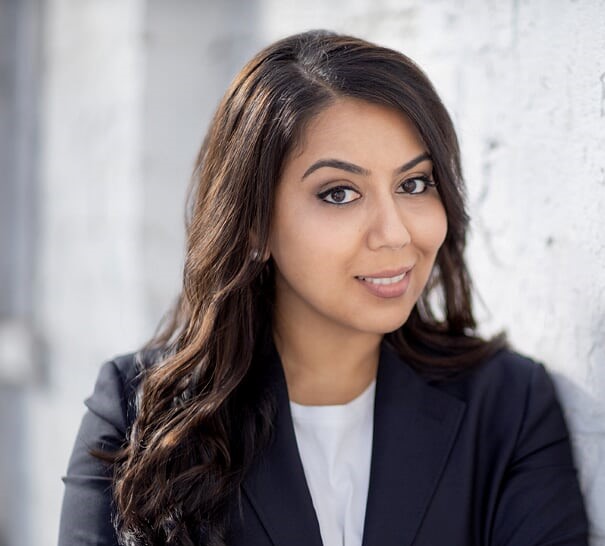
Mariam Veiszadeh
Executive Director, MindTribesMariam Veiszadeh is an award-winning executive, lawyer and human rights advocate. She came to Australia as a refugee from Afghanistan and has spent more than a decade working on anti-racism, belonging and cultural diversity, including as a spokesperson for the Afghan Australian Advocacy Network during the fall of Kabul. She is Executive Director at MindTribes, founder and Chair of the Islamophobia Register Australia, and former inaugural CEO of Media Diversity Australia. A TEDx speaker and experienced non-executive director, Mariam was named the 2023 Most Influential Asian-Australian of the Year.
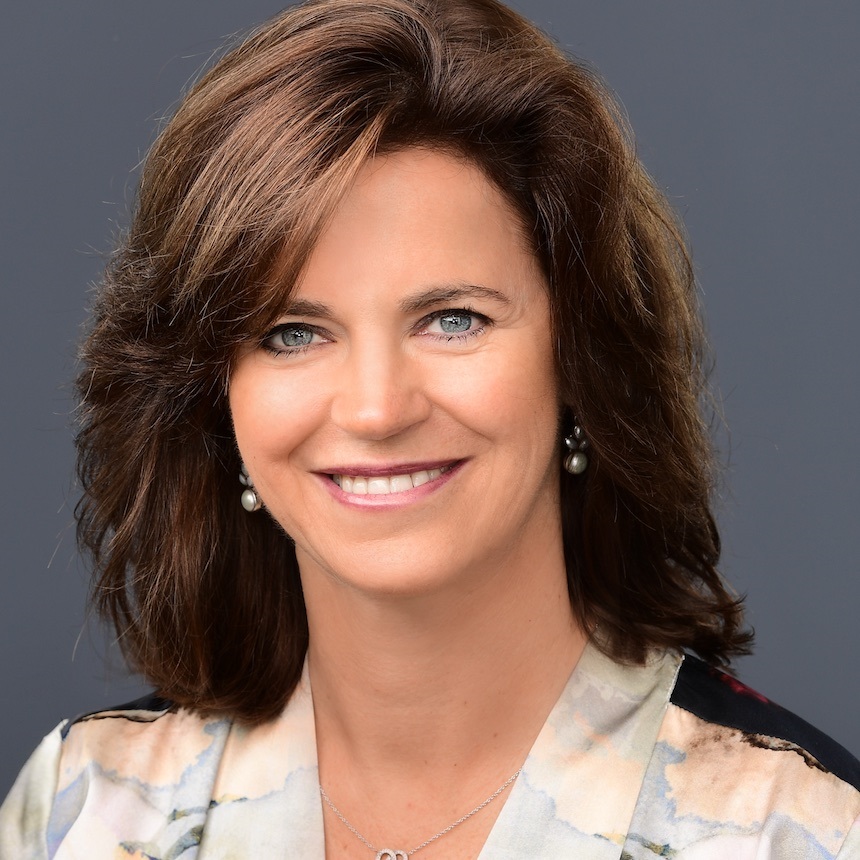
Nicole Abadee
Freelance journalist and event moderatorNicole Abadee is a freelance journalist and event moderator who writes for the Sydney Morning Herald and Harper’s Bazaar. Nicole is a regular moderator at writers’ festivals including Sydney Writers’ Festival, Adelaide Writers’ Week, Canberra Writers’ Festival, the Blue Mountains Writers’ Festival and the Edinburgh International Book Festival. She has been a literary judge, podcaster and a guest on ABC Radio to discuss books. Nicole is a board member of the Eleanor Dark Foundation, which runs Varuna, the National Writers’ House, and is on the Advisory Council of the Sydney Women’s Fund.