Andrew Upton: From stage to page
Life is an incredible, incredible miracle. And we seem to be very busy trying to make things to make it convenient and make it go away and put ourselves to sleep. But this is it. So have it.
Andrew Upton does not stay in his lane. He has written for theatre, film and television in Australia and abroad, and his stage adaptations have toured internationally. During his tenure as co-director at the Sydney Theatre Company with his wife Cate Blanchett, they channelled their passion for theatre, sustainability and teaching into an award-winning green performing arts hub and produced a podcast on climate change.
Across these many creative pursuits, Andrew has had several jobs, but just one calling: storytelling.
Andrew’s debut novel Krank Fuss is a modern-day Animal Farm and follows the titular character, a chicken with a deformed foot on a farm in Nazi Germany on the eve of World War II. As both the chicken heroine and her homeland hurtle towards their inevitable fates, this fable reminds us of the importance of hope under the creeping shadow of authoritarian catastrophe.
In praise of Krank Fuss:
“Layered and beautifully written” - Susan Chenery for the Guardian
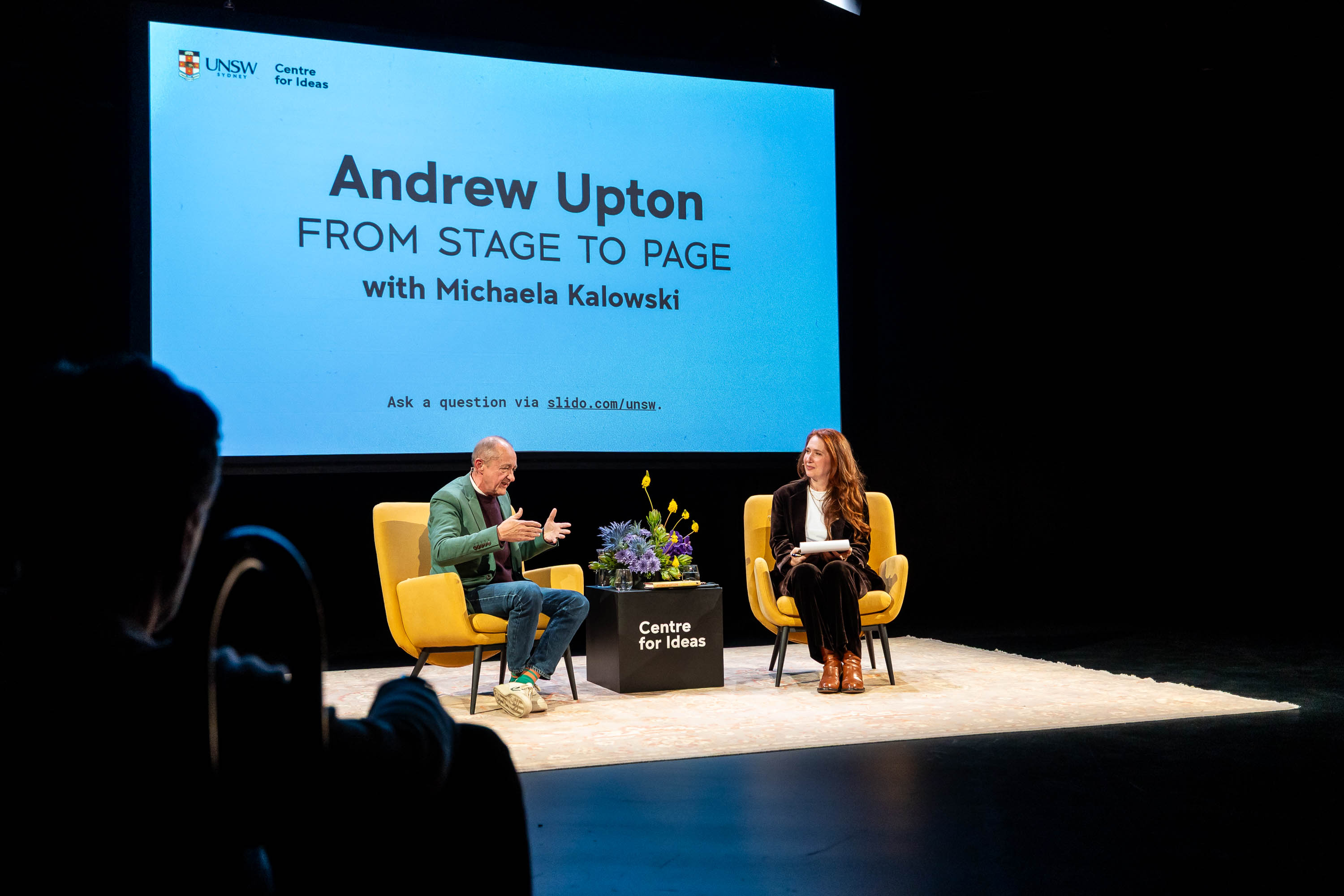
Join Andrew in conversation with Michaela Kalowski, as they explore how to live a life rich with creative purpose. From the inspiration he draws upon to moving between artistic disciplines to thinking about how the arts should be for all, this is a rare look behind the curtain of a powerful storyteller whose work has shaped the Australian and international creative landscape.


Podcast transcript
Michaela Kalowski: Good evening everyone and welcome to tonight’s event. It is so wonderful to have you all here and so wonderful to have Andrew Upton in the house. My name is Michaela Kalowski. I’m an interviewer and moderator for Ideas and Writers Festivals and I’m thrilled to be in conversation with Andrew.
Firstly, I would like to acknowledge the Gadigal people of the Eora Nation who are the traditional custodians of this land. I would also like to pay my respects to their elders, both past and present, and extend that respect to other Aboriginal and Torres Strait Islander people who are here.
Tonight we welcome Andrew Upton and in a moment I’ll tell you a little bit more about him and delve into some of the topics we’ll discuss. But before we do that, just a tiny bit of housekeeping. I’ll speak with Andrew for about 45 minutes and then we will leave 20 full minutes for your questions at the end.
Let me tell you a little bit more about Andrew before we dive in.
Andrew Upton is a Sydney-born writer, director and producer whose career spans theatre, film, television and audio. From 2008 to 2012, he was co-Artistic Director and co-CEO of the Sydney Theatre Company alongside Cate Blanchett before serving as sole Artistic Director from 2013 to 2015.
During this period, Sydney Theatre Company expanded its national and international touring profile and undertook the landmark Greening the Wharf sustainability program. He’s written for London’s National Theatre and Broadway. He’s currently a principal of Dirty Films and co-creator of Audible’s climate podcast, Climate of Change.
His debut novel, Krank Fuss, was published in 2026. Tonight I’m going to ask Andrew about the threads that run through all of his ways of writing and creating and about the people who have shaped him and his way of looking at the world. We’ll speak about his powerful first novel, Krank Fuss, and what inspired it. I’ll ask him about what he’s learned watching and working with audiences over many decades, about how place and memory shape his work, and also what he’s learned from observing chickens close up. Lastly, I’m going to seek out his thoughts on AI and what fiction can tell us that maybe other forms of writing can’t. It is so good to have him here.
Please join me in welcoming Andrew Upton.
Andrew Upton: Thank you.
Michaela Kalowski: Andrew, I want to go back to the very beginning of things and ask you, in the home where you grew up with your parents, what kind of attention or focus was given to stories? How were they thought about? What was their status?
Andrew Upton: They were very present, actually. My father was a GP, like very much the old school of house visiting GP, called up at night, go off and deliver a baby. Very community kind of way of being a doctor. And mum was a nurse. And at the dinner table, of course, without any exposure of the patient privilege, they would talk quite a lot about, you know, illness and sickness and probably the attendant psychologies that go with chronic illness particularly. And they weren’t raconteurs, they weren’t sort of big storytellers and fruity, but they were very, very attentive to sort of narrative detail and psychology. I think there’s a lot of understanding of patients as whole creatures, not just sicknesses and symptoms.
So that was probably the strongest presence. And then on top of that, my father particularly was interested in theatre, and in fact, brought me here when it was the Nimrod. And so I’ve been coming here on and off for a long time.
Michaela Kalowski: Do you remember the first piece of theatre you ever saw?
Andrew Upton: I think the first thing I ever saw was on Shark Island and was a version of Treasure Island, which was done by the Nimrod Theatre Company, they were called. But the piece I remember most, for whatever reason, it’s going to betray a lot about me, I think, was here. And it was, I was about 13 and it was a Pinter play. It was either Betrayal or Old Times, one of those sort of mid-career Pinters, no interval, full of sexual tension. I mean, absolutely brimming with sexual tension.
And I was thrilled. And I think because they had no interval, we went out there to the bar and Dad wanted a cup of coffee before we went home, and the audience dissipated. And the side door opened, we were there long enough for the side door to open from the foyer, and the three actors came out.
And I sort of emerged from the shadows, and I thought of all that sexual tension, and I was just thinking, I have got to work in this business. And so there you go, I was stuck. I love it.
Michaela Kalowski: I was going to ask if there was a light bulb moment, but I didn’t realise it was about Pinter and sexual tension, but that makes perfect sense. But I mean, there’s one thing to say, a lot of people say they come into a space and it feels magical to them, or as you say, it feels like I want to work in the theatre. How did writing and adapting become the thing you were drawn toward? What was the allure of adapting for you?
Andrew Upton: That’s out of chronology. Can I just rearrange that?
I think my first exposure is, like everyone’s, is to acting, and there’s that sort of sense that that’s the front, that’s the shop front, that’s what it is. And then you eventually you find out, oh, no, of course, and you learn about, you know, hacks like William Shakespeare, and you think, okay, well, there’s obviously a writer as well, so that’s something else I could do. And then you learn about directors and designers and lighting designers and stage managers, and then you slowly realise, actually, there’s an entire community there that I could join in one way or another.
And I think that was the path I got sort of waylaid at writing, which suited me. And it was because I really didn’t, I did act in school plays, but I was terrible and I didn’t really enjoy it. I sort of don’t really like being on stage.
Michaela Kalowski: Except for now.
Andrew Upton: Loving this, loving this.
Michaela Kalowski: So that was the pathway there. And I think from there to adapting was perhaps a rare moment of humility where I thought, I’ve really got a lot to learn here, and there are so many great plays that they’ve done. Like, there’s a lot.
It’s not a finite medium at all, it’s infinite, but there was a lot to learn. And it felt like a great way to kind of keep writing without having to kind of keep inventing, because it’s a terrible thing. I’m sure many other writers have felt it, but I’ve certainly felt it.
You’re sort of coming out of stories so that you can be a writer, and it sort of defeats the purpose. It gets very dry, very, very dry, very quickly. So it was a much more fluid way to remain engaged with the form and to keep working and learning.
And then having done that, I think, because I was always interested in history, there was a sort of anachronistic anarchy or freedom that you could start to bring to, I felt you could bring to adaptations. Hopefully not randomly, maybe sometimes randomly, just out of my own stupidity. But when it worked, it really was like you could sort of see history crack open. And that really fascinated me. And then I was kind of stuck on it really then.
Michaela Kalowski: I love that description of history cracking open.
You’ve adapted plays by Moliere, Rostand, Ibsen, Chekhov, among others. When you started adapting those works, which was decades ago now, and I don’t mean that in a derogatory way, I think the demands of audience and the demands of sort of the political are different. And I suppose I wanted to ask you what demands you felt then as a playwright to either modernise the texts, or I suppose, how was the mechanism or the vehicle of adaptation viewed at that time when you first started doing them?
Andrew Upton: Yeah, I think when I first started working, I felt it was pretty common that plays were like books and that they were literary texts. And once I got to know directors and what directing was, and actors and what actors needed and wanted, and, you know, you can learn this from probably from writers like Harold Pinter, there’s a sort of, it’s not literature, it’s a work piece, it’s a part of a bigger project, which hopefully will form a work of art. But in itself, it’s not a work, I mean, you know, Shakespeare aside, it’s sort of not really a work of art, it’s just a thing that you need to make work.
And that freedom then becomes, well, it’s going to be our thing. And I suppose, having always been kind of drawn to that more punky aesthetic, sort of turning things on their head, and perhaps, admittedly, a bit randomly doing that, opened up again, that pathway to taking control of the text. And so I think there was, I feel like adaptation is a relatively new idea, actually.
And they were all, they were called translations, which is not the same thing. I mean, a translation is probably an academically important device. But it’s unperformable. So you need an adaptation, which is the next step. Yeah, you need to break it and put it on stage for this production now.
And they’re transient things, adaptations, I think.
Michaela Kalowski: I wanted to ask you about Chekhov. You’ve done a lot of adaptations of Chekhov plays, and it sounds like somebody whose work you’ve come back to a lot.
In all the years that you’ve spent sort of close to his words and scenes, what has his writing taught you or shown you?
Andrew Upton: Well, that’s a hard one. He’s taught me that, I mean, look, I think writing is very easy on one level, and everyone can do it, which is great.
And it’s pretty easy to be good, but to be great is very, very, very, very, very rare. I think words are very flawed. To have a kind of sense of how communication both works and doesn’t work is really Chekhov’s master at, and it’s an incredible gift to be able to tell a story with as much not being told and not being able to be told and not even being necessarily understood by the characters in it.
To do that with so many missing pieces is just incredible. And it becomes, I mean, I’ve said this a lot over the years, and I think I learnt this mostly from doing Uncle Vanya with Tamás Ascher, who couldn’t speak English, and actually didn’t speak Russian. So, he had the text in Hungarian, which was not my text, and I had done a text in English for our cast, and it became a piece of music, basically.
And it was just beautiful. And I remember when they remounted it to take it to New York, they did a show, I think, for the NIDA students, and they ran it. And he was standing in the front of the, conducting them, literally conducting them, it was beautiful.
And that musicality, I think, speaks to that Chekhovian genius of composing gaps and problems and missing pieces and glimpses of truth. And just incredible. So, I just, I feel like that is a lesson in, I think, finally, for me, the Chekhov lesson is, has always been to slow down and to listen and to do less. And for a long time with my writing, there was kind of a lot of overacting in the phrasing. And I’m still very proud of what I did, but there’s a sort of overacting in it. And to do less is just so much harder. So that’s Chekhov.
Michaela Kalowski: And I think briefly before tonight, you also talked about some great previous playwrights, you know, the older playwrights from a hundred years ago, where ideas they’d written about, as you said, you needed gear changes, maybe even with Hedda Gabler, you needed the gear changes to bring them to a modern audience. But with Chekhov, there was less of that required.
Andrew Upton: Nothing. I think nothing. I mean, by the time I was doing the big plays, I had a real sense that even the entrances and the exits were exactly the right.
So with Ibsen, when we did Hedda Gabler, and I think they were the right choices. We had to really reshape the beginning because there was a lot of exposition. And it was very awkward. And it just, you could feel that it was going to, just going to leave the audience going, what are we saying this for? Which is fair enough. I mean, we don’t need that. And we don’t want that anymore. And for whatever reason, we have faster tracked approaches to exposition. And we like to be taken by surprise, by story and whatever.
So those decisions, you know, and it was easy to cut certain characters, not out, but rearrange them. And I think it made sense. And I think it was a good adaptation. It was good for that production. But with Chekhov, it’s like, they come on when they come on, they go to the right place, they go to the right room. It’s just incredible.
I mean, it really is an incredible conception. And, you know, given that he only wrote really five or six plays, it’s an amazing facility. Incredible.
Michaela Kalowski: I do want to come. I wanted to ask those questions as a way of sort of leading us into the different forms of writing that you’ve done and what you learn from story and how you kind of shape story. But I’d love us now to speak about Krank Fuss.
I said to Andrew, every time I say that word, I want a sausage, Krank Fuss. But it has got nothing to do with that. So I’m going to refocus.
I wanted to ask you how and when the novel began for you. Where were you and what had you been thinking about?
Andrew Upton: Okay. The novel begins in three times. Hopefully not as a piece of writing. It doesn’t begin three times.
But it has three important genesis, whatever they are. So I’ll give them in terms of length, I suppose. Duration.
We moved back to England. My dad was English and moved to Australia when he was 40. And he’d been in the RAF during the Second World War. And he was a navigator in Mosquitos. And that allowed him to finish. He survived. And surviving, I think there were so many dead people, it allowed him to finish his schooling because he hadn’t been able to finish his schooling, to get into university, to become a doctor. And I think to get the freedom to say, I can’t live in this land of death, because I think he’d seen so much death. I mean, both his parents died when he was young.
And so there’s a lot of death around him anyway. But I think becoming a doctor and getting away from the war are linked. And they brought him to Australia, where he met my mother on the boat and began that life.
Now that was that I just knew that life while he was alive. And while my mother was alive, while I was working at the STC, all of that, that was the life I knew. He barely talked about the war.
As most veterans don’t, except Pete Hegseth, he probably would. He’d talk about the war. He’s very brave.
So he didn’t talk about it much. So it really, it hung over us though. And it was around.
And death was, you know, his sense of mortality was definitely very present, I think. He wasn’t a heavy man, but he had a presence around that, those sorts of issues.
So I was thinking about him a lot. And I was thinking about the war. And when I was young, I used to make Airfix planes with him. And so I obviously wanted to know.
I mean, I think there was definitely an attempt to get to know things, but it wasn’t really forthcoming. But I knew about planes. And we live in Sussex and near an airfield called Biggin Hill, where somebody, some rich man, presumably it’s a man, owns lots of spitfires. And they have to fly them out every weekend. I think they have to keep the grease moving through the engine. So they fly them out every Sunday and they make a very distinct sound.
It’s like, I wasn’t in World War II, believe it or not, but I feel like I am when they fly overhead. It’s very throaty and it’s a kind of great sound, but it’s ominous. And they’re flying overhead every Sunday, really. Not all the time, but once or twice each Sunday. So I started to think about Dad quite a lot. And I was anyway, because Mum had died and I was back in England.
I think I thought, oh, the STC was really partly about being brought up by my parents. I was out of that shell. And so I was thinking about him a lot and I was trying to work out what to write and I was writing lots of notes and it was just turgid shit, to be honest. It was just awful. But it was there and it was solid and I couldn’t do much about it. So that’s there in the background.
At the same time, we’ve got chickens that we’re keeping. And I started to live with more and more animals, which, you know, we had two dogs and we had three dogs. At one point we had four dogs, which is madness.
Two cats, six chickens. It was just animals galore. Cows down the road, horses up the road.
So I’m surrounded by animals and increasingly aware of their presence as beings, as conscious beings with a different consciousness. This is not me anthropomorphising. That happens in the story, of course.
But this is just their presence is very, very magnetic and I’m quite intrigued by it. And we’ve gone through one round of chickens. They last about six years.
And I go off to pick up another batch and you take a cardboard box with you. I assume you do the same thing here. So you go to this place where there’s like probably about this many chickens.
And you’ve got a cardboard box and some bloke gets around and he picks them up and he puts them in the box. And I’m carrying the box here. So they’re going right by my face one at a time.
I’m getting six of them. And all six of them take a look at me and go in the box. And I’m thinking, what the fuck are they thinking? I mean, how the hell are they making sense of this? It’s super traumatic. I mean, a whole lot of them are scrawling and running around.
There’s feathers everywhere. I mean, the guy’s pretty cautious, but it’s better for the story. And he’s picking them up and grabbing them and the wings are flipping out and it’s fantastic.
But it’s awful. And it really is awful. And they’re going back in this black sort of shell.
Do they think they’re going back in an egg? Do they think they’re being eaten by a fox? What do they think is happening?
You know, so begins the anthropomorphisation, I suppose.
Michaela Kalowski: But there’s also empathy in it as well.
Andrew Upton: I mean, they look me in the eye, for God’s sake.
Michaela Kalowski: Yeah, exactly. What are they thinking?
Andrew Upton: So it left me with a really distinct sense that something really big had happened.
And, you know, if you’re going to tell a story, it’s got to be big. Otherwise, don’t bother, really. So this was big.
Six think-they’re-dead chickens who are about to lead an entirely other life somewhere else, which must relate, as I say it out loud, to my father. So I’ve got them and I get them home. By the time I’m home, I’ve actually thought, I’m going to write a story about these chickens that get put in a box and they don’t know why.
That’s all I knew. Anyway, I’ve been writing short stories at this stage and dabbling around with prose. God, I’ve got to get on to talking about prose at some point.
So I’m writing away the story and it’s, to be honest, it sort of dies in the ass because it’s a great opening provocation, but six chickens wondering where they are and then finding out isn’t a great story. But that’s what happened. They wondered where they were and then they found out.
So then I introduced a frog, which then introduced the drawings because I thought I’ve got to, what I had discovered and what I loved was I had discovered this chicken with the deformed foot that was super naive, like a clown. It was just beautiful and no idea what anything meant, but sort of a strong idea that something meant something. So he was, or she, that was another thing.
The first draft, if I could dig it out, I think I’ve probably erased it or, you know, tweaked it to death. But it was first draft, they were all he. And I thought, they’re not he’s, they’re she’s.
So that was quite important for me. And it was, it became that I saw my own expectations reversed and I thought, no, that’s interesting. So she, I thought she needed a friend because she was right at the bottom of the pecking order and that was some good drama and it was good.
And so I introduced this frog and I love the awkwardness of her mind. So the drawings really helped with that because I’m a terrible drawer. Don’t worry, there aren’t enough drawings in there to destroy the book, I don’t think, but they’re pretty bad.
But that’s part of their, I’m going to say charm, but it’s definitely part of their purpose. But their real purpose was to keep me on edge, really. So that’s where I got to and it still died in the ass.
She met the frog and they had a chat.
Michaela Kalowski: And frankly, if Andrew Upton can’t make that thrilling, then no one can.
Andrew Upton: So they can’t, nothing’s happened.
At the same time, however, we’re living in Sussex, as I said, and we’re living near where A. A. Milne lived when he wrote Winnie the Pooh.
And they’re very proud of that round there, as you would be, as you should be, because it’s a great, great work of art. And I always loved Winnie the Pooh. I’ve read it to my children.
It was read to me by my father. I had a toy stuffed Pooh bear. It’s a big creature to me, Winnie the Pooh.
He means a lot. I assume that’s a he, but you never know.
Michaela Kalowski: You never know.
Andrew Upton: You never know. Winnie the Pooh. So that was being talked about a lot. And someone told me that A. A. Milne, I didn’t know this and maybe everyone here does, but I’m going to tell you anyway.
Someone told me that A. A. Milne had fought in the First World War.
And not just fought in the First World War, he’d been, I think it was the Somme, and he’d been, so that’s 1916, he’d been in three years of the First World War. And he had been, yes, he had been an officer, but he hadn’t been kind of top toffee officer. He’d been an in-the-trenches working officer.
And I thought he had seen, and I was reading this incredible book, I can’t remember what it’s called, about World War One, that’s sort of amalgam of various literary and historical perspectives on the war. And it’s really distressing piece of bookmaking. And he had seen, you know, people blown apart and shot for no reason.
And not just one, not just two, but thousands of people. And to come home from that awful, disgusting display of humanity and create Winnie the Pooh, I think is the most beautiful thing you could possibly do actually. And that’s it.
That’s what happened. I went to bed one night with these three things. These are the three big things swirling around in my head.
Story with no real purpose, but a character I love. Two characters by now. A lot of stuff about my father that’s too turgid to write.
And this sense of what it would take to survive the war. And I don’t mean survive it as in like not get shot. I mean survive the war enough to have such a heart.
And that, I woke up the next day, I woke up one morning, and this is a genuine part of everybody’s writing process, where you get everything all at once. Just everything. And the rest of the process, you’re trying to fucking get it back, basically.
And I got everything at once. I got, this is written by an imaginary grandfather of mine. It’s in Nazi Germany, because that’s a really complicated place to put it.
I knew from my own reading that even though history would tell you otherwise, there are as many Germans after the First World War fighting for Bavarian socialist republics as there were fighting for shitty right-wing bags. Rubbish. And that it was a weaponised political environment that really spoke to the weaponised political environment we’re living in now.
And of course, you know, there was a lot of talk about, as there has been, and really should be, a lot of parallels being drawn to the rise of Nazism. So I thought this is perfect location for it, because I can actually speak to it historically. It can allow me to sort of explore what I really was interested in, which is the effect of war on people, on us as creatures.
And it gives it, fuck, it’s a father writing a story for his unborn daughter, and he’s a pacifist, like my dad was a pacifist. So I just gave it, it was everything all at once. And it was a beautiful moment for me.
Hopefully some of you will get off the page. But trust me, it was great. And that then became really everything.
And then I then began the kind of automatic writing stage, because I had these voices, and I was really loving the anthropomorphised animal state. I just hadn’t let myself go into it, because there was no reason to. To just sort of write a story is not the same as to need to write a story.
But I really needed to write this story now. And yeah, then I just followed it. And then it’s an iterative process, as you know, rewriting, getting it better, throwing shit out.
Hopefully.
Michaela Kalowski: So with that beautiful background, and I love the idea of there being these layers that make the story come together, that idea of when it hits you, bam, in a whole, in its whole entirety, and you’re trying to spend the rest of your time recapturing that magic. But in Krank Fuss, where six chickens are delivered to a farm, and the main narrator for us is Krank Fuss, and there are, the other chickens have the smart hen, and thick end, and prettiest, and these other names.
And Krank Fuss is born with a deformed foot, and Krank Fuss is the bottom of the heap. And we see the other way, the way that all the chickens deal with Krank Fuss. And whatever Krank Fuss does is wrong, and they’re cruel.
They’re more than cruel. They’re cruel in their language, and they’re cruel in the way they exclude Krank Fuss, but they peck her. They peck her on the eye. They peck her on the back of the neck. They tell her to go away, and then they accuse her of leaving. It’s that kind of relationship.
It’s a fascinating relationship in there. But I wanted to ask you about what, you’ve captured what I like to call chicken cadence, which is this particular rhythm in which chickens speak. You really have.
The way that their movements and their noises are so connected, and their way of communicating is so expressive. And when you read this novel, you can hear them. You can see them and hear them.
And I wondered how you got to find that cadence, and also how you moved Krank Fuss from being this kind of literally like a kind of an underdog into being somebody where they kept pushing her out to sort of do things for them. They kept pushing her out to be brave out into the farm, which is how she meets a toad called Gibby, who might be a frog, and might be a he, might be a she. And Gibby is, tell us a bit about Gibby.
What is Gibby’s role on the farm as well?
Michaela Kalowski: Well, Gibby’s role on the farm is a bit unbeknownst to Gibby, because, you know, a lot of frogs are born at once, or toads. I sort of took that, and I don’t know if it’s true, and I don’t really care.
I took this idea that I think some amphibians, I think some amphibians shift gender. So, I kind of like this idea that they sort of shift, that they’re a shifting, in human terms, they’re a kind of shifting creature that is freer in a way. And that led me to think, well, maybe Gibby had a, or maybe an ancestor of Gibby’s had a relationship with a witch.
That kind of intrigued me. Is that possible? Not a relationship relationship.
Like a, you know, what’s it called? A familiar relationship. Yeah, familiar.
And so that sort of allowed Gibby to be the sort of point at which the animals who’ve found themselves thrown into this farm, that they don’t really understand, none of them understand it, and they don’t really understand why they’re getting fed, that’s a bit of a bonus, but then they don’t really understand why they’re getting eaten, which is awful, but they just, they’re there, and that’s their relationship to that reality. And Gibby helps, in a way, helps them find peace with that, not that he’s talking them into killing themselves or, you know, being eaten, but he sort of is a negotiating point, if you like, a peace point.
Michaela Kalowski: Kind of a diplomat almost.
Andrew Upton: A diplomat for the farm, or a source of wisdom.
Michaela Kalowski: And he’s also a source of wisdom between the animals who are the farm animals and the animals who live on the land. So it’s a very sort of big picture of humanity or aliveness. Yes.
Andrew Upton: And the interaction is, he doesn’t really negotiate it, because there’s a sort of vagueness to himself over time of what exactly his heritage insists that he do.
So the farm is at a tipping point where they’re all in an uneasy relationship with the reality they’ve found themselves in, you know, not unlike perhaps the Nazi Germany situation or, you know, perhaps us, perhaps humans generally, I don’t know. But it’s got that sort of unease. It’s about to tip.
It’s unbalanced or it’s a delicate balance. And he is the fulcrum, I think, on which that sits. And Krank Fuss gets to know him or her very well.
And they encounter the farm. And initially, I think, it’s quite sweet, really. It’s a bit bad.
Michaela Kalowski: It is sweet. I think what’s so powerful about Krank Fuss as a character that you get to read is to see a creature coming into consciousness. Krank Fuss goes from being sort of perplexed and overwhelmed to, in part through meeting this toad, through meeting Gibby, discovering what it means to be alive and to be aware and to meet all the other creatures and to see the level at which they understand what will happen to them until we come to this more serious point in the book.
I did want to ask you about the darkness in this book. There is darkness and there is violence and terror. There is a rooster called Der Boden and rats.
And they are, we don’t meet them till later in the story, but they are this very dark, ominous, they gang up together and they sort of take over the chickens. I don’t think I’m spoiling too much. They take over the chickens and they terrorise them, really. They hurt them and humiliate them and take food from them and they do it all together and they cheer while they’re doing it. It’s hard to read. It’s really striking to read.
And I wanted to ask you about the decision you made to write those scenes in the way that you did, because it is quite violent and what it sort of pushes Krank Fuss toward.
Andrew Upton: Yeah. Well, once again, this is the automatic writing.
Although, like I say, I knew it wasn’t a children’s story when I had the fateful shower. But I didn’t know exactly what was, I mean, I felt like I knew what was going to happen, but the ins and outs were more intricate. The sense that, I suppose, that the foot becomes a weapon, I mean, spoilers, but it does, and becomes a power for Krank Fuss.
And that is the last piece, really, in the consciousness puzzle, which is that she comes of age and it’s a fairly grim place that she lands in, really. And she’s responsible for some of it and not responsible for others. And there’s a conflict with her bird nature, which is a relationship she develops with the crows, versus her farm animal nature.
And it’s a fairly round picture of someone finding themselves in a terrible circumstance. And that demanded violence. And the other thing that demanded the violence for me, and I did really start to dig into it, was the author’s, not me, the author’s experience of World War I, which obviously A. A. Milne had the magnitude of soul not to stick into his children’s story. But this character can’t get away from what he saw and what he did, probably.
It doesn’t get all confessional or anything like that. But if you imagine that the violence is written by someone who saw violence, it has that purpose. It’s almost expiating.
Michaela Kalowski: It’s almost like he’s retelling some of the worst things humans will do together.
Andrew Upton: Yeah. Through this story, which is meant for his daughter, which she never got to read, presumably because the mother read it and went, no fucking way.
Michaela Kalowski: Exactly. And the opening pages are this wonderful, you’re kind of pulled by the scruff of the neck into the story. It’s a translator’s note.
And the translator is the grandson who, on his mother’s death, has found this suitcase. And inside the suitcase is this story her father wrote for her. And the father is the person who survived World War I and was in Bavaria and is writing this sort of allegory almost to his unborn child. That’s the background to it.
Andrew Upton: That’s it. In a nutshell.
And so, yes, so the violence has two purposes. It sort of tells his story, gives his story some texture. But more importantly, I think it puts Krank Fuss in a very particular position that’s vital to her consciousness.
Michaela Kalowski: There are aspects toward the end of the novel, and I don’t want to spoil them for anyone. So if we’re going vague, that’s why. But you mentioned, I think before tonight, that you were thinking about art brut as well in that kind of movement when you were thinking about writing this book.
Can you talk about what you drew on from that movement and how it’s imbued in this story?
Andrew Upton: Yeah. I mean, it starts, I think, for me with the drawings and how those drawings, they really were important for my process because they really were.
I mean, I’m not saying I’m a great writer, but I can write. So that’s okay. That’s nice.
That’s good. You’d hope so from someone who’s written something, but I can’t draw. I cannot draw.
And it’s great. It’s really confronting. And I can try and draw and hate it to death.
And so it puts me in a relationship to the frustration at being able to get across what I want to get across. And I think outsider art or art brut has talks of that, talks to that, talks from that, talks about that, honours that as well. It’s not a sort of ironical sneering inadequacy.
It’s inadequacy. And inadequacy has a story to tell as well, I suppose. And I think that is an important part of particularly the layer to do with the grandfather telling his story and not being able to get to the bottom of it and not being able to finish it.
And not that the story has no ending. It does have an end of sorts.
Michaela Kalowski: There is one other aspect of the story that I did want to ask you about.
The rats go on this kind of murderous rampage. I’ve sort of implied that. And then in a moment of quite significant confrontation between Krank Fuss, who’s become more powerful than she ever realised she could be, and the rats, they try and turn the tables on her.
And they accuse her of doing exactly what they did. They say to her, you’re a murderer. And we work and we give our young and we work on the farm.
Can you talk about that scene? It feels like some of the madness we see in political discourse today.
Andrew Upton: I’ve got to say.
Michaela Kalowski: The kind of the switching of that. Can you talk about that scene and what it was like to write that?
Andrew Upton: There was a... Joy is the wrong word, but it was really satisfying to write. Because I think the powerlessness that we all feel in the face of these hypocrites and liars is so excruciating that when you sort of feel it grip you like that, it’s excruciating to have to listen to this bullshit and accept it and say that that’s got to be the truth because so-and-so said it. It’s agony.
And the agony of it was just so... I mean, I’m going to say it was therapeutic. It was just a joy.
But it was...
Michaela Kalowski: It does feel that way to read it, I have to say.
Andrew Upton: Yeah. And I think there’s a thrill in being able to witness something that you know is happening and witness it in the way that you know you should be allowed to witness this, which is as hypocrisy and deceit and bullshit. And so I think that... And you also got...
You are, even though Krank Fuss has found herself in a pretty... Not compromised, but a pretty complex place, you are still rooting for I hope. I’m still rooting for her at the time.
And it’s only... There’s a sort of point at which we’re all just stuck in this pattern and it’s hard. It’s painful.
Michaela Kalowski: You’re speaking beautifully about this. It’s almost like a subterranean part of the book, that there were things, as you say, that hung around your father that he couldn’t give voice to. And they were bubbling in you for a long period of time.
And they’ve kind of found expression in this book. So in a moment, I wanted to ask you about the reader, about how you think about how the reader receives that. But before we do that, because we’re here, you’ve spent a long time getting to know audiences, watching audiences, listening to audiences.
And I wanted to ask you over many years before we talk about audiences and readers, what audiences have taught you about your writing or just in general?
Andrew Upton: Audiences are fabulous. They’re the point, really.
Particularly if you’re trying to write... Not trying to write, but if you find you’re writing something that you hope is funny, the kind of relationship to the audience is... It’s just so vital.
And it’s so... What you’ve written doesn’t really exist until the audience hear it. And it is this is theatre.
So let’s say we’ve got recipients in art. One group are an audience and one group are a reader. And it’s quite...
That difference has been a real liberation for me. And I hadn’t really experienced it until I wrote prose, what it’s like to talk to a reader. But with an audience, you are waiting for them to complete what you have written by responding or...
And taking... They take it somewhere as well. And I know this from actors that without...
You can rehearse a play and it’s great fun. But you put it in front of an audience and it’s a play. Till then, it’s just a rehearsal.
And this moment is... It’s not just... It doesn’t happen once with theatre. It happens... Well, it better happen every night, really. And it’s magic.
And it’s where we both make it together. And what’s interesting is you... Hopefully, you make an audience one.
And I think that’s a really great and beautiful human quality that we are able to be one. And we are able to come together and laugh at once. It’s just...
I mean, I’ve done it a couple of times in my life and it is just a joy. So that’s an audience to me. It’s that magic of coming together and becoming one and finishing.
I mean, I think the reader finishes as well. But it’s a very different relationship. And when I moved back to England, I just touched on this with you and I’m going to rave on now.
I started reading... I mean, I was reading a bit of Thomas Hardy again and a bit of Charles Dickens. And I reread Middlemarch, which I’d read at university. And then I thought, oh, fuck, George Eliot can write. And... I mean, I’m very slow, by the way.
It wasn’t just because it was a penguin, kind of black-spined penguin. It was definitely a good book. So I read more. I’ve read... I think I’ve read most of George Eliot now. And there is this incredible relationship to the reader.
Sometimes addressing the reader, grabbing you like that. I love that turn of phrase. He used to grab you by the... Like sometimes grab you by the collar and take you out, like take you over there. Just fantastic.
But actually never that rough. It’s just so gentle and so intimate. And the intimacy, there’s a bit in Middlemarch, in the middle, 170, 180 pages in or something, where she just for no reason at all really talks about a father and his daughter on a hay cart thing. And it’s clearly a memory.
I mean, to my mind, it’s some memory that she shares of her life with her father. And it’s just a divine glimpse of a relationship between them. And it’s just beautiful.
It’s just for the reader. And it’s so intimate. And it’s so true.
And I just started to think, oh, this is why books exist. I thought they existed because they didn’t write plays. But they’re actually... They’re completely, beautifully different relationship to the reader. Mine’s fairly crude, you know, in its attempts in ways, but it’s still a debt of gratitude for me, particularly to George Eliot, but to those novelists that just really just bring you along. It’s magnificent, beautiful.
Michaela Kalowski: Do you ever think about what you’re thinking about readers at all when you were writing this novel?
Andrew Upton: Yeah. Yeah. I was really... I thought quite a lot about George Eliot, actually. I have been for a while.
Yeah. That seems to me to be where I’m most interested in, for myself, and hopefully I can write something interesting out of it. But that’s what I’m most interested in, what that difference is and how to create a relationship with...
I think it’s one at a time with each reader. You know, hopefully more than one, but you know, you never know.
Michaela Kalowski: Quite a few people here, you never know.
Andrew Upton: But it’s very, very beautiful. You open the novel with a beautiful quote from Iris Murdoch, if fiction is necessary enough, it is not a lie. What can fiction tell us or allow us to see that perhaps other forms of writing can’t?
Andrew Upton: I mean, so much, really. But just to recap what I’ve said, I suppose, there’s a sort of turgidity that you’ve got to be careful of. You can write what you like.
But for me, in personal stories, there’s a sort of turgid problem. And I think that’s the problem being alive. It’s really hard.
You know, nothing’s perfect and everything’s flawed and you can’t quite express it and you meant much more than that and you didn’t mean enough and whatever. That’s really not interesting. And fiction allows that to just get swept aside a little and you’re allowed to see a little bit further and go a little bit deeper and touch something, I think, sweeter and nicer and better in yourself and in people and in life.
And I think that clearing of the turgidity of daily life is a big part of art and fiction in this instance.
I’m going to do a segue for us.
I feel like this AI question is a non-starter, really, because fiction is a thing that human beings do and it’s a completely and utterly useless pastime, really.
But it’s fundamental to how you make sense of what is very difficult to make sense of without it. And without a story around something, without a narrative around something, without an imagination of more or of what else could have been or what was meant to have been or wherever you find yourself in relationship to a series of startling events, which is what life might be without it, you don’t really have anything. And so it’s that.
It’s that container. And that container is not a formula and it’s not a program and it’s not a game and it’s not a fucking money-making device. It’s living.
It’s the difference between just walking through life and living. And it’s ours. And I think it’s probably in animals as well, but I don’t think it’s fiction.
Whatever they do, it’s a different consciousness. But one of the things we do is narrate. We narrate ourselves.
We narrate each other. And we make sense. And it’s key to that.
And I just can’t see why a thing that’s not us would do that. And it won’t, in my opinion.
Michaela Kalowski: I mean, people the world over in every practice, but particularly in the areas of creative practices, are worrying about AI and worrying about its inclusion. And there seem to be pockets of people working in creative industries who aren’t terrified of it.
Andrew Upton: I’m not terrified of it. I’m not terrified of it.
Michaela Kalowski: It’s an important distinction. I suppose I’m wondering sort of what the allure is. And I don’t mean that rhetorically.
I mean, there are some people who are like, oh no, we can synthesise it and we can work with it and we can include it. You’re saying something else.
Andrew Upton: Yeah. Well, I mean, I think we just do these things. I don’t want to take it for granted though. That’s the problem. There is a thing we do that makes sense of our lives that we do. We do it together. We do it ourselves.
Everyone writes their own story or tells their own story or whatever. I don’t want to sound like a self-help book, but that we do these things. And if it’s done for us, that’s a different thing.
And if it’s done to us and for us, that’s even worse. So, you know, I’ve worked in the film industry, which is notorious really for this sort of seek. It’s constantly seeking the holy grail of some kind of formula that’s going to tell you what the audience is going to like.
And I guarantee you, you will never get that because that is not what people do. Because once something makes sense to a whole lot of people, it doesn’t make sense to the next lot of people. It just doesn’t.
It’s like, oh, what are they like that for? You know, it’s like seeing people in flares. But they still do.
But seriously, those layers of how we are in the world are to do with being alive, I think. And so I’ve kind of curled myself in a corner here.
Michaela Kalowski: No, well, I think what I think I was thinking, I mean, you spoke before you’ve spoken about writing process, you’ve spoken about the iterative way that stories take place.
And, you know, I’m thinking about your comments before we came on stage tonight about the idea that, you know, that AI is kind of like, it’s one and done. You know, there’s no staring at the blank page. There’s no wondering what comes next.
There’s no agony of finding all the wrong words.
Andrew Upton: Yeah.
Michaela Kalowski: And so it’s just an interesting moment.
Andrew Upton: It’s not living.
Michaela Kalowski: No.
Andrew Upton: But I think why would a machine, and, you know, poor machines, but why would you, I mean, we can’t even, we’ve got all this science. Apparently we can go and live on Mars, but we can’t even make an egg.
Michaela Kalowski: It’s not wrong. It’s not wrong.
Andrew Upton: So I don’t know what we think we can do with artificial intelligence, but it’s not going to be what we think it is.
Michaela Kalowski: Yeah. I want to switch to something else. You mentioned a moment ago that you’ve lived in the UK for a while now, and that you’ve got this farm full of, well, land full of wonderful animals all over the place.
And I wondered about this thing when, not just when Australians leave Australia and go somewhere else to create, but what it’s like for you, how being in the UK has affected what you write and how you create, or whether it has.
Andrew Upton: Oh, it has as an exile, because it’s very interesting. I mean, I wrote this book, it’s set in Nazi Germany ostensibly, but the framing story dragged it straight back to Australia.
And I’m not nationalistic, and I’m not being nationalistic, but I am an Australian. That’s my voice. That’s my understanding. My understanding of light is an Australian understanding of light. My understanding of animals, it’s, I just, that’s it. And that’s great, because that’s how culture works.
Culture makes us. We don’t really make culture. And that’s the culture that made me.
And, you know, I’ve gone over there, and I can be porous and absorbent, and it’s a pretty easy culture to cross to anyway, because there’s so many elements shared, history and all that. But even so, when I wrote the book, and I gave it to a few people, I gave it to my son, I gave it to Cate, and I gave it to Kip. They were the first people that read it, and I took it out to a few other people after that.
But I, they’re all Australian, really. And it is an Australian book. And it will always be.
I mean, you know, no amount of Nazi German chickens is going to change that. I suppose you were waiting to hear Nazi German chickens.
So, I think that that’s an important thing that captures the culture is, you know, it’s who you are. It’s where you are.
Michaela Kalowski: And maybe you see yourself differently with that, as you say, but being in exile.
Andrew Upton: Like an exile. Yeah. And I don’t mind. I’m there voluntarily, and I’m very lucky to be there.
And it’s an incredible country in and of itself, and with input and things that are remarkable. But they’re not mine. And I know that.
Michaela Kalowski: I feel like some of the next questions I want to ask you, and we’re shortly going to come to your questions, so please send us as many as you’d like. I feel like the next couple of questions are all like rejoinders to AI. But, you know, we’ve talked over the years about your falling in love with the theatre, and then you’re realising that, you know, it takes a whole community of people to make theatre.
And you’ve mentioned you work in film as well. And you’ve worked in theatre for a long time. I suppose I wanted to ask you what are some of the most important lessons or meaningful lessons to you about what you’ve learned about collaboration, about what it’s like to work with others, and what makes it kind of sing and what makes it sink?
Andrew Upton: I mean, theatre is a fully collaborative medium. And prose would appear not to be, but I mean, I just said, I’m made up of what I’m made up of anyway. So we’re all, I think the beautiful acceptance that you learn in theatre, that there really is, I mean, look, I’m sure there are stars, and I’m sure they’re, you know, I just banged on about Chekhov as if, as if he could exist by himself or come into existence without everything else that was around him that made Chekhov.
You learn that you are with other people all the time, and you, and it, and that that’s how, that’s the only way in theatre that you’ll make anything. And like I say, the last piece, the audience is, it’s not an insignificant, it’s not like, oh, let’s get the audience in. It’s like, this is for the audience.
The show must go on. This is, it’s a, you’re constantly aware of being in an interaction and a, and a knitting together of people, of other people’s needs, other people’s demands, other people’s expectations. And it, it’s, you, you want, I mean, you, it’s beautiful.
And you want to do that. That’s, that’s what you do. And so I feel like, and maybe this is what I mean about George Eliot, is, is that there’s a, that is a, there is an absolute reaching out to the reader.
To, across a hundred years, and probably every language on the planet, there’s a reaching out of this person to the reader. And that’s not the person. That’s, the person is the reaching out.
And the connection is the, that is the bit that matters, that what gets written in silence, it’s, could be great, but it’s.
Michaela Kalowski: It’s about the interaction.
Andrew Upton: It’s the interaction.
Michaela Kalowski: Between those two people. There’s the reader and the writer. Or the audience and the play. Or the audience and the writer.
Andrew Upton: And the people making the play and each other. And the play and themselves with the play. And that connection is the most important thing.
Michaela Kalowski: The coming together.
Andrew Upton: Yeah.
Michaela Kalowski: Thank you. We’ve now got some wonderful questions coming in. So I wanted to ask some of these ones.
Someone’s got a really interesting question. Does writing a debut novel later in an already rich career feel like a beginning, a detour, or a return to something? Lovely question.
Andrew Upton: Well, that’s a great question. I mean, it’s, for me, it’s a beginning. God, I hope.
Well, you never know. Could be a false start. You never know.
It feels like a beginning. I mean, I’m definitely, I think I said this to you. I’m not, not that I’m of the mind to have manifestos, but it’s, it’s really important to me when you’re making something that you have not necessarily a programme, hopefully not a programme, but you have something that you’re really trying to get at.
And hopefully, for me, something bigger than each thing that you’re trying to get at. So one of the things I really tried to get at for a long time, which led perhaps to my overacting in my writing, was a sort of the incoherence of people, really, and that people are not fully formed when you meet them and encounter them and that the characters aren’t ready and they’re not fully formed. And that interests me and it always has.
And that was probably a driving kind of quest inside. And, you know, I got very interested in people talking over the top of each other and half hearing each other and that, whatever, that’s, that’s, so that’s a sort of thing that I was after, that I was looking at, that intrigued me. And this relationship to the, to the reader and how to be, I suppose, how to be in a book would be just a beautiful thing.
And I don’t know, I may never do it, but it doesn’t matter. That’s the thing. It’s to be, it’s to sort of come alive inside a book.
Michaela Kalowski: Beautiful. Someone else has written, it’s a really important one, especially as we’re sitting in a theatre. We are in very tight economic times and theatres locally have struggled to make money. Could you just talk, talk about the role of art, whether it’s theatre or books or anything about that in society and how we, maybe the end of that question is how we balance those out in times that are difficult, you know, what, not just why it matters, but what, how we keep it part of our lives when, when, when economics are so difficult as well.
Andrew Upton: Yes. Well, that’s a very, very, look…
Michaela Kalowski: I know they’re good questions. They’re great, great questions.
Andrew Upton: But I would need to sort of unpick, first of all, art and the role of art in society has nothing to do with money and should never have anything to do with money.
And it doesn’t belong. And money does not belong really in society. And the problem that we have…
Michaela Kalowski: In society doesn’t belong with art.
Andrew Upton: It doesn’t belong with art, but I don’t think it belongs to society, but you know, that’s a long, complicated conversation.
Michaela Kalowski: That’s our next hour.
Andrew Upton: The problem that we have with these straightened times that we live in, and I know we do, is that for every million dollars that a billionaire makes, people get poorer and poorer.
And it’s, it’s not, I’m not saying that it’s their fault, but it’s the wrong shape. It’s just, we all know it. I’m not speaking anything particularly wise, but that is the problem with that question.
Not that question is a great question, but the money is the wrong shape. It’s the wrong shape. If you want a society, you will have art.
That is, they go together like hand in glove. And if you want an open society that can engage in art, then you’ll have to have a conversation and you’ll have to have a sense of equal opportunity, or you won’t have those things because that is the culture that will make that possible. So I, look, I agree it would be good to solve it from the ground up, but I think pumping money into things or solving things economically is not the answer.
I know it sounds stupid. I don’t have an answer. Not that I have an answer, but my understanding of art and its role in society and the creation of a culture and a fabric that holds us together has very little to do with money.
And I, that’s all I’ve got to say.
Michaela Kalowski: It’s just a really, it’s a really interesting question. This is a great one.
It feels a lot like we’re overwhelmed with creative content at this time, that we’re kind of in an oversaturated state. And the question is, how do you maintain, it’s an interesting one for you, how do you maintain motivation to create new work when there’s so much sort of oversaturation, when there’s so much work being created all the time? When we can, you know, I heard a writer say that it took, you know, the paragraph, it took three years to write, takes us three minutes to read.
And there’s this massive mismatch between how long it takes to make things and how fast we can binge them. Yeah. Or read them.
Andrew Upton: Uh. Yeah.
Michaela Kalowski: Feels like a trick question, doesn’t it?
Andrew Upton: No, no, no, no, it’s not a trick question. It’s a great question. It’s a great question.
It’s, that for me goes back to, and this is just my answer, that goes back to, I have a thing now with prose that I am interested in exploring. I hope, because, not because lots of people buy books, but I hope other people would be interested in exploring that with me. But I’m going to do it anyway, and I won’t be able to do it without someone, poor bastard, joining me.
So even if it’s just one person, that’s what I’m going to do. Now, I’m in a fortunate position to be able to do that. I acknowledge that.
But I think the idea that you forget about having a good story to tell, forget about having something to say, have something to do, have something that you’re trying to find out, it seems to me, will propel your work. And it will, it will unpack how you encounter the problems, which is all you’ll encounter with the work, because that’s all it is. It’s genius until you start making it, and then it’s, yeah, it is what it is.
Michaela Kalowski: There’s a lovely question here that’s a bit different to some of the things we talked about tonight. Someone’s written, on the topic of what do we pass on and what do we try not to pass on, we’re talking about your parents and war and trauma, what parts of yourself are you most conscious of handing down to your kids? It’s a lovely one.
Andrew Upton: It is lovely, if you’re lovely. I mean, look, oh God. Happiness.
No, I don’t know, have a good, like, live, live. I mean, I’m conscious that life is an incredible, incredible miracle. And we seem to be very busy trying to make things to make it convenient and make it go away and put ourselves to sleep.
And, but this is, this is it. So this is the bit. I’ll have it.
And I would hope that I’ve been able to give that curiosity, I suppose, to my children. Or I certainly feel like I got that sense that life is a miracle from, well, yeah, maybe from my dad, but certainly from my parents, certainly from the life around me. Yeah.
Michaela Kalowski: Another good question here. How does your background in theatre and theatre writing shape the novel scenes and dialogue? How did you draw on those skills for these scenes?
Andrew Upton: Yeah, I mean, dialogue is my natural strong suit, if that’s the right, I think that’s probably the right phrase. So it definitely shaped the automatic writing end of it, which is so you have your flash of inspiration and hopefully you dive in and it blows out into some kind of completed thing. And that was, it really was, I mean, my publisher, who was a fabulous, fabulous publishing Puncher and Wattmann, I hadn’t even punctuated it really.
I mean, I’d punctuated commas and full stops, but I hadn’t put the quotation marks around. And he said, I don’t know when they’re talking, because it has a very talky quality, but the punctuation marks work well, I think they, they separate out when someone’s talking and when it’s just me blabbing on. So I, it shapes it a lot, is the short answer.
It’s very much a spoken word.
Michaela Kalowski: There’s another lovely writing question here as well from Erin. Could you talk about a typical writing day and how does this change if you’re moving between different mediums, writing in different mediums?
Andrew Upton: Yeah, I write, I want to say every day, but that would be a, I mean, I didn’t write today, so that’s a lie. But I write a lot. Most of it is that turgid sort of awfulness.
So the day, I love the mornings. So particularly with kids and getting them to school and whatnot, if I’m up at 5am, there’s sort of two hours there where, two hours is a long time when you’re writing, where I’m, my brain is really clear, then no one else is awake. So it will start then.
And that possibly is all the writing I might get done that day, but it’s not bad. It means that rewriting is a kind of afternoon thing for me. And then, you know, then there’s the other jobs or the other work.
I don’t really write, I don’t really write plays anymore. And most of the work I do is sort of producing, which is sort of phone calls and Zoom calls and endless reiterations of reading scripts that you’ve already read before. So that’s sort of the middle of the day.
But that first two hours, and I kind of, I mean, I’ve heard of people who write at night, but I can’t imagine ever doing that. I mean, the beginning of the day is an incredible time.
Michaela Kalowski: Are you writing more fiction?
Andrew Upton: Yeah. Yeah. I’m enjoying that. Hopefully someone else will too. Yeah.
Michaela Kalowski: Meet you back here in like a year and a half. No pressure. There is, it’s an interesting question here.
Terrific questions tonight as well from you, from the audience. If you had not ended up in this career, what do you think you would have pursued?
Andrew Upton: Oh, I’ve got no idea.
I mean, really, I remember years ago, Cate was in a play with this, with an actor. Surprise, surprise. No, she was in a play with this English actor, you know, play in England long time ago.
And he, we went, they had, I don’t know, it must’ve been the end of the show. Anyway, we went down to the Isle of Wight with him. And on the drive down, he said, I don’t know, I couldn’t do anything else but be an actor.
I mean, I’m useless at everything.
Michaela Kalowski: And that came to mind because...
Andrew Upton: And I think both Cate and I thought, not of him, but of ourselves.
Yeah, I know exactly what you mean. It’s a sort of funny thing. I don’t know.
I mean, I would have found something to do, I hope. But I genuinely don’t know the answer to that question. Because I did really, I was fortunate enough to start quite young.
And, you know, I had the support of my parents, and there was no real, get a real job pressure there. There was expectation to be in the world. But I found ways into the world that either allowed me to write, obviously, early on, and then that allowed me to write, you know, that we’re writing.
So that was just very, very good fortune, I would say. I know you said before, and it was a very powerful thing to hear that money and the arts shouldn’t be mixed together, that then one is not a solution to the other.
Andrew Upton: They just aren’t together.
Michaela Kalowski: And that a society or a culture that’s thriving and alive has art in it, whether you fund it or not. And I love that idea. But there’s one more question I wanted to come to, because I think people being in this space and having you here, and, you know, you ran Sydney Theatre Company so successfully for so long.
The question here is, you know, what do you think are, the question is, what do you think are the main challenges for theatre companies Australia now? But the question is also, what are the potential solutions? And I just wondered if you have some thoughts on that, because we’re all people who love to come to the theatre, and we’re here, and we are seeing show after show close, and maybe there are lots of reasons for that, and we know cost of living is part of that.
But from the perspective of having run a theatre company, what are some of the things that could be being done differently or imagined differently?
Andrew Upton: I mean, the form is so plastic. And I think there are lots of experiments being made on it that are driven probably, you know, and I don’t mean cynically, and I don’t mean negatively.
So there, I’m wrong about, maybe I’m wrong about money and art. But they are maybe driven by economic choices that are opening up ways of making smaller sort of suitcase shows that still are alive and dynamic and theatrical. And I feel like that’s an honest response to straightened times.
And that, if it’s an honest response, and pursued not cynically, but pursued rigorously with hope, then an audience will be able to add to that and agree with you on that response and sort of see it in their own lives, maybe, and how we are all trying to work within constantly shrinking envelope. I would also say that one of the great things about theatres is big, big ceilings and big ideas. We do still have to seek scale, because what we have to change to get to where we really want to be is so enormous that we have to think big thoughts.
And I don’t mean big rubbish thoughts like travelling to Mars, which is a rubbish B-grade 1950s movie thought. I mean big, real thoughts with real solutions inside them and real opportunities and hope inside them. And that, to me, seems like big stories.
So I don’t, when we were at VCA, we did a community theatre project, which is a big sort of fashionable thing in the 70s, and I was at VCA in the 90s, so that says a lot about VCA, I think. But it was a really lovely idea, and it was a community theatre idea, and that had inside it the potential for big thoughts with big expanse. And I wonder if that would be a space I would be intrigued about seeing revitalised, re-engaged with, because I think the chance to create communities and to create communion between people, amongst people, with people, and to create scale are really important conversation, they’re really important things you need to feel satisfied with as a person to say, this is possible, we can have a big idea, we can make a big change, we can do a big thing together. And you know, years ago when we started the STC, we had the great fortune of putting on the War of the Roses, which Benedict Andrews directed, which was eight hours long, and it was Shakespearean, and it was big, and it was big, and it was big.
And I know that’s really hard to expect that, but the scale and the big ideas are really important to keep alive, because that’s, I think, where change gets born. I mean, I think adaptation is born, and that’s great, and let’s follow that as well, and that does seem to be about, you know, a shrinking down and a concentration and a rigour with the material at hand, that’s great. But you don’t want to just, if we keep adapting to a situation that’s really not what any of us want, then the big chance we might miss.
So, yeah, I mean, I suppose, thinking on my feet, if I was running a theatre company now, I probably would be interested in finding out what a big community outreach project looked like. Yes, that would have budgetary problems, but it would give you some solutions. I mean, I don’t know. I mean, I’m not running a theatre company, thank God. But I feel like scale is, we’ve got to have scale.
Michaela Kalowski: Thinking of big ideas, my last question for you is, when people pick up Krank Fuss, what ideas and conversations do you hope it might ignite for them or inspire?
Andrew Upton: I really, I am genuinely interested in consciousness, in coming to, so there’s a coming of age story, which I think you’ve outlined really beautifully. That’s a conscious, they’re coming into understanding, but also what understanding even is and how we have our understanding, which we all share and brings us here and takes us out and brings us into the world and makes us humans, and that’s humans. But there’s all these other understandings, and that fascinates me, that I would love.
Look, the characters are anthropomorphised. I’m not saying I haven’t made that rather easy gesture, but hopefully inside them, they’ve all got a consciousness that their anthropomorphised state doesn’t capture for them. And that’s part of their problem, really, is that they know something else, but they don’t know what it is.
And that I would love to be, I mean, I love thinking about that, and I would love to share that with you all.
Michaela Kalowski: And you spoke as well about this idea before we came on tonight, this idea of when you look at an animal and you can’t speak to an animal, but you are communicating with them without language about what happens between two living beings when they’re in proximity. I feel like we need that in the world now more than ever.
Andrew Upton: Yeah, I couldn’t agree more. Something’s created between things that’s bigger than the two things, and that’s just really beautiful and important.
Michaela Kalowski: Yes.
It’s really interesting you close on those beautiful thoughts because UNSW Centre for Ideas, I hope that conversations like this will inspire just those ideas, those ideas of what we can make together in community, about getting to know our local communities, about supporting emerging artists inside our local communities, and about things that other books and other ideas you’ve mentioned tonight, or plays that have been mentioned tonight, that there are ways for all of us, and I feel like I’m speaking to the converted already, but that we can all find ways all the time through these sort of conversations to push ourselves to read voices and styles and genres that we wouldn’t normally pick up. That’s what UNSW Centre for Ideas hope these conversations bring to you all as well.
Andrew Upton, thank you so much for everything you’ve shared tonight. Thank you for this beautiful book. Thank you all for being here.
Please join me in thanking Andrew Upton. Thank you. It was such a pleasure.
-
1/6
-
2/6
-
3/6
-
4/6
-
5/6
-
6/6
Andrew Upton
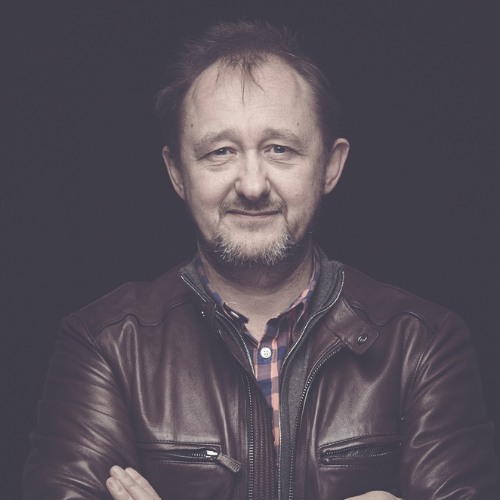
Andrew Upton is a Sydney-born writer, director and producer whose career spans theatre, film, television and audio. From 2008 to 2012, Upton was Co-Artistic Director and Co-CEO of Sydney Theatre Company alongside Cate Blanchett, before serving as sole Artistic Director from 2013 to 2015. During this period, Sydney Theatre Company expanded its national and international touring profile and undertook the landmark Greening the Wharf sustainability program. He has written for London’s National Theatre and Broadway. He is currently a principal of Dirty Films and co-creator of Audible’s climate podcast Climate of Change. His debut novel Krank Fuss was released in 2026.
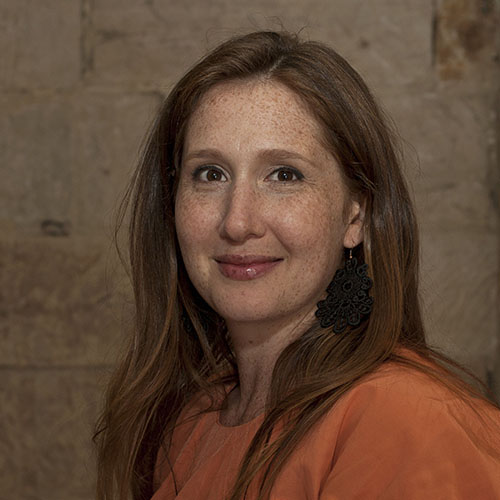
Michaela Kalowski
Michaela Kalowski is an interviewer, moderator & curator for writers and ideas festivals. Highlight interviews include Margaret Atwood, Zadie Smith, Bora Chung, Tim Winton, & Stan Grant. She was curator of Big Weekend of Books, ABC RN’s annual on-air writers’ festival for five years, until it finished in 2024. She produces & hosts a monthly books conversation event for Petersham Bowling Club. Michaela has conducted radio interviews and presented programs across ABC radio & TV. She's co-presenter & co-writer of a two-part podcast for ABC RN, tracing part of her family’s history, called Laya’s Way Home.