
Vanishing Histories
Because these women were sort of Australian, but they lived a lot of their lives overseas, they didn't quite fit into conventional narratives of Australian history. Nor were they really part of the mainstream of American history, so they sort of slipped between the cracks in the national narrative.
Miles Franklin is a literary legend now, but her story, and those of women like her, were nearly lost to the passage of time.
Kerrie Davies unwinds the mysteries of Miles Franklin’s lost years in Miles Franklin Undercover: The little-known years when she created her own brilliant career, constructing a real-life sequel to My Brilliant Career using never-before-published material. Yves Rees dives into the early days of Australia’s relationship with America through the forgotten lives of 10 Australian women, from an artist to an advisor to JFK, in Travelling to Tomorrow: The modern women who sparked Australia’s romance with America.
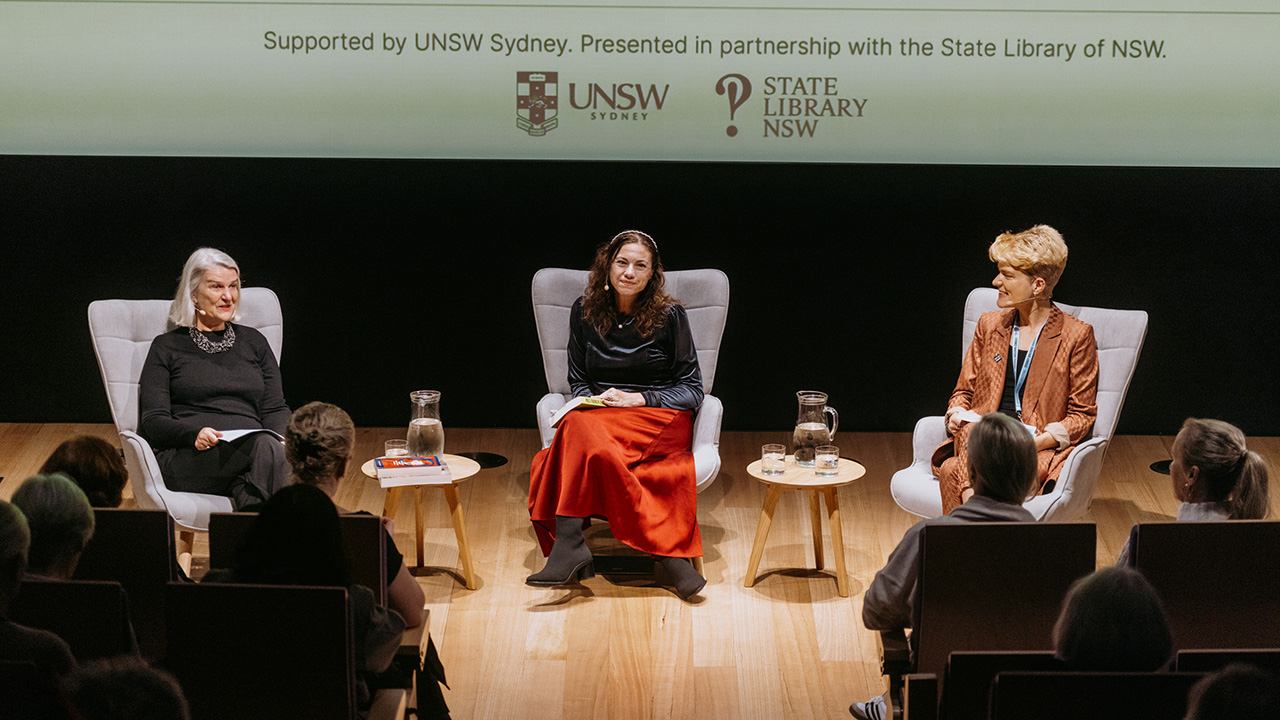
Hear Kerrie and Yves in conversation with journalist and co-editor of Hazzard and Harrower: The Letters, Susan Wyndham.
This event was presented by the Sydney's Writers' Festival and supported by UNSW Sydney. Presented in partnership with the State Library of New South Wales.
Transcript
Susan Windham: Good morning everyone. I'm Susan Windham, and I'm very happy to welcome you here to one of the first events of Sydney Writers Festival, and the first of a full day at the library, which I hope you'll be able to stay for.
I would like to acknowledge the Gadigal people of the Eora nation, the traditional owners of this land, and pay my respects to the elders past and present, and to any Aboriginal and Torres Strait Islander people who are here today.
As I said, I'm Susan Windham. I'm a journalist and writer, and I've been doing my own research into a somewhat forgotten Australian writer, Elizabeth Harrower, for a biography that will be published later this year, just getting my little ad in.
And so I'm particularly interested in this conversation today with two authors who have brought back to life in a very vivid, vibrant and interesting way, some forgotten but fascinating Australian women using deep research and as I say, great creative thinking.
First of all, I'm pleased to introduce Yves Reese, the author of Traveling to Tomorrow, the modern women who sparked Australia's romance with America, and an earlier memoir All About Yves: Notes from a transition. Yves is a senior lecturer in history at La Trobe University, and, among many other things, co presenter with Claire Wright of the podcast Archive Fever, which will be recording a session here later in the week.
Kerrie Davies is the author of Miles Franklin Undercover, the little known years when she created her own brilliant career, and another work of creative biography, A wife's Heart about the troubled marriage of Henry and Bertha Lawson. Kerrie is a former journalist and now senior lecturer in the School of the Arts and Media at the University of New South Wales, and was a visiting fellow here at the library last year for much of your research. Now, there are a lot of points in common and overlap in your books, although they are set in somewhat different times.
However, perhaps the main thing is that Miles Franklin and the 10 women that Yves writes about, all spent at least part of their lives in America, and we'll spend some time on that in the early 20th century, though they were there, they are both meticulously researched books by Dr Rees and Dr Davies with extensive End notes and sources, and yet written with a lightness that is not typically academic and employs varying degrees of imagination.
So first, I'd like to ask both of you how you were attracted to your subjects, and what was your starting point.
I think Kerrie, let's, let's begin with Miles. You know, we can hardly say that Miles Franklin is a forgotten figure vanished from history as the novelist who wrote My Brilliant Career. She's one of Australia's most famous writers. She's been the subject of a huge and thorough biography, by 700 page biography by Jill Rowe and many other books, films, plays, etc. And of course, there's the Miles Franklin Literary Award and the Stellar Award that memorialize her. Does the average person know the name Miles Franklin these days?
Kerrie Davies: I think they should, at the moment, just because of the prize has just been announced for the long list, which has got some really exciting novelists on it, like Tim Winton at the moment. So I do feel that she's vaguely known, or that even it's kind of one of those abstract figures from the past.
Susan Windham: Do people read My Brilliant Career? I don't think so.
Kerrie Davies: I think that it's more the movie. I think people, or some people, though, would have read it when it you know, just maybe around the movie, but it's just also known as well. It's part of Australian literary history. I mean, she wrote it when she was 21 and it was like this shout to this generation going, I don't want babies in the bush. You know, this is not my life. And she had all these women, young women, writing from her all around Australia. This you've said what I am screaming inside. So she really captivated at the time, yeah, so she is. And then I think the film really kind of reignited that.
Susan Windham: So with that forest of material already in the world, what drew you to her?
Kerrie Davies: I kind of realized, and I seem to work, terrible academic, I work retrospectively. I just sort of do it, and then I work out what I've done. So for the first I know it doesn't go down well. For grants, they're like, Yeah, I just kind of feel my way. Doesn't really work. Did you get a grant for no. Like, no. So basically, I, first of all, like, The Wife’s Heart, I essentially, kind of come in through these social side doors, which is what I've retrospectively realized.
So with The Wife’s Heart, it was about Henry Lawson and Bertha's marriage and her becoming a single parent in 1903 and how she put him in jail for not paying his child support, which I was like, really, that happened, and I am amazed. So I was very much interested in that as a single parent myself at the time, so similar to what you've done, you know, wove in my own story with, you know, their story. And then coming to Miles, it was a former journalist. I was interested in undercover journalism. I was actually just researching about journalists in the 19th century, actually for a research gig. Then came across this throwaway line that Miles Franklin worked as a servant in search of literary material. And I was like, she's what, like, you know? And as you said, Jill Rowe’s exhaustive. It's like, weighs a kilo. I just literally waited. It's amazing. Apparently she even researched what pencil, you know, Miles preferred, but, and this is covered, but only just a few pages, it's like, and all her other biographers were like, oh yeah. Well, that didn't work out. So moving on.
She had such a huge life, you know. And so I was, like, really interested in this idea of, like, I guess, the part biography, or you just so my book saying, like, 1901, to 1915 you know, because it has, you know, the whole cradle to grave doesn't really interest me. And also, it's been done so definitively. Why would you do it?
Susan Windham: I think that's about 200 pages of Jill Rowe’s, you know, 500 page story of mother's life. So, yeah, you know, you've really, yeah, um, zoomed in. Let it breathe.
Kerrie Davies: I was like, look, let's let this life breathe. And this is a really formative time for her, like a sort of joke to my publisher, I was like, oh, it's like, the real life sequel to My Brilliant Career. And she was like, Oh, that's great.
Susan Windham: So how did you begin? I mean, where did in terms of research? Where did you go?
Kerrie Davies: Well, first of all, I was very focused on the manuscript that she wrote for while she was working undercover as a servant for a year, and that's here at the State Library as part of her voluminous archive. It's the most extraordinary archive that she left. So it's about 100,000 words, and it just details how she worked undercover as a servant to answer what was called the servant question at the time, because all the girls were going to the factories and you couldn't get a good servant, which, you know, so much for the myth of equality, pretty much from middle class upwards, it was a status symbol to have a servant. So she was like, Well, this is a way. She didn't have much money by then.
You know, despite My Brilliant Career, doing so well, as a lot of authors know, your name might be known, but you might not financially. She was also screwed over by the royalties, the colonial royalty, because it was published overseas. So she was really needed money, and didn't want to live at home with the parents, which was at Penrith at the time they'd moved from the farm. So she decided that she would go work undercover as a servant, like she went what's called Gonzo, which was a lot of American and UK, particularly American journalists, had done that already, and that's how they were making their name in news. Like Nellie Bly.
You know, she went undercover in mental, notorious mental health institution in New York, because Pulitzer said, “Well, you know, why don't you just get yourself admitted and we'll come and get you after 10 days.” And she did, like, God, you know? And that caused a massive expose. And of course, that started a trend, but it got this is what you had to do as a woman to be noticed. And so she was a bit influenced by that. There was a woman in England that did a similar kind of upstairs downstairs, and had an autobiography around about in 1903 so I think that's and Jill Rowe kind of suggests that too, that she was perhaps influenced by and then that started the manuscript of her working in all these houses in Sydney and Melbourne, which, miraculously, still, some of them exist, especially for Sydney.
Susan Windham : Yeah, yeah. We'll get into the detail of her life a bit more in a while. But as well as the manuscript, of course, there's a whole Miles Franklin archive and all that's written. But did you spend a long time reading before you wrote?
Kerrie Davies: You know, it's been because I mainly focused on the Undercover manuscript at first, but then as the book became like it was going to be more a part biography. And the lead up, that's when I and after what happened, that's when I really at least started getting into her diaries and her journal, her articles. But obviously the letters from the family were really important. And to, you know, people in her orbit, like A.B. Patterson, who was very flirty, was a bit of a bachelor at the time.
And so a bit like, you know, in Hazzard and Harrower, which is your book at the moment, with Brigitte, all of us, you know. You see the relationships evolve between people through their letters, and you see the tensions and the flirtations and you know, and so much unsaid, but so much said with and then, of course, the handwriting, which you know, everything's all handwritten, so everything's been kept it's everything from her fan letters right through, has been kept, except maybe a couple of the early diaries. You know, they can't be found. I don't think that were mentioned in the undercover she kept the diary. So, yeah, it was very much Miles world.
Susan Windham: How many years have you worked on this?
Kerrie Davies: It started just before COVID, you know? So it's like, BC,
Audience Laughter
Kerrie Davies: And then I just, I was originally just going to publish it as just an edited manuscript with an introduction, but that didn't really work for a few reasons. Made the links and just was told it didn't age well. And I was like, “No”, you know. So that's when I more creatively thought about it.
So I think you kind of come back in and out with projects, I don't know if you find that as well, like you sort of leave it for a while, and then you come back. And then I started experimenting, and then connected with my wonderful publishers, on and online, were like, well, you know, if you and when, that's when we agreed on the part biography from 1901 to 1915 and just showing that arc up to the how she ended up as a servant, how did you end up in this place? Which is, you know, where it starts, and then, of course, what happened afterwards, and then stopping around the wall, and then it can go on.
Susan Windham: It's fascinating. Fascinating. Yeah. Yves you, your book tells the story of 10 Australian women who went to live in America, but that small selection came from a much bigger research project. Could you tell us what work you did and why?
Yves Rees: Yes. So that final group of 10 was a distillation of a bigger research project in which I found 700 Australian women who lived and worked in the United States in the early 20th century. So I had a very unwieldy spreadsheet with all those names, and I had to kind of get it down to that small number for this book.
Susan Windham: Can I just ask how you found them? Where do you go? Where did you go?
Yves Rees: I might just step back to the genesis of the project. So I guess for me as well, it was a kind of, you know, a personal my own biography kind of intersected with the lives of the characters in that I'd done that classic Australian thing of being a cringing colonial and going to study in London to get some, you know, Metropolitan polish, and thinking I was returning home to the mother country, and I'd feel this sense of connection. And I didn't. I got there and it was grey and cold and people made convict jokes. It all felt very outdated and tedious. And then, just after I lived in London, I went to live in America for a while, and I had the complete opposite experience. I just was completely enraptured by this, you know, entrepreneurial, open minded, ambitious society where it felt like anything could happen.
Susan Windham: You were in San Francisco.
Yves Rees: I was in San Francisco. Yeah, in 2011 so kind of at the beginning of the sort of Silicon Valley tech boom. And you know, we all know that world has its problems, but it was also a very exciting place to be. And I guess that got my historian brain thinking of I feel like I know we know a lot in Australia about all the Australians who went to the UK. That feels like a very familiar narrative. But were there Australians a century ago who went to America and sort of found a sense of a different metropole, a different model for Australia in the United States? And I went looking in the archive to go back to your question.
I looked in for collections of personal papers, for newspaper articles which might have been digitized thanks to Trove the National Library's wonderful digitized Newspaper Database. And I thought I might find, like maybe a dozen or so names of women who'd undertaken this trajectory. And instead, I very quickly found a few 100, and then that spiralled and more and more went up to 700 and then I thought, yeah, this is this is. This was a thing. This was a phenomenon that deserves a book written about it.
Susan Windham: And that suggests that even though we're treating these women as fairly unknown names now, there aren't many that are familiar. They had been interviewed and had some, well certainly, success and some fame at the time. So there were interviews with quite a lot of them weren't there in magazines and newspapers.
Yves Rees: There were, and I think that's partly a reflection of the fact that in the period I'm looking at, sort of from the 1910s to the sort of 40s and 50s, international travel was still relatively unusual. It largely happened by boat. And if, if a person of any kind of note did happen to travel overseas, they were often interviewed before they left or when they returned, particularly when they returned, reporters wanted to know about their impressions, because America was a pretty unknown commodity. There was a sort of real curiosity about what's it really like in Hollywood. What's it really like in New York? Is it like what we see in the movies?
But as you say, Susan, a lot of these women were also very well known in their lifetimes. They were, you know, national leaders in their various professions. They were some of, you know, one of the woman is when this book is, you know, Australia's sort of most popular novelist of the day for a brief moment. I call her the Leanne Moriarty of the Jazz Age.
Audience Laughter
Yves Rees: And so it's kind of, actually, you know, they never would have predicted that they would become so forgotten. And I think the fact that, you know, I think really none of the women in this book are household names. In the way that Miles Franklin still is a household name thanks to the prize, if nothing else, is a testament to kind of two factors. It shows the misogyny of Australian culture and Australian history that we still narrate our history through these male dominated narratives of, you know, Gallipoli, Anzacs, convicts, sports people, and also the fact that these were women who lived between two nations.
And the way history-making works is it's so focused still on the national you know, the nation state as container. And because these women were sort of Australian, but they lived a lot of their lives overseas. They didn't quite fit into conventional narratives of Australian history, but nor were they really part of the mainstream of American history, so they sort of slipped between the cracks in national narrative.
Susan Windham: The expats always had that problem, and I think still does absolutely. Yeah, just thinking about Shirley Hazzard, who is in Book of letters that I co-edited last year between Shirley and Elizabeth Harrower. Shirley lived in New York, and she was very well known over there. She became well known here, but it was a struggle. Yeah, it was, anyway, that's another thread. But how did you narrow it to the 10? Was it the people that there was the most material about or the most exciting stories, both?
Yves Rees: A bit of both. I guess I wanted to distil it down, because I wanted to use your wonderful phrasing, Kerrie, give some individual stories a chance to breathe. I wanted to kind of create a sense of taking the reader on journeys of specific lives, rather than just talk in a larger, more abstract level. And I sort of, I guess, I had a few constraints.
I needed archives big enough to sustain, you know, a more fully fleshed out narrative, because so many of the women I did discover in my cohort of 700 sounded absolutely fascinating, but I would often just have one newspaper article, just a little scrap that hinted at this incredibly complex life that perhaps could sustain a whole biography. But I just didn't have the archives. So I needed women who'd published memoirs or autobiographical novels or who had collections of personal papers and things like that.
And also, I wanted characters to illuminate the kind of more general trends that I'd seen play out in my research. So I wanted, you know, I wanted to have people who worked in the performing arts and the visual arts, but also in the professions to kind of eliminate the range of professions. I wanted women who had been forced to come back to Australia prematurely, because that was a really common and often quite tragic trajectory. And I also wanted women who had not only been influenced by the United States, but who had influenced America itself, and had kind of taken Australian ideas to the US.
Susan Windham: We'll come back to some of those. Let's get into some of the specific women's lives.
And Kerrie, I'll come back to you. You begin when Miles is kind of riding high on My Brilliant Career in 1901 and she had high profile admirers and mentors and suitors and exploiters and, you know, I mean, you open up this wonderful cast of people with Henry Lawson, Banjo Paterson, A.G. Stevens, the Bulletin critic, the publisher, George Robertson, the suffragists Rose Scott and Vida Goldstein and all those people were really paying attention to Miles.
If you want to say a bit about that, why didn't it lead to more success for her?
Kerrie Davies: I think it was a choice for her, as much as circumstance as well. Because, yeah, she was in this wonderful sort of celebrity circle. And Rose Scott, the feminist, called her a “spirit child”, you know, Norman Lindsay, of course, was married at the time. Was like, Oh, she's like, our Marie Bashkirtseff, which was a teenage Parisian memoirist that said, “I am my own heroine,”. And apparently influenced Anais Nin, she was called the Charlotte Bronte of the bush. So she could have just kept floating around and being one of those B-list celebrities, you know, while she figured out her next book. And she was driven by writing, definitely, she saw it as who she was. She says, “Why do I write?” You know, in My Brilliant Career, “why do we?” in Beating Hearts. And she kept writing, and she said she would write in a fever, archive fever.
But her next book, which was the follow up to My Brilliant Career, was just seen as too defamatory. She was already had been warned that, you know, look, it's fine to make fun of country bumpkins, but not the better class and, you know, and that's what she was told. And so she was frustrated by that. She also wrote another book that later became, I think, Cockatoos, and also the sequel then got rewritten much later in life. So she would just not really rewrite or draft or take on the feedback and go, “Okay, maybe there's another way of working with this”. She would just leave it and move on. She was always kind of, you know, onto the next project. Partly, I think that was financial, you know, she wanted the money. She needed the money. But also it was her way of writing. And “it was like, okay, right next”. And so I think the publishers got quite frustrated.
I do think there was a bit of misogyny one of her later books, as well as I call, you know, Everyday Folk and Dawn that was written, I think 1905 so poster servants. It was like, Oh, no one wants to know about famine. You know, voters, women voters. You know, she did actually get that published later in England while she was in the States. Sorry, but it was published in England, I think because of the suffragette movement there. But it was just like, yeah. She just kind of kept going around in circles.
But she could have married, that's the fascinating thing.
Susan Windham: She could have any number of men
Kerrie Davies: She had numbers. Her sister's like, “Well, you can be Mrs. Banjo, you know”. And she was like, “Oh…”
Kerrie Sighs
Audience Laughter
Kerrie Davies: and, you know? And he wanted to collaborate, because I think he wants her talent as much as you. Because there was talk about collaboration. He was like, “You can do the tears and I'll do the thrills, you know.” So you can just imagine, yes, he's an extraordinary journalist and war reporter, so I'm not sound like I'm dissing on Banjo, but, you know, he had his talents as well. But yeah, he was very much of his time so.
She also had lovesick farmers, bachelors, everyone was lending her their favorite horse,
Audience Laughter
Kerrie Davies: And her grandmother's like, “Oh, you know, if you found anyone you like better than yourself,” like the grandmother, like someone that like Violet and Downton Abbey. I just had visions of her…
Yves Rees: I love the photograph of the grandmother in the book. She's so stern and intimidating,
Kerrie Davies: Yeah I know, and so to resist that pressure at that time, talking about resisting the status quo is so hard. And she kept going, “No, no, no”. And then eventually hit on this, you know idea, which horrified her family, you know, that she would then go and work as a servant. She said, “to be a nurse, that's okay, but a servant horrified my circle”. And she just disappeared, and pretty much didn't really kind of come up under the real radar, I think, until the 30s, when she won the prize for All that Swagger and lots of pseudonyms and stuff for Brent of Bin Bin and…
Susan Windham: She had so many names, didn't she? She sort of got lost among her own split identity.
Kerrie Davies: Yeah, she almost didn't, didn't want to know about My Brilliant Career anymore. She didn't want it published anymore after, I think around 1908 or something, she was like, 1910 she was like, “Right,” to the publisher, “I'm done”. And everyone kept asking her about it and she’s like, “be a good journalist. Stop asking me about My Brilliant Career.”
Susan Windham: Yeah, early success is sometimes a blight…
Kerrie Davies: yeah. So she really struggled with that second book problem, you know. And I think that really, you know, that's where she was at that stage. But certainly she could have just hung out with Rose Scott and been her spirit child and hung out at salons and talked about feminism and, you know, and had this very nice life. And Sydney is basically Rose Scott's all, but literally adopted daughter, but she found Rose a little suffocating at times, I think. And again, she was very independent, like this woman. “There must be something more I need to keep myself”, which is so strong even now, to have that.
Susan Windham: yeah, really extraordinary. I mean, she was so different from her sisters, wasn't she?
Kerrie Davies: Yeah,
Susan Windham: I wonder where this spirit comes from?
Kerrie Davies: I think her Grandmother's wit, that's definitely there, but yeah, I just see, yeah, you kind of wonder where you are. I don't know, from people and families, I'm like, the changeling of my family. Like, where did you come from? You know, where I've got other friends that come from really literary families, or, you know, intellectual families, and they're much more kind of, “Ok well, you're one of us, you know?” So I think sometimes you are this little changeling that bursts out, you know.
Susan Windham: And with the novel based on her time as a servant, she ran into that same problem of potential defamation, and because she was really a journalist, in a sense, wasn't she? She couldn't move too far away from the facts of what she was observing. Would you tell us a little bit about the content of that story and the problem?
Kerrie Davies: The problem. So basically, yes, she'd already been warned with particularly the sequel. You know, My Brilliant Career, she said everyone had gone snake headed over it. But this time it was, yeah, My Brilliant Career, the sequel defamation. So, you know, you would think, okay, I get that.
No, what she does is she goes and works undercover in like, Richard O'Connor's, he was the Senator that brought in franchise for women, for women's vote, led it like a wonderful, and quote “the hand side”, which I found in the book of this great dialog between all the senators discussing it.
He then went on to be a high court judge, and she ended up working undercover as a servant. She called herself Sarah, which was one of her middle names. So Sarah Franklin. And yeah, so she was working and he was then a high court judge. You know, you can imagine a publisher was like passing out. Someone else was like an engineer family in Melbourne. It was a wealthy Toorak family. And she, I think the mistress - they called them the mistress - eventually worked out when it came out she'd been a servant, The Bulletin basically outed her towards the end, and then she wrote a letter. She invited her to tea. So connected through Vida Goldstein. And was like, “Who is this well-spoken little you know, calls herself Sarah,”.
She'd kind of flirt with a naval officer at the boarding house, the posh boarding house, which, incredibly, is still on Kirribilli. Along that front street of Kirribilli, you can walk past it, of course, it's luxury apartments, as everything is in Sydney now, but still there. And so, you know, she was flirting there, and she'd quote Shakespeare at him, and he'd be like, “What? No, you're not a servant. Servants don’t know Shakespeare”.
Audience Laughter
Kerrie Davies: So it's quite extraordinary.
But of course, there was this litany of people that could turn around and sue, and she wasn't exactly complimentary. Like she called Richard O'Connor's wife, she [Miles Franklin] got told off for lean too pretty. And the cook was calling her the old demon. So the Irish cook in the house was calling, Richard O'Connor's wife, the old demon. So, you can just imagine, and she's calling all these other people who were really idle, like lazy and…and it's just like the bald-headed man that's boss of his own backyard, for the engineering, you just like…
Susan Windham: oh, so she's a satirist, isn't she just to an extent…
Kerrie Davies: She's a social satirist. But, yeah, it just didn't work. I think defamation really did curtail it. That's pretty clear. But also it was very long, and also she changes point of view halfway through. So first of all, it's like a memoir, like very much undercover. “I was Mary”. The book is called Mary Ann, you know, a slavey, but when I was Mary Ann, a slavey, but she actually called herself Sarah Franklin. So, you know, she hadn't thinking she was undercover. Yeah, these layers and layers, and nobody knew what she looked like at the time. Far, a couple of photos. So she Yeah, she thought she was being really clever, but it was like, chiffon, you know, it was so easy, and Sydney and Melbourne are so small. So she initially is doing, I, I, and then she then starts referring to herself in the final manuscript as Mary Ann. And it's like…
Susan Windham: What?
Kerrie Davies: Yeah, and you can work with that. So I don't know if that is the final draft. It's very neat. It's all handwritten. So it possibly was. It definitely needs revision. It needed some heavy revision, and let alone the defamation.
Susan Windham: And she was resistant to all of that.
Kerrie Davies: She just moved on to the next project. Well, she ended up doing freelance journalism, which I think, AG, Stevens kind of went, “Okay, you know, let's get this girl. You know that she's got all this talent and she needs an income”. So he pretty much continued the journalism, which she was great at, for the Bulletin for the and also Sydney Morning Herald. Oh, yeah, right, yeah. But she wrote under the vernacular, which must have drove the editor…
Susan Windham: The name the vernacular?
Kerrie Davies: Yeah, yeah. She started going under pseudonyms, rather than a name, which was must have annoyed the editor, because he would have wanted the name to sell.
Susan Windham: Well, it's no wonder she took off for America.
Audience Laughter
Susan Windham: But we'll come back to Yves, because this is a Writers Festival, and we're talking about writers, I thought we might just pick up the couple of writers in your cast of characters to start with.
I knew nothing about Dorothy Cottrell, and yet, in the 1920s she was probably better known than Miles Franklin.
Yves Rees: Absolutely.
Susan Windham: As a current writer, for sure. Could you tell us her story? It's absolutely fascinating. She went through so much.
Yves Rees: Yeah, so Dorothy Cottrell is the writer that I referred to a few moments ago as the Leanne Moriarty of the Jazz Age. She was from Queensland. She was born in the first years of the 20th century and contracted polio as a child. So from the age of about five, was in a wheelchair and lived in a wheelchair for the rest of her life. And you know, you can imagine that that, given ideas of disability around that time, that she would have been expected to have quite a small, quiet life. But Dorothy wasn't having a bar of that.
This was someone who had an enormous personality right from the beginning. So she mainly grew up in a sheep station, a family sheep station, in central western Queensland, but became determined, first to become an artist and then to become a writer. She would sit out for hours on the family sheep station and scroll manuscripts under the Jacaranda tree.
And her first novel that she wrote was called The Singing Gold. Which, again, was a very autobiographical novel which told the story of Dorothy's own kind of brilliant career, because not only was she in a wheelchair, but she had a very dramatic elopement.
When she was about 20, there was a young man called Walter who came to work on the family station, and Dorothy and Walter fell in love, and then they got married in secret in Brisbane, because Dorothy was under 21 so they'd need parents permission. So they just snuck into a church and got married, and then didn't tell anyone about it for six months. Kept just living as if, as if normal on the sheep station.
And then one day, Dorothy and her new husband, Walter, they just absconded from the station. They came up with this elaborate ruse about how they had to visit a friend. They cut the telegraph wire that was connected the station to the outside world…
Audience Laughter
Yves Rees: Like it was very melodramatic, kind of excessively. So Dorothy just clearly liked to cultivate a bit of drama. And then they went off. They got the train east to the coast, and then washed up on Dunk Island, which, as some of you might know, is an island in the Whitsundays, which Dorothy had been obsessed with for years because she'd read a famous memoir about Bancroft, this travel writer who lived on the island.
So she's in a wheelchair, newly eloped, living on a remote tropical island. Her family are pretty unimpressed by this situation. She gets some very stern messages telling her to come home, but she isn't bothered. She just, you know, thinks they've made a big fuss out of nothing. Eventually, the money runs out, essentially, and she and her husband are forced to come home to the station.
But then she's decided, “I'm going to, I'm going to turn this into my story, my novel, and sell it and make make a motza”. So she writes the story of her own elopement into this novel, The Singing Gold. And, of course, Australians of this era, this is sort of in the mid 1920s they normally published in London as Miles Franklin did with My Brilliant Career. But Dorothy, being so entrepreneurial, was like, “I've heard you can make a lot of money from selling books in America. There's a big mass market there”.
So she just sends off her manuscript cold to the slush pile of the Editor of The Ladies Home Journal, which is one of the biggest magazines in the United States at the time. Incredibly big circulation, and miraculously, the journal, the editor, picks it out of the slush pile, reads it, loves it, so sends her a telegram to this station in the back of beyond in far west Queensland, saying, “I want to publish your book for $5,000”. Which in, you know, 1927 is a lot of money, and “I'm going to serialize it first in the journal, then I'll publish it. I want to help you develop your career. You know, you're going to be a celebrity”.
So she kind of gets plucked out of obscurity and turned into a star, and she had an important mentor in this process, Mary Gilmore, who some of you might know is a very esteemed Australian poet. And Mary Gilmore actually later said that Dorothy Cottrell was one of two encounters with genius in her life. The first was Henry Lawson, who Gilmore discovered in the 1890s and the second was Dorothy Cottrell. So she was putting them on equal footing. And I mean, of course, we all know who Henry Lawson is today, but what about Dorothy Cottrell completely forgotten.
So she publishes this book. It goes gangbusters in the United States, and she goes off to chase the celebrity and the money. She migrates with her husband to California and goes on to have very long career in the United States. Unfortunately, her fortunes take a tide for the worse during the Great Depression, and she goes from being very, very wealthy to almost penniless overnight. But then she, kind of … builds herself back up and spends the rest of her adult life in the United States.
Susan Windham: Perhaps you could use her just to illustrate one of the problems some of the women ran into, which was the visa quota for Australians. She had to wait, didn't she, to get to America?
Yves Rees: Yes. Well, in our in 2025 under Trump, we're all newly familiar with the difficulties of United States border control. I suspect some of you in this room might have thought twice about going to the US for a holiday. Well, funnily enough, in the 1920s Australians had kind of similar difficulties.
So we all know this was the heyday of the White Australia policy, where Australia had very restrictive immigration regime to keep Australia white, Australia for the white man, as the Bulletin put it.
Now the United States, at this time, they decided to copy the Australians. They thought, “These Australians have done such a great job at protecting the whiteness of their nation. We've got all these immigrants coming in from Southern and Eastern Europe, who, you know, we feel a bit uncomfortable about, let's copy these racist Australians”.
So the Americans came up with their own elaborate system, basically to screen immigrants that they thought were undesirable from migrating. This was brought in from 1921 and was known as the quota laws. Now, like Australia, Australia had the dictation test, which gave this veneer of it not being racist. So any person coming in could be asked to do a dictation test in any European foreign language.
The United States decided to do their own kind of non racist, you know, scientific way of eliminating undesirable migrants, which was to assign national quotas. So each sending nation were given an annual quota of migrants they could send to the United States, and they calculated this very carefully. So funnily enough, the UK got a really big quota, but Italy got a very small quota. It was carefully calibrated along racial lines but seemed objective.
Now, the kind of the funny fallout of this system was that Australia had a very small quota, mainly for a lot of complicated reasons, which I won't go into, but partly because our population was just so small. The irony was that the Americans were very explicitly saying they were emulating the White Australia policy. They wanted to be like us, but white Australians suddenly couldn't migrate to the United States. Love it.
They would often, and this is what happened to Dorothy Cottrell and many other women in this book, they'd try and apply for a visa, and they told that year's quota for migrants had been exhausted, and you'd have to wait months or year, or sometimes they would kind of be ignorant of this whole system.
They'd just get on a boat and get to New York or California, and then they'd be told at the border, sorry, you can't come in, and they'd be put in immigration detention, sometimes for, you know, even weeks, because they were in breach of US immigration law.
And you know, one of the women in this book was actually effectively deported for overstaying her visa. In similar circles…
Susan Windham: That was Cynthia Reid, wasn't it?
Yves Rees: That was Cynthia Reid…
Susan Windham: Who is known as Sydney Nolan's wife, but and as a writer, had a whole life in America. Which I don't think we have time to go into, because time is running along, but she's a fascinating story too. Yeah. I mean, Australia could only have 100 people after 1929.
Yves Rees: Yeah, 100 people a year could migrate than that.
Susan Windham: And there was much more demand that obviously.
Yves Rees: So much more. And this is one of sort of the arguments of my book. All the Australians I looked at, who went to the United States, almost without exception, they loved it.
They loved it more than Britain, if they'd been to Britain. They really thought America was a better model for Australia, a better kind of metropole that we should be emulating.
But I basically think that turn to America would have happened much, much earlier and much more forcefully than it did, that cultural turn, if it weren't for these migration restrictions. Because the demand was there.
Australians loved America. They wanted to go there. A key factor we kept going to Britain in such greater numbers was the absence of migration restrictions. There was no until the 60s. There was no limits on the number of Australians who could go and live and work in the in London, in the UK, and that kept us in that traditional Imperial orientation to the mother country, when it could have shifted in the other direction earlier.
Susan Windham: Thank you.
Kerrie, why did Miles Franklin choose America in 1906?
Kerrie Davies: That is a question that relates to what Yves was talking about, and Vida Goldstein, who was one of her mentors, Spirit Sister, if you want to call her, as opposed to spirit child, Vida and her family were actively encouraging Miles to go to the States, because Vida had been there in around 1902, to sort of promote the woman's vote. The first suffragette conference that was in the States, and just loved it. And talked about, you know, what Chicago was like, and meeting the President, and the fish room, and just, you know, really kind of encouraged her, saying “There's money to be made there. This is where publishing is happening. Forget about England.”
And also, she'd been quite burnt by England, with the colonial royalties. Books had been rejected as well. And so she was like, “You know what? Let's just try this one.” And it's such a gutsy thing to do. I mean, I know we've all got students. We're about to go back to semesters from terms, so our holidays will now coincide with Sydney University, and the students are like, “Great, I can go to Europe with my friends now, but not all of them. But, backpacking is like, you know, a tradition. But it's at a time when to get on by yourself as a single woman is quite a brave thing to do. So Vida set her up with some friends in California so she would have people to meet.
And interestingly, you know, thinking about the complex relationships that we have with our mothers, you know, and thinking about Shirley Hazzard’s mother, for example, it’s her mother, which was always trying the marriage line. The marriage line going, “Oh, what's Miles doing now,” but then would quietly sew her white dresses and save her manuscripts. And then when, when she said, “I'm going to America,” said, “Well, I wanted to, but I got married”, so I thought that was such an interesting… that was in one of her journals, one of those little throwaway lines in one of her journals are in the library here. And I was like, Wow. You know, the mother actually had this whole life boiling inside her as well. And so off she went on the ship in 1906. But she called herself Stella. She'd pretty much left Miles behind in Australia. Like, Stella was, you know, her first name, she good
Yves Rees: She had so many middle names.
Audience Laughter
Kerrie Davies: I know, I wish I had that. She’s like, “Which one should I use know?” Miles is actually one of her middle names. And she actually, as an aside of why she used Miles, because she didn't want to be known as a woman. But, of course, when she wrote My Brilliant Career. But of course, Henry Lawson said she outed her, “Oh, she's just a little bush girl”.
And she also wanted to have My Brilliant Career with a question mark, and they just ignored that as well. So you know, and I think this whole question mark over, what is my going to be My Brilliant Career? Because that book is kind of not working out financially, even though people still know my name was going to the States and starting this whole new life and identity. So she left Miles behind, very much became Stella again.
Susan Windham: But it didn't really work out for her as a writer. Did it?
Kerry Davies: No.
Susan Windham: She did lots of other things. Tell us about the different parts of her life there.
Kerrie Davies: Well, first of all, it did work out as a writer, in terms of journalism.
Susan Windham: Journalism, yeah.
Kerrie Davies: But not as an author. She basically went to California and, of course, sailed somewhat dramatically into two weeks after the San Francisco earthquake. So she comes into this utter devastation, of course, and having that wonderful, curious, journalistic mind, instead of being scared on the ship, she goes, “Oh, let's get out there and go”.
And she'd made a friend that she called Jonesy that was off to the Seventh Day Adventist, headquarters in California. So the two of them went in and she captured all these evocative scenes of the whole class system breaking down. Guys in top hats getting called on to grab logs. And, she loved horses, so she was really upset to see the horses, like, dragged into exhaustion. Because all the trams and everything had stopped.
And then through that, she also made, she contacted Jack London. She was like, “Oh, I'll just call”, you know, because Jack London wrote one of the most memorable works as well about San Francisco and the earthquake. So she wrote to Jack London, and I think she was trying to get Mary Ann published in the states, like the undercover servant work, because she must have spoken to him about it. That original letter to him, unfortunately, is not in his archives or here, but we've got his reply, which is like, “Are you a socialist?”
Audience Laughter
Kerrie Davies: Because he was a socialist. So he was like, “But sorry, I don't help anyone. Helped a couple of people once, and, you know, won't I don't help anyone, as a rule, even my friends. So good luck with that”.
Susan Windham: She was very bold. Wasn't she?
Kerrie Davies: Yes, she was very bold, yes. She had that strength of spirit. Just ask for what she wanted. And then she was like, “Oh, okay”. So then, because she couldn't stay in San Francisco, her friends in New York had gone they'd gone to Europe, so instead, they set her up with Jane Addams in Chicago.
So Jane Addams was this incredible social justice advocate that had set up Hull House that is still there in Chicago, and it was like where all the new migrants that America was trying to keep out later were coming to work in the abattoir and all the Chicago factories. It was just this extraordinary city.
So she went to Chicago, and that's where she kind of, she kept writing at night, but again, nothing really flew. And I think she was too busy having a living as well. I mean, she still wrote. She did publish in 1908 one of the earlier books. She reworked that, and then she also wrote another book that she wrote in the states that was published at the start of the war under an anagram of Talbingo, like another currio which has sort of been lost, right? And I think hardly any copies, and that got so they kind of got published smattering, but she didn't have that big author published in success, no? And I wonder that's such a good question, why that was so. And I think it was so much captivated with having a living.
Susan Windham: She really worked for the union movement, didn't she? And worked in offices, and
Kerrie Davies: Yes, yeah, she was surviving,
Susan Windham: Yes, but also doing good work.
Kerrie Davies: Oh yeah. She said she fell in with all these wonderful feminist advocates for working women, who were pushing for the vote in the States, which actually didn't happen to happen to 1919?
Yves Rees: 20,
Kerrie Davies: Yeah, 20, that's right.
Susan Windham: So after Australia?
Kerrie Davies: oh, yeah, yeah, yeah.
So it was quite extraordinary that she was with these amazing women, and I was just like, instantly fascinated with them all, as well as some the millionaire reds like the socialist millionaires, you know, William Lloyd and his life, Lola Lloyd. And they looked after her in this little town outside Chicago. It looks like a Ralph Lauren ad it's called Winnetka. When she had a major health episode, they looked after her. So all these wonderful people just kind of welcomed her.
So she was in the center of the literary and cultural, social and political heaving, you know, dynamic city that was Chicago, a bit like how Mary Cecil, found about New York, you know. And so she just thrived. And then she's got this farmer that's in love with her, which I think was a cousin going “come back…”
Susan Windham: Oh, Edwin Bridal
Kerrie Davies: Edwin, who I think was a bit of a stalker.
Audience Laughter
Kerrie Davies: Edwin's like, “Oh, it's okay, you know, you can write it's okay, you know. And we'll go to Sydney sometimes”, and she's there hanging out with these amazing people in the Chicago. Yeah, no.
Audience Laughter
Yves Rees: Yeah no
Kerrie Davies: But no. tempting, but no.
Susan Windham: Kerrie, I'm going to just cut you off there. I'm sorry. Miles did go back to London…
Kerrie Davies: Yes.
Susan Windham: And then went off to cover the First World War and work as a nurse. I mean…
Kerrie Davies: There's a whole other life.
Susan Windham: There's a whole other life, and it's fascinating.
I just want to jump to Yves, if you can encapsulate in two minutes.
Audience Laughter
Susan Windham: I mean, many of the Australian women took skills and talents to America that changed life in America. They also brought their what they learned in America. What they were able to achieve there, back to Australia. And I just wondered if you could give us a couple of examples of that sort of interchange, and what did they bring back? Let's end with that note, perhaps from both of you.
Yves Rees: Yeah. So as I mentioned earlier, a lot of the women I was looking at, they wanted to stay in the United States, but they often were forced back to Australia prematurely, and there was normally three reasons for that. They ran out of money. Their parents got sick, and they were the single daughter in the family who had to look after the sick, elderly parents, or they ran into visa issues, as I mentioned a moment ago. So for them, it was often a bit of a kind of tragic homecoming, but it had real significant implications for Australian culture, because these women were often professional leaders in their field, had been studying or working in the US and brought back these ideas.
So just to give a few examples, there's the artist Mary Cecil Allen, who was a modernist painter and art educator, and she was one of the first people to talk about artistic modernism in Australia, and particularly abstract expressionism after the war. You know, as we all know, after World War Two, the centre of the art world kind of moves to New York, and you get people like Jackson Pollock, kind of, you know, radically reinventing what painting could look like through abstract expressionism.
And Mary Cecil Allen is hanging out with all these people like they're her friends. And she has a few incredibly influential trips back to Melbourne in this period, where she's bringing back slides of Pollock’s and saying, you know, showing them at the National Gallery of Victoria and Melbourne, and saying, you know, “ This is cutting edge art. And this is why, even though you might think it's just a bunch of scribbles or paint throughout the canvas, this is why it's actually beautiful, and you should see it as such.”
Susan Windham: And Max Meldrum, who was one of the critics and or teachers of, what was he anyway?
Yves Rees: He was a teacher, yeah,
Susan Windham: Teacher, crossed the road to avoid so controversial.
Yves Rees: I know, I mean, that was in an earlier visit in the 30s, but it's hard to overstate how controversial modernism was at this time. And this is like, this is even before Pollock. This is like, Picasso and Braque, you know, work that it now seems, cubist work that seems kind of canonical and self-evidently important in the history of art today.
In the 1930s in Australia, it was kind of as shocking as if you were exhibiting hardcore porn in an art gallery, like quite literally.
Audience Laughter
Yves Rees: You know, as Susan just said, Max Meldrum, Mary's teacher, crossed the street to avoid her. And she wrote in her memoirs that he looked at her as if she was the devil with horns.
Audience Laughter
Yves Rees: You know, there was all these scandalized reviews about how she had sort of lost her way in the modern metropolis of New York. Had become a modernist one won over to deviancy. It was really very shocking stuff, because Mary was a great educator, and she was also kind of from the Melbourne establishment that helped. She won people around.
She was really good at just kind of laying out and speaking in layman terms why this art wasn't deviant, but actually quite beautiful.
One more. I'll give one more example.
Susan Windham: One more…
Yves Rees: One more. Yeah, a kind of slightly more frivolous but equally fun example is the swimmer Isabel Latham. She is known in Australia as one of the first women to surf, here. She surfed with Duke Kahanamoku at freshwater beach in the summer of 1915 and became a sort of overnight celebrity. Because of that, she later went to Hollywood to become a film star. That didn't work out, but she leveraged her kind of swimming prowess to become a very successful swimming teacher in San Francisco.
Long story short, she fell down a manhole and broke her back. Which was kind of, you know, if it wasn't so tragic, would be kind of comical, because it's so slapstick, but she's forced to come back to Sydney because she's injured and can't work, which is very sad for her. But, she introduces synchronized swimming to Australia because she, like in California in the 20s and 30s, they were all starting to do synchronized swimming. She's back teaching swimming in Sydney in the 40s and 50s and gets troops of girls together. And, you know, sort of brings back this phenomenon. Kind of brings back a bit of Hollywood glamor to depressed post-war Sydney, so.
And there's, you know, in almost every story in the book, there's similar examples.
You know, there's the dentist who brought back modern dentistry techniques, the pianist who brought back modern methods of teaching piano, which revolutionized piano pedagogy in this country. So almost in almost every sphere of life you can think of, there are women like this.
Susan Windham: Kerrie. Would you like to make any comment about what Miles brought back in her own life? Again, we're just about on time, but I'm just wondering, was she a very different person by the time she came back to Australia?
Kerrie Davies: I think she knew who she was. She'd definitely given up on, well, not given up… I think it's way of wrong things. She definitely decided that marriage was not in her life plan. I was saying before we were talking that there's this new trend called hashtag self partnering,
Audience Laughter
Kerrie Davies: And hashtag boy sober, where you basically decide that, and wild flowering, which I love, and it's about your it's about self-growth, and you may decide to get married, but it's not you don't have to or you don't have to partner.
So I think she was very strong in her views of what feminism were. Like, I think she was very much matured by her time in the States with leading, not only the working, like being involved in these extraordinary strikes and but with, you know, people like Jane Addams and, you know, just very strong in her ideals. And “this is who I am”. I mean, she still kept fluttering about her writing was still and would financially, got challenged, but she'd get it off together to start the prize, which is her legacy. So she was very much focused on literature when she came back. She actually came back from England, I think because of her mum, that's what you do.
Yves Rees: That that was the story. You come back, the good single, daughters.
Kerrie Davies: Yeah, yeah. The good yeah. Unfortunately, you know, there was some tragedy in the family, so it sort of came to her to come back. And she was always, “oh, God, mum”. She's, you know, yeah, for ways, her and Alice Henry had this, like, long correspondence, and there's lots of frustrations around the mother, but she very much, you know, was “very much focused on writing, and that's who I am.”
Susan Windham: Well, we do have to end there. Thank you both for bringing to light these wonderful stories. I wanted to talk about the whole creative element in their writing, but you'll find it when you read the books.
Audience Laughter
Kerrie Davies: Ask us when we’re signing.
Susan Windham: Buy the books out there, and I would love you to thank Yves Reese and Kerrie Davies.
Audience Applause
Thank you very much. Thank you. Thank you.
-
1/4
-
2/4
-
3/4
-
4/4
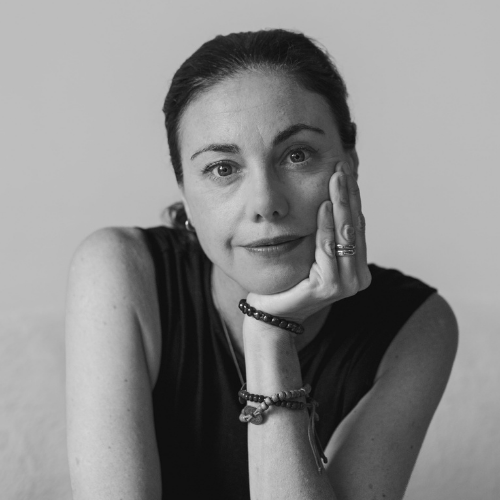
Kerrie Davies
Kerrie Davies is a non-fiction author and senior lecturer at UNSW Sydney. Her latest book is Miles Franklin Undercover. Her previous book, A Wife's Heart, created national discussion about the poet Henry Lawson and his marriage. A former journalist, Kerrie was a visiting fellow at the State Library of NSW (SLNSW) while researching Miles Franklin Undercover. Kerrie writes for The Conversation, and lives on the NSW North Coast and Sydney with her husband, Oliver and their two dogs, Ursa and Loki. She is attempting to learn to surf.
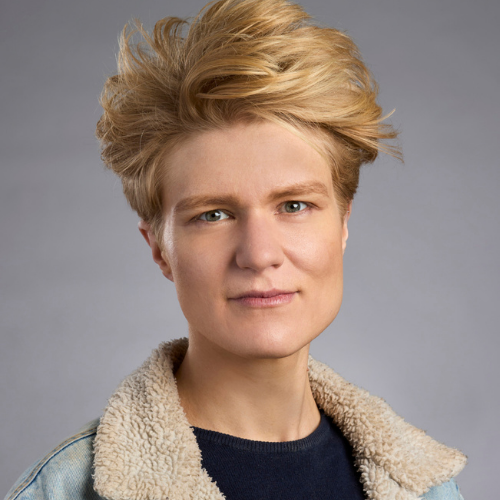
Yves Rees
Dr Yves Rees is a writer and historian based in Naarm. They are a senior lecturer at La Trobe University, the co-host of Archive Fever podcast and author of Travelling to Tomorrow (NewSouth, 2024) and All About Yves (Allen & Unwin, 2021). They are also co-editor of Nothing to Hide: Voices of Trans and Gender Diverse Australia (Allen & Unwin, 2022). Yves has been awarded the Calibre Essay Prize, a Varuna Residential Fellowship and the Serle Award. They are the 2025 KSP Writers' Centre Emerging Writer-in-Residence.
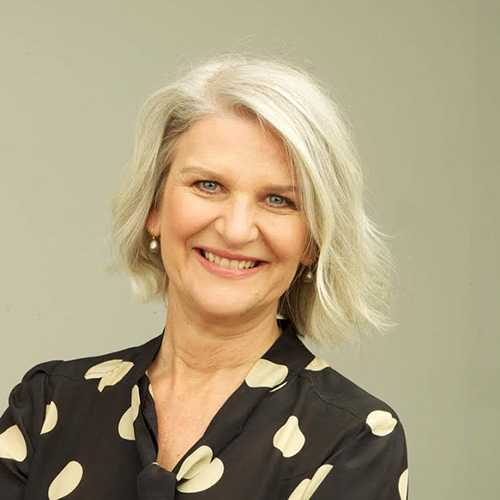
Susan Wyndham
Susan Wyndham is a writer, journalist and former literary editor of The Sydney Morning Herald. She is co-editor with Brigitta Olubas of Hazzard and Harrower: The Letters, published in May.