
STEMMinist Book Club
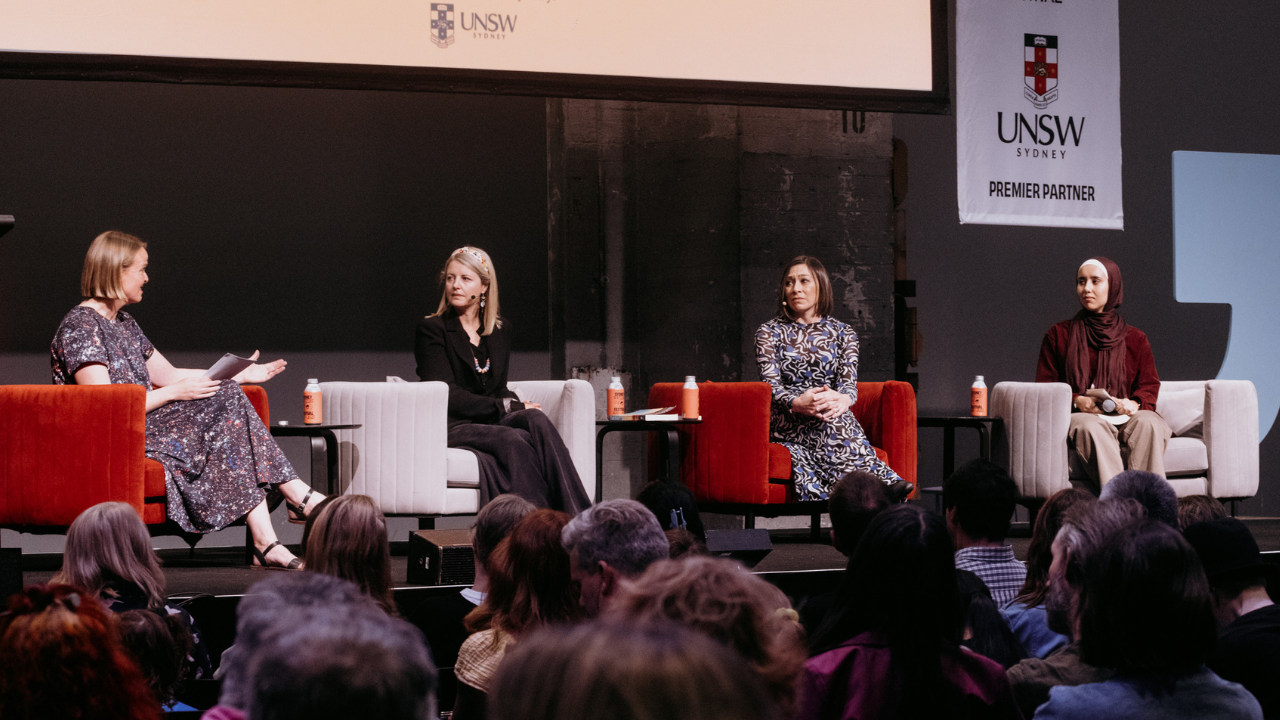
In a way, medicine really is about building narratives for people to help guide them through these signs and symptoms that are controlling their life that they might not be aware of or have the capacity to name. And writing a novel is like that. It can change someone's life to come across words for what they're feeling.
The STEMMinist Book Club was founded in 2018 and is dedicated to reading and discussing books related to feminism and STEMM (science, technology, engineering, medicine and maths).
The book club has over 5,000 members from 25 countries. As well as discussing great books, the book club provides a virtual discussion forum and support network for women and non-binary people working in these sectors.
In this special Festival edition of the STEMMinist Book Club, hear about the phenomenon of GPs who write. Hosted by Caroline Ford with guests Jumaana Abdu (Translations), Melanie Cheng (The Burrow) and Sarah Sasson (Tidelines), all of whom are doctors with brilliant new books.
This event was presented by the Sydney Writers' Festival and supported by UNSW Sydney.
Transcript
UNSW Centre for Ideas: UNSW Centre for ideas.
Caroline Ford: Hello everybody. I'm delighted to welcome you all here this afternoon. My name is Professor Caroline Ford, and I'm excited to welcome you to the Stemminist Book Club meets Sydney Writers Festival.
It's wonderful to see so many familiar faces in the audience, but I'd like to begin by acknowledging that we're meeting on land of the Gadigal people, of the Eora nation, the traditional custodians of this land. I'd like to extend that respect to any First Nations people that might be joining us today.
And I'm going to kick on because we have so many questions I want to ask these remarkable people. So before we move on, just a very quick explanation of what the Stemminist Book Club is for those of you that might have just wandered by with your coffee or your gin and tonic. So STEM stands for science, technology, engineering, math and medicine, and the ist part of the steminist Book Club stands for feminist. And so it's a book club that I founded back in 2018 on a little bit of a whim, but it's actually grown to a pretty wonderful network of readers all around the world. Together, we've read almost 50 books over the last few years, ranging from topics like indigenous science, medical misogyny, the wonder of treetops, the power of women's rage, how weird jellyfish are and more recently, three wonderful novels by these authors joining me today. You can find more of our full list on Stemminist Book Club.com.
So let's move on to a short intro for our incredible panellists. We've got Dr Jumaana Abdu, Melanie Cheng and Sarah Sasson joining us today.
Audience Applause
Caroline Ford: So on the end. Dr Jumaana Abdu is a Sydney based medical resident with a strong interest in women and children's health as well as refugee health. She's been published in multiple anthologies, and last year published, I'm sorry, this year published her novel Translations, which I will get her to hold up, which was a 2025 Stella Prize finalist, remarkable congratulations.
Audience Applause
Caroline Ford: In the middle of the stage is Dr Melanie Cheng. Melanie is a Melbourne GP who works regularly with women's health and mental health in that role. She's also the author of several books, including Australia Day, Room for a Stranger, and her latest work The Burrow, published last year and also a Stella Prize finalist.
Audience Applause
Caroline Ford: And our third remarkable panellist is Associate Professor Sarah Sasson. Sarah is a physician scientist who works part time as an immunologist at Westmead Hospital and part time as a medical researcher at the Kirby Institute at UNSW. She's also been published in multiple anthologies, and last year, published her beautiful debut novel, Tidelines. Welcome.
Audience Applause
Caroline Ford: So I have spent a lot of time thinking about this panel and how to use the time wisely. I've also had some serious case of imposter syndrome. Even sitting on the stage with these three people, I don't know how they managed to pack all of these things into their lives, and that's a little bit what we're going to unpack today, as well as discussing their beautiful stories.
I was trying to think about themes that cut across the three novels, and particularly with your unique combinations of medicine and writing. And I came up with a sort of short list of words, because we're at a Writers Festival. They all start with the letter C. And I didn't choose that because my name is Caroline. It's because I am also a scientist and I like order and structure, and I figured this is how it's going to work.
So my first word I want to start with today is “care”. Medicine is ultimately all about care, and I really would be very interested to know a little bit about what drew each of you to your career in medicine and also your particular area of focus. So doing things differently.
I'm going to start with you, Melanie, so tell us a bit about your medical career.
Melanie Cheng: I guess I was always an avid reader from a very young age. My mum taught me to read before even starting school, so that love probably came first, I would say. And I relished any opportunity to do creative writing throughout school. But I did also love the sciences. So when it came to graduating from high school and having to make a decision about which path to take, it was difficult.
I had a very helpful, practical Chinese father who kind of nudged me towards a more vocational path of medicine. And you know, I'm, in the end, I am glad that I took that path, but I guess also, for a long time, I felt that perhaps something was missing.
But during my medical training, I really didn't do much reading or writing. The course itself is so demanding, and the last thing you really want to do when you have some spare time is to sit down at a computer or with another book. So it was really only once I finished my GP training that I actually, you know, started writing.
And for me, one of the most formative experiences I had to push me along that or give me kind of the inspiration to go. There was a creative doctors network meeting, actually, here in Sydney. It was run by the AMA, and it was a wonderful day where doctors came together to share their creative pursuits. And they were all we were all very amateur and it was a whole range of creative pursuits, so not just writing, but photography, visual arts, film, and it was just a celebration of these other parts of ourselves. And I guess what I noticed at that day was how happy these doctors were, and it was in stark contrast to the consultants that I had met at the hospital during my training, and even, to be honest, many of the GPS that I'd been placed with.
And so I guess in my mind, I thought, oh, perhaps this is a key to preventing burnout. And also, I'd always harboured this kind of love for writing. And so also just seeing these other doctors, you know, really making space for that and prioritising it gave me permission to do that too, and I guess, yeah, that's how it all began.
Caroline Ford: You've answered all the questions I had for the rest of the session. So thank you, everybody. Jumaana, can I ask what drew you to medicine in the first place?
Jumaana Abdu: There's a few things. The first of all, there's the detective work of it, which I really loved as a child. I wanted to be a forensic scientist. I found out that's not a great career. So I thought, all right, here's something that's more sustainable. And then there's also the narrative aspect of it. Being a writer is also not a very lucrative career. So then there was that additional aspect. And in a way, medicine really, really is about building narratives for people to help guide them through all these signs and symptoms that are controlling their life that they might not be aware of or have the capacity to name. And writing a novel is like that. It can, it can change someone's life to come across words for what they're feeling. And I feel like diagnoses can be like that for some people.
But the answer that we're told to give in in medical interviews is that we want to help people, and really, really, that is what I get from medicine that I don't get anywhere else. And it's been a very painful time to be working in the hospitals, because I've been seeing in Palestine, in Gaza, there are no hospitals left that have not been affected by the indiscriminate bombardment, deprivation and genocide that Israel is committing against the people of Gaza at the moment, and I was really struggling to go to work, and it's a privilege to say that, but I found that my cognitive capacity at work was going down, but my emotional capacity, paradoxically, was increasing because I wasn't able to have that compartmentalization that we often have to build up working in the hospital working in medicine.
It was just all the emotions there at the forefront, and that was actually more rewarding to be connecting with people on that level was more rewarding for me. I felt they took more out of it as well. And so writing has helped to be a sort of soothing force alongside medicine in that way, but it really has reminded me why I did medicine. It was because there is something about working on the front lines in that way that you don't get in any other career, I think.
Caroline Ford: It's so beautifully put. Thank you so much. Sarah, may I ask you a little bit about your journey into medicine and what led you there?
Sarah Sasson: I think, similar to Melanie in high school, I really loved both biology and English, and I was very interested in writing as a career. And all the career counsellors at that time really pushed me towards journalism. And they're like, oh, writing, well, you better go and do an internship and be a journalist. But the kind of writing I liked was, you know, very reflective and poetic and long form. And, you know, took me five years to write the first draft of this novel. So I don't think I'd be a very good journalist. I think the turnaround times are far too short. So yeah, I've been just trying to grapple with a career that balances both the sciences and the arts.
And then so I did art-science as an undergraduate at UNSW, and was looking to become a medical journalist. But around the same time, I got very interested in HIV medicine, and I was interested in how that virus what was going on at molecular level, like how it was infecting cells and depleting our immune system and causing interesting cancers and infections. But then at a societal level, I was very interested in how a tiny virus that wasn't even really alive brought out bigotry, hatred, discrimination, and it showed inequity in geographical health care. And it was quite a time to go to those HIV meetings globally and just see how politically powered they were. And that's what drew me into immunology.
And then after my physician training, writing was always in the background. I was always trying to get short stories and poetry published just as a way of reflecting on the world and really to process the world around me. But it was only when I finished my immunology training that writing really came back and sort of grabbed me, grabbed me again, again and wouldn't really let me go, and that's when I decided to try and write a novel.
Caroline Ford: Thank you. That's really, really interesting answers from all three of you, and not quite what I expected. I think one of the things I loved about each of your books is that you write very honestly about medicine research and the healthcare systems, that inadequacy of care and people trying their best, but it just not quite making it. Jumaana, in your book, you have an amazing description of an indigenous woman in hospital and her desire to return to country for her final days, and how that's challenged, both structurally and also by individual clinical staff.
Sarah, you write very honestly about burnout, the intensity of internships, the fallibility of doctors, the egos of researchers.
And Melanie, I think you really nicely referenced the sort of judgement between doctors and the lack of understanding regarding anxiety and mental health and not wanting to, kind of, look weak.
I'm curious, based on your responses just previously, was it intentional to include this in your works of fiction? And do you think it's important that we highlight the sort of fallibility of medicine and the fallibility of the people that do these careers that sometimes get sort of idolised? We might start with you Jumaana.
Jumaana Abdu: Well, interestingly, I've been thinking about this a lot because for my next book, I decided to focus a little bit more on the metaphors of illness and that. And one of the case studies in that book is set in a prison. And when I was researching prisons and watching documentaries of them, I was really struck by how much it sounded like a hospital. And I felt that sometimes that we were keeping patients prisoner, particularly low socioeconomic patients, patients who didn't speak English, there was a sense that they didn't know why they were there. They didn't want to be there. They were deprived from things that gave their life quality and meaning, and yet, because of the time pressures on us, on everyone in the system, we're just desperately trying to help them get better, and that sometimes involves keeping people there for one hour of treatment a day and 23 hours of languishing.
You know, there are a lot of great systems that get put in place, like ambulatory care and things like that. But, yeah, I think I was thinking a lot about that in this first book. When I was a medical student, I didn't quite have a grasp of how challenging and confronting I would find it when I started working as a junior doctor. So there's maybe an inkling of that in here, where I'm really trying to work out what is our purpose as healthcare workers, and how is the hospital system, which is under immense strain, struggling to allow us to deliver that purpose in a humane and liberating way, rather than a constrained and desperate way.
Caroline Ford: Very interesting, Sarah, did you also write about one of your characters in the book is a medical researcher that has left sort of the clinical world? Was that something you thought was important, an important story to tell?
Sarah Sasson: Yeah, it's been really amazing seeing Jeanette Winterson here at the festival, because her book, Written on the Body, sort of blew the whole medical humanities open for me. So that was the first book, if you haven't read it, it's just a stunning novel, but the way she writes about the human body and in all its beauty and complexity, but then it's banality and how it how it fails us again and again.
So I always kind of knew in my writing, I had a strong suspicion that the body was going to come through, because I'm interested in how the human body, how disease, sort of changes the text of a body, and how we read the signs of disease on the human body. So I knew that was going to be a theme in the novel.
Then, when I started writing the hospital scenes I was writing largely when I was on maternity leave with my children, and I guess reflecting back on my own internship and residency and physicians training. Those are gruelling, gruelling years, both physically and emotionally, and it was amazing what came out on the page. And it was only when I stopped to reflect, I was like, yeah, I think I was holding on to a bit of trauma from the medical training and just how much we're expected to face on a day to day basis, and not even personal trauma, but even vicarious trauma of what's going on around us.
So that sort of came out in the writing. So there was a lot of that got whittled back into the story. But I think the point I was making, yeah, the main character, Grub moves from working in a hospital to working in medical research.
And I was just trying to make the point that, you know, there's, there's other ways to be helpful and of value to society, and you don't have to be in the frontline trenches. And as Jumaana was saying, you know, those, those jobs do come at a cost as well.
Caroline Ford: Yeah. Melanie, anything further you want to add?
Melanie Cheng: Oh, yeah. Just wanted to add that, you know, this kind of boundary between who's the patient and who's the care or the health professional is sometimes an artificial one.
To some degree, in my short story collection, there's a scene that I took direct from real life, and it was me sitting in a hospital car park. I don't know why I was there. I was just killing a bit of time, and I observed someone who was dressed in scrubs and clearly on their way to work, so either a nurse or a doctor, and they had locked their car and they worked the lift, and then they went back to their car, they checked the lock, and they went back to the lift, and they did this. And I was just observing them do this several times before they finally went to work. And I guess it struck me, you know, where is the patient? Where is the health professional?
Some people would say that, you know, illness is the great equaliser. Every doctor will become a patient at some point. I don't think that's entirely true, because, you know, health and access to health is affected by social demographics and things like that. But to some degree, you know, these boundaries we put are a little bit arbitrary.
Caroline Ford: Yeah, that that brings me very nerdily to my next C word, which is “character”. And your mention of observation kind of made me jump ahead a page.
I'm really interested to understand the links between your training as physicians and the character development in your writing, because for those of you that haven't read these books, there are some incredible characters in each of these novels that have stayed with me long after reading them, and I think they are so exquisitely rendered in each of your stories that I was curious about whether you are so good at writing characters because of your medical training, and so much of medicine is about observation and noticing what is said and what isn't said, and as soon as someone walks in the door, what you're observing and what you're listening to, and that sort of elegance of noticing things.
Do you think that helped you develop these characters? I feel like I've given you a very biassed lead in there, but Sarah, perhaps you can comment first.
Sarah Sasson: Well, I think they're the two main common threads between writing and medicine is really empathy and an understanding of people. And I don't think it's coincidence that we all the kind of doctors. We're all, we're all patient facing doctors. You know, we're not in radiology pathology. I am a little bit a pathologist. I do see patients as well. But you know, and a lot of being a physician and GP is sitting with patients and hearing the story, and the patients telling you the story, interpreting the story, and then figuring out what it means.
But I think for me, I've always been interested in people, and both in medicine and writing, you've become a great observer of people, and then the great privilege of being a doctor is, of course, that people really let you into their lives and when they're the most vulnerable and when they're going through the worst times in their lives, and there's really no charade or pantomime, and you can actually see the mechanics of how people react when they're facing challenge and difficulty, and also joy. And also the way I think we all wrote about families and the family dynamics and how that plays out in a clinic room or in a hospital ward as well.
Caroline Ford: So Melanie, I guess following up from that? Do you think it's something the three of you naturally just had excellent emotional intelligence, and perhaps that's what drew you to this? Or do you think something in your medical training and your experience has honed your skills at observation?
Melanie Cheng: Well, I remember a GP supervisor telling me when I was training that your consultation starts before the patients even entered the room. The consultation starts when the patient steps up from their chair in the waiting room, how they walk into the room. Maybe you know, how they presenting themselves.
I do also remember writing an article for the Saturday paper about telehealth, in which I was, you know, talking about some of the limitations of telehealth, in that you lost that aspect of the consultation. But I did get a little bit of backlash to that article as well from patients who said, “How dare you judge me on what I'm wearing”, or, you know, “what does that tell you about me?” You know, but it's not. It wasn't so much a judgement as, as you say, an observation, right?
If you know a patient well, and they're normally well-presented or whatever, and suddenly, the next time you see them, they they're in their tracksuit pants with no makeup, and you know that that's not usual for them, then that is a helpful, I guess, observation.
And actually, I don't think medical training is that good at teaching med students to use that power. I think we focus a lot more on the words and the history and in fact, in the narrative medicine course that I do a guest lecture for, with kind of trying to draw that out a little bit in the med students, because that is that common link between writing and doctoring.
Caroline Ford: Do you mind just telling us one more thing about that narrative medicine course, because I think it's quite unique for Australia. It's Melbourne University Medical School, is that correct?
Melanie Cheng: Yeah. So it's only been in operation for a couple of years, and it's the brainchild of two wonderful doctors, Fiona Riley and Mariam Tokhi. So I really want to let their names be heard, because it's really been a lot of work on their part. They did the original course at Columbia University in New York, and so their course is modelled on that, and it's an elective for medical students at Melbourne Uni. And I believe it is the first of its kind in Australia.
Basically, Narrative Medicine is all about, you know, looking at patient stories of their illness and getting doctors to focus more on the stories, rather than just symptoms and signs. And there is some emerging evidence that if a doctor does this, that they will actually reach a diagnosis in a more efficient manner and practice a more kind of patient centre, holistic care.
So in my role with the med students, we focus on short stories, and we really get the students to write stories, but encourage them to take the perspective of someone else in the room, so the patient, or even an orderly or someone else, so that they're forced to suddenly look at the non-medical aspects of a patient, doctor-patient encounter. So the students get a lot out of it. And I always tell them, “I'm so jealous that you guys get to do this course”, because I would have loved it.
Caroline Ford: It sounds wonderful. It sounds like it should be done in all medical schools. Jumaana back to being super observant and the effects it has on your skills at writing characters.
Do you have any comments on that?
Jumaana Abdu: I was just I just love that phrase that you used. It's not a judgement, it's an observation. I can imagine Lady Catherine de Bourgh from Pride and Prejudice. It's not a judgement, it's just observation, really used for nefarious purposes. That’s where my mind went straight away when we were talking.
I agree so much with what you both said. that really resounded with me. I just was remembering a psychiatrist supervisor I had, who is one of the most laid back people I've ever met, and he just every single patient that came in, no matter what they said, if they were in acute psychosis, mania, they'd come and say, you know, believing that they were the King of Thailand or something. And every single comment that they made, he would say, “I find that extraordinary”. And that was his genuine response. I really think he was genuinely fascinated by the way their minds were working, and whether or not his investigations led to any change in treatment, I doubt, but it did keep him entertained.
Caroline Ford: That’s fantastic. I know lots of people are here because they have an interest in medicine, but also there's a lot of people here that love books, and I'm sure would like to hear from each of your stories. I've read them all, and I read them while living on the other side of the world, and thanks very much for making me cry and making me incredibly homesick.
They each have some absolutely beautiful descriptions of Australia that just cut through. So your descriptions of the bush, bird song, Aussie suburbia and Sarah, that feeling of diving into a Sydney ocean pool, really, I struggled with. They were so beautiful.
But I also loved that each book also had something very relatable to me in these descriptions of medicine in the story. So there were aspects of the Melbourne covid lockdowns, a character who's a medical researcher, a nurse working on the front lines in regional Australia. So I think I would like you all to have an opportunity to hear a little bit from the book. So I've asked each of the authors to do a really short reading, and we might just literally go down the row and just have a listen and see what you think. If you want to give a bit of context, perhaps that that would be great.
Sarah Sasson: I will say I wrote the book largely in Australia, but I edited it in the UK during a very bleak winter, so it became a kind of escape hatch for me as well. So this is a part so Grub is the main protagonist. This is a book about sibling love, and she has just left her medical internship, and she's applied for a job to be a PhD student at a research institute, and she's meeting the professor who will become her boss.
“So you're a medical doctor, interested in research. I'm kind of a doctor. I said, I didn't quite finish my internship. My voice trailed off. What happened? He asked. There was too much. I began, and then I found it very confronting. I was never interested in studying medicine, Professor Olsen said, interested in disease, yes, in furthering science and contributing to the development of new therapeutics, absolutely, that is what we as a group are about. But the rest of it, all the tears and the blood and the bodily fluids, he used both his hands to sweep something invisible away from his chest. Forget it. Yes, I found internship challenging. I began what I didn't say was that there were people older and frailer than I'd ever seen before, bodies twisted into foreign shapes by illness, and from them came unusual sounds. And yeah, there was a lot of fluid. I added, organs and liquids spilling or being drained, bits cut out. All those borders became blurred. Those that kept the insides in and the outsides out. There were lines between regular people and doctors. The other interns and I crossed them became altered, changed into something that before we weren't.”
Thank you.
Melanie Cheng: So my book, The Burrow, follows the Lee family, and they're a family. When we meet them, it's four years after a really awful tragedy. So the family are still in a state of kind of suspended grief, and they actually take in a mini lop rabbit for their daughter, Lucy. And hence the rabbit on the cover.
The book is told from four different perspectives, and so this excerpt comes from the father's perspective. His name's Jin, and he's actually an emergency physician.
“Some estimates of healing were straightforward. Six weeks for a fractured bone, two weeks for a soft tissue injury, five days for a wound on the face, 10 for an equivalent wound on the back, chest, limbs. Jin regurgitated these figures when asked, but remained sceptical of the body's ability to repair itself in neat round numbers. Jin also knew that scar tissue was never quite as strong as the original. Depending on its location, it was more prone to rupture, infection, degeneration. Sometimes the scars themselves led to new problems, contractures, obstructions of the bowel or the fallopian tubes. In the case of keloids, the skin didn't know when to stop forming scar tissue. It grew thicker and more gnarled in response to the mere memory of trauma.”
Jumaana Abdu: I love both of those excerpts. Thank you.
So Translations follows Alia, who is a midwife who's fled the city after a series of what she calls personal disasters, as she goes to work on rebuilding an old, run down estate in regional New South Wales with her young daughter, and she works as midwife for money on the side, a few days a week at the local hospital, and Billie, the head midwife of the women's Ward, shows her around on her first day.
“Like all the best midwives, Billy delivered two things with expertise, babies and gossip. As they zipped through the hospital, she alternated between politics, logistics, medical specifics and whispered tell all biographies of each person in scrubs they happened to see. She said that's Kay, our best radiologist, divorced from the head pathologist who. Shacked up with his medical intern last year. It's always the pathologist. Never trust a person who would spend all that money on medical school just to chop up the dead. And here's the emergency room and the Big Shot bosses with God complexes next door in the ICU. And here's the children's ward overflowing and the paediatricians always stabbing each other in the back with Play School grins. Here are the psychiatrists who all need a psychiatrist of their own. And here are the adolescent patients who all want to die. And here's the cardiac ward where everyone's dying. And hear this and hear that. And now the drug and alcohol wing, yes, a whole wing. They're not enough, not enough for all the desperation out here, for all that goes on behind closed doors, each door kilometres from the next, so no one who's suffering. So anyone suffering doesn't know they can be helped until they come here, gone from themselves. You drove over the bridge to get here past the sports club. People nicer than me, call the sports club God's waiting room. All this sickness is from a long-ago place. City folk come here thinking, How quaint the hills, the getaway packages, the Milky Way at night, the fog in the morning, but there is a loneliness here like anywhere else worse, and you and I to dress it in gauze.”
Caroline Ford: Back to my nerdy C words, my next C word, I'm sticking with it. My next C word is “courage”.
So I've had so many friends that work in the STEM sector that have made the same comment to me when they heard we were hosting this event, that they would love to write something that they think you're incredibly brave. They're scared. They're unsure if they're allowed to step outside their lane. And so each of you has delivered. You've had the drive to write your books, the success to publish them. It's remarkable.
So my question is about courage, like, where did that courage come from? Jumaana, do you want to start us off?
Jumaana Abdu: Pure stupidity? No, it's, I don't think. I don't know. You just have to do it scared, is it? It's courageous. I suppose if you do it while you're scared, if you weren't scared, it wouldn't be courageous. But the courage came from, well, I had no idea that the book would be published, really, so I don't know if it was that courageous, but I still managed to be scared anyway, while I was writing it. I think there's always an internal reader, and that that reader just becomes more and takes on more and more of a bodily form.
As you get into the industry, you have to ask yourself, why are you writing? Are you writing to be published, or are you writing because you love it, and if you really love it, then it's almost an obsession. It's addictive. There's nothing that can stop you. It's something that you will do, regardless of how scared you are or how stupid it may seem. So I think if you feel that urge to keep doing it, then that's a sign that, you know, no matter how scared
Caroline Fod: Sarah.
Sarah Sasson: It’s a good question. I've actually been, yeah, quite inspired by kids and children. And when I say that, I mean, in primary school, you know, we're encouraging children. They do maths, they do spelling, they play an instrument, they play sport. It's okay to be a multi-faceted being, and it's something I really struggled with in adulthood, was especially when you're studying medicine and then you're picking your speciality, it's expected that you become this narrower and narrower person. And because, like Jumaana and Melanie, I always had books. The idea of writing a book inside of me that was really threatening, but it's really heartening to hear that there are more stem women out there who want to write books, because I think we need to hear from you. And I think it would be a great gift to have more steminist authors.
Yeah, I think I always wrote, and then I started doing courses at Writing New South Wales and formed a writers group that bit's actually really pleasurable, because you're actually returning to this thing that's been this great passion in your life and the whole time, the chances of getting published are actually quite small, and so you don't have to worry. It's not a fearful thing. But when you sell the book, and it approaches, you know, you do in house editing, and then it approaches publication. Well, I hadn't actually told anyone at the University of the hospital where I worked I was writing a book, and then when it finally got slated, I had that moment was like, oh, it's really going to come out now.
So for me, that was the hardest bit, was reconciling those parts of myself. And you know, some people in my life knew I was writing, but a whole lot of people didn't. And yeah, I was interested in how I was going to be received at at work, and just putting, just being vulnerable, putting words on the page, putting ideas and thoughts into the world. You know, it does take a little bit of courage, but everyone, I think the experience has been very positive. And yeah, I would, I would recommend it to other women in STEM, because I think another voice is in STEM, because I think crossing those boundaries and having such expert knowledge in maths and engineering and medicine and bringing that to the page and sharing that with a wider readership, what a gift.
Caroline Ford: Yeah. And Melanie, your first novel was eight years ago. A while ago, but then you've come back again and again and again. So what role did courage play in in your journey?
Melanie Cheng: Well, I hate to be another C word, contrarian. I don't see it as courageous, at least in my personal experience, because when I started writing, it was really a selfish thing for me. I had this passion and I wanted to do it and in a way, the way I started, which was to write short stories. And I did it in a very uncourageous way. I feel in that I would write these stories, and then I'd submit them to competitions and journals, and it was really not confronting at all, because I either heard nothing, which meant I didn't get anywhere, or I'd hear back. So I only really heard back if, if I'd been shortlisted for something. So it I felt like it wasn't really, you know, too difficult or courageous thing for me to do. It was a kind of secret pleasure for a long time.
I guess when I submitted the collection to the unpublished manuscript prize, it was a next level. I never expected to win that, which was what my big break really, for my writing career. But again, it didn't. It felt like, Oh, I'll probably just hear nothing, in which case it's another, you know, just anonymous kind of submission in many ways, but I guess one thing that I have found a little bit difficult is the imposter syndrome that I did feel strongly as someone not from the publishing industry or without a MFA behind me to kind of make me feel qualified to be in this world.
But to be honest, having gone to Helen Garner's session yesterday and hear that she's suffered imposter syndrome her whole life,
Caroline Ford: And she’s eighty-two.
Melanie Cheng: It’s just part of the process of being a writer, in fact. And nowadays there's so many Doctor writers, it's almost a trope you know, that every Writers Group has a doctor writer.
So I think it's not that unusual, actually anymore.
Caroline Ford: Well, I'm sticking with courageous. I think it's courageous. But I love that you all sort of described that you were compelled to write, and that it was almost a degree of self-care, and it was something you you had to do, and it was from a young age. I think that's beautiful. And thinking back to one of your earlier answers, Melanie, about the doctors with the creative bents.
I mean, there's so many people across stem that are, yeah, photographers or play an instrument or have all these sort of artistic interests, but often, I think we're sort of told to hide them or we think we have to sort of cosplay the role of a professor or a surgeon or whatever, and those parts of people are what make them so interesting.
And it's wonderful that people are starting to kind of embrace all aspects of it.
And that leads me team to our next C word “combination”. I think it is such an interesting combination of what we sometimes think of as opposing sectors, so the sciences and the arts. And I guess we've spoken of it a little, but if there's anything you want to add about how you think these two complement each other, so sort of the creative and the care, and how do you make that combination work in your lives? I think there's some practical questions people have as well.
Sarah Sasson: I'm thinking corpus callosum, because that's the part of the brain where the right brain and the left brain meet, and also two Cs.
From a practical point of view, I wrote the bulk of my novel late at night when everyone in the house was asleep and on the weekends, and then big chunks of it when I was on maternity leave, which sounds crazy, but I just sort of had to have some something to go on with mentally.
And yeah, I think what Melanie said originally about her creative doctors experience, I think there's something very true in that. I think there's actually research showing that doctors or healthcare professionals who do engage in some form of creative practice, whether it be writing or painting or photography, they have lower rates of burnout. So I think there is something inherently self-preserving about having a creative outlet.
But I also related to what you said, Carolyn, I think in some of these professional roles, I mean, I was very worried that people would take me less seriously as a doctor or as a researcher if they knew I was rhyming on the side. But yet, it was completely socially acceptable to be training for a triathlon. You know, some things are okay. You can play an instrument very well or run, you know, do extreme sports, but somehow writing isn't, doesn't have the same gravity.
So yeah, at the moment, it's late at night and on the weekends to getting it done.
But yeah, in the future, would love to get some more time from somewhere.
Caroline Ford: We'll figure out a way. Jumaana, how do you think the two halves fit together nicely. How do they complement each other?
Jumaana Abdu: I think I will give a less practical answer, more figurative one, because I think we all probably have the similar time pressures. But I think about this a lot, and so I apologise if anyone's heard me say it before, but when I think about writing in medicine, I'm always thinking about the metaphor of illness.
And there's a great essay, which is published as a book by Susan Sontag, called On Illness as Metaphor.
And she talks about how illness is the night country of life for which all of us have a passport, and at some point we will be compelled to travel through and the book goes through the metaphorical lives of major illnesses in every in the mind of every society.
And at one point, you know, tuberculosis was the premier illness of society, and it took on this metaphor of being the illness of repression. And it was a more repressed society at the time, and it was the poet's disease. You know, they languish, and then they get bursts of passion in an issue. And that was just the cycle of tuberculosis. And not necessarily, everyone who had tuberculosis was a poet, but this was the image that it took on. And so it came to have real meaning for people who were diagnosed with it, and it came to have real meaning in the way that that disease is remembered in literature.
And then now we have cancer and metabolic illnesses, and these are considered almost in some imaginaries as the illnesses of excess or the illnesses of toxic absorption from the environment, and this is something that preoccupies a lot of our imaginaries as well. And so while this is lends itself really well to fiction, and I'm always thinking about medical metaphors when I'm writing and trying to extrapolate them to their extreme, on the flip side, when I am interacting with a patient, I really have to keep in mind what narrative they have constructed in their mind about the illness that they have. And sometimes it's a very little one. And sometimes, you know, if someone's got even something as simple as reflux, the pain they feel is in their chest. And if reflux is caused by stress, they think they have a heart problem and that their heart's under stress.
And the words that people words that people use to describe illness are so figurative, they're idioms of illness. And so you have to be keyed into how people imagine these pathologies affecting their lives, and not only just treat the biological illness, but also the imagined illness.
And it's really tricky, and we don't often have time to think about it, but I get the luxury of thinking about it in fiction.
Caroline Ford: I see you nodding along Melanie.
Melanie Cheng: That’s really beautiful. The most famous, of course, Doctor writer is Chekhov, and he has that very non politically correct quote that medicine is my lawful wife and literature is my mistress. When I get bored of one, I go to bed with the other.
But, you know, I guess. And this is, that's not a great quote for a semminist book club, is it? But I do relate to the idea of, you know, sharing these two loves. And because I work in general practice, I feel that the two are very complimentary, in fact.
Because I as far as I'm concerned, patients come to me with stories, and that same GP supervisor that I mentioned before also encouraged me to to think about what patients are doing in the waiting room, and I've done this myself as a patient, and they're, you know, you're kind of figuring out the story that you're going to say when you go and sit down on that chair in front of the GP. And so words are really important and I do find great inspiration from the stories my patients tell me.
I do not breach patient confidentiality, but I do lead a rather boring existence, and I enjoy the privilege of hearing about other people's lives, insights that I would not be afforded otherwise.
And so if anything, what I realise is how alike we all are, really and so with that universality, that that's something that you can kind of feed into you, into your work. And so, so I people ask me now because they think I make money for my books, but I don't really, if I would ever give up medicine. You know, if I suddenly wrote a bestseller, and in all honesty, I don't think I would.
I do really like the combination, you know, one keeps me grounded.
Caroline Ford: I think that's a absolutely gorgeous place to end. My last C word is cool, because these are three of the coolest women I've come across. So please join me in thanking them and Sydney Writers Festival.
Audience Applause
UNSW Centre for Ideas: Thanks for listening. This event was presented by the Sydney Writers Festival and supported by UNSW Sydney. For more information, visit UNSW Centre for ideas.com and don't forget to subscribe wherever you get your podcasts.
-
1/4
-
2/4
-
3/4
-
4/4
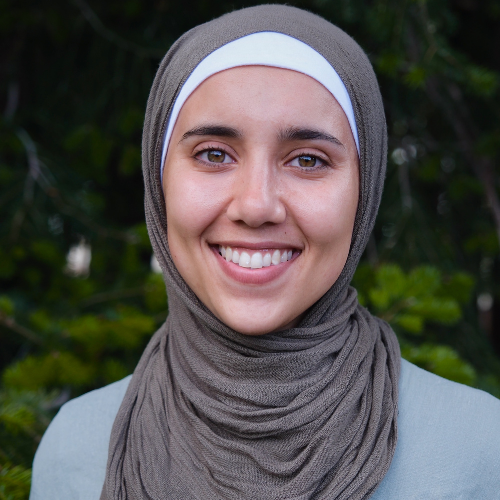
Jumaana Abdu
Jumaana is the author of Translations (Vintage). She has received the Dal Stivens Award, the Patricia Hackett Prize and a Wheeler Centre Next Chapter fellowship. Her work features in Thyme Travellers (Roseway Publishing), an international anthology of Palestinian speculative fiction. She has been published elsewhere in Kill Your Darlings, Westerly, Griffith Review, Meanjin, Liminal Magazine, Overland, Debris and New Australian Fiction 2024. During the day, she is a medical doctor.
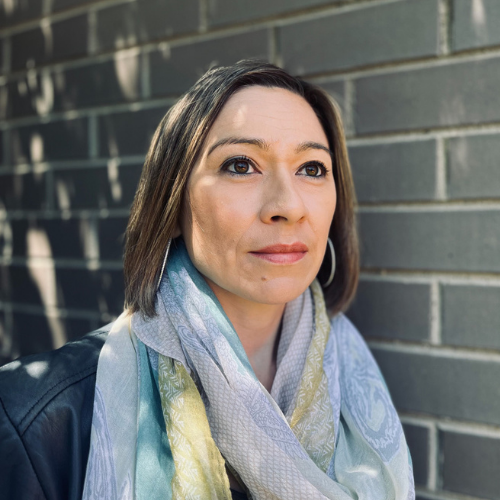
Melanie Cheng
Melanie Cheng is a writer and general practitioner. She was born in Adelaide, grew up in Hong Kong and now lives in Melbourne. Her debut collection of short stories, Australia Day, won the Victorian Premier's Literary Award for an Unpublished Manuscript in 2016 and the Victorian Premier's Literary Award for Fiction in 2018. Room for a Stranger, her highly acclaimed first novel, was published in 2019. Her latest work, The Burrow, was published in 2024.
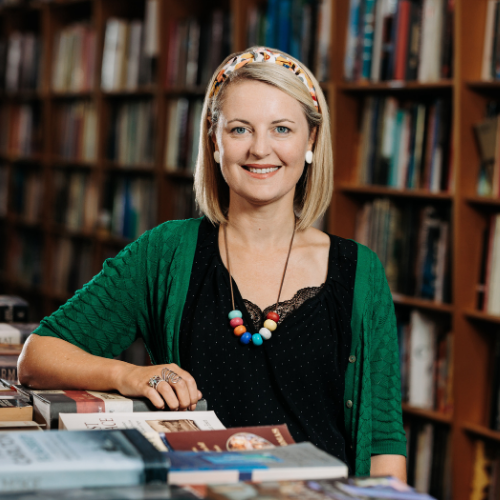
Sarah Sasson
Sarah Sasson is physician-writer living on Gadigal and Bidjigal land in Sydney. She spent part of her childhood living in Chicago and Singapore and later studied and lived in Montreal and Oxford. Sarah's poetry, memoir and non-fiction have been published in Australia, the UK and the USA and have appeared in Meanjin, Kill Your Darlings and The Conversation. Longlisted for the Queensland Writers Centre Publishable Program and shortlisted for the Varuna House Publisher Introduction Program, Tidelines is her first novel.
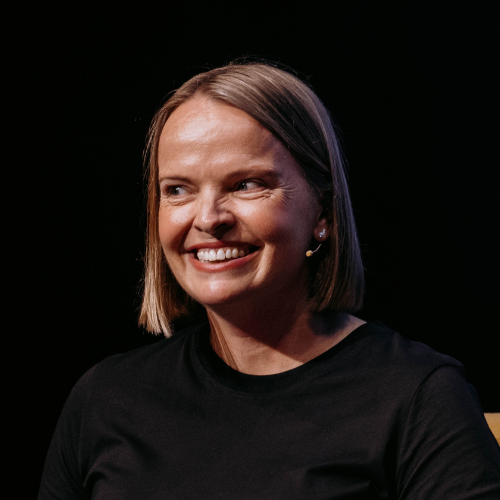
Caroline Ford
Medical researcher and women's health advocate, Professor Caroline Ford leads research into gynaecological cancers and endometriosis. Her innovative philanthropic partnership with the Australian fashion brand Camilla and Marc has gained global attention and significant investment in ovarian cancer research. An enthusiastic reader, Caroline founded the STEMMinist Book Club in 2018, an international network of readers interested in topics related to science, technology, engineering, maths and medicine with a feminist focus. Caroline currently works at UNSW Sydney.