
When solving the water crisis comes from thin air with Shannon Lemanski
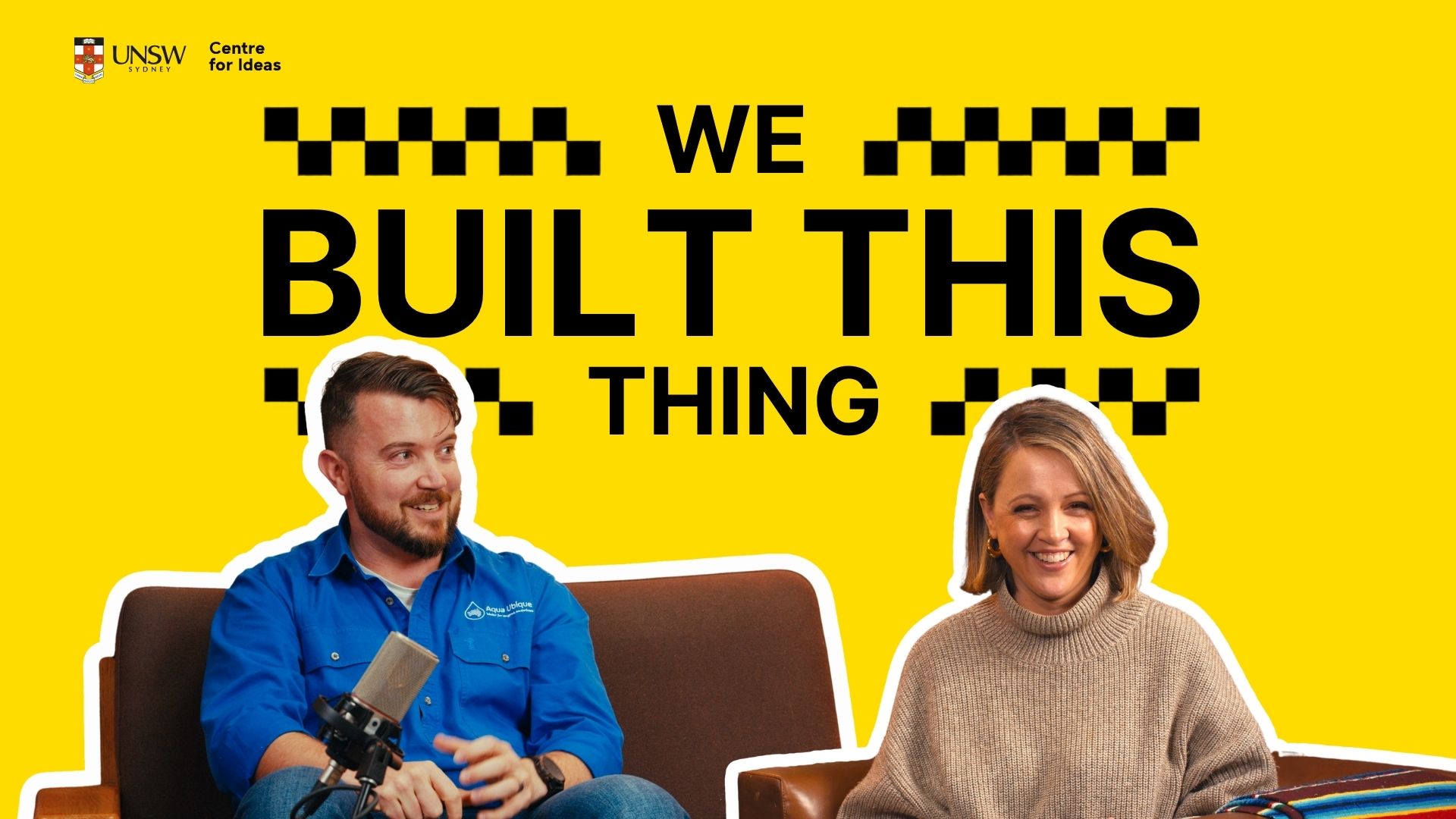
When I was writing the business plan three years ago, stand on stage at Royal Albert Hall, get handed the award by Benedict Cumberbatch, then pitch the company to 5,000 people, including the King and Queen. That wasn't on the business plan.


As a veteran, Shannon thought his business idea, a machine that filters water from the air, would be a no-brainer for the military. But when the first round of funding fell through, he had to pivot. His next move led Shannon all the way to Buckingham Palace and is transforming countless lives across Australia in the process.
There are over two million Australians without access to fresh drinking water, but Shannon Lemanski intends to change that. On this episode of We built this thing, Shannon chats with host Justine Rogers about his uncertain path to becoming an award-winning founder. From his decision to swap his childhood dream of becoming a pilot to doing an engineering degree at uni, to the trials and tribulations of being a first-time founder, to finding out the secret sauce to start-up success isn’t the invention but the business plan.
Watch on YouTube
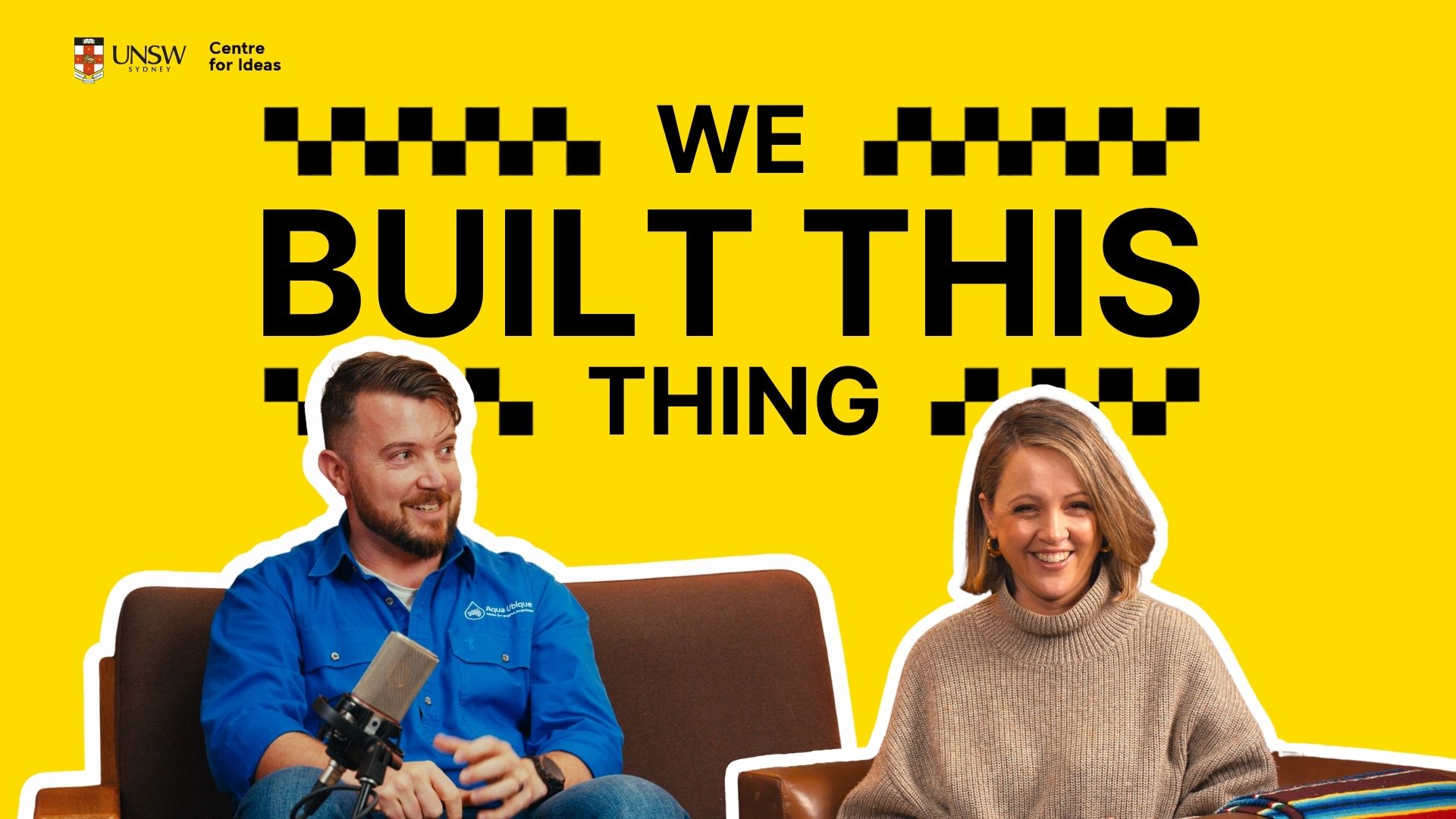
Podcast transcript
Shannon Lemanski: UNSW Centre for Ideas Like, when I was writing the business plan three years ago, stand on stage at Royal Albert Hall, get handed the award by Benedict Cumberbatch, then pitch the company to 5,000 people, including the King and Queen. That wasn't on the business plan. More than half your bottled water cost.
Each machine will eliminate up to 240 15 litre bottles a year, so that's a lot of plastic. You eliminate the transport emissions associated with that. And what sets us apart is for every five office water cores we've replaced, we're then able to install a sixth machine, all free, into community where it's needed most.
Gundoo Daycare Centre, so that's Sherbrooke's daycare, they were spending, and there's an ABS airport, they were spending $600 a fortnight on bottled water because they couldn't drink tap water. We put a drop for drop machine in for free. For anyone that's looking at starting a business, your customer does not care.
You are very interested in your features, you are very interested in the widget, your customer does not care. Focus on the feelings that you're generating in your customer.
Justine Rogers: My name is Justine Rogers, and you are listening to We Built This Thing. On this episode, we're chatting to Shannon Lemansky. Shannon built a company called Aqua Ubique, which supplies clean drinking water that it makes out of thin air.
Shannon came up with this idea around 10 years ago during a deployment with the army in Papua New Guinea. His mission is to change the way we supply water, and in the process, help regional and remote communities. Shannon was recently awarded the Global Kings Trust Award for Sustainability, and was the first Australian ever to do so.
Welcome, Shannon. Justine, thanks for having me on. No probs.
I wanted to start with something that happened to you 10 years ago, I believe, in Papua New Guinea. You had locals come up to you and ask if they could take your used plastic water bottles. I think a lot of people probably would have said okay and handed them over, but maybe you never thought of that moment again.
Why did it stick with you? How did it stay with you?
Shannon Lemanski: You're right. In 2016, I was over in Papua New Guinea and I was serving with the army. This is really where Acquia Beaks' story starts.
Even though it took me a good eight years to work out, this is where the company actually started. I was over there supporting a contingent of about 100 soldiers. We had tap water, but it wasn't drinkable, it wasn't certified, so I had to get in plastic bottles.
100 soldiers, hot, humid environment, that's a lot of plastic. Crush the bottles and take them down the tip, because you're looking at the garbage as well. There is no garbage service.
When I say the term tip, I'm talking two-story high pile of burning garbage. I've got to take two reasonably sized defense trucks. I've got six foot ground clearance.
I need to take two to use the second one as an anchor to pull the first one out when it gets bogged. We jump down out of the truck. I'm now ankle deep in mud and I'm shoveling these crushed plastic bottles off the back of the truck.
The locals come up to me, hey boss, can you not crush these? Yeah, sure, whatever. They're trash.
What do you need them for? If we get them uncrushed, we can harness more rainwater for our kids and we don't have to give them dirty creek water. Okay, sure.
Get back to barracks. Hey guys, I know I'm the new kid, so I'm a second year lieutenant at this stage. I know I'm the new kid.
I know I've been telling you for three weeks to crush the bottles, so I only have to do the rubbish run once a week, not three times a week. Please ignore everything that I've said. Please ignore everything that I've said and just give them to me uncrushed.
The boys will find this very funny. Anyway, skip forward two weeks from there. This job happens every 12 months.
You grab the last two pallets of drinking water and you put them in the shipping container. It gives you something to get started when we're rebuilding a road or a school or a hospital or whatever we're doing. We hadn't needed the two pallets from the year prior and they've now expired.
Still don't understand how water expires in a plastic bottle, but sure. I'm now back down the tip with these two pallets of unopened, still shrink-wrapped bottles and we're throwing these out at the tip. The locals go, army guys in army uniform on army trucks throwing this out.
They won't touch it. They're like, no, there's got to be something wrong with it. It has to be plastic or poison or something.
So I grab a bottle, drink it in front of them to get past the language barrier. No guys, there's nothing wrong with this. It's literally just number says no.
So they think we're nuts and that water very quickly grows legs. I get back to Townsville where I'm stationed at the time and I'm talking to some of my senior soldiers. Oh yeah, yeah, when we were in East Timor in the early 2000s, same thing happened.
Pallet of water would come through from the UN, water would come through a couple of days later. Oh no, that pallet's expired. You've got to get rid of it.
They asked if they could put it out the back of the barracks and again, let it grow legs and run away. No, no, no, you can't do that. It's too much of a health risk.
So with a locally employed workforce in the barracks, they had to slash the bottles. So you've now got perfectly good water running down the gutter and then burn the plastic because they didn't have a garbage service. So yeah, when I was transitioning out of the army, came across this technology, realized that it could solve a real world problem in the near region where over 30%, oh sorry, only 30% of Papua New Guinea have got access to safe drinking water.
And we figured just before we start dealing with the near region, we'll have a look in our own backyard because Australia is a first world country. Surely everyone can turn on the tap here. And that's when we discovered that that's actually not the reality.
Justine Rogers: Yeah. So before we look at that technology, that was something that surprised me too. I mean, I think growing up we all know we've got maybe a water shortage issue in Australia.
We know that we have to have short showers, for example, but the water safety and reliability issue, I don't think I'd ever really thought about it, I must admit, until I saw what you're doing. And I think I read a fair bit, but tell me about the scale of the problem in Australia.
Shannon Lemanski: Yeah. So the reality of the problem, and everyone else can be forgiven for not knowing this problem exists. I didn't know this problem existed when I started the company.
I remember growing up in Melbourne, yeah, there's the money or drought and you wouldn't leave a tap running to save water. But the concept of you can turn the tap on, but you can't drink what comes out of it, completely foreign concept, except to the two million Australians that can't drink the water that comes out of the tap, if water comes out of that tap. And this is not, oh, it's a little bit brown or it doesn't taste the nice on arsenic, uranium, E.
coli. This is water that can make you seriously, seriously sick. And I'm not talking like really remote and regional Australia either.
So the closest community to Brisbane, Cherbourg, it's less than three hours from Brisbane. They've been under a boil water alert since January this year, because their water treatment plant is failing because it's past its life of type. Infrastructure takes time, infrastructure takes money.
The government is doing something about it, but it's just not happening quick enough for the community right now. Which therefore means that the reality is they haven't been able to safely drink their tap water since January, and they've had boil water alerts on and off for years as their treatment plants have been getting worse.
Justine Rogers: Two million people is a lot of people. Does everyone know that, if they're in that group of two million? I'm sorry to get a bit errant this year.
Shannon Lemanski: No, no. And so I think the biggest problem, so this is an issue that disproportionately affects First Nations communities as well. And the thing with Australians in general, remote and regional communities, it's this is the way it's always been.
You roll up your sleeves. Yeah, we're not happy with it, but we don't complain and we just move on. So unfortunately for a lot of these communities, and particularly for people that have stayed in community and they want to stay connected to country, they don't necessarily know that there's anything different.
And even where they do, they've spoken, they've talked, they've been engaged, they've had people come out and write reports, and then nothing's happened. So they've got sick of complaining because of the fact that they complain and nothing happens, or they don't complain and nothing happens anyway.
Justine Rogers: And is this the problem Acre Ubiq is trying to solve? Or if you had to sum it up, what are the problem or the problems that you're trying to solve?
Shannon Lemanski: So I suppose it can be best encapsulated with our mission. At the moment, we're on a to generate 40 million litres of water a day by 2032. And that will allow every Australian to safely turn on the tap.
Justine Rogers: So maybe tell us about the technology for lay people.
Shannon Lemanski: Yeah, so for lay people, and I suppose my co-founder, Dani, my wife, she describes it the best. Take the engineer out of it and just simplify it so everybody can understand. We make water from air.
And the best way to do that, we've got a machine that replaces a standard office water cooler. And it's effectively a dehumidifier that's hooked up to some water filters. There's some proprietary magic sauce in there, but effectively what we do, pull the air in, cool the air down, the water drops out of it, filter it, remineralize it, and then it's dispensed as premium drinking water.
Justine Rogers: And so if it's remineralized, is it actually better water than I'd be getting or anyone else?
Shannon Lemanski: Yeah, it is. So the big focus at the start was not only make sure that this is cost-economical for our customers, but make sure that there's that premium element as well, and make sure it's safe. Because ultimately what we're trying to fix in these communities is this water is safe.
So it's been independently tested by Unity Water and Queensland Health. That's how we know it's got no detectable microplastics, no PFAS, more minerals than bottled, and less chemicals than tap. So it's literally the best water you can get.
Justine Rogers: Yeah, sort of.
Shannon Lemanski: Yeah, sure. Yeah, so I suppose the best way to do that, so you've got the glass of Sydney's finest there. So if you try that, just for comparison.
So this water, yep, iced. So this water that we've got here, it was humidity on the Sunshine Coast last night.
Justine Rogers: I feel a bit weird. I mean, I guess her mum was a Queenslander, but otherwise it feels a bit funny in the State of Origin context to be having anything to do with that.
Shannon Lemanski: No, we don't want to talk about State of Origin. Not after last week. We don't want to talk about State of Origin.
Justine Rogers: All right, I'll try both. UNSW? Yep.
Oh my gosh, it just tastes so fresh and clean. It almost tastes, I hate to say it, almost nothing. You know, like just liquid.
Shannon Lemanski: We hear that a lot. It tastes like nothing. And particularly people that- It's just heavier.
Yeah. And that's just the mineral difference and the chemicals and the other thing that's... So even in Sydney, when you turn on the tap, the distance that that water has travelled through, through pipes that you don't want to see the inside of them, there's a reason why tap water needs to be so chlorinated so that way when it comes out the other end, it's safe to consume.
We don't need to chlorinate our water because we make it exactly where it's needed and then it sits next to a UV light so it stays safe and fresh.
Justine Rogers: So is there anything stopping it from being everywhere like this technology?
Shannon Lemanski: Simple answer, no. Slightly longer answer. So because of the fact that it's humidity dependent, at the moment, hot and humid locations is where it works best.
So it can work in Sydney. It will work in an air conditioned office. It will work better in Brisbane.
It will work even better again in Cairns. So that's why we've intentionally for the time being drawn a line at the Tweed and we're going north before we come south. So that way we can capitalise on where this technology works the best and the most efficient.
And we're also doing some stuff with UNSW down here in Kensington to help dramatically improve the energy efficiency, particularly in those cold climates. So that way, currently the areas that we can't get into where it's super dry or super cold, we can get technology into those locations and still generate water efficiently.
Justine Rogers: So going back a bit while you sip on your product over there happily with a big smile, before you got into business, I think you were in the military and studied engineering. Can you tell us a bit about those choices and how they helped shape your problem solving mindset and if they did in the same ways or different ways?
Shannon Lemanski: So I suppose I can thank my father for being an engineer and I can thank the army for being logistics officer. So you go all the way back to my primary school textbooks and there's the yearbook. What do you want to be when you grow up?
Fighter pilot. It had been the thing, you get all my yearbooks, fighter pilot. And you can trace that back to my grandfather flew DC-3s for the American Air Force during World War II.
A bunch of dads, family are pilots, so that's just what I wanted to do. Found out that you can do a degree through UNSW ADFA. So it means that I can finish with an engineering degree and no Hex debt and a house deposit.
So that sounded pretty good. So went through recruiting and found out that my eyesight's not good enough to fly the planes. Okay, well, if I can't fly the planes, I'll jump out the back of them.
So that was the switch between Air Force and Army.
Justine Rogers: I thought the same. Yeah, exactly.
Shannon Lemanski: So I'm probably three quarters of the way through an engineering degree before I found out that an engineer and a mechanic are not the same thing, but that's okay.
[Justine Rogers]
Because you did mechanical engineering.
Shannon Lemanski: I did mechanical engineering.
[Justine Rogers]
I don't even know the difference, civil, mechanic, all those. I'm just like something.
Shannon Lemanski: Civil, the thing doesn't move. Mechanical, the thing does move. Aeronautical, the thing flies.
Justine Rogers: Okay, cool.
Shannon Lemanski: Locked in. Yeah. So I effectively did the degree because that way it'd give me a fallback option.
And if I ever got out, it'd mean that I'd be employable elsewhere as well. I need to find out that Army is reasonably poor at managing its technical engineers and it views engineers as logistics officers. And it means that you go become a logistician, which I was not thrilled with because it means that I'd spent four years doing a degree and now I don't get to do design or CAD, which is what I thought an engineer did.
Computer aided design.
Justine Rogers: Okay.
Shannon Lemanski: So drawing cars and engines and whatever on the computer. So it meant that for the next, the majority of my junior career, I'm moving pallets around. I'm moving water around.
I'm moving fuel around. I'm moving ammunition around. I'm making sure that people are supplied at all four corners of the earth, which is not a true engineering skillset in the terms of a design engineer.
But what it did teach me was systems thinking, how to look at a problem, look at the end state and then reverse engineer the problem from there. And then what I ultimately ended up discovering is that, okay, although I was trained to look at engines and how things work, I was also taught how to break down a problem like that and how to, what's the end state? Where are we?
How do we get from here to there? And how do we take the small steps and how do we make sure particularly that the at the other end where there is no bunnings down the street, it's reliable and it always works. So I suppose you take that systems engineering approach and the logistics that I was taught, and that's what's formed the basis for the company.
Justine Rogers: But pretty perfect. But is there any skillset or mindset or framework that you've had to learn on the go?
Shannon Lemanski: Oh, business.
Justine Rogers: The whole business?
Shannon Lemanski: Yeah, just the whole business thing. So in the military, and I thought I've been an operations manager, I've been a logistics officer, that means I can clearly step from military operations to business operations because they're the same. No.
If you're in the military, you have a budget. It's a magical P&L that just exists. And as long as you don't go over the budget, or if you do, you just go over by a little bit, you're okay.
In business, you have a budget, but if you don't make the P&L, then you're not getting another one. And at the end of the day, companies need to make money to survive. The military works off the taxpayer dollars.
So that reality just doesn't exist. So that kind of, oh, okay, I can't just generate impact. I need to generate profit as well to make the whole thing sustainable.
What is sales? What is marketing? An accountant and a bookkeeper are not the same thing.
What is BAS? How do I get a business activity statement? Reporting to the tax office.
Previously, when you're dealing with HR, so HR and the military, there's the policy. I know what my left and right of arc are. That's fine.
That doesn't work outside. So I'd learnt some of those human skills, but sales, marketing, finance, concepts that were completely foreign to me. So I had to learn all that and I had to learn all that really, really quickly.
Justine Rogers: Who'd you learn or how did you learn this?
Shannon Lemanski: I listened to a lot of podcasts and I read a lot of books. So I suppose, and you can actually trace it back, where I found the technology originally, because I can't claim to have invented it, was on a Mark Boris podcast. So Mark Boris, the mentor.
There was a company down in Sydney that was a distributor for the technology at the time. And I'm like, that solves a really big logistics issue for Army. Grabbed the technology, took it to Army, got told I wasn't innovative because Army and innovation is an oxymoron, which is hilarious because in a reserve capacity, now I'm the innovation engineer for Army headquarters, but we'll park that for a minute.
Justine Rogers: So what did they say? It was just sort of distribution, but you weren't making enough of it or something? What was the piece that was missing to make it an innovation?
Shannon Lemanski: So they were looking at it as going, we already can make water because we've got different filtration processes. They're not the same thing. One of them, you need a water source and filters and chemicals to make a drinking water.
Us, you need power and humidity. It's completely different scales of magnitude. One, you need a supply chain that needs to be protected.
You need big water tanks. And if you can hit that water purification plant, everything in front of that's dead. Ours, you can put it in an armored vehicle.
Is it going to generate all the water that the crew needs? No. Is it going to generate enough to keep the crew alive?
Yes. So in that sense, if you don't then have that supply chain, you can get all the efficiencies.
Justine Rogers: So I hadn't realized you made this for the Army first, or you're thinking of, and then did you break away or what?
Shannon Lemanski: Yeah. So we tried to take it to the Army and government procurement, long story short, startup business, don't try and sell to government first. Excellent way to go bankrupt.
And I had a business mentor. So our first go to market was take it to the military. That didn't work.
And I had a business mentor on the Sunshine Coast, sit me down and go, hey, if Army hasn't worked, if your first go to market hasn't worked, why are you still so passionate about this? So we dug into it over a couple of sessions and it was what I'd seen in P&G. So, okay.
So if we know that there's that problem and the first go to market hasn't worked, and we know that we're trying to get these machines to the people that need them but can't afford them, what's the actual problem we're trying to solve? Is it a technological problem or is it a social problem? And our first thesis is it's a social problem.
The technology exists. We're working to do some improvements on it, but right now it exists, it works, it solves that immediate need in community. How do we fund it sustainably to get it out there?
And that's what led to our drop for drop program. So effectively at the moment, we go hunting 15 liter office water cools, particularly through civil infrastructure. We found a lot of them there and we replaced those.
So for our customers, the machine will generate 20 to 30 bottles a month. We charge the equivalent of 10. So we more than halve your bottle water cost.
Each machine will eliminate up to 240 15 liter bottles a year. So that's a lot of plastic. You eliminate the transport emissions associated with that.
But then, and what sets us apart is for every five office water cools we replace, we're then able to install a sixth machine for free into community where it's needed most. And then we've got the resources to support it there as well.
Justine Rogers: And you've done that already, haven't you?
Shannon Lemanski: Yeah, correct. So yeah, I'm really proud that the company's only been around three years. Drop for drop kicked off just over 12 months ago.
And on Monday, I'm putting the eighth and ninth machine into Sherbrooke. So it means that the daycare center, the school, the elders village and the town hall, so where all the most vulnerable are within Sherbrooke, they now have access to safe drinking water.
Justine Rogers: Wow. So when you said 12 months, it made me connect the dots with something I read you saying around 12 to 18 months ago, you were at a bit of a crisis point of what's the point? Or should I keep going?
Or was that the big thing that shifted the alignment that it was finally like, this is what my purpose is, this is the mission. And it could marry with some commercial kind of reality or something. Would that be fair to say?
Shannon Lemanski: A hundred percent. So small business is hard. As a founder, I suppose the best way to put it, everything is on fire, but at least that way I'm warm.
Or as Elon Musk says, entrepreneurship is like chewing broken glass. So at this stage, we were probably 12 months in. First product, go to market failed.
That was defense. Next go to market was to small businesses. Selling to small businesses is super, super hard.
Cashflow is really tight.
Justine Rogers: Are they leasing these things or buying?
Shannon Lemanski: Yeah. So we lease. And that way as well, maintenance filters, if anything ever goes wrong, not the customer's problem, it's our problem.
They give us a call, we'll switch the machine out. They don't need to understand the technology. They just need to enjoy the water that comes out of it.
So we've been trying to sell to small businesses and we'd had some success. Wasn't moving anywhere near as quickly as we wanted it to. And then you'll have a couple of wins with a couple of customers.
Then you'll get machines returned because that small businesses, they've got cashflow issues or they've gone bankrupt or they can't keep it going.
Justine Rogers: What was the founder emotion that you're feeling that we maybe don't talk about enough?
Shannon Lemanski: I was over it at that stage. I was completely over it. So getting out of defense, I'd moved into a consulting role for 12 months, getting paid really good money to do stuff that I could have done when I was in the army, but that outsourced the role.
So I was getting paid really good money for something that I didn't mind doing. Probably wasn't a good cultural fit and that's why I only lasted 12 months. But looking at that and going, I was less stressed then.
I was getting paid significantly more. I was working a lot less. If things went wrong, it wasn't my problem because punch my time card and walk out.
Exactly. Yeah. So you're looking there with a business, it's how do I make cashflow?
Even if you don't have to make payroll, even if you're just paying yourself, how do I pay the bills? How do I pay the mortgage? How do I put food on the table for my wife and my daughter?
I have machines that are getting returned, not because there's anything wrong with the machine, but I think the tipping point was when we put the first drop for drop machines into Sherbrooke. So the reality in the Sherbrooke Daycare Center before drop for drop got in there, there were two and three year olds with their front teeth falling out because of how much soft drink that they were drinking. And the reason that that was happening, there was babies being sent to daycare with soft drink in their baby bottles, because the tap water in town had been so bad for so long that their parents didn't trust it to make formula for them.
And bottled water was more expensive than soft drink at the only store in town.
Justine Rogers: So just impossible choices. Yeah.
Shannon Lemanski: Impossible choices for parents. So when we were able to get the first drop for drop machine in there, and the day that we put it in, so there was a four-year-old girl, Luna, that was there. And so she stood back for a couple of minutes, just checking out the machine and what's this?
And she worked out really quickly that she could grab her own cup, walk up, stick it under, push the button and pour her own glass of water. That's the first time she'd been able to do that in her life. This is three hours from Brisbane.
That's the first time she'd been able to do that for her life. Because up until that point, she couldn't drink the water that came out of the tap because it wasn't safe. She couldn't get a cup of water out of the water coolers because big 15 litre bottle, you can't put that in a daycare because the kids could push it over and crush their peers.
So it meant that for her to get a drink, she had to communicate to her educators that, hey, my cup's empty or my bottle's empty. With a drop for drop machine, she could walk up, push the button and get cold water. And because it's cold, they'd actually drink it.
They like it.
Justine Rogers: Yeah.
Shannon Lemanski: Exactly.
Justine Rogers: And I guess it's also cutting out all of the other kind of sustainability costs with trucks coming in with tanks of water or I don't know the language of this, but it's coming. It's sustainable in itself, isn't it?
Shannon Lemanski: Is that right? So the reality was the Gundoo Daycare Centre, so that's Sherbrooke's daycare, they were spending, and there's an ABS airport, they were spending 600 bucks a fortnight on bottled water because they couldn't drink the tap water. We put a drop for drop machine in for free.
It wasn't making enough water because everybody in the centre went, this is so much better than bottled, it's not funny. And Gundoo have now, they're paying for their own two machines as well. So they've got three, one's provided through drop for drop, they're paying for the other two.
Justine Rogers: Wow.
Shannon Lemanski: And because they've got those two, the kindergarten that's across the road at the state school now has a drop for drop machine in it that's partly funded by Gundoo. And this is what we're finding, that we get the machines into areas that really need them, people go, oh, hang on, this is bottled water, but cheaper and better, we'll have this, thanks. And then by them switching over and then them helping themselves as well, that means that we can then get into the next community or the next location as well.
That's good.
Justine Rogers: And what about other help that you've had along the way? Have there been any kind of communities or business associations or groups that have helped you? I'm just thinking about people listening who may want to start their own entrepreneurial business, or even a mission led one like yours.
Who have you kind of leaned on or benefited from in terms of community?
Shannon Lemanski: So the best, I've been to quite a few entrepreneurial festivals around the country now. If you're thinking about starting a business, there's one that happens on the Sunshine Coast. So we're located up on the Sunshine Coast.
There's one that happens on the Sunshine Coast every year, it's called Forward First. It's at the start of Small Business Month. You have to, you have to come to that.
Tell me why. Yeah, not only is it the beach, yeah. Not only apply for the Sunshine Coast, but the connections that we've made there have just been absolutely incredible.
So we rocked up in 2023 with a business card. The company didn't even exist on LinkedIn yet. At that point, I thought that it was all about the technology.
I needed to raise all this capital to secure distribution agreements and whatever else. Didn't know how to raise, didn't know what a pitch deck was, didn't know what a data room was, barely knew what a P&L was at that stage. So I was like, okay, if I just go introduce myself to venture capital and angels, I can pitch them this grand idea and they'll give me money.
Naivety is a good thing. You need it for business. But anyway, so I'm sitting in this, this mock DD session and I'm like, oh, angel investor, angel investor.
Well, before I go introduce myself and give them my business card, company probably needs to exist on LinkedIn because that's the first place they're going to look. So I'm literally making the company on LinkedIn before I go up and hand them the business card. So that's 2023.
No idea what I'm doing. Skip forward to forward first 2024. We'd downselected a product, we'd verified it, we'd got it all certified.
So we launched the product at forward first 2024. And we were able to get our first customers at that festival as well. Wow.
Skip forward to 2025, forward first 2025. We now have enough customers that we could have the first two drop for drop machines there wrapped, ready to go for, hey, we were a business card and then we were a business and now we're a social impact project. And then forward first 2026, which has just happened, we could come back and go, hey, we've just gotten off a plane having returned from London because we were just awarded the King's Trust Global International Sustainability Award for what we're now doing through drop for drop.
Justine Rogers: Top man. That's a great story. But tell me more.
I'm sorry to jump into this award because partly I want to know, you've just come back from London at the Royal Albert Hall and this is such an amazing form of recognition, but I'm a bit of a UK fan, like TV fan. What was it like to be near Dec of Ant and Dec?
Shannon Lemanski: So I didn't know who Ant and Dec were until about six weeks ago.
Justine Rogers: What?
Shannon Lemanski: I knew who Benedict Cumberbatch was.
Justine Rogers: Yeah, I was going to say, and that was my second thing about Benedict.
Shannon Lemanski: So for anyone that doesn't know the name, but if you've seen Marvel or you've seen Sherlock, he's the guy that plays Sherlock and he's the guy that plays Doctor Strange. And my wife, Danny, is absolutely convinced now that you can stand in your kitchen and you can yell Benedict Cumberbatch and you can just, he'll just appear because that's pretty much what happened. So we'd got the call, now I'll skip back.
So 2025, we won the King's Trust Australia Sustainability and Rising Star Awards. And that meant we got put forward for the 2026 international ones. So we get the call, yep, you've won the global one, but it's under an NDA.
You're under an NDA, so you can't tell anyone. We're going to fly you over to London. It's the 50th years of the King's Trust, so it's going to be bigger than, so the one at Royal Albert Hall.
Justine Rogers: The one to win.
Shannon Lemanski: Correct. If you're going to do it, do it on the 50th, right? So we're going to fly you over, you're going to stand on stage next to Ant and Deck at Royal Albert Hall.
There's going to be an A-lister that presents you to the King and Queen. Who would you like that A-lister to be? And so we jumped on and we'd had a look at last year's awards and they had George and Emile Clooney in the front row and we were like, who do we know that is an A-lister that's aligned to the company or aligned to the values of the company, the sustainability angle, that's someone that we like.
And Danny straight away in the kitchen just screams, Benedict Cumberbatch.
Justine Rogers: So I like him. So you actually impacted him, you influenced this.
Shannon Lemanski: Yeah, so we asked if Benedict could present it.
Justine Rogers: I thought she was just talking like all ladies do, if I can imagine him, but actually it was like, bing bong, I'm going to hit him.
Shannon Lemanski: So we asked and so that went across, King's Trust Australia gave that to King's Trust Global. There was a number of different awards on the night. Benedict got given a couple of briefs.
We found out after the fact, he's actually an ambassador for the International Trust, but he got presented a couple of different packs of, hey, these are the people that have won, who would you like to present? And he picked us. So we picked him and he picked us.
Justine Rogers: Whoa, this story.
Shannon Lemanski: Yeah. When I was writing the business plan three years ago, you stand on stage at Royal Albert Hall, get handed the award by Benedict Cumberbatch, then pitch the company to 5,000 people, including the King and Queen. That wasn't on the business plan.
Justine Rogers: Wow.
Shannon Lemanski: Yeah. So from that, we've picked up a bit of PR. We've been on ABC a couple of times.
And yet now I actually understand what an inbound lead is because we're now starting to get calls from all over the country. Hey, when are you coming to Townsville? When are you coming to Perth?
When are you coming to wherever? And it's like, yeah, we can, for the right project, we can go pretty much anywhere in the country.
Justine Rogers: But looking back, what advice now would you give yourself on the, you know, back in, maybe not when you, maybe a bit later, but just when you were sort of thinking about this as an idea and do you have advice that you'd like to give and that might be useful for those listening who are thinking about starting something themselves?
Shannon Lemanski: Yeah. So I suppose I don't have a bunch of good ideas myself. I just find other people that have had good ideas and I steal them.
I found the technology on a podcast. I found the business structure on a different podcast. So for anyone, once you've finished listening to this episode, as well as all the backs, like all the back catalog as well, Alex Formosy, The Game, really, really simple business advice, which boils down to focus on your customer.
Understand your customer and understand the problem better than they do. Because at the end of the day, your product or your service only generates value from the feelings it generates in your customer after it's solved their problem. So sure, we roll out water cores and we get paid for water cores that are on subscriptions.
That's part of the value that we provide in the sense that we eliminate plastic bottles and we reduce spend. That's lovely. That's how you get it past the CFO.
But because of for every five machines we put in community, the companies that are supporting those machines, we then put their logos on those machines as a thank you.
Justine Rogers: Right.
Shannon Lemanski: And then they get the photos of the kids and they get the stories of what that's generating in community, which they can then put into their ASG reports and tell everybody how they're helping community as well.
Justine Rogers: And that's where a bunch of emotional narrative parts of it.
Shannon Lemanski: Correct. So it's the, they feel good because they're helping community. They feel good because they're reducing their footprint because they're eliminating the plastic bottles.
They're eliminating the transport emissions. But there's that real tangible. There are now three and four year olds that don't have their front tooth falling out that aren't getting gastro, that aren't getting diarrhea because they can pull their own glass of water.
So that's where our value has come from. And that's from knowing the pain point for your customer. So for anyone that's looking at starting a business, your customer does not care.
You are very interested in your features. Your customer does not care. You are very interested in the widget.
Your customer does not care. This is the engineer that I had the spreadsheets and the unit economics and the business model and all of this. And Danny sat me down and she's like, they don't care.
They just don't care. You're really good at knife-hand army officer. This is the way that we're going to solve the problem.
Let's go forth and execute. And you're very good. These are the numbers because it's engineering and it's rational.
And you forgot the human side. She's now a trained psychologist. She's studied a bit of law.
She's about to do some finance. But to take army officer Shannon and take engineer Shannon and go, no, no, you need to put some humanity back into this. Focus on the feelings that you're generating in your customer.
Because if your customers like you, and if you love your customer, you can work through product issues or stuff that you're not happy with. If you're not embarrassed with your product when you ship it, you've shipped it too late. Get an MVP, get a minimum viable product, get it out in the market.
And then your customer will tell you what they like and what they don't. And then work off what your customer wants.
Justine Rogers: Okay. So before I ask one more question, I just wanted to ask if there are people listening who want to get in touch with you or even support the mission, what's the best way for them to do that?
Shannon Lemanski: So I'm pretty active on LinkedIn. You can see where we're rolling them out. If you're Queensland NTWA and you have an office water cooler and you would like a better one, happy to give you a trial.
And just in general, if people can jump on, share the stories of the reality of what's happening in Cherbourg and Dumogy and Wujal Wujal, a lot of the traction that we're now picking up is because of the fact that people are now becoming aware of the problem. So if people can just help us share that story to help us get that traction, that will go a long way to getting these machines into the communities where they need to go.
Justine Rogers: Okay. And finally, if your expectations and hopes are achieved, even beyond, if you achieve beyond your expectations, what would that look like?
Shannon Lemanski: So at the moment, 2.2 billion people don't have access to safe drinking water. That shouldn't exist. So what we're working on right now is improving the energy efficiency of the technology.
So that way in the not too distant future, we'll be able to do sunlight plus air equals water. And as soon as we can do that, we'll have 20 foot shipping containers that need no external support. They come to community, they've got solar, they've got Starlink.
So they've got communications, which means that we can bring power, water and communications to remote communities anywhere in the world. And in so doing that empowers the community to be in charge of their own destiny. They're then connected to the outside world, education improves, access to fresh water improves, access to energy improves.
And then similar to what we're doing in Cherbourg, these communities know how to fix their own problems. They just need to be empowered and they need other people to get out of their way. So what we try and do is, what are the problems?
Okay, do you think this could help? Set it up, empower the community such that they can own those assets as well and then just get out of their way. They know how to fix the problem.
They just need that work up.
Justine Rogers: Okay, that's amazing vision. I hope it comes true. Thank you so much for being with us today.
Thanks, Shannon.
Shannon Lemanski: Excellent. Thanks for having me.
Justine Rogers: Thanks for listening. For more information, visit unswcenterforideas.com. And don't forget to subscribe wherever you get your podcasts.
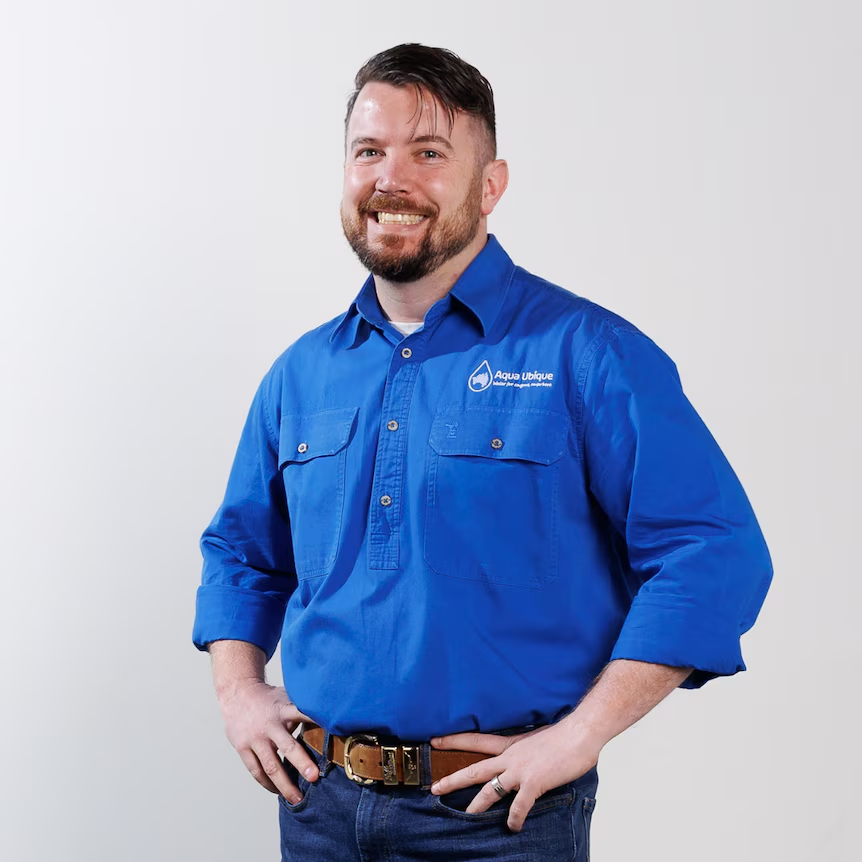
Shannon Lemanski
Co-Founder, Aqua UbiqueShannon Lemanski is the co-Founder of Aqua Ubique, a company providing clean drinking water by generating it directly from the atmosphere. His mission began during an Australian Army deployment to Papua New Guinea, where he witnessed communities relying on discarded water bottles to collect rainwater and avoid contaminated creek water. Shannon now works to challenge traditional water supply systems and reduce plastic waste. Shannon is a UNSW graduate from the Australian Defence Force Academy (ADFA) with a Bachelor of Engineering (Mechanical). He was recently the first Australian to be awarded the King’s Trust Award.
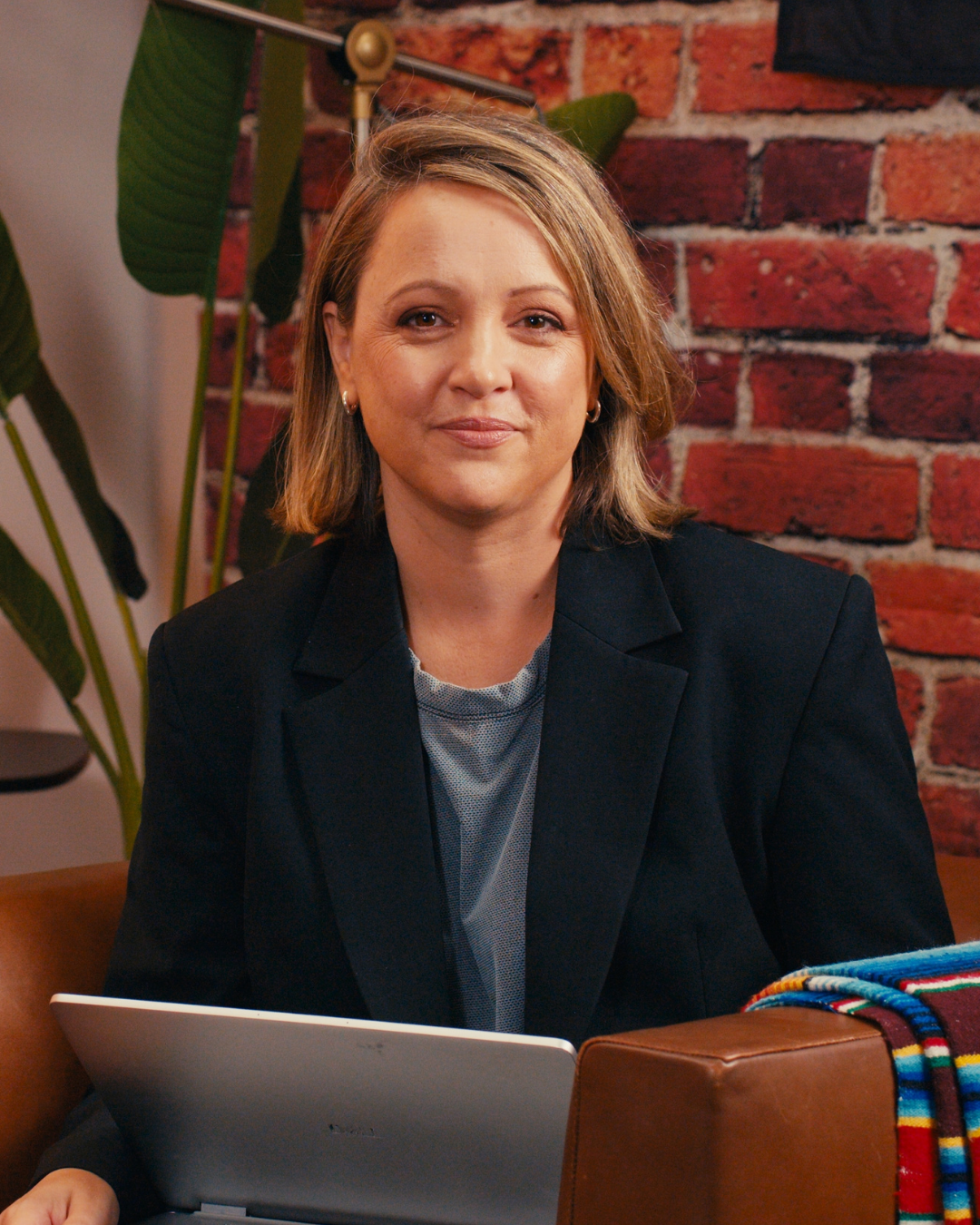
Justine Rogers
Associate Professor, UNSW Law & JusticeDr Justine Rogers is an Associate Professor at the Faculty of Law & Justice, UNSW Sydney, specialising in ethics, justice, and new technologies. A lapsed stand-up, she found life without self-doubt oddly unsatisfying and is now co-writing a comedy feature film – proof that it's never too late to follow your dreams that you'll give up again.