
Sebastian Sequoiah-Grayson | Australia and Asia: Working Together for a Prosperous Future

Our relationships with China and across Asia are among our greatest virtues as a nation. We have to work together to make our future.
In a reflection that spans centuries, Dr Sebastian Sequoiah-Grayson recounts the tumultuous history and promising future of Australia. He draws us into the dramatic events of the Lambing Flat Riots and their lasting impact on anti-Chinese sentiment, weaving in personal anecdotes of his great-grandfather’s compassionate actions. Sequoiah-Grayson challenges us to imagine a different path where early settlers embraced cooperation over resentment. As Australia navigates its role in the 21st century Asian landscape, he advocates for strengthening ties with Asia, fostering mutual understanding, and working together for a prosperous future. This narrative is both a tribute to the past and a call to action for the future.
Hear more from Dr Sebastian Sequoiah-Grayson on strengthening ties with Asia, and working together for a prosperous future.
Podcast Transcript
Rob Brooks: Welcome to ‘Progress? Where Are We Heading?’ A miniseries from the UNSW Centre for Ideas, where we'll explore the ideas shaping our future. Today we are exploring a topic that touches all of our lives. Information. In the 21st century, information has become the new gold. As the world becomes more connected and data-driven, understanding how we mine, use and share information will be crucial to our success. Today, we're joined by Sebastian Sequoiah-Grayson, who's been thinking deeply about the implications of the information rush in the context of the Asian century. Sebastian, thanks for joining us.
Sebastian Sequoiah-Grayson: Rob, thank you for having me.
Rob Brooks: You've been thinking about the parallels between the 19th century gold rush in Australia and today's information rush. So, to kick things off, can you explain what you mean by that comparison and why information is becoming as valuable as gold?
Sebastian Sequoiah-Grayson: Yeah, yeah, absolutely. Thanks for starting with such a great question. Like gold, information is imbued with the value that we give it as a species and as a convention. But just because something is a convention, it doesn't mean it's not real. My favourite example here is that the New South Wales Police are a social construct, but they're very real. And if nobody believes me that they're welcome to go and knock on the front door and say, I don't believe you exist, this is where the sovereign citizen people have gone a bit nutty. I think they've realised that some things are conventions. They're not natural kinds, therefore none of it's real. It's like the worst of late 80s, early 90s, post-structuralist social theory extravagance.
Rob Brooks: Where we ended up.
Sebastian Sequoiah-Grayson: Yeah, yeah, great. Thanks everyone. I hope all of the social theory people who are responsible for this, stay up at night thinking about the world they helped create. Anyhow, moving on. I think we saw, especially during COVID, just how fraught the data fields are, in the same way that gold fields have been fraught in the past, they've always been places of skulduggery and competition, and that's just because the rewards for those who find the biggest nugget of gold are absolutely life changing, and in some cases, species changing. And in the world of information, this infosphere in which we live now, that's a term from Luciano Floridi, who discusses the ecosystem of information in terms of an infosphere, whoever can extract the useful information from that ecosystem of data to that way is the gateway to the control of the universe, I think, and that the absolute fight, the battles over the value of information over COVID in particular, to say nothing of the recent elections in America and so on and so forth are pretty stark, I think.
Rob Brooks: Have you read Yuval Noah Harari's latest, ‘Nexus’?
Sebastian Sequoiah-Grayson: No, no I haven't. I wish I had time to read...
Rob Brooks:
Crosstalk
Spare 20 hours.
Sebastian Sequoiah-Grayson:
I wish. Yeah, not a chance to read.
Crosstalk
That's a luxury that's gone the way of the dodo, I think.
Rob Brooks: Yeah. I'm listening to the audiobook, and it's very... I mean, it's actually...
Sebastian Sequoiah-Grayson: OK, the audiobook. OK, the truth comes out. OK. Now I see.
Rob Brooks: Well, it's just so much easier to sustain some momentum if you…
Sebastian Sequoiah-Grayson: So I had this mental image of you in front of the open fire in the armchair in your library reading this book, but it's probably rushing between home and work and so on with the audiobook on. Maybe that's a good tip, though, I should take you up on that.
Rob Brooks: Long walks, long runs, that sort of thing, OK. So, you mentioned that Australia's history, particularly the gold rush, offers some important lessons for how we should approach the information economy today. What are the key similarities between the two eras and what can we learn from them?
Sebastian Sequoiah-Grayson: Yeah. Thank you. I think something I talked about in my talk (UNKNOWN) were the riots at Lambing Flat in the 1800s and the response from the white public at the time and in the region to the Chinese gold miners precipitated the Chinese Immigration Act of the 1800s. And that in turn gave considerable motivation that led to it being culturally acceptable for Australia to have something like the White Australia policy, which, if I say it out loud now to my students, they look at me like I'm making this stuff up. Because it's so embarrassing a lot of us just agree to not speak about it anymore.
But there's considerable anti-Chinese sentiment in a lot of the narratives that we see in the media at the moment, especially the ones surrounding foreign students. I mean, everybody knows this. Most people are just too polite to say it out loud, but that's how it gets the traction that it does within the national psyche. And I'd like to encourage all of us to think about how different the region and the Western and the Asian worlds might be today, especially across the Asia Pacific, if Australia's relationship with Asia in general, but China in particular, with Australia being a Western nation in Asia, how different that relationship and the situation on the ground might be today if we'd just behaved a little bit differently.
All of us, 100 or 200 years ago and right now, as we have these usually God-awful discussions in the public media about international students, just the type of world that we might like to see in 100 or 150 years from now and to realise that we're messing with a type of the tendency of our species that I think is quite dangerous and quite ugly, and it can be very cruel, even the so-called supporters of international students in the Australian media today speak about them in terms no more humanistic than a raw commodity. They just say that they're worth this much money and they pay for this thing and that thing, that there's no acknowledgement of the actual people here who are bearing the brunt of these sorts of decisions and, and these sorts of discussions. And I've been an international student and I know what it's like to be in that position. But I don't think it takes a great deal of empathy at all to realise that we're getting this, if not pretty wrong, and I think we are then at least not nearly as right as we can and not nearly as right as we should.
Rob Brooks: So we'll go back to Lambing Flat quickly, for a bit of context here. There was an opportunity back in the mid-19th century for the Anglo derived miners to learn something about how to run a decent mining operation and perhaps to flourish economically, etc. And they didn't take that. They simply stomped down on the Chinese miners. So as this informative counterfactual, what would have happened if they had just had a little bit more humility and a little more openness?
Sebastian Sequoiah-Grayson: Yeah, I think it's both wonderful and sad to imagine if the white miners at the time, instead of just being jealous about the simple fact that the Chinese gold miners were better at mining for gold than they were, and instead learned from and observed them, and perhaps in time even joined forces and collaborated. It might have been one of the first multinational mining conglomerates, say there's a little bit of hyperbole there, but not too much, I don't think. I think that would have undermined any push for a Chinese Immigration Act. It would have precipitated, perhaps 150 or 160 odd years of cooperation across the entire region. And it's not difficult, I think, to extrapolate, with some justification, and say that things would have been a lot better than they are today. And we're not always great, I think, as humans, of thinking terribly far ahead in terms of centuries. But in the same way that we look back at things like the Lambing Flat riot and the response of the government at the time and think, oh my goodness, why weren't there some adults in the room? Why weren't there some cooler heads? What on earth is going on? And how did it possibly get to that situation?
Well, we can do better today, and information travels a lot more quickly today than it did back then. Of course, we don't have the tyranny of ignorance, so to speak, as perhaps, the government of in Sydney would have had with the goings on at Lambing Flat, which for those listening is known now as Young in the New South Wales Riverina District. We find out about things pretty quickly and we have the opportunity then to not react to them, but to act in such a way as to undermine the darker of their consequences.
Rob Brooks: So, in many ways, greater is us in that our ignorance is almost a wilful ignorance about how best to go about dealing with relationships with China, relationships with the young people from all over Asia who come here for an education. It's one of our big export industries, education, but at the same time, it seems like there's this determination to make it not very... to tamp down on its success from one direction or another over the last 25 years that I've been in Australia, where does that impulse come from in the Australian psyche?
Sebastian Sequoiah-Grayson: Oh, I think, I'm not sure where the impulse comes from in the psyche of Australia as a whole. I do think it's very convenient for people of a certain political stripe who know full well that there's a real and virulent strain of anti-Asian xenophobia in Australia, and it's easy to bootstrap your political career on the back of this. And my bigger heartbreak here is that I think that people who do actually know better, they really do, they fail, both morally and because of fear, I think, they don't have the mettle to really stare this in the face and have an open and frank conversation about it. And they'd be...
Well, look at it this way. I'm still waiting for even just the regular, normal everyday media to get into the thick of it with our international students from everywhere, not just from China, and to ask them what effect this narrative is just having on them and their wellbeing and their daily lives. And just imagine if you were on the other side of the planet, or at least a third of the way around the thing, that's far enough, and every time you open the newspaper, there's somebody bleating on about how we've got to stop Australians coming here and studying. Of course it would make you feel absolutely abhorrent and alienated doesn't even get half of the way there, I don't think.
Rob Brooks: So, you're really well poised in your professional life to see this firsthand, 'cause not only have you been an international student, you teach plenty of international students.
Sebastian Sequoiah-Grayson: Oh, absolutely.
Rob Brooks: Give us some of a sense of what it's like teaching those students and where the potential is for things to be better.
Sebastian Sequoiah-Grayson: Oh, gosh. Well, firstly, and most importantly, it is the best job in the world. There's nothing better. Every now and again, somebody will ask me like, oh, are you committed to staying in academia? This sort of thing. And I say, no, there's nothing ideological about it at all. It's entirely pragmatic, perhaps largely self-serving. It's just awesome. And I have a ball every day, and every morning I get up and I just can't wait to get to work. And that's because of our students who are just the greatest people you could ever hope to meet. And every year there are thousands more of them from all over Australia and all over the world. And it's just like this endless carnival of inquiring minds and hard work and generosity.
I'd have to say, over the last six months to a year, there's been some palpable fear and worry amongst our students as a whole, but in particular the international students, where all of a sudden, what you're actually doing is making a huge contribution to human culture, your host culture, which in this case is Australia, your friends and family and countries back home, but none of this is being acknowledged or recognised in the discourse that's out and about and it seems like the focus in this discussion are these tiny peripheral issues that have next to no connection with international students whatsoever.
Rob Brooks: House prices and rentals and...
Sebastian Sequoiah-Grayson: Exactly. And the government's view, they know that international students can't vote. So, what are they going to do about it? And it's in entirely bad faith. I'll go out on a limb and say the vast majority of people engaging in this discussion know that it is in bad faith, but they don't have the moral core required to stand up and say so. And they should be ashamed of themselves because they know what they're doing.
Rob Brooks: And it worries me that this is a nominally centre-left government and opening the way to no contest for a further closing down on universities, on student visas, immigration, all that sort of stuff in some future term of government.
Sebastian Sequoiah-Grayson: It's a truly bizarre move, and I would like very much to get some of the people involved in a room and see if they could just speak honestly for five minutes. Hey, look, dude, what are you doing? Have you thought this through? Why are you letting the most transparent of dog whistling narratives actually dictate federal government policy? It's embarrassing to watch, and I like to think that they could do better.
Rob Brooks: So the people. You've got this great proposal that you delivered in your UNSOMNIA talk. And I think it's really bears a little bit of fleshing out here, that not only should we be embracing the foreign student market, which is in many ways what's keeping Australian universities great at what they do. And in fact, the Times Higher Education Supplement ratings came out last week, and because of uncertainty over foreign students, all the Australian universities went down.
Sebastian Sequoiah-Grayson: Well, there you go.
Rob Brooks: So very, very obvious. And I think the vice chancellors of the universities and stuff would be saying the same sort of thing you're saying in the language that they use. But you have this proposal that we should go huge on sending Australian students to Asia.
Sebastian Sequoiah-Grayson: Yeah, absolutely. The world is, as far as I'm concerned, a better place if there are more people with a globalist and internationalist mindset in it than it is otherwise. Nationalism is rarely good news and we would do very well, I think, as a nation, if we ensured as a matter not only of opportunity but of some considerable policy that our students, students who've grown up and gone to high school here as part of their degrees, study for a time at universities all across Asia, especially in China.
So instead of just importing, so to speak, tens of thousands of international students to come to Australia and then some, we exchange and we export our whole tonne of our own so that in a generation or two from now, the people's geopolitical perspective, as politely as I can put it, is a little bit more nuanced and has a perspective that is a little bit wider than somebody who's just marched around in circles in some city in Australia for their whole lives and then thinks that they're in some sort of position to pontificate on geostrategic policies across the entire Asian region.
Right now, as we're doing this interview, a couple of things are going pretty wrong on the planet. There could be about to become a lot worse. And I don't think there's a quick policy fix to anything like this. These sorts of situations, they don't just fall out of the sky, it's not like everyone was skipping down to the corner store to buy milk and eggs, and then all of a sudden, oh, no, what's that around the corner? It could be World War III. How did that happen? And this stuff emerges from a bunch of lost opportunities. And right now, we should be sending our best and brightest out around the entire region to share meals and share ideas with the best and brightest of all of our Asian neighbours as friends so that they grow together.
Rob Brooks: Yeah, and deep relationships, human capital.
Sebastian Sequoiah-Grayson: Definitely. So, in 50 years from now, somebody thinks, well this isn't looking great, why don't I pick up the phone and ring so and so, and people trust each other. Trust, you need to grow together to earn trust.
Rob Brooks: Absolutely. Well, that's one of our other podcasts on friendship, and it's very much along those lines. So, Sebastian, I've heard you speak about yourself as a philosopher, as a mathematician, as a computer scientist. Which of those are you?
Sebastian Sequoiah-Grayson: Alright, I have many different passports, Rob, it depends on how much trouble I'm in at one point in the world, I just used a different one. No, it's a good question. And to the outsiders listening that they might seem like very disparate areas, but that's just not really the case at all. I meant my undergraduate study was in philosophy and so was my postgraduate study, but that turned very quickly into logic and mathematical logic, which in some part of the world is known also as theoretical computer science. So, these days, I'm teaching on the teaching front, everything from Discrete Mathematics and all that is involved there, until very recently, a lot of Formal and Symbolic and Mathematical Logic, as well as the Ethics of Computer Science and Artificial Intelligence, which is terribly trendy. Right now, I'm certainly enjoying my moment in the sun there. I'm happy to accept accolades on prescience, but I like to joke that if you have the same haircut for long enough, eventually it becomes terribly fashionable.
Rob Brooks: So AI, so hot right now, as you say, as the great fashion designer, Jacobim Mugatu would have said, I imagine. Tell us a little bit about the potential for AI to amplify these things that we began with about these things that are worst in our character. Do you think that that's something that we need to be worried about?
Sebastian Sequoiah-Grayson: Not in any way that is as obvious as the standard press release might have one believe, that there's a lot of nonsense going around at the moment about AI and existential risk. And this is a story that we've been telling ourselves for 1,000 years. There's always some way to describe the Second Coming, the arrival of the other and the end of humanity. But now we tell this story in terms of the arrival of the singularity, whatever that's supposed to be. Now, that term has gone out of fashion, and now we talk about Generalised Artificial Intelligence, or if you're in the tech space, because we all love our abbreviations, you just say Gen AI, Gen AI. Nobody's very clear about what this means, and the goalposts and the definitions keep changing to something narrower and narrower and more achievable. But even just a year ago, Gen AI just meant self-aware, self-conscious, artificial intelligence, something along the lines of some emergent superintelligence, and in five or 10 years’ time, we'll be telling the same story in entirely different terms.
I think that the cult of Gen AI, or the singularity is largely a rapture cult for Silicon Valley, but they're too embarrassed to mention Jesus, so they just talk about the singularity instead. But functionally, the purpose of the narrative is it performs some sort of deep purpose for us, I think, as a species. But that's a whole other talk. What I am fascinated about, though, is something that is becoming slightly more to the forefront of discussions in the public right now, which is that AI simply doesn't fall from the sky. It's a function of massive engineering and computational power, and it requires just unfathomable resources. And a lot of these resources that are required for things like data centres and power and so on, not just the sort of rare earth minerals that compose the devices of computation themselves, but literally the provision of energy from uranium to coal. Well, they're found here in Australia as well, just like gold.
Rob Brooks: Mmm.
Sebastian Sequoiah-Grayson: So rather curiously, here we are again thinking about the great mining fields of Australia and the potential that we might have this time when it comes to sharing and allocating and extracting and refining and using the wonderful resources of this country, how we might just get it right.
Rob Brooks: Do you think there's any potential that we might do more than just be on the extractive end of that business this time around, that maybe we might do this from, I mean, we're all into remote work now after COVID, perhaps we could lead with the development of useful and interesting and economically productive AI from Australia?
Sebastian Sequoiah-Grayson: If the students with whom I talk every single day, you know, in Computer Science, we have a fantastic number of students here in Computer Science and Engineering. If they are anything to go by, then I don't doubt that for a moment. This century is Asia's, and Australia has this absolutely terrific opportunity as that Western outpost in Asia to be at the forefront of developments, both technological and political. And I think it would be a terrific shame if we did fail to rise to the occasion here, but it's our best students and our best young people who will be the people who carry this forward and make these decisions. And these decisions, they are decisions that we make, and they are here for all of us to make, they're not deep structural realities of the universe, in spite of the way that things might be presented to us in the media or by politicians all over the world. How we behave is absolutely our responsibility.
And I'm sure that we can, all of us, I mean, this globally, might be able to do a little bit better than we have in the recent past. And I don't doubt for a moment that in the middle of all of this, innovation as well as extraction, is something that could be in the very near future for Australia.
Rob Brooks: Well, I absolutely love your optimism, Sebastian, thank you very much for that. It's complicated, you've put your finger on a number of very difficult interpersonal, intersubjective realities about how things have rolled in the past and whether or not we're going to do better the next time. So, vast opportunities, big challenges, complex landscape to navigate. But anyway, thank you very much for being on the show and for your fantastic UNSOMNIA talk as well, which expands on these ideas.
Sebastian Sequoiah-Grayson: Rob, thank you very much for having me.
Rob Brooks: For our listeners, the Information Age is changing the world in ways we're only beginning to understand. Until next time, keep exploring and stay curious.
-
1/3
-
2/3
-
3/3
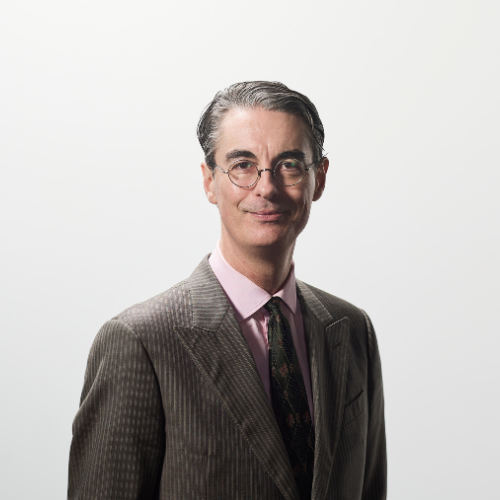
Professor Sebastian Sequoiah-Grayson
Dr Sebastian Sequoiah-Grayson is a Senior Lecturer in Epistemics at the School of Computer Science and Engineering at UNSW Engineering. Sebastian studied at the Faculty of Philosophy, University of Oxford, was a senior research fellow at the IEG at the Department of Computer Science at the University of Oxford. His research spans across all areas of logic, human information processing, and the ethics of artificial intelligence.