
Philippe Sands: 38 Londres Street
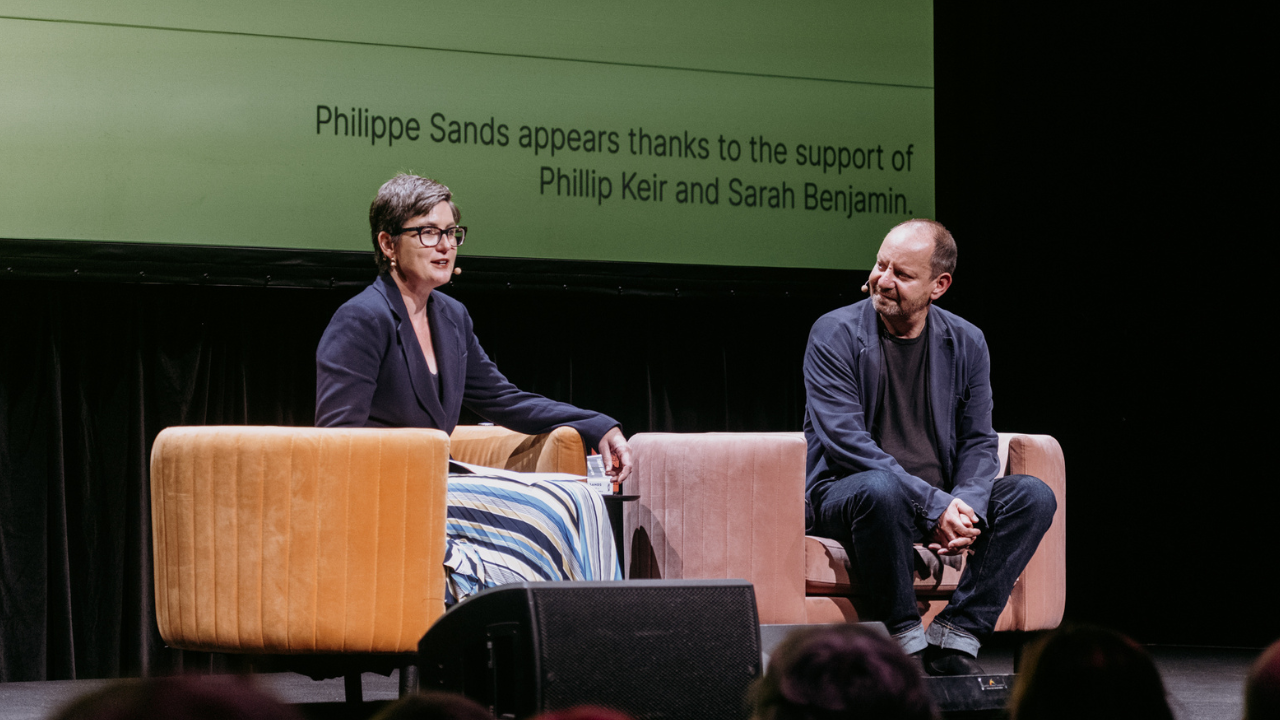
The subtitle of the book is On Impunity. It's a lesson of the consequences of what happens if we don't find a way to root out the horrors of the past, they come back to haunt in a very real and direct way.
In 1998, at the beginning of his esteemed career as an international human rights lawyer, Philippe Sands was invited to advise Augusto Pinochet as the Chilean dictator faced arrest in London.
Instead, Philippe chose to act as a barrister for Human Rights Watch, where he uncovered the well-hidden connection between Pinochet and former SS commander Walther Rauff. In his latest book, part memoir and part detective story, Philippe draws on interviews and archives to link two of the most brutal regimes of the 20th century at the infamous 38 Londres Street in Santiago.
This event was presented by the Sydney Writers' Festival and supported by UNSW Sydney.
Transcript
UNSW Centre for Ideas: UNSW Centre for ideas.
Rosalind Dixon: Welcome everyone. First, I want to acknowledge that we're here on Gadigal land and pay respect to elders past, present and emerging.
I want to thank our wonderful sponsors, who in this case are Philippe Kia and Sarah Benjamin for bringing the esteemed professor Philippe Sands here to Sydney to talk about this exciting and brilliant new book, 38 Londres Street. But we're absolutely delighted, Philippe, that you are here in Sydney to talk to us about this book. There's some Chileans in the audience, there's some law nerds, but this is a book that has gone beyond law nerds and Chileans, because it brings the story of international justice to life in such an amazingly vivid way. Anyone who writes reads this and feels deep envy for your craft with words.
So this is the story of Augusto Pinochet and the long march to only partial justice. But before we get to the story and your role in it, I mean, you're a remarkable international lawyer in that you're writing books that festivals want to talk about. You do cases before the International Court of Justice, and you teach and write boring articles like the rest of us.
So tell us a bit about your day job. You know, you've been in the ICJ, in the whaling case that Australia was in. You've been in self-determination cases that people are really interested in at the current moment.
But how do you write popular books and go to the ICJ and teach students? What does the life of Philippe Sands look like?
Philippe Sands: Well, first off, it's incredibly nice to be here with you, Ros and to be back again at the Sydney Writers Festival.
I do indeed have a mixed life. I am first and foremost an academic. I mean, that's what I've been for 40 years. I still love teaching. I love my students, and the spine of everything that I do is these rules of international law. As a young international lawyer, I was encouraged also to become a barrister, and with a lot of luck, because that is often how it works. It contacts people you know I got involved in various cases. One thing led to another.
There was a very important Australian who played a central role in my life, probably my closest colleague for more than 30 years, James Crawford, who's sadly, no longer with us, and his arrival in the United Kingdom had a very dramatic consequence. I'd already known him for a few years, but he brought in this sort of Australian breath of fresh air. It was not hierarchical anymore. It was just what are the best ideas, and how do we break down the barriers and think outside of the box to come to a solution that is helpful and interesting? So I do want to acknowledge in my life, the role that Australian culture has played, it's been very significant. And then, the war in Iraq happened, and I found myself at a dinner party in in London with
Rosalind Dixon: Yes, good dinner parties, if you read some of the friends in his books.
Philippe Sands: Good dinner parties and fantastic neighbours. Yes. Well, come
Rosalind Dixon: Judges, policemen, amazing. Really. I need a new apartment.
Philippe Sands: Yeah, you need to move to London. You see, move to London, you see what happens when you live in North in Camden Town.
Anyway, at a dinner party, a lady from Penguin publishing said, “Oh, your case sounds sort of interesting”. I'd done the Pinochet case by then, and you know, environment and nuclear arms and war and mass murder and all this kind of stuff. And she said, “I think people are interested in that, if you can write, if you can do me a 10 page proposal, and you can write, I will give you a contract”.
And that became the first book that took me outside what I have loved and what I wouldn't change at all. All the books that we write for Cambridge University Press, Oxford University Press, whatever that sell 11 copies. But we love writing them.
Audience Laughter
Rosalind Dixon: Maybe 12, sometimes
Philippe Sands: You've sold one with 12? I've never reached those heights.
Audience Laughter
Philippe Sands: And and with Lawless World, published in 2005 which told the story of how the war in Iraq was prosecuted on the basis of a lie. Let us call it that. I came to see that there was a big interest in the general public about issues of international law, and so I opened that door and started writing these other books.
Rosalind Dixon: So this was almost a very tricky book for you to write because you were almost Pinochet's lawyer, but then you weren't. And there's a wonderful story some of you would have seen. It's report in the press. It's in the book early on about Philippe was quite excited to get the brief as an international lawyer, and his wife said, “if you take it, I'll leave you”.
But fortunately, you weren't put to the test of love or loyalty to international law. So as someone from the Australian, British style tradition, you thought it was your obligation to take the case. Your wife didn't think the same.
Tell us about that conflict and how it was resolved, because it didn't involve a family law mediator, but rather a rather clever out.
Philippe Sands: Yeah. Well, first off, I acknowledge Natalia, my wife, because she very often saves me from myself, and this may well have been one of those examples, but I am a believer in the cab rank principle. I'm an English barrister. The cab rank principle means you're like a taxi driver. You're driving along. Someone puts their hand up and taxi you can't say, I don't like the cut of their gear, but don't like the colour of their skin, I don't like their politics. You have to take the fair and the principle, I think, is a very good one. She's an American.
Rosalind Dixon: Why is it good?
Philippe Sands: It's good because it basically ensures that everyone gets access to the lawyer of their choice, and it means that I, as a lawyer, have acted on a whole range of cases. I should say it doesn't apply for international disputes. It's only cases before the English courts. That's the way that it works, but it means that I've had to do cases for the kinds of characters I might not socialise with, I might not hang out with, I might not want to hang out with, I might not share their political views. And it has, I have to say, informed my practice at the international level, I will sometimes act for states that are run by governments that do not have nice human rights record or political records. And the theory behind it is that your social function as a barrister is to contribute to the ideal of the rule of law and the delivery of international justice with a commitment to the courts not just your client. And I believe in that.
Natalia also believes in those principles, but has the American root, which is that the cab rank principle is bullshit.
Audience Laughter
Philippe Sands: And, and I mumbled away about the cab rank principle, and she said, “Oh yes, well, you can do it if you want to, but I will divorce you tomorrow”. And, and so I didn't do it, and we're still very happily married. And…
Rosalind Dixon: But how come? How did you I got out?
Philippe Sands: Because the beauty of England, the one of the many beauties of England, is that for every rule, there are 37 exceptions.
Audience Laughter
Philippe Sands: You know about this too. Australia has the same approach.
Rosalind Dixon: Very similar.
Philippe Sands: And one of the exceptions was called professional embarrassment. And a few days before I was contacted, I had been on the BBC World Service and pushed by a journalist, wonderful journalist called Zaina Badawi, who remembers the incident. And she kept pushing me and saying, “Oh, should a former head of state like Pinochet have immunity for international crimes? What's the basis for that?” And I would say it's never happened before. We do not know what's going to happen. That's why the case was so unique and so significant. It was as big as Nuremberg, frankly, the case.
And she pushed and pushed and pushed, and eventually she said, “Well, what do you think should happen?” And I said, Well, I can understand why you have immunity for a serving head of state or a serving head of government, you can't be arresting these people as they travel around the world, but once they have left office, no, if you've crossed the line into international criminality, the immunity should go.
Incidentally, this is a big issue right now in the United States, the Supreme Court adopted a judgement, a very unfortunate judgement, and I think it's got a lot to do with what's happening now in the US, last July, basically saying former president of the United States for acts in an official capacity have a presumptive immunity from the criminal jurisdiction of the federal courts.
And of course, that opens the door to all sorts of things that should not happen. And they did not create a carve out in the style of the House of Lords in the Pinochet case to say, but that doesn't apply for genocide, crimes against humanity, torture, which leaves the appalling situation that as things stand, if an American president in their official capacity commits genocide or torture, they are immune from the jurisdiction of the American courts. That's a real problem.
Rosalind Dixon: Indeed, as you know, some of the justices in dissent said you could shoot your political opponent and have immunity under the US court's doctrine.
Philippe Sands: So long as it's an official act.
Rosalind Dixon: So immunity is, you know, one of the themes of this book, because the fight that they wanted you involved in very early was about, essentially, whether immunity was going to be a shield for Pinochet in facing justice. But we have to back up a little bit in order to understand that. So you almost got the case, but didn't, and then decided to write a book about it, because you had learned
Philippe Sands: there was an intervening event.
Rosalind Dixon: Oh.
Philippe Sands: I was contacted three days after I said no, by someone on the other side. Oh, and my wife, I sort of crawled go for it. I crawled up to my wife and said, can I act for human rights? Watch against Pinochet? Yes. And so I did get involved in the case. It meant I had a seat at the top table, so to speak. I mean, we had a peripheral role, we were interveners in writing only, but it meant we were in the room.
Rosalind Dixon: You were in the room and so many different rooms thereafter, in terms of the access you got amazing. So just tell people the thumbnail sketch of what happened. So from the beginning to the end, there's partial justice, but not full justice. For those who don't know the story, oh, they will, because the colour. Have you seen how long it is? There's a lot of interesting stuff in here.
Philippe Sands: I mean, you. Literally, you could not invent what happened. I mean, the case goes to the House of Lords. They give an initial, they give a judgement, a final judgement,
Rosalind Dixon: But first of all, there's this brave guy in Spain who decides to start the process in response
Philippe Sands: Let's go right back, right, right back to the beginning. So I had known roughly how the case started. There's a famous Spanish judge called Baltasar Garzón, and he is the man who, on the 16th of October, 1998 is about to send a list of questions when he's heard that Augusta Pinochet is in London to question Augusto Pinochet.
He then receives a phone call from a friend at the British Embassy, a British diplomat, who says, want to let you know, actually we've had information that Pinochet is leaving on a flight back to Chile tomorrow morning at 630 that's all I'm going to say.
Garzón changes tack, and in the space of 30 minutes, changes his request for what are called interrogatories, asking questions to a person who is in a particular place under caution, to a request for arrest and extradition to Spain. He does this in 30 minutes.
Rosalind Dixon: This is Friday afternoon. Yes?,
Philippe Sands: Friday afternoon, 16th of October, 1998 and pause for a moment and understand what has happened here. If he had not received a phone call from John Dew, who I've spoken with at the British Embassy, none of this would have happened. Why did John Dew call him? And this is a theme that runs all the way through all of my books. There's a trilogy East West Street, The Rat Line. Everything in the end, turns on the individual human act.
John Dew called Baltasar Garzón, because for a few months they had been working on a sensitive issue relating to money laundering in Gibraltar, which is a big problem in relations between UK and Spain. Some people know about that, and he wanted to just be friendly and helpful. And he calls Garzón. So Garzón sends off the request.
Rosalind Dixon: But first, Garzón is worried that there's a guy down the corridor who's going to block it.
Philippe Sands: Okay, we really are going deep. And you've read this book.
Rosalind Dixon: I love this story.
Philippe Sands: The thing is, we’re the same we love detail. It's always the tiny detail. So So Garzon knows that there is a rule requiring him before he sends off any request for extradition to a foreign country, to get the sign off of the Chief Judge. It is a Friday afternoon. He knows that the Chief Judge leaves 15 minutes early every Friday afternoon to attend a bull fight, his favourite sport, and so he waits until two minutes to three, goes to the Chief Judge's door, knocks on the door, knows that he's not there, and then says, I did my best endeavours, and sends off the request. So the request is sent off by fax. It arrives at Scotland Yard, and at Scotland Yard, they then decide they've got to process this request for arrest and extradition.
Rosalind Dixon: Again, brave civil servants doing their jobs,
Philippe Sands: Just doing their jobs out of hours, and so they have to go to what's called a duty magistrate. The duty magistrate that evening, Friday, the 16th of October, 1998 is one Nicholas Evans. Now there are many things you need to know about Nicholas Evans, but one of them is he happens to be my next-door neighbour.
Audience Laughter
Rosalind Dixon: John le Carre and Nicholas Evans both go to the dinner parties
Philippe Sands: And and Nick has never given an interview to anybody. But of course, as I started writing this book, I said, Can I ask you, Nick, what what happened? And and Nick said, “Yeah, sure”. Come over Sunday morning. I go over on a Sunday morning, which
Rosalind Dixon: is pretty nice of him, given that he messed up a little.
Philippe Sands: He's well, I'll explain. So we're nattering away to give you a sense of Nick and his lovely wife and lovely beloved neighbours who've planted bamboo in their garden, which has caused a lot of mayhem right now. And I'm sitting there talking to him, and at that 10 in the morning, Diana opens the door and says, “cup of tea, Felipe, or something stronger”. That's Nick, and I anyway.
Nick says to me, I'm not like you. Philippe, don't do international law. Didn't know about these things. Pinochet, name wasn't really familiar. Just you know, it's it's true, it's incredible. And the police then arrive at 7:30 the extradition squad for police officers from Scotland Yard. They've got a draft arrest warrant, and the draft, in the usual practice, has already been filled in, but just sort of in pencil. And the crimes alleged are genocide, crimes against humanity, torture. Disappearance. “Philippe, I never studied international law”. Says, Nick, “I'm not like you. I've never heard of any of these things. So I crossed them out and I wrote, murder.”
Problem. English courts don't have jurisdiction over the crime of murder committed in a faraway country by a non-British national. So what happens actually, is that Garzon, the copy of the arrest warrant is then sent to Garzon that evening. He gets it the next morning, Saturday, he looks at it. Almost has a heart attack. I've interviewed all of these people.
I almost had a heart attack when I read this and I realised I had to put in a second arrest warrant, which came in on the Monday morning and resolved the situation. But you know, you're you're a hair's breadth from disaster. Anyway, once the arrest warrant has been signed, the next thing that happens is there has to be an arrest.
The Met in their wisdom work out that General Augusto Pinochet, bless him, does not speak a word of English, and so they need to find someone who can interpret and they identify the person who I've come to know very well, who is very frankly, I think, my favourite person in the entire…
Rosalind Dixon: She's an amazing character, the translator.
So can you read us a tiny bit about this moment? It's a great part
Philippe Sands: Right now, I'm having the film - the book has already been bought for a film, and I have been negotiating long and hard that they give a proper part to Jean Pateras, interpreter of Scotland Yard.
‘“We turned up out of the blue” said Jean, “no warning”. The officers showed their identity cards and explained their purpose. They were ushered to lift up to the eighth floor outside room 801 guarded by two Chilean security men. A nurse told them Pinochet was asleep and his wife, Lucia wasn't there. Jean continued, “well”, someone said, “Go inside and wake him up so he doesn't get a shock and have a heart attack”. It's probably me who said that, because I'm so bossy. So the nurse knocked, opened the door, went in, switched on the light. Jean listened to Pinochet being woken up. I went in after a few minutes with two detectives. It was just the three of us. He was sitting up in bed in pyjamas, the lights on two Chilean guards in the room, his private bodyguards. They didn't speak a word of English. Hewitt spoke, and Gene then interpreted. I said to him, “buenas noches. My name is Jean Pateras, and please listen to what the police officer is going to say. I will repeat what he says in Spanish”. The detective sergeant then read out the order for his arrest and told Pinochet of his rights. You don't have to say anything. It may harm your defence, if you may do so blah, blah, blah, blah, blah. And then I said to General Pinochet, “you are under arrest for murder”. Pinochet listened. It was nearly midnight. “How did he react?” I asked. “He digested what was being said”. “Well, what was his immediate reaction?” “He looked at me, and he said, “I know the fucker who's behind this. It's that communist, Garces. Juan Garces”, he was furious, furious said Jean. Juan Garces was the first thing he said. I translated. He said he'd come to London on a secret mission. Had a diplomatic passport and immunity. I told him, your guards have to leave because you are now under the protection of the British police. Can't remember what happened. Then, all sorts of things. Initially, the Chilean guards refused to leave, Jean said. “One of them said, Nope, I'm not leaving. I told him, if you don't leave, you will be forcibly removed. Go outside”. Two uniformed police officers came in and escorted them out. One would recall Pinochet as arrogant and unhelpful and totally aghast that this was happening to him. Sensing Pinochet's anxiety gene sought to calm him. I said to him, “Look, I'm sure your ambassador is on the way, and you can speak to him when he gets here and sort this all out”. Not long after the ambassador duly arrived, the ambassador came down with us in lift. He said, “Don't please think that I'm a friend of this man. My family had to leave the country because of him”. Jean spent about an hour at the London clinic. There was a lot to sort out. I was just hanging around while the police were doing this and that, signing things, making sure he knew what was going to happen. It was after midnight when she left. Outside on the street. The two Chilean security men lingered, not knowing what to do. They were just standing there in the rain across from the clinic, the two of them standing and staring, quite extraordinary, huge devotion. At home in a state of excitement, Jean called her sitting. Sister in Paris, where her husband was Costa Rica's ambassador to France. It was about two o'clock in the morning, and I said to her, “guess what I've just done? I've just arrested General Pinochet”. She said, “Oh, come on”. I said, “Yes, you'll read all about it tomorrow”. My sister was thrilled. She thought Pinochet was a monster. Jean Peteras was still energised about talking about it 20 years later, it was so exciting. I can tell you that night she didn't realise this was not the last time she would be with Augusta Pinochet. I've got a whole load all the extradition papers. Do you want them? It was not an offer to refuse. We exchanged farewells, I left with several large plastic boxes filled with documents, hundreds of pages of Pinochet papers. Garzon's request was there with excruciating and terrible details of the crimes that had led to Pinochet's arrest. And then as I headed off, Jean mentioned the call she made the next day to her mother, who was in Dorset, England, “Guess what I did last night? Mummy, mummy, guess what I did last night?” Her response, she did guess. And Mummy said, “I think it's absolutely disgraceful. The man is a marvel. Chile was wonderful under him”. I said, “mummy, do you realise what this man has done?” “It's all nonsense, darling. It's all nonsense.” that is Jean Pateras.’
Audience Applause
Rosalind Dixon: So of course, the book is named for one of the chief sites of torture in Santiago, just the breadth of human rights abuses in terms of torture, disappearances. You know, the archive that you uncover is pretty heavy going. How do you maintain the sense of the story and the joy when you write about former Nazis and abuses of this kind? Because it's, it's a serious book, but it's not heavy in the sense of, there's no despair in the writing.
Philippe Sands: I mean, I'm generally an optimistic person. I don't write with a very detailed structure to begin with. I have a hunch. But basically, this book is about two stories, the first two investigations, two hunches. The first is, as many of you know, I'm not revealing anything that's not known. Pinochet was not sent to Spain. After 503 days in detention. He was returned to Chile on the basis of a decision by Jack Straw, the Home Secretary, that he was unfit for trial.
At the time, all of us had a hunch that this man was not unfit for trial, and so one very large part of the book is the investigation into what were the real circumstances of his return. And I can tell you, I have found 100% certitude on that issue. For the first time, we know now what has happened, and that's why this book has been on the bestseller list in Chile for about eight weeks when it came out, and has caused some degree of political mayhem because of what it contains.
But there's a second story.
And the second story, the Nazi part of the story arose when in 2014 I was researching the second book in the trilogy of The Ratline, I was given access to the entire archive, 10,000 pages of the couple Otto and Charlotte Wechter, who are the main characters in the ratline Austrian Nazi couple. And buried in these 10,000 pages, I find a three page type written letter.
The three page typewritten letter tells Otto Wechter, who is at the time, in on the run in a Vatican monastery in Rome, trying to escape from charges of genocide and crimes against humanity. And the letter writer says, “Don't come to the Arab world”. The letter writing writes from Damascus, Syria. “Don't come to the Arab world. Head to South America”.
Wechter dies, in fact, in mysterious circumstances. That's the subject of The Ratline.
But I get interested in the writer of this letter. Who is he refers to Wechter as a comrade, and that means he, too is an SS man. The letter writer's name is Walter Rauf. I google Walter Rauf. Walter Rauf was in the SS from 1937 working in the same office as Heinrich Himmler, Reinhard, Heydrich, Adolf Eichmann, and so on and so forth. And he in 1941 is charged with managing, developing, running the new system of extermination. Mobile gas vans. Hundreds of little vans that will drive around Nazi occupied Central Eastern Europe, gassing people to death in groups of 50, mostly Jews, but also poles and Roma and other political opponents, absolutely appalling.
And it is for that that he becomes hunted after the war, also for the crimes he commits in Tunisia and in Milan, where his crimes are against communists and leftists and partisans.
He escapes on the rat line to Damascus. He writes in ‘49 to Wechter. He then follows his own advice and makes his way to South America. In 1950 he and his wife, Edith arrive in Ecuador, and they set up shop in Quito the the former, you know, commandante of the mobile gas fans becomes a motor mechanic for the Mercedes Benz concession in Quito, Ecuador. You couldn't invent it.
They intend to make a new life there forever. But in 1956 they meet a charming Chilean couple who say you're in the wrong country. Head to Chile. We love people like you. Big German community, you'll be very happy there. They go. In 1958 they end up living that year in Punta Arenas, the southern most town in the world, in Patagonia, in Chile. And in ‘63 he manages to fight off an extradition request for crimes against humanity and genocide. He can't be extradited rules Supreme Court of Chile, because Chile has a 15-year statute of limitations, and the crimes happened 21 years ago.
He goes back to Punta Arenas and resumes his work as the manager of a king crab cannery, and I've met many of the ladies who worked under him on the production line. I've had many accounts, and they are a marvel of their own.
10 years pass, he's doing very well. He's a bastion of local society. Everyone knows what he has done, but they turn a blind eye.
Rosalind Dixon: And then
Philippe Sands: And then, on September the 11th, 1973 there is a coup d’états in Chile. Salvador Allende, democratically elected president of Chile is overthrown. He dies on that day in the Moneda palace at his own hand, and a four-man military junta takes over.
The four-man military junta is headed by Walter Rauf’s friend from Quito Ecuador, Augusto Pinochet, and Ralph is ecstatic. He writes to his sister, “I'm now like a protected monument”.
And because I'd been involved in the Pinochet case, I simply had a hunch, and it was no more than that. Could it be that Walter Ralph participated in some way in the crimes of the Pinochet regime? That's the second part of the story.
And could it be, if indeed Ralph participated in those crimes, that there would be an unbroken line from in my books, from Hans Frank in East West Street, through Otto Vesta in The Rat Line, through Walter Ralph in 38 Londres Street to my desk in London in October 1998. that was the hunch. That was what I was interested in.
Rosalind Dixon: And I mean, one of the things that's amazing about the book is you have this sort of combination of investigative journalist, lawyer, to pursue down to, you know, the documentary source, that line and the culpability, essentially, of, you know, Nazi practices in the Pinochet regime.
But, I mean, it is absolutely remarkable in all these stories, you draw the line between them, but there's also some character who's some distant relative of yours, or your wife's, and, you know, was at some dinner party. It is unbelievable.
Philippe Sands: It is unbelievable.
Rosalind Dixon: And you and I were talking bit before about, you know, how is it, I mean, you don't know everyone in the world, so how is it that you come to write these stories where, once you're in them, it's like someone's cousin was a complainant in this case. And in, you know, your previous book, there's a family part of the story, there's the neighbours, there's.
Do you feel there's an element of like you were meant to write this book?
Philippe Sands: Just to explain many of you in the room may have read East West Street, so you'll have understood the extraordinary connection between my grandfather's family and the place called East West Street, which happens to be the same street on which Hersch Lauterpacht was born.
So that book is an exploration of my own family roots.
What happened here was as follows, The Rat Line comes out in Spanish in February 2021, and by then I'm well on the way. I'm a slow worker. I've got a day job. I'm teaching, I'm doing my cases. So I'm writing that slow bit on the sideways for sort of 10 years, really, of doing this, and I'm writing this book. On the side, I get what happened. The book comes out in Spanish. El Pais do a big profile, and right at the end it says, “Sands next book will be on Pinochet in London”.
Three months later, I get an email from a Spanish prosecutor called Carlos Castra Sana. Would you like to know how the Pinochet case really started, not with bar for Garzon, but two years earlier, in 1996 sure it's covid, we do a long zoom. Wonderful man tells me the whole story in short, visit from a group of Chilean refugees, April, 1996 in Madrid. Could you find a way under universal jurisdiction to bring a case against Augusto Pinochet in the courts in Spain.
Castro Sana explores, finds a basis, unbelievably General Franco has passed legislation in 1971 that introduces crimes against humanity and genocide universally into Spanish law.
He uses a Franco era legislation, but he says to the Chileans, the refugees. “Look, our courts are very conservative. Our judges are very conservative. I think we've got a chance, but we enhance our prospects if we can find a victim who has Spanish nationality”.
So they go away and they come back with three or four names of people, and he Castro Sana chooses one person, and that person is called Carmelo Soria. Carmelo Soria comes from a very well-known Spanish family. His grandfather was an urban planner. There is a major Avenue in Madrid named after him. His -Carmelo Soria’s brother, Arturo is the publisher of Pablo Neruda, the poet, and Soria himself is the head of the UN Office in Santiago, when on the 14th of July, 1976 he is abducted, taken to a place of torture and killed, and his body is discovered two days later, killed by the Pinochet regime.
And Castro Sana says to me, with the case of Carmelo Soria, I started the Pinochet case, which eventually led to Garzon in October 1998. Fine, I'd never heard of Carmelo Soria. Fine. I took my detailed notes. I'd recorded the conversation so on and so forth. We finish. I go, I'm in Totnes Devon with my mother-in-law. And you need to understand that my mother-in-law is Spanish and a refugee from the Spanish Civil War, arriving in Britain in 1940 as a five year old.
And so there is family in Spain and other Spanish speaking parts of the world, and I tell her the story as I have told it to you just now, in a little more detail, and my wonderful mother in law looks at me and says, “What was the name of that Spanish gentleman who started the whole Pinochet case?” I say, Carmelo Soria. She looks at me, pauses and says, “of course, I'd forgotten. Cousin Carmelo”. That's like…
Audience Laughter
Rosalind Dixon: so great.
Philippe Sands: And you don't know, I know it's just,
Rosalind Dixon: So what's behind it? Is there, is there a, is there meaning to it or accident?
Philippe Sands: I don't think it's a - Natalia thinks it is accident. We have lots of, actually, this one, she even said, “I've got to admit, this is pretty amazing”, because I'm constantly saying, you know, I think there are other ways that we communicate, non verbalised, ways in which information is shared, the way connections are made, why we respond positively to certain people, why we meet certain people, why there's something, there's something.
How could I have been the pupil of Hirsch Lauterpacht, of Eli Lauterpacht, the son of Hirsch Lauterpacht, and then written the story of East West Street with all those connections? It's like, what's going on there? And now it's happened again with 38 Laundres Street, and she now is on the cusp of accepting that there could be something there, but she's very tough.
Audience Laughter
Rosalind Dixon: I just love that part of it. It's kind of it's kind of,
Philippe Sands: It's crazy
Rosalind Dixon: Almost goose bumpy level of contingency and coincidence. But this is also a story of, you know, your neighbours, and not just your judge neighbour, but John le Carre is a neighbour. And one of the things that you can tell that you've gone all the way into becoming someone who writes in a way that isn't law. It's, you know, explaining the world to a general audience.
And one of the questions I wanted to ask you is, do you think that when you write this way and you bring people in, there are risks that sometimes, even with all the careful research and all the meticulousness that you show, that you tell a story that is too much fiction and not enough the dry facts.
I mean, is there a risk, or are you navigating it carefully every day in a way that pleases John le Carre but also Lauterpacht?
Philippe Sands: So, so this is a very big issue. I mean, this book is slightly it's exactly the same tone of style. You'll all recognise it those of you read the other books. But what I have done is it has a slightly greater literary quality to it in a number of ways, and one of them is that I've introduced references to literature in various ways.
Neruda, that I've already mentioned, who writes a piece about Walter Ralph in 1965 excoriating the courts in Chile. Bruce Chatwin, unbelievably, in 1977 Bruce Chatwin writes a book called In Patagonia, and many of you will have read it. Chapter, go back to your copy of In Patagonia and read chapter 96 it's about Walter Ralph. And then some of you may have read a wonderful Chilean novelist called Roberto bolano. And Roberto bolano publishes a novel in 1997 called Nights in Chile, which posits the idea of a relationship between Walter Ralph and Agusta Pinochet. The thesis is that Ralph, this is a novel, so it's fiction that Ralph was the man who obtained a teacher for Pinochet to learn about Marxist social theory.
So I've introduced elements of fiction in this way, but I write as a barrister and as an academic. You know, when I'm appearing before the International Court of Justice, I propose the possibility that Ralph worked with Pinochet, and there are lots of rumours in Chile, and you can talk to taxi drivers, and they'll say, “Oh yes, absolutely, they were connected”.
If a judge at the International Court of Justice asks me a question and says, “Well, Mr. Sands, what's your what's your evidence for your proposition?” I can't say, “a taxi driver in Santiago told me that the…” I need something else. And so what I need is evidence that, for me, would stand up in a court of law. And there are two types of evidence that are possible. One is documentary evidence that doesn't exist in relation to Chile because the archives were destroyed in 1977. So that leaves witness testimony, and that's of two types. One, the victims and two, the perpetrators.
The victims, in a sense, are much easier to have access to. And the title of the book is 38 Londres Street because it is the first place where I'm able to connect Pinochet and Ralph.
38 Londres Street is a street in central Santiago, very near the Moneda Palace. It was until September the 11th, 1973 headquarters of Salvador Allende socialist party. It was appropriated very soon after the coup d'etat, turned into a detention centre, then a torture centre, then a disappearance centre. It's a very nasty place. It's a very beautiful building on a very beautiful street.
And I meet a man called Leon Gomez who was detained there for seven days in July, 1974 he was one of seven people arrested a little group. He's the only person who survived. Three of the six who have disappeared, and to this day have never been accounted for, and one of them is a central character in this story. And Leon Gomez says to me, “I was interrogated by Walter Ralph at Londres 38.”
And I spend a lot of time with Leon Gomez. I push him his story is consistent, and I pick up from the perpetrator side various other bits and pieces that become significant. They are transported in vans, refrigerated vans of another fishery, the Pesquera Arauco in San Antonio. But I'm… you must have it also. When you're doing your research, you you have a hunch, you've got some supporting evidence, but there's some sixth instinct which cuts in and says it's not enough.
And I therefore turn to the other side, and I'm introduced eventually to a number of former agents of the DINA, the Direction the Intelligentsia Nacional. And through those agents, and I've spent time with people who have been convicted of major international crimes, and driven around Chile with them to places of killing. I have been able to join up the dots and reach with really pretty clear certitude.
It's a really nasty story that Walter Ralph returned to the work that he had done in the 1940s. Then, people were disappeared using gas vans in 1974 and 1975 I'm very sorry to say it was the vans of the Pesquera Arauco appropriated on the day of the coup. Strange thing that a military junta would, on the day of the coup, take over a fishery in the Pacific town of San Antonio that happens to be where Manuel Contreras, who is Pinochet's right-hand man, has his base.
Why do they take over the fishery? They take over the fishery because it has 310 Chevrolet C10 and C30 refrigerated vans, and those vans are used to transport detainees and then to disappear detainees. And the Fesquera also has another facility that is almost unique in Chile. It has the largest fish meal production plant in Chile, 30 tonnes a day, and these DINA agents connect Walter Ralph directly to the Pesquera Arauco. So pause for a moment. What we have here is the first time, apparently, we can link one of the many Nazis who goes on the Rat Line to South America and there are 10s of 1000s of them, directly to the crimes of one of the dictatorships of South America in the 70s and the 1980s and that raises fundamental questions about justice and why there is a need with individuals like Ralph in the 1940s to ensure that whatever happens, they cannot be permitted to return to the kind of activities they were engaged in much earlier, and that's why the subtitle of the book is On Impunity. It's it's a lesson of the consequences of what happens if we don't find a way to root out the horrors of the past, they come back to haunt in a very real and direct way.
Rosalind Dixon: You can tell why. I mean, you can walk the line between fact and fiction because your meticulousness as a lawyer shines through. I mean, tracing it down to the vans tells us the reliability of the story.
So we have a question from Sarah that sort of dovetails with what you've just said about impunity and international law. The end of the story for Pinochet was the House of Lords said he could be held accountable, but Jack Straw ultimately made a decision that he did not face trial.
One of the things I love about the book is it tells the story from the victim's perspective of how meaningful it was to see all of the evidence and argument. Allende's widow was in the House of Lords. You described that cousins of his family talked to you about that.
But what do we make of the role of international law when it doesn't bring full justice? Is it, you know, the possibility not yet realised, or is it that it's failed us?
Philippe Sands: It's a real issue right now. I think, as you are really asking me, we are all aware of what is going on in Ukraine, what is going on in Sudan, what's going on in Israel on October 7, what happened subsequently after October the seventh.
What's happening today in Gaza, we're aware of arrest warrants issued by international courts and tribunals in relation to Mr. Putin, in relation to the leaders of Hamas, in relation to Mr. Netanyahu, we're aware of proceedings before national courts based on the theory of universal jurisdiction. This is alive. It's happening. But I'm not starry eyed about international law. This is early days in what is a very, very long game. You need to understand. And I think many people in this room do understand that the moment in 1945 which is the beating heart of what I'm writing about, it's essentially a project of advocacy through literature to remind people that what happened in 1945 the idea of creating international rules that limit what the state can do to you as individuals, to you as members of various groups, is a new project, and it's going to be one step forward, one step sideways, one step backwards, two step forwards. It's a long game.
That does not provide solace and comfort to those who are on the receiving end of horror, but it's a lot better than the world in 1930s where there was literally nothing. At least, now we have rules, at least. Now we have embryonic institutions. We have national courts, and what the Pinochet case did, and of course, he died under house arrest, serially indicted, effectively, a broken man whose reputation was in tatters because of the arrest and everything that followed.
And the arrest opened the doors to justice in Chile, imperfect justice, as you will see in the book. But until he was arrested, there had been no cases in Chile. It was total impunity. Now it's only partial impunity. So it had a huge consequence, and it meant that every leader who engages in international crime now knows, because of the Pinochet precedent, they are at risk of the tap on the shoulder. And that is not nothing. And I give some examples in the book right at the end of some of the practical consequences that it had for certain people. So I'm not starry eyed. It's not perfect. It's a long way to go, but it's a lot better than the alternative.
Rosalind Dixon: So one of our questions is about Thatcher. Obviously, Blair tried to kind of step back from the problem, made it Jack Straw's problem, but Thatcher was pretty keen to defend her mate Pinochet.
You know, is Trump the biggest obstacle we face today?
Or what are the things we have an interesting question here about what your biggest worries are about the current state and future of international law and accountability. I mean, what is the path from here for the vision that you just outlined?
Philippe Sands: So Thatcher does have a Lady Thatcher does have a sort of little role in the book, because she was very active proponent for Pinochet. And, in fact, Jack Straw, who I spent quite a lot of time with, told me that, you know, she would bombard Blair with letters the whole time, let this lovely man out and let him go. And one of the major clues that I had in relation to the first part of the investigation, what really happened about Pinochet's return was very striking. Just out of interest, has anyone here actually read read Tony Blair's memoir.
Rosalind Dixon: Oh, everyone has…
Audience Laughter
Philippe Sands: You are the first person in six events. Yes, you are the only person in six.
Audience Laughter
Philippe Sands: So how many times does Blair refer to Pinochet and Chile in the index. Your starter for 10,
Rosalind Dixon: the best examination, examination to each other.
Philippe Sands: Yes, zero. It's unbelievable. There's no mention you know of the biggest case in international criminal justice over which Blair sort of presided for two years, and that, for me, is a clue.
If the Prime Minister of United Kingdom makes no mention of Chile or the Pinochet case, there is a reason for that. He is silent about it because he doesn't want to talk about it. And he doesn't want to talk about it because he knows something may emerge.
It's the way, there are people in the room who are far better litigators than I am, who know how you put the clues together. I mean, on your question, look, I think we just have to keep plugging away. It's it's a long game. As I said, my inspiration on these matters, and I can't, in one minute and 50 seconds give you the practicalities of how I'd remake the world order.
But my inspiration for this comes from when the time when I was a very young academic in the mid 1980s I was a research fellow at St Catherine's college Cambridge. I had a very senior and distinguished colleague called John Baker. So John Baker, professor of English legal history at Cambridge University, a wonderful human being. And he would occasionally invite me in for lunch, and he would say, “what are you working on, Philippe?”
And I would tell him what I was working on, and he would stroke his little, nice beard, and he'd say, “Oh yes, yes”. He'd reflect, you could feel cranking into play. And he'd say, “Yes, we had a similar problem in English law in 1472 and it took 275 years to sort it out”.
And I think that's what allows me to feel optimistic. But
Rosalind Dixon: It's a long game.
Philippe Sands: It's a long game. We just plug away. We stick to our principles. We stick to our values. Yes, we face right now difficult times, but you never know. Pinochet never knew, never predicted what was going to happen to him.
Rosalind Dixon: So one of the things I love about your books is the germs of the next book are always in the last one. That's the seamless connection between the three. There's a question here from David about gaps. One of the gaps in international law might just be the subject of your next book. Can you tell us that exactly?
Philippe Sands: So I have been thinking that this is it that I'm done with this. It's three books. It's been 15-16, years. But then the following happened.
Audience Laughter
Philippe Sands: President Putin decided he wanted to acquire the entire territory of Ukraine, and on the 23rd of February, he ordered his forces in on a special military operation. The special military operation caused the Financial Times newspaper to get in touch with me the next day and say, “oh, you know about international law. You know about Ukraine, East West Street, Lviv, could you write 700 words for us on the Ukraine and international law?” So I said, “Yeah, okay”.
I thought about it for a couple of days, and I then decided to settle on the gap that was referred to in this question. The International Criminal Court has, in respect of Ukraine, jurisdiction for war crimes, crimes against humanity and genocide, but not the fourth international crime, and that is the crime of aggression.
It was called crimes against peace, waging an illegal war, and that is the central crime in relation to Ukraine.
So I wrote a piece about that and proposed the creation of a special Tribunal for the crime of aggression, something that has not happened since Nuremberg, 80 years. Fine. You write an op ed piece. You know what it's like? Nine people get in touch.
Rosalind Dixon: No one calls me up and says, Will you write a book about…
Philippe Sands: It's better than that. Nine people write to you, and they six of people say it's fantastic. Three people say it's crap. And and then you move on to the next thing, this was totally different. Within two days, I'd had 1000 emails, WhatsApp messages, text messages, via the university, via my chambers, and there are two amongst them that really stand out.
One of them is from the foreign minister of Ukraine, Dmytro Kuleba, who I don't know. And he says, “Yeah, I read your article in the Financial Times. It's a really good idea, and President Zelensky wants to do it. Will you help us?” Okay, fine.
And the other email comes from someone else who I'd heard well, I'd heard of him, and I knew of him, but I didn't know him personally. Gordon Brown. Former Prime Minister of the United Kingdom, he emails me and says, “I read your article in the Financial Times. I am at your service to assist. What can I do to help? I've got a fantastic address book”.
Audience Laughter
Philippe Sands: I'm paraphrasing, don't quote that. Okay, he's been amazing. And so what happened for the next four Sundays with his address book, we would do zoom meetings with 15 former presidents and prime ministers of European countries.
Rosalind Dixon: They’re gonna kick us out in a minute.
Philippe Sands: Well, I'm going to just finish the story.
Rosalind Dixon: Tell us the title, because we can't wait.
Philippe Sands: Just because it is an amazing story. It is an amazing story. And and anyway, so we get all these former presidents and prime ministers, and they say, “Yes, we're with you”. They then persuade their presidents and prime ministers, the serving ones, to do it. They then create a core group. They negotiate for two years, and they decide they're going to create a special Tribunal for the crime of aggression. And two weeks ago, a meeting was held to announce all the European foreign ministers announced the creation of the special tribunal of the crime of aggression and a treaty between Ukraine,
Audience Applause
Philippe Sands: Ukraine and the Council of Europe.
But here is the thing that touches me the most, the foreign ministers of the European Union decided to hold the meeting in Lviv to honour Lauterpacht and Lemkin. And for me, the idea that I mean, for us,
Rosalind Dixon: It comes full circle.
Philippe Sands: Yeah, it comes full circle. But also the idea that things we do as academics, the ideas we generate can actually have an impact is incredibly reassuring at a very difficult time in human history. It matters. What individuals do, matters. Ideas matter, words matter books matter. Literature festivals matter.
Rosalind Dixon: And if you want to get something done, email Philippe Sands
Audience Laughter and Applause
UNSW Centre for Ideas: Thanks for listening. This event was presented by the Sydney Writers Festival and supported by UNSW Sydney. For more information, visit UNSW Centre for ideas.com and don't forget to subscribe wherever you get your podcasts.
-
1/4
-
2/4
-
3/4
-
4/4
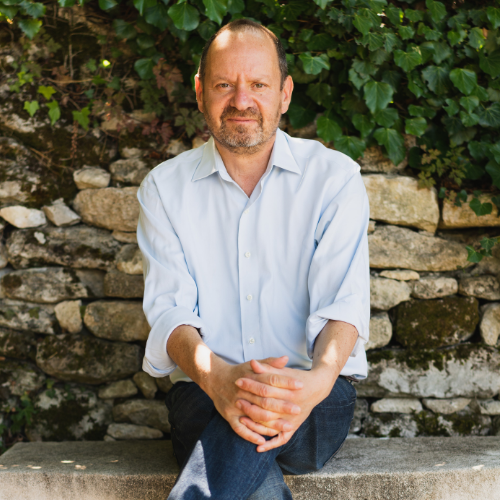
Philippe Sands
Philippe Sands KC FRSL FBA is a Professor of Law at University College London and visiting Professor of Law at Harvard University. He is a practising barrister at 11KBW, appears as counsel before the International Court of Justice and other international courts and tribunals and sits as an international arbitrator. His books include East West Street (2016), The Ratline (2020), The Last Colony (2022) and 38 Londres Street: On Pinochet in England and a Nazi in Patagonia (2025).
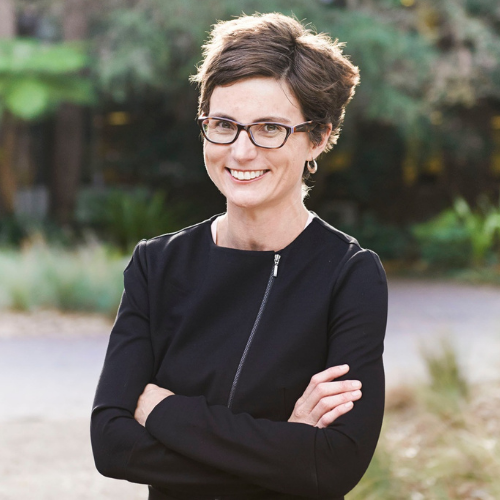
Rosalind Dixon
Rosalind Dixon is a Scientia Professor of Law at UNSW Sydney. She is also Director of the Gilbert + Tobin Centre of Public Law, Pathways to Politics for Women Program NSW and UNSW Gender Equality Hub.