
Nobel Prize Dialogue | Student Question Call Out

Want to ask a Nobel laureate a question?
On 24 October 2024, UNSW Sydney is hosting The Future of Decision Making, the first Nobel Prize Dialogue to be held in Australia!
As a part of this event, UNSW students have the exclusive opportunity to ask the Nobel laureates and panellists appearing live on stage, a question live and in person. The event will examine the future of decision making, including sessions on the questions of how we improve collective decision making across cultures, geographies and generations.
As a part of the event, there are two sessions (outlined below) in which questions can be asked. To submit your question, first read the session specific information below and then submit this form. To explore more about the event head here.
SESSION INFORMATION
Session 1 | Democracy reimagined: new thinking for the 21st century
Panellists: Megan Davis, Tawakkol Karman & Owen Gaffney
Cooperation is our superpower and democracy is a foundation of human progress. But we take them for granted at our peril. In some of the strongest democracies, democratic principles are being undermined while many voices are ignored. In this conversation Nobel Prize laureate Tawakkol Karman will tell her story of her determination to bring peace and democracy in the Middle East. Tawakkol will be joined by Megan Davis, a constitutional lawyer who is committed to greater Indigenous representation in Australian democracy.
Session 2 | Facts, fiction and critical thinking
Panellists: Tim Minchin, Saul Perlmutter & Verity Firth
Facts matter. The scientific process matters. The ability to think critically is essential to navigate our world, to make good decisions and to solve some of the world’s most intractable problems. Nobel Prize laureate Saul Perlmutter believes everyone can learn the skills scientists use to think critically so that they don’t fool themselves. Saul will be joined by Tim Minchin, a writer, composer and fierce defender of facts, the scientific process and logic. Tim urges us all to embrace messy reality and be guided by our own creativity, curiosity and critical thinking.
Explore the biographies of each speaker below.
STUDENT CRITERIA
To be eligible to ask a question you must be
- a current UNSW Sydney student;
- available to attend the event in person on Thursday 24 October from 6pm – 8.15pm, at the Sir John Clancy Auditorium, UNSW Kensington; and
- willing to be photographed and filmed asking your question.
CLOSING DATE
Submissions close 5pm, 7 October.
QUESTIONS
Please email centreforideas@unsw.edu.au if you have any questions.
APPLY NOW
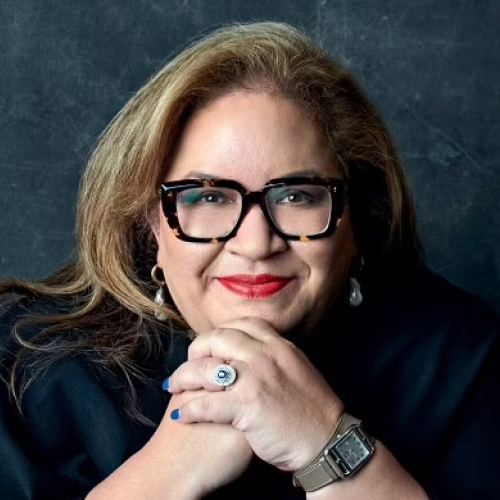
Megan Davis
Megan Davis is the Pro Vice-Chancellor Society at UNSW Sydney, holds the Balnaves Chair in Constitutional Law and the Whitlam Fraser Harvard Chair in Australian Studies at Harvard University and is a Visiting Professor at Harvard Law School. She is a renowned constitutional lawyer and public law expert, specialising on Indigenous peoples and the law, the constitutional recognition of First Nations and democracy.
She has been the leading Australian lawyer on constitutional recognition of First Nations peoples for two decades and designed the Referendum Council’s deliberative process that led to the Uluru Statement from the Heart. She is the co-chair of the Uluru Dialogue – the group of First Nations leaders who led the Uluru Statement from the Heart work. She is a globally recognised expert in Indigenous people’s legal rights and was elected by the UN Economic and Social Council as an expert member of the United Nations Permanent Forum on Indigenous Issues (2011–2016), and was also appointed by the United Nations Human Rights Council to the Expert Mechanism on the Rights of Indigenous peoples twice (2017–2022).
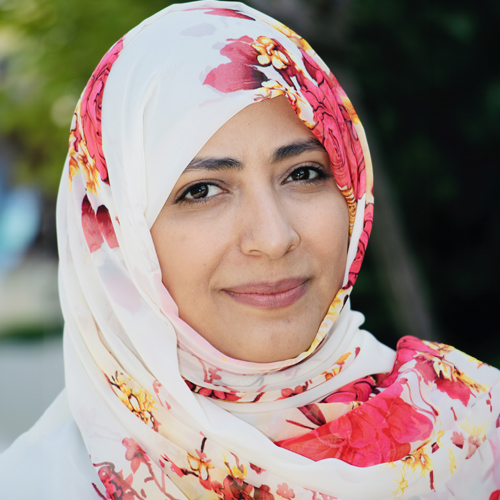
Tawakkol Karman
Tawakkol Karman, a Yemeni journalist and human rights activist, is the first Arab woman to win the Nobel Peace Prize. Known as the “Mother of the Revolution”, “The Iron Woman”, and “The Lady of the Arab Spring”, Karman led hundreds of protests against Yemen’s dictatorial regime, advocating for democracy and freedom of speech. She founded Women Journalists Without Chains and the Peaceful Revolutionary Youth Council, facing imprisonment and persecution for her active engagement in these causes. She played a pivotal role in pressuring former Yemeni President Ali Abdullah Saleh, who ruled from 1978 to 2012, to relinquish power.
Karman came forward as a courageous leadership figure during the Arab Spring in 2011 and was praised for her efforts against tyranny in the Arab world and for promoting reconciliation between Shia and Sunni Muslims, countering terrorism, and fostering dialogue between Islam and other religions. Karman's extensive influence is recognised globally. TIME Magazine listed her as one of the 17 Most Rebellious Women in History and one of the most influential women of the past century, featuring her on the cover of their 100 Strong Women in the World issue as a 'Torchbearer of the Arab Spring'. She is also recognised by Foreign Policy magazine as one of the FP Top 100 Global Thinkers and named among the most powerful women by many international media outlets and organisations such as CNN, BBC, and Reporters Without Borders.
Karman continues her struggle against tyranny, wars, and terrorism worldwide and advocates for expression rights, democracy, and development. She was appointed by the former UN Secretary-General to the High-Level Panel of Eminent Persons on the Post-2015 Development Agenda. She serves on the boards of several key international institutions and organisations, including the Nobel Women’s Initiative, Democracy for the Arab World Now (DAWN), and the Facebook and Instagram International Oversight Board. Her Tawakkol Karman Foundation plays an important role in development by building schools, fighting poverty, and supporting health institutions in Yemen.
More about Tawakkol Karman and the 2011 Nobel Peace Prize
Photographer: Abdullah Al-harazi.
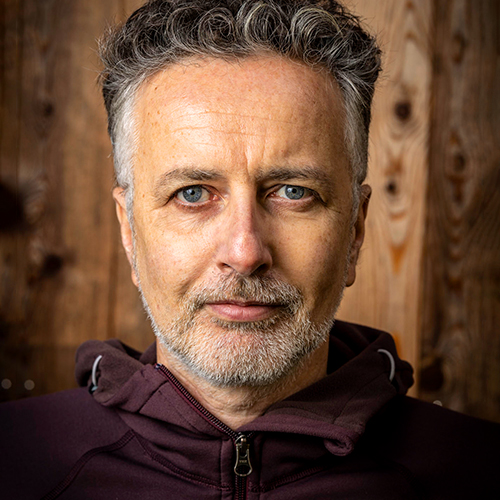
Owen Gaffney
Owen Gaffney is a writer, analyst and strategist. He is Chief Impact Officer at Nobel Prize Outreach. Owen co-founded the Exponential Roadmap Initiative and co-leads the Earth4All initiative. He has held positions at the Potsdam Institute for Climate Impact Research, Stockholm Resilience Centre, Future Earth, Global Commons Alliance and the International Geosphere-Biosphere Programme.
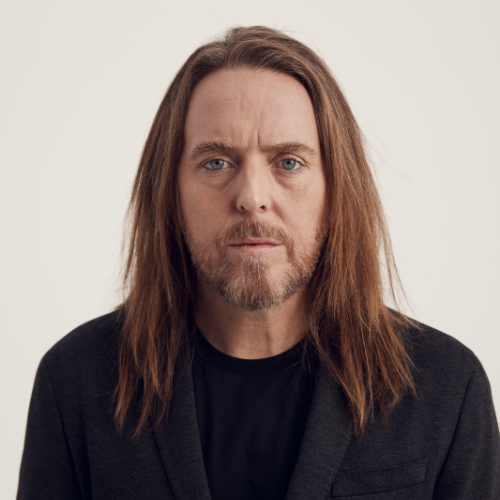
Tim Minchin
In addition to two decades of award-winning live performance and multiple recorded specials, Tim Minchin is the composer and lyricist of smash-hit stage musicals, Matilda and Groundhog Day. He is also a screenwriter (of the award-winning Upright, in which he stars alongside House of The Dragon’s Milly Alcock), and a screen actor, (Atticus Fetch in Californication, Friar Tuck in Robin Hood 2014, Darius Cracksworth in Disney's The Artful Dodger). He is a public speaker, and a book of his commencement speeches, You Don’t Have to Have a Dream, was recently published.
Stage roles include his acclaimed Judas in the 2014 UK / Australian Arena Tour of Jesus Christ Superstar, and Rosencrantz in the Sydney Theatre Company’s Rosencrantz and Guildenstern Are Dead. His 2020 studio album, Apart Together, peaked at #2 on the ARIA charts.
Among many accolades, he has won two Olivier Awards for Best Musical, a British Composers Award for Best Score, a Logie for Best Supporting Actor, an ACTAA for best TV comedy performance, an Edinburgh Comedy Award for best newcomer, a What’s On Stage Award for Best Actor in a Musical, the Richard Dawkins Award for Science Communication, and an Order of Australia for Services to the Arts and the Community. He has been nominated for some Tonys and a Grammy.
Photo: Damian Bennett.
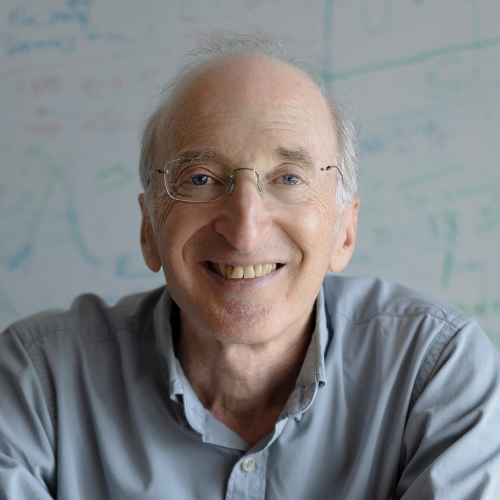
Saul Perlmutter
Saul Perlmutter is a 2011 Nobel Prize laureate, sharing the prize in physics for the discovery of the accelerating expansion of the universe. He is a professor of physics at the University of California, Berkeley and a senior scientist at Lawrence Berkeley National Laboratory. He is the leader of the international Supernova Cosmology Project, founding director of the Berkeley Institute for Data Science, and currently serves as a member of the U.S. President's Council of Advisors on Science and Technology. His interest in scientific-style critical thinking led to the development of the interdisciplinary courses “Physics & Music” and “Sense and Sensibility and Science,” which he has been teaching to undergraduates for more than a decade—and which is the origin of the new co-authored book, Third Millennium Thinking: Creating Sense in a World of Nonsense. An author of hundreds of articles on cosmology, Perlmutter has also written popular articles and appeared in numerous PBS, Discovery Channel, and BBC documentaries. In addition to other awards and honorary doctorates, he is a member of the National Academy of Sciences and the American Academy of Arts and Sciences and a fellow of the American Physical Society and the American Association for the Advancement of Science.
More about Saul Perlmutter and the 2011 Nobel Prize in Physics
Photo: Christopher Michel.
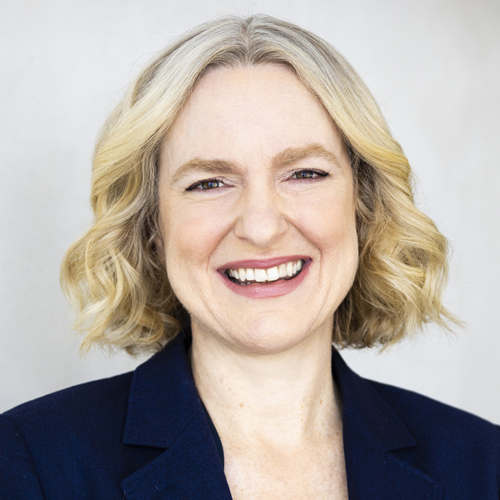
Verity Firth
IntroductionVerity Firth is the inaugural Vice-President Societal Impact, Equity and Engagement at UNSW Sydney. She has over 20 years’ experience at the very highest levels of government and education sectors in Australia. Prior to her role at UNSW, Verity was Pro Vice-Chancellor Social Justice and Inclusion at UTS (2015–2023), CEO of the Public Education Foundation (2011–2014) and NSW Minister for Education and Training (2008–2011). Verity is a member of the Commonwealth Government’s Implementation Advisory Committee for the Universities Accord.