
Nila Ibrahimi: Song of Rebellion
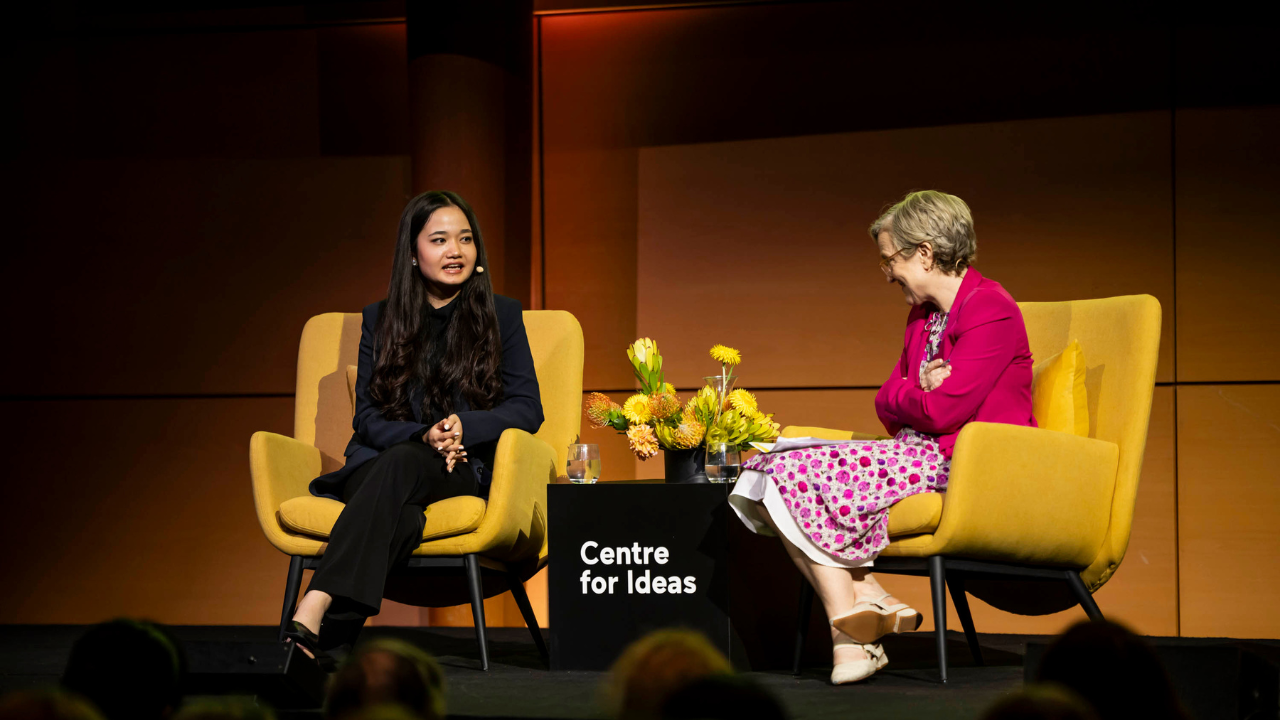
I get my strength, I get my power and I get my inspiration from the girls of my country.
When Nila Ibrahimi posted a video of herself online, singing proudly in protest of the ban on girls over 12 singing in public, she hoped the music would inspire young girls to continue their education. It was 2021 and the Taliban’s return to Afghanistan had come down swiftly on women's freedom. The video went viral and the ban was reversed, sending a powerful message across social media – women of Afghanistan would not be erased from public life. The Taliban would, however, go on to prohibit female education and Nila and her family would have to flee her homeland. Undeterred, Nila continues to advocate for Afghan girls from Canada.
Listen in to winner of the 2024 International Children’s Peace Prize Nila Ibrahimi in her first ever visit to Australia. In conversation with UNSW’s Verity Firth, they’ll unpack how peaceful grassroots activism can empower people of all ages to challenge authority and the importance of a right to education.
ABOUT THE GANDHI ORATION
Since 2012, UNSW Sydney has held the annual Gandhi Oration celebrating the legacy of Mahatma Gandhi as a champion of human rights. Each year the Oration focuses on a significant human rights issue of our time, providing a moment to take pause to explore these important issues. Revisit past Gandhi Orations through videos and podcasts here.
Transcript
Verity Firth: Good evening and welcome to the 2025 Gandhi Oration, hosted by the Centre for Ideas.
Nila Ibrahimi, Song of Rebellion. My name is Verity Firth, and I'm the Vice President of Societal Impact, Equity and Engagement here at UNSW.
As we begin tonight's conversation, I'd like to acknowledge that we're on the land of the Bidjigal people, the traditional custodians of the land upon which this university was built. This land has been a place of learning, storytelling and cultural exchange for thousands of years, long before the foundations of our university were laid.
Tonight, as we gather to reflect on the power of education and the courage of young voices, we honour the deep knowledge systems of Aboriginal and Torres Strait Islander peoples and the role they continue to play in shaping a just - a more just - and equitable future. I also extend this respect to other Aboriginal and Torres Strait Islander people here tonight.
For over a decade now, the Gandhi Oration has honoured the legacy of Mahatma Gandhi, a global icon of nonviolent resistance and a tireless advocate for human rights. Each year, we gather to reflect on a pressing issue of our time, and tonight, we turn our attention to the power of education, the courage of young voices and the enduring strength of peaceful advocacy. At UNSW, we believe education is one of the great equalisers. It has the power to close gaps between communities, to uplift health and prosperity and to create meaningful change, both here in Australia and across the world. This belief is at the heart of our university's mission: Progress for All. We know that when education is accessible and inclusive, it transforms lives. It creates ripple effects that reach families, communities and entire nations, which is why tonight's event is so important. We have the pleasure of welcoming Nila Ibrahimi for the first time to Australia.
In March 2021, a ban was imposed on Afghani female students over the age of 12 singing in public events. The condemnation on mainstream news outlets and social media was swift. In protest, women from across the country recorded videos of themselves singing and posted these videos onto social media using the hashtag, I am my song. In an act of defiance at the age of 14, Nila, with the support of her brother Murtaza, posted a video of herself singing her song of rebellion, Boro bakhair ba maktub, meaning Go to School. This brave decision changed the trajectory of Nila's life. Nila’s story is a testament to the power of words, of music, of community and of conviction. Her journey reminds us that age is no barrier to influence and that leadership can be kind, thoughtful and deeply courageous. Tonight's event is a celebration of this impact of what happens when one person, even at a young age, chooses to speak up, to lead and to inspire. As we hear from Nila tonight, I invite you to reflect on the kind of world we're building, and the role education plays in shaping it.
Now, the moment that we've all been waiting for, please join me in welcoming Nila Ibrahimi to sing her song of rebellion: Boro bakhair ba maktub. She will be accompanied on guitar by Harley Coleman.
Applause
Music Performance
(Persian – Romanised)
Boro bakhair ba maktab dars bekhan dokhtar jan
Bah to niaz dareh Afghanistan dokhtar jan
Boro bakhair ba maktab dars bekhan dokhtar jan
Bah to niaz dareh Afghanistan dokhtar jan
Sang mokteb mikhaneh dandan ba
Darsena misheh zandegani rang rang
Boro bakhair ba maktab
They told you to be silent and keep your head held down,
Hide yourself inside and never speak out loud.
Hear the silence break voice by voice,
You can write your story, sing your song.
Hear the bells are ringing all day long.
I can see the fighter. She's still there.
Hear the voices echo everywhere.
Daughters, daughters, you are the future.
Brothers, fathers give them a future. This is on us.
Daughters, daughters, you are the future
Brothers, fathers, this is on us.
You can write your stories, sing your song.
Hear the bells are ringing all day long.
I can see the fighter. She's still there.
Hear the voices echo everywhere.
Boro bakhair ba maktab dars bekhan dokhtar jan
Hear the voices echo everywhere,
Bah to niaz dareh Afghanistan dokhtar jan
Hear the bells are ringing everywhere.
Sang mokteb mikhaneh dandan ba
Hear the voices echo everywhere
Boro bakhair ba maktab
Applause
Verity Firth: Take a seat. That was absolutely wonderful, Nila.
Nila Ibrahimi: Thank you, Verity. I had so much fun preparing for this, thanks.
Verity Firth: So, what I thought I'd do is start with a question about what we're talking about tonight, about how age isn't a definer of who can have influence. And I was obviously doing a bit of research and watching the speeches you've made in the past. And when you received the International Children's Peace Prize, you said, “activism for Afghan girls, or anyone who has lived through injustices is not a choice. It's a necessity.”
But as I watched you speak, I thought that's so true, but activism also takes a lot of personal courage, especially in countries where you know the punishments can be harsh, and you were just 14 when your advocacy began. So, I thought it'd be interesting to talk to you a little bit about where that courage came from for you, and how do you reflect on that moment now?
Nila Ibrahimi: Thank you so much Verity for that question. I just wanted to take a moment to say hello to everyone. Thank you so much for coming. This is so fun for me, my first time in Australia, and I'm here to speak to you all. So, thank you so much for your time to be here, and thank you to UNSW for organising this.
Getting back to the question, I think, you know, growing up in Afghanistan, there were so many battles that, you know, every person, every Afghani, had to go through. But for women, it was so much harder, because there's not only the gender inequality issues, there's the taboos and the ideas that are ingrained in the systems that the society works with, ingrained from the first time the Taliban came. And so girls had to deal with that every single day. And when we look at the general public, the general public had to deal with a lot of other issues, like then safety-ness and the discrimination and the other things, all the millions of things that Afghan Afghans had to go through on a single day to day basis. So, thoughts of protests, thoughts of, “I want to stand against this. This is not something that I want to live through, and I don't want my children to go through”, is something that happens a lot. And this is a very common thing for people from Afghanistan.
And so, you know, standing against a decision like that, like the protests that I did, it was the first time that a decision was impacting my own life, so on a personal level, and that courage came from believing that this decision really is going to affect my life, and I don't want to let that happen. And you know, there are so many places we take that inspiration of standing against something. And getting that courage from for me personally, that comes from seeing how my single mother lived in Afghanistan through the you know, like being a single mother is hard, but being a single mother in a country like Afghanistan is difficult on another level. And so seeing how she battled through, how she stood against, the battles that she had to go through every day, that became a sense of courage and inspiration for me. And I'm sure that Afghans in Afghanistan have so many other things that they can draw inspiration from, because it's a country full of stories. When things happen, you know, when harsh things happen, there's a lot of courage that comes through that, because we're tough, you know, and I've noticed that since I've come outside of Afghanistan, that Afghans, we've been through a lot, but it really, you know, it really has shaped some character.
Verity Firth: So there was courage all around you. You saw a lot of examples of courage.
Nila Ibrahimi: Yeah.
Verity Firth: So why don't you tell us what's happened in Afghanistan since you've left? So you left in 21 is that correct?
Nila Ibrahimi: Yes.
Verity Firth: Yes. And so what's, what's been going on recently in Afghanistan?
Nila Ibrahimi: So, I'm going to start from the first time that the Taliban came in 2021 they started by saying that “we've changed”, that, you know, “we're going to accept women's rights”, “we're going to be respectful of human rights”. But something felt wrong, and it felt very performative for the media, because at that time, they didn't have as much power they had just come to the country. But slowly, they brought back the rules and the restrictions that they had 20 years ago when my mum lived through their first regime, and it started by not letting girls go to school, so now they can only go to school from first grade to sixth grade, and then it started by not letting them to decide how they want to dress in public. They can't go out without a man escorting them right now. They were banned from gyms and parks. Now they can't be heard in public, and of course, they can't pursue their passions of or hobbies, of, you know, sports or arts, they're all banned. And recently there was an internet ban, which was horrific. And for two days, no one in Afghanistan could be reached. They couldn't, you know, communicate with the outside world, which was just reminding me of North Korea. And it was so hard to live through that. And I'm sure, with for Afghans who have families back home that was so horrible to go through. The reasons are not still “out”, like what's happening, so we're not sure why that happened. But it's really terrible to think that the Taliban have that much power that they can just cut the world from, you know, knowing what, what is going on in Afghanistan. So to know that they're we're dealing with a government like that that can just do whatever they want without any reasoning behind it. It's really horrible to live through that. And I think when it comes to how it's impacting girls in Afghanistan, you know, online education is their only hope right now. And I'm in contact, and I know of so many organisations that are helping them get an education online, and to see that that what happened, that can happen again. It's really hard to see that. You know, that was the only hope of these girls, and it can be stripped away at any time.
Verity Firth: So how did you and your family get out of Afghanistan?
Nila Ibrahimi: I'm thinking of writing a book about that, because it was a really long journey. We left five days after the fall to Pakistan, because, you know, the 20th, 15th of August, the Taliban came. The 20th of August, I didn't know the morning of that date that we would be leaving, because it was just they were bringing out new rules at the, you know, every day. So we just got to this conclusion that we have to leave. We went to Pakistan, and it was really hard, because we were going from city to city, not knowing how long we would be in Pakistan. We were undocumented refugees. We were there illegally, so we couldn't get an education. So, with the help of the 30 Birds Foundation, which was the foundation we were connected with through the help of the school I was going to in Afghanistan. We got to Canada after a year. And so it was a very long journey, but I'm happy that, you know, I have all the rights that any girl should have right now in Canada.
Verity Firth: Yeah, and the 30 Birds Foundation got a lot of you out of Afghanistan. How many people all together?
Nila Ibrahimi: So, there were two rounds. The first round, 200 girls with their families. In the second round, which I was a part of, 200 girls with and without their families. So most of them were girls who were going to the school that I was a part of.
Verity Firth: Wow. And so that's how they so you were all going to the same school in Afghanistan?
Nila Ibrahimi: Yes,
Verity Firth: Right. Wow. That's amazing. And you first, which town? I tried to say it behind stage, and I didn't pronounce it right. Which town did you first get to in Canada?
Nila Ibrahimi: Saskatoon, Saskatchewan. So very small town. Great place to start life in Canada in, but maybe not the best one to be at forever. That's why I moved to Vancouver. But yeah.
Verity Firth: Yeah, and you were telling me it was like minus 40 degrees.
Nila Ibrahimi: Oh, yeah. That was one of the reasons we left.
Verity Firth: So, you speak passionately about the power of education, and you've said in the past that if you build a school or educate even one girl, you have made a difference. So, you've already told us about how the battle for girls’ education is going - like in terms of people can't officially attend education after year six, which is actually terrible and a complete denial of human rights. Obviously. What is it that the international community can do to help keep the pressure on the Taliban?
Nila Ibrahimi: I think the very first thing, and I get this question a lot, is talking about it, acknowledging that this is an issue that is impacting real people. It's not just numbers. You know, with that, you scroll through Instagram, and you see a post from UN Women, and it's saying that it's been four years since girls in Afghanistan can't go to school, and you're just like, it's another post. It's not another post. It's real people that are being impacted by this. And an example I bring up a lot is I left Afghanistan when I was going through my midterm exams of grade nine, and I've graduated high school, I'm a first year university student, but my when I talk to my friends back home, they're still frozen in time, and so I think of that a lot myself, and that's what drives me, but acknowledging that this is a real issue, empathising with the people that are being impacted by this is the first step, and then getting out there and seeing who is active in this issue, in solving this problem and getting in touch with them. There's a lot of organisations that are helping the girls in one way or another. Most of them are things that can't be talked about in public. But just being out there and getting in touch with people who are active. And truly, I believe when we, you know, want to be a part of a solution, there are so many ways, and I just some examples that I can give is online - online schools, volunteering with the girls, to talk to them and to teach them. Give, give them some of your time and some of your attention. That means the world to them. It truly represents that the world hasn't forgotten about them. And so, yeah, I would say, I would say, those are ways we can help.
Verity Firth: Yeah, which is why the cutting off the internet was so damaging. Yeah. So you had a musical group in Afghanistan, Sound of Afghanistan, which is, I imagine, also why you felt it was so deeply affecting your life when they said they wanted to ban singing over the age of 12. So, most of the people in Sound of Afghanistan were also part of the people who came to Saskatoon with you at the time. How - are you still connected to Sound of Afghanistan? And how did you draw strength from this community?
Nila Ibrahimi: I think, you know, when I think about Afghanistan, I really remember the school that I was going to. It was just a dreamy place. I know that sounds corny, but it's really true, because in a country like Afghanistan, there's rarely places you can go and talk about your dreams and be able to speak up and just be respected as a not just as a human being with values, but, you know, as a girl, as a woman, and so growing up, my siblings went to the school, and I was like, well, maybe I should too, and when I did, I really understood why they were just really obsessed with everything that was going on at the school, because we were taught to speak up. We were taught to question things. We could get in arguments with our teachers in class, because we didn't believe in the same thing they were talking about, but respectfully, of course. And you know, there were other extracurricular activities that, you know, not just boys, but girls could take part in as well. And as my siblings were taking part in this musical group, I was like, “maybe I should too”. And as soon as I joined it, I fell in love with everything that we were doing, because we weren't just singing free note, I don't know, Mother's Day, Teacher's Day special occasions at our own school, which was so fun when I think about it. That's what I really miss about my country right now. But it was also the school trips we would have to, you know, with to sing on national TV, which was breaking taboos, literally, because, you know, Afghanistan was not ready to see women stand on stage and sing. And when I say women, I mean teenage girls. And I think when that ban happened, I felt like our group was the group that was really attacked. Because, you know, I can't name another group that was bringing boys and girls to sing about their rights, about, you know, things that were political on stages, on national TV. And so when I think about that group, that's really where I learned to speak up, because, you know, that gave me the courage to stand on stage, sing about my beliefs, and when that was taken away, you know, the passion that I had for that, for being part of that group, that was what motivated me to speak up against that ban.
Verity Firth: Yeah. And so they're mostly back in Saskatoon, but you still see them each year. Is that right?
Nila Ibrahimi: Yes. So, they're mostly in Saskatoon. Some of them have moved like to Toronto or Vancouver like us. But yes, there is a gala. The 30 Birds Foundation has a Wingspan Gala. They call it that, and I see them every year. So it's the greatest thing. I'm looking forward to it. It's happening in November.
Verity Firth: That's lovely. That's really lovely. So this was one because we've got all this politics about social media going on in Australia, and the fact that your song went viral and forced the Taliban to back down on their ban on women singing well, not just your song, but all of these sorts of songs that flooded social media during the ban. In many, in many ways, it demonstrates the power of social media in activism, right? And I know that globally in modern activism, social media has been very powerful, but there's obviously a lot of commentary in the West about the negative impacts of social media on young people. And I just wanted to get your views on, given your experience.
Nila Ibrahimi: I think if I were to just block my memory from Afghanistan and everything I knew before I could really relate to why this ban is happening in Australia. But it really depends on the context and the country we're talking about. Because, you know, in Afghanistan, I mean here, let's talk about here first, because it's more relatable. When we look at the Western world, social media can be addictive. It's known. You know, the things that come out when we say come to mind. When you say, social media, it's addictive, It's, I don't know, propaganda in the in the US right now, and many other negative connotations that are associated with it.
When I think of Afghanistan, it's, you know, where people got connected and when they talked about ideas and how they didn't believe in things that were going on in the government and what was going wrong. And it's really where a lot of teenagers and young people came together to discuss about their ideas, you know, and a lot of activists came out from, from that, from being able to share ideas, connect with each other. And so I think it really depends on the content in the context. But this social media right now, when I, when I look at it in Afghanistan, it's and throughout my time in Afghanistan, it's really been a tool for change. It's been really powerful. And though you can if you use it too much, of course, the negative connotations just can exist in Afghanistan or wherever you are in the in the West. But it really was a tool for change in Afghanistan, and I think it still is, because, you know, girls can't go out in public and protest anymore. They will be beaten up, but they can post something, they can talk with people outside of the country or inside the country, and that does something, you know, it does something to someone who feels hurt and seen and knows that they're not alone in dealing with something. So that brings me back to the internet ban and how horrible that was.
Verity Firth: Yeah, and you can also see why governments may want to turn the internet off when it's being used for activism in that way. Right? So it is a very powerful organisational tool. Did you use the same platforms as like, were you Facebook and Instagram? Is that all the same platforms?
Nila Ibrahimi: I think what I'm going to say is going to make some Australians happy, because at that time, I was 14, I had, I had no access to social media, so I was completely off. Yeah, I was really good at school, when I think about it now, because I wasn't on social media. But, you know, my brother was on it, he was on Twitter, everything. He was good at school too. Let’s just be honest about that.
Verity Firth: So how do you feel? Like most people in this room wouldn't have imagined a life that you've had over the past four years, like that must have been just even fleeing your like, you know, they come to power five days later, you've fled the country to Pakistan. You know what I mean, all of that, arriving in a brand new country. How do you feel that your experiences have shaped you, and what do you carry forward from them?
Nila Ibrahimi: I think sometimes, when I think about it, it puts me at an advantage, unfair advantage. But getting to this perspective took a lot of time, because when I first got to Canada, all I could see was, you know, I was going through the cultural shock phase and everything, and I was still really homesick about Afghanistan. It's a really horrible time. It was a horrible time - I was, all I could think of was the negative things that came out of the experiences I had, you know, just missing my friends, missing everything I knew from back home, and having to start from scratch as though I was just 15, 14, at that time. You know, I know people who move when they're 30 or older, It's much harder. But it was just really hard for me to adjust and to have to start life from, from zero again.
But when I think about it now, it really, going back to my point earlier, it really gives me character, because resilience and patience and being able to care for other people and be empathetic and have the chance to, you know, use the voice and the platform that I have right now. For girls who don't have that, it's really a privilege for me. And when I think about it, everyone who got the chance to get out of Afghanistan after the Fall, they really do. And I see some Afghans here right now, and I just want to say that we have a big responsibility when it comes to just being able to flee the country, we have to speak up about what's happening, and because it's truly a privilege to be able to have these experiences, but also have the ability to live a normal life.
Verity Firth: You're about to start university, so which I think is going to be an amazing time for you. You already won a scholarship to go to a school in Vancouver. I think that was right, wasn't it? So you're doing really well in your studies, but how do you feel you'll start growing into yourself as you step into this new phase of your learning and go to university.
Nila Ibrahimi: I think I'm appreciating education very differently. When I got to Canada, I was in grade 10, so I finished grade 10 in Saskatchewan, the public system, not very my style. And then grade 11 and grade 12, I started high school in Vancouver, and it was intense. It was a really intense private school. So that was still hard, because I was still going on stage and talking about these things, and I got the peace prize last year, but I was still in my senior year, so a lot of chaotic stuff going on with balancing school and, you know, the speaking stuff. But right now, I think, because I've had a break from advocacy, this is, I'd say, my first time after the Peace Prize ceremony that I'm out and talking, it really gave me the chance, the break, that I had to appreciate education on another level, because I saw it as a burden for a long time, as any teenager does, but right now, I see it as a way of just harnessing my abilities and my skills as a person and how I can voice my opinions and how I can think critically, and how I can analyse information and to be an Afghan girl and have this right at this time - It's really a privilege. So, I just sometimes have to tell myself that and remind myself that every time I'm like, really
Verity Firth: Why do I have to do this an essay?
Nila Ibrahimi: Yeah, and essay or a computer science assignment or an e-comm lecture I have to go, to I just have to, you know, remind myself where I come from and who I am, and what this is, what this means for me as an Afghan girl. So my experience has really helped me not take that right for granted.
Verity Firth: Yeah, and you're right that in terms of the experiences that you've had as an activist role model, it's been pretty incredible. So you've spoken at many large events. You've spoken at the UN. This year, you spoke at the Clinton Global Initiative annual meeting. You're obviously international young person of the year. But I did watch that speech, and it was really wonderful, and it looked like it was in a very large room full of very influential people. So you've really had your voice heard on a global stage. One of the reasons why we had this event is that we want to honour Gandhi, who believed in advocacy through strength, through the power of words and through non violence. So what does that philosophy mean to you personally, and how do you embody it in your leadership,
Nila Ibrahimi: To be, to be compared to Gandhi, or just to draw from everything that he stood for, I'm going to need a minute for that.
But I think mainly you know, what I really focus on is the power of words, the power of sharing stories, and the power of listening to each other and just drawing something for everything that someone has to tell, you know, and that's when I got out of Afghanistan, or when the country fell. I was just instantly, as any Afghan did, thought about how I could help solve this problem, which seemed so much bigger and still does so much bigger than me. And for me was words and the power of words, and I'm still working on solving this problem through storytelling. And, you know, the first year I got to Canada, I was invited to speak on different, you know, speaking engagements, and that's what I did for a while, but then I understood that. What I understood was I can't carry the responsibility of representing Afghanistan just on my shoulder, because Afghanistan is so much more than just Nila, and there's so many other talented girls that I know that have to have this platform, because it's just going to be another stereotype ingrained in the minds of, you know, the Western world. And so I created HerStory with my brother as my co as co founders. And what we did was we interviewed girls online in Afghanistan, because what they're doing, how they're coping with what's going on in Afghanistan, is incredible. They're building online businesses. They're, you know, making photography archives. They're being more active on social media, because, you know, that's what we talked about before, tool for change, and we covered those stories, and what that did to those girls and to our audience was really impressive. And so we widened that, and now we're focusing on interviewing girls outside of the country who are in diaspora, like people who have been really successful ever since they've got out, gone out of the country. So the business women, the artists, the people who are change makers, politicians, and these are really people who have immigrated and other Afghan communities, you know, outside of the like the immigrant Afghans, they don't really know they exist. And so it's really important to have a platform where all Afghans can come together and see how capable we all are, and not just to strengthen our own sense of self, but the Western world needs to be reminded that Afghanistan is not just the tragic headlines. It's more than that. It's the potential of not just the girls, but also all of the people that come from there. So I would say storytelling is a really powerful tool, and I hope that it can bring the change that I'm hoping it will.
Verity Firth: Yeah and do the women or the girls that you interview in Afghanistan, so you do that over the net. How do you protect them? Do they ever have problems then having been publicly identified.
Nila Ibrahimi: That's what we consider. One thing we consider as well. So we do two things. We have a sector of HerStory, which is in their words. So they submit their own writings. There is no identification. They don't talk about their names. It's all what they want to say. We have poems, we have art pieces, and we have stories that they write, both in English and in Farsi, Dari, and also the interviews that we do, we interview them, and then we have someone write an article, and we ask them if they feel comfortable. And we have to go through the signing a contract and everything or consent form, sorry. And we change the names sometimes, but most of them are anonymous, so it's whatever they feel comfortable sharing, but without their names.
Verity Firth: Yeah. So what advice would you give to other young people who have something to say and they don't know where to begin?
Nila Ibrahimi: I would say, you know, answering this question, what really helps me is going back to the 13 year old Nila, before she posted the video and before it kind of went viral and this happened, I would say, just believe that that gut feeling that you have, or that thing that burns inside of you is going to lead somewhere you just have to lean into it. And that's what I feel right now, and that's what I feel every time I get on stage, and I really feel connected, and maybe it's because of your energy. Thank you so much for, you know, being here. And I just think, just reminding yourself that everything you do just big or small, and leaning into the voice that tells you to take action, and that thing that really bothers you, and you're like, I want to change that, just leaning into that and believing that whatever you do matters and has an impact that's going to truly be remarkable. Because this is not just advice for young people. I've met a lot of people through this work who have different backgrounds, different ages, who, you know, have told me that they've been impacted by what I've had to say, or they've been impacted by whatever is going on in Afghanistan and the other Afghan girls that they've met. And I think just believing, just believing that you have your actions have power, it really can do remarkable things.
Verity Firth: So, Afghanistan's got a long way to go. It's, you know, what - I suppose - gives you hope?
Nila Ibrahimi: That's the hardest question I have to answer. I can do this two ways. I can be honest, or I can pretend. So we can all be hopeful, but I'm going to be honest. The reason I took a break from my advocacy was, you know, because I felt hopeless. I got the International Children's Peace Prize, and I was busy with school, and that's another story, but I was just thinking, you know, there were moments where I was doubting myself. I was doubting whether all of this was doing anything. And in those moments, I would go back. I would go back to the girls that I knew, to my friends back home, and to everything that they are going through every single day and they have to put up with that, and how they're dealing with that, and how they're coping with that, and how they're taking action, and they're still standing, and they're not giving up. Every time I thought of that, I did not let myself give up. Because I couldn't, and it's a privilege for me that I have the right to live a so-called “normal life”. And they don't. And I get my strength, I get my power, and I get my inspiration from the girls of my country. I hope that answers your question.
Verity Firth: It really does. It's really beautiful.
We now have some opportunity for some audience questions. Oh, this is a really good one. I will ask you this one, “how can people across Australia support Afghani women and girls with online education options?” And I'd be really interested in that from a university point of view as well.
Nila Ibrahimi: I think other than one thing I mentioned about volunteering your time to be in contact with the organisations that help with the online education, I think just universities in general, being more eager to give scholarships to girls, Afghan girls, whether they've just gotten out of the country somehow, or they're in Afghanistan, they're qualified and they're applying. Just being more eager to that is really helpful. Because what I've noticed is that after the Fall universities, especially ivy leagues in the US, they were more eager to accept Afghans because of the headlines and because of the power of social media and the media in general, and how hectic the whole situation was, but it's still like that, and the media doesn't really cover it as much because it's not clickbait or whatever. It's not really good for their own system or strategies. But just keeping in mind that universities, if they're more eager to have more girls from Afghanistan because they are qualified, they just need a push.
Verity Firth: Yeah. And the thing is, there's so many more online options now than there used to be as well, right? Like so yes, push for people to come and actually get visas and come as international students, but also just most universities now around the world have many, many more online options compared to what they used to have. So, I think it's something we should be thinking about as a sector in a more coordinated way.
Yes, apart from your dreamy school, which is lovely, what do you miss most about Afghanistan?
Nila Ibrahimi: I get this a lot too. I would say what I remember is, you know, the hospitality of Afghan people, how close everyone is, and the culture, and just the culture of being, you know, there is a lot of differences in Afghanistan, and we've had, we've come a long way with how the different nations and the different languages and the different ways of looking how we've dealt with that throughout time, but I feel like in the late, in 2021, or the latest years, we were there before the Fall, we were getting somewhere, and people would change unique time, but we were really on a path of change.
And one more thing that I miss is I seem very “activisty” here, like in the in the genre of school and or university, and I feel that, that people think I am very “activisty”. It's an Afghanistan thing. It's very Afghanistan because, you know, I've said enough about how many things we have to go through, but that really changes something in you. It really makes you speak up. Because, a quote I heard once was “people who've never lost their voice don't know the impact or the value of their voice”. So that really speaks to the experience of Afghans and how that really has felt some “activisty” character. So I would I would say, I miss that too.
Verity Firth: Yeah, that's really interesting. With the school that you went to. It was that in Kabul? Yes, yes. And was that? How was that school established? Was it a government school, or was it a school that was privately funded? Your dreamy school?
Nila Ibrahimi: I think it was private, because it was built by Dr Aziz Royesh. He's in the US right now, and he's a great person. I think there's a there's a lot of stories about the school. There's a lot of books written about it, and I'm thinking some short films as well. But yeah, it's, it's, it was really one of a kind.
Verity Firth: Yeah, and then that also, because it played such a role in getting young girls out of Afghanistan as well. So, it's a really amazing story.
Another question from the audience, “can you give us a sense of how your friends and their mothers back in Afghanistan spend their days, given the rules imposed on them?”
Nila Ibrahimi: It's really hard for me to imagine it myself too, but I would say using the least restrictive resources that they have, online schools or social media. But I would say social media really is what's what takes most of their time, and not in the way that we think in the West. No, but it is, it is really horrible to have to put, I don't know, to have to imagine what they have to go through, but I really don't know specifically.
Verity Firth: Yeah, can you tell us, oh, this is nice. “Can you tell us the Farsi word for courage? Because we will take it away with us.”
Nila Ibrahimi: Aww. Shojaat, I hope that's not, that's not a hard Farsi word. So yeah, you guys got lucky with that one.
Verity Firth: What are you studying, and what are your plans for your future career? Will you continue to advocate? Do you think?
Nila Ibrahimi: As a fellow Afghan girl, advocacy will always be a part of my life in one way, shape or form. I think of becoming a human rights lawyer. I'm not sure - that's Plan A. Maybe there's a plan B, but I'm on a gap year right now, so I have some time to think about it. I'll be starting my studies at Wellesley College next year in Boston, and I'm thinking of studying cognitive systems so I get to explore what I actually like outside of everything else that I've had exposure to, and just having the chance to actually see what I actually like, but I think advocacy will always be a part of my life.
Verity Firth: I think it's really interesting what you said about advocacy being more prevalent in Afghani culture or like activism. And I think that's very true. Like when you face genuine hardship, when you actually face real problems, there is a courage in humanity, and maybe sometimes in the West, we're just too comfortable to properly have that courage. But maybe we need to learn right and to say, as you say, understand that privilege so that you actually stand up and help other people.
Nila Ibrahimi: Yeah, it's the key word is “privilege” here. That's how I talk to myself. I'm like, “you're privileged to be here”, “you're privileged to go to school”, “you're privileged to live in Canada”. And I feel like a lot of the work that we do with storytelling is that people, no matter where they come from, feel that because we're all human, and we shouldn't have to be, you know, going through different experiences just because of our skin colour or where we come from. So just, I want to send that feeling to other people and share that with other people.
Verity Firth: Has it been difficult maintaining relationships with your cultural identity when you're so far away from Afghanistan?
Nila Ibrahimi: Wow, thinking that came from an Afghan because you really have to go through it to know that it's a thing that comes out in the journey. I think connecting with Afghans in Canada has been really helpful, because we have events for any significant cultural occasions: the New Years, or we have Ramadan, and we have Eid and all of that. So connecting with people who have come outside of the country, in Vancouver, where I live right now, and just every time I see Afghans, it's just just makes me really happy. And I just want to tell, like, ask them, “so how did you end up here?” Because I know every Afghan has, we have to write a book, each person, because there's a long story behind each one of us. So yeah, just staying connected with the people. I think the people help with the culture, and just not forgetting where I come from, which happens through, every once in a while, sobbing through some old photos that I watch or some videos that I see. But yeah.
Verity Firth: And how big is the Afghan community in Vancouver? Is it reasonably sized?
Nila Ibrahimi: Yes, yeah, I would say it's not as small as the one in Saskatchewan, because when we went there, the big group that we were, we were the only Afghans, and the first Afghans, I would say, in Saskatoon. But yeah, Vancouver's we have, we have a large community of Afghans.
Verity Firth: Yeah, that's nice. Are there particular organisations that we can work through that would support women and girls in Afghanistan?
Nila Ibrahimi: There's quite a few. I'm just going to name some of them. I don't remember the other ones. But in Canada especially, there's Right to Learn. They have online education. There's the 30 Birds Foundation, which does on the ground and online work. There's Afghan there's Women for Afghan Women in the US. And I hope you guys are noting this down. And there's HerStory. So, very much focused on storytelling. But yeah, these are the ones that come to mind for now.
Verity Firth: I can also do a plug for an organisation in Australia called the Indigo Foundation, that I often do work with, and they're amazing. They deliver education for girls in Afghanistan in collaboration with communities. But as I was saying to you off stage, they sort of work, almost like underground, yeah. And with, I don't know how much I should say in public, but anyway, they do manage to get girls educated past year six, and they do it by working very closely with people in community who sort of deliver it secretly.
Nila Ibrahimi: Yeah, there are some other organisations that I know that do similar work, but I was just mindful of the security.
Verity Firth: Yeah, I hope, I don’t mean to -
Nila Ibrahimi: It’s okay.
Verity Firth: When you planned - this is from Zora and Wari - when you planned to sing for the first time, which challenges did you face?
Nila Ibrahimi: So, my mom has lived through the first regime of the Taliban. And of course, as a mother does, she was worried that this was going to be too risky for me to put out into the world. And considering everything that the Taliban, or not, the Taliban, the Afghanistan Government, would do, the Taliban were kind of there, there would be, every once in a while, there would be an explosion, and they would say “that was us”. You know, it was hard to consider the risks of what could happen, because there had been protesters before, and to have to go through all of that and see what had happened to them, it was hard to consider those risks. But, you know, getting back to the passion, I was really stubborn. I was like, “I really want this to be out there, because I can't imagine not being able to sing on stage.” And I can just imagine my teenage self, like thinking like that and music and, you know, singing was a big part of my life back then. So I can really relate to how, like, where that passion and drive came from.
Verity Firth: I think it's really interesting that, because I think that's also another thing about activism. It's almost like people get spurred on when something directly impacts them, right? It's that sudden realisation that, “oh, this is going to impact me”, that can, and so again, learning to also be able to see what's happening to other people as well and have that inspire you as well. But I think your story is very usual.
“If you could design one global action to support Afghan women and girls right now, what would it be?”
Nila Ibrahimi: One global action?
Verity Firth: Yeah, so maybe even something by the global community. Is there anything that you think, it's so difficult at the moment in the world, but is there anything that you think sort of combined governments could do, like a global action?
Nila Ibrahimi: Oh yeah, yeah. They could put more pressure on the current regime in Afghanistan. I mean, that's a very obvious thing that comes to mind, because they, from my perspective, they can't function if they don't have the support of any other country, and I can name a few, but they're too powerful. You know, if they cut off Afghanistan from all the support that they're giving them, they would have to surrender. They would have to reconsider how they're approaching their human rights and women's rights issues. So I'd say, yeah, just just putting more pressure on them.
Verity Firth: Yep, getting the political will right. “You described your start of life as a horrible time in Canada. How did you adapt to your new life there in the freezing night, minus 40 degrees”
Nila Ibrahimi: That was the very small part of the horrible things I would say. If I were to write a book, this would, this question would get, like, a lot of chapters. I would have to write a lot about it.
But I think it's not like, you know, when I said horrible, I didn't just mean because of the location of route, like where I was in. It wasn't just the weather guys. It was, you know, the mental things that you go through when you leave a country. And I'm sure people who are not from Afghanistan here, you've you've left where you were from at least once, I'm supposing. It's hard to leave your country. But imagine if that country is struggling so much with so many things, that people are struggling all the time, and have to think about that and seeing that yourself, you have so many privileges - that's the emerging theme - so many privileges that the people back home don't have, and to deal with that guilt.
But how did I get through it? Time. Time really helps, because you know you have to let it happen to you, but you don't - you shouldn't let it pass, you know, pass by. You have to let the pain be there. I sound really corny right now, but you have to really feel the pain and just see what it does to you and feel it and let it be and then take something from it, because it will pass. But don't let it make it make you bitter. Just use it so you can prove through that. So I would say that that's what happened to me, I hope. And sometimes it's still hard. I mean, it's been three or four years, it's still hard, but I'd say the first year is really tough. Yeah, it really hits you.
Verity Firth: But I think you're right. It would also give you incredible strength. Yeah, “do you think you'd ever go back to Afghanistan?”
Nila Ibrahimi: If things change. Only if things change. I don't think it's the best choice right now, because the only question people ask is, “how can we get people out?” And I don't think really that is sustainable. I don't think that works. Only, you know, but the only solution is, if we fix what is happening in Afghanistan, we can't keep taking people out, but only if the regime changes, only if it goes back to the way it was before. I can go back home to the country that I knew, once knew.
Verity Firth: Yeah. “My name is Molly Doherty. I'm 11 years old and Australian, and I was wondering what life is like for girls my age in Afghanistan, and how can I support them?”
Nila Ibrahimi: Molly, Molly. Oh, there you are. Oh, hi. Hi, thank you for the question 11 year olds in Afghanistan. Wow. To compare what an 11 year old in Australia, just the difference is fast. Learning about what's going on in Afghanistan, you know, and just seeing, leaning into how knowing how privileged you are, and just not taking those rights for granted, because it's hard for young people to bear the troubles of the world on your shoulders solely, but just focusing on understanding the problems and, you know, letting those feelings of “I really want to change this. I hope I can change this one day”, just letting that be there until one day when you, you know, grow up and get, get to a position where you can solve that problem through your own expertise, you can really lean back to that. Because I think what happens a lot with a lot of adults or grown ups is that they just let that voice fade away and they're like, “I'm too incapable”, but just believing that you are capable.
Verity Firth: So, we've probably got about another 10 minutes, but the questions keep flowing in, there’s still time. So, this is good.
Nila Ibrahimi: That’s great, I love it.
Verity Firth: You touched on the struggles of migration, and everything you said makes absolutely perfect sense about how it would feel to be sort of rooted out of your country and then in somewhere completely strange. “What can we do to assist Afghan women and girls during this time? What would have helped from Canadians?”
Nila Ibrahimi: Yeah, ooh, I think just talking to them and having some sort of organisations or programmes where they can just be there and express themselves and not feel like they're being alienated by the society. And I think it's really a vulnerable time for Afghans, for anyone who moves countries, it's really hard, but I think I had a good experience in Canada. It was just there was a lot to deal with. So just having someone to process that with, talk it through, having communities of storytelling, or just where you can talk about it, you know, and not feel like you're alone, or feeling the support of fellow Canadians who are going to affirm those feelings and emotions, I think that would be really helpful. Yeah.
Verity Firth: “You mentioned the brothers and fathers in your song. Do they secretly try and help their sisters and daughters to learn, or do they comply with Taliban rules?”
Nila Ibrahimi: When I think of Afghan men, I go, I immediately think two, into two categories, the ones that are very strict. They've given in into the taboos and the cultural disgusting ideas the Taliban, you know, ingrained in the society the first time that they came.
But then there's the category of the men who are progressive, the men who haven't been educated themselves, but they really do believe in equality. And it really amazes me, and it really just, you know, makes me tear up sometimes. I think it really depends.
When I think of the Afghanistan I knew when I left, there was a rise of seeing progressive men who were, you know, allowing their girls to go to school, allowing their girls to have rights, and maybe just, I don't know, over dinner, just letting their girls contribute to the conversation, because that was a huge step in of itself. But right now, what I'm really scared of is that the guys can go to school, the boys can go to school. But what's happening to the education system? We don't know. So the Taliban might be doing whatever they want to do. So they might be turning it into a system where they are ingraining their own ideals, into ideas, into these young people who don't really know much they're growing up, and that's the education that they're getting. That's what they're feeding them. So that's my fear right now, that the education that the guys are getting is scarier than the lack of education for girls.
Verity Firth: I think you could be right there, like, just the power of like, education so powerful, so liberating, but in the wrong hands and for the wrong purposes.
Nila Ibrahimi: Yeah, it can be dangerous.
Verity Firth: Yeah. “Authoritarian governments have a long-term tradition of oppressing dissenters. Has your advocacy impacted your friends or remaining family friends in Afghanistan?”
Nila Ibrahimi: I'm not sure if I understand that question. Dissenters?
Verity Firth: So, you think, oh, dissenters means activists, really. So do you think some of the activity that you've done has hurt people who are your friends and family in Afghanistan?
Nila Ibrahimi: I'm not very public about this, or public about who I know and who I have relations with back home, but thankfully all of my immediate family members are outside of the country, so.
Verity Firth: That's fantastic. That's really it would be very hard otherwise. And there's this wonderful question, which is, “who is your favourite singer?”
Nila Ibrahimi: Oh! I don't know which one. Which answer to give you guys. I don't know if you're ready. Okay, so I listen to a bunch of songs. Pop, Western. I grew up listening to Selena Gomez. And I would tell people in Canada that, and they would be like, “wow, you know who that who that person is.” And I'm like, “Yeah, we have internet” and, like, “we have YouTube and everything”, you know, like, “we're people”. So that's what I was inspired to do like HerStory too, but yeah, like Selena Gomez and Justin Bieber and all those people. But I listened to a lot of you know, Afghan singers as well, and I've had the honour of meeting some of them, so it's been really cool to see them in person. But I would say Aryana Sayeed, she is the, I would say, the first Afghan singer, female singer. And as I said, there were a lot of taboos for girls to sing, right? But she would just be so reckless and breaking those taboos. So I would say her as well.
Verity Firth: Wonderful. Is she still in Afghanistan?
Nila Ibrahimi: Oh, no! She had to leave as well. That would be, no that would be horrible.
Verity Firth: Yeah. Do you think when you off at University in Boston, do you think you'll continue singing?
Nila Ibrahimi: I really hope so. I had a lot of fun with the performance here tonight, so I'm hoping to continue singing in one way or another. I'm in a choir, but that's not enough, so we'll see.
Verity Firth: “What has the reception been from Canadians since you arrived in Canada?” meaning in terms of the Canadian so, you know, one of the things that's interesting, because I was talking to your brother about this backstage, which is one of the things that's good about Canada is that they've got this pathway for refugees, where communities can sponsor refugees, and they can raise the money, and then they can bring them out, and it helps in terms of just refugee places that are available. And, you know, Australia doesn't do that, but it's the sort of thing that we could try to do here. So this is really about so reception really means, what are Canadians like when people arrive and how has their greeting, their having you come into their country, what's it been like?
Nila Ibrahimi: I think it's been an amazing experience. Canadian - it's not just a myth, guys, Canadians are really nice. They're really polite. You know, I've had to learn to hold the door like, for like, 10 seconds, even if the person is like, right there, you have to wait to hold it, or else you're not Canadian enough. I'm scared sometimes, if I don't hold it, they're not gonna give me the passport. But, you know, saying “sorry” a lot, but aside from the jokes, it really has been an amazing experience. Canadian are really, really accepting when it comes to refugees and, you know, immigrants. And I've seen it in the way my teachers behaved with me, and I've seen it in the way people my age have treated me, which is, it's harder to accept, to expect a lot from people my age because, you know, it's a different way of upbringing. But then when I see that they're so kind and so, you know, curious about my experience, but in a respectful way, I'm just so amazed. So I'm really thankful that Canadians have given me that experience.
Verity Firth: I remember being in Vancouver, and on every zebra crossing, which is like, where you cross the road, they just stopped for you, like there was, you know what I mean, or you're just even trying to, sort of Jay walk illegally. Across the road, and the cars will still stop for you. So I agree. I think the Canadians are very nice people. This will probably be the last question. “What are you most proud of from your journey?
Nila Ibrahimi: These are really good questions. Thank you guys. I would say every time that those doubtful thoughts come, come back. You know that I talked about in my last year that I've had a lot just how I deal with those - that's what I'm really proud of, because it's the dark moments that nobody sees that really impact you the most. It's the moments where you feel powerless and in the face of everything that you're trying so hard to solve, and the way of taking myself back up and told myself that it's not going to be over like this, that is what I'm most proud of. But I hope that resonates with some people here.
Verity Firth: You've been wonderful. Nila, it has been such a pleasure meeting you, and I know that everybody else feels the same way. So thank you so much. Congratulations almost seems to “twee”. It's amazing what you've done and the bravery and the courage that you've had, and I think you're going to have a really big impact on the world whatever you decide to do.
Nila Ibrahimi: Thank you, Verity, this has been amazing. Thanks so much.
Verity Firth: Thank you.
UNSW Centre for Ideas: Thanks for listening. For more information, visit unswcentreforideas.com and don't forget to subscribe, wherever you get your podcasts.
-
1/4
-
2/4
-
3/4
-
4/4
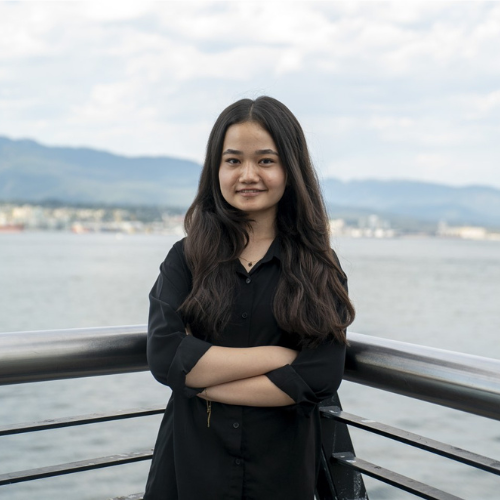
Nila Ibrahimi
Nila Ibrahimi is an 18-year-old Hazara activist who narrowly escaped the Taliban following their return to Afghanistan in August 2021. At the age of 14, Ibrahimi joined the #IAmMySong social media campaign and recorded herself singing in defiance of the Kabul Education Directorate’s ban on singing. This peaceful act quickly became viral, and the notoriety rendered her a target with the Taliban forcing Nila and her family to flee the country.
In Canada, Ibrahimi uses her freedom as an opportunity to continually platform the oppression of Afghan girls and Hazaras left behind under Taliban rule. She is the co-founder and director of HerStory with her brother, an initiative to provide a safe platform for Afghan girls to share their stories and experiences, amplifying their voices worldwide. In recognition of her tireless work, Ibrahimi won the prestigious International Children’s Peace Prize in 2024.
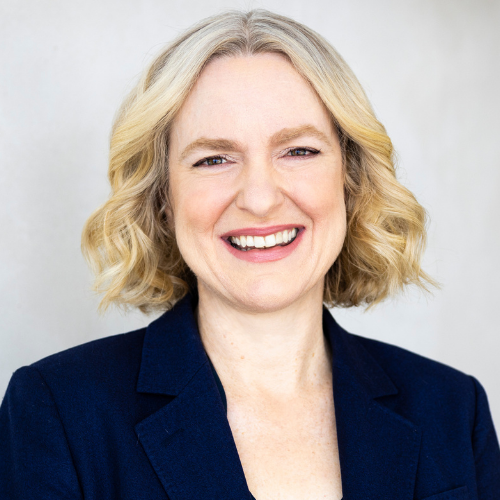
Verity Firth
Professor the Hon. Verity Firth AM is the Vice-President Societal Impact, Equity and Engagement at the UNSW Sydney and a member of the University’s Leadership Team. She has over 20 years’ experience at the very highest levels of government and education sectors in Australia.
Prof. Firth has spent her career championing the importance of education and women's rights in enabling progress for all. She was NSW Minister for Education and Training from 2008 – 2011, where she focused on equity in education, and how to best address educational disadvantage in low socio-economic communities, including rural and remote Indigenous communities. As NSW Minister for Women from 2007 – 2009, Prof. Firth implemented sector wide strategies to improve women’s recruitment, development and employment in the NSW public sector, and delivered the NSW Government’s first Domestic Violence Strategy.