
Nevena Krups | The Hidden Power of Friendship
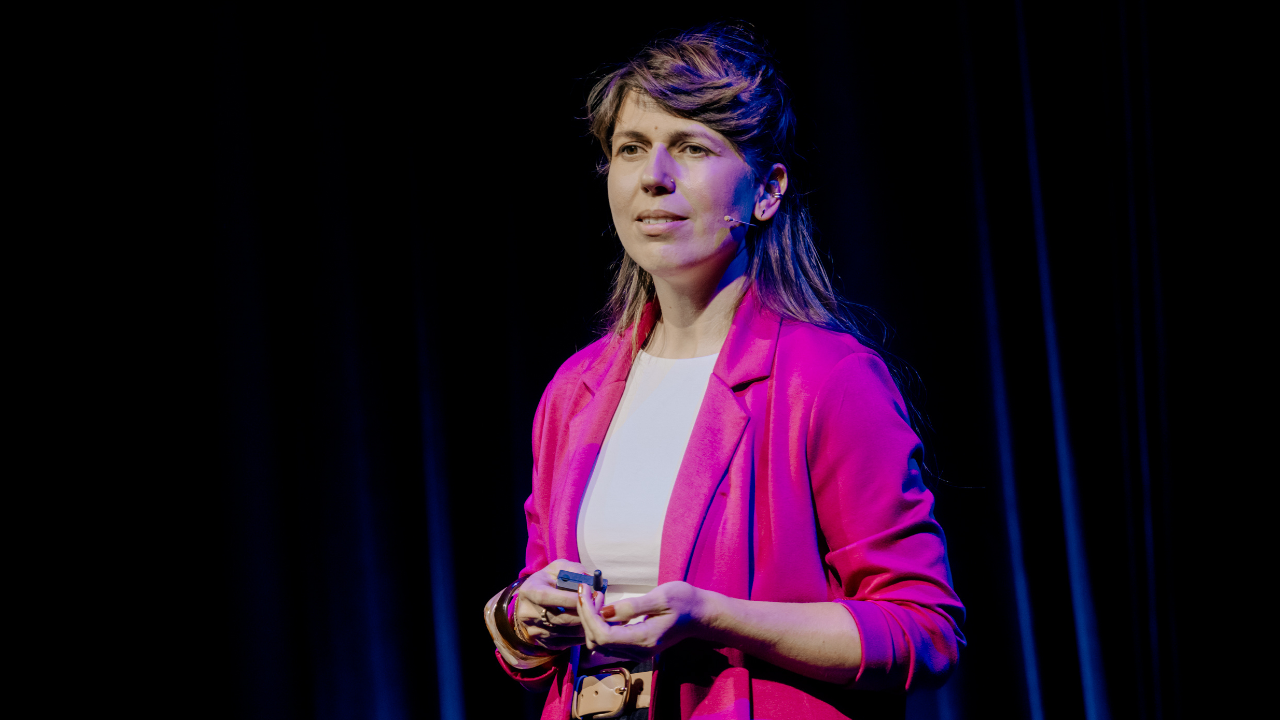
Friendship thrives when we allow each other the freedom to be who we are. When we welcome each other not despite of our difference, but because of it.
Despite the rush of technological breakthroughs, we find ourselves drifting into a crisis of connection, profound loneliness and division. Nevena Krups takes us on a heartfelt journey, revealing how the ancient and seemingly simple art of friendship can serve as a powerful source to bridge divides and heal a fragmented society. Drawing from her poignant experiences in former Yugoslavia, Krups illuminates how true friendship, with its embrace of differences and commitment to understanding, can transform political landscapes and infuse our world with essential humanness.
Dive further into the transformative power of friendship and how it contributes to political and societal stability in the podcast below.
Podcast Transcript
Rob Brooks: Welcome to ‘Progress? Where Are We Heading?’ A miniseries from the UNSW Centre for Ideas, where we'll explore the ideas shaping our future. I'm Rob Brooks and today we're talking about something that we often take for granted, friendship. Our guest today, Nevena Krups, has been studying the deep significance of friendship in human history and how it holds the key to cooperation and even societal stability. Nevena, it's a pleasure to have you with us today. You've explored friendship from an angle that many of us probably haven't considered before. To start, could you tell us why you believe friendship is more than just a personal connection, and how it contributes to something as big as the political and social fabric of a community?
Nevena Krups: Thank you, Rob. Good to be here. So, yes, friendship. Initially, I have to admit that I probably had the same ideas around friendship as quite a few people have, that it is a personal, private, intimate relationship, which it certainly is. However, once I started reading Hannah Arendt's work, I actually picked up on something else, which is a different type of understanding of friendship, which I myself hadn't considered before and got quite intrigued by and curious about. I think at the beginning it was more of a hunch rather than a strong sense of what that actually is, or why friendship could be considered political. But the more I read and the more I understood, I realised that my personal life or my own history has actually those elements of that political understanding of friendship. So, I found a connection there to my own experiences, and I guess a way into the concept of a political understanding of friendship via personal experience.
Rob Brooks: So, we'll get back to that personal experience 'cause I think it's a fascinating story. But Hannah Arendt, for now, tell us a little bit about her, especially for the listeners who maybe are unfamiliar with her, a bit about her and her position on friendship and how she came to that.
Nevena Krups: So, Hannah Arendt is considered one of the most influential 20th-century political theorists and philosophers. She was born in 1906 in Hanover, Germany. She was a very smart young woman, and she began reading classical Greek literature very early. So, she could read Greek and Latin, and she decided to study theology, philosophy, and I think Greek in Marburg in Germany when she was 19. And at the beginning of the rise of the Nazi regime, she clearly perceived that it isn't safe to stay in Germany.
And in 1933, she managed to escape, and she left to France, where she spent eight years and was in an internment camp for a year, where she then managed to escape again and left France for New York. And in New York, she built a new life with her second husband, Heinrich Blucher. And she started writing about totalitarianism. So, her first book that she published was 'The Origins of Totalitarianism', which was instantly well-received. And it really established her as a deep thinker and political theorist, which she wanted to be seen as. She struggled with the label of philosopher. She didn't quite agree with it and wanted to be considered a political theorist.
Rob Brooks: And you've said before that she had a knack for friendship. So, what was her approach to friendship?
Nevena Krups: So, her approach to friendship, initially, I don't think she had a full-fledged idea or like a deep theory of friendship. And it's not like she's written systematically on her notion of friendship. But what became very clear to me is that all throughout her work, there's actually this understanding of friendship that has this very specific core, which is that friendship is about difference. That's not about sameness. And I think in her own personal life, it's very clear because we know a lot about Hannah Arendt's life. There's a massive archive with all her letters and postcards and everything she's ever written and thought about. We have her diaries. So, she kept thought diaries. We have very good insight into Hannah Arendt and who she was, which has a bit of a tension because she was a private person. She wanted to have her private and her public life separate. And yet here we are digging through her intimate details and getting a good look at who she was.
But in her friendships, she very much valued the dialogue. So, for her friendship, the key or the essence of friendship is the dialogue. And this dialogue for her is not required to affirm one's own beliefs. It's rather there to challenge one's own ideas. And a very interesting aspect of her understanding of friendship, which I think has been so far somewhat overlooked, is that she actually says that friendship begins with having a friendship with oneself, and that only once we understand how to be a friend to ourselves can we be a friend to someone else.
At the beginning, I didn't quite understand what she meant by that. But in her last work, 'The Life of the Mind', she explores this theory, what thinking actually is and that it's different to knowing. So, that's thinking and knowing are two separate things. So, we can have knowing which is, for her or in her understanding, a means to an end. So, the know-how rather than understanding or meaning. And she separates knowing and thinking and says that thinking in itself is actually meaning-making, it's sense-making so that we have to engage with our own selves and explore the meaning of concepts, ideas.
So, rather than having them frozen, as she says, is one thing. In our thinking through the dialogue with oneself, we unfreeze those concepts and actually explore what do we actually mean when we say certain things. Just to give an example, if I were to have a conversation with you and we would have a conversation about justice and how you might consider something unjust and I might consider it just, she says that through encountering that difference in a conversation, that someone has a different view of the same thing, we are challenged or nudged into continuing that conversation with ourselves. So, we take away from that conversation that there was a certain type of tension or a certain type of difference. And it's actually onto us to then walk away and to reflect on what was the conversation about? And what did I actually mean when I said that I think that is just? And do I actually think that is just? So, it's more of a reflective inquiry that needs to happen. And that's the conversation, the dialogue between the self and the thinking ego, as she says.
And only through that experience that I can have a conversation with myself and that I can explore through encountering difference in the world what I actually mean and where I get that from, and whether that's truly what I can stand behind. Do I become a friend to myself?
Rob Brooks: Wow. So, that's more than just be kind to yourself and take a couple of days of spoiling yourself kind of thing. It sounded when you started a bit familiar with some contemporary woo. But there's a lot more to that. And what a reflective and thoughtful person. I mean, what a mind? And that's, your PhD has been sort of exploring a lot of those texts?
Nevena Krups: Yes. So, my PhD has been mainly so far focused on the primary literature. I've engaged with the secondary literature, depending on the subject of the chapter that I'm working on. But yes, I've been mainly trying to dive deep into what Arendt is saying, especially from that perspective of friendship because, as I mentioned earlier, she hasn't written systematically on the notion of friendship. And that's a quirky thing about her because she's never written systematically about anything. And it's often a criticism that she's all over the place and that she's connecting different ideas. But to me, that's a criticism that's not well placed because she never aspired to write systematically or to fit into a certain framework. She was trying to think, she has this phrase 'thinking without banisters'. So, to think freely without guardrails or trying to free oneself from those guardrails and to explore what do I actually think.
So, yeah, she hasn't written systematically about friendship, but there's a couple of occasions where she does speak about friendship. And in two of those occasions, in particular, she's very specifically talking about friendship as a political concept. And one of them which really stood out to me and which I still consider one of... It's probably one of my favourite essays by her, and it was a speech, an acceptance speech for the Lessing Prize in Germany. And there is this entire context around this acceptance speech, which is that for the first time after the war, she, as a Jewish woman, is being recognised by the German public for her work. And she has to appear in public in front of people that she probably thinks some of them might have been involved with the Nazis. There's lots and lots of work still to be done to work through all this horrific event in the 20th century. And she has to stand up in front of those people and talk about something and give an acceptance speech. And on this very occasion, she chooses to talk about friendship. So, to me, that's a very clear sign, that she wanted friendship to be understood in a different way than we normally do.
Rob Brooks: You have personal experience growing up in former Yugoslavia that plays a big role or you attribute a big role to your thinking about the power of friendship. Can you give us a little bit of a sense of how friendship through those experiences and through your understanding of friendship in your own life can help people stay connected, even when there is great political and social upheaval?
Nevena Krups: Yes. So, I grew up in Yugoslavia and initially in Bosnia and then in Croatia today. And we lived in a part of the city where there was quite a lot of diversity, diversity in ethnicities and nationalities and religions as well. And my experience from very early on was that literally every day there would be people gathering either on the street, in front of the house with chairs and little tables or in our apartment often. And it would be people from all walks of life and with lots of intriguing stories and memories. And it was a place of sharing. That's probably the most fitting term that I can find. And it didn't matter where you came from or what your heritage was or... There was this understanding that we are sharing the present and that we are part of the experience we are creating for each other. So, there was always the sense of, yes, there is the political aspect of our lives that are affecting everyone and everything. But there's also us who are perceiving all these things and we perceive them in different ways.
And that's why I call it a place of sharing because it was always a sharing of how do I experience life in the now? And what limitations do I see for me, for my family, for our community? What do I believe could be done differently? What could be done better and why? What would better look like? So, these conversations always revolved around how do we create a place and a life that is conducive to friendship? In other words, how can we support each other? How do we care for each other? What are we concerned with? What are things that we can do to make each other's lives in a significant way better?
Rob Brooks: And was that something that happened in all sorts of places, in all sorts of homes? Was it typical of the place or was it that your family cultivated of just a very magical culture?
Nevena Krups: I'm not too sure about that. I think there were a lot of these places. I don't know if they had the same connotation or the same quality to them. But especially people who understood themselves or who supported the idea of Yugoslavia, they did try to create connections and build relations and to move on because the history of Yugoslavia and that entire Balkan region is a very complicated one, and...
Rob Brooks: To say the least.
Nevena Krups: Yes. And yet there were people who were willing to move forward, not move on, not forget, not shove it under the rug, but to move forward, to acknowledge that there's been mistakes on all sides through time, but that it's still more valuable for us to move forward together rather than separate.
Rob Brooks: Absolutely. That must have been quite something to see that sort of unravel at the time.
Nevena Krups: It was. It was indeed.
Rob Brooks: So, we're here, we're in 2024 racing towards 2025, and we have all sorts of technologies that help us to maintain our friendships, probably broaden but maybe also shallower friendships. I'm not too sure what your take on it is. But certainly how we experience friendship’s changed, but also what we can expect from friends. I don't see a lot of character friendship in terms of what's at least aired publicly on social media. How, in your opinion, has the technologies and the politics of the present day altered our ability to connect deeply with one another?
Nevena Krups: I think significantly. And I mean, yes, as you rightly say, there's, technology is making it easier for us to stay in touch with our friends, or to stay in contact with our friends. At the same time, we have a crisis of connection and we have a crisis of loneliness. And it's clear that even with all these technologies, there's an element missing that, yes, in expendable. Is that the word?
Rob Brooks: Maybe. Let's go with it. I think I'm getting the vibe of it.
Nevena Krups:
Laughter
So, in a sense, yes, we can be in touch with our friends more often or easier or we have more freedom in that sense. But friendship understood in the form that Hannah Arendt understands it and that it's been understood by Aristotle and Socrates is not just merely exchanging quick ideas or statements or arranging dinners or... It is about bringing people together and actually making the time and creating the space to have an in-depth conversation with one another and going deep into why do you think differently to me? What is your experience that leads to the opinion that you're having, and how can I understand what you think about the world better?
In a political sense, if we simply engage with each other on social media or other platforms where what you are writing and what's on a screen doesn't carry your personal character and signature, it's not said with the same... You hear it in your own voice when you're reading something. It's not the friend's voice. You might be using intonations differently. You might be putting emphasis on different words which your friend would have never done. And therefore, we might understand things in a completely different way as they're meant to be understood. But to clarify that via a screen or mediated through a platform, doesn't work. At least that's what I think. It just doesn't work. And to have that engagement with a friend, to be experiencing a friend, to see their expression, to sense the tension that sometimes comes with difficult opinions and to really feel that and to understand they're not just saying this light-heartedly, and they're not just trying to swipe across a difficult topic, it actually does affect them. And they do think about it and they feel it and they want to... Maybe in a certain way, they want to hear differently.
Rob Brooks: Yeah. Some they need to at least do... At some level, we know we need to just like you need to go for a run or you need to go to the gym. It's not pleasant, but we're gonna do it anyway.
Nevena Krups: It's a discomfort. And I think we have become really intolerant to discomfort. And I think it leads us to take sides quicker, because if you get a sense that, to be a friend with someone, you have to pick a certain side, then you're gonna pick a certain side. And once you've picked that, you will try to defend that side. And we have fallen into this habit of trying to prove that we are right instead of trying to consider how we are wrong.
Rob Brooks: Yeah, the only way to have any kind of subtle reaction is to not react, 'cause if you affirm, which a lot of people are all about wanting affirmation, then you're doing one thing. Or if you contest it, then you're doing another thing and there's no in-between in social media.
Nevena Krups: Yes. And there's no sitting in uncertainty. Because sometimes we think we know. But then when we find out that we actually do not know, we try to insist that we do, rather than creating that space and allowing that space to just be there and sit with this and allow the other person to draw out different ideas, different perspectives, and to provide us with a different perspective of the world. And we are very quick to dismiss something that we feel threatened by rather than actually engaging with it. And that's a problem I think for all of us and for society and for politics. And this political dialogue or that freedom to express your opinion, to express your view of the world and to be heard and to have someone truly engage with what you're saying rather than instantly dismissing you for not being like them or not for thinking the same way as they do, that is missing. There's a lot of that missing.
And friendship actually teaches us to do that. Because if we talk to a friend, someone that we consider a friend, we have a certain attitude towards them. We have a certain openness, a willingness to hear them out, to consider, to actually put ourselves into their seat and to look at the world and see why the world might look that way from where they are. So, we are much more curious and willing to engage with our friends, but it needs practise.
So, personally, I think friendship can be learned and friendship should be learned, and I actually think it should be taught. And I don't have all the answers and I don't know how that could work. But still, I believe that this idea that we just pick up on friendship and what a friend is and what a friend does and how a friend should be, I don't think that's true. And what we pick up might be entirely destructive or not very helpful to ourselves or society.
Rob Brooks: So, everything you've been saying today just resonates so much with some of the research that I've been doing on the deep evolutionary roots of intimacy, of which friendship… If you imagine we chat to each other and we become friends and then we become close friends, and then we become psychologically intimate. And for psychologists, what they mean by intimacy is that you integrate the other person into your sense of self. An intimate is kind of somebody who's going to, were they to disappear or die or severely disappoint you, be a sociopath or a fraudster, it would absolutely devastate you. Because why? Part of your sense of self has suddenly had to be erased. It's not just your sense of the other person, but it's your sense of self. So, they talk about the self-expansion model of friendship and intimacy, that by becoming friends with people who are different from us, we expand ourselves. Would you say that that's, fits with the kind of philosophical take that you have?
Nevena Krups: Definitely. That sounds absolutely fascinating. And yes, and it certainly connects to Arendt's own work as well, because she says that by understanding the most number of perspectives, we are refining our political judgment. And because every time we consider a decision or a certain way forward or whatever it is, we have the ability to go visiting, as she says. So, we go visiting other people's minds. And I think that's a very important aspect of friendship. And that's why we need difference and diversity in friendship. Because if I am someone who is in charge of creating a new policy, if I only have friends and insight into one group of people, I will miss out on a lot of different perspectives. But if I have friends from all across society and all walks of life, I will have the capacity to go visiting their minds and their views of the world and incorporate them into my own thinking. So, yes, that might be understood as an expansion of the self because it all becomes part of ourselves.
Rob Brooks: And you can't not only make policy, but you can't necessarily write unless you can imagine different readers. You can't do politics, all of it. Wow. OK. Well, that's really interesting. That's expanded my sense of what friendship is. I need to get out there and be a bit more of a friend.
So, we're in a tough place in the world. I guess it always feels like we're in a tough place, but it feels a little bit like we are in a particularly tough place right now, especially where people are wearing their political takes on events as part of their identity rather than something to be discussed and worked through and something that's really complex. I'm wondering what you think about how we can start rethinking the role of friendship in today's world, and particularly, and you've touched on this a little bit, how do we individually, because I don't think that even Mark Zuckerberg can necessarily say, this is how we're doing friendship from now on. Would be lovely if he had a switch, but he doesn't, as far as I'm aware. But we can change our own ways. So, how do we personally go about cultivating these friendships that go beyond personally fulfilling, but also are the friendships, not just the ones that we want but the ones that we need?
Nevena Krups: That's an excellent question. Well, a part of me thinks that we need to start by improving our conversations. And the sense that I have is that almost everyone has those conversations that they’re avoiding. And when we encounter disagreement, I think we need to lean into difficult conversations and to approach them in the spirit of friendship, first becoming clear about what it is that we cannot go without, and that's the friendship. So, if I approach any conversation with the sense of I want us to be friends, I don't want our friendship to end, then my engagement with you will have a completely different quality to it, rather than me beginning a conversation with I want you to hear me out, and I want you to see that I'm right and I want to convince you or I want to compel you or persuade you or whatever it is. That aim plays a significant role in how we approach any conversations. So, if we could individually approach more of our conversations, not just with people that we know, but pretty much anyone that we meet in a spirit of friendship, I want to be open and I want to be curious about what you have to say, and I want to be curious about who you are and how you see the world, because it's not only going to be of benefit to me or to you, it is worthwhile. It in itself is worthwhile.
So, I think in philosophy often think of the means and ends. And when something is an end in itself, it is really worthwhile. And friendship I think is an end in itself. We do not need to have any other utility from it or get anything specific from it, but friendship itself is worthwhile. So, if we could start to approach our conversations with people in a spirit of friendship and actually taking note of who we’re sharing the world with, and wanting to share the world with the people that are in it right now, because we can't go back and we won't be here in the future. But to engage with the people that are here right now and to see it as our responsibility and our contribution to the world, to engage with the people we encounter in the spirit of friendship, I think that would be a good start.
Rob Brooks: Wow. That is... Yeah. I mean, since I've been speaking to you about your ideas, it has changed how I've approached certain dinnertime conversations, in particular, in our household, which are surprisingly politically polarised. There's six of us.
So, Nevena it's been absolutely fantastic talking with you about this. It's clear that friendship's more than just a personal relationship. It's more than just a button that you click with a thumb sticking up or anything like that. For our listeners, I would prescribe to you, although I'm not really in the business of preaching, take some time to reflect on the friendships in your own life. If Hannah Arendt can do that, then we're all capable of a lot more of doing better, as we're implored to do on social media. But are you building bridges to those around you who see the world differently? Until next time, keep exploring and stay curious.
-
1/3
-
2/3
-
3/3

Nevena Krups
Originally from former Yugoslavia, educated both in Germany and Australia, Nevena Krups is a PhD Candidate in Philosophy in the Faculty of Arts, Design & Architecture, School of Humanities and Languages at UNSW Sydney. Nevena’s research focus is on the political value of friendship. She has experience working with the United Nations in Kathmandu/Nepal and the NGO sector. Nevena is a keen educator with a diverse and interdisciplinary perspective on ideas that promote a more humane world. She is also the proud mother of two.