
Michelle Chase | Making Space Law in the Twenty-First Century
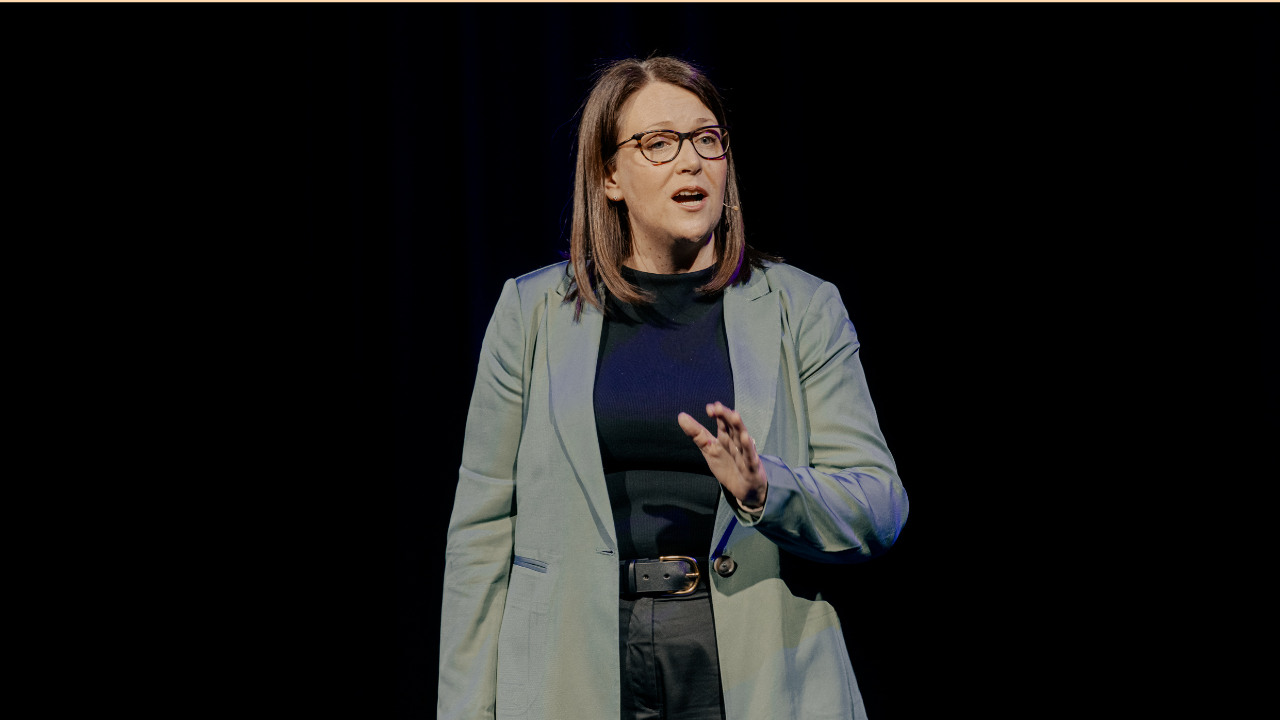
Strategic competition in space is fierce – history says that this might be the perfect time to push for new international space law.
International space law has a rich history that offers valuable lessons for today's challenges in protecting humanity’s use of outer space. So, what is the likelihood that the space powers can agree to new laws which ensure a smooth path into the next frontier of space use and exploration? Dr Michelle Chase explores key moments such as the 1967 Outer Space Treaty and the 1972 ABM Treaty, revealing that self-interest often drives these international agreements. Chase calls for renewed international cooperation, drawing from Cold War-era lessons to manage state competition and protect space from modern threats like warfighting and space debris.

Hear more from Dr Michelle Chase about whether international law can really safeguard our critical space assets.
Podcast Transcript
Rob Brooks: Welcome to ‘Progress? Where Are We Heading?’ A miniseries from the UNSW Centre for Ideas, where we'll explore the ideas shaping our future. Today we're looking beyond the Earth to the vast expanse of space. It's a thrilling time for space exploration with new missions to the moon, Mars and beyond. But as more countries and private companies launch into space, there's a growing risk of conflict. What happens if the next battleground is not on Earth, but in orbit? To help us understand the legal and geopolitical implications of war in space, we're joined by Michelle Chase, who's been researching international law and space warfare. Michelle, welcome.
Michelle Chase: Thanks, Rob.
Rob Brooks: Michelle, space has always been a place of wonder. More recently, a place of exploration. To kick things off, can you explain why space is increasingly seen as a potential war fighting domain?
Michelle Chase: Mmm. Yeah, and that's a really good question. I think there's perhaps two reasons that I would single out. The first is that the leading global powers increasingly use space and space assets to support their terrestrial forces. So, there are satellites which are providing targeting information, early warning data on potential incoming strikes, important information about weather, all of which feeds into military decision-making and is important in any conflict scenario. So, because those space assets are so important in decision-making, they themselves then become legitimate military targets for potential adversaries.
Another reason why I think attention is shifting to space as a warfighting domain, is that so much of our communications technology, everyday technology, goes via space and through satellites. And so, if you want to target critical infrastructure of an adversary, then targeting a space asset via a cyber-attack can be a good way to do that. And we saw that happened in 2022 at the time that Russia was preparing to invade Ukraine. And one of the things that happened was there was a hack of the Viasat satellite network, that's an American owned satellite network, and that interrupted the internet connection of customers across Europe. And that can be a way, part of a broader kind of theatre of operations, where your objectives may be on Earth, but you can achieve them by going through space-based technology.
Rob Brooks: Now, when I was young, I remember a great deal of discussion about the possibility of actually exploding things in space, I suppose, is a crude way that one might put it. But missiles deployed in space or bombs deployed in space, possibly and possibly counter responses to that kind of thing. Is that kind of stuff still on the table?
Michelle Chase: There has always been discussion, even back in the very early 1960s, I think, that military chiefs were, seemed super excited at the potential for space. And I know that General White, I think his name was, a US Chief, he envisaged sinking missile launch silos onto the moon's surface and being able to launch missiles from the moon and target them to Earth. If you know very much about the kind of astrophysics, that's never going to help, but I think there's always been that sense that, if only we developed the technology, we could do anything. And there's been the plans for the rod of God, these rods that would come down from orbit and hit the Earth.
I think these days a lot of the focus is more on directed energy technology. So, lasers. I think one of the, but certainly there is attention being given to the potential for nuclear weapons to be positioned in space. It's important to know that The Outer Space Treaty prohibits their placement. But in the last year or so, we've started to kind of hear reports that perhaps some super-powers are considering deploying weapons, a nuclear device in space.
Rob Brooks: Right. So that 1967 Outer Space Treaty is very interesting, kind of a big step forward in keeping space peaceful. Can you give us a bit of a sense of what that treaty was and why it worked so well?
Michelle Chase: Yeah, sure. So, the Space Age opened in 1957 when the Soviet Union launched Sputnik 1 into Earth's orbit. But even before that initial launch, there had been a lot of discussion in think tanks, particularly about, in think tanks, about what the international law for outer space would be. And remember, at this time there was also negotiations between states about how to manage Antarctica. So, another area that's sometimes referred to as a global commons. I mean, that itself is a politically charged term. But there was this, in the middle of the century, this kind of question, how would states approach these parts of, first, the globe and then beyond, that were not under the control of any one state? And so, in the years that followed, the kind of opening of the Space Age, those discussions intensified. And it really seemed to be when in the mid-60s, 1966, when the race to the moon was really heating up, that this question of, how are we going to manage celestial bodies when we got there, really crystalised.
And so, it was a question only the US and the Soviet Union faced. No other state had the space faring capacity to go to the moon, and I think, so I think that was the question that brought those states to the negotiating table. And the US came with the proposal for a treaty on celestial bodies, and it wanted to agree that celestial bodies couldn't be claimed as a territory of any one state. The Soviet Union had a slightly different objective. It wanted to agree a treaty that would set general legal principles for what states could and couldn't do in space.
In the end, they kind of put them together and came up with the Outer Space Treaty. And I think there's a couple of important things that does, it designates space as the province of all mankind, as the language in use at the time. It designates celestial bodies. So the moon and other celestial bodies to be used exclusively for peaceful purposes. And it's important to note that that only applies to celestial bodies, not to Earth's orbit and to the void space, but it puts some guardrails around what states could do. They couldn't militarise the moon, they couldn't conduct manoeuvres, build fortifications, and no state could claim territory on the moon.
Rob Brooks: So that's the USSR and the US. I guess the US are still very active in this area. US corporations too. Then you've got the EU and Russia, I suppose, and now China. So, it's a much more complicated sort of political arena. How has that altered sort of the relevance of that treaty and of other aspects of law?
Michelle Chase: On the one hand, I would say yes, it does immediately seem that it would be more complicated, the more actors you have. At the same time, I think that the principles that were laid down in The Outer Space Treaty, even though negotiated just by the two space powers at the time, have still largely stood up and have been able to accommodate the arrival of new actors in space. I think one of the important things that The Outer Space Treaty provided for was the free access to and use of space for all countries, and so that has opened the door to others to come. And if you think about it, that's the corollary of not allowing any one state to claim sovereignty over territory is that all states have access. So that's opened the door to other states to come in.
I think that the difficulties arise because it's not always clear how the general legal principles laid out in the treaty should, how they will work out and address specific technical questions related to usage. So, an example of that would be that while states can't claim sovereignty over a celestial body, they have the right to establish a base there and conduct activities on the surface of, say, the moon, which they may not be able to make a legal claim to territory, but functionally it can be hard to draw a distinction. Once you've built a base, then that starts to look, function a lot like a sovereignty claim even though you haven't, you can't make that at law.
Rob Brooks: OK. Now, there hasn't been a new space treaty since 1979. Why is that? Do we not need another one or?
Michelle Chase: That is a good question. I think the answer is that the ambiguity in the current legal regime for outer space works to the benefit of the most powerful. The current arrangements address kind of the most pressing issues for states, for, and particularly those leading space powers, the US and then potentially China and Russia. But the ambiguity, the questions about is this lawful or unlawful? And that ambiguity gives a freedom of action to the most powerful without them needing to commit one way or another.
Rob Brooks: Turning away from sort of weapons and bases, etc, there's also a problem with space junk I guess, the debris and space left over from, you know, missions that are now complete, etc. Is that something that you've paid much attention to, sort of the ways in which that might be regulated and resolved?
Michelle Chase: Only at the margins. It's a really interesting question. And as with everything that happens in space, there's always politics behind it. So, on one level, it looks like a technical question, how will we clean up space junk? But sitting underneath this kind of question, which seems a fairly straightforward one, are questions to do with protecting intellectual property. You think about the payloads that satellites carry can be highly sensitive, national security, data, military, payloads, commercial IP. And so, any time we want to think about, oh, we should just be able to clean it up, that's great. But understandably states and commercial operators are very wary about their high tech space objects falling into the hands of others, so it's not an area that I pay a lot of attention to. But, yeah, but the politics are always there, bubbling underneath.
Rob Brooks: Alright. You spoke in your UNSOMNIA talk about the fact that agreements can be reached and that there is plenty of scope for arriving at agreements between countries if it's in their interests, their shared interests. Can you give us a bit of a taste of what those shared interests might be, and the kinds of agreements that we might reach?
Michelle Chase: Mmm. Yeah. Think back to 1967 and The Outer Space Treaty and the shared interest that drove the US and the Soviet Union to negotiate that agreement. I think competition is really at the heart of it. And the race to the moon really became the exemplar of what it meant to kind of win the space race. And I think the problem that both states faced was that they stood to lose a lot if they came second in the race. For the Americans, it would just have been unthinkable that the Soviet Union might have got to the moon first. And certainly, these questions were seen in big ideological terms in that battle between communism and capitalism. And so, certainly that was, had been, it was a big issue in the kind of public consciousness when it was the Soviet Union that were first to launch Sputnik and their satellite in ‘57. So, it was unthinkable that the Americans could just stand back and let the Soviets win the race to the moon, but equally, the Soviets had had that early lead, especially in crewed human space flight. So, they had a lot at stake as well.
But it was really, really expensive to keep funding these space programs. And although a lot was at stake, strategically, it didn't actually help them very much. They wanted to invest. I mean, the US had an interest in intelligence gathering from space, and so that was of much greater interest to them. The Soviets, they were developing their fractional orbital bombardment system, whereby they were looking to put missiles in a not complete a full Earth's orbit, but put it into just do a fraction of Earth's orbit and attack the US mainland from the south, where it was harder to get an early warning signal. They had strategic goals to meet in space, but the more resources they had to put into the race to the moon, the harder it was to actually invest in what gave them the greatest benefit. And actually, so this was a shared interest they had. And in negotiating The Outer Space Treaty, released them from, not all, but released them from a lot of the impetus to compete to get to space.
Rob Brooks: You mentioned earlier on that cybersecurity is an issue here. It's not just about the sort of physical integrity of the hardware, but also what, you know, how people on the ground are interacting with it. Is that, I mean, I understand the Ukraine-Russia thing, but is that something that's increasingly likely to be a thing?
Michelle Chase: I think the criticality of the communication between Earth and space assets only can grow as we use space assets for more and more everyday activities. I think that for those of us with a smartphone, we think, oh gosh, it would be inconvenient if I couldn't use maps on my phone to tell me where to go. But that doesn't seem catastrophic, if that, say, GPS technology came down for a little while. But the other systems that rely on the precise timing that sending communications through space provides. So, stock market transactions and other financial transactions particularly, if we lose that access, that interruption of service would really start to make a difference in our everyday lives. Certainly, I think in the developed world. And so any time you have points of vulnerability, threat actors will seek them out and seek to exploit them. So, I think, yes, that is going to be an area where we are increasingly vulnerable to attacks.
Rob Brooks: Not something I'd thought of before I met you, and done this. So, space exploration is this immense symbol of human progress and cooperation. It's not even a symbol. It's just, is evidence of what people are able to achieve. How do we reconcile that in the best of what space can be and what we can be in space with, you know, increasing militarisation and these threats? Is there a way forward that, that balances exploration and advancement and progress with security?
Michelle Chase: I think the fact that for so many decades, we've actually have been able to explore space, push the boundaries on what's technologically possible and do that in a context which from the very beginning was of strategic importance, characterised by competition between geopolitical rivals. And yet we've done that. And so far, we haven't seen an outbreak of conflict, at least kinetic conflict in space. That makes me optimistic.
So, I think we ought to be careful not to assume, just because things are of strategic significance for powerful states, that it's inevitable that we will end up in some kind of conflict situation. And I think that the other point I would make is, so often it's not in the interests of powerful states to go to war. And in fact, China since the late 1990s, has been advocating for a new treaty that would prohibit the placement of weapons in outer space. And Russia joined that diplomatic initiative. And that points us to, I think, the fact that there can be incentives for states to limit, at least the weaponisation, if not the militarisation, the weaponisation of space.
So, I am mildly optimistic that there may be a way forward. To date, the US has not been at all interested in negotiating this treaty. We call it the PPWT because the full title is a real mouthful. The draft treaty on the Prevention of the Placement of Weapons and of the Threat or Use of Force Against Space Objects. And so far, the US has not been interested in negotiating this treaty, largely because the current state where there are gaps in the law, ambiguities about what's lawful, works well for the US. But I think that as China grows, increases its position as a space power, as both states and certainly in America, as the American space industry invests more and more in commercial activities in space, in the race to Mars, I think that there will, that shared interest in ensuring that all those activities can continue in space without being interrupted by the outbreak of war may well push those two space powers to negotiate a new agreement, not because they are motivated by altruistic purposes, but because doing so would help them achieve bigger strategic objectives.
Rob Brooks: Well, that's a great optimistic, but nonetheless sort of realistic and contingent position to end on. So, I'd like to thank you very much, Michelle, for joining us today. It's clear that space is complicated and getting more complicated, but it also in many respects reflects the other types of conflicting interests that we have down here in the terrestrial zone. So, it's incredibly instructive to just think about that. Thank you so much for coming on the show.
Michelle Chase: Thanks, Rob.
Rob Brooks: For our listeners, space isn't just a far-off domain. It is integral to our daily lives. And the way that we handle these issues is going to have profound effects for our future. Until next time, keep exploring and stay curious.
-
1/3
-
2/3
-
3/3

Dr Michelle Chase
Dr Michelle Chase completed her PhD in early 2024 as a candidate in the School of Humanities and Social Science at UNSW Canberra. Michelle’s doctoral research looked at the legal and political implications of proposals to ban the placement of all weapons in outer space, and China’s role as a leader of the non-weaponisation of outer space movement. Michelle was the recipient of the 2015 Maurice Blackburn Prize for best performing postgraduate student at UNSW Law & Justice, and undertook her PhD as a Scientia PhD candidate. Michelle currently works as a Research Officer at UNSW Sydney and casual academic at UNSW Canberra.