
Lesbians are Lovely!
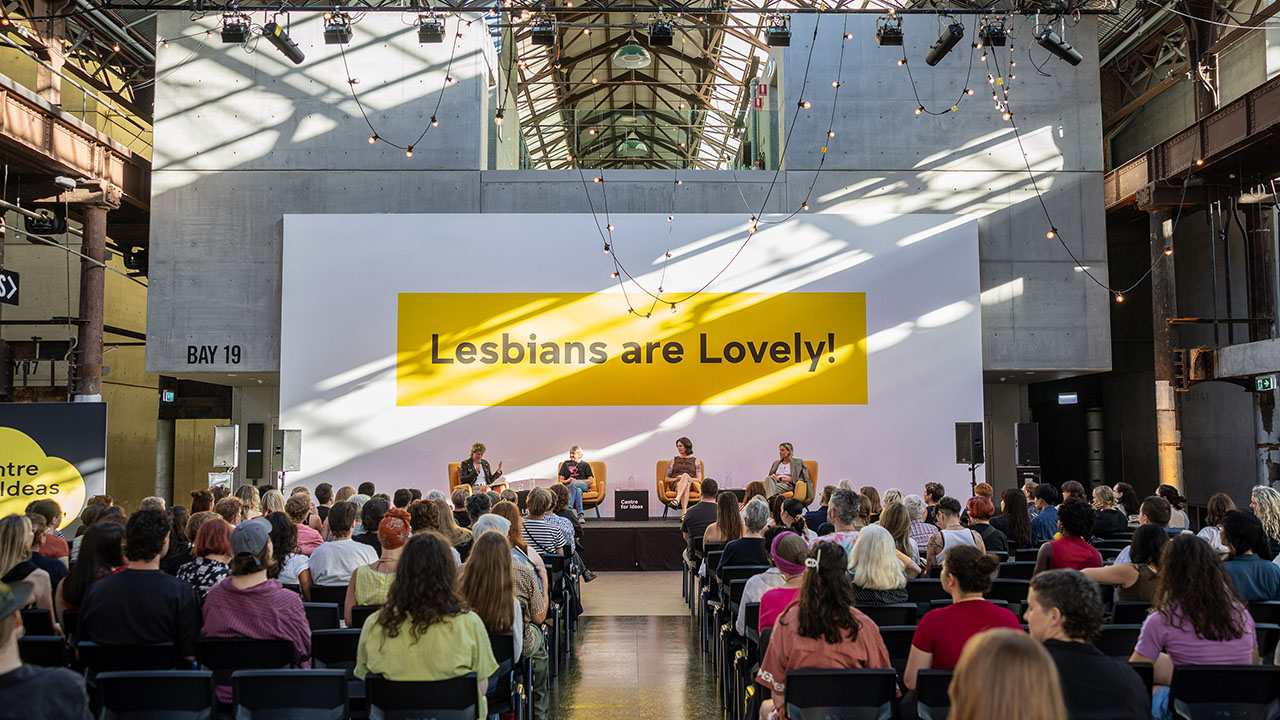
We’ve come a long way since references to lesbians could potentially land you jail-time and lesbian culture was less visible in literature and the arts, social commentary and public life. From anthemic pop icons Chappell Roan and Billie Eilish to commercially successful flicks like Bottoms and Love Lies Bleeding, lesbian culture is having a moment.
In the fifty years since the rallying cry “Lesbians are Lovely!” was sprawled across walls, bodies and picket boards in the fight for recognition and liberation, there have been many developments in queer identity and culture. But are we making space for all lesbians and how can we celebrate every part of our community?
Hosted by Walkley Award-winning journalist, presenter and producer Mon Schafter (they/she) and featuring a trailblazing lineup of panellists, including Kate Rowe (she/her), an activist and advocate ‘78er who marched in the original Sydney Gay and Lesbian Mardi Gras; Kath Ebbs (they/she) queer actor, presenter and content creator; and Jackie Turner (she/her), trans woman, social justice and climate organiser, and Director of Trans Justice Project.
Co-presented by the UNSW Centre for Ideas (in collaboration with Dr Yves Rees) and Sydney Gay and Lesbian Mardi Gras.
Transcript
Mon Schafter: Hello everyone. Welcome to tonight's event, Lesbians are lovely! Because, aren't we. My name is Mon Shafter. My pronouns are they and she, and I'm a host and a journo at the ABC, and I'm very excited to be hosting our Mardi Gras parade coming up on Feb 28 so I hope to see all of you there, either in the parade, or you will be beaming into your lounge rooms from the ABC broadcast.
Firstly, I'd like to acknowledge the Gadigal people who are the traditional custodians of this land. I'd like to pay my respect to their elders, past, present and emerging, and that respect extends to other Aboriginal and Torres Strait Islander people who are with us here today.
This evening, we're talking about how lesbian culture, and queer identity has evolved over time through the eyes of three gorgeous humans who are on that wild sapphic ride. They are actor, presenter and O.G Instagram influencer, Kath Ebbs, sorry Kath; Trans woman and longtime social justice and climate organiser, Jackie Turner; and 78’er and author of the awesomely titled memoir, “How the fuck would I know?”, Kate Rowe. So please join me in welcoming Kath, Jackie and Kate.
Audience applause.
So, to start us off, I want to play a little game with you folks, if you know you're all up for that? Only play along if you're comfortable, but you know, feel free to raise your hand or give a bit of a shout. Do we have any lesbians in the room tonight?
Audience whoops.
All right, any queers?
Audience whoops.
Dykes?
Audience whoops.
Butch dykes?
“Yeah!”s from audience.
Any lipsticks? Woo! ENBY’s? Hey! Any trans - any non-binary transmascs? Hey! Yo! Hey mate! Femmes, yeah. All right. Giddy-up. Anyone who has given up on labels entirely? Ok. All of the above, yep. Fair enough. Fair enough. I'm keen to hear from our panellists how you all relate to the term lesbian. When did you realise you were one? Is it still your preferred term to describe yourself? Are there other terms? Kate, I might start with you.
Kate Rowe: First of all, can I say I haven't seen so many lesbians since there was the Minto Bush Camp way back in 1982, and we were pretty wild back then, I can tell you, no names, no pack drill.
So, I came out when I was 26. I'd given up my drug and alcohol, really criminal life, and discovered, when I got clean, that actually, “oh my god, I'm a dyke. I'm a lesbian.” We used the word “dyke” back then, and I wasn't comfortable with it at all. In fact, I hated myself for it, and that's how it was back then.
But when ‘78 came around, and I was at that first one, that kind of changed everything for me. You know, I got arrested and charged for unseemly words, “up the lezos”. It's in the book - shameless self-promotion - and I really embraced that identity. And I was just saying, I don't know if any - can I say this? I watched Australian Story last night. I don’t know whether anybody else watched it? About Sophie, who's made this Jimpa. I think it's called Jimpa. It's this new film that's out. And Aud, the child - getting the language right - started talking about what it meant to be non-binary, and so I identify as she/her. But when I watched that this morning, and when I was on my trainer, I've kind of - “something's happening to me”, because they talked about “me.” So, I don't know what the fuck I am at the moment. So, I'm a lesbian, at this point in time.
Mon Schafter: I love it. Thanks, Kate. And also, being arrested at the first Mardi Gras for chanting “up the lesos”. Holy shit.
Jackie, what does “lesbian” mean to you?
Jackie Turner: Yes, I have a funny relationship with it. I you know, I'll use “gay” and “queer” interchangeably and “lesbian”, but I think when I was about, I have a really vivid memory of when I was about 12 years old, before I had affirmed my gender, or come out or anything like that. Just like having this deep understanding that I was like, “Ah, man. It is so awesome that some people get to be born lesbians. Wow, that's a real privilege”. And I'm like, just like feeling like, I'm like, “oh, everyone else surely feels this way”. We all kind of recognise that that's the best thing, right? So that's not a normal thought. So yeah, it's been a bit of a gateway drug and a guide for me, I think, as well throughout my life, like working in social justice and working in organising, I just happened to have been surrounded by lesbians and queer women who have been the ones who have mentored me. They're the ones who have supported me through a lot and like, when I came out as trans, I think, like, the people who were most accepting and embracing were definitely lesbians, like, kind of violently inclusive. Like, they're kind of like, “if you hurt my friend, I'll hurt you,” kind of kind of vibe.
Mon Schafter: That's incredible. Also, shout out to your mum, who I believe is in the room tonight. Hi Jackie's mum. Kath, how do you relate to the term “lesbian?”
Kath Ebbs: I feel like I knew, I had an inkling that I was a lesbian at a very young age, but it was so interesting. I grew up, like, around religion, and I knew that being gay was like, “not it” - but the worst thing, like, what would be worse than being gay was like, being a lesbian. And I just remember it sort of like, when I would, I guess, have those thoughts, feelings of, like, “I think I'm gay”, “I think I'm a lesbian” throughout especially, like, ramped up throughout puberty, it would just like, send this, like, that's just something that I don't know - It had this like, “gross” connotation to it. And then when I eventually came out at the age of 21 it was really interesting, because I started to sort of explore this, like, I noticed there was, like, within the community, like this, like, “disdain.” Like, I knew a lot of people that were in, like women, like they were identified as a woman, and they were with women, and they were like, “Yeah, I'm gay. I'm gay, I'm gay, but I don't know, I don't really like using the word ‘lesbian’”. And I was like, “why is this?” And like, then I thought about, like, my upbringing, and I think the more that I learned about the history of lesbians and like, lesbian erasure, and also how misogyny plays into - like, we live in a patriarchal society, and I think we kind of forget that misogyny also then exists within marginalised groups, and in this instance, in the queer community, there's a lot of misogyny that goes on. And I think that's where that sort of lesbian erasure and that word being seen as, like, fetishized or dirty has come from. And ever since then, I just was like, I want to, like, own this label, like I am a fucking lesbian.
And also, honestly, sometimes I have the craziest experiences, like, I'm similar to, I'm sure a lot of people in this room, like, everything's sort of on a spectrum, and you're kind of like, “I'm a lesbian”, and then you have things about your gender, and then, you know, and you're always sort of working it out. You're always in this, like, weird, perpetual puberty, which I think is beautiful, but there's something when I'm in a room full of like, dykes, especially like my elders, like older dykes, I get emotional because I'm like, I don't know how to describe like, this is my gender and my sexuality, and everything that feels like my soul, in front of me, and it makes me, like, emotional. And so that's why I am, I don't know. I just feel very connected to the word “lesbian”. It feels very like it was a part of my journey of coming out. And yeah, it feels prolific to me.
Mon Schafter: Kate, as someone who marched in the first Mardi Gras you were coming out during that time. What was it like to be a lesbian in the 70s?
Kate Rowe: Well, it was a bit like Kath was saying it was a dirty word. So back then “homosexuality”, I can't stand that word, because it refers to men, but it was illegal to have homosexual sex, so we didn't get that as lesbians. The homophobia kind of came out on the sides, if you like, and kind of relate this story. So, after the March and we went to court on the Monday, then I had to go back to work, and a lot of people were outed in that time. Some people lost their jobs. So, I was working at what was called the Maritime Services Board, now the Museum of Contemporary Art, and I walked in, and it was like, everybody knew, you know, I was a lesbian. Like I've been outed, and people would walk along the other side of the corridor. I had pornographic material put in my office drawers, lemons in my mailbox, like that kind of really doesn't make you, if you haven't got really good self-esteem to start with, it really doesn't help. And then I got called to HR, and, you know, I thought, “Well, that's it. I'm fucked. I'm going to lose my job”. And I was going to lose my job, but the HR manager was Mike, was American. He was a closet gay. I didn't know that. He told me when I went into his office, he said, “I've just saved your job. You've got to keep your head down”. And so that's how it was for like, months afterwards.
So, all that, that's kind of oppression, really, but it just made me feel even worse. So, being a lesbian, then, when you were within a crowd of people, it's great. When you're on your own at night or walking down the street and you've got drunk young kids, like, “yeah, you fucking leso!” and, you know, all that kind of pejorative stuff. It was very prevalent. I don't know whether it happens now, because I'm not young anymore, so you know, that's how I started my journey. It's not like that now, but, and I would hope it's very different now. I'm just hoping I'm going to hear that from people, that, for younger people, that it's not like that anymore.
Mon Schafter: I'm just going to stick on the the Mardi Gras theme for a little bit. It used to just be called Sydney Gay Mardi Gras, right? What was the fight to what was the fight like to get “lesbian” included in that name.
Kate Rowe: So, yes, so there was this woman - I actually shared a house with her and her partner, Sue called Kath Phillips. So, I think this is maybe 83 or 84 - forgive me, memory. So, around that time, she stood as co-president, and she fought for two years to get that, from Sydney Gay, to Sydney Gay and Lesbian, and we won that fight. But, like, she really had to take a lot of crap to get that there. And now it's not even called the Gay Mardi Gras. It's just the Mardi Gras, isn't it? That's what we, it's kind of everything's gone, when we're all included, but actually it's become this nebulous thing.
Mon Schafter: It is still officially Sydney Gay and Lesbian Mardi Gras, which I think we all acknowledge is kind of excluding a few different groups in our community.
Kate Rowe: Well, that’s the thing.
Mon Schafter: So, that’s a conversation for another day.
Kate Rowe: But yeah, exactly. So that's how it started. But, you know, finally we got it on the map.
Mon Schafter: Mardi Gras these days. Do you folks feel that it adequately sort of caters for the lesbian community?
Kath Ebbs: I think there's something really special about the march being led by the Dykes on Bikes. I think that has a very important special place in my heart personally. But I definitely do feel like, I mean, I see it in pride in many places around the world, but if I'm specifically talking about the Mardi Gras here, I definitely feel like sometimes as lesbian or like a gender diverse person, it feels very “gay man heavy” if I'm speaking from my personal opinion, and that's something I do struggle with. I think sometimes when I'm in spaces that are, like, geared towards, or, I guess, marketed as a pride, Mardi Gras, like event or whatever. I'll sometimes usually steer clear, because I'll go, “oh, that will just be full of gay men”. And I, as someone that you know identifies as a lesbian, have encountered a lot of misogyny from gay men, weirdly enough. And so, I guess, to answer your question, not entirely. I think there are elements to it. Absolutely. I think the actual parade - I definitely like, again, personal opinion - I do feel represented. I feel very “lit up” when I'm at the parade, or Fair Day on the weekend and stuff like that. But I think the sort of discourse, almost like, around it sometimes can feel very, yeah, male heavy. But I think that's also a bit of an issue, like across the board. I think it's again, like, kind of what I was saying before, like people think like, when we think of like misogyny or patriarchy, I think we think of like in society, like that it wouldn't exist within a marginalised group, but it does, and I think that is just evident sometimes, in my opinion, in yeah, discourse or representation around the Mardi Gras,
Mon Schafter: What do you reckon, Jackie?
Jackie Turner: Yeah, I've seen clear of, like, definitely a lot of the larger parties that are a bit more mixed. I think I, the things that I've enjoyed the most is ones like, parties or events where they have like, a really clear culture around it. Like the first one I went to was like a Unicorns party, which does have, like, such a great culture that I think is steeped in a lot more, It feels weird to say, but you might know what I mean by like, “lesbian values”. I don't know it's like, “Good family lesbian values”, but, but this kind of, you know, there's a there's a strong ethos with the events, around that these events are inclusive. They have a strong understanding of consent and people's spaces. People come to have a good time, you take care of one another, and they're built to be really accessible. And I think that's something that's often missing from the bigger, sort of, like, more male dominated parties. Yeah, I would love to see more of that kind of stuff. I'm like, I'm a bit of a quiet queer these days as well, to be honest. So, it's like, not so much the parties. I'm like, probably more events like this, to be honest. So, it's nice that this is on, yeah.
Mon Schafter: I'm not sure if many people were at Ultraviolet on the opening night of Mardi Gras? Go from the flag-raising to the Ultraviolet party? But I think every lesbian I've ever met in my life was at that event, and we were all having a bloody good time, I tell you what. We need more of those, but I love the way you sort of articulated the “Lesbian values” that kind of inform some of these younger, more inclusive parties that are popping up. Because I've noticed that too, but I hadn't realised how to articulate it. It is all about consent and creating safe spaces that seems to have a very different vibe to some of the male-skewing kind of big dance parties, which are, I feel like I'm talking in cliches, but they're really sort of sexualized - that's the imagery that hits you sort of immediately. But some of these sort of inclusive, gender diverse, lesbian queer events, there's just, there's more of a kind of a softness to them that, yeah, I hadn't heard articulated that way. So yeah, thank you for that.
We've seen a decline in lesbian bars over the years, right? Like, I kind of came of age in Melbourne and used to go to the drag queen night, drag king night King Vic, that was every Friday, and, you know, had very, very formative experiences at that one. We've seen lesbian bars kind of come and go in Sydney. I think we all got a bit excited last year to hear that a new bar called Pink Pony was coming only to discover that we weren't welcome, basically. It was catering for predominantly gay men. That was very, very disappointing. Kate, what was the role of lesbian bars in the past?
Kate Rowe: Well, there were very few of them. I mean, there's people here. I remember the first place I went to this thing every month above a garage in North Sydney. And then there was, those that are old enough to remember, the famous Ruby Reds, which was the only place on a Saturday night, just in Crown Street, just off Oxford Street. And it was a steak bar downstairs, and it was this lesbian bar upstairs, run by certain person. And there was a lot of corruption. And there were passing of envelopes. People are nodding, I can see, you know, the cops would come in with their big boots and short back and sides into a lesbian bar and go to the bar, and she'd hand them an envelope, and then they'd piss off. So, we know what that was all about. That's how corrupt it was. We had to have money. You know, it was corrupt. That's how it stayed open. There was a couple that tried to open - The Playground, and then there was another one in Bondi Junction that lasted six weeks before they were fire bombed by said person. So it was, there wasn't many places, and I don't drink. So, I kind of got into another, into sport, actually, as a way of meeting other lesbians. But yeah, so that was the only place, and it was just full of was very binary. Was you're either a butch type or you're a femme. So, someone who's androgynous, like me, I didn't really fit there either.
Mon Schafter: You had to pick, kind of pick a side sort of thing. That's interesting. Where do lesbians hang out these days? Jackie, I'll start with you.
Jackie Turner: Oh God, mostly at home with my wife, to be honest, or at rallies, I don't know. Well, look, we went to see Lucy Dacus the other night. Was anyone else there? Yeah. So many lesbians like, yeah, at one point, like the lights at the back were lit up in the lesbian flag colours and everything. I feel like we're having a bit of a cultural renaissance at the moment of lesbianism, right? Like with people in pop culture and representation in, like TV and that sort of stuff. I feel like that's where I'm getting a lot of that kind of connection from, like, music and TV and those sorts of things. Yeah.
Kath Ebbs: I don't know now, in Sydney. I was a Bearded Tit goer. Anyone knows the Bearded Tit? Shout out, shout out, Joy. Rest in peace. So that was my home away from home, and where I would gather in community. But it's actually really sad, like, it's hard to have lesbian bars that stand the test of time. Yeah, it's not even here, like, even I was living in the States, and the one lesbian bar that we had in LA, like, recently shut down because it just didn't, yeah. So, they're hard to keep going. I don't know why, but I think for me, maybe I turn I mean, I'm kind of similar, like, I hardly go out. I stay at home and watch gay TV shows or reality TV, which is honestly a bit gay because it's so straight that I'm like, “these people”. “This is a bit gay.” But I wish there was more places to gather. But, yeah, I don't, I'm not really sure.
Mon Schafter: Yeah, I also loved the Bearded Tit. That was sort of one of my favourite places. Had real Melbourne vibes and really just inclusive artistic space. So, rest in peace, Bearded Tit. But um, what I've noticed on social media is all like, lesbian run clubs popping up, and there are other kind of interest groups catering for the committee. I personally think that's a fantastic idea. I'm too busy to get to any of their events, but I love that idea that sort of taking it out of the bars.
Kath Ebbs: Yeah, I'll, actually, I'm going to cheeky plug myself here. I run a line dancing group called Cowboy Country in Sydney at the Imperial and that is, obviously, it's LGBTQA+ friendly, but I'm a lesbian, so let's infiltrate and make it lesbian line dancing specifically, so you can gather there if you want.
Mon Schafter: How important are lesbian spaces now? So, we've talked about clubs that kind of cater for a mix of people. We still have lesbian nights, you know, once a week in Newtown and stuff like that. But is it important to have spaces that are for lesbians and queer women? Kate?
Kate Rowe: Okay, that's a hard ask, isn’t it? Because we always wanted to be seen as just another person in the street and our sexuality didn't matter, but at the same time, we want to have our own spaces. And I go to bed about half past eight because I get up at 4:30 to go running. But anyway, so I'm really boring. You don't want to lead my life at the moment. But it's really important. And you know the sporting area? I mean, for me, sport, in lesbian sport, is important a) because of our health, because I think we as a group tend not to look after our health so well. So, I like to stay fit, but it's you meet other lesbians of all different ages, even though I'm almost 75 and then the oldest there always, I can still run. So, I just think they're really, they are important. I think it's just morphing. And I'll just quickly say this book, I did a there's a sapphic book club, and when my book was first launched, I got a text from I've never heard of them, and they’d chosen my book as the book of The Book of the Month, and they wanted me to go and talk to the book. So, I thought, okay, yeah, I'll do that. So, we met at some place in Erskineville, about like 15,16. There was one with short hair, and the rest were, I wouldn't have known. You know, we have that thing about “what does a lesbian look like?” No one was over 30, and they had, everyone had long hair, but they were so proudly lesbian. And they obviously, wanted to know about the book, which was great, but it was a real lesson for me that there are places being created in all manner of ways that are outside of the bar culture. Because really, the bar culture's kind of died I think. That’s the way I look at it.
Jackie Turner: Yeah. I just bouncing off what you were saying before about the lesbian run clubs. Like, yeah, the lesbian sport in Sydney is kind of insane. Like, there's a lot of great clubs for different codes. We discovered before that we're all runners. So that's, that's yeah, that checks. But, and we’re also proud to be home to the oldest lesbian soccer club. Is it the Flying Bats?
Mon Schafter: You're not giving a shout out to the Flying Bats, are you? Flying Bats! Any Battys in the room tonight?
Audience whoops.
Mon Schafter: Go Battys!
Jackie Turner: We have the president with us, actually tonight. Anyway, but I think that's been a really powerful space as well, because there's, I know that like going to a gym and everything can feel like a bit off if it's like a lot of like, this might sound mean, but like, big, big weight lifting bros kind of yeah. And having spaces where you can actually, like, get into your body, you're doing something healthy for yourself. And also, like, inherently, is about having community together, I think is really awesome. I've recently started doing roller fit. It is roller skating, but, like, mixed in with dance. I used to play hockey as a teenager on like, roller blades. So, I'm learning how to do like the four, like the roller skates. It's really fun, and it's really hard as well. But anyway, and it's just like a really wonderful space. You meet some great people. Yeah, a lot of fun.
Mon Schafter: Yeah. Kath, what do you reckon is there still an essential need for spaces, just for queer women?
Kath Ebbs: I think there is an importance for queer spaces, though, like, kind of what you were talking about before, like, lesbian values that whole discussion, like building on that, like spaces of that sort of energy, I think are very needed and very important. Specific to lesbians, I don't know, but I think kind of like, like adding on to what everyone was saying, I think there are so many amazing groups now for whatever your hobby is, whether it be sport or, you know, reading, drawing, knitting. I had a friend, she lives in Melbourne, who went to a weeding group. Seemed like a scam, I said, “so you paid to hang out with a bunch of dykes and do someone's garden. Sounds like a scam. Glad you had a good time.” So there really is something for everyone. So yeah, I think they're important. But I think, like lesbian specific I think maybe those are more like fringe, like meet up things. I definitely think there is an important still in queer specific spaces. I do believe that, yes.
Mon Schafter: I'm just going to take us back to the Flying Bats, seeing as our former president is in the room tonight, Jen Peden, hello. So, I've played with the Bats for a very long time now, and the sense of community that that queer women's and non-binary people's football club provides is just off the chart, and it's such a diverse and welcoming space for all sorts of people. Some of us, you know soccer, I'm not concluding myself in this, there's, some of us are soccer pros who've been playing forever, and others are just newbies who kind of come for the community, and it's such an incredible space. I also look at orgs and community groups like the Dykes on Bikes like they've served such an essential role in our queer community for such a long time, you know, protectors of our queer spaces, and, you know, protecting people walking home from gay bars on Oxford Street, sort of back in the day, like I know that a lot of these sort of traditionally lesbian community orgs have also have to kind of grow over time as language evolves, as we, you know, embrace gender diversity these days. We believe in bisexuals. They do exist. Shout out to any bisexuals and pansexuals in the room tonight, but I love the ongoing presence of all of these community orgs and how they've evolved over time as well. Have you folks ever belonged to any of those sorts of community groups that whether it's for sport or just reading or whatever?
Kate Rowe: Yeah, so I'm going to talk about sport because I'm sporty. So, they used, there still is Sydney Spokes, which was like a cycling one. I became a competitive cyclist, so it was more recreational, but it was a great place that was, it was mixed, but it wasn't specifically lesbian. And this is where I’m glad to hear there's lots of lesbian running groups, because I belonged to Sydney Frontrunners for a very long time. Went to quite a few Gay Games. Was very involved in the Gay Games, at a board level. And, you know, I just found the misogyny in some of the mixed groups, like I just left. There is misogyny, you're right. It's a thing, and they don't get many female or they don't get many lesbians or queers running with them, or swimming with them, or playing hockey. The amount of women in the mixed groups, gay, lesbian groups is it's very small. And that's never, never gets addressed. Well, you know you're gay, but you're still a man, and you can be misogynistic, just like any other man. But I mean, I actually belong to a straight running group now, and they're really wonderful with me. I'm not sure whether it's to do because my gender doesn't, my sexuality doesn't have anything to do with, it's just that I'm the oldest there, and I'm always last, and they clap me, really respectful.
Kath Ebbs: Yeah, I am terrible at ball sports. I don't have a sporty bone in my body. That confuses some people, because I do a lot of running and stuff. And I was like, you're really sporty. If you literally throw a ball at me, I will dodge. And it's really funny, I'm dating an AFLW player, and they're sometimes like, “you actually give me an ick when you have a ball in your hand”, it's so like, you're it's no it's so bad. It's so bad. So, sucks for me. I can never join any of the sporting groups because I genuinely am terrible. But, when I remember experiencing, I guess, like, genuinely, that feeling of like, wow, this must, what it must, what it'd be like to be in a team was when I was living over in the States, and I did line dancing for the first time at a place called Stud Country. And it genuinely sounds ridiculous, but like, changed my life. I like walked into this space, and there was all these queer people a lot like different sexualities, genders, two-stepping and doing these crazy line dances. And I was like, “how do they know all these dances, this is so weird?” And I became like obsessed, and I was like, “I need to be part of this. This, whatever this is. I need to be part of it.” And became like obsessed, and built like a community of people. And we would meet up, and we would learn line dances, and we knew on Mondays and Thursdays, we would go to this place and we would geek out on dancing. And it's so interesting, though, because it was the first time I felt that real, like sense of like community, where like you, the feeling of safety in that like you are just the norm in that environment. We're not talking about, you know, our sexuality or whatever. It's just like in that world that's existing in those like, four walls of line dancing and like, our common interest, like being queer, is that's the norm. And then you go outside and you're like, “oh, yeah, totally, we're living in a bubble.” But it's that there was, like, that real like, sense of like, yeah, like safety and like, I guess inclusion just by having a shared hobby, which is the first time I've ever experienced that feeling. So, for all the people that aren't really good at ball sports, dancing, two-stepping, could be a thing, but yeah.
Mon Schafter: We really are promoting a wholesome lifestyle up here today, isn’t it. Good on us. It was interesting what you were saying, Kate, about like, front runners, predominantly men, because I've been on some of those runs and I've had the same feeling. It's like, “ah, you know, I like running, but you guys are cool, but you're sort of, you're not my people”. I think it's interesting looking at who runs these groups, or who runs organisations like Mardi Gras, and Midsumma in Melbourne, and looking at the makeup of the board and people who are making programming decisions and stuff like that. And we were talking about Mardi Gras earlier, and I did a little check of the board. It is actually a pretty even gender split at the moment on Mardi Gras. But you know, I would encourage everyone here who, if you're not happy with the programme that you see at Mardi Gras or other events like that, you know, advocate, get involved. Put on your own event. I remember years ago, growing up in Melbourne as a little alternative dyke in Fitzroy in the early noughties, Midsumma, to me, felt really gay boy. That's like Melbourne's version of Mardi Gras. And I got on the board, and I ended up, like doing this opening night at Federation Square, and it was about 80% sort of lesbians and sort of queer, kooky folks, you know, of all sorts. But that was like, I had to kind of get involved to see the change that I wanted to see as a punter. So yeah, anyway, hot tip, get involved with all of our orgs, and you know, be the change that you want to see as they say.
I'm curious to know if any of you have ever felt unwelcome in lesbian spaces.
Kate Rowe: Well, I did at Ruby Reds, apart from being androgynous. So Ruby Reds, so as I said, it was like your either butch or a femme. And then I was just this young, didn't know who I was, but I figured I was a lesbian. And I love to see people dance, because I'm hopeless, but I really love to see dancing. And I was watching this woman on the little, tiny dance floor they had there. The next thing I know, someone's got my - this butch dyke, like really overweight, short cropped hair, brill cream, that's the thing then - and she just grabbed me by the collar and said, “you look at my girl again, and I'll fucking smash your face in”, and threw me down the stairs. So that was my --. But then in the lesbian separatist days, which we've talked a bit about, in the kind of early 80s, there was a down in the Haymarket. We had five floors of this place called the Women's Warehouse. Doesn't exist anymore. I almost don't even know whether it's in the history books, like I just don't know. So much happened there. I mean, political stuff. We had bands like the Stray Dags and others. We had a restaurant upstairs, and I used to cook - because I used to be a chef - cook and serve food up there. They had news, we had newspapers that, like, everything was in those five floors. It was a complete fire hazard, but we ignored that, and that was a huge thing for about what, four or five years. There's people here who probably remember it, and as separatism kind of fizzled out, so did the warehouse. So, I don't know whatever happened, because I stopped going there as well, but we've never seen anything like it since. And I don't know whether it was anything before, but everybody was welcome there at that time. But the Ruby Red’s was the only time within the community, apart from the fact that I get shut on a lot because I speak my mind, but that's another story.
Mon Schafter: Hey Kate, just for anyone who's not familiar with what “lesbian separatism” means, can you explain that?
Kate Rowe: Right, so that was, when we had the early Mardi Gras, there was a lot of misogyny. A lot of misogyny, and we got kind of, people politically got sick of being in political movements where it was all about the men. So, we decided that there was a political, not just a discourse, it was almost like a philosophy that we could just be on our own, hence the Minto thing. And we could do everything, we didn't have to be part of anything. We were just separatists from everything. And after a number of, a bit of time, I thought, “actually, that means I can't have any heterosexual male friends”, not that I have many, but girlfriends, I couldn't. It was like I was almost separated from society. And for me personally, it felt like a dead end. And it didn't last very long, but it was great for a while, because I was just finding my feet in everything and but it really, kind of, it goes nowhere, really I don't. The women's land, Amazon acres, all that sort of stuff, I think it's still going, where they went there, and they just barely had anything to do with anybody else. And there's still a few people up there, I think. But again, it was strange. It felt like a bit like Lord of the Flies, a lesbian version of Lord of the Flies.
Mon Schafter: Jackie, you mentioned earlier that you have like, this lesbian army supporting you, particularly when you first came out, which is amazing to hear. But have you ever felt you know, like you're not welcome or unsafe in any lesbian spaces?
Jackie Turner: Yeah. So obviously I work as a like, I campaign on Trans Justice and everything. So, I obviously like cop, a lot of that sort of abuse and all that sort of stuff online. I feel like I've been quite lucky in like, actually, never really experienced it much in person. But I think also, like, you know, I'm not going to go to a party where I'm unsure if trans people are welcome. You know, it's one of those things where I was, like, quite selective, especially when you're early out and you know, you're not feeling super confident. You don't want to feel like you're not welcome somewhere. So yeah, picking places like Unicorns, where, yeah, you know you're going to be, you know, more than welcome, and there'll probably be a whole bunch of other people like you, is what I did more of. I think I definitely have found that big portions, we know that in terms of support in the lesbian community for trans and gender diverse people that actually like lesbians are the strongest support base in the LGBTQ community, for the trans community, like when you look at support polling across those who are most in favour of equality is the lesbian community. And so, it's kind of this weird thing where, you know, people are trying to create a conflict, where it's actually like, the strongest, the strongest base is there. So, I think I've been quite fortunate there and had quite good experiences.
Mon Schafter: I'm really glad to hear that. How about you Kath?
Kath Ebbs: Yeah, I would sort of agree. I feel like I love my little lesbian community, even like some of my job is online, and sometimes I can end up in spaces online that are outside of my four walls of like my community. And I always feel like the lesbians like, have my back, and it makes me feel so safe, like I've ended up in situations where, like, sometimes I'll read something and like, I'll be like, oh, I want to, like, go into bat for myself. Because, like, I get, well, not really anymore, but like, I was in a situation where sometimes things go outside the four walls, and sometimes I'm like, “It's okay, the lesbians will have my back”, and they're the only ones I really care about anyway. But like, it's interesting on that topic of gate keeping or feeling uncomfortable in spaces, I feel like sometimes that that goes on just within community in general, that I think sometimes queer people maybe don't realise. I think there's, like, a lot of people that maybe don't feel queer enough, and I'm sure that could extend to people that lesbians or identify like they see themselves in lesbians, or they feel like that label feels right for them, but they may be scared because they feel like I don't know “we're gonna get in trouble by absolutely no one.” Do you know what I mean? So, I think I've sometimes felt maybe scared in spaces, I think, as well doing advocacy or like being present outside of my in-real-life community. Sometimes, maybe that's my own insecurity, but sometimes I feel like people have so many like opinions on how to go about things when I'm like “at the end of the day, we all want the same thing.” We all want equality. We want to make this world better for queer people and for everyone. Let's just remember that. But in terms of lesbian specific spaces, like I feel the most calm, I feel like supported by the lesbians, which is nice.
Mon Schafter: I'm curious about, like, your journey, Kath, because you're strong identify as a lesbian. You're a non-binary person, like I've heard you describe yourself previously as a non-binary lesbian and your partner is an AFLW player who identifies as a non-binary transmasc person. Is that right? Yeah. Like, how you going with this? Kate, you're right?
Kath Ebbs: When I read that question, I was like, “Oh God, sometimes, sometimes we just need to go. Don't worry about it. You don't need to get it.” It is a bit like that, like when you put it like that. But I think it's so interesting, because obviously I would say that I'm not in a lesbian relationship right now. It's more queer, because my partner is not a woman and is trans. But I think I've had many lengthy conversations, obviously, with them when we first met, especially of just “What do you think about this? What's your relationship like to the word lesbian?” And I think it's really interesting for a lot of non-binary people, especially AFAB people, and trans people, that for a lot of trans people, there's lesbianism has been like a stepping stone in how they first saw themselves or first identified. And I think me and my partner both have that in common, and I think too for me, and whether this was right or wrong or whatever, like, I think at the end of the day, it's not that big of a deal. And for me, like the word lesbian feels bigger than women loving women. It feels like a movement. It feels like where I feel the most safe. It's where I started in my journey. It also like the word for so long was something that I rejected growing up and had a lot of, I really struggled with that word from a very, very young age, that it just feels sort of a part of me and my identity, and although that I experiment with gender and have my own feelings about my own gender, and I, you know, obviously not dating a woman anymore, It still feels important to me and who I am, and yeah, my partner, like understands that that label is a part of me. But yes, I'm not in a lesbian relationship right now because they do not identify as a lesbian anymore. But I think it is really interesting when you talk to a lot of like ENBY people or transmasc people that lesbian is such an interesting label, because not for everyone, but for many, it's kind of was the stepping stone. And I think especially for me, and I've had that conversation with a lot of friends of mine that are non-binary, that feel that it sort of still feels like a part of them in some way, because it was like the beginning, and I don't know, I also feel very safe and myself in lesbian spaces, probably more than any other sort of queer, lesbian valued spaces are where I'm like, “this is where I feel like I fit in.” So that's how I express it, and everyone experiences it different. And some people would agree or disagree, but I don't really care, because that's what feels true to me. And it's not that deep.
Audience applause.
Mon Schafter: It's interesting, isn't it, with the increase in visibility of non-binary people and transmasculine people, that you often hear people say, you know,” where have all the lesbians gone? There are not many lesbians anymore.” But when you sort of think about it and take the labels away, we often have a lot more in common than you know you might think from first impressions. As a 78’er Kate, and someone you know who's seen a lot, how do you sort of navigate your way through all this evolving language and identity labels?
Kate Rowe: So, Mon and I have a lot of, we've become really good friends, so I teach Mon about our history, and Mon teaches me about the now. And because I think one of the good things about me that I like is that I've got an open mind. And so, it's like, I don't want Mardi Gras to be like 1978 like some people seem to want to go back to 1978. I fucking wouldn't want that. So, the whole lesbian culture, the whole lesbian space, it's completely changed, and we use a language that I'm still struggle with. You know, I never get into trouble with Mon, but she's very good about pointing out when I'm, the whole pronoun thing, I slip up all the time. I mean, I'm even looking at my, that Australian Story program has just blown my mind. I have to say about, you know, your gender identity, but I because I'm not going to be around very long either. I mean, I'm nearly 75, I'll hopefully be till 95, but I have to accept how it is now. I can't say it's, you know, “a lesbian is this in this box, and a gay man is this in this box”, and about, you know, we've got a lot of boxes, and some people tick all the boxes, and some people only tick one box, and some people tick no boxes. I mean, we just didn't have this language or this culture, and this whole new generation who seem to identify in very, very different ways. And do I have struggles with that? Yes, I do. I mean, I do. I have conflicts about the whole lesbian identity. Absolutely, I do. But I don't want to have a fixed position. I want to be open to having a conversation about the whole trans, how lesbians identify the, like, I didn't know there was such a thing, but transmascs about three months ago. “Oh, right, okay, that's another one I have to grapple with.” But I want to grapple with it. I don't want to shut down. And I would hope that a lot of us who are older would just try and be a bit, we need to just be a bit more open minded, because we've lived our life as this, we can still live our life as we did. But that doesn't mean to say that those that are coming after us live it the same way, if that makes sense.
Audience applause.
Mon Schafter: Yeah. I think ultimately, with labels, that's whatever fits right on you, whatever feels right on you, you can choose whatever one you want.
Yeah, Jackie, something I really love about your advocacy is that you kind of, you take people on the journey. I kind of feel like you're a really good communicator, who is, you know, willing to have sort of intergenerational conversations, conversations with people who don't sort of have their heads wrapped around gender diversity and the, you know, the current conversations that we're having today. Why is that important to you?
Jackie Turner: Yeah, I think it's important because when we're thinking about how we create change in society, right? It's all well and good to get our own section of society on board, but if we're not actually trying to win the support and like, active popular support from large portions of the public, then we are vulnerable to political attack. This means that if we're, you know, sticking in our silos, we're not actually advocating for ourselves to that broader public, to bring them on board, that we're actually not building the power that we need to build the future that we want and that we deserve. So I think it's really important that we're actually explaining to people like, why, in my case, right, like what it means to be trans, why the anti-trans lobby can't be trusted, and actually where we have solidarity across so many other communities, right, that are under attack right now, whether it be First Nations People who are having their treaty processes cancelled, immigrants, people seeking asylum who are being blamed for a housing crisis. You know, people in SA who are having their right to a safe abortion under attack as well. You know, all of these things are about dividing us and about taking away the power that we have to work together for a better society. So, I see the role of me as your respectable transsexual, to have those conversations, right? And to actually, just like, have a bit of an understanding, because I think as well, like, you know, like we're saying with terminology, right, it's incomprehensible a lot of the time for people outside of our community, and, like, even the most good faith. And, you know, I have this battle with myself sometimes, which is like, well, “how much do people actually need to understand all of this for them to support our human rights?” Like, “what actually gets people over the line?” Is it understanding the all the ins and outs of our community? Is it always getting pronouns right? Probably not. It's probably actually just like having a relationship with someone who is trans, gender diverse in their community, and understanding a bit about them and having a connection. We know from research that anyone who has someone who is trans in their life, their support for our human rights and equality just goes up massively. It just makes the biggest difference out of anything. You can't buy that kind of support. So, I kind of see the most important thing that we can be doing is actually going out and having conversations with people who don't know anything about us and are probably getting a lot of their information from people online who know even less, I think as well. I just wanted to piggyback on the thing about the disappearing lesbians as well. Because, you know, I think that when, like, it's an understandable thing, because I think a lot of people are responding to their friends changing how they have identified, right? And I can kind of see it in that human way. But, you know, I think for like, every non-binary person who's coming out, we've got a trans woman just waiting in the wings to fill the gap. So, you know, I think this is just a cyclical move that we need to make space for.
Audience applause.
Mon Schafter: And Kath, one thing that I really like about you is your openness, right? You're very open about who you are, your sexuality, your gender, your relationships, like you kind of you put it all out there. Why is being open and being visible so important to you?
Kath Ebbs: Sometimes I'm like, “maybe I overshare too much.” No, I honestly think, I mean, I think a part of it is also it's just my personality. I think growing up, not only was I closeted, I also struggled with very bad mental health issues, and I felt very isolated a lot of the time growing up. And I always would like tell myself as a small kid sitting at home by myself, because my anxiety was so bad that I like, literally, or sometimes for months I couldn't leave my bedroom that if I could, you know, one day, sort of overcome this, I would share that, this is yeah, and I was, like, kind of my motivating force always, if I couldn't do it for myself, then maybe I could do it for someone else, and I could, if I could just tell someone else that was, like, in that position, that they were going to be good if I could prove that to them and give that over then, like, you know, what a gift. So let me see if I can figure it out for myself in order to, you know, do that I didn't. It's crazy sometimes, I think about my job now and I'm like, “Whoa, that's wild to think about what I do now as a job being so visible”, because it really was born out of just being young and feeling really alone and really isolated and really sort of just like I didn't know how the world works and help. And so, I think the reason why I do it is I don't know. I genuinely feel like it's a part of, like my purpose. I've tried to not do it. I think even in the past year, I felt like it went almost like too far for me, where I was like, “I feel too visible in a way that feels very uncomfortable for me”, and I think, and that came with a different set of circumstances, like it was not in my control at all, but I almost after that, felt kind of scarred, and was like, “Okay, I'm not going to share myself.” But I've actually, like, it's weird that you say that, and that's something you like about me, because I'm in this thing at the moment where I'm like, when I don't sort of share and be honest and be vulnerable, I get sort of, really, I don't know, like, a cloud washes over me. And I think you saying that has made me, like, have answering my own problems now, from today's New Year introspection of like, yeah, maybe it's because I'm not doing, I'm scared to do the thing that I feel like I was meant to do, which is just be really honest and sort of say the thing out loud and but yeah, I'm rambling. To answer the question, the reason why I am is literally just because I just feel like I felt alone and I just like to share what I'm feeling, so hopefully someone else can resonate with that and feel like they're not alone in their own struggles, because life is hard sometimes.
Mon Schafter: 100% Good on you, Kath.
Audience applause.
Mon Schafter: Now, Kate, you're 74 right?
Kate Rowe: Yeah.
Mon Schafter: 74
Kate Rowe: 75 in two weeks.
Mon Schafter: Hey! oh, look out! And as I said, before you've written a memoir, How the fuck would I know? And there's a lot of stories in that memoir I'm telling you, you've got to read Kate's book. The fact that she's a 78’er is one small part of Kate's incredible life. But how does it feel for you to be on so many sort of panels and speaking events these days, reflecting on the life that you've lived, and also speaking to a lot of younger queer people. Like, what is that like?
Kate Rowe: I think it's a blessing. I think I don't know. I mean, I feel like I didn't even write the book. It only took three months. But anyway, and it's, it's a good read, it's not Shakespeare, but it's a good read. And I'm like, you I've, you know, for me, I'm just, this is who I am. It's very open and honest. There's some trigger warnings in that book. But, you know, at my age, it's sort of an, a common accumulation of, like, 75 years of lived experience that I've been able to articulate in the book. So when I'm like, I've just seemed to be I was on Conversations about a month ago or something, and it's just kind of taken off, and I'm going everywhere, but I'm not tiring of sharing my story, not from a egocentric point of view, but so many stories in that book resonate with a lot of people in many, many facets. There's a whole lot of shit in there that I've managed to come through. And I think one of the legacies, hopefully, of being an older person and being an older lesbian is that we can share our stories, and I know I'm not the only one. I absolutely know I'm not the only one that's had some of those experiences, and that younger lesbians can not only understand our history, but understand that, as you said, that you're not alone. I mean, I think that's the worst place to be, and we've all been there to feel utter, utterly alone is, you know, it's suicidal. In my case, it was. In a lot of other places, you know, kids are just committing suicide because they just don't feel there's anybody out there that understands them. And that's because we just don't talk, you know, we just sweep it under the carpet. It's all about secrets. So, I feel very blessed that I've been given this time, short time I'm sure, to just be out there and just be sharing my story and hoping that it's - I'm not telling you how to live your life, because how the fuck would I know - my own life? That's why it's called that, but that you might get something out of it as well that helps people along the way, in their own journeys.
Mon Schafter: Thanks so much, Kate.
Audience applause.
Mon Schafter: I'm going to surprise you all with my favourite question. I would love to hear about your first lesbian kisses.
Audience laughter.
Mon Schafter: I have a story. I'm sure we all do. Kath? Kath first.
Kath Ebbs: Well, I'm trying to think, what if this counts? But I remember obviously being like, “I can't be a lesbian, I can't be a lesbian, I can't be a lesbian.” And I was like, in year I would have been in year seven, so well, I was, think was my 13th birthday, and I was really scared to kiss this boy, ooh. And I was freaking out. And I remember I was in, I was in the bathroom, and I remember, like, my friend was like, “I'll just kiss you.” She just, like, launched at me and like, made out with me. And then I went to the bathroom and cried because I was like, “that felt too good.” And I was like, “oh my god, I'm a lesbian. Oh god, I'm a lesbian.” Yeah, that's the story I'm gonna put on the table.
Mon Schafter: Jackie?
Jackie Turner: I'm so used to talking about politics and social change. This is not my area of comfort. But, what I will share is when me and my wife on our first date, we met on OKCupid, for those who were on that back in the day, met on OKCupid, went on our first date at the Bearded Tit and we rocked up at like, 5:30 to have a drink, or whatever drink, turned into dinner. We ended up leaving at, like, just past midnight, you know, just talked the entire time, and then we had, I asked, I was like, “Would you like to have a kiss?” like this at the station, which she was like, “I guess so”, you know, quite like, awkward and embarrassed. Anyway, we had a kiss. There you go. That's your story Mon.
Mon Schafter: Oh! yeah, what did it feel like?
Jackie Turner: Well, obviously, good. We got married. Stop it. Move on.
Mon Schafter: Kate.
Kate Rowe: So, cue the violins. So, I was, just had to think of, you know, the very first one.
Mon Schafter: Been a few.
Kate Rowe: So it was, you know, back in the day when, you know, because I'm old and we that was around the lesbians that I was at the time. I remember this woman, she was German, and we were at this collective, you know, in the days when we had collectives, and she just started rubbing her hand up my leg, and I hadn't – look, I'd been asexual, I was a drug addict, so it was Speed Freak, like you just didn't have sex, like there was no, there was nothing. It was dead. I was dead for a long time in that regard. So, when I came back to life, it was like an electric shock. And, you know, you got the drill in hit, and then, so the first kiss, it was, you know, a tonguey and it was just really deep, and led to other things and I just thought, “fuck, this is what.” You know, it felt real. Can I say that? It felt real because all my sexual stuff, because of my abuse, like, I just thought you had to have sex with a man, because then they'd like you. So, you know, clearly that wasn't the case. So, it was a lot of sex with men, a lot of casual sex. So, then I started doing it with women. But at beginning it was I felt like I'd come home and I had one relationship with this gorgeous Canadian woman who taught me everything. And I'm just going to leave it at that.
Mon Schafter: Thank you. I think you've got a few more books in you there, Kate. Do you want to hear my one? Yeah, okay, okay, so I didn't like come out properly until after uni, but at uni, studying media in Melbourne, my best friend at the time was a bisexual guy, and we loved all the same music. We're both, you know, good at sport, like making films together, stuff like that. So, we decided that we would go out, because back then, I don't think I was connected to my heart. It was all very cerebral, good looking. They like Pearl Jam, you know. Okay, we're meant to be together. So, we started dating, and I kind of thought, “Okay, I think I'm sort of bisexual. I'm not quite sure who I am.” He was bisexual. So, we went out to gay clubs as bisexuals, with a caveat that if either of us decided that we were gay, that was cool. So, every Thursday, we'd go to this night in Melbourne called Q&A. It was the Queer and Alternative night, and it was like, I found my people at this night. They played Nirvana, Pixies, like all this kind of grungy music that I loved back then. And they one night, we had a game of spin the bottle at this Queer and Alternative night. And so, we're all sitting in a circle on the floor. It was at the Builders Arms in Melbourne, and, and I, you know got matched with a girl that was there. And, like, in hindsight, she wasn't particularly my type, like, I, you know, didn't like Pearl Jam that could that kind of thing. But, um, when we kissed, oh my god, I just my stomach was like, “What the hell was that?” like, I remember comparing that to the first time that I kissed a guy, which was in year eight at recess. He was my, he became my boyfriend. It was like you are now, you know, boyfriend and girlfriend sort of thing. And he just finished his fried dim sims for, you know, morning tea outside the canteen, and I just remember, yeah, this giant tongue going down my throat, thinking, “what the hell is this?” But I just figured that that's what everyone experienced and everyone felt. But, yeah, kissing a girl was just like, I was absolutely terrified, because I felt something I'd never felt before, and it was just 100% proof that I was so queer, and I just wanted to leave the bar straight away. I was so kind of freaked out and overwhelmed. And she was like, “No, stay, stay, stay”. Like, no, no, no. But, um, yeah. So, from then on, you know, we were best mates, and we both ended up, you know, being gay, not that that's everyone's journey, but that was ours. And, yeah, it was a pretty crazy experience.
Okay, so I'm going to have a look at this iPad, so I'll ask a few from here, and I'll throw to some on the floor as well.
Are labels helpful? Kath?
Kath Ebbs: Yeah, I think labels are identity markers that help you find community. They help you understand yourself. And I also think labels have also been so important in the past. I'm sure you can speak more to this, Kate. But yeah, I think labels have a, have a place. I think obviously people get, like, fixated, maybe on them, and I think that's, that there's nuance within it, but I think as a blanket, I think there are identity markers that help you find community. And I think that's pretty important.
Mon Schafter: Thank you. Good question, Anonymous.
Okay, another question: How can we positively address lateral violence? In this case, between TERFs, that stands for Trans Exclusionary Radical Feminists and trans inclusive queer women and unite our movement for progress and inclusivity. Jackie, do you want to tackle that one?
Jackie Turner: Solve that. Yeah, yeah. That's a good, good question. So, I think, yeah. I think we need to be really clear about what we're talking about when we talk about the difference between, for example, like transphobia and like anti trans so like, when we talk about, like anti trans lobby groups, we're talking specifically about a number of organisations that have been funded to run campaigns to erode the rights and protections and like, access to healthcare of the trans community. And to do that, they're doing a bunch of things like, you know, disinformation campaigns, you know, working like hand in hand with the far right, all this sort of stuff. And then there's folks who maybe are actually unfamiliar, maybe getting news from these organisations and everything, like, have reasons that are more steeped in their lived experience about why they feel that way.
And so, like, I think some of it can be misunderstanding. I think when we're talking about organisations and groups of people who are actively campaigning against our community, like, I just don't know if those are the people that we should be trying to convince. Seems as it's like, well, like they're kind of active opposition. It's like, the people that they're trying to reach is the people who are more like, you know, the broader community, right? And so, I think that we should be talking more to the broader community. They're kind of as entrenched in their beliefs as we probably are in ours. So, I don't know if I spend a lot of time sort of bridging that gap, but yeah, you would have a very different experience of this, Kate. And I'm wondering whether you have any reflections on your conversations with friends that you've had and that sort of stuff, particularly as you've kind of, yeah, navigated your friendship with one. Sorry, I just asked a question.
Kate Rowe: Look, I mean, I'm, I'm, I think there's a fair and this may sound ageist, but I think generally speaking, my experience is that it's a lot of older lesbians from my age group, my demographic, who we had our lived experience and there's a lot of conflicts, because it just seems to be, again, we talked about this about a bit of, you know that that's “you're taking, you're taking space in my space”.
And I think what has happened is, the way I see it is that we have kind of gone into our corners. And my whole thing about this was trying to come out of our silos, try and have an open mind, and, you know, not walk in the other person's shoes, but just try and understand, because there's, I think there's a lot of misunderstanding, a lot of fear, and I'm talking about myself here. I mean, I've been through this journey. I've been on – “right no, this is shit” I don't you know this is it's not normal coming from someone that's supposedly not normal myself, like as a lesbian. So, I've with I've just over time. I'm trying to engage more. I have parts of my area that I know people who are older transgenders in one particular community group I'm in, who transitioned in the 50s and 60s, who don't fit any kind of, you know, sometimes there's this kind of, what's this, what's the stereotype woman, or what's the stereotype man, and will dress ultra Femme and, you know, and then there's no recognition, because “I don't dress like that”, and similarly, with men. So, I've just tried, I've just tried to start asking questions, and I have my and find people that I can feel safe enough about asking those questions without feeling that I'm putting shit on somebody, and then somebody's putting shit on my particular viewpoint. So, it's about having a conversation. And I really the reason I got involved with this was because I wanted to open that conversation, no matter where you are, that there are people like Jackie, there's other people that are more, can I say radical transgenders who are more like there's a particular group begins with P, who kind of a I wouldn't want to have anything to do with that kind of transgender or trans people, because they're violent, like verbally violent. I'd rather have a conversation with Jackie. So, I can sort of say, “well, you know, what about this and what about that?” And we can have a conversation. So, if we can do this from here and carry the conversation on in our only community groups. I think we've achieved something,
Jackie Turner: Yeah, and I think as well, what the kinds of impressions that you know, there's always, like, a diverse movement of people like, I'm sure, the story you were telling before about some of the lateral violence in the lesbian community. Like literal violence that you endured, like there's a whole range of different people. It's obviously a diverse community. And one thing that we do know is that a bunch of the sort of key anti-trans actors who are leading anti-trans organisations have had relationships or families or family members, or something like this in their life involving a trans person that has, like, radicalised them in this way. So, something, something's kind of happened along the way that has made them go down this, this really hateful path. And while I don't necessarily think, yeah, whatever I said before, it is, like, worth understanding where that's kind of, where that's coming from.
And I think, as well, like, part of what's missing here in the conversation is understanding where there's actually more solidarity. And it's, you know, something I want to start talking about more is, is particularly when we think about the attacks on reproductive rights in the US. A lot of people don't know that a lot of the TERF groups in the US were funded by the American right, like, you know, think tanks like the Heritage Foundation, they worked hand in hand with them to repeal Roe v Wade. You know, this is, they're really betraying their own community. And when I sit down and think about it and look at the kind of, I guess, like class solidarity here. You know, trans women, many non-binary folks and cis women have much more in common than they do that, than we do that divides us right like we're both deeply concerned and impacted by sexual harassment, sexual violence, domestic violence, and want to see big action on these things, we both have to fight for autonomy over our bodies, lives, our health care, and also, like men don't listen to us much, you know, which is something that we can all kind of relate on, like that, there's real solidarity that we could be working towards some of the big issues that are affecting our entire community. But instead, one group is focusing on eroding the rights of another.
Mon Schafter: Thank you. I'll come to you in just one second.
I just want to say the one thing that I love about gender is that it's on a spectrum, and it's unique to all of us. So, it's completely individual as to how we express ourselves and the language we use to describe ourselves, and that goes for transgender people and cisgender people like it's such a unique experience. And I kind of like that, you know, society is at a space now where we kind of have language to wrap around that.
One thing I did want to say, and this is what we would have in our, you know, chats when we go for run. So, try to think of transgender as an adjective. So, it could be like a transgender person or a transgender woman or a transgender man, as opposed to just transgender on its own, if you know what I mean?
Kate Rowe: Yes, yeah.
Mon Schafter: No, you schooled me on my stuff too. So good on you. Yes, please.
Speaker 1: Okay, I'm a bit disappointed that we haven't talked much about space, because that's what I was, came for. As a lesbian activist of from 1972 - I've been active in the women's movement, the lesbian movement, both in Adelaide and in Sydney. And by the way, all of the groups that I've ever been in, we've organised ourselves. And there's still lots of, there's lots of groups out there that are older lesbians organise, one of the problems that we face in recent years, having fought for the rights, along with other people, of course, for people to have the right to form their groups, indigenous people, gay men. I was very disappointed that people protested about the Pink Pony. They could have changed the name! But I think it was great to have a young men's club, because as a young, I have a cousin who's gay, and that would have been great for him when he was young.
Mon Schafter: It is going ahead. They’ve called it ‘Tribe’.
Speaker 1: Hang on, hang on. I'm speaking. But as an older lesbian, we have been attacked on numerous occasions when we want to have an event that we define. Now I support every group defining their own needs and having a group. People like myself are engaged, like I am now, in the broader group, we come to things we're not that isolated, and we do, and there's terms like this TERF term, which is very abusive and should not be used, and we shouldn't be abusing each other. We should not be using those terms. But we should definitely be supporting each other in their spaces, not taking each other to anti-discrimination boards and attacking each other for not having, because you believe, whoever it is, that these people shouldn't have that space in their definition. That’s what I think is the problem. In the past, we had our spaces, we had our women's dances. We had our groups. We had our organisations, and now we're underground because we're afraid. We have been attacked. Lesbians have been attacked as Kate mentioned. There have been violent attacks against ordinary, everyday, older lesbians, which is totally not acceptable. So, what we need –
Mon Schafter: May I ask if you have a question?
Speaker 1: - is spaces to meet and to be accepted for that, alongside all the other groups who do what they want to do, and I support them in their meeting together.
Mon Schafter: Thank you for your comment. Do you have a question?
Speaker 1: My question is, why is it not supported by the so-called queer community. I'm not queer, and I don't know what it means anyway. It's just a word. But the lesbian community that's mixing in with the other gay and other communities don't accept older lesbians or lesbians having their own spaces.
Kath Ebbs: But we do.
Speaker 1: My question is, why is that?
Mon Schafter: But spaces do exist for older lesbians.
Speaker 1: Well, they talk them to the anti discrimination court for it. So why is that?
Kath Ebbs: I think are you referring to like, I know you said you don't like the acronym TERF.
Speaker 1: I dislike it intensely. It's very abusive.
Kath Ebbs: Well, it's not. I think TERFs are the ones that are imposing a sort of abuse and discrimination against some of the most marginalised people in our community,
Audience applause.
Speaker 1: No. no people are called. People are called TERFs for no good reason. I had a friend who was called that and she didn't even know what it was.
Kath Ebbs: Okay. That's okay. But if we want to, if we want to have it, I agree if there should be room always for learning, if you don't understand what something means, and you've been accused of it, and then you learn, and then you understand, and you go, “ha”. I agree that we should all be allowed to learn and be better and not know something and then know it and do better when we have the information. But I think in terms of talking about wanting to protect these spaces, I guess my question back to you, which is rhetorical, is, why? Why do you feel the need to not allow gender diverse people and trans women into your spaces? I think the queer community is so, it's like we're here to help each other and protect each other. And I think that sort of energy is just perpetuating the same thing that made us end up in this situation in the first place as a marginalised group in society. And it makes me sad that people in our own community want to create this sort of exclusionary space and language, which is why we were here in the first place. The first ever Mardi Gras was a protest, because we were excluded from spaces. And I think then encouraging further spaces to be exclusive is sort of it, doesn't it makes me sad, quite frankly. And I don't say that in an attacking way. I say it in an empathetic way, genuinely.
Audience applause.
Mon Schafter: I'm just going to throw to Kate at this point as an older lesbian, how, what would you say to that, Kate?
Kate Rowe: So I think, you know, I've got some friends in here, friends, and Sylvia's a friend. I think what we're not saying, and I understand that the fights that have been in Melbourne and have been in Sydney, about having, and we've said we wouldn't use the word, but I think there's this whole biological, you know, you're a biologically female, and if you're a transgender, you're actually not a woman, because you're still biologically a man. I think there's that debate there that we're not talking about.
Mon Schafter: I just need to flag here that we're not here debating the existence of transgender people, because they're very real, and they've been here forever, since the dinosaurs. They weren’t people then, maybe transgender dinosaurs.
Kate Rowe: Oh yeah, totally. Yeah, absolutely. Yeah.
So, I think what some of the older lesbians are saying is that they want their space in the way that they define lesbians. I think that might be it, and that they should be free to have that space. Now I'm not going to say yes or no, because I'm not up here for it, but I think that's what you're trying to say. Am I right?
Kath Ebbs: And you have it, though. But the thing is, you have it like you can have it. But yes, some people will come up and say, “I think that is very exclusionary.” I think that we as a community, certain pockets of community, are going to say, “that's not very inclusive”, and you need to accept that or not. You can have you have your spaces if you want them, but we're allowed to have an opinion that it's exclusionary and not very nice, in my opinion. But that's just my opinion.
Speaker 2: Look, I'm a lesbian, I'm not queer. I respect the queer community, but I don't see myself as part of it, right? I respect the Jewish community, but I'm not Jewish. I'm an atheist, but that doesn't make me an antisemite. I'm just someone who has my own culture, my own ideology. And we naturally gravitate towards people who share our culture and our ideology, and we're entitled to do that, but we can't.
I've been personally part of an organisation where I, it was the Australian Lesbian Medical Association. I was the co-convener. I said nothing even remotely relevant to trans people, but because I said I was a feminist lesbian or a lesbian feminist, I was witch-hunted and called a TERF and we cop this thing all the time. We can't meet together safely. We can't, we just want to live respectfully alongside the queer community. We want to be respectful and safe and have our debates. We might have different ideologies.
Kath Ebbs: I don't want to debate human rights, though. Like we're talking about human rights here. You can talk about, again, labels, this and that, but you're literally debating someone's existence as a human being. And like, end of discussion. This is over. We're not doing this anymore because it's incredibly offensive.
Speaker 2: I've never denied anyone their human rights.
Mon Schafter: Thank you for sharing. I'm going to pick up on one of the things you said, because someone also asked this question: “why do you think some lesbians don't like the word ‘queer’?”
Well, that goes for all LGBTQ, plus people. Some people don't like the word “queer”. Why might that be?
But it's the thing. It's like we can each identify how we like you don't have to use the word “queer” if you don't like the word “queer”. But I think we can acknowledge that with the younger generation of LGBTQI+ plus people, the meaning of a “queer” has evolved over time, and it's often used as an umbrella term to describe broad sexualities and genders. You don't have to use it if you don't like it.
Kate Rowe: You know, for me, when I first heard the word “queer”, when way back, we had a special AGM at Mardi Gras to change the name, because it was Gay and Lesbian Mardi Gras, it didn't include, well, it didn't include the word trans. It didn't include anything. It was just lesbians and gays and so this is going back probably 15 years, and we had like, two massive discussions, and it went absolutely nowhere, because no one could think of another name that would be all inclusive of everybody, no matter what you were. So rainbow, I suggested rainbow, which is a bit naff but, you know. And then the word “queer” came up, and I thought, “well, for me, it's like, well, it could be seen as being pejorative, but I've never been anything but queer in all my, in any not just my sexuality, just I'm just weird, right?” So, I think that's where the word “queer” comes from. If someone doesn't want to identify as being “queer”. I think that's their right, but it's also other people's rights if they want to define themselves as being within the queer.
Mon Schafter: Thank you, Kate,
Speaker 3: Hello. I just wanted to add look, It's kind of a question, but it's also a comment. What I'd like to advocate for is a culture. What I like to advocate for is a culture in which we're able to make mistakes, but we're good at listening. And as a transmasculine lesbian, transmasculine dyke, that's what I want to identify with, a culture in which we listen to one another, we hear one another fully, but we also can make mistakes and learn from them. And I'd like to throw that to the panel. What do you think about that?
Audience applause.
Kath Ebbs: I'm in total agreeance with that. I think it's really interesting, even at large, with the kind of political climate at the moment, not only in Australia, but in the world, there's so much sort of divisiveness. And I think I further see this as someone that lives sort of chronically online because of my job, and it's something I really struggle with. I think there's a lot of sort of obsession with moral perfectionism at the moment, rather than remembering what the goal is and the steps it takes to push the needle forward, and because someone's, you know, journey to get there is not the way that you would like it to be done. Or if someone made a mistake, or has made a mistake, and then is willing to listen and learn, we do exactly as you said, we listen and we move forward. I think we have a real problem with that at the at the moment, and it's something that I really feel sort of polarised by, and not really knowing, personally, my own advocacy work, how to move forward with. Because sometimes I feel like it's just sort of perpetual, yeah, everyone sort of policing each other, rather than actually thinking about what we're trying to do, and that all of us are, majority of us, actually on the same page as we want a world that centres human rights and equality and a better sort of life and future and livelihood for everyone. And if we can just stick with that, then I think the world would become a much better place. So, all I'm really doing is, like, agreeing with you, I guess, and saying that, yeah, I think we have a real sort of, I don't know, issue with the level of sort of divisiveness. I wish people would just tap back into empathy, really is like, my thing at the moment is like we're all human. We're all trying our best. We've all come from different paths, and whatever way we get to learning is good enough. And if we're constantly thinking about caring about each other and about collective care and community and listening, I think we will do a pretty good job at society rather than ostracising ourselves from each other.
Jackie Turner: There's like a saying right that the I think it's like, “the Right looks for recruits, the Left looks for traitors”, that and, yeah, I think like refocusing on which side of the picket line somebody's going to be on is probably going to be a better judge. Like, you know, the world's fucking falling apart around us right now. We need more allies, and I think that means also having a higher tolerance for shit that annoys you. When other people do things, it's like, okay, well, they're doing their strategy. That's fine. I gotta go over here and do my thing. You know, however we're helping out, like, every little bit has to be a part of it. I think it's like way more important that we prioritise actually speaking up and doing something rather than, you know, doing it perfectly.
Mon Schafter: Yeah, over to you.
Speaker 4: Thank you. Firstly, I'd just like to say, “Does anyone else want this to be their living room wall?” So, thank you to all the panel. I have a question, as a proud literary queer and also a sporty lesbian, that Venn diagram is very, that gap is very small, but being of having been involved in the sporting community and the writing community, it reminds me of my favourite ever Mardi Gras float. I don't know if anyone ever saw it. It was a ute with some couches and some lesbians on the couches, and it said “lazy lesbians”. Maybe I'm just talking about millennial lesbians, but we struggle to get lesbians to come to our events. And in the hockey club that I play for, we struggle. The guys are always trying to get us involved, and the lesbians, we're pretty lazy. So, I suppose we like the idea sometimes of having these sort of spaces. But are lesbians just lazy?
Audience laughs.
Jackie Turner: We managed to get a few here tonight. Yeah.
Mon Schafter: Are you suggesting that lesbians don't want to go out, that we'd rather stay home with our cats?
Speaker 4: Well, I mean, we all have those friends, that friend who was out all the time, and then they got their new girlfriend, and now we don't see them anymore.
Jackie Turner: So it's lesbian relationships that are the problem.
Speaker 4: I mean, a question for the panel, are we our own worst enemy?
Kate Rowe: Well, I think some people are very lazy and, but that's a sweeping statement. But I think one of the issues I remember front runners like, fuck, I don't know, 25 years ago or something, the lovely Zoe, I don't think she's here, she stood for being president of Frontrunners. And for the two years that she was president, there were more lesbians in that, that it was almost equal. But she got shut off with having to deal with the blokes on the board, and so she stepped down. And ever since then, there's been very, very few. There's this whole thing about not wanting to engage, because it's too fucking hard to deal with the misogyny and the sexual politics. And so, you are what you see, right? So, if you don't see lesbians in sporting groups, you're not going to go there, which is, you know, Flying Bats is the best in terms of visibility, so, we go to lesbian sporting groups. Unfortunately, I was a triathlete. We never had anything, you know, it was very few people are “out” in the triathlon community. So, you know, I wanted to be a triathlete, so I just copped what there was, and sometimes it was copping it. But, like, there's a lot of dykes that do triathlon, a lot of them, and they're really nice… looking.
Audience laughs.
Mon Schafter: I think we should finish on that note. Thank you, Kate.
I just wanted to thank all of you for coming tonight, for your questions, for sharing your own experiences. I appreciate the energy in the room. I just wanted to thank our panellists: Kate, Jackie and Kath, for being part of this really important conversation. And thanks to the UNSW Centre for Ideas and Sydney Gay and Lesbian Mardi Gras for putting it on. Some of us might stick around if you want to have a chat. Okay, thanks again. See you later.
UNSW Centre for Ideas: Thanks for listening. For more information, visit unswcentreforideas.com and don't forget to subscribe wherever you get your podcasts.
-
1/4
-
2/4
-
3/4
-
4/4
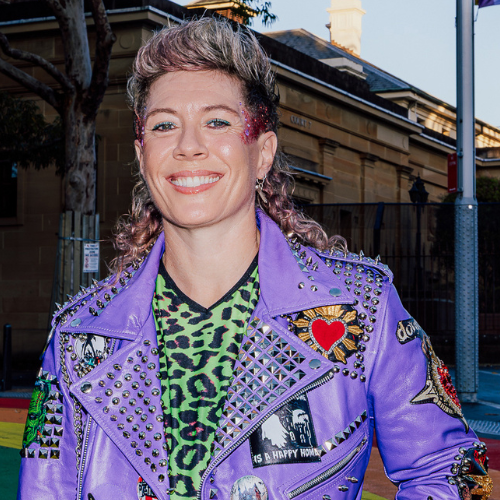
Mon Schafter - they/she
Mon Schafter (they/she) is a Walkley Award-winning journalist, presenter and producer, and the founding editor of ABCQueer. Mon has hosted the Sydney Gay and Lesbian Mardi Gras parade on ABC TV, the Innies + Outies podcast showcasing uniquely Australian coming-out stories, and has reported extensively for programs including 7.30 and the comedic current affairs show Hungry Beast.
Mon has interviewed Hollywood icons such as Jodie Foster and Margot Robbie, human rights pioneers including former High Court Justice Michael Kirby, and LGBTQIA+ trailblazers like Mercury Prize-winning artist Anohni — as well as hundreds of everyday Australians with extraordinary stories. Mon created the ABC’s cross-generational series OK Boomer, OK Zoomer, and in 2020 was named one of Australia’s Outstanding 50 LGBTQI+ Leaders in the Out50 report.
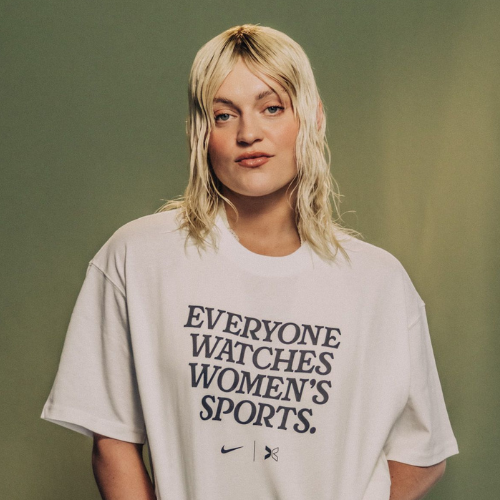
Kath Ebbs - they/she
Kath Ebbs (they/she) is a queer actor, presenter, writer and content creator. With over 100,000 followers on Instagram, their work focuses on visibility and advocacy with storytelling at its heart. Arguably one of the original Instagram influencers, Kath grew their online following through meme culture as part of one of the first content collectives and has continued to foster that community whilst harnessing the power of new-age advertising.
They continue to push for change in these spaces both on and offline by fusing their creativity with their love for what it means to be human.
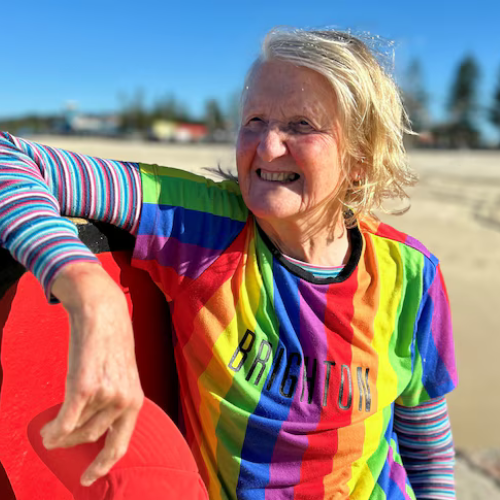
Kate Rowe - she/her
Kate Rowe (she/her) is a Londoner by birth, and Aussie by choice. Kate has been sober for 48 years, she is a survivor of childhood sexual abuse and adult rape, a ‘78er who marched in the original Gay and Lesbian Mardi Gras which became her political and sexual awakening. While it led to her being outed and almost losing her job, she has been committed to lesbian politics and feminism ever since.
In 2025 she published a memoir, How the F*ck Would I Know, and in January of 2026 can be heard on the ABC’s Conversations. At 74 she believes it’s time to hand over the baton to the new generations of LGBTQIA+ people.
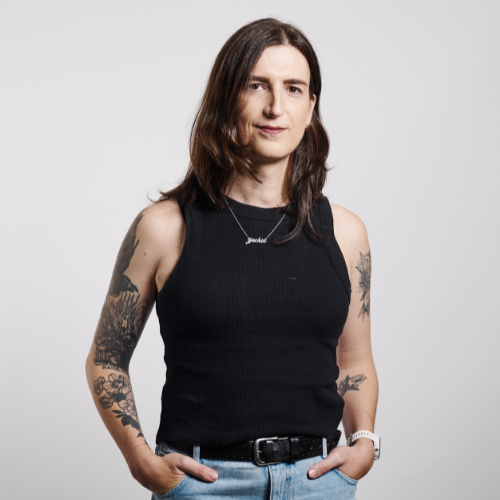
Jackie Turner - she/her
Jackie Turner (she/her) is a trans woman and a long time social justice and climate organiser. Growing up on Jagerra/Turrbal Country in Meanjin [Brisbane] Jackie is passionate about community power, developing the leadership of trans and gender diverse people, and building movements that can win. She is the Director of Trans Justice Project, the first trans-led national campaigning organisation. Their mission is to build a powerful, trans-led movement standing up for freedom, justice, and equality for all trans and gender diverse people.
Over the last 10 years as an organiser and campaigner she has led national mobilisations, trained and mentored hundreds of volunteers, and run campaigns across movements for climate and economic justice.