
Leah Lui-Chivizhe | Why Ancestors Can’t Stay in Museums
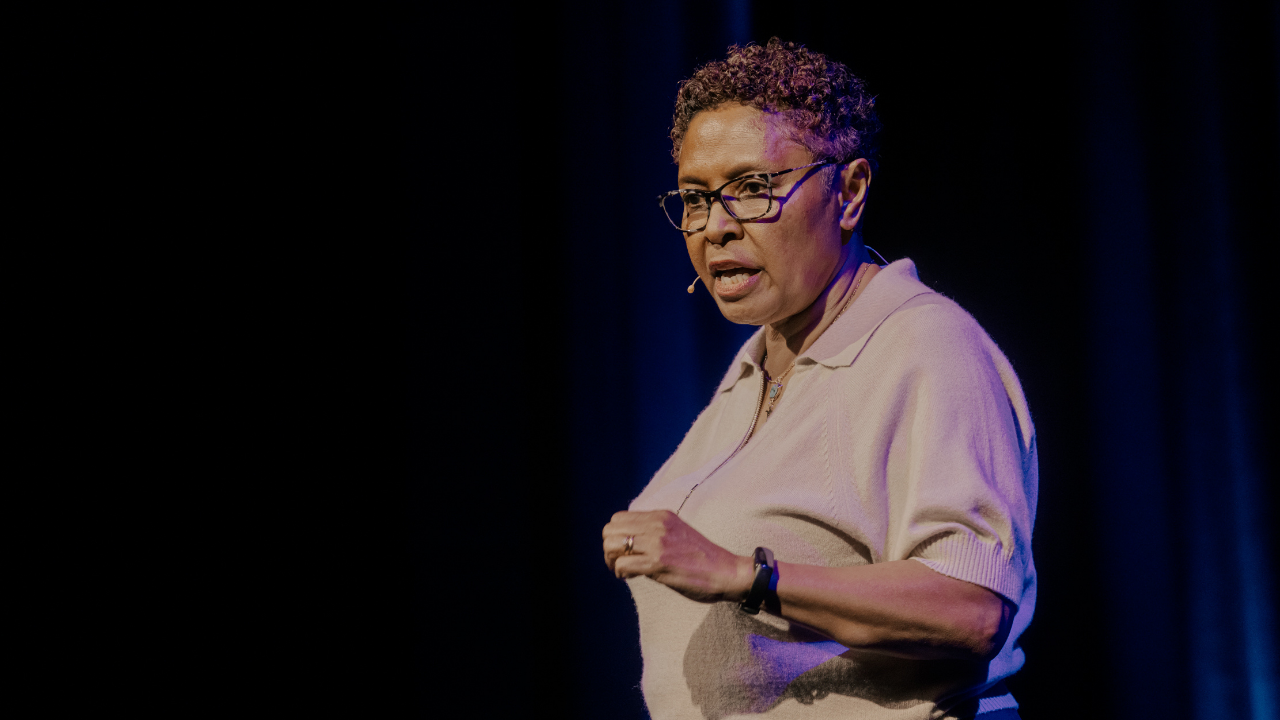
Progress tells me these Ancestors can’t stay in museums. Their return is a material way for institutions to acknowledge that things have changed.
In a stirring exploration of history and justice, Dr Leah Lui-Chivizhe delves into the profound impact of colonial practices on Indigenous communities. She unravels the poignant narrative of Ancestral Remains taken from their lands and stored in museums — far from their people. Through her personal journey and research, Lui-Chivizhe illuminates the ongoing pain and historical injustices inflicted by these acts. She calls for a transformative approach that not only acknowledges past wrongs but actively seeks to return these Ancestors to their rightful homes. This powerful narrative underscores the urgent need for institutions to demonstrate true progress and respect for Indigenous peoples.
Dive further into Dr Leah Lui-Chivizhe's personal journey and the importance of repatriating these Ancestors for their families.
Podcast Transcript
Rob Brooks: Welcome to 'Progress? Where Are We Heading?' a mini-series from the UNSW Centre for Ideas, where we'll explore the ideas shaping our future. Today, we are diving into a topic that spans history, culture and ethics, the return of Indigenous Ancestors from museums. For many of us, museums are places to learn about the past, but for Indigenous communities, these institutions can hold a painful history of removal and loss. Our guest today, Leah Lui-Chivizhe, is working to bring these Ancestors home, starting with her own Torres Strait Islander heritage. Leah, thank you so much for joining us.
Leah Lui-Chivizhe: Thank you, Rob.
Rob Brooks: Now, your research, at least some of your research... You're a historian. Is that right?
Leah Lui-Chivizhe: That's right.
Rob Brooks: And some of your work focuses on the return of Indigenous Ancestors from museums, which is a really sensitive and ongoing issue. There's a tremendous amount to be done there yet. To begin with, maybe you could share with our audience why it's important for these Ancestors to be returned to their communities, and why they can't stay in museums.
Leah Lui-Chivizhe: Wow. Yeah. Thank you, Rob. This is a massive topic. I guess, there are so many reasons for why. Ethically, they can't remain in museums. Many were taken under really problematic and violent circumstances. People still look for their Ancestors. Yeah, there's any number of reasons, I guess. For me, it's about those Ancestors being given their final resting places, their final rites.
Rob Brooks: So, it's not just for the people who are, who may be descended from those Ancestors, but it's very much for the Ancestors themselves.
Leah Lui-Chivizhe: Absolutely. It's for the Ancestors, and I think it's for the past as well as for the future. There is something about us being good Ancestors now as well. How do you become a good ancestor? For me, this is a really significant one, is that you look after Ancestors.
Rob Brooks: And in some ways, it's about also, if I infer this correctly, it's about correcting something that was very wrong, that was done some time ago. And in order to have any kind of progress, perhaps, we need to correct that wrong.
Leah Lui-Chivizhe: Yes. And I think that is the idea, for me, behind the theme of progress, is to think into, well, what did it mean when these Ancestors were taken and what can it mean now? To me, progress means people are returned, those old people are returned. Yeah.
Rob Brooks: Which is a very different notion of progress from the notion of progress that the people, often the sort of Victorian gentleman naturalists, etc, who collected not just Ancestors, but also other samples, other living material and cultural material, back 150 years ago. They did this in the name of what they thought was progress.
Leah Lui-Chivizhe: Yes. And progress to them in that enlightenment period was about proving something, proving the worth of humans. And there were some humans who were not seen to be as worthy as others. Those ideas have been... I don't even know what the word to use is. I think I said this, those ideas are, they don't hold anymore. We know much more now than those gentlemen did back in the Enlightenment period. The significance of Ancestors to their descendants continues for everyone.
Rob Brooks: So, a big part of your story takes place in the Torres Strait island of Erub.
Leah Lui-Chivizhe: That's right.
Rob Brooks: Could you paint a bit of a picture for our listeners who haven't been to the Torres Strait or encountered it much in media, etc, a little bit about what that place is like and what it was like.
Leah Lui-Chivizhe: Alright. So, Erub is in the eastern part of the Torres Strait. So, people may have heard of Mer or Murray Island, which is a little bit to the south and the east of Erub. Erub and Mer, so those islands are volcanic islands, so they're quite large islands. They are on the edge of the Great Barrier Reef. So, the waters around those islands are quite deep. They were also the first islands that people travelling west would come across sailing in that Enlightenment period. So, they were invariably places that during the southeast trade winds, visitors arrived there and Islanders saw them coming, so people knew they were coming. Erub and Mer are also, as I said, they're volcanic. So, they're quite fertile islands. People would grow their own food. There are, around both islands, stone fish traps that are thousands of years old. So, in the area, I guess, the dating of people living on those islands is probably the... Murray Island I would go to, which is where the dating of the bones of turtles, in particular, is around 2,500-3,000 years ago. So, people are living, fishing, being with their families, but also moving across to different islands at different times of the year, are living in that area 2,000-3,000 years ago.
Rob Brooks: And so, in this particular case of the story you tell in your UNSOMNIA talk, some folks came for only a couple of weeks and seemed to have done a tremendous amount of gathering of materials and of people.
Leah Lui-Chivizhe: Yes. So, Erub is also important for the arrival of missionaries in the region. So, four years before the collection happens, missionaries arrived there in 1871. And Erub is the first island where they land. And much later in the 20th century, the 1st of July becomes talked about as the coming of the light, which is this idea, again, we might think about enlightenment ideas, this idea that until Christianity arrived, there was just darkness. And Christianity, with Europeans, brought the light. So, by the time that the collecting happens in 1875, there are these ideas of both Christianity and science that are in play. So, the collecting that happens in 1875 is, as you said, happens over a period of two weeks. And the other really significant thing is, so, in those two weeks, I think I've said, it's shells, it's fish, it's birds, it's all kinds of things, as well as Ancestors are taken in those two weeks. In the months prior to the collecting happening, so when the Chevet left Sydney, a measles outbreak was also happening in the region. So, by the time they got to Erub and started collecting, the people of Erub were in mourning because many people had died. So, there is also something about that two-week period of collecting that is really problematic. Were they able to get all those things, including the ancestral remains, the Ancestors, because people were in mourning, you know? So, these are really kind of big questions, important questions, to ask that we may never find the answers to. Does that mean we shouldn't look for answers or not ask questions? I don't think so.
Rob Brooks: No. It sounds terribly opportunistic on their part.
Leah Lui-Chivizhe: It does. It does. And especially, for me, particularly, the taking of the Ancestors, the ancestral remains, 'cause I wonder whether the taking is only possible, or the offers are only made, because the descendants of those Ancestors were also deceased. So, there is something about the exploitation of that moment, perhaps, that kind of also leaves this unsavoury taste about, yes, there's birds and fish and we're trawling, you know, and they talk about trawling the reef. And then casually, we went around, or someone went around, to the other side of the island and came back with skulls. So, there is also the way that it's recorded in the journals and diaries that is really very... What is the word?
Rob Brooks: Sketchy.
Leah Lui-Chivizhe: Yeah. Sketchy, but just ordinary.
Rob Brooks: Yeah.
Leah Lui-Chivizhe: It's just another day of collecting.
Rob Brooks: It's what you do as a naturalist. Oh, my goodness. And so, everything that was collected, everyone, brought back to Sydney and stayed in Sydney.
Leah Lui-Chivizhe: Yes. For nearly 150 years, yeah, and mostly at the University of Sydney in storage. So, the collector, who was William Macleay, did, I think, he did put the mummified man and some of the skulls, I understand, were on exhibition. They were exhibited as part of the... What do you call it? Kind of the World Fair things.
Rob Brooks: The expo kind of predecessors?
Leah Lui-Chivizhe: Yeah, yeah. So, that also happened. So, Macleay, who was renting Elizabeth Bay House, which you might know, which is in Elizabeth Bay in that Potts Point area, had also built a facility where I think he exhibited the old man, the mummified man, as well.
Rob Brooks: So, let's talk a bit about the old man. You've been on a journey to try and bring him home or get him home. Can you give us a bit of a sense of what that journey entails and what it means for the people of Erub?
Leah Lui-Chivizhe: It's been a long and difficult process, I guess, for me as well. Certainly, much longer for him, of course, he's been here since 1875. But when I first started working at Sydney Uni in the 2000s, someone who's associated with the museum told me, when they learnt my parents were from Erub, told me about the old man and asked if I wanted to see him, and I immediately said no. As much as he is from where my parents are from, I know nothing, like... It's not my place. And to this day, I've not seen him, and I probably never will. But I did speak to him in the weeks before the talk I gave. So, he was transported here after being collected in 1875. So, by about October 1875, he arrives in Sydney. And as far as I know, in that early period, he's either at Elizabeth Bay House or on exhibition, perhaps, related to the Australian Museum. And then, from about the late 1800s when the University of Sydney builds the Macleay Museum, my understanding is that he ends up there then. There are all kinds of things that happen with him. At some point in the 1900s, he is x-rayed. So, he was transported up to the hospital, the Prince Alfred Hospital, where he's x-rayed. For, I guess, in that time, for scientists to get some sense of how old he might be, you know, whatever other things they wanted to be able to tell from that. But he's pretty well, then, just kept at Sydney Uni, like, there's not much else that happens with him.
Rob Brooks: You just said something really intriguing. You said you did speak to him.
Leah Lui-Chivizhe: Yes.
Rob Brooks: What do you mean by that?
Leah Lui-Chivizhe: Yes. Well, I wanted him to know... And not just him, the other Ancestors that I talk about, I wanted to introduce myself, and I wanted them to know about the work that I had been doing. Yeah, having the conversation with them, you know, came up a few times in my conversations with people when I went back to the Torres Strait and when I talked to people on Mer, but also on Erub, about the returns, other returns, international returns of Ancestors from around the world back to Sydney. One of the things I asked people about is whether or not they thought I should... Well, I thought I should tell them about the work I was doing. And this was agreed to. So, in July, I was on Erub and I met with members of the Erub Traditional Owners group. And I actually read them my draft script because I wanted them to hear what I had to say about the Ancestors who were kept at Sydney Uni. And I suppose, in many ways, I wanted them to tell me whether what I was doing was OK or not. I needed to hear that from them. After that reading, they pretty well gave their blessing, I guess. And then I talked to them about addressing the Ancestors and talking to them about, well, introducing myself. And a couple of uncles had said, yes, you should do that. And you should tell them your genealogy, who your family is, what part of the island, what village they were from, whatever your totemic affiliations are. And then the biggest challenge was, they said, and you should also tell them this in the eastern island language of Meriam Mir, which I do not speak. So, that was a bit of a challenge.
Rob Brooks: Another complexity.
Leah Lui-Chivizhe: So, I then ended up writing in English a script that I sent to an aunt, Auntie Elsa Day on Murray Island, and she translated the text for me. And then she recorded it in Meriam Mir so I could grasp the pronunciation of words. So, then I practised my script over and over. And then the week before the talk, I went to Sydney and arranged to be in the room where they are, and I gave them my speech.
Rob Brooks: Wow.
Leah Lui-Chivizhe: Which was powerful.
Rob Brooks: What the listeners might not know is that we've been talking for a couple of months about your talk for UNSOMNIA, and you've been developing, you know, what do you wanna say and how are you gonna say it, etc, and I did not know that. So, that's a remarkable development in this story, which, you know, is quite a remarkable story.
Leah Lui-Chivizhe: Yeah. It was perfect.
Rob Brooks: Yeah. You know, it's heartbreaking to think about how these Ancestors were collected and what's happened to them since, and their displays and all of the ways in which they haven't been sufficiently respected, and etc. You also talk about how this legacy still affects Indigenous communities today. Can you give us a bit of a sense of the impact of this collection, but also of other collections in terms of the broader work you've done on this question?
Leah Lui-Chivizhe: With this collection, what was most difficult for me, initially, was that everything was taken together. So, the Ancestors were there with everything else, and for me, it was separating... Initially, thinking I had to separate all of that and think about things in a really discrete way. But it was only coming to the realisation that, no, I had to treat this as all being taken together and think about the context in which the things were taken. That was a more important way to think about this, and perhaps more relevant to think about the Ancestors and the things. So, for me, it's also been looking at the relationship between the Ancestors and those things. So, he was adorned with particular things, a pearl shell piece that was worn on his chest, vegetable fibre fringing that was on him, things that I've seen described. And some of these things are associated with, let me see, respect for the person who's passed away, but they are also everyday things. And they took everyday things, aside from... In the wider collection. So, there are other shells, there are other grass or vegetable fibre fringes. There are other things. So, it's also trying to work out the relationship between what was with him and what was with the skulls, with what else is in the collection to look for those relationships between people and their things in place. Yeah. And that's driven me to think a lot more about, I suppose, to try to reconnect things with people. So, other things from other collections that are taken from the Torres Strait, to reconnect those things with Islander people and the practices of people in the period that things were taken. Does that make sense?
Rob Brooks: It makes sense, absolutely. It sounds so unfathomably difficult to do in a way that's sufficiently meaningful too.
Leah Lui-Chivizhe: Yes. And it is, I guess, one of the easier things, but because they are islands... Unlike what happened to Aboriginal people on the mainland, Islanders were not moved off the islands. So, whole islands became reserves in the protection era. But pretty well people got to stay, and knowledge of people's ownership or custodianship of particular places remained. So, often, if you can find the link back to a particular place on an island, then you can also trace the people back to the people of that place. Yeah. It is a lot of, like, combing through archives and diaries and then looking at that against stories that were collected and then looking at that against the memories that people have and the stories that have been told to people. Yeah. So, I suppose it's the stuff that historians love because it's trying to put together all of those things into a narrative that not just makes sense, but progresses our understanding of how certain things were able to happen when they happened.
Rob Brooks: And there's no putting it back together. But there's this notion of repatriation, this goal of repatriation. But it's not like you can put somebody back into a context where that context has moved 150 years and all of the people and things and events.
Leah Lui-Chivizhe: Yes.
Rob Brooks: So, how do you make a space there on Erub for, you know, this kind of a return?
Leah Lui-Chivizhe: Yeah. That is such a good question. And it is something that I think we're getting somewhere with, but it's very tentative. So, one of the key things is the arrival of Christianity in the region. So, ostensibly, islanders are Christian, and that's one of the things that I talked about with Traditional Owners recently, is that we have to... Yes, we are dealing with something that happened nearly 150 years ago. But as islanders today, how should we treat these Ancestors? And that's the thing that I've been talking with people on Erub about recently.
Rob Brooks: Right. So many different angles on progress, Leah. It's not a one-way street, that's for sure. So, thank you so much for talking to us, Leah. I could go on with you for another hour and a half about it because there are so many dimensions to it. It's such a nuanced subject. But I'd just like to go beyond the sort of righting a historically wrong question and some of the things that we've spoken about today, and talk about how repatriation efforts can help with a broader understanding of Indigenous culture and history. Is it possible to be a vehicle for that as well? Or do you not go there?
Leah Lui-Chivizhe: I think there is. This is a really sensitive topic for many people. But there has to be a way, in terms of repatriation, the importance of repatriation for Indigenous peoples around the world. The public needs to have an understanding of why First Nations people, Indigenous peoples, continue to seek this, to seek the repatriation and the return of people to country. I think with the return of Ancestors to Australia, that happened probably in the last ten years. There are so many Ancestors who are still sitting in museums around the country. They are not back on their traditional land. Yeah. And people need to know that. The broader public needs to know that. And for Indigenous peoples, we need to feel supported in our want to have our Ancestors returned. Yeah. And that will only come if the public understands how significant those Ancestors continue to be to Indigenous peoples.
Rob Brooks: I've learned a lot about that significance just talking to you over the last few months and talking to you today, Leah. So, thank you so much for sharing your knowledge and your journey on this question. There's a long way to go still, I hope that that goes smoothly and is as illuminating as it has been so far.
Leah Lui-Chivizhe: Thank you very much, Rob.
Rob Brooks: Now, for our listeners, repatriation might seem like a quiet issue, but it's a powerful reminder of the ongoing impacts of colonisation. As we've heard today, bringing Ancestors home is not a symbolic gesture, it's a crucial part of healing and progress. Until next time, keep exploring and stay curious.
-
1/3
-
2/3
-
3/3
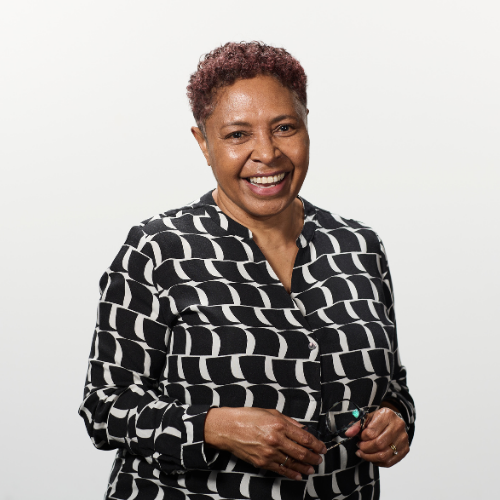
Dr Leah Lui-Chivizhe
Dr Leah Lui-Chivizhe is a Torres Strait Islander with enduring connections to Mer, Erub and Badu islands and a Scientia Senior Lecturer in UNSW Arts, Design & Architecture. A historian and curator, her current research focuses on how 19th century collections from the Torres Strait can strengthen Islander connections to our pre-colonial histories of human and more-than-human relations and contribute to decolonial praxis in collector institutions. Her book, Masked Histories: Turtle shell masks and Torres Strait Islander people, was highly commended for Australian History in the 2023 NSW Premier’s History Awards.