
Kerrie Davies on Miles Franklin's Little-Known Years
She kept rejecting security. She could have married the wealthy bachelor with the great horse next door, or found some fancy guy in Sydney, as we do. And she just didn't. She was like, “I am a writer. I'm going to keep writing.
Not two years after making Australian literary history with My Brilliant Career, Miles Franklin fell into obscurity – and when publishers rejected her subsequent novels, she left Australia for Chicago.
Uncover the mysteries of the legend’s life with Kerrie Davies, whose Miles Franklin Undercover focuses on those lost years. It’s a real-life sequel to the classic Australian novel, using never-before-published material – including intimate correspondence with poet Banjo Paterson – from Miles’s years working as a servant.
This event was presented by the Sydney Writers' Festival and supported by UNSW Sydney.
Transcript
UNSW Centre for Ideas: UNSW Centre for Ideas
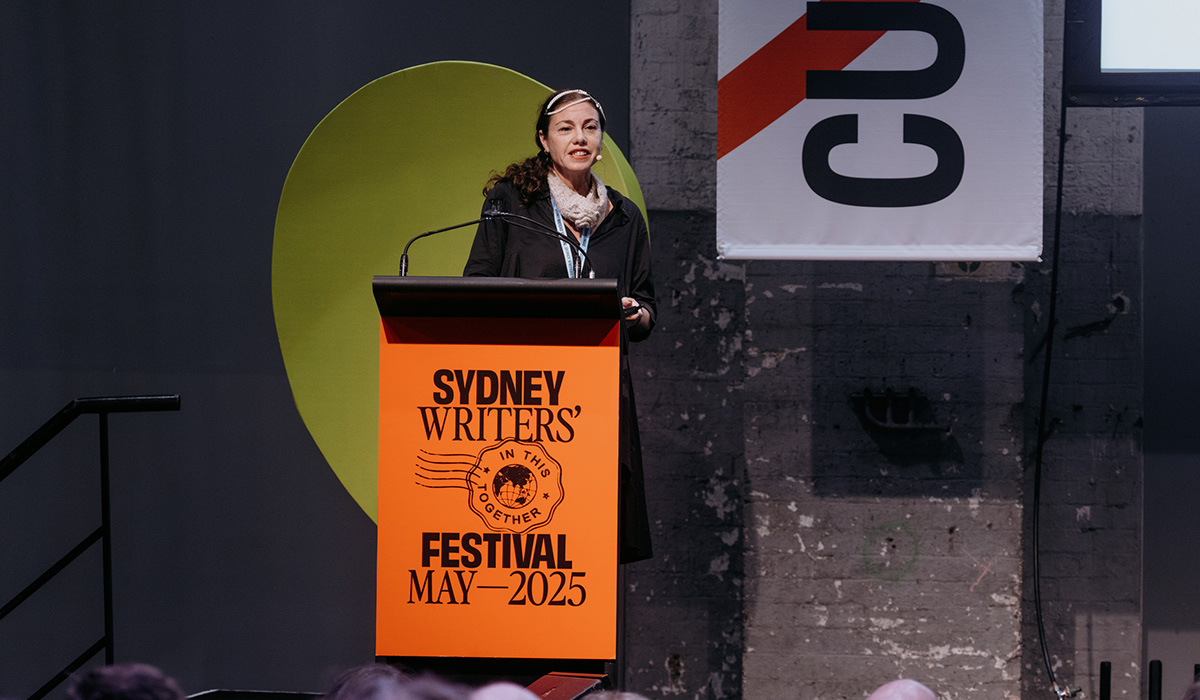
Kerrie Davies: Hello, so my name is Kerrie Davies. I am the author of Miles Franklin Undercover, which covers The My Brilliant Career to the World War One, so does 15 years of her very eventful life. I'm also with UNSW, where I teach journalism and life writing, so I'm very lucky to also have a job that supports my writing.
All right, so first of all, what I thought I'd do is I would begin with a reading and just to orientate where Miles is, and it's 1903 so just remember, this is one of the most famous writers in Australia around this time, 1901. 1903 Brilliant Career had come out. It's incredibly famous, for her.
Here we are, autumn, 1903.
Blackboards talk with “positions vacant” hanging against the wall. She feels like she has walked all morning to get here. She hurries past loiterers. With worn faces and sagging hats. They spit and slouch in her wake watching. Inside, she sits on the nearest bench, as rigid as wood. A crowd of women seated on the other benches glance at her with curiosity and competition. Like them, for she wants to be like them.
She's wearing a plain linen dress edged with a stiff, shiny starch collar and cuffs. Her long, dark curls are tucked into a bun under a sailor's cap, and her petite feet are in brown boots. On her lap, an open diary shifts with her nervousness. The women stare at her, at her diary, at how she looks so refined despite the plain clothes. Is she a governess who has come through the wrong agency door? The wrong life. She tries to ignore the stares.
Using a pencil, as ink will ink on her dress, she writes about the morning experiences, searching for work, knocking on terrace house doors with cotton gloved hands, “Arriving in the metropolis by an early train from the country. I'd armed myself with portions the leading daylies headed ‘servants wanted’ and ‘situations wanted’. I left a purse containing a few shillings on the counter, and though I returned within two minutes, I did not recover it. He eyed me in the manner of the purchaser inspecting a horse”.
One of the women, smaller than her in statue, inches closer. Miles smiles at her. She edges closer again.
“Are you trying to get a place?” The woman whispered.
Miles nods her head.
She pauses, “I thought you might be a missus”.
“No, a servant,” Miles replies, you'll find it terrible consequences of the drought and all are trying to cut down expenses. It makes dozens after every place.
The woman said she is deaf from typhoid because she can no longer answer the door, she's begun working as a laundress and cook instead. Now, having lost her strength to carry heavy pots and wet washing, she will do whatever menial task is offered to her.
Miles makes mental notes for her diary as she listens. Experience is to be milked daily, like a cow at her family's dairy farm. Or, what is now left of it after the drop to quell her stomach as much as to occupy the time, she bends into the solace of her diary again and describes the agency staff, ignoring her and the other girls lined up on the benches, “a very superior young lady sitting before a desk,” she writes.
Through the back window a hard-faced old dame lumpenly strutting around in a gorgeous blue gown of satin brocade.
She sits and sits. As the hours pass, she feels the weight of boots on her feet, the pressure of her hair pin tied under a cap and what to do next.
She writes, “I change the only individual over whom I have any control”.
So let's go back to 1901. So here she is just two years earlier.
Who's seen the film?
Yeah, it's wonderful. It's on Amazon for about $5 now you can still see it. I saw it the other week. It's wonderful, just to kind of see that wonderful atmosphere that Gillian Armstrong created. And I was so happy to see that, because that's what I'd gone for in my book. And there is the original cover of My Brilliant Career.
So now there's she wanted a question mark on My Brilliant Career. That was her title that she wanted. She also didn't want it to be known that she was a young woman. But of course, her English publishers, that Henry Lawson had taken the book to, ignored her. And not only did they get rid of My brilliant career?, which she was very upset about, he also outed her as a little bush girl in the opening, saying, “This is the little bush girl”.
So nonetheless, because it was published. Based in England. She's getting reviews in English papers, as well as in Australia. And at the time, she's in Stillwater, which is just outside Goulburn. It's a burning frost instead of rain. You know, there's cows are starving in drought in which they're pulling them up, just like they were doing in the you know, in the film, there's this huge hurricane wind coming in from the west, and all this is being recorded by the newspapers at the time, which is, I'll go to a little bit later, how I managed all this sense of atmosphere. Because this is actually what happened.
And there's this wonderful record of newspapers that's accessible to everyone. She was also compared to the Parisian Russian artist Marie Bashkirtseff, who wrote an audacious teen memoir. She was a Parisian Russian. She was said to have inspired Anaïs Nin, and she died of tuberculosis when she was 25 but she said it might be wrong to, you know, write my own story, but I am my own heroine. So she's totally missed her time. You can imagine her now on social media.
So this is where she is. Then at this time, like I said, around there was the wonderful story in the newspapers. Everyone was worried about a giant tiger that they thought someone had brought back from the Boer War as a pet and had escaped. And I don't think there's Tigers where they were, but anyway, there was lots of arguments. I think it was a giant feral cat. So at this time around, Stillwater, there's comets in the sky. And all this is from Trove, which is, does everyone know? Like Trove’s, the Digital Newspaper Archive. So if you're doing any family history or any history at all, you can go right back to the 1800s and all these wonderful newspapers have been kept and digitised by and a lot of them have actually been edited as well. So you don't have to peer over the type like I did. So this is, you know, talking about the Maryland Tiger and also comets.
And I got slightly fascinated by all the obsession about comets at the time, because it was like, “do not fear the comet”. It was seen as kind of harbingers of doom. So this is all around this time, and she's also then having this amazing book, but she's out in the bush, out in the drought, and she doesn't want to be there, like as she does not want babies in the bush, like she's seen, that she's looked after her feral cousins, that she's like, I am not doing that. That is not for me.
And her grandmother, who was like, in the film, was this kind of violet from Downton Abbey, and is kind of saying you found anyone you like better than yourself. You know, she was really witty. And so Miles is getting all this pressure, and she's also getting all the local suitors around her who are lending her their best horse and saying, “will you come and, you know, be with me, you know, here's my horse”. So, and she was like, “No, I think I'll answer these letters that were from the famous feminist rose Scott at the time, was like, I lived your book with you. You're marvellous. Come and be my spirit child”. And also Banjo Paterson, also Vida Goldstein, and there's Rose Scott, and Vida Goldstein also became a huge mentor for her and was influential in her life.
So there's Rose, there she was fabulous and charming, and she had all these salons every Friday night that sounded super fun. And so she was like, come to my salons. Come and be with me, you know? And she's like, “Oh, I think I'll do that”. So off she goes. And everything's amazing. She's also trying to write books, but with all this, and her sister asking, “When will you be Mrs. Banjo?”
Because A.B Patterson is writing a very flirty letters, and she's been very flirty back. She keeps writing, but things aren't going so well. So and as a writer, things often don't work out. And then they take drafts and they just, you know, you start again. This book has been, I think I started when I was before covid on this unpublished manuscript of when she was a servant. That's when I found that, and then it just morphed into this completely different project. So lots of false starts, lots of like, Oh, this isn't going to work.
But she also wrote extremely fast for the money, so she tossed off the sequel to My Brilliant Career in six weeks, which is a bit of a feat, but unfortunately, it was quite defamatory, which was a real problem at the time. And you know, so her publisher is like, it's okay to make fun of country bumpkins, but not the better class. And she's like, “Oh, okay”. And because she said, “Well, everyone was going snake headed after me after the first book, so I understand”.
And then after that, she becomes very much trying to go, “Well, what's my next project? What can I do?” And again, it's the big theme with the book which emerged, is that she kept rejecting security. She kept- she could have married, like, she could have just, you know, listened to her grandmother, married the wealthy bachelor with the great horse next door, you know, or found some fancy guy in Sydney, as we do. And she just didn't. She just was like, “I am a writer. I'm going to keep writing.” And meanwhile, her finances are just dwindling, because even though she was successful, most writers can't live on their money.
You know, I have a job at UNSW, which I'm very lucky. They let me write, and they love me doing stuff like this. But it's extraordinary that, you know, at the time that she was also under these draconian colonial royalties. So she got screwed. Basically. Not only did they ignore her title, they just screwed her over with the money.
So she's like, “well, what will I do? What can I do?”,
Given that she's very much already gone, you know, “I'm going to leave marriage”. And the very much. She gets asked this is saying the theme in the book. She says that “there is a theory that any woman can be rescued from the shoals of failure and despair for finding some man to ask her in marriage, but before I could be happy in love, I should at least need to realise myself.”
And a lot of young women are actually and people that have come through divorces that's kind of resonating with them, they're going, “oh yes, that's me”. And definitely with My Brilliant Career, a lot of women were going at the time, going, “Yes, I don't want to do this”.
So as much as marriage is a choice, she was like, “That is not going to be my choice”. ‘
Which, remember, this is the early 1900s when you're expected to marry, have your kids be a good housewife. And then there's this extraordinary woman that just bucked the trend and just went “no”. So how does she become - coming back to 1903 - so this is just two years later. She's famous. She has no money. How does she decide to become a servant?
Well, what happens is she gets influenced by these other amazing women that were called Gonzo journalists. So undercover stunt girls at the time, and most famously, Nellie Bly in New York, was asked by Pulitzer to go, go into the local mental health institution that was super notorious for 10 days. Just pull your hair a bit, you know, you'll get admitted, it's fine, and we'll come and get you after 10 days. And she was like, “I'll do that. I'll do that”. And so, and off she did. She just went off and did that. And then there's called this whole trend of stunt reporters. And this woman called Elizabeth Banks, like the actor and her poodle called Judge, did this in England, and went upstairs downstairs. So worked as a servant for a while, and then later wrote an autobiography about it.
So we think Miles was inspired, goes, “I'll do that, I'll just go and work about the 'servant question'”. Because at the time, everyone wanted to have a servant. It was a status symbol. So she was like, “I'm going to do it in Australia, that's gonna be amazing”. And of course, her family were horrified. They were like, “a nurse, is okay. A servant? Are you kidding? Like, really?” And I think by this stage, your grandmother's always passing out, and so she does it, and she was definitely- she didn't have a poodle. And this is Miles. So this is in the State Library of New South Wales.
And yesterday I did a talk at the State Library, and they brought out all the archive for everyone, including the original manuscript that I worked on of her year, as it was called, when I was Mary Ann, I was a Slavey, and so that's her as a nurse. Now you go, “Well, why didn't everyone recognise her?” Well, again, it's 1903 and we don't have Instagram, so, you know, it's a lot easier.
So that was her in Melbourne and Sydney, and that's the outfit. So she worked -amazingly, for those of you that you all love from Sydney, - in these houses still exist that she worked in extraordinary course of luxury apartments, because everything in Sydney is a luxury apartment or trying to be.
So this is just, if you go along the harbour walk where she worked at a posh boarding house, where she had another flirtation with a naval captain, and when she quoted Shakespeare, and she says parliament, he's like, what? Oh, my God, you know. So this is Keston, where the high court judge that she worked for, that was their house, and that had a hilarious Irish cook that called the wife an old demon, and the wife wanted her - she looked too pretty in her butterfly cap - and asked her to look messier and pull your hair down. And the cook was like, “saw that one coming”. So this is all recorded. So how do we know this? Because she wrote it all down every night in her diary. She wrote everything down, so she kept a record of it, and it was like 100,000 words. And so that's the original there. That's my. It was winter when I was doing it, and that's what they had out at the library yesterday.
So that became the core of how she became a servant for 1903 to 1904 and how cross-checking like with those houses, with their family writing to her. You know, this is non-fiction. How come it's not being published? Well, that's because, again, of defamation. So here she's recording. This is her diary. And for anyone that's into Miles Franklin or knows a little bit about her, which I had this kind of rabbit hole dive, because I was so interested in her with her servant, I suddenly became fascinated with, you know, her life and how she became a servant, which to me, that seems to be what I've decided I do. I kind of come in through like a social side door, though.
So my previous book with 2017 which was called A Wife's Heart, was about being a single parent, and I was a single parent at the time, and I heard, as an aside that Henry Lawson's wife Bertha Lawson had put Henry in jail for not paying his child support. I was like, “What? What do you mean?” I didn’t know you could do that.
And then I found all these letters, and she's like, “Henry, I need the money. You know, the kids have got dental bills”. And he's like, “here’s a duck”.
Audience Laughter
Kerrie Davies: You know? And I was like, “Oh, wow. You know, this is just like single parenting now”. And so that was coming in. And before that, I had really very little kind of knowledge or fascination. So I seem to have come in again with coming back to Miles fascination with her working undercover as a servant at that time.
Now this is so with her diary, so which doesn't exist actually in form like they've kept most of her diaries from 1909 and this one would have been written in 1903 but she put extracts in the manuscript. So it's actually quite an important document, because what it does is it shows a record of diary keeping earlier than that. And this is where she's saying on the fifth day she was dealing with the newfangled stove. It was a gas stove, and so she's playing with it, and it blew up. And anyone that's been dodgy rental in Sydney would completely know this can happen. And it just blew up in her face. And they're just like madly, like throwing tea towels at her and things like that.
And she writes, “That stove, that infernal stove, it's tap being laced, and by no one not knowing, leaving on the oven”, you know, flew up with gas and all the air, gassed up. She said that she lost her eyelashes, some of her hair, and then she went on and worked for the rest of the day. They were like, “Oh, you poor thing, it's amazing. You didn't lose your sight. It must be the length of your lashes”. And then she went and cooked the dinner. And she's like saying her eyes were all yellow from the steam burn. And so it's quite an extraordinary time, you know, because it was a lot of exploitation.
I mean, as much as she was kind of satirising her employers, like she called the guy at this house who was an engineer, the boss of his own backyard, she was working really hard. She did this, and she lost weight, she was exhausted, she had injuries, and she wanted to say, “this is what it was like. You were lucky to get an afternoon off in two weeks”.
And so it's actually a historical record of that of a time in Australia that's supposed to be, like a myth of equality. You know, we're all supposed to be all equal. And really, no, you know, it was very at the time class, as we all know, like class conscious. Okay, so afterwards, so she does this thing for 100,000 words.
She's worked as a servant for a year. She's like, right? I'm ready to publish now. Off I go. So she goes back to George Robertson and goes, “Oh, my God, here we go again. I told her. I told her not to - to be careful”. And this time she's actually writing about a high court judge, you know, you can imagine him just like passing out, you know, of the time. It was just extraordinary, and it was so dangerous. So he's like, Absolutely not, and no other publishers were interested. It also needed probably a pretty good rewrite, if that was the final draft. But she wouldn't also, I think, for money reasons, as much as personality. She never, kind of focused on reworking drafts and working on something and figuring out another way to do it, which is how you do it with a writer. Like, it's really this idea of, “I just did it overnight, or three books this year”. Like you read on you like on Instagram, you're like, how so she was very much like devastated by this, but she was also, well, moving on, because I have to. So it got left in the - left behind.
So what did she do next? So my book here at the time, I was just really going to focus on the 'servant question' that I kind of got so fascinated with what happened after. And obviously you have to show what happened next to kind of tie it up. So again, you know, her grandmother's like, “okay, we can get married now, can't you?” She's like, “Oh no, that's not happening”.
And so after that, she then goes and she writes another book, which gets rejected because it's too much of a feminist book. It did later get published in 1908 called Some Everyday Folk and Dawn. It's based on Penrith, if anyone's you know, Penrith and the woman getting the vote. So it's a really fascinating piece, but that got rejected as well, and but then, fortunately, the editor not Archibald, but he was the editor of what they called the Red Page, AG Stevens, who was like at the literary giant at the time, everyone was terrified of, including Norman Lindsay. He, you know, he had all the power. He was like, “Look, why don't you have Why don't you try journalism? You've done this undercover work for a year. What do you, you know? How about you write some articles for the Herald”, You know, Banjo Paterson would do it. It was a whole history of people doing it to make money on the side while they wrote. And they said, “it's good money. You can have the life you want”. And it suited her, because it's fast. So she wrote a series of articles for the Sydney Morning Herald. So they're all there as well, in Trove, and you can find them. And she went in musters in Kiama. She wrote about country boys going to the city to try and get work. She wrote under this pseudonym called the Vernacular, which must have annoyed the editor, because her name meant sales. “Oh Miles Franklin wrote, oh yeah”.
So that would have been interesting about that. So that's how she saved the money for the next trip. Because everyone's like, “Well, how did she save? How did she have money?” But this allowed her, but instead of going and hanging out with all the friends in with Rose Scott and everyone. She was very good with money. She saved it, she bought a ticket to the United States. Which, yesterday, I was doing a talk with the marvellous Yves Rees, who wrote a book called Travelling to Tomorrow. And it's all the women in the early 20th century who went to the States instead of England, which is where you would normally go. And there's all these great ones. One was a lawyer, one was a swimmer that brought swimming lessons to San Francisco.
And so all this, she was a little bit before that, and Vida Goldstein, who I mentioned before, was really encouraging her to go, because she'd been to the States in 1902 to advocate for the woman's vote there, because they were very slow on the woman's vote. It didn't happen till 1920 and she was like, “Well, apart from the vote,” that Australia obviously had had by that time, you know “you should go, and that's where the money is, that's where the publishing is”. So she's like, right. So she's a woman alone now going to the San Francisco, and she sails into the San Francisco earthquake.
So just about two weeks after the massive earthquake that destroyed it, it was the fire that caused most of the damage, rather than the earthquake, and I found the San Francisco archive, like the examiner and all the accounts of the ground pulsating, but one of the best accounts of the earthquake was written by Jack London, who, you know, wrote Call of the Wild, and he was a famous author at the time. And then she wrote about the earthquake as well. So she - her and her friend that she'd made on the ship that she called Jonesy that was off to the Seventh Day Adventist camp in California- went, right, let's go. Let's instead of being like Gould tourists. They went and she recorded notes, and they were helping, and she wrote this really evocative piece, probably one of her best works of journalism about the earthquake. And she was like, “Well, Jack did it too, so I'm going to write to Jack”. But Jack's like, “Are you a socialist?” Because he loves socialists. He was one. And he was like, because she talked about Mary Ann, which was her servant work, says, When I was Mary Anne, a Slavey, I want to bring it to the States. He was like, “Well, that sounds great. Good luck with that. I don't help anyone. But you know, nice to - nice. Thanks for the letter” and “Yeah, are you a socialist? If not? Why not?”
So Jack, that didn't work out with Jack, but fortunately, her friends in San Francisco who she couldn't stay with, said, “why don't you go to Chicago?” Now, Chicago had the marvellous Jane Addams. So Jane Addams, and also had the Lloyds, who he was called the millionaire red. He was like, how we want all our millionaires and billionaires to be. Like, you know, helping all their causes and helping social justice. They called him the millionaire red.
And this was Agnes, who was the glove union. And they used to sing a song like in the glove factory to try and keep up. So she was started hanging out with these most extraordinary people, as well as Hull House’s Jane Addams. Yes, she is very well known for social justice. It was where all the immigrants came to Chicago, and that's where they found childcare. Because she was like, they were tying their kids to furniture while they went out and worked, because what else were they going to do? They had to work.
So they said, we'll start a childcare centre, you know? So all these services and things. And she was like, put your fur where your bed is. Basically, don't just go and chuck money at it and swan off like they lived in the poor areas and became this most extraordinary kind of place of just community and Miles was right in the middle of that.
So that's just amazing to have that there with her, and then from then, so she basically, this is where I think a lot of her feminism really kind of started to form with these, you know, really in this place of Chicago, which was, you know, Sydney on steroids, basically, and one of the biggest cities in the world. And at the heart of Chicago was like an abattoir, and it was one of the biggest abattoirs in the world, if not the biggest. And there's a book that's written about this abattoir, based on the immigrants working there by Upton Sinclair, called The Jungle. If anyone's heard of it, yeah, don't if you're going to read it, don't plan to eat any meat. I was vegan for a month after reading it, because it started, it helped contribute to the FDA, you know, the Food and Drug Administration, because the shocking practice is there. And Upton Sinclair said, “I wanted to hit people in the heart, and I hit them in the stomach”.
So that's a bit of supplementary reading to my book.
So all this is going on, and in 1910 she starts getting involved in the women's Trade Union League, and they're actively helping women in the factories get a better deal. And she's acted like she's out there on the strikes, in the freezing, snow and everything and these are the garment strikes of 1910 and writing about it in between going out to the opera. He was, I think, wanted her to be his mistress. She was like, “I'm no man's sport”. She had boundaries, you know? She was like, “No, Lola, who was a friend, actually”. And I think she trusted miles. I think she knew Miles was, you know, not interested. She was, they had a very kind of friendship.
And there's, I went to the New York Public Library. Have you been to the New York Public Library? And there's, there's actually where you can actually go and research there, but you have to make an appointment, like weeks before, and they take you up and you go to all the tourists, and it's called the broadcaster room, and it's all very like special. So that was great. And there's a letter there from Miles to Lola, which I actually must give to the State Library, because we don't have it here.
Yeah. So miles world in Chicago was just pretty extraordinary. So to actually have this amount of time that really formed her and I think that the undercover servant work, which has been a bit dismissed by a lot of biographies before, or because the most definitive biography of her is, and that's, you know, where you start, the cradle, baby to grave is Jill Rowe. It weighs a kilo. It's about 700 pages. And even that has a fairly compressed, like, a few pages, really, of the servant work that she did. It wasn't really seen as significant, because she did so much in her life, and that's why it was kind of, where do I stop? Do I keep going like? And that was never my intention, because I don't like doing well, I don't feel comfortable writing.
Birds Tweeting
Kerrie Davies: I think that’s Miles. She's like, Yes, I'm here. She loved Lyrebirds. Actually, if it was a Lyrebird, she'd definitely be here. I think she said she had a fatal gift of impersonation. See, she's saying yes.
Audience Laughter
Kerrie Davies: So definitely the, I think, going back to the servant work, this is kind of been underestimated in her history. So I really wanted to bring it to life. And I'm just going to finish on, I guess, how I decided to do this project, because I really wanted to do it in the 15 years. You know, and I kind of stopped at the world, World War One. That's where the book kind of ends, and that goes on to our next chapter in her life, partly because I felt and as I explained to my publisher that the cradle to grave had been done so well. Why would I do that?
And also, I wanted to write it like a novel, but I didn't want to, obviously, make things up. So where I got stuck, you know, where there wasn't this amazing archive or these wonderful articles like on Trove that I could build on these, you know, all these wonderful articles, all the tiny little details in the book came from world building, came from the newspapers in Chicago. Like I said, I got slightly obsessed with comets. Haley's comet came over in 1910 and there's this wonderful line in the Chicago Tribune talking about how everyone was looking up at her opera glasses. Yes, but the comet, so there's just the most extraordinary time, and that's where I really, really kind of enjoyed writing this book. So I hope you enjoy it, too.
Thank you so much for hearing about my book.
Audience Applause
UNSW Centre for Ideas: Thanks for listening. This event was presented by the Sydney Writers' Festival and supported by UNSW Sydney. For more information, visit unswcentreforideas.com and don't forget to subscribe wherever you get your podcasts.
-
1/3
-
2/3
-
3/3

Kerrie Davies
Kerrie Davies is a non-fiction author and senior lecturer at UNSW Sydney. Her latest book is Miles Franklin Undercover (Allen & Unwin, 2025). Her previous book, A Wife's Heart, created national discussion about the poet Henry Lawson and his marriage. A former journalist, Kerrie was a visiting fellow at the State Library NSW while researching Miles Franklin Undercover. Kerrie writes for The Conversation, and lives on the NSW North Coast and Sydney with her husband, Oliver and their two dogs, Ursa and Loki. She is attempting to learn to surf.