
Kate Poole | How Can We Better Prepare Our Astronauts For Space Travel?
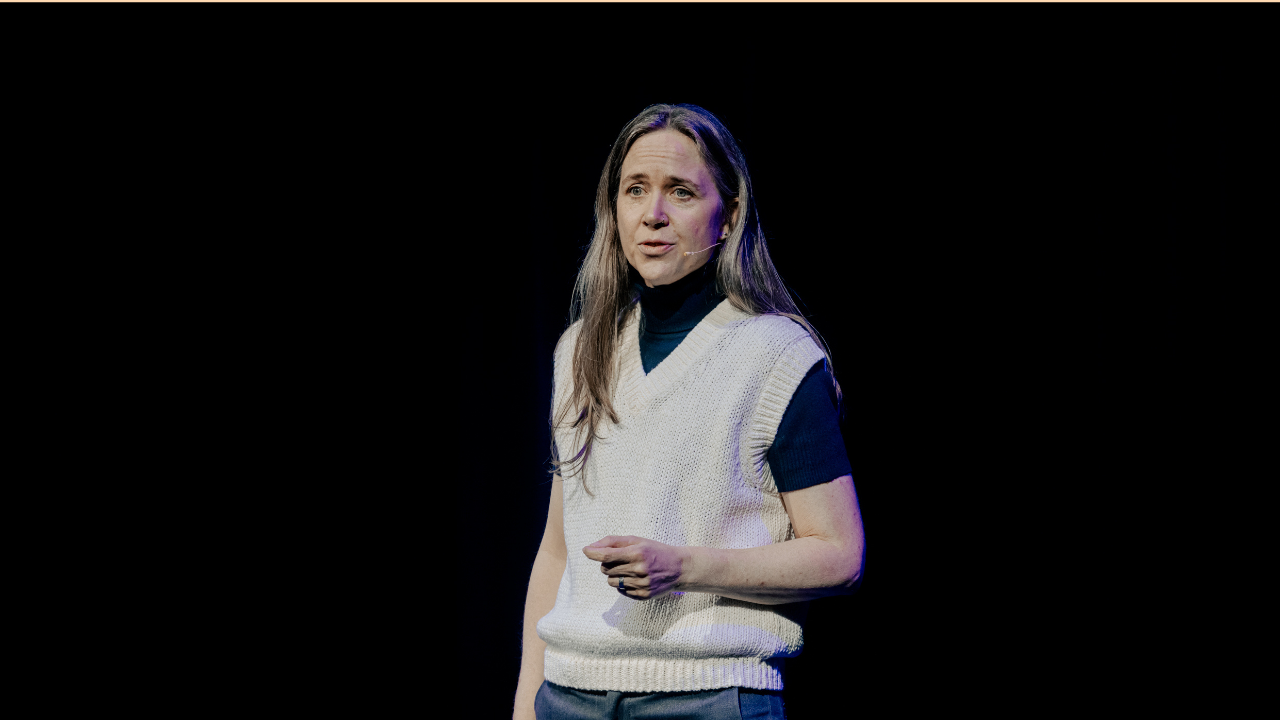
To make long term space travel possible we need to learn more about how low gravity disrupts our bodies, down to our individual cells.
Have you ever wondered why astronauts return from the space station weak and struggling to walk? Associate Professor Kate Poole dives into the physiological challenges faced by astronauts during and after their missions. She explores the effects of microgravity on the human body, including muscle atrophy and bone density loss. Poole highlights the cutting-edge research and innovative solutions being developed to mitigate these issues, so that astronauts can withstand long-duration spaceflights. She highlights the need for long term planning to achieve these goals and draws parallels between space medicine and fundamental research into how our bodies function.
Hear more from Associate Professor Kate Poole as she dives into the physiological challenges faced by astronauts during and after their missions showcasing how space exploration can drive advancements in medical science
Podcast Transcript
Rob Brooks: Welcome to 'Progress? Where Are We Heading?' a mini-series from the UNSW Centre for Ideas, where we'll explore the ideas shaping our future. Today, we're talking about something truly out of this world, space exploration. For the first time in more than 50 years, humanity is gearing up to leave footprints beyond Earth. But as we plan for future missions to the Moon, Mars, and beyond, we are faced with all sorts of challenges. Today we have Kate Poole with us, who's been working on the cutting edge of research into the effects of low gravity on the human body. Kate, welcome to the show.
Kate Poole: Thanks, Rob. It's a pleasure to be here.
Rob Brooks: Kate, are humans going to Mars?
Kate Poole: Well, we might want to think about it a little bit before going charging off to Mars. There's definitely plans to make that happen. And I think we've got a lot of the engineering solutions coming online for the rockets and craft that are going to get people there. But we need to start thinking about what happens to human health and human performance spending that long... We need to think about the human body and what's going to happen when they spend that long in low gravity environments because it's not particularly good for human health or performance.
Rob Brooks: So, Kate, a bit of background. What are you? Are you a space biologist?
Kate Poole: I'd say I'm a mechanobiologist, actually. So, what really interests me is that question of how our bodies sense forces and what that means for our human health. But of course, if you're thinking about space, well, one of those really big forces that we're always impacted by, gravity, well, that's gone away. And that leads me to having an interest in space biology.
Rob Brooks: And does this research, before we get into the space part, does this research have applications elsewhere down on Earth, for example?
Kate Poole: Oh, absolutely. So, I think you'd be surprised by how much of our biology is actually influenced by forces and the ability of our cells to sense different forces. So, as you're sitting there listening to me, there's parts of your inner ear that are responding to the force of those sound waves and then allowing you to be able to hear. But beyond even that, we can sense touch, our bones and muscles need to be able to sense the amount of mechanical loading that they experience. So, you can either build or degrade bone to an appropriate level. But even cancers, in cancer cells, they can feel their surroundings. And as you get changes in the mechanics of the surroundings, that can actually make some cancers worse and more invasive. So, there's actually a lot of different areas of our biology that are dependent on being able to sense forces.
Rob Brooks: And our cells and other parts of our body, or should we say, the parts of our body that are made of cells, need the Earth's gravity in order to function nominally?
Kate Poole: Well, I guess that's a question of how you look at it. I would say they've evolved to function optimally in Earth's gravity. And then when that gravitational force has gone away, they don't work as efficiently anymore. So, one could say that they need it to work properly, but it's more that they've just evolved to that being the condition that they're used to.
Rob Brooks: OK. Just like being in water or, you know, low oxygen or something?
Kate Poole: Exactly.
Rob Brooks: OK. So, we know when astronauts spend some time in space, their bodies change. What's happening to their bodies when gravity is reduced? Why do our bones and our muscles and even our immune systems experience changes?
Kate Poole: So, we don't know precisely the mechanisms at this point of why these things change. But you can imagine as soon as you go into low gravity, it's basically a state of weightlessness. So, one of the first things that happens is you have massive fluid shifts in the body. So, your circulatory system changes a little bit and the blood flow, blood can start pooling near the head, which would not normally happen. So, this can drive a bunch of different changes in the cardiovascular system. And then because those astronauts are experiencing weightlessness, their bones aren't getting the same kind of mechanical loading. And they can sense that. And they start to degrade because they feel that they don't need to be as strong in that unloaded environment. Now, as to why the immune system doesn't work as well anymore, we actually really don't understand that yet. And there are a number of other places in the body where cells are really impacted, like red blood cells. You can have a space anaemia that some astronauts actually experience because their red blood cells just degrade. So, it seems to impact a lot of different physiological systems. And this is one of the reasons I find it so interesting, is because we don't really understand why all of these changes are occurring.
Rob Brooks: So, working with cells, working with forces, how do you even go about studying these things in zero gravity? Because I'm guessing you don't have your own space shuttle?
Kate Poole: No. I haven't been able to find someone to give me the funding for my own space shuttle yet. No. So, we actually have a trick that we can do to simulate microgravity in the laboratory. And this is basically dependent on the fact that the gravitational force, so force is a vector, which means it has a direction. And since it has a direction, if we randomly rotate a sample against that vector, we can actually average it away. So, the cells think that they're in weightlessness, but we're actually just tricking them to think that they're in that weightless state. And this is sort of what we call simulated microgravity.
Rob Brooks: OK. And can you do that with, you know, on a big scale, like a simulated microgravity for a human being?
Kate Poole: It's a little bit trickier. But if you think about those, there's show rides that you might experience if you go to Lunar Park or a Royal Show where you're in what I think they call it a Gravitron, where you're strapped into something that then rotates you through all three directions. And that would be sort of like similar to what we're actually doing to these cells in a dish.
Rob Brooks: Wow, fantastic. So, a bit terrifying, really, that, you know, our bodies aren't necessarily made for space. I guess, not surprising when you explain it like this. You put a lot of emphasis on mechanosensors or their molecules.
Kate Poole: Yes. So, I would call it a molecule. So, we use the word molecule for a lot of different things in our biology. And all of our individual cells have what we think of as mechanosensors. So, they are molecules, mostly proteins, that can actually respond to different forces. And the ones that we're looking at, they're what we call ion channels. So, they sit in the surface of a cell and they're essentially like a pore or a hole, and they're mostly closed when nothing's happening. But as soon as they sense a force, they'll actually open up. And that allows an electrical current to go across the surface of the cell. And the cells can feel that. So, it's a way of converting a force into an electrical signal. And then that electrical signal controls the cell function.
Rob Brooks: OK. And you've found some interesting sort of findings?
Kate Poole: So, we've been looking at some of these force-sensing ion channels that are required for our sense of touch, and that are required for cancer cells to crawl around the body. And when we started thinking about the microgravity, we were interested in whether or not these normal force-sensing molecules might be repurposed in that microgravity state. So, one of the molecules that we found that's really important for cells to be able to sense and interact with their surroundings or for our sense of gentle touch that we've called ELKIN-1, we discovered that when we take that out of cells, they seem to become agnostic to microgravity or they just don't respond to it anymore.
Rob Brooks: Oh, fascinating. So, is that going to be part of the solution for space travel, do you think?
Kate Poole: I'd love to be able to say yes, that's going to be part of the solution. But I think it's going to be a lot more complicated than that because we don't think that this ELKIN-1 force sensor is specifically a gravity sensor. What we think is happening is that so many different things about the structure of the cells is changing when you go into this microgravity state, that ELKIN-1 experiences all the forces differently. So, it's not that it's sensing gravity, it's just that its function is disrupted. And we don't know that that's going to be the same in all of the different cells and tissues in our body.
Rob Brooks: So, going from this very careful, detailed work at a very small scale, how do we get to space travel? How do we hack our biology to avoid these kinds of problems?
Kate Poole: Well, we're going to need to do a lot of work first. So, I think something that we really need to know a lot more about is actually, what do these changes look like at the cellular level? What are those structural changes that cells are undergoing? How is that influencing the force-sensing pathways, and how does that change depending on which part of the body that you're looking at? So, since we really don't understand these processes at the moment, there's a lot more that we need to know about those mechanisms. And it could be that, actually, one of the best solutions to start off with is finding other ways to mechanically load those cells. So, through exercise and resistance training, at the very least, to try and help keep things in order as long as you can before needing some kind of external intervention.
Rob Brooks: So, you're an astronaut. You've learned all your life. You've trained all your life to be super fit, super able. You get sent on this incredibly expensive, you know, journey to Mars, and your physio is still giving you exercises that you have to do.
Kate Poole: Oh, absolutely. Because if you didn't, if we actually sent someone off to Mars, now, the likelihood is when they got back, their bones would actually break when they tried to stand up back on the surface of the Earth, because there would be so much wastage that it just wouldn't be able to stand that force anymore. So, the longest that any very highly conditioned astronaut has spent in space at any one time is around 437 days. And that was back in the 90s. One of the Russian cosmonauts set that record. And that seems to be a real limit for just how long you can spend out there before this damage becomes detrimental.
Rob Brooks: So, that, obviously, you know, the differences in conditions that we face suggests, it comes into my territory, evolution, now, I'm wondering if we can send Elon Musk and Peter Thiel and all of their mates and hopefully some of their children off to Mars for a period of time, how many generations before they can't come back?
Kate Poole: Oh, that's a really interesting question. I'm not sure I've got a clear answer to that, but thinking in terms of evolution, this could be a way that you could have a speciation event. So, you need that sort of geographical boundary to end up with a speciation event. And so, to end up with something that is no longer human, someone who is no longer human, sending them out into space might actually be a way of achieving that. So, there's questions about the development of babies. So, it could be a real challenge, actually, gestation in a low gravity environment, particularly because a baby needs to know actually which way is up and which way is down for proper orientation. And that goes away. The fluid flow within a baby's vasculature is actually really important for those veins and all of the vasculature to form properly. And there's actually one of these four sensors in the vascular cells that are really responsible for that proper development of the vascular system. And all of these processes are going to be disrupted. So, there is a real question that we don't know the answer to yet. Is gestation going to be severely impacted in a low-gravity environment?
Rob Brooks: Now, I'd never thought of that. And I'm thinking back to, like, first-year embryology classes, even the orientation that, you know, leads to the spine developing and all of that kind of stuff would kind of potentially be messed up.
Kate Poole: It potentially could be messed up. There is a question, though, of whether that, you know, the gravity on Mars, which is lower than Earth, whether that would be large enough to overcome those problems. So, with plants, plants are very, very responsive to gravity. And they can actually sense which way is up and which way is down. So, we call that gravitropism or something where you are actually responding to that direction. But it seems that the low gravity of the Moon and the low gravity of Mars are generally enough for plants to overcome that limitation. Whether that's true for the physiological disruptions that human experience is another question.
Rob Brooks: So, NASA's Artemis mission is planning to send astronauts back to the Moon. There's talks about future missions to Mars. We've been, you know, shooting the breeze and talking about experiments, not only in evolution but also in democracy, if we send all the plutocrats off. I hope you don't mind me being flippant about that. But based on what you know right now, you know, what are your top five challenges, or three, if you want, that you think need to be met before we can even think about this?
Kate Poole: I think we need to know just where that limit is. So, I think one of the things that we actually need more information about is, how resilient are our bodies? So, we have that 437-day limit. But is that really the limit? And I will extend beyond what I've been talking about. So, I'm interested in microgravity, right? That's because I'm a mechanobiologist. But there's also that question of radiation. So, there's very few human beings that have been outside that protective shell of Earth's atmosphere. So, even on the space station, they're in near-Earth orbit, they experience a little bit of protection there. It's only those astronauts who have already been to the Moon that have had that full exposure to the radiation of space. So, if people do go off to Mars, they're not going to be farming on the surface of Mars like we saw in that movie, 'The Martian'. They're going to have to live in caves. So, there are a number of different human concerns that we're going to have to solve above and beyond that microgravity. How does it affect us at the cellular level? What are the force senses? But then, what's going to happen with radiation as well?
Rob Brooks: Did you read that other Andy Weir book about the spiders?
Kate Poole: No.
Rob Brooks: Oh, it's fascinating, but these spiders, they've grown up without light, or not grown up, evolved without light. And so, they go off to solve the same problem that the Earth astronauts are solving, but they all die because they don't know about radiation.
Kate Poole: Oh, wow.
Rob Brooks: Or something like that. Yeah. I can't quite remember. It's a fantastic book. Alright, enough about that. It's getting positively Trumpian in my discourse. Alright, so, we've learnt a lot about what happens in space, two bodies. But we must have learnt a tremendous amount of what happens when bodies come back from space. Are we able to use some of that kind of knowledge to apply it to space travel?
Kate Poole: So, there's a lot of information that does come back from the astronauts. So, they're highly surveilled, and there is a lot of medical history and medical information. But as you pointed out before, they're also the fittest and most healthy humans on the face of the planet. So, we do know that some of the bone degradation is irreversible. And that's something that's sort of come from studying these astronauts when they come back. But the challenge there is, yes, there's more and more humans going into space, but it's still quite limited numbers. And we still have a gender imbalance in who is actually represented in that sample. So, we can learn some things, but you've got that tyranny of low sample numbers. So, it's always a little bit challenging to know how applicable that's going to be to the broader population. For instance, the space anaemia that I mentioned earlier, that doesn't impact all astronauts. And we've been looking at red blood cells in the lab in our simulated microgravity device. And we've found that about half of our participants have a really strong change in the shape of their red blood cells that would suggest that they'll go on to develop an anaemia if we sent them to space. But the other half of our sample set, no, no problem, doesn't respond at all. So, clearly, there's going to be a lot of individual to individual variation. And that's always going to then be a challenge trying to work from that small sample number into much larger information.
Rob Brooks: That's going to be fascinating, I imagine. And, you know, talk about real world applications of diversity in hiring. I mean, you know, I don't imagine that astronauts are very high on sort of anxiety, neuroticism, you know, they're very high on agency, all that kind of stuff. But, yeah, how are different types of people going to respond to this? I never thought of it.
Kate Poole: And not only that, the degree of conditioning as well. So, yes, they've got all of those amazing mental capacity and resilience, but a huge amount of physical resilience as well. Perhaps a little bit less than in the 70s when they were all former test pilots, which was really selecting for a very small cohort of people. But still, there are quite high bars so far to who has accessed space. It will change as people with great wealth can buy their way out of Earth's gravity well, and then they may actually experience a lot more detrimental impacts because they're not starting from such an amazing point of conditioning.
Rob Brooks: Yeah, fair enough. So, you've spoken about this kind of project in terms of sort of short-term thinking and long-term thinking, and it's interesting that so many speakers in our series, so many guests on this podcast, have, you know, taken very long-termist kind of perspectives. And yours is probably the longest term, just because of how long it takes to get to where you're talking about going. What needs to change in order to do the right kind of long-term thinking and investment?
Kate Poole: The flippant answer is, everything. So, I would say we need to do better about how we're assessing the value of some science. So, we do see increasingly, even in academia, a drive for short-term outcomes, something to point to, to say, hey, look, we achieved this. You know, here's our output. Yay, success! When actually some of these really challenging issues, they're not easily solved. So, we need to be able to support research that's going to take longer to get to that point of being able to say, hey, yeah, look, there's our big outcome or something where we're saying, OK, we've got our literal moonshot. We're aiming to get people out into microgravity for a much longer period of time and look at what the waypoints along the way are to be able to say, OK, well, we've advanced this far and we have a second use out of this research, which is knowing a little bit more about our health, or knowing a little bit more about osteoporosis or osteoarthritis, which mimic some of these things that happen in microgravity, while still being able to maintain that long term goal of spending more time outside Earth's gravity.
But the way that we sort of assess who is a successful scientist, it often really looks at these short-term outputs of like, did you get enough papers? Were they in high enough impact? And some of these things can be driven by inequities or what's trendy or fashionable in science at any given moment. And so, I think we really need to be able to look at, or return to what used to be called cathedral thinking of people actually starting a project, building a cathedral, that they're never going to see the end of, and knowing that they're never going to see the end of that, they're never going to see that cathedral. They're never going to sit inside and listen to the choir sing. But it doesn't mean you shouldn't start trying to build it, because it will be there for future generations. And I think we've lost a lot of that.
Rob Brooks: I'd have to agree with you. I mean, I hadn't thought about the cathedral way of putting it, but it's such a perfect way of putting it. Wow. You've given us so much to think about, Kate. So, I guess, before we wrap up, let's just think ahead one last time. We're talking about long-term human space habitation on the Moon or even Mars. What do you think? Do you think that space exploration is just talk, or do you think that there really is a future with space exploration, and what most of all needs to change? We've got rockets that can be caught by, you know, towers. We've got you sorting out the mechanosensors and figuring out how cells respond. Maybe, you know, you haven't had the big YouTube moment yet, but I hope you do. What else needs to happen if we're going to do this?
Kate Poole: Well, I think we need somewhere to go because at the moment it's not clear just how long we can actually spend on these environments like the Moon and Mars. So, with the Artemis plans to build a lunar base, I think that that will be a really telling moment. Can we actually have people spending long periods of time outside Earth, or are we just going to continually be running up against these boundaries that have been defined by the conditions that we've evolved in? There's also a question of will. So, space travel is expensive, and there are a lot of things that the world is struggling with at the moment that might look like an important investment. Our climate is one, and it's never going to be a solution of finding a new place to live, or going off to another planet, or colonise Mars. We really do need to think about a lot of these other challenges. So, I think there's sort of like, slow and steady pace towards an eventual goal, is really what we need to be able to then build on that base of engineering and then starting to understand our mechanobiology to really make that meaningful and sustainable, rather than sort of clinging on by your fingernails and hoping that you can survive that length of time before coming back to Earth.
Rob Brooks: So, at least begin with thinking about, what do we need to know in order to build a cathedral.
Kate Poole: So, I think we're still at that stage. We don't know what we need to know to actually really make this possible.
Rob Brooks: Kate, this has been an absolutely fascinating conversation. It's incredible to think about the challenges that our bodies face in space. But, you know, more generally, the challenges of getting to solutions that might allow us to live and thrive and travel beyond Earth. So, thank you so much for sharing your very, very interesting and creative insights with us today.
Kate Poole: Thanks, Rob.
Rob Brooks: And to our listeners, as space travel moves from science fiction to reality, it's clear that the future of human exploration will rely just as much on breakthroughs in biology as in rocket science. Until next time, keep exploring and stay curious.
-
1/3
-
2/3
-
3/3
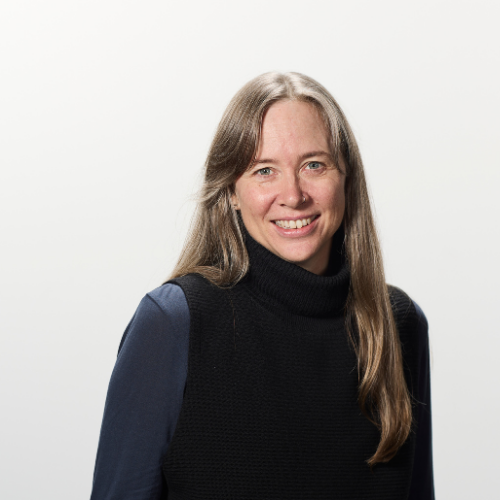
Associate Professor Kate Poole
Associate Professor Kate Poole is the Director of Research in the School of Biomedical Sciences at UNSW Medicine & Health. Her research seeks to understand how the cells that make up our bodies respond to the forces around them. She is currently investigating what happens to our cells under low gravity conditions to better understand how long-term space travel will impact human performance.