
Ivan Coyote: Playlist
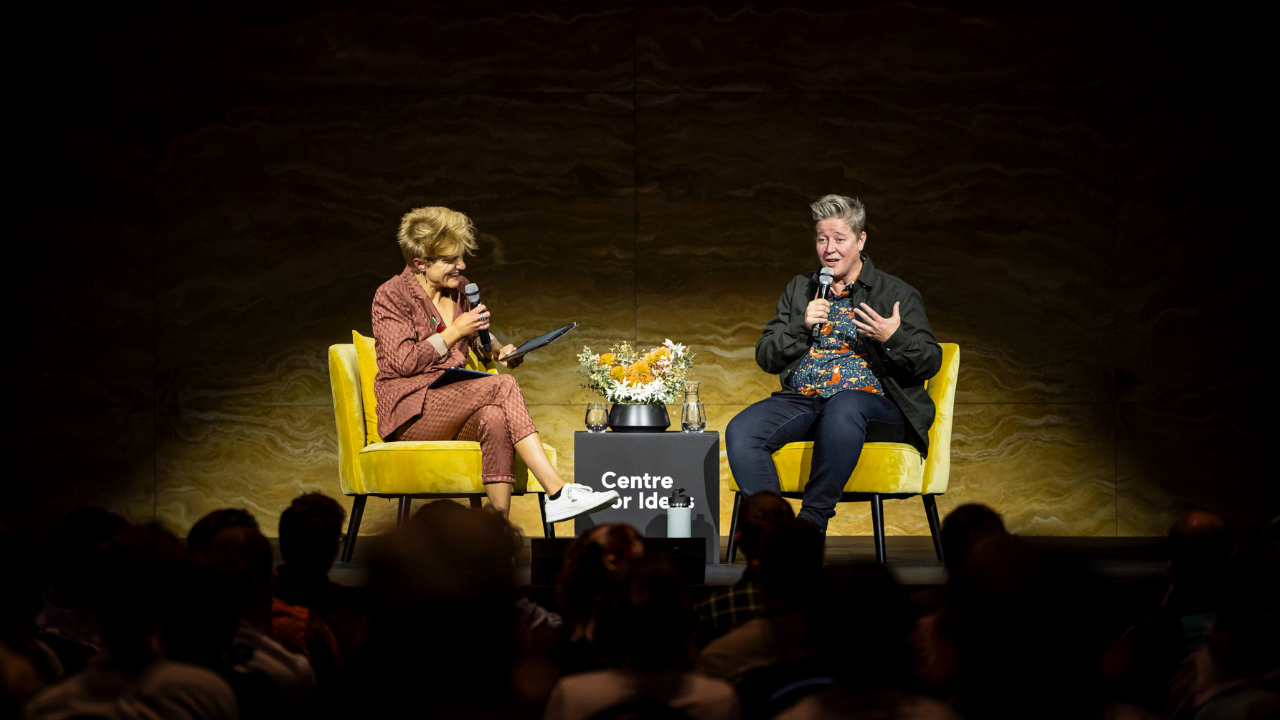
We have this beautiful, incredible opportunity to build a masculinity that is more sustainable, that is more compassionate, that is more thoughtful, that is more feminist and that cares more about the environment.
Ivan Coyote doesn’t fit neatly into one of two gender boxes, they never have. From an early age in the Canadian Yukon, they can remember discovering a coded but very possible queer future hidden in the music coming out of the AM radio in the kitchen, lurking in their parent’s record collection, and leaking out of the lyrics in their elementary school musical.
In conversation with Yves Rees, the award-winning author, performer, and musician explores the deeply personal terrain of gender identity, family, class, and queer liberation, approaching every story with warmth and sharp wit.
This event was presented by the UNSW Centre for Ideas as a part of Diversity Festival.
Transcript
Yves Rees: Hi everyone welcome back.
Audience Applause
Yves Rees: Now Ivan, you’re clearly a natural performer, and I know from reading your most recent book Care Of, that you had to be grounded in your performing for a few years. Does it feel good to be back on the road, having live audiences again?
Ivan Coyote: Oh yeah, for sure. Totally. I got really into doing online gigs in the pandemic. I was living with my partner at the time, Sarah McDougal, the Swedish singer-songwriter, and we literally had just finished building a recording studio. Like, the day that the lockdowns happened, the carpenter came upstairs, he was painting the baseboards, and he was like, I just went to Costco, and people are fighting over chickens and bottles, flats of bottled water. It’s really scary out there. Do you want a hug? We were like, no, Sean, you need to go. Like, no, you can’t hug us. There’s no hugging. And so, we were in a recording studio, and so I just took over the learning as much about video. I watched a lot of, actually, Australian nerds on YouTube, because live-streaming – gamers live-stream.
Yves Rees: Are we especially good at live-streaming in Australia?
Ivan Coyote: You just have a lot of nerds, I think, is what it is. But yeah, I remember, yeah, it was a weird time. I remember the first couple of gigs I did, the audience was all still masked. That was, yeah, I went back to St. Catharines, Ontario, was my first live gig that I did. I can’t remember when it was in the whole, like we were talking about in the green room. I feel like we’ve been gaslit about that it all happened, and that we sort of like, we don’t really address like how traumatic that was for everybody. And I was lucky because I lived with my partner. Well, actually, we lived on opposite ends of the country, but we chose to spend that time together. I went and closed up my apartment in Vancouver, and yeah, and I stayed in Ontario for most of it.
Yeah, it was a weird time. And this has been such a part of my life, and it was very strange to not have that kind of connection for me as a performer. I was actually in an online support group that happened every Wednesday, and they let me in. It was for women songwriters, and I was neither a woman nor a songwriter, but I was sleeping with one. So, they let me in. And it was like the who’s who of Canadian women songwriters.
And we got together once a week, and there was like three of them had babies. And we met once a week, every Wednesday for almost two years. And I’m still really tight friends with all of them. And it was all these performers, like, you know, so many of us, we talked about the kind of existential angst of like, who are we then? Like, if we never get together like this again, like, what do I, I could go back and be an electrician. I was an electrician in my former life. Yeah, it was a strange time. And I wrote all of Care Of in six months.
Yves Rees: So, Ivan, like, as you just said, the end of your answer there, you know, the storytelling performance work you do is all about connection and, you know, using stories to kind of build bridges between people. And that, I guess that really kind of resonates with my very firm belief that storytelling is one of the best tools we have right now to heal division and polarisation in the world, which, you know, is obviously an increasingly major problem.
Do you think storytelling has that kind of political effect? Do you see it as something that is kind of essential to connecting people in an increasingly disconnected world?
Ivan Coyote: Oh, 100%. Not only do I think it’s a good tool, I think it’s the best tool that we have. And I don’t think that you can legislate kindness. You can’t force someone to have compassion. But you can, and I’ve seen it. I’ve seen it. I’ve felt it. I’ve felt it in the room. I could tell you 100 stories.
Honestly, I could tell you 100 stories minimum of the experiences that I’ve had as a storyteller. And my friend Richard Van Camp, he’s a Dogrib First Nation storyteller from Fort Smith, Northwest Territories, up in Northern Canada. He’s one of my favourite guys in the whole world. And he calls it the gathering. The first story that you do is very important because you have to gather, right? And this is a predominantly very good-looking queer audience, from what I can tell.
Yves Rees: Very good-looking.
Ivan Coyote: I don’t always get to have this privilege. And that’s why humour, I feel, is such a powerful tool as well. And so, there’s a very specific kind of story that you need to do at the beginning of a show that’s the gathering, right? And it’s, you know, when someone’s uncle, someone made their uncle come to the show and he’s like, you know, he doesn’t, you know, who’s that, you know, faggot up on the stage and whatever. And then you tell the first joke. And it’s really important timing-wise, you have to let it ring out. You can’t step on that first joke because you’re telling the audience how much they get to respond, right?
So if you’re too quick with that first joke, you’ve got to let it settle and ring out a little bit. And you can literally feel the shoulders drop. You can feel the shoulders drop. And you can, if you’re listening, and a good storyteller is always listening, seems counterintuitive, but it’s really not. Like there’s so much that I feel and can hear from the audience. And you can actually feel people’s, like, ribcages cracking open a little bit, right? And I just think it’s the best, I think it’s the best tool that we have, that and punching Nazis.
Audience Applause
Yves Rees: And both can be sources of trans joy, I think. You started by telling us that, you know, you were going to write this story about toxic masculinity. You were faced with a lot of Nazis. You pivoted to trans joy. And it was such a wonderfully joyful show. And that connects to something I’ve kind of been burning to ask you, because I feel, you know, like non-binary people like you and me, we talk a lot about the really hard stuff about being non-binary, you know, the bathrooms, going through airport security, and they don’t know what button to press, being abused by Nazis, you know, small things like that. And that’s all really real and important to talk about. But I guess I know as a non-binary person, and it’s also pretty fucking awesome being non-binary. Like there’s a lot of freedom and joy in just not having any kind of box to conform to. So I want to ask you, what are you at the moment finding joyful or exciting or fun about being non-binary?
Ivan Coyote: Pink.
When I turned 50, I was, it was a while ago now, I was working up in Atlin, this little town called Atlin, which is about two hours south of Whitehorse. And it’s, I think in the summer, maybe 700 people. At the time, they’ve got a cell phone tower now, but at the time it was, you had to drive for a little over an hour to get a cell signal.
And I was building a cabin, mostly by myself. And I had a lot of time to think as I was approaching turning 50. And so I was like, what, how do I want to like live with intention, you know? And what, when I was a kid, I sort of, I threw a lot of babies out with the bathwater of femininity and about what it meant to be a girl or a woman. I just, I sort of tossed all that stuff out. And I thought, you know, I love pink. I really do. I love pink. I love pink. I love the colour pink, especially powder pink. It’s very flattering on my complexion.
Yves Rees: Have you had your colours done? Is pink one of your colours?
Ivan Coyote: It is, I’m a spring.
Audience Laughter
Yves Rees: I knew it.
Ivan Coyote: So I was like, I want a pink plaid shirt. But I don’t want like a women’s, so-called women’s cut. Like I want a men’s pink plaid shirt. And it’s, you know, the year 2019. That shouldn’t be too tall a task. Maybe not in this town, but, you know, when I get back to Vancouver. So I went to that store Patagonia, do you remember? Do you know that? Do they have that here?
Yves Rees: They do have that. Yeah.
Ivan Coyote: And I was looking, they had all these plaid shirts and I was looking through them to try to find the right colour. I wasn’t salmon. I wasn’t looking for salmon. I wasn’t looking for fuchsia. I was looking for like powder pink, right? And there was this dude in there and he was, there was a wall of baseball hats. And he was trying on all these different hats and looking in the mirror. And he says to this woman, how do you think I look in this hat? Do you like this hat on me? And the woman immediately like, you could tell she, I don’t think she spoke much English. She was not into talking to him. And she wasn’t interested in his hat situation at all. And so she just left and she just walked away. And so I said, I think that hat looks pretty good on you. And he looks at me and he goes, yeah, but I want like a woman’s perspective.
Audience Laughter
Ivan Coyote: Now, see, my mom says that I have an adversarial nature.
Audience Laughter
Ivan Coyote: But I don’t think that’s true. I think I’m a storyteller and I’m always kind of just like, I’m interested in chatting with people. And so, you know, I don’t know why I didn’t just, he obviously wasn’t interested in my opinion. So I said, well, technically, you know, I was assigned female at birth. It says F on my, still on my, you know, and I think that hat looks pretty good on you.
Audience Laughter
Yves Rees: Did you bat your eyelashes like that?
Ivan Coyote: I did, I fully did. He’s like, yeah, well, I mean, like a lady’s opinion. I want a lady’s opinion. And I’m like, well, again, I should have walked away at this point, right? I know that now in retrospect. Like a female opinion. And I said, well, I’m like menstruating right now.
Audience Laughter
Ivan Coyote: Like day two, like full. Continues to be my opinion that that hat looks pretty good on you. He’s like, I’m not asking you, right? And then that’s all of a sudden I look, all of a sudden there’s a woman standing there. She’s like maybe in her early 70s. And I’m not sure when she’s arrived. She just appeared there. I don’t, I’m unclear as to how much of this previous non-consensual sort of situation that she’s heard before. And she said, well, I’m a woman. And I think that hat makes your head look very, very small.
Audience Laughter
Ivan Coyote: And then she just, she was wearing Birkenstocks. She just like whirled on the heel of her Birkenstock and just sashayed away. And I’m still laughing at that guy. And I’m 56 now. And the best thing about that story is that I tell that story sometimes. And then people send me pink plaid shirts. I think I’ve got like eight of them now. From all over.
Yves Rees: I was going to ask. Did you end up finding one?
Ivan Coyote: I never found one, but now people give them to me. Yeah, I’ve got, I think I’ve got like eight of them. Most of them don’t really fit me, but. But they look great. No, I’ve got like a little pink plaid section of my.
Yves Rees: Of the wardrobe.
Ivan Coyote: Yeah, yeah. And so I guess, I think for me that’s been the thing is like just kind of going back and going like, who really am I? Like, what do I like? And what am I interested in? And it’s like, I love doing cross stitch. I like knitting. Like, I like all these things. I hang out with a lot of Indigenous folks at work. So I do a lot. They’re telling me my beadwork, it’s coming along. It’s coming along.
And so, you know, all these kind of things that I sort of poo-pooed as a kid when I was trying to like valiantly in the 70s and 80s sort of define this some kind of a, you know, I didn’t have any role models, right? I had no, I’d never heard the word trans before. I had never, you know, I was a tomboy. That was the closest word that anyone ever had for me.
And yeah. So I guess, I guess the fun part now is like figuring out really who I am actually. And just having no attachment to any kind of gender-specific habits or, you know, because everything is so still so gendered, right? In fact, they say they’ve done studies on toys in the 70s. And toys now, they’re more gendered than they were in the 70s. Yeah, like we’re not actually, we haven’t come a long way, baby. In lots of ways. Yeah.
Yves Rees: Now, I believe that you’re, these days, often being described as quite a role model yourself or even a trans elder.
Ivan Coyote: Trans elder, yeah.
Yves Rees: And I mean, this is, you know, the funny thing about trans and queer time that like we don’t have a lot of elders because we know, you know.
Ivan Coyote: We can’t show up on time for anything.
Yves Rees: They can’t show up on time for everything. All the events start late. You’re an elder when you’re in your mid-50s, what’s going on?
How do you feel about that label? Like, how does it sit with you? Do you like, does it feel a bit icky or you lean into it? And I say this more broadly, like, what do you think trans people of different generations can teach each other?
Ivan Coyote: Oh, what can trans people, those are two very different questions.
Yves Rees: Just trans and age, you know?
Ivan Coyote: Well, I, you know, I guess like elderhood-ship? Elderhood? Elderness? Elderly?
I, the first time it was ever levelled at me, I immediately felt like sweat running right down, you know, and I thought, I’m just not good enough to, like, I’ve got a criminal mind. I, you know, I can’t do this. It’s like, I can’t do this. I have a harder time with the term role model than I do elder because I should not be in charge of anything. Like I am, you know, like if you’re ever on TV and it says like Ivan Coyote, writer, storyteller. I’m working on a time when it’ll say Ivan Coyote, notable bad influence.
Audience Laughter
Ivan Coyote: That’s what I’m going for. And because I want to be one of those old people who like, so who started the riot? Well, Ivan was there for sure. And, you know.
Yves Rees: So you want to be a role model in like rebellion.
Ivan Coyote: Yeah, yeah, yeah. I want to like encourage the children to break into shit and do something bad and, you know, not conform and never give up, you know, bending the rules and stuff like that. So maybe I shouldn’t be a role model. I could be an elder because I hope to get much older even. But role model, notable bad influence or yeah, general bad influence, I’d also accept.
Yves Rees: Now I’m going to be a bit of a buzzkill and go back to toxic masculinity.
Ivan Coyote: Okay.
Yves Rees: Sorry. But I guess, you know, I have a working theory. Yeah. That a lot of our problems in the world in the moment link back to toxic masculinity. You know, Trump, Exhibit A. Elon Musk, Exhibit B. You know, Putin. You know, MAGA, generally we can keep going. And I think trans people know a lot about masculinity.
As we know a lot about femininity as well, because we kind of, you know, the way in which we live between genders, you know, are socialised in one gender and then might come to inhabit another. And so I actually have a theory that trans people are going to save the world from toxic masculinity. What do you think about this?
Ivan Coyote: I think you’re so beautiful right now. No, for real though. No, I think that’s why they’re so scared of us, because we’re not domestic terrorists. We’re not. Like, nobody’s got time for that. And we’re, you know, I mean, sometimes it’s almost laughable. How much power they think that we have.
And so really, what I think it is, is that you cannot build and continue a society that privileges men over women if you cannot delineate who should be the, who is the oppressed and who is the privileged one, right? So they know that, they know that we are dangerous to the very foundation of the society that they, like they want to bring some Handmaid’s Tale shit back. Like they’re, and they’re not even hiding it. They don’t even, you know, this whole like women, pregnant ladies, don’t, you must just live with your pain. No Tylenol for you. I mean, they’re not even, yeah. So I just think they know how powerful we are.
They just think it’s a different kind of power. Or they’re accusing us of having a different kind of power. Really what they know is that we just dissolve the kind of foundation just by just being ourselves, right? I think, I think, I don’t know. I can’t, I don’t know. For a long time, I, for a while there, I was like, why, like we’re less than 1% of the population. Like what the fuck is going on? Like why are they, but I think it’s because they, I think it’s because they know. They know how powerful we are.
Yves Rees: And then there’s also our secret cabal that’s running the global system. But we can’t tell anyone about it. Now I have about five million other questions I want to ask Ivan, but I’m also, I am going to be generous and give you guys a turn. Okay, here’s a good one.
How can cis butches and tomboys show up better for trans mascs and non-binary people within our community, especially given our at times overlapping experiences?
Ivan Coyote: Well, I guess my first thing is that I still identify, part of me is still butch and still very proud to be butch. And I would also return the question, like I think we need to show up for each other. And I think we just have to have a zero-tolerance policy for any TERF nonsense, which is really hard to do. I’m of a generation where, like the whole TERF situation, not so much now, because sadly there’s kind of like, thanks to She Who Shall Go Unnamed, there’s a whole kind of younger generation of TERFery now. Is that a word, TERFery?
Yves Rees: It is now, it is now. We’ve coined it.
Ivan Coyote: I used to feel like it was my grandparents, like arguing with my children, you know, in the sort of like early ‘aughts. And yeah, I mean, I think for me, it’s like how do we show up better for each other, you know? And for me, it’s about like ultimate no qualifiers respect for each and every one of our sort of gender path or journey.
And that goes, like, I just don’t question, I just don’t question people’s, who they say that they are. And personally, I try never to project my own beliefs or my own qualifiers or my own identity process onto anyone else, right? And I just see sister and brotherhood where I see it. And I just wish there was, like, a better word than sibling.
I’ve never loved the word sibling, you know? And I feel the same way about nibbling, too. Like, you know, for niece and nephew, yeah, nibble, nibbling. That’s something that you do, like, to a cracker in my mind, right? So I guess we have to, I don’t know, how do, I would say, like, get rid of all TURFery, you know? And just have a zero tolerance policy for it. And I think that there’s, we need to stand with each other and we need to be very, very actively, consciously stepping up for our trans feminine siblings and sisters. I think there’s a lot of solidarity to be sought and found there as well. I don’t know if that answers your question.
Yves Rees: Okay, well, this one’s got a lot of upvotes now. Well done on the voting. A lot of the songs you shared were from when you were young, but what are some of the songs that mark moments later in life?
Ivan Coyote: Oh, I’m really into Lekele 47 right now. Do you know her? Oh, she’s a rapper. I’m really into UK, uh, female rappers, women rappers right now. Sampa the Great. Yeah. Yeah, I’m that person at the stoplight.
Yves Rees: Yeah. Oh, no, it’s one of the greatest joys of my life to play music obnoxiously loud in the car.
Ivan Coyote: Oh, yeah. Yeah, but I’m still, I’m still not through investigating, like, I’m working on this story right now that actually is based on well, it’s calls upon ‘Josie’s on a vacation far away.’ So do you know what that song is actually about? It’s about a teenage boy whose girlfriend won’t put out and so and Josie’s on a vacation far away. And so he wants to have an affair with a married older woman, which was totally me through like all of my 20s and, but I’m working on a contemporary story, which is about my lover Pilou who passed away October 8th, 2023.
And she was a cisgender 6-foot-2-inch-tall woman, but she had like a Tom Selleck, a perfect Tom Selleck moustache and like just glorious, glorious. And she passed away from cancer a couple of years ago. And so I knew I was going to write about her, her and I together in the world like the world could not deal with us. They were her and I together like one time a guy came out in, there certain States in the United States. She was from Florida. Yeah, she had a Florida accent. She used to say Ivan Coyote. I mean, really, how could you resist? Ivan Coyote.
Yves Rees: Almost as good as planet of the apes.
Ivan Coyote: Right? Almost as hot as planet of the apes. Yeah. Yeah, but I remember I went to go visit her in Jacksonville, Florida one time. That’s where she was from. We met in New York City on Cinco de Mayo. Anyway, long story. But I’m going to write a story. I don’t know how but for some reason Josie’s on a vacation far away is going to turn into the story of me and Pilou Miller.
Yeah, so I don’t know what’s I’m not really writing any playlist songs that are contemporary for some reason. They’re all really rooted in my like grand love of the music of the 70s and the 80s and I think it was because we didn’t have television. So that was my connection to the world. The outside world was music and yeah, it’s music for me is you know how they say smell is connected really to memory for me. It’s music and like a certain song comes on and my brain will flash through like a hundred stories that of stuff that happened in my life when that song was on, you know, like Joni Mitchell blew that whole record. I have zillions of stories including the time I met Joni Mitchell, but yeah.
Yves Rees: Well, speaking of stories. You’ve been tantalising us with, at the end of Playlist tonight you referred to your first kiss that you had no shame about someone in the audience has asked what is the first kiss story?
Ivan Coyote: The first kiss of a girl. Her name was Ellen Churchill and she was a trombone player slash jazz singer. And I was a saxophone player and we both had very good embouchures.
Audience Laughter
Ivan Coyote: I was almost 19 and she was 28 and we were going to Capilano College. I was taking the Bachelor of Music transfer programme and she was in the jazz programme. We are both in we were both in the jazz band together. She was really hot kisser. She’s a real estate agent now who lives in Kelowna and she’s still mad at me to this day.
Yves Rees: What did you do?
Ivan Coyote: I’ll tell you later.
Yves Rees: Okay. Another question, someone in the audience another anonymous person very common name here tonight. You are as we’ve acknowledged an extraordinary storyteller with power and compassion and joy. Who are your favourite storytellers or elders?
Ivan Coyote: Richard Van Camp for sure. Richard Wagamese another Canadian indigenous writer. He passed away a few years ago. He was magic. He was magic. This guy he’s from it starts with an H. It’s a town. It’s a steel mill town outside of Toronto. I can’t think of it right now. His name is Charlie Chiarelli. He’s a really good Sicilian Canadian storyteller and so many. I mean the thing about storytelling is that it’s not just storytellers. It’s not storytelling that there’s so many great, Joni Mitchell is a great is a great storyteller. Kendrick. He’s a great storyteller. He’s I mean, he’s a rapper, but he’s a really good storyteller. I find stories in lots of things. I think filmmaking is, my favourite films are good stories. I even think that dancers are storytellers just with their bodies, right?
So I find my uncle Rob is a really great storyteller actually don’t tell him I told you that but he is he’s a really good storyteller. My grandma Pat was a fantastic storyteller and I remember my friend Sharon Bailey one time we went up to the Yukon and see I there was Juniper Street in Porter Creek and which is a little suburb of Whitehorse where I lived, number one Juniper was my grandma Flo my aunt Roberta my aunt Nora my cousin Dan my cousin Christopher my cousin Rachel my cousin Lindsay my cousin Robert, and then number 13 Juniper Drive is my uncle Rob my aunt Kathy and my cousin Nick and my cousin Ryan and so there was like this big, and so when I got to town we would everybody still smoked cigarettes inside we’d sit around the kitchen table. We drink we drink tea with canned milk and sugar white sugar and everybody would smoke cigarettes and we would tell stories tell stories like two o’clock in the morning and I brought my friend Sharon, from a very kind of waspy quiet family. Poor Sharon poor Sharon, and she came and I remember we got there was like reeking of smoke at two o’clock in the morning. We get back into the van and she looks at me and she goes wow you’re not even the best storyteller in your family. No I’m just the one that writes them down.
And yeah so I mean there’s so many great storytellers if you expand your mind to think beyond the obvious storytellers right I’ve always loved I think that’s why I kind of love Dr. Hook because they there’s so many of their songs when I was a kid they have these stories like ‘Roland the Roadie and Gertrude the Groupie’ ever heard you remember that one Gertrude the groupie love groups? No? Anyway so.
Gordon Lightfoot great, Canadian songwriter fantastic storyteller he’s a fantastic storyteller.
Then later on when I wake up at three o’clock in the morning which I’ve been doing since I got to Australia, jet lag is a real thing, then I’ll think of all the other storytellers that I wish that I would have said right now and then of course there’s the novelist storytellers right. There’s the poet storytellers, there’s so many different ways of telling a good story. Painters. Painters are great storytellers too I don’t know if that answers your question but yeah.
Yves Rees: We’re gonna have to start wrapping things up unfortunately soon but final question. No pressure. Do you have any advice for young trans masc slash butch slash trans people today.
Ivan Coyote: Do I have any? Oh yeah I mean, that’s. Yes of course I do.
Don’t model yourself after men. Don’t. Make up your own masculinity. We have this opportunity, we have this beautiful incredible opportunity to build a masculinity that is more sustainable, that is more compassionate, that is more thoughtful, that is more feminist, that cares more about the environment and it’s not to say that like I know some really great men. I really do, and not all men hashtag not all men just hashtag most men.
Yeah, we have this, it’s a really magic opportunity and responsibility to build a kind of masculinity that men could model themselves after, and save the world.
Yves Rees: Yeah, Donald Trump needs us.
Ivan Coyote: He really does.
Ivan Coyote: And last words from the audience. This isn’t a question but a comment someone has said as a young trans non-binary. I just wanted to thank you for existing and sharing your stories. It gives me hope that we can grow old.
Ivan Coyote: Thank you.
Audience Applause
Ivan Coyote: May we all grow old now.
Yves Rees: And before you go tonight we wanted to leave you with a few final thoughts.
Ivan Coyote: I also forgot to thank Clyde Peterson who did all the beautiful artwork and we’re working on some more. Please check their workout online. It’s Peterson spelt all with ease. Like every time you have a chance to put another vowel in there.
Don’t it’s like p-e-t-e-r-s-e-n. Please check their workout one of my dear, dear friends and I think just a beautiful artist and I forgot to thank them at the end. So please check their work out. Thank you, Clyde.
Yves Rees: Yes final thoughts. I guess I wanted to just sort of to sum up the conversation suggest that we leave here thinking about the importance of care and connection and storytelling and also the importance of using our voice to keep fighting for trans people, for queer people, against Nazis. On behalf, to be good allies to First Nations people and to free Palestine.
Thank you so much for coming tonight.
Ivan Coyote: Thanks everybody.
-
1/4
-
2/4
-
3/4
-
4/4
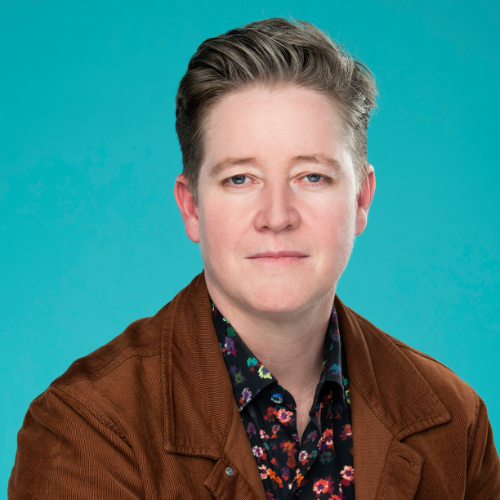
Ivan Coyote
Ivan Coyote is a writer and storyteller. Born and raised in Whitehorse, Yukon, they are the author of 13 books, the creator of four films, six stage shows, and three albums that combine storytelling with music. Coyote’s books have won the ReLit Award, been named a Stonewall Honour Book, been longlisted for Canada Reads, and been shortlisted for the Hilary Weston Prize for non-fiction, and the Governor General's Award for non-fiction twice. In 2017 Ivan was given an honorary Doctor of Laws from Simon Fraser University, and in 2023 they received the first Honorary Doctor of Arts ever bestowed on anyone by Yukon University. Coyote’s stories grapple with the complex and intensely personal topics of gender identity, family, class, and queer liberation, but always with a generous heart, and a quick wit. Ivan's 13th book, Care Of, was released in June 2021 by McClelland and Stewart and their new one-person show Playlist premiered in February of 2024.
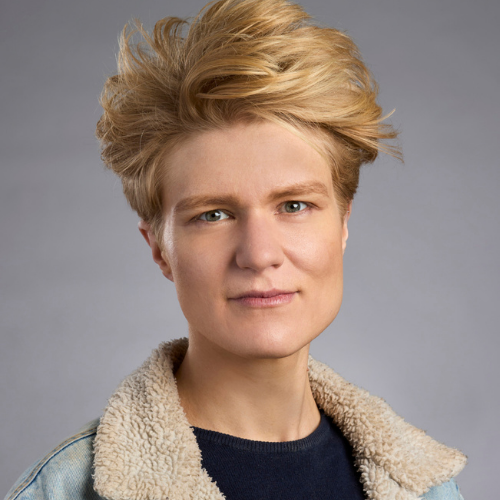
Yves Rees
Dr Yves Rees is a writer and historian based in Naarm. They are a senior lecturer at La Trobe University, the co-host of Archive Fever podcast and author of Travelling to Tomorrow (NewSouth, 2024) and All About Yves (Allen & Unwin, 2021). They are also co-editor of Nothing to Hide: Voices of Trans and Gender Diverse Australia (Allen & Unwin, 2022). Yves has been awarded the Calibre Essay Prize, a Varuna Residential Fellowship and the Serle Award. They are the 2025 KSP Writers' Centre Emerging Writer-in-Residence.