
The Housing Crisis with Alan Kohler
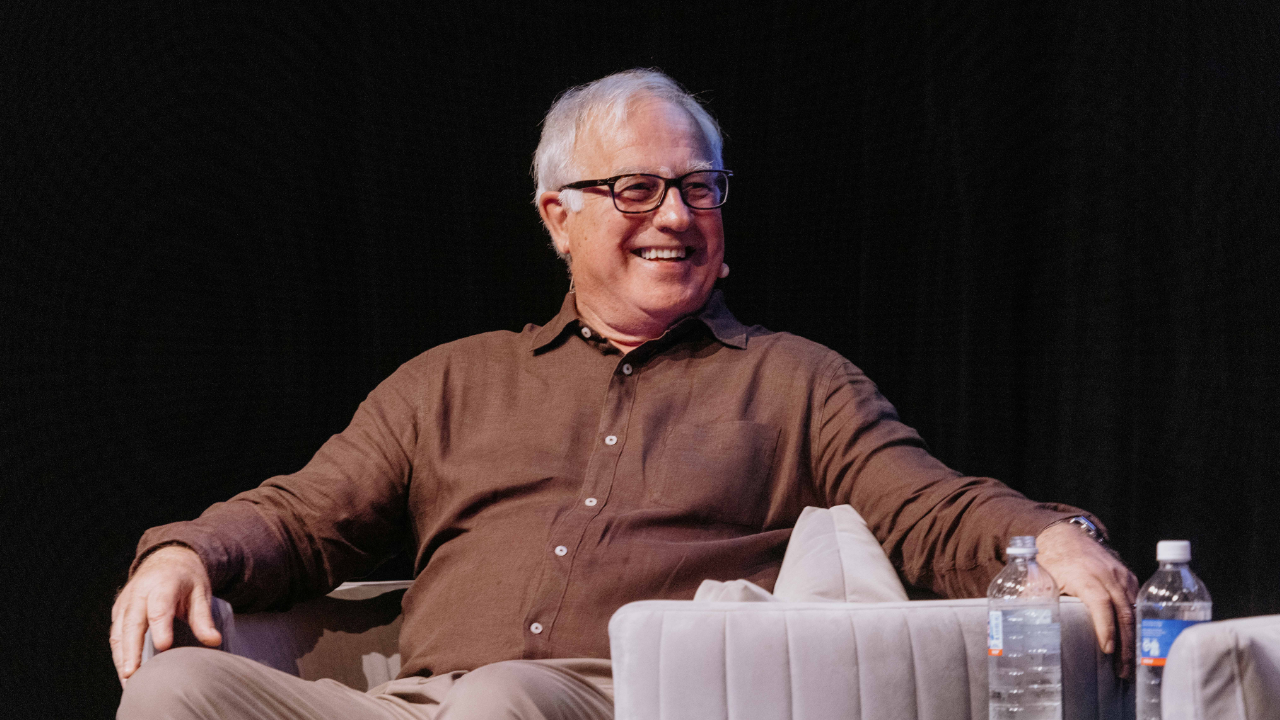
What I think needs to occur is not some sort of arbitrary reduction in immigration, which can so easily be tied to xenophobia or racism in some way, but some kind of way of transparently tying immigration to the capacity of the construction industry.
Australia, a land of sweeping plains, has one of the lowest population densities on the planet. So, how did we end up with a housing shortage?
In conversation with economist and author Richard Holden, veteran finance journalist Alan Kohler’s new Quarterly Essay, The Great Divide: Australia’s Housing Crisis and How to Fix It, investigates where things went wrong at the start of the 21st century with escalating property prices leading to a rental crisis, a dearth of public housing and a mortgage crunch.
This event is presented by the Sydney Writers' Festival and supported by UNSW Sydney.
Transcript
Richard Holden: Well, good evening and welcome. My name is Richard Holden. I'm an Economics Professor at the University of New South Wales and also have the privilege of being President of the Academy of Social Sciences in Australia. And it's a great pleasure to be with you this evening in conversation with Alan Kohler, who I will introduce, even though he needs no introduction, very, very shortly.
Let me begin by acknowledging the Traditional Custodians of the lands on which we meet and pay my respects to Elders past and present and extend that acknowledgement to any First Nations people with us today.
It's my enormous privilege to be on this stage with Alan Kohler. And when I normally introduce somebody and come up with their bio, I try and think about how to distill the things that they've done. And when it comes to Alan, I try and think about the things that he hasn't done, which is not many, to be honest.
So, he has been an incredible public intellectual in Australia for the better part of half a century. He's the former editor of newspapers like the Australian Financial Review and The Age. And he's just been an incredibly important part of our national conversation.
And I think perhaps more than anything, and as an inspiration to people like me, he's a really independent thinker. And when we're going to have a discussion about what we are this evening, which is about our national housing situation, I think independent thought and thinking from first principles is incredibly important. So, it's a great pleasure to be with you here this evening, Alan.
And let's get right into it. Let's get into your quarterly essay, which I think was inspiring to many of us. So, let me start by asking you, why did you write it?
Alan Kohler: Well, thanks, Richard. And it's really great to be on the stage with you, I must say.
Well, the short answer is that because they asked me to.
Richard Holden Laughs
Alan Kohler: Sometime last year, I got a one line email from Chris Feik, who's the editor of The Quarterly Essay saying; “Would you consider writing a quarterly essay on housing? Regards, Chris”. That was it. And I thought, mmm.
It was prompted by a few things I've been writing on the subject. And it was clear to him that I was both passionate about the subject and was approaching it from what you might call a non-financial point of view.
I was looking at and starting to write about what I saw as the social consequences of what was going on. And I think that piqued his interest. And it's certainly the idea of expanding on that, instead of doing a thousand-word column on it, to write a longer essay on it certainly looked interesting to me. So, I said yes.
Richard Holden: Well, that's a great entry into the whole point. I think you've already touched on this, but maybe tell me a little bit more, which is, there's one way of coming at it that maybe you and I, as people who are, sort of, steeped in economics and finance would come to it, which is to say, in what way is this an economic or a financial issue? But I think one of the points that you really bring out in your essay is that it's a social issue as well.
And I think that's a point that's become part of our national conversation now. So maybe say a little bit more about how you think this has become, not just a financial issue, but a social issue as well.
Alan Kohler: I actually think it's mainly a social issue.
I think that yes, if house prices underpin the financial system, the banking system, that's true, houses, you know, the housing, residential housing is the kind of foundation of the financial system in a way. But I think that what's occurred in the last 25 years or so with house prices rising rapidly and becoming unaffordable really, has changed the way Australia operates.
I think it's become to the point where it's changing how wealth is created. It's no longer the case that you can, you know, you can easily make wealth in any other way than housing. It's much more difficult. Where you live tends to determine how much wealth you have, where you started out living and where you continue to live.
If you live in Sydney, you have a much larger amount of wealth than if you live in Alice Springs. The distance between houses in various places is such that geography now plays an important part. Inheritance now is much more important than it's been in the past in Australia, I think, because we're now at the point where if you do not have a parent who can assist you in buying a house, you can't buy a house.
It's no longer possible for somebody who doesn't have reasonably wealthy parents, or at least parents who have got equity that they're able to free up in their own house, who can help you, then you cannot buy a house. It's as simple as that. And I think that's a fundamental change to Australian society.
Richard Holden: And has that kind of compounded itself, which is in the sense that if you're going to have a parent, if you're in the fortunate enough position to have that, if you have a parent who has wealth in their housing, then the incredible expansion of property prices has given them the wealth to be able to assist. But of course, there's the need there of their children to be able to do it. So, is this kind of a treadmill that we can't get off in a certain way?
Alan Kohler: It's certainly a treadmill. And I think there's three types of families. One, there's the family where the parents do not have that wealth because they rent themselves. So, you're basically stuffed in that case.
There's where the parents do have the wealth, but they're not going to share it with the children for whatever reason, because the children have gone away or they've become unengaged and they're not friendly anymore. And there's those who do, where the parents are able to help them. And then look, to be honest, even if the parents are able to give the child the deposit for a house, it's quite then a task to service the mortgage.
Buying a house for $2 million or $1.5 million, yeah, maybe you can get the 20% deposit off your parents, but then you've got to service the 80% mortgage and you've got to earn a lot of money for that.
And the families that are doing that, the young families with young kids who are doing that, they haven't got any money for anything else. So suddenly there's this whole new class of working poor who have developed now where they've got decent jobs, they're paid reasonable money, more than the average weekly wage, it might be $150,000, kind of a semi-management position or something, but they've got no money.
They can't go on holidays, they can't do anything, and they're just getting by. And I think that's becoming more and more common.
Richard Holden: So, one of the things that I was really taken by in your fantastic essay was that you basically talk about, I think, the full suite of solutions or potential solutions to the problem.
So, if I could characterize it this way, and I'll reveal my economist bent in all of this, which is that there's sort of people who think about it on the demand side, and here we're talking about things like tax subsidies, negative gearing, capital gains, tax discounts, and so on. There's the supply side issues like zoning restrictions and medium density rules and things like that. If I read you correctly, I think you basically say we need to push on both of those things at the same time.
And I feel like the political discussion in the nation is a little bit having to pick and choose between the demand side and the supply side. And there's a history of some particular proposals that were taken to elections that we can talk about. But is that the right way to read you? Which is your view is we need to, we need to do a bit of everything, or maybe a lot of everything, rather than just push on one side or the other side?
Alan Kohler: Oh, yes, that's, that's right. But I take a step back here, because I think that firstly, I think that doing something about housing affordability will be really difficult. It's not easy. When the last column I wrote on the subject was last week, and I said that any solution to housing that is easy and popular won't work.
Richard Holden: So that's a hopeful vision.
Alan Kohler: Well, that was in response to Peter Dutton's housing policy of reducing immigration to 140,000 a year, which he seems to think it looks easy and popular. And I just said, well, you know, that's fine, do that, but it's not going to work.
So firstly, I think it's, it'll be really difficult, take a long time. But I think the first thing that needs to happen is, firstly, there needs to be a consensus, a national consensus, that it's a good idea, because most people in Australia own a house. And it's really important for particularly young people, but but everyone really for the houses to go up in value.
I mean, my kids have just bought houses. And, you know, one of the my… what I said in the in the essay is that, in order for the to redress the problem to, to undo the level shift that's occurred in the last 25 years, as you nicely put it, just before, would require 20 years of houses not changing in value. And I say that to my kids, they're horrified at the idea, you know, because they want and need the equity in their house to go up, to increase, they need to build. That's how they see their their future is to build wealth in the house.
So, the first thing and also, baby boomers like me, we've got a lot of equity in our houses. And we don't we don't want that to go away, right? And the other thing is, it's not only the most voters who own a house. It's also the powerful people in the country, the people who run the banks want house prices to go up, because that increases the assets that they have, increases their revenue, increases their salaries.
Real estate agents obviously want it because they get a percentage of the sale price when they sell it. And the percentage has not changed as house prices have gone up. So, it's great for them. There's a lot of a lot of powerful politicians like it because, you know, it makes people feel wealthier and they tend, they're inclined to be happier and inclined to vote for them.
So, I think that the both the majority of people in the country and the the elites, you'd say, want house prices to keep rising. So, I think that there needs to be a very focused conversation about, you know, OK, this is not a good idea and here's why. And let's… and then the second thing that needs to happen is there needs to be a goal. What are we trying to achieve? Because everyone comes out with solutions all the time, whether it's reduce immigration, you know, change negative gearing, change the planning and zoning laws, we're going to build one point two million houses, this is the government's policy now under the housing, the National Housing Accord is to build one point two million houses over five years. We've got the Housing Australia Future Fund, which is going to build 30, I think 30,000 houses. Anyway, there's tons of these things. They're all kind of grabbing bits of policy around, but there's no kind of statement about what's the aim? What are we trying to achieve here? Because and without the aim, there is no way to hold anyone accountable for it.
So, with, for example, climate change, there's tons of policies about climate change, about how to reduce emissions, lots of work going on at all sorts of levels, which is great. But there's an aim, right? Which is to reduce emissions in Australia by 43% by 2030, and to net zero by 2050. So therefore, in 2030, when emissions have not been reduced by 43%, we can hold them accountable, say, oi, you know, that didn't happen. So now what? Or at least, and the other thing is, if you've got an aim, you know, you can focus your attention on that and you can, you can kind of measure yourself along the way and say, okay, we're falling a bit short, we need to do something.
And so I think the aim needs to be, to return the house price to income ratio back to what it was, because I think personally, I think it would be disastrous for Australia if the level shift that's occurred in the past 25 years from three to four times income, average house price is three to four times income 25 years ago, to eight times now, so double, that if that level shift was simply maintained, so that it stayed, the average house price stayed at eight times incomes, I think that'd be really bad. And we should try to get it back to what it was. But I don't see any serious attempt to do it, to achieve that. Certainly no one's talking about achieving it. And I don't see any policy that is likely to achieve it.
Richard Holden: So, let me press on that a little bit, which I think is fascinating, which is, is this what we need in housing, which is some kind of net zero moment when it comes to stating that goal?
So if I can make that analogy, the sort of net zero thing when it comes to emissions says, you know, people like me have said for a long time, all my ilk and so on, as fellow travelers, as economists have said, we should have an economy wide price on carbon, and we should do this and we should do that. But we've talked a lot about the things that we could do about stuff. But we haven't basically said, we're going to hold you accountable for this outcome.
And what I think I hear you saying is, yeah, you could talk about getting rid of negative gearing, you could talk about building more houses, you could talk about this policy or that policy. But at the end of the day, like, give me a number, which is like, if housing isn't four times what we earn, then that's not good enough anymore. And it's currently eight to 10. And let's get back there.
So, say a little bit more about that kind of target and how you think the politics of that play out.
Alan Kohler: The way the politics works at the moment is based on the 2019 election, which we can, I think we need to talk about a little bit. In 2016, Labor went to the to the election with a policy of confining negative gearing to new houses and halving the capital gains tax discount. And they lost, but only just. They almost won, actually.
And then, you know, it was close. And then in 2019, Bill Shorten decided that he wanted to make sure of it. And so, he added a whole lot of spending promises to the policies and they had to pay for the spending promises. So, they added an attack on dividend franking to pay for the spending. And then they lost badly.
So, my view is that if he hadn't done that, if he hadn't added spending and dividend franking to the policy in 2019, he would have won then because he, you know, he was close. But that's made negative gearing and capital gains tax adjustments toxic politically. And Labor Party won't touch it anymore because they don't actually know why they lost in 2019. So, they have to get rid of everything.
And then obviously the coalition campaigned against those things in both 16 and 19, and they've continued to be against it. So therefore, the focus has turned into we need to only look at supply. And so, the whole political engagement has been about increasing supply and that's for both parties, you know.
So, I think, and I don't think that's going to be enough. I mean, some people do think it's enough. You know, there was quite a bit of, sort of, correspondence to my essay from people who said, you know, we just need to densify the cities. And I think that'd be great if we could do that.
But I'm pessimistic about achieving it to the sufficient extent. But so I do think that net zero 2050 approach to the problem, you know, which, and the thing about that, the thing about the climate change targets is that they're a long way off, you know, like here we are 2024, and we're talking about 2030, which is actually beginning to approach now, six years off, and they're nowhere near it. But anyway, 2050, 2050, okay, that's, you know, 25 years or something. And so, okay, that's, that's a fair way off.
Richard Holden: You can still imagine it, right?
Alan Kohler: But it's, you know, it's a long way off. Okay. And that that sort of approach would be a good idea, it seems to me to focus everyone's mind on it. And we can talk about it as a country and a nation, we could engage in a national conversation about, okay, is that a good idea or not, you know. And then perhaps even have an election on it, you know, and then if obviously, if the party that's proposing to reduce, to get house prices back to, house prices back to four times incomes in 25 years, if they lose, well, we're in strife, then you would hope that they would win.
Richard Holden: Well, let me let me ask you a little bit about the politics of that. And I, for the audience members who don't know, I should out myself as being someone who wrote a policy report for the McKell Institute, which is a Labour aligned think tank in the middle of 2015, which advocated phasing out negative gearing. And that was some input into the policy that that the then opposition took to those two elections, which you mentioned in 2016 and 2019.
How devilish is the politics of that? Because I think you said two really interesting things there, which is, they came incredibly close to win in 2016, when no one thought they would win. They came incredibly close to winning. And then, you know, there were there were some a number of other policy leavers that were being pressed in 2019, which may or may not have contributed to them losing.
Are these kinds of moves on at least one side of things on the demand side? Are they intractable anymore? Or could you imagine them happening in some way?
Alan Kohler: Look, I think it's very seductive to oversimplify all this. I think that, particularly politically, it isn't one thing, you know, in the in the essay, I point out that house prices started taking off in the year 2000. When I thought about how I'm going to do this thing, this essay, I thought about, well, what I need to figure out is, or find out, is what happened. And when it did, when did it happen? And that would hopefully lead me to some kind of a solution, if I could see when it happened.
So, I got the, as people may know, I like graphs. So, I got the graphs of house price to income and house price to GDP. And in both cases, they took off in 2000. Up to that point, house prices had been rising at the same rate as both GDP and incomes. And then after that point, after 2000, house prices started rising at double the rate of incomes and GDP.
So, OK, question is, what the hell happened in 2000? And it wasn't negative gearing, it was the capital gains tax discount, which was announced, which was hard, you know, the capital gains tax discount of 50% was announced in September 1999. And the capital gains tax, obviously, had been in place since 1985. And the point, and between 85 and 1999, the deal was that you added the capital gain to your income, minus the effect of inflation.
And I haven't polled this, I don't, you know, I haven't done psychological studies about it. But I think that the reason that it made such a difference to the housing market from 2000 onwards was because nobody understands inflation and the CPI, but everyone understands a discount. And so, it was a psychological lightbulb moment for the nation.
Oh, 50% discount. I get that. And negative gearing already existed, had existed forever, basically. But it was a combination of the two things that made housing such a fantastic tax dodge, basically. And then, but see, I think that the impact of those things has faded over the years. And on the demand side, immigration has started to have, you know, an outsized impact.
I mean, it's interesting that Peter Dutton wants to reduce immigration back to 140,000, because it was Peter Howard who increased immigration from 140,000 to 280,000 between 2005 and 2007. And so it was, before Howard did that, immigration was about 140,000 a year. And if you look at the graphs of housing supply and demand, it's quite clear that the whole problem that we're now dealing with is to a large extent due to 10 years of immigration outstripping housing supply between 2005 and 2015.
That was the period, that decade is the period when housing in Australia became unaffordable. It's true that since the pandemic in the last two years, there's been a very large spike in immigration, which probably has gone a bit further than making up for the lack of it during the pandemic. But really, if you look at the period that includes the pandemic, whole kind of four or five years, it's not that enormous. The impact of immigration on housing demand isn't that great. And also immigration is now coming back down to what you might call a normal level, which is still twice as much as it used to be before John Howard got going. And so, it's really that period of 2005 to 2015 when the problem was created, I think, with immigration.
But also, obviously, demand was supercharged to some extent by the tax incentives for investors.
Richard Holden: And so how do we think about that issue, which is, should we be thinking about something when it comes to immigration that it runs the risk of falling into one of these, sort of technocratic, slightly too nuanced policies, which I think you think need to only be part of a holistic solution, which I find very compelling. But do we need to think about something along the lines of saying, well, if we're going to have more people come into the country, we need to make sure there are enough of them that can help build houses for us in the process?
Alan Kohler: Yeah, so it's really interesting. I saw a graph the other day of housing approvals per capita. And the population, which is in Australia at the moment at an all-time low. And then I saw the same graph for the Western world, globally, all-time low. Housing approvals that are an all-time low versus population everywhere.
And I thought about why would that be? What's going on? And the answer is Australia is not the only country seeing a lot of immigration at the moment. European countries, America, UK, you know, a huge amount of immigration. And I haven't looked at the detail of what's going on in the other countries, but in Australia, the number of people, the number of immigrants in the construction, who go into the construction industry is about 5%.
And so, what seems to be going on is that there's a huge inflow of immigration, but a very small number of them are builders. You know, they're doing other things. And so, it doesn't augment the construction industry, the capacity of the construction industry at the same time as increasing the number of people.
And so, what I think needs to occur is not some sort of arbitrary reduction in immigration, which can so easily be tied to xenophobia or racism in some way, but some kind of way of transparently tying immigration to the capacity of the construction industry. Even simply to have a monthly joint press release by the housing minister and the immigration minister to say, this is how many people came in this month, and this is how many housing approvals there were.
That's it. Just to say that, expose transparently the number of new migrants and the number of houses that were approved or built. And then everyone will kind of go, oh, okay. And after a while, it will become clear that there's an imbalance. And something might be done about it. I don't know.
Richard Holden: You've been in the economics commentary game. I'm just going to sort of divert for a second here, but you've been in the economics commentary game for a long time. And I'm really interested in this issue of making things salient. So, you know, one of the things that people have pressed on is saying the reserve bank governor should do what the federal reserve chair in the US does, which is give a press conference after each of their meetings that decide on interest rate settings.
So, I'm just interested in this sort of, it might have a very specific point here in terms of the immigration minister saying the kind of things you just said. What do you think about the idea of, kind of, just in a very gentle nudge, kind of Dick Thaler kind of way, and Cass Sunstein kind of way. Holding people to account a little bit about this stuff by saying, we just want you, you know, once a month or once every couple of months to come up and tell us about this stuff.
Alan Kohler: That's what I'm saying. It's exactly what I'm talking about.
Richard Holden: Yeah. And do you think that's more, how widely applicable do you think that is?
Alan Kohler: Enormously. I mean, Michelle Bullock is now having press conferences, which is great. She doesn't say a thing.
Richard Holden and Audience Laugh
Alan Kohler: But it's great. And everyone gets to ask a question, and the journos are all happy.
Richard Holden: There's even a lockup and stuff like that. And I'm told the sandwiches are quite good and so on.
Alan Kohler: There is even a lockup. Exactly. That's right.
Yeah. So, look, I think, you know, as a journalist, I'm kind of in favour of, entirely in favour of transparency and, you know, press conferences. So, look, I actually think we can't, I mean, I had this idea in the essay that, you know, maybe there's some way of tying the number of, the amount of immigration to the housing approvals.
But I think that's probably a step too far. I think it would be enough simply to expose it.
Richard Holden: Well, so maybe the topic for your next quarterly essay is something along the lines of how we nudge our politicians or something like that. Because I love that idea that you bring up here, which is these seemingly simple things, which is just saying, come tell us once a month, once every two months about these things. Just tell us, say whatever you want. And it could be the governor of the RBA, as you say, maybe saying not so much or maybe a bit more. It might depend, but just tell us. And if we hold people to account, that's pretty interesting.
Let me move you to a slightly, before we come back to some lighter things, let me move you to a slightly sort of darker possibility, which is one of the problems we have in Australia is that housing has become, you know, incredibly expensive.
And that's because housing prices have gone up a lot. Of course, if we look across the Pacific, and we could also look in Spain or Ireland or other places. There were certainly moments not that long ago where there were real drops in housing prices and there were financial crises as a result of that. And one of the things that somebody who lived and worked in the United States during the 2008 period, I worried a lot professionally and a little bit personally about the consequences of that.
Are you worried about that here or are our financial arrangements not something we should be worried about?
Alan Kohler: Well, house prices in America fell by 30% or so between early 2007 and 2008 when that caused a global financial crisis. And I think that if Australian house prices fell by 30%, something similar would happen here, the banks would be stuffed. So, we do not want that.
I do not think that'll occur. You probably can tell us more about why house prices in America fell by that much, because it wasn't the financial crisis that made that happen. It was the house prices falling that made the financial crisis happen.
And what triggered the house prices to fall, I'm not entirely sure, to be honest. It is worth noting that the main influences on house prices have always been, in Australia, interest rates and the activities of APRA. House prices fell in Australia by about 8% or 9% in 2017 because APRA cracked down on banks lending to investors. And that was rare. I mean, that sort of fall in house prices almost never happens. But it happened because APRA said to the banks, you've got to stop what you're doing. You've got to stop lending so much to investors. And they did. And house prices fell because investors left the market.
House prices fell in the early 1990s because interest rates went to 17.5%. The house prices fell in the pandemic because everyone panicked. But the interest rates went to 0.1. The cash rate went to 0.1%, virtually zero, which sort of saved the day, stopped house prices falling, and then stayed there for way too long and led to a takeoff of house prices. But they did fall in, house prices did fall in 2022 because interest rates went back up, you know, 4.35%. So, the thing that influences house prices actually is not all the government policies, it's interest rates and APRA.
So presumably if interest rates went to 10%, or for some reason, that would cause a big decline in house prices. But that won't happen because the Reserve Bank wouldn't do it.
Richard Holden: Precisely because they're concerned about financial stability /
Alan Kohler: Exactly, that’s right.
Richard Holden: / and a whole lot of other things, right?
So let me take you there for a second, which is, as someone who's been, as I mentioned at the start, an astute observer for a long time about a variety of matters, there are sort of fundamentals. So, you just told a very compelling story about how fundamentals determine house prices in Australia and elsewhere in the world. But there's also an element that I think we both acknowledge about sort of mass psychology in all of this.
Do you have a take on how much it's about fundamentals and what the cost of money is, and what interest rates are, and what supply and demand is, and what the immigration level and all these, sort of, fundamental factors. And how much of it is, the fact that one of the incredibly striking things I found when I moved back to Australia was like picking up newspapers and feeling like, oh my god, like 60% of the newspaper is about renovations and, you know, and I click on a television station and it's all like how to renovate your home.
There is a kind of mass psychology in Australia. Maybe that's true everywhere in the world, but are we different about that? And does it matter?
Alan Kohler: Well, it's a really interesting point because, you know, there's two types of owners of houses. There's owner occupiers and there's landlords, right? And investors who are landlords, for them, it is a financial decision and it's a financial asset and they're generally buying it for capital gain.
The rent is less than you would get by buying shares in the Commonwealth Bank. You're doing it for capital gain, plus a bit of rent, but it's a financial decision. But the thing is that the financial decisions of investors is distorted by the tax incentives. So, it's kind of, you need to park that a bit, because it's all distorted and a bit hard to figure out.
For owner occupiers, it is entirely psychological because there's no way of valuing a house on fundamentals. I mean, you know, I do a lot of kind of mucking around in the share market or reporting on the share market and there's lots of talk about price earnings ratios, and price to book ratios, and all sorts of return on equity. And everyone kind of looks at stocks in terms of, when you're buying a stock to invest in, there's all these ratios and you work it out, and you can figure out whether this stock is cheap or expensive, right?
But there's no way of doing that with a house that you're going to live in because it doesn't provide you with a financial benefit. It provides you with an emotional benefit. So therefore, the only way of valuing a house has to do with the interest rate you're paying. And then you'd get involved in an emotional decision.
I've just bought a house actually last week.
Richard Holden: I won't ask any details, but you know.
Audience Laughter
Alan Kohler: But, it was…
Richard Holden: And I don't know whether to say congratulations or commiserations, given our discussion.
Alan Kohler: My wife and I are downsizing because the kids have all gone and we're going to get a smaller house. But the decision was an emotional one, you know, entirely emotional. Like we like the house. We like that house.
Richard Holden: You do this for a living and it's an emotional decision for you, really?
Alan Kohler: Of course.
Richard Holden Laughs
Alan Kohler: Well, it's my wife's decision, not mine.
Richard Holden and Audience Laugh
Richard Holden: Oh, that's a cop out if ever I heard it. But you know, no fair enough.
I want to get to questions from the audience in a second. But let me just, sort of, press for one second further on that stuff, which is, the financial system is very bound up in all of this. And our banks, if I understand it correctly and if I look at the loan books of our four major banks. And our four major banks in Australia are actually globally relevant financial institutions. They're very, very large, relative to the size of economy, and they have a lot of exposure to our housing market, particularly our residential housing market. That's kind of like what they do in many ways.
There's also the fact that our financial system is just incredibly geared to this stuff in general. Is that something we should think about from a systematic perspective? Does this have, can we keep – maybe another way to put it is – can we keep just kidding ourselves that you and I can –or if I was in the fortunate position of being able to do this – you and I can just keep telling ourselves like, I'll pay you two X dollars for what you paid one X dollars for a little while ago, and we can keep doing that kabuki dance back and forth for the rest of our lives?
Alan Kohler: I don't think we can. I mean, I think we must surely be getting to the point where it's got to stop. My concern is that it stops but stays where it is. You know, I think that we need to aim at getting it back to where it was so that Australian society can stop being so distorted.
But look, I think your point is right about the financial system so geared around residential housing. So, for that reason, we need to be careful. And APRA and the Reserve Bank and everybody is careful about it. They put out, Reserve Bank puts out financial stability reports every three months and they kind of talk about this stuff a lot and they're focused on it, and they're concerned about it we should all be concerned about it. The last thing we want is to cause the financial system to come unstuck, which is what a big fall in house prices would do.
Richard Holden: Would do, right? And I guess that's another compounding factor with the fact that as you point out in your essay, the median voter and hence the median politician doesn't want house prices to go down, and it would potentially ruin the financial system as well. So, we're sort of not going to allow that to happen in some sense, right?
Alan Kohler: Yeah, well, the house prices fell quite a lot. I think as much as 50% in 1892 because there'd been a boom, and it was a bubble and just about every bank went broke. I mean, there was a depression. It was nightmarish, huge amount of unemployment, depression, banks going broke everywhere all because house prices fell so much.
And the reason they fell so much is because they'd risen so much because of the post gold rush boom, couldn't continue. So, we looked, the last thing we want is that.
Richard Holden: And so that's where you get to, I think with this viewpoint that we need to kind of just take a lot of the steam out of things, but for a really extended period of time, the way that we're going to get back to the maybe four times or five times the, sort of, price to income ratio is we need to just wait for incomes to catch up by maybe we don't want things to go down by 50% right now.
Alan Kohler: No, we don't.
Richard Holden: We just need to take the steam out of it for a long time. But that's also necessarily like a long-term solution. It says this has to happen for, and you put some numbers to this, but this has to happen for a sustained period. And, you know, it could be 20 years or 25 years or something like that.
Alan Kohler: Well, the median house price in Sydney is over a million dollars now. This is the median.
Richard Holden: Yeah.
Alan Kohler: So, there's a lot above it and a lot below it. It should be 500,000.
Everyone in this room, you think about that, everybody. I mean, think about house prices being half what they are now. I mean, you should be paying, if house prices had not gone up at twice the rate of income. So, the last 25 years, you would be paying half what you're now paying for a house. And think about what that would do to your life. It's enormous.
Richard Holden: Let me come to a few questions from the audience. And one of the, I think, highest trending questions is an excellent one, which is, is housing and property now the major source of the class divide in Australia?
Alan Kohler: I guess so. I mean, the problem is that the inequality traverses classes. I think we think about classes as kind of permanent divisions in society. But I think what's occurred now is that there's an inequality that's within classes. It's not really a class divide anymore.
Richard Holden: So how do we unpack that? Is income not the right way of thinking about that anymore?
Alan Kohler: Yeah, I mean, class. Yeah, I don't know. What is class? I kind of...
Richard Holden: Or are there maybe like there are property owners and non-property owners?
Alan Kohler: Well, there’s definitely that.
Richard Holden: Or there are the Bank of Mum and Dad folks, and the non-Bank of Mum and Dad folks?
Alan Kohler: That's what I'm talking about, yes. And I think that if house prices don't come down in relation to incomes, we're going to have to get used to renting. More and more people, young people, young families are going to have to get their heads around the idea that they will never own a house, and they'll rent all their lives. Which is a huge change because the whole kind of focus of life in Australia has been, you buy a house. You get married, you buy a house, have children, and then over time the house grows in value and then you retire, and you've got a house, that you've paid off.
But I think that we're probably as a society going to have to get our heads around the idea that we can't do that anymore, so you're going to have to rent. And I think that with superannuation, which is now 30 years old, it's kind of going to make that a bit easier because everyone's now having 12% of their salary saved. So, it isn't going to be the case anymore that when you get to retirement age and you don't own a house, you're going to be impoverished, because there'll be super.
So, you know, I think that... so, but that's a big... people don't kind of... I don't think everyone really trusts super, you know, at the moment. They kind of don't feel like it's theirs, and they don’t trust it. You trust a house. Everyone trusts the house. So...
Richard Holden: Well, it's tangible in a way, right?
Alan Kohler: It's tangible. And so... and the other problem with renting in Australia is that the balance of power between tenants and landlords is far too skewed towards landlords.
We don't give tenants enough rights. There have been some attempts in Victoria and Queensland, in particular, to redress that with the new tenancy laws. And they do, particularly in Victoria, do that. I mean, landlords have been squealing about it and selling their houses and getting out of this, which is great because that means it's working.
Richard Holden Laughs
Alan Kohler: But yeah, there needs to be a national approach, I think, that the idea that there can be differences in states and that landlords in New South Wales have more power than landlords in Sydney, in Melbourne, that's crazy. So there needs to be a national approach to that.
Richard Holden: Well, let me pick up on that. And it's one of the other questions that I think was really prominent in the chat, which is about social housing.
But let me just pick up on that national approach thing, which is, I mean, I certainly understand when I hear some of our national leaders say, like, dude, what do you want me to do about it? Like this is a New South Wales issue, or a Victoria issue, or a Queensland issue. And I don't have the power to, like, release land or change zoning restrictions in Randwick or something like that. On the other hand, you know, it's a national problem or maybe an international problem, as you pointed to earlier.
What's the right way to think about the kind of federation issues that are associated with our housing problems?
Alan Kohler: Look, I did some work on planning laws, but not enough. There are people who are far more knowledgeable about planning than I am. But as I understand it, our planning laws were modelled on England's. The UK planning laws, back in the early part of the 20th century. And then around about 1946, Britain centralised planning and took it away from councils and they centralised it. And Australia didn't at that time. There was a, you know, I think that we watched the UK do that and decided not to do it.
And so, we could have centralised planning. I'm not sure whether a referendum would be required to change the constitution, possibly not, but you can certainly do it with an agreement of the states. Yeah, I mean, I think that with the way planning works now, which is the states have got it, and they delegate it to the councils for the reasons of firstly, to have the decisions made closer to the citizens.
And secondly, to wash their hands of it so they don't get blamed for it. So, the councils do it and they're all over the place. You know, there are good councils, bad councils, you know, some councils allow stuff, some don't, it's a mess, complete chaos across the country.
So, you know, I'm inherently a federalist. I'd like to see the federal government just take it over and say, okay, we're not going to have that anymore. We are going to densify the cities because that's what we have to do. And here's what's going on. And so, the people who live in Mosman, I'm sorry, you're going to have some blocks of flats.
Richard Holden: Well, on that note and on the great philosophical note of moving back to, you know, was Thomas Jefferson or Alexander Hamilton right about how to run a democracy? Alan Kohler, you've been one of the most thoughtful commentators about this and many other issues. Thank you so much.
Alan Kohler: So, thank you.
Richard Holden: Thank you.
Audience Applause
Centre for Ideas: Thanks for listening. This event was presented by the UNSW Centre for Ideas and the Sydney Writers' Festival. For more information, visit unswcenterforideas.com.
-
1/4
-
2/4
-
3/4
-
4/4

Richard Holden
Richard Holden is a Professor of Economics at UNSW Sydney and the President of the Academy of Social Sciences in Australia. He was formerly on the faculty at MIT and the University of Chicago and earned a PhD from Harvard University. He has published numerous paper in top economics journals and is a regular columnist at The Australian Financial Review.

Alan Kohler
Alan Kohler is finance presenter on ABC News and a columnist for The New Daily. A former editor of The Age and The Australian Financial Review, he founded The Eureka Report and has written for The Australian, The Australian Financial Review, The Age and The Sydney Morning Herald. His books include It's Your Money.