
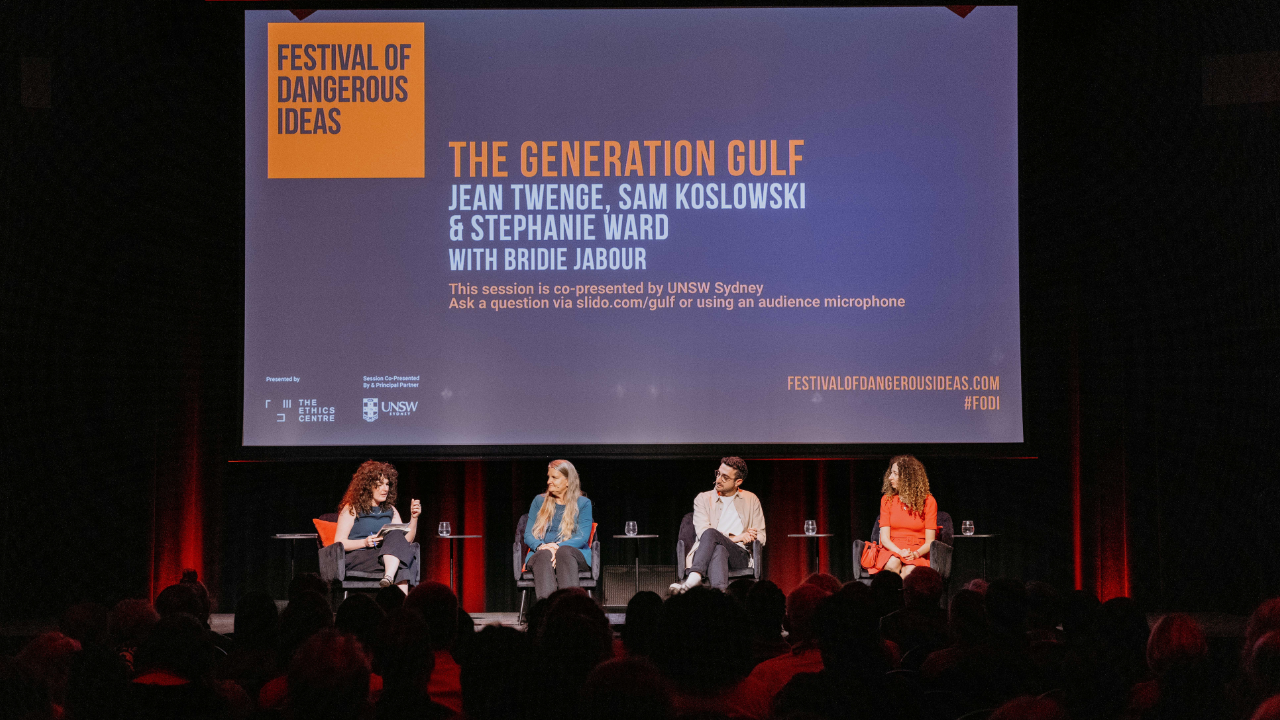
The Generation Gulf
Gender, ethnic background, region, social classes, all have a big impact on people. But when you're born also does have an impact.
Jean Twenge | Sam Koslowski | Stephanie Ward | Bridie Jabour
Breakneck cultural change means growing up today is a completely different experience from growing up in the 1950s, or the 1980s, or even the 2000s. Psychologist and author of Generations and iGen Jean Twenge, researcher and geriatrician expert on ABC’s Old People's Home for 4 Year Olds and Teenagers Stephanie Ward, and co-founder of youth media platform The Daily Aus Sam Koslowski discuss what is driving these changes and where the widening generation gap could take us as a society?
Presented as part of The Ethics Centre's Festival of Dangerous Ideas, supported by UNSW Sydney.
Transcript
Bridie Jabour: Good evening and welcome everyone to the Generation Gulf session. I'm Bridie Jabour, Associate Editor at The Guardian and author of Trivial Grievances, a book about all the grievances of millennials.
Firstly, I'd like to acknowledge the Bidjigal people who are the traditional custodians of this land. I would also like to pay my respects to their Elders, both past and present, and extend that respect to other Aboriginal and Torres Strait Islander people who are here with us today. Tonight's event is co-presented by The Ethics Centre and UNSW Sydney as a part of the Festival of Dangerous Ideas, and it is my great pleasure to welcome all our panelists to the stage as we explore accelerating individualism and the technological changes that are driving generational change.
First of all, we have Jean Twenge, psychologist and author of the books Generations and iGen. Next, we have Sam Koslowski. He tells me he's on the cusp. He's Gen Z, probably technically, but on the cusp of millennial as well. He's also the co-founder of Australia's biggest youth news platform, The Daily Aus. And at the end, we have Stephanie Ward, an expert geriatrician on the show No Old People's Home for four-year-olds and a researcher for UNSW.
Now, wars come and go. Pandemics come and go. Well, we hope. Feels like there's quite a long tail on this one. But technology is linear. It just keeps improving.
Jean, you've written that technology has broken the old cycles of generations to create the technology model of generations. What have you meant by that?
Jean Twenge: Yes, so the traditional theory of generations is major events, you know, pandemics, economic depressions, wars, things like that.
The idea behind that was, well, if you're a certain age when you experience these things, then that's what defines your generation and your experience. And certainly, those can have somewhat of an impact, but they tend to be shorter term. And with a few exceptions, COVID being one of them, they tend not to affect day-to-day life for everyone.
But if you really think about why it's different to live now compared to 200 years ago or 100 years ago or 50 years ago or even 20 years ago, the very clear answer to that question is technology. That the technology that we live with. So not just smartphones and social media, but also things like labor-saving devices, like washing machines, like faster transportation, better medical care.
All of those have really transformed our lives compared to, say, our grandparents or great grandparents' generation. And technology is fairly linear in its progress. So, I think that also suggests that some of the other theories around generations may have fallen apart in the last few generations.
So, there's like one called, it's like a cyclical theory. And there, there's supposed to be four generational types that reoccur. But I think that doesn't take into account the enormous impact of technology on not just how we live our lives, but on values and attitudes and some of these downstream effects.
So, if that, you know, four generational types theory were correct, then Gen Z would look just like the silent generation and they look nothing alike.
Bridie Jabour: And how do you think technology, because technology is obviously something that's affected everyone. So, when it comes to generational change, how have these technology advancements impacted, say, boomers as compared to Gen Z?
Jean Twenge: Yeah. So, with this, it's often just, it's often not just the technology. It's also what particular technology you're talking about. So, boomers would have been television, maybe having the biggest transformative effect and for Gen Z, it's going to be smartphones and social media. But it's also that technology has those direct effects, but it also has these kind of downstream indirect consequences. So, one of those is individualism, more focused on the self and less on others. And that's played out in different ways through each generation that we'll talk about tonight.
And then also something psychologists call a slow life strategy. So, it means at times and places when people live longer and medical care is better, you know, two things caused by technology, that parents tend to have fewer children and nurture them more carefully. And then you get a slowdown of the developmental trajectory across every stage of the lifespan. So, children are less independent. Teens are less likely to do adult things. Young adults take longer to marry and have children and settle into careers. And middle-aged people look and feel younger than their parents or grandparents did at the same age. So, everything is slowed down.
Bridie Jabour: And Sam, you've been at the forefront of harnessing technological generations for your generation by co-founding the New Daily. Why do you think it took a group of people under 30 to co-found that and not, say, a more traditional media outlet?
Sam Koslowski: Because my experience of, I mean, I don't have the kind of scientific or academic background of Jean, but from my anecdotal experience, I worked at one of the two big media companies, it might rhyme with Schnuch Corp.
Laughter
I worked there from when I was 17 to 23. And I pretty much pitched them the Daily Aus.
Bridie Jabour: Oh, my God, I didn't know that.
Sam Koslowski: And I think the way that we relate to and experience young people in the workplace isn't particularly healthy. And I think the reason why it took, so I was 22 and my co-founder Zara was 20 when we started the Daily Aus. And I think the reason why it took two people in their early 20s to do it is because there is something so powerful about speaking across from your generation, not down to or up to. And there is a certain level of social trust and currency that comes with hearing from your peers and your colleagues rather than a teacher.
And that's something we've really been able to harness. And we haven't wanted to lose it. So, we've got 17 full-time employees at the Daily Aus. I'm 29. I'm the oldest. Our youngest is 20. And we find that 20 and 21-year-old and 22-year-olds in the workforce, they create content that a 20, 21-year-old, 22-year-old audience loves. So, we're remaining young. Because if you chill out for a bit, then naturally, the content will evolve to be stuff that I'm thinking about.
Like, I just got married this year. And I'm thinking about how I'm never going to be able to afford a home and all of those kind of stuff. But to fulfil our mission of being the first news source you ever read, we need to make sure we're still relevant to that really young, young cohort.
Bridie Jabour: Is there anything surprising a 20 or 21-year-old person has taught you about how to communicate news to people their age?
Sam Koslowski: Yeah, a lot. So, I think they are growing up in a... And I'm saying they because I feel differently, which is also interesting, you know, Gen Z v Gen Z kind of thing. But they're growing up in a world where the idea of a short attention span, and the idea of concise, quick information is not a negative. It's not a way that they're cheating the system or that they're missing out on quality. They see it as truly valuable. And the idea of a short piece of content, sometimes we'll do a news story on a video that is 30 seconds long.
The quality and care that they put into that 30-second piece is the same as we would put into a longer piece. And the audiences receive it in the same way. And I had my own judgments around, well, if you're listening to something for 30 seconds on tax reform, there's no way that you're going to get any value out of that. And what I've noticed from them is that they prefer to tell the story over eight 30-second videos, rather than one five-minute video. And why do we approach that sort of situation thinking one's better than the other? I mean, they're both awesome. We're learning about tax reform. How cools that?
Bridie Jabour: And Stephanie, you are at quite the other end of who you work with compared to Sam, you're a geriatrician. So, you work a lot with the members of the silent generation, which I find really fascinating, because I think a lot of people obviously know members of the silent generation. But in general, you don't know lots and lots of members of that generation. What role do you see technology playing in their lives?
Stephanie Ward: Well, it's a great question. And it's been a real privilege through my career to work with members of the silent generation. And I think I was thinking probably even some members of the greatest generation, and now some boomers as well.
And technology has changed everyone's life and in the basic ways and in lots of great ways, labor saving ways, so that women could start to work outside of the home, international travel, more time for leisure. But it's also the pace of technological change in the last 10, 20, 30 years is dizzying for a lot of people. Even I find it dizzying.
And the worry that I have is the way that technological changes can leave certain groups and generations behind. And I think that's especially the case for much older people. So, members of, if they're still around the greatest generation, so born up until around 1927, and the silent generation, as we get older, the cognitive load of having to keep learning new and new technologies, new apps, new ways of interacting to bank, to telephone, to connect, it's a big learning load.
And for a lot of people, as we get older, there can also be some health changes that make learning and keeping up more difficult. Things like changes in your hearing, in your dexterity, your vision, cognitive function. So, as we get older, and these problems can accumulate, but the needs to keep up with technology keeps going up.
And I find it a big exhausting just to think about it myself. So, the big worry is that you can be excluded from groups. You can be excluded from ways of communication.
If there's an announcement for a community, but it's only on certain social media platforms and you don't have access, how do you know about it? How do you know, how can you connect with people if you're not au fait with social media, for example? How do you manage all of these intricate things around banking if everything has to be on an app? I think there's still a role for, you know, face-to-face and in real life, but it worries me that people can be excluded and isolated. And that's a shame because we lose a lot when we don't have generations in contact with each other. There's so much to be gained just by spending time with people of different generations, as well as people in our own peer group.
Bridie Jabour: And Jean, what does your research say about how the pace of technological change drives the divide between generations?
Jean Twenge: Yeah, so I think what Stephanie's saying is exactly right, that you could definitely make an argument that the generation gap now is just as big, if not bigger, than it was, say, between the boomers and their parents around the values that they kind of fought over. And a lot of it is communication and who's on what app and so on because, you know, most of Gen Z is on TikTok and there's very few silent or even boomer people who are on TikTok. And there's just always these different ways of communicating, which often can lead to misunderstandings.
I mean, vast overgeneralization, but it's often said a boomer wants to see you in person or with a phone call. Gen X wants to email you. Millennials want to text you. And Gen Z wants to send you their resume on a TikTok video.
Laughter
Over-exaggeration, but grain of truth.
Bridie Jabour: And this has also driven a culture of individualism across generations, hasn't it? And what have you seen in your research there?
Jean Twenge: Yeah, so, you know, as I was mentioning earlier, individualism, more focused on the self, less on others. It's not all bad or all good. You know, there's trade-offs to every cultural system. In each of the six living generations has kind of put their own spin on individualism and how they've explored it.
So, a lot of the silent generation has more traditional attitudes. However, some of their most famous members fought for equal rights. So, Ruth Bader Ginsburg was on the U.S. Supreme Court, but also tried a bunch of cases for gender equality when she was a lawyer. Martin Luther King Jr., also silent generation, who was a leader in the civil rights movement. So, you can see that they wanted to start to change the laws in a more individualistic direction, at least some of them did. Then boomers changed hearts and minds because they lived a lot of those changes around equality and otherwise.
I think for Gen X, they took for granted a lot of these changes. And then of course, technology for Gen X, a lot of the media that Gen X grew up with really promoted individualism, feeling good about yourself, making your own choices, things like that. And I think that definitely continued with millennials, just a lot of emphasis on the self in the culture.
And then Gen Z puts their own twist on it. They don't have as the self-confidence and the feeling good about yourself that millennials were exposed to. But then they really have more of a belief of individuals being able to have an impact on government, at least in certain ways, like protest.
And they also are taking the ideas around gender equality kind of to the next level into saying, you can choose your gender. And they have a lot of terms around gender that many of their Gen X parents have never heard of. That happens very frequently. A lot of parents talk about that. There's been a couple of articles recently on Gen Z slang and how nobody understands it, just nobody older understands it. So, it's not just about terms around gender. It's also just a lot of words that they get from memes and things online that every generation has its slang, but Gen Z is kind of next level this into a way that a lot of people who are even just a little bit older have no idea what they're talking about. Like, what is riz anyway? Somebody explain that to me.
Laughter
Bridie Jabour: Oh, I'm only six years older than some of the Gen Z in my office. And I am taken aback sometimes by what I do not understand.
Sam Koslowski: That's very demure of you.
Jean Twenge: Oh God, not that one.
Bridie Jabour: It actually was the Gen Z in my office who taught me what that meant. And just as I think the trend was ending.
Laughter
Jean Twenge: And how long did it last, 10 days?
Bridie Jabour: Yeah, well, this is the other thing. The cycle life of trends now is just so much shorter than when I was a teenager. And on the flip side of all this, you've written an entire book that takes in a lot of the impact of technology on the mental health of Gen Z in particular. And what are the correlations that you've drawn there?
Jean Twenge: So basically, you know, I've been doing this work on generational differences for a really long time. And I got used to seeing changes that were big, but they, you know, roll out over a decade or even two. And then with the mental health statistics, it became much more stark, really, really fast that teen depression started to rise and just doubled between 2011 and 2019. So even before the pandemic, just a really big change in a very short period of time. And that made me wonder what happened. You know, I had no idea. And really, at first, I had absolutely no idea what could explain that.
First, I thought might be a blip, but then I kept going. Couldn't be economics, because that was actually misaligned. The US economy, for example, was doing very well over that period and kept getting better.
But it turns out, when that turning point was about 2011 or 2012, that's about the time that the majority of people in Western industrialized nations owned smartphones. It's also around the time that social media use among teenagers went from optional, maybe half of them doing it every day to almost mandatory, about 80 percent doing it every day. And you put that together, and that also crowds out time for sleep. It crowds out time for social interaction in person. And that's not a good formula for mental health, at all. Less sleep, less time with people in person, more time on a screen.
Bridie Jabour: And Sam, you work with older Gen Z and younger Gen Z. We're talking about the gulf between generations. And I think that, you know, you mentioned the gulf between boomers and younger generations. It's almost as big as it was between boomers and their parents.
But within generations, there's gulfs now with the pace of technological change. What do you notice between, say, people in their late 20s and people in their very early 20s?
Sam Koslowski: Well, it kind of makes you think whether the idea of generations is getting a little redundant or not quite representative of how fast this is all moving and whether we need to start making micro generations or, you know, Gen Z-1, Gen Z-2, I don't know, additions. Because, yes, what I notice about the younger Gen Zs that we work with is that they have a totally different relationship with conflict.
That's one of the keyways that I think they're very different, the kind of 20 to 24-year-olds. In my experience, I can see that they're quite avoidant of conflict. And at like the crazy end of the scale, things will happen where, you know, because the other thing with Gen Z, the young Gen Z, in my opinion, is that they all want to move way quicker than even I did.
So, the idea of...
Bridie Jabour: And you started a media outlet when you were 23.
Sam Koslowski: Yeah, but I, but and then that's what they say to me as well, these little youngins.
Laughter
But then I say, well, yeah, after I did five years of shit kicking at a major media organization when no one knew my name. And so, the idea of like these employees coming in and then three months into the job going, I need a raise. And then three months after that, being like, I'm ready for my promotion. And like, they want to be, and I guess you could say it's ambition, as well, they want to be the editor by 23 and a half, because they've been there for a year.
And so, what happens then if we say, well, we can't afford that. So, let's map out your career and let's work on a development program for you. Then, you know, the extreme end of the scale, we could get a message saying, I think I'm going to resign. Nah, I just haven't felt appreciated. And so, I'm really struggling. This is my generation, so I'm allowed to bag it.
Laughter
I'm really struggling with this idea of how do we show appreciation and how do we show value in our people at such a young age. And it goes to what Jean mentioned, which is this presence of purpose in everything that my generation stands for. So, it comes out in the way that we work with advertisers.
We cannot full stop work with advertisers that our audience might have a problem with, because the hate and the feedback that we'd get is so severe that it actually does their brand and our brand damage. And to give you an idea, I'm not talking about mining companies here. I'm talking about like, we can't work with supermarkets.
Bridie Jabour: Oh, really? I was thinking like fossil fuels.
Sam Koslowski: No, no, no, no, no, no. We can't work with supermarkets because there's a cost-of-living crisis and these supermarkets are perceived to be bad actors by my generation in the cause of that.
We absolutely cannot work with Airbnb because that's contributing to the housing crisis. But the idea of flicking through the Sydney Morning Herald hard copy in the late 90s, seeing an ad for P&O Cruises, you don't look at that and go, I can't believe the Herald just endorsed P&O Cruises. But for us as a new brand and a new audience, they are so intertwined. The purpose of what we're doing, who we're working with, how we're making our money is so intertwined. So, I'm not surprised that that's kind of bleeding over into personal career ambitions and value and all of that kind of stuff.
I'm not sure how to solve it. I mean, like, we're kind of on the coalface here of how to actually help that younger group of Gen Z feel valued and loved and secure. The other thing to remember about them is they spent three very important years inside a bedroom. I've got a 21-year-old brother, and he missed out on really important stuff. He didn't have a graduation. He didn't have an end-of-year 12 party. He didn't have a gap year. All of that stuff that helps you become who you are so you're ready to enter the workforce and do the shit-kicking job for a bit, that all was missing.
So, I don't know how you even begin to incorporate that into research because it seems it's kind of a black swan event, almost, but it's something that we need to think about.
Bridie Jabour: Jean, have you looked at that at all, the particular impact of COVID?
Jean Twenge: The data's still rolling in.
Bridie Jabour: Yeah, that's what I would think.
Jean Twenge: But it's kind of a mixed bag. Like, you'd think it would be, you know, depression would just like that, and that didn't happen. It continued about the same pace. But then we've got data from 2022, and it did start to trend out a little bit as things got better. So, I think that suggests there was a mental health impact.
It's just, it was kind of in lockstep with all the stuff around technology. And then when the COVID part went away, then things improved, but it's small improvement. So, and I've seen some other data suggesting, you know, that some mental health issues actually got better during COVID, believe it or not. So, it is kind of a mixed bag.
Bridie Jabour: And I also think it's one of those things where we'll keep, and this is true of the world wars, when we look back on them, you see the impacts ringing out. Like the tail is like 10 years, 15 years, 20 years that you see ringing out on generations.
Stephanie, you're a geriatrician. There is evidence that doctors who work with older people are the happiest doctors. Can you tell us why? Do you believe that first? And can you tell us why?
Stephanie Ward: Yes, I do. And if anyone's interested in working with older people, I can highly recommend it.
Laughter
Why is that? I think it's because if you have the opportunity to spend a lot of time with people who are experts in life, because they have lived a long time, I think by passive osmosis, you get to take on some of the wisdom and perhaps learn what matters in life and what doesn't matter so much in life. That's my theory.
And I think it's been helpful for me in that it's given me a little bit more of a perspective on what matters, and maybe not so much to sweat the small stuff, although if anybody here knows me, you'll know I do often sweat the small stuff, but I try not to. And I think that, you know, sometimes we all come from different backgrounds, and I also do some research, and you can get really caught up in trying to achieve in the moment, and whether that's, you know, how many papers you've published, or I guess for Sam, how many readers you have..
Sam Koslowski: Heaps.
Laughter
Stephanie Ward: …and how many advertisers. Well, yeah, like, likes or things like that, or how much money you make.
Sam Koslowski: Not that much.
Laughter
Stephanie Ward: Yeah. But I think you sort of get a sense of what's important in life is having people around that you've connected with, that you've cared for, that you've seen, you know, true relationships, and had the joy of enjoying life as much as possible.
So I very much recommend working with older people, but I have to say that it's also been great being part of this panel, because I do work with people in their early 20s, but I didn't have so much of an insight into the issues until, you know, the last few days, Sam, when I've been talking to you and Jean from reading your book as well, and I didn't even know the word demure until I did something demure about two hours ago.
Laughter
And I think it really shows the importance of spending good quality time with people of different generations to understand different perspectives, because sometimes we might think, oh yeah, 20-year-olds, well, I was like this when I was 20, or I was like this when I was 30, or, you know, all 60, or 70, or 80-year-olds might have that same experience, but it's not actually the case. And that was a big lesson for me reading your book.
And while I think it's important to acknowledge that within any generation there's so much variability, not every person's going to be the average, which I think is so important to acknowledge, but it was really illuminating to me to see that, you know, a 20-year-old today is different to a 20-year-old 20 years ago, that we are shaped by the experiences of our generations, and that really opened my eyes.
Bridie Jabour: And Jean, just data-wise, do you have difficulty comparing the mental health of Gen Z in their teen years and early 20s to the mental health of, say, the silent generation in their teen years and early 20s? How do you deal with that?
Jean Twenge: Well, yeah, you can’t. We don't have data from one survey that goes back that far. So, we can do Gen Z to millennials to Gen X in one of the surveys, because it goes back to the early 90s. If you look at everybody at 18 at those ages, you can do it there. But a lot of the other surveys, it's hard to tell.
But we do have data on the silent generation compared to, say, the boomers at the same age. And silent generation tends to have better mental health, less mental distress than boomers at the same age, and actually less mental distress than the greatest generation right before them. So that's a generation who, for whatever reason, seems happier and has fewer instances of, say, anxiety and depression than the generations either older than them or younger than them.
Bridie Jabour: Do you have any theories on that? Is it the economics or major world events at certain ages?
Jean Twenge: You know, it's hard to say. I think that some of it may have been who got drafted into war versus didn't and which war and how horrible it was, at least for the US data. But it could also, I think, just be a factor of something that the silent generation is often known for, which is that they married young and had their kids young.
And there's downsides to that. A lot of them got divorced as well. But they tended to have an immediate family around them for, you know, a higher amount of time than, say, boomers or especially the younger generations, where a time in your 20s, which, yeah, you have a lot of freedom, but a lot of times you're really lonely. And the silent generation, most of them didn't experience that at the same rate that a lot of younger people have.
Bridie Jabour: Yeah, having kids is a really good way to have a lot of face-to-face contact.
Laughter
Perhaps too much sometimes.
What did you think? I thought Sam's comment really… earlier was really interesting and I saw you react to it as well, that our ideas of generations could become redundant. What do you think of that? Because you're breaking up previous theories of generations pretty forcefully.
Sam Koslowski: How Gen Z is that of me, by the way? Just to be sitting next to, like, an absolute expert and go, you know that whole area of work you're in? I reckon I could change it.
Laughter
Jean Twenge: But you have a self-awareness, so you get a pass for that.
Sam Koslowski: Okay
Jean Twenge: I mean, I wouldn't use the word redundant, but that there are micro-generations, that there are differences between, like say right now, between someone who's 29 versus someone who's 21. Absolutely. Absolutely. Even though, you know, by our birth year cutoffs, they're both part of Gen Z. And that's one reason why I make graphs in my books. Any of you who've read any of my books, you know how much I love graphs.
And I tend, most of the time, I don't say, here's what boomers look like, here's what Gen X looks like, here's what millennials look like, and let's compare them. You know, like with bars, it's a line. And you can see that with Gen Z. You can see how, say at 18, the percentage who were depressed or anxious or had a particular attitude compared to those who came later. And you can see that year by year by year, not just generation by generation. So, in that way, that idea of the micro-generations or, you know, things changing fast. Absolutely.
Bridie Jabour: And how much do you, does your generation matter compared to other markers like class or culture, do you think? You know, I think a 35-year-old in Northern Ireland, well, particularly in the 80s, I guess, but even now, is having a very different experience to a 35-year-old in Northern Australia.
Jean Twenge: Yeah, so there's lots of things that influence our personalities and our values and our attitudes and our behaviors. And generational differences when you're born is just one of those.
So obviously, you know, gender, ethnic background, region, social classes, all have a big impact on people. But when you're born also does have an impact. It's a little hard to compare it and put an exact number on it, but it does have a significant impact.
Bridie Jabour: And you talk in your book about, particularly in generations, about why we do these studies. What is the value in looking at generations and these trends across years? You can explain that a bit as well, like why it is important to look at generations, because not every single person and generation is going to be the same.
Jean Twenge: That’s right
Bridie Jabour: As Stephanie referenced from reading your books as well. But why is it important for us to know and be aware of these general trends?
Jean Twenge: Yeah. Well, to help understanding, for one thing.
And yeah, we do have to go into that. Any study of group differences, you have to always give that very true caveat that these are changes or differences based on averages. Not everybody is going to fit the average.
But if you can understand the average differences, it at least gets you starting to think about how when the person you are talking to was born in a different time, either before or after you, and they're going to have a different perspective. I mean, that's why I wrote the book. That's one reason why I've continued doing this work on generational differences for so long, is I just love the insight that it gives into people.
And that you can have more empathy and more understanding. I think that's what really needs, I mean, you really need more of that. Because so often the generation's discussion is finger pointing, and who's to blame? Whose fault is it that things happen? Boomers and millennials especially will have this discussion endlessly online about whose fault, is it? You know, boomers are like, oh, it's your dang fault. And then they're like, no, we didn't ask to be born. I mean, it's like they're 15 again, right?
Laughter
But that's often how it goes. I think it's very counterproductive because generations happen because cultures change. We're all in this together, and trying to figure out whose fault it is, is very counterproductive. Plus, whose fault, like who are we going to blame for all the good things that happen? Nobody ever discusses that.
Bridie Jabour: You've hit on a real dynamic there. And it's something that I've watched with interest from, you know, being online for the past 10 years, there really is something about boomers and millennials going each other. As I got older, I thought that, oh yeah, Gen Z is coming up, they're coming online, I've got no idea what they're saying most of the time, but I thought that, oh, is this dynamic going to play out now with their parents, which are generally Gen X? And it's just not there. It still is 10 years later, boomers and millennials, why do you think that dynamic has come around?
Jean Twenge: Ugh. I'm not even, I don't even nearly know, but you're right, a lot of millennials had boomer parents, but they got along with their parents reasonably well, at least better than Gen Xers did.
So, I mean, I think some of it is for millennials, this has faded a little bit, at least in the U.S., but it was the idea of we're never going to be able to buy houses, we're never going to be able to do well economically. And it turns out, as of last week, millennial wealth in the U.S. has exceeded other generations at the same age by 25%. So, they not only have caught up, they are now doing better.
So, I think a lot of that sniping happened when millennials are still struggling more economically, say, you know, mid-2010s, and then that improved. So, I wonder if we'll see some of that starting to fade because they've done better.
Bridie Jabour: Or maybe Gen Z will just yell at millennials, and Gen Xers will just never get yelled at.
Jean Twenge: No, no, no, totally. I mean, yeah, Gen X is in the middle going, whatever, you know, but with Gen Z, I think there may still be, they already have some arguments with millennials, but it's usually trivial stuff. It's like fashion. I'm like, you should part your hair this way instead of that way, or you shouldn't wear those mom jeans, you know? It's those types of things that make millennials go, oh my God, I'm old now, you know? So, they've usually been like that.
The other dynamic that's happening right now is the generation behind Gen Z, who are, say, elementary school kids. So, I call them Polars, after melting polarized caps and political polarization, you know? So, it probably won't catch on, given that reaction of yours.
Laughter
Sam Koslowski: I like that.
Bridie Jabour: It's just so depressing.
Jean Twenge: So, they're usually called Gen Alpha, I think, under the idea that, oh, Z's the last letter of the alphabet, what are we going to do now? I guess we've got to go back to the beginning and use the Greek alphabet, so it's Gen Alpha.
But Gen Z is already criticizing Gen Alpha, and Gen Alpha is already criticizing Gen Z. I think that's just the product of there being, unfortunately, too many nine and ten-year-olds on TikTok.
Bridie Jabour: Wow.
Jean Twenge: Making skiddy toilet videos, don't get me started on that, but what really cracked me up the other day, one of my kids told me this, and I immediately incorporated it into my talk, was, do you know what Gen Z calls Alpha? We call them crusty iPad kids.
Laughter
First generation to not know a world without the iPad, true, and apparently, they don't wash their hands before they use it. And that's why it becomes crusty.
Bridie Jabour: That is really, that is really gross.
Laughter
And Stephanie, you were part of a pretty extraordinary program that put four-year-olds with nursing home residence. What did you, what did that teach you about how younger people, because I'd say extreme ends younger people interacting with older people, and what were your takeaways from that?
Stephanie Ward: And yeah, it was an amazing experience, actually, so we paired four-year-olds with older people, some who were in nursing homes, some who were community-based as well, and then later we did this with teenagers. And it was really quite amazing.
For the four-year-olds, it was this opportunity to have really enriched quality one-on-one time with an older person. And what we saw for the younger people, the very younger people, is that they did seem to come along with confidence and pro-social development, and we hoped that it might help with some really positive attitudes towards older people.
What we saw with the teenagers was a lot more profound, perhaps because the teenagers, who I think are Gen Alpha, are they? No, Gen Z, a young Gen Z, were really articulate in what they learned, and so they approached the program with, as you might expect, a few preconceived notions about what older people would be like, as well as their own complex coming-of-age issues.
Everyone had a different perspective. Everybody was going through something quite different, and what we found is that they had an enhanced understanding of the experience of older people, a learning about what it was like to grow up 70, 80 years ago, some exchange of skill sets, but what was really lovely was that it really helped some people's confidence levels blossom as well. So, for a couple of the teenagers who participated, the experience was actually quite transformational.
And for some of the older participants, it was that case as well, because it was this amazing opportunity for older people to give back, to be mentors, to be teachers, to be encouragers, and to develop some really meaningful connections and have a sense of purpose. So, what was really delightful is that that translated into some measurable changes in mental well-being and also physical well-being as well. And it just taught, which we're talking about a gulf between generations, but it really showed what can happen when you build bridges between generations.
It's really illuminating to learn from other people's life experiences, and if you don't spend quality time doing that, you can just come up with generalisations and you just close your mind off and you don't understand that there are differences. I feel a little bit like an anthropologist tonight, thinking, wow, there are all these different cultures within our community, which I probably wasn't completely across, particularly for Gen Z, and you don't really understand these things unless you spend time with one another.
I think intergenerational programs have a lot to give younger generations, because when you're living in the here and now and we're spending time with your peer group, this is your reality and this is your context, and it's really lovely to just take a step back and understand someone else's experience, and also have someone from a different generation reflect back to you certain strengths that you might not see yourself.
And that works for a four-year-old, a teenager, and an older person, in my experience.
Bridie Jabour: Maybe Sam does have something to learn about ambition from the 20-year-olds.
Sam Koslowski: I hope so, I mean, they're fantastic, but I think just to add one personal note to the incredible kind of experiment that you conducted there, and this is a bit deep and personal, but I'm next to a psychologist, it's fine.
Jean Twenge: I'm not that kind of psychologist.
Laughter
Sam Koslowski: I'll go back into my shop.
Jean Twenge: No, no, no, I'm kidding.
Sam Koslowski: But I didn't have any good relationships with any grandparents growing up. Very complicated intergenerational trauma and, you know, whatever. And I didn't have the quality time with anybody older than my parents, and my parents were 28 when they had me, so quite a young scene, and I am physically anxious when entering environments with older communities.
Like, I'm not just saying that as a Gen Z who has diagnosed himself with mental health issues, which we all have in Gen Z, and it's good, but I have a genuine physical reaction to hospitals, nursing homes, funeral homes, anything, even some shops. And I think, honestly, like reflecting on what you were saying there, I just, probably I'm a good candidate for a bit of exposure therapy. Like it's, I just wasn't exposed to that at all, and I can kind of bring all of this big generational discussion down to the human, and I, you know, I think it's real.
Jean Twenge: And I think that's what's, one of the things that's missing in our modern society is there's not as much interaction between people of different ages and different generations. So that's why we really need programs like that, because that used to be the norm, where you'd have a community of people of all ages, and now we're so much more often siloed into age groups, generation groups, and we don't have as much of that occurring, especially with older people, teenagers and older people who have a lot to learn from each other. It's great.
Stephanie Ward: Yeah, and you really miss out, I think, when you're not able to be exposed to people of different ages in a society. I think you have a full life experience when you understand that life is a trajectory, and it's a journey, and we do change, and our generations change, but it's so much richer when you have multiple perspectives. Sam, I'll sort you out, and then maybe you can teach me a little bit more about Gen Z.
Bridie Jabour: You need him on your next show.
Sam Koslowski: Yes. Watch Sam have an anxious episode on national television. Sounds good.
Laughter
Sam Koslowski: That'll go well on TikTok, actually.
Bridie Jabour: Jean, I just wanted to finish this on. You have said a lot in your books and your work and your interviews that technological advancement doesn't necessarily have to be good or bad. It just is. Like, things just change, but when it comes to smartphones and social media, how do you marry that with your findings with the mental health of Gen Z?
Like, do you think it is good or bad, or do you think there are ways that we need to deal with it differently?
Jean Twenge: Yeah, so smartphones overall, probably net positive within reason, but then my definition of within reason is it's not in your bedroom overnight, and you don't pull it out when you're talking to someone, and you don't take it on a camping trip and so on, or at least have it out, because that's usually not the way it's used. So, it could be a net positive with just a few guardrails.
Social media, people argued there are some benefits to it. I think those benefits are mostly for adults and for kids and teens. It's not that the technology itself is negative. It's that the companies have poured billions of dollars into their algorithms and into making sure that people stay on the apps for as long as possible. If that wasn't true, and maybe everybody used it maybe half an hour, an hour a day, then it could be a net positive, but that's not what it's designed to do. It's designed to keep people on it and get, even some people have argued, even get them addicted, and they don't verify age, and they do not enforce their existing age limit or age minimum of 13.
So that's why there's routinely, you know, 8, 9, 10-year-olds on TikTok, why there's 12-year-olds with Instagram accounts. They're not supposed to be on there because they don't verify age, and so I think that is another big negative. So, like an analogy might be alcohol, that maybe there's some benefits to having a little bit of alcohol, but you have too much, and that you're going to have a bad outcome. And we also don't let kids drink it.
Bridie Jabour: Question for Sam. This is actually quite interesting. How do you explain the general vitriol of our generation, our generation I'm assuming is Gen Z, in comment sections that lead you to disabling said sections?
Sam Koslowski: Well, to start with, at least in our company, we disable comment sections when either there's kind of one of three things. There's a risk of defamation, and we don't have the money to pay lawyers.
So, Sam's dodgy law degree that he, you know, didn't really attend classes at a wonderful institution that was UNSW.
Laughter
Is the last line of defense. So, we do that.
We also do it when there's hate speech or anything that we feel like is just totally disintegrating the social conversation. Why our generation has so much affinity with those comment sections and using them as a place to express their rage, I perceive as a sense of helplessness that things are so dire. It is so dark that we are past the point of trying to mediate an outcome, whether it be about everything from the global conflicts that we see happening right now all around the world, all the way through to, oh, my god, I'm never going to be able to afford a home.
We don't know where to direct that frustration. And very rarely are we directing that frustration at such a young age into really productive solutions. Like, if you're angry about Trump getting elected, you're not going to be able to sit there as a 23-year-old and go, well, then I'll just run for the Democrats. Like, we don't know what to do with this sadness. And I think social media gives you a voice and a platform and a keyboard and you don't have to worry about getting punched in the face. And there's kind of perceived benefits to being a keyboard warrior. I get it.
Jean Twenge: Just a quick follow up, because I think you're right about in the workplace that Gen Z is more averse to conflict, but then they seem to do it more online.
Sam Koslowski: It goes back to that purpose thing, I think, that when there's a strong root in purpose and ethics and values and the big picture, we're a generation still trying to negotiate this idea of the post-truth political landscape.
Trust in media in Australia is the lowest of any country in the English-speaking world. And of Australians, it's 18 to 24-year-olds. And 18 to 24-year-olds statistically trust their drug dealer more than they trust the news. Yeah, and we need to understand that trust has been broken, whether it's by the former President Trump or by bad climate policy or by whatever. Trust is gone. So, we have to kind of renegotiate that trust.
Bridie Jabour: I'll go to this lady first and then this one over here.
Audience Question 1: That was actually the issue I wanted to explore across the generations is the relationship to power and perceptions of where power is and how people are engaging, where they see them having advocacy or control over their lives in the different generations and where the focus comes, whether it's political or individual. And I was very curious about your comment on conflict aversion.
If you'd like to comment from the different perspectives of the different generations that you kind of have an expertise in, just what is power to the different generations?
Stephanie Ward: I think I work with a lot of older people in the healthcare setting and so it's usually with a generation that has had more trust overall in institutions, but that can vary depending upon where someone's, what someone's individual life experience has been and in particular what they might have been through, particularly growing up in different countries. But also, often a trust of healthcare professionals and people in positions of authority and it's to be really mindful of when people are unwell not to abuse that trust and to empower people as much as possible to be part of conversations in their healthcare. And I think we're aware that as the boomer generation is getting older, they're much happier to speak up and make their preferences known.
And from my experience, and I talked to you about this on the weekend too, Sam, I took for granted a sense of trust in institutions and authority and I found it really disconcerting to understand what it would be like to not have that sense of trust growing up. It's really, to me it just sounds so destabilising and anxiety provoking.
Audience Question 1: What about you Jean? Do you, have you seen different generations have different relationships to power?
Jean Twenge: So that trust in institutions thing, that those same trends have happened in the US as well as, you know, especially starting with Gen X, then trust in government and news media and even medicine, you know, went down.
And one interesting analysis I did recently with the US data of 18-year-olds is they're asked, you know, do you think voting will make any difference? Do you think citizen action groups and protesting will make any difference? And I wasn't sure what that was going to look like, but especially among Gen Z liberals, those have gone up. So, I think that points toward them, yes, maybe being very cynical and negative and pessimistic, which we know from their other survey responses, but they're increasingly thinking that there are things that they can do. This pessimism could be tear it all down and start over, which I think that idea is out there as well, but it can also be we have this negativity, we have pessimism, so let's change things.
And if that's done and through the right channels and in the right way, that could be a benefit for everybody. If it's too chaotic and, you know, devolves, which sometimes it does, then it might not be good.
Sam Koslowski: And I think the key shift there is about strength in numbers versus strength in a concentrated position of power where decisions lie in the hands of a single or few.
And that's why I think Gen Z resonates so much with protests is because it's a chance to show up against the single person who you perceive to have the power with backing, yeah.
Bridie Jabour: And over here.
Audience Question 2: So, the old idea was that each generation was a reaction to the previous generation, which I'm interested in the thoughts of the panel about that and how technology and all sorts of modern circumstances perhaps make that irrelevant.
But I think about, you know, traditionalists like my father and what I hear about Gen Z and A's and people I don't even really know. And I think is there some way that there can be an integration of these generations? Are we coming to an integration or are we forever trapped in that I don't feel heard, or I don't this and I don't that? And is that the role of generations? So, I guess I've got a whole lot of questions really. But yeah, thank you.
Jean Twenge: Well, it really doesn't look like that theory of the cyclical theory or that each generation reacts to the one before it. And thus is the opposite that if that was ever true, it's broken down in the last 50 or 60 years, maybe because of technology changing so much. So sure, there's certainly for each generation things they look at with the older generation they want to do differently. But so many of the changes have been linear. Individualism is a great example. There may be different twists with each generation, but it's continued upward.
The slow life strategy, say, you know, median age at first marriage has just continued to go up. It's not that, you know, Gen Xers, you know, or sorry, or yeah, like I'm trying to get the best example. I mean, Millennials, maybe it's not the Millennials or Gen Z looked at Gen X and said, you know, you guys waited too long to get married. We're going to get married at 20. No, it was the opposite. It just kept going in the same direction.
Stephanie Ward: It worries me about how you can understand other generations if generations are effectively in different rooms. So, if Gen Z are communicating in a certain, you know, forum or social media and people younger than you are using Snapchat now, is it? And TikTok and then other people are still meeting up in real life or using telephone. And we're not really able to interact with each other or really understand people's perspectives, particularly around political issues, social and economic issues. If we're not on the same forums of other generations, how can we really or in the same room? How can we really hear and understand?
Sam Koslowski: And I think that's why it takes a certain level of bravery to reach out to a habit that you know is not associated with your generation. I read a hard copy newspaper every weekend. I love it. Hopefully that allows me to connect in some ways to an older newsreader. We get messages all the time saying, I'm not in your target audience. So, there's that acknowledgement and the consciousness that our stuff isn't meant for you. But they'll often write, I'm not in your target audience, but I absolutely love what you do. And I really admire that.
Bridie Jabour: And over here.
Audience Question 3: I was born in May 1944. I always considered myself, and I thought everyone else did, as a war baby. I'm not a boomer. And I don't understand these other variations of the labels. But perspective, speaking about perspective, I love going on Facebook. I'm a retired lawyer and I'm social justice. So, misogyny and ageism, I always get a comment from me. I did read one recently that I interpreted as being misogynistic and ageist. And so, I said, really? You've got to be joking? And I got this message that my message had been deleted. It was inappropriate. So, I'd like to know the person who decided that. He clearly had never heard the word irony.
Laughter
And then a little bit later, my message came back on because there were the most, I would have thought, inappropriate responses to the first guy. And they remained. So, I'm a little bit at loss of the perception of who.
Jean Twenge: So basically, content moderation is broken. And that's one of the many problems on social media.
Sam Koslowski: There is no person doing that moderation. It's all just one big machine. But yes, I wouldn't have interpreted your comment as rude. And I hope you feel validated by me expressing that.
Laughter
Audience Question 3: I'm here for validation. And thank you very much.
Laughter
Sam Koslowski: I am only too happy to provide that.
Audience Question 3: Thank you. And I still do read ordinary newspapers. And I do a lot of face-to-face contact. I find that's most enjoyable. And I like the cryptic crosswords that you get in the papers.
Sam Koslowski: We should do it together sometime.
Bridie Jabour: I think Stephanie would be very happy hearing that as well. Because she does a lot of work on cognitive, don't you? On keeping up cognitively.
Stephanie Ward: And face-to-face contact is just wonderful. Being able to talk and see somebody or talk to someone on the phone. I highly recommend it. It's a great skill to develop.
Audience Question 3: Just walking down the street and patting a dog. Because my little dog passed away a couple of years ago. So, I pat everyone else's dog. I have the most lovely conversations that start about a dog. And you find out a lot of things about people. And the young ones with children. The children are lovely. And they still love the things that I love. Their babies, their dogs, the flowers. A nice day in the sun. Nothing much has really changed.
Bridie Jabour: Oh, well that's nice to hear. And actually a hopeful note after hearing Jean describe the youngest generation as polar. Because of melting ice caps and polarisation. And over here we have another question.
Audience Question 4: Thank you very much. My question to Bridie. I'm excited about your research. I come from a Lebanese background. And I guess I can summarise what you said. In an extended family. I remember when I was first migrated and growing up in Australia. We were criticised and ridiculed actually for coming with the big family. The cousins and the grandma and the aunts. But actually your research is showing that this is how healthy relationships and personalities form. So, I wonder whether we are at a moment where we can bring the value of an extended family back. Or whether the economic, the social and the tech realities have made that impossible.
Stephanie Ward: Well, it's a great question. Because there are a lot of benefits to being part of a village and a multi-generational living. And we know that in Australia we've tended towards nuclear families. And people being isolated. And it's really hard for everybody actually. You know, children miss out. Parents have so much responsibility. And there is that lost opportunity. Maybe there is an opportunity given the cost-of-living crisis. And the housing crisis. That perhaps we could move towards more multi-generational living. It would be something lovely. And in the absence of that looking at structured ways to bring generations together. I think holds great promise for a lot of reasons.
Bridie Jabour: We're going over time. But that's okay. I'll risk getting in a bit of trouble. But we'll have one last question from over here. Thank you.
Audience Question 4: No worries. So, my question is a question from Slido. Because I think everyone about my age is too scared to actually ask a question.
Bridie Jabour: Well done you getting up.
Audience Question 4: I'm just reading it off. So, it's not actually my question. So, bless whoever. SG who 36 minutes ago asked. Question for Sam. How do you explain Gen Z conflict aversion? Do you think this relates to cancel culture and an inability to resolve issues through conversations? Which is a great question. Thank you.
Sam Koslowski: Yeah. Good question. I think that a lot of it goes back to my previous answer about helplessness. And not quite knowing what to do with these very complicated emotions that we're feeling because of existential threats way bigger than we could ever imagine. But I do think we've got a massive issue with the way that we write each other off at the moment. I don't think the generation's probably one or even two above us of setting particularly good examples with that.
I do have to say and I say this with all seriousness. Some of the worst comments that we get are from people in their 40s and 50s. It's not actually like I'd say probably the worst 2% like the ones where we have to kind of “oh I think we should call the police on that one”. That's from older people. So, I think that it's not exclusive to our generation. I think we as a number of generations have lost a little bit of the thing that stitched our society together. And the ability to have healthy discussions, disagree with each other without, you know, totally writing each other off. It's going to take, I think, a really good leader. And I think where that will probably come from is our politics. But somebody who can reach across generational divide, who can model what good debate looks like because at the moment we don't have a lot to base it off. I mean, we don't have somebody who we're looking to, at least Gen Z does, who we go like they're modeling what we want to be. And so perhaps we'll end there with my announcement of my running of president.
Laughter, applause
But I think ultimately the best thing we can do is keep trying to be a bit kinder to each other and allow for more mistakes. And I think that’s transient across all generations.
Bridie Jabour: Please join me in thanking Stephanie, Sam and Jean for joining us this evening.
Applause
Centre for Ideas: Thank you for listening. This event is presented by the Festival of Dangerous Ideas and supported by UNSW Sydney. For more information visit unswcentreforideas.com and don’t forget to subscribe wherever you get your podcasts.
-
1/4
-
2/4
-
3/4
-
4/4
Stephanie Ward
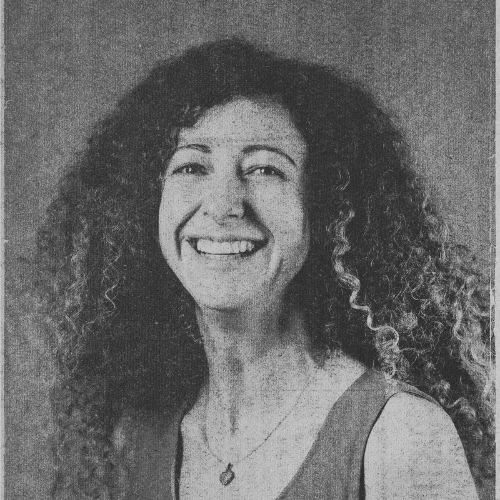
Dr Stephanie Ward is a Senior Research Fellow for the Centre for Healthy Brain Ageing in the Faculty of Medicine & Health at UNSW Sydney, along with being the Clinical Lead of the Australian Dementia Network Registry, the first clinical quality registry for dementia in Australia. Ward leads the SNORE-ASA substudy of the ASPREE study, investigating sleep apnea and its relationship with cognition and neuroimaging in healthy older adults. She is also involved in randomised controlled trials evaluating interventions to promote healthy ageing, including a trial of intergenerational contact. Stephanie has been an expert geriatrician on the award-winning ABC factual series Old People's Home for 4 Year Olds and Teenagers that has further exemplified the reciprocal benefits of joining young and old together. Dr Ward is also a practicing geriatrician at the Prince of Wales Hospital, leading an inpatient acute medical unit and working in a cognitive disorders clinic.

Sam Koslowski
Sam Koslowski is the co-founder of The Daily Aus, Australia’s leading social-first news organisation for young Australians. He holds a Bachelor of Laws/Bachelor of Communications (Journalism) from UNSW Sydney and worked as both a lawyer and journalist prior to co-founding TDA. Sam has been named in the Forbes 30 Under 30 list on two occasions, and co-authored a book on understanding the news with Penguin Random House. Sam is an Advisory Board Member at the Australian Human Rights Institute, and a member of the UNSW Media Degree Advisory Board.
Jean Twenge
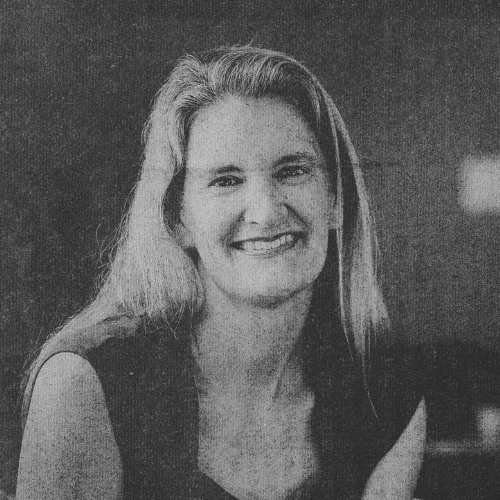
Jean M. Twenge, Professor of Psychology at San Diego State University, is the author of more than 180 scientific publications and seven books, including Generations: The Real Differences between Gen Z, Millennials, Gen X, Boomers and Silents—and What They Mean for America’s Future and iGen: Why Today's Super-Connected Kids Are Growing Up Less Rebellious, More Tolerant, Less Happy—and Completely Unprepared for Adulthood. She holds a BA and MA from the University of Chicago and a PhD from the University of Michigan. She writes the Generation Tech substack.
Bridie Jabour
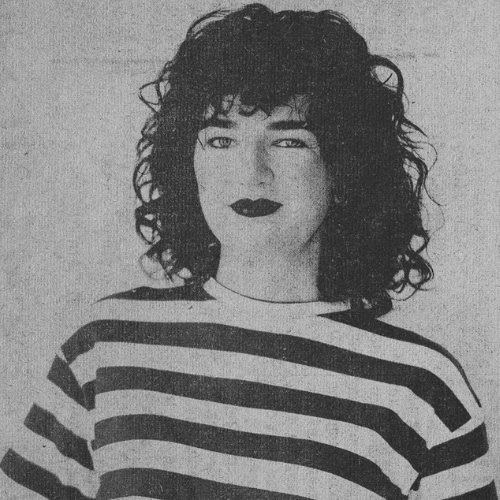
Bridie Jabour is associate editor (audio/visual) at Guardian Australia. She is the author of the book of essays Trivial Grievances.