
The Gene Editing Revolution with Jennifer Doudna
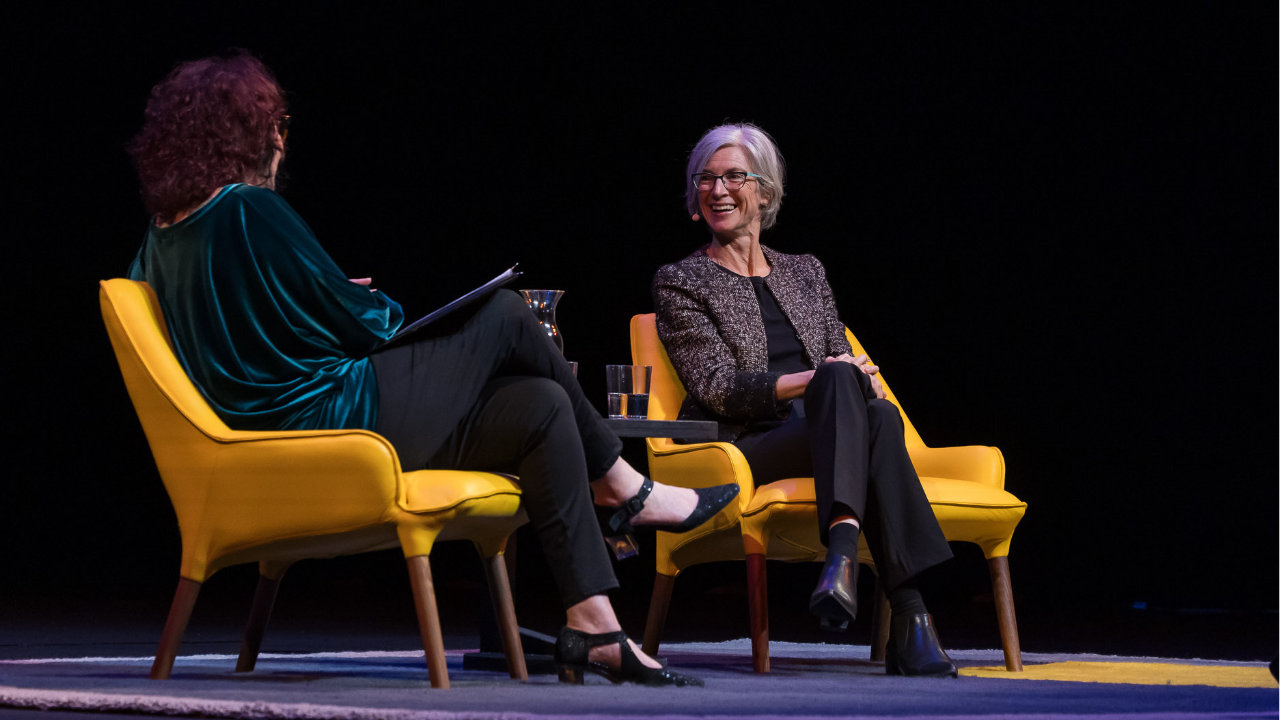
We're really at the very doorstep, the very beginning, I think, of this revolution in genome editing, where we're going to see increasing opportunities for CRISPR to improve our health. To improve our climates.
An intrepid biochemist reckons with the monumental implications of her most provocative discovery to date: a deceptively simple, yet startlingly powerful method to rewrite the very blueprints of life. This isn’t just any scientific breakthrough, but a tool that promises unparalleled control over DNA – the core of existence – teetering on the brink between amazing potential and great danger.
This technique, known as CRISPR, emerged not as a quiet ripple in the scientific community, but as a tidal wave of concern among its very pioneers, reminiscent of the trepidation that shadowed the advent of the atomic bomb. In 2015, biochemist Jennifer Doudna stepped forward to issue a moratorium on using CRISPR for human embryonic edits that pass on to future generations. This revolutionary technology, lauded for its simplicity and efficacy, harbours the capacity to cure intractable diseases and could be the answer to famine. Yet, it brings with it the perilous possibility of irreversible genetic ripple effects and the contentious debate over the ethics of heritable changes in humans.
In conversation with Natasha Mitchell.
Presented by Sydney Opera House, BQI, Sydney Writers' Festival, and UNSW Sydney.
Transcript
Merlin Crossley: Perhaps the greatest equation in science is E equals mc squared. It tells us that matter and energy are the same thing. It explains how the matter in uranium becomes energy in a nuclear reactor. But I'm a biologist and I don't use E equals mc squared much in my lab at the University of New South Wales, and I never use it at home. But there's another equation that I use every day. In 1597, Francis Bacon wrote, scientia potestas est, knowledge equals power.
I believe knowledge does equal power. Humanity began progressing via language, speaking and oral traditions, song lines that served as instructions for navigating through the land and maintaining cultures. Later, writing was invented in the Middle East and in Asia. Like energy, written knowledge cannot easily be destroyed.
Today, the information stored in computers is enabling artificial intelligence with unimaginable power. But there is another information store that is facilitated the expansion of all life on Earth, the information in DNA. Watson, Crick and Rosalind Franklin showed us how to read that information.
Our guest tonight, Jennifer Doudna, together with Emmanuelle Charpentier, won the Nobel Prize for enabling humanity to go beyond reading the genetic code, to writing it. This may enable us in the 21st century to cure genetic inherited lifelong debilitating diseases like sickle cell disease and hemophilia, and many more diseases that affect millions of families worldwide, just as humanity pushed back tuberculosis, smallpox and polio in the 20th century.
For 30 years, I have worked on sickle cell, the blood disease that affects 10 million people. I've been telling my children that humanity would cure it in their lifetimes. But in 2014, we used genetic engineering here in Sydney to introduce a beneficial naturally occurring mutation that boosts fetal hemoglobin production to cure this disease, harnessing the concepts Doudna pioneered.
Many labs around the world are trialing this technology in patients. It currently costs two million dollars per treatment, but that is less than the lifetime health costs to patients. So it makes sense, and it will get cheaper.
An international student, Bika Veenat, led the work in my laboratory. Then she went to Berkeley to join Doudna's department and work at the world's leading centre for gene editing. I like the fact that Australia has become the destination of choice for international students and they can thrive here and then go elsewhere.
Bika chose Dr Doudna's department because Doudna is an inspiration. Let me say a few words about Jennifer Doudna's life so far. She grew up in the US, but significantly, I think, on the island of Hawaii, a place that many consider to be one of the most beautiful Pacific Islands, second only to Australia.
She was inspired by nature and by her school chemistry teacher. She moved to California for college, where she studied biochemistry, then to Harvard for her PhD. She then went to Colorado, another beautiful place with mountains, second only perhaps to Sydney's Blue Mountains, and she worked with Tom Chek, who has also won the Nobel Prize for his work on enzymatic RNAs.
She then moved to Yale and started her own lab in 1994, then to Harvard. She moved to her current academic home, the University of California, Berkeley, as a professor in 2002 and met another towering figure in biology, Gillian Banfield, in 2006. This was a scientific turning point as she transitioned from studying RNA enzymes to investigating how bacteria use RNA, an information molecule that is like a short-lived DNA, to search for predatory viruses and to destroy them. In collaboration with the French researcher Emmanuelle Charpentier, she was able to adapt the CRISPR system that evolved in bacteria to what are the chemical equivalents of word processing search and replace functions, enabling humanity to write the genetic code.
Along the way, Doudna has won innumerable prizes, the Breakthrough Prize, the Gairdner Prize, the Kavli Prize, and in 2020 the Nobel Prize. She has been inducted into the most prestigious academies, the National Academy of Sciences, the Royal Society, Pope Francis's Pontifical Academy, and has been listed in Time's 100 People of the Year, all because of her wonderful work on editing DNA.
We should not be surprised, the last three letters of Jennifer Doudna's name are DNA. And now, in a unique honor, she is about to be interviewed on stage by our very own ABC journalist and host of Big Ideas on ABC Radio National and ABC Listen, Natasha Mitchell. Who would certainly have won a Nobel Prize for science journalism if Alfred Nobel had set one aside for radio.
So now, we get to welcome Jennifer as one of the few scientists who, on top of all her achievements, has been invited to perform here at our world-leading opera house. Ladies and gentlemen, Natasha Mitchell and Professor Jennifer Doudna!
Audience Applause
Natasha Mitchell: Not bad. Almost rivals the Nobel Prize, don't you reckon? Full house at the Sydney Opera House?
Jennifer Doudna: Easily, better!
Natasha Mitchell: It's wonderful to have you back in Australia. Thanks for being here.
You know, we spoke on stage in Melbourne six years ago and it is incredible. Then I asked Jennifer, is it too early to use CRISPR in clinical human trials? And I also asked Jennifer, is it too early to consider using gene-editing CRISPR on human embryos? And I also asked, is it too early to use CRISPR on germ cells? So, this is eggs, sperm, embryos, so that you might change the course of evolution. Now, that was six years ago. All of those things have happened. How do you feel about that?
Jennifer Doudna: It's kind of mind-blowing, isn't it? It's amazing to think that a technology that grew out of curiosity-driven science, that maybe we'll get into, and had its origins in a few scientists who were just curious about the way that bacteria fight viral infection, has now turned into an extraordinary technology that allows precision tweaking of DNA that can do all the things that you said.
Natasha Mitchell: Unbelievable, isn't it?
Jennifer Doudna: Yeah.
Natasha Mitchell: And we'll get into the detail of CRISPR because, you know, I was speaking to a neighbour yesterday and he said, what's CRISPR? What's gene editing? This is someone who's smart, but this is how fast this technique has really transformed research agendas in labs around the world overnight.
But I just want to get you to channel your little self, your 12-year-old self. What would have 12-year-old Jennifer thought of you being here with all this right now?
Jennifer Doudna: Well, I can tell you that 12-year-old me would have never imagined this moment, really never. It's just amazing to be here. And my journey, as you heard a little bit in the introduction, started off on the island of Hawaii, where I was growing up in a town called Hilo. It's not the glamorous Hawaii that you think of, maybe. It's a rainy place, beautiful, kind of more of a rainforest kind of environment. And I was inspired by that natural world there. You know, it was incredible.
And I think I really got my interest in understanding DNA and kind of how it affects the evolution of life from just observing that phenomenon in action on the island, never imagining that I would end up on the journey that I've had.
Natasha Mitchell: With a Nobel laureate, no less. As a Nobel laureate, no less. But actually, when you were 12, your father, who I think was an English professor, left a book on your bed. And you get home from school. And it's a book about a Nobel laureate and the story of who and what. And what was that book?
Jennifer Doudna: Yes.
So that story is that I got home from school and on my bed was a little paperback book, the title of which was The Double Helix. And maybe you've heard of it. And it was, kind of, a dog-eared copy. My father, you know, loved prowling around, you know, used bookstores and buying old, old, old paperbacks like this. And, you know, he would occasionally throw books my way. And this was one of them.
And to be honest, I looked at it and I said, I don't know, you know.
Natasha Mitchell Laughs
Jennifer Doudna: and I kind of set it aside for a while. And then, you know, one rainy day, which we had many in Hilo, I picked it up and read it. And you could just sort of read it in an afternoon. You know, it's not a very long book and quite engrossing once I got into it.
And it really tells the story of the discovery of the structure of the genetic material of DNA, as told by James Watson, who was one of the people recognized for that work. And the story was fascinating, not only for the science, which was incredibly interesting, but also because it really told the human side of science, something you, you know, me as a kid, you know, you didn't read about that in textbooks at all.
Natasha Mitchell: And you certainly didn't hear about it in the classroom.
Jennifer Doudna: No, no.
Natasha Mitchell: Science is often communicated as this sort of disembodied/
Jennifer Doudna: Seemed very dry.
Natasha Mitchell: / List of facts /
Jennifer Doudna: Right, yeah.
Natasha Mitchell: / you know, and you've got to learn them. It's not that.
Jennifer Doudna: It's not. Yeah.
Natasha Mitchell: And then, yeah. But I mean, it's interesting to think that 12 year olds now might be kind of turning to TikTok and you were turning to the double helix /
Jennifer Doudna Laughs
Natasha Mitchell: / and reading about the history of DNA. But there you go!
I mean, that's an interesting sort of turning point for you. But we were just reflecting earlier that it only takes really one teacher, doesn't it? One teacher can change the course of a young girl's life. And tell me about that one teacher.
Jennifer Doudna: Well, if I had to pick one, there were a few, to be honest. But, you know, if I had to pick one, I think it would have to be Miss Wong, who was my 10th grade chemistry teacher in high school.
And, you know, in the US, you know, 10th grade, you're, you're a, I don't know, I was probably 14 years old, 14, 15, something like that. And I already knew I loved mathematics. And I, you know, I was fascinated by, you know, kind of my more technical classes. But when I got into her chemistry class, it was eye opening for me because she told us kids that science was about discovery. It was about solving puzzles. It wasn't about memorizing a bunch of facts in a textbook. It was actually about figuring things out. And that was, you know, kind of a revelation for me at the time.
Natasha Mitchell: Yeah.
Jennifer Doudna: And then we had a lab, you know, that was associated with the class where we were actually, you know, trying to figure some things out. And that was the first time that I got the sense of what it would be like to, you know, be working in a lab with my hands, figuring things out. It was fun.
Natasha Mitchell: Puzzling away.
Jennifer Doudna: Yes!
Natasha Mitchell: It's a puzzle.
Jennifer Doudna: It is.
Natasha Mitchell: It's the puzzle of the universe really, isn't it?
Jennifer Doudna: Indeed.
Natasha Mitchell: So the, the big puzzle that you won the Nobel Prize for is CRISPR. And just take us back though. And I think it's interesting. We've had a pandemic since we last talked, a global pandemic. A lot's gone down really. And just explain to us the way in which CRISPR has had this deep evolutionary story. It's the story of bacteria and how they fight viruses. And it's a beautiful story.
Jennifer Doudna: I think it's the story that is in a way the most fundamental in biology, probably. Probably goes all the way back to the very origin of life. Because as soon as life evolved, there were, you know, there were viruses that were trying to exploit it and take advantage of it and capture it for its own purposes.
And you can think of it very much like, you know, it's sort of analogous to a computer virus. You know, you've had a computer virus that tries to take over your, your computer. And, you know, CRISPR is the, is the, the antidote to that. You know, it's really the way that bacteria are able to defend themselves from getting infected. And it was a system that, you know, really nobody in science had really paid any attention to up until, you know, kind of the early 2000s.
There had been a few scientific publications going back to, I think, 1989, where, you know, a few scientists here and there had kind of noticed that bacteria had little repetitive pieces of DNA in their genomes and nobody really knew what they were doing. And, you know, it was kind of ignored.
And then a scientist named Francisco Mojica, in Spain, discovered that these repetitive sequences were changing over time in bacteria. And so that was one of the first tip-offs that they might actually be doing something very interesting. And he was one of the people that noticed that those pieces of DNA in some cases came from viruses.
Natasha Mitchell: Yeah. And that was an oh-my-god moment /
Jennifer Doudna: Yes.
Natasha Mitchell: / for that scientist.
Jennifer Doudna: Yes, indeed. Yeah.
Natasha Mitchell: And there have been many more oh-my-god moments since then.
Jennifer Doudna: Indeed. Yeah.
Natasha Mitchell: So what was your, so essentially what he discovered was this was an immune system inside bacteria. And so what was your oh-my-god moment that ultimately led to the Nobel Prize? And really you repurposing this, this tool, this instrument of bacteria in a way that would ultimately allow us to hack our own evolution as a species, which is what we're, where we're heading to with this conversation.
Jennifer Doudna: Yeah.
Well, my moment, I guess I, let's go back to, you know, how did I even get started working on CRISPR? And I, you know, it was, it was not something that was on my radar until a wonderful scientist who is a colleague of mine at Berkeley, and a local Aussie, named Jill Banfield called me up one day in Berkeley, my office in Berkeley, and we did not know each other, but she had, she was one of the scientists who back in those, sort of, early days of CRISPR had figured out that a lot of bacteria have this adaptive immune system. And at the time nobody had done any experiments to test it, but it was a hypothesis.
Natasha Mitchell: And they didn't even really know what it was.
Jennifer Doudna: No, no.
Natasha Mitchell: Still at that time.
Jennifer Doudna: No.
Natasha Mitchell: This is the beauty of this whole project.
Jennifer Doudna: Exactly. Yeah. It's a mystery /
Natasha Mitchell: Chipping away, chipping away.
Jennifer Doudna:/ but it looked interesting.
Natasha Mitchell: Yeah.
Jennifer Doudna: You know, why were bacteria stealing pieces of viral DNA and storing it in the genome? Well, why would they be doing this?
So she, you know, googled who at Berkeley works on molecules of RNA, because the idea was maybe that's how these immune systems were working. And my name popped up, she called me up, and one thing led to another. And we actually started working together to figure this out.
And as I told the students today, earlier today at the university, you know, the science for me is there's an element of serendipity, and I had the good fortune to start working with a wonderful scientist who came to my lab at about that time, Blake Widenheft, who was probably one of the few people on the planet that had actually heard of CRISPR sequences because he had been working at Yellowstone National Park in the U.S. where there are lots of bacteria that have CRISPR systems.
Natasha Mitchell: Yeah. And so there you go, but you haven't got to the oh my God moment yet. So take us to that.
Jennifer Doudna: So we're getting there.
Natasha Mitchell: So there are quite a lot in this story, but there wasn't one in particular that made you go, wow, I'm onto something here.
Jennifer Doudna: Right.
So we started working on the system, meaning that, you know, we started investigating what this CRISPR system might be doing and how it was working and getting a few clues, but, you know, hadn't hadn't sort of really reached that moment of epiphany or anything.
And then we started to understand that – we, meaning the few of us in the field that were working at the time – that really what these CRISPR systems and bacteria were doing was cutting DNA, cutting DNA, and not cutting random DNA, but cutting DNA of viruses. And the question was, how does that work?
And that's where my collaboration with Emmanuelle Charpentier began, because I met her at a conference in 2011, and we had read each other's scientific articles in journals, but we had never met in person until that meeting. And when we got together, we realized that we had complementary skills.
She was a wonderful microbiologist and had a lot of knowledge about the bacteria that harbored these CRISPR systems. I'm a biochemist. I work on molecules and figuring out how they work. And we thought, hey, we could put our skill sets together and really try to understand the, you know, the mechanics of this CRISPR system in detail. So that was the origin of our collaboration.
And again, it's all about, you know, the people that do the work. And in this case, it was two scientists in our labs, in my lab, Martin Yinnick, who was a postdoctoral scientist, and in her lab, Chris Chylinski, who was a graduate student. And amazingly, this is before Zoom, by the way, but these two scientists were working, you know, several thousand miles apart, and they were communicating by Skype. Anybody remember Skype?
Natasha Mitchell Laughs
Natasha Mitchell: Those old days!
Jennifer Doudna Laughs
Jennifer Doudna: Sounds like ancient history now.
Natasha Mitchell Laughs
Jennifer Doudna: But, you know, at the time, it was really cutting-edge technology, and it allowed them to talk to each other and share ideas and data in a way that made that collaboration possible.
Natasha Mitchell: It's really great. You're sort of dealing with the wetware of biology, but you're dealing with this sort of virtual conversation. It was kind of a UN of science, wasn't it?
Jennifer Doudna: Yep!
Natasha Mitchell: Here you were in America, Emmanuelle Charpentier is French.
Jennifer Doudna: In Sweden!
Natasha Mitchell: In Sweden.
Jennifer Doudna: Her student was in /
Natasha Mitchell: Vienna!
Jennifer Doudna: / Austria, yep.
Jennifer Doudna Laughs
Natasha Mitchell: Amazing. Amazing.
And what you worked out was a way that you could borrow this CRISPR system that's inside bacteria to edit any genome, DNA in any organism, and you could target what gene you could slice out, you could insert a gene into any genome, you could edit a genome of any kind and persuasion. That was enormous, wasn't it? Why was that such a profound game-changer for scientists around the world?
Jennifer Doudna: Well, what you just described, that really was kind of that aha moment, because what we figured out is that the CRISPR system, this immune system in bacteria, the way it works is it really is a programmable system, meaning that what bacteria are doing with it is they are taking pieces of DNA from viruses, making a little temporary copy in the form of a molecule called RNA, and they use that little temporary copy to program proteins that are able to target DNA sequences using this little RNA copy as a zip code, a way of recognizing a very specific section of DNA and making a cut. And that's what we figured out.
Natasha Mitchell: A pair of molecular scissors, I like to think of it.
Jennifer Doudna: It's molecular scissors.
Natasha Mitchell: You sort of send it into a cell and you go, find this little strip of DNA /
Jennifer Doudna: That’s right.
Natasha Mitchell: / that matches this little RNA guide /
Jennifer Doudna: Yep.
Natasha Mitchell: /and then I'm going to /
Jennifer Doudna: And then snip, right?
Natasha Mitchell: / snip.
Jennifer Doudna: Yeah.
And so that's what bacteria do with it. As soon as we understood that chemistry, that mechanism of action, we also realized that we could harness it differently in other kinds of cells because of, you know, all of the other work that had gone on in different fields that showed that in our cells, or in plant and animal cells, when DNA breaks, it often gets repaired.
And people had understood that, you know, you could actually take advantage of DNA repair to make changes to DNA. The challenge was, how do you break DNA where you want to make a change? And that was really hard to do. And that's what CRISPR is great at doing, right? So you kind of brought that knowledge together with the ability to break DNA, and it created a fabulous technology.
Natasha Mitchell: And bang. And it really did change researchers' lives. And many of you who are scientists in the room, potentially, you know what it did to your laboratories and your agendas around the world. Massive impact.
And let's come to some of the impacts now, because they have been immense. And in my mind, I just don't think that we're having enough of a public conversation about the consequences of this work, both good and concerning.
So let's look at the good. So that was 12 years ago. That was 12 years ago. Just last year, at the end of last year, the UK and America have approved the first CRISPR-based gene intervention, gene therapy /
Jennifer Doudna: Right.
Natasha Mitchell: / for sickle cell anemia. So just describe what that has meant for the lives of those who will now get access to this treatment using CRISPR.
Jennifer Doudna: Well, it's amazing because it's a technology that, you know, as we've talked about, you know, can make a targeted change to DNA. And that means that for people that have an inherited genetic predisposition to a disease or an inherited, you know, disease that manifests itself during their lifetime, like sickle cell disease, we now have a technology that, in principle, can correct it, cure it.
Now, with sickle cell disease, it's kind of interesting. There's a little bit of a twist to the story because right now, this approved therapy does not actually correct the disease-causing mutation. It actually turns on the production of another protein called fetal hemoglobin, that is normally made when we are, you know, in utero, but is turned off when we're born. And it was known from some examples in the human population that if that fetal hemoglobin is turned on, it can suppress the effect of the sickle cell mutation. And that's how the current CRISPR therapy is working.
And how does it affect patients? It's incredible. So, Victoria Gray was the first patient in the United States to receive the CRISPR therapy for her sickle cell disease.
Natasha Mitchell: So, they're essentially taking her blood cells.
Jennifer Doudna: Take the blood out.
Natasha Mitchell: So, they're doing it outside of her body. They make the modification using CRISPR.
Jennifer Doudna: Yep.
Natasha Mitchell: Then they give her her blood back via her bone marrow.
Jennifer Doudna: Bone marrow. Mm-hmm.
Natasha Mitchell: And there she goes.
Jennifer Doudna: Yeah.
Natasha Mitchell: And what happens?
Jennifer Doudna: And it's extraordinary because it's a one and done therapy. It's not something she has to, you know, it's not something she has to do every week or every month. She did it one time, once. And it provides a correction to her mutation in her blood cells that has basically made her disease-free for the last almost five years.
Natasha Mitchell: So, pain-free?
Jennifer Doudna: Pain-free.
Natasha Mitchell: She will live a longer life.
Jennifer Doudna: Indeed.
Natasha Mitchell: Because the thing is, her blood was getting sticky. It gets sticky, doesn't it?
Jennifer Doudna: That's right.
Natasha Mitchell: And it really doesn't get oxygen to where it needs to be. So, life is really horrendous for people with sickle cell anemia.
Jennifer Doudna: Exactly.
Yeah. It really gave her her life back. And she was able to go back to school. She was studying business. She is a mother. She has four kids. She was able to, you know, do things with her kids that weren't possible before. It really changed her life. And she wasn't the only one. There were about almost three dozen people in that original trial who were affected similarly.
So, it's a, you know, it's a very exciting watershed moment in the field. But, I would argue, you know, it's really only the beginning.
Natasha Mitchell: So, that's just one condition.
Jennifer Doudna: Only the beginning.
Natasha Mitchell: Just give us a quick sense of the range of diseases that are being targeted in clinical trials, or are about to be targeted. Because, you know, it's a big deal for Victoria to have put her hand up to be one of the first.
Jennifer Doudna: Oh yeah.
Natasha Mitchell: That's a scary thing.
Jennifer Doudna: Imagine how brave you'd have to be.
Natasha Mitchell: A scary thing. Because gene therapies previously had come with huge risks.
Before we get to the range, though, what did it take to make sure it was safe for her to give it a go?
Jennifer Doudna: Well, she was the beneficiary of kind of the final stage of a clinical trial. So, you may know that, you know, clinical trials typically proceed in three phases. The first phase is to test the safety of a new therapy. And so, in this case, the idea was, let's make sure that CRISPR is, you know, not making undesired changes in the DNA, that it's doing the thing that it was designed to do in this case. And, of course, that the edited cells were having a benefit in a person.
So, that was the initial phase. And then there were additional phases that studied the amount of, you know, the number of cells that needed to be put into a patient to have a benefit and then what would happen over time.
Natasha Mitchell: Ok, so, that's one disease. But there's a whole lot of other diseases that are being targeted or explored or subject of clinical trials. Some of them have been part of clinical trials, but they've been too expensive to run. So, people have, you know, abandoned them.
But just give us a sense of the range of disorders. Obviously, you've got to be in a situation where you can target one gene.
Jennifer Doudna: That's true today. I think that'll change over time. But you're right. Right now, the targets of CRISPR are diseases where we have a very clear understanding of a gene, usually a single gene, that is causing a disease where you can use a tool like CRISPR to, you know, make a change that's going to have a benefit in a person. And that includes diseases that affect the liver, that affect the eye. There's actually a company that's also working on cardiovascular disease with the idea that you could protect people from heart attacks by changing one gene that can lower cholesterol. So, it's, you know, there's a wide range of applications.
Natasha Mitchell: Urinary Tract Infections, all the women in the audience will go, hooray, bring it on!
Jennifer Doudna: Exactly!
Natasha Mitchell: Yeah, so I mean, a real range. HIV!
Jennifer Doudna: Yes, HIV. That's right.
Natasha Mitchell: Okay, HIV. So, we've been talking about gene editing our body cells, our so-called somatic cells. That's one thing. Then there's the challenge that comes with, should we be editing our germ cells, so our eggs, our sperm, embryos, so that we can actually hack the course of our own evolution? You know, so that we introduce, you know, we snip out genes or we add genes that then can be inherited by the next generation. Now, that's where a whole lot of worms leap out of the can, don't they?
And so, take us back to 2018, and you're at the second summit of the Human Genome Editing Summit or something like that in Hong Kong. I remember this day really well. You do too. You were there! And a Chinese scientist gets on the stage, and you know what's coming because you've heard behind the scenes what's about to happen. And he announces that he has used CRISPR to edit the embryos of, well, three embryos. Well, more embryos than that. But ultimately, they have resulted in pregnancies, and those edited embryos have been carried to term. Two of them have been born as the world's first gene-edited babies.
Now, how did you receive that news? Because no one had ever done that before. You'd been very concerned about the prospect of that happening. But here it was. It had happened in the world.
Jennifer Doudna: Right. Well, it was shocking. I mean, there's no other word for it. It was really shocking that someone had actually done that kind of work, in a way that I think the folks at that conference that heard this announcement for the first time agreed was truly unethical.
You know, that it was conducted in a way that was not, you know, not something that I think we as scientists felt should have been done. And yeah, it was, you know, I had a complex set of emotions. I think that, you know, I really was, kind of, horrified that this had happened. I was grateful that we had already convened a group of scientists around the world to be already kind of talking about this possibility. None of us expected it would, you know, actually happen.
Natasha Mitchell: What were you worried about in the lead up to this event? You had done some real work bringing scientists together around the world, including Chinese scientists, /
Jennifer Doudna: Sure.
Natasha Mitchell: / to really have a discussion about, the limits, the possibilities of this technology.
What's the concern if you edit an embryo and then carry it to term? So we're not talking about… CRISPRs being used to edit embryos in an experimental way, that are non-viable, they're not used for reproductive purposes. So that's an amazing research tool and we might get to that. But what were the concerns about carrying an embryo to term that had been gene edited?
Jennifer Doudna: Well, let's just be clear. So when we're talking about sickle cell disease or these other applications of CRISPR, those are all uses of gene editing that affect one individual. They don't create heritable changes that are passed on to future generations. But making edits in embryos, or eggs, or sperm does just that. It creates, you know, a heritable change that's passed on.
Why is that problematic? Well, you know, you start to think about, this makes you think of things like eugenics. It makes you think of, you know, possibly using CRISPR in ways that could create more inequities than we already have in the world, you know, in sort of the worst case scenario. Or could create changes in the genome that have been untested. So they might affect people in ways that, you know, would be terrible.
And so those all seemed like very real possibilities and they still do, frankly, for that type of application. That being said, I do think that, you know, in the future, as CRISPR is validated in embryos, and you know, we learn more about our own genetics, we could imagine there might be scenarios where you would want to use it to remove a devastating mutation from the genome /
Natasha Mitchell: At the embryo stage.
Jennifer Doudna: At the embryo stage, right. So, I don't think we want to rule that out necessarily, but it certainly has to be approached with caution.
Natasha Mitchell: Yes, we're going to talk a little bit more about that, because there's all sorts of possibilities there. And I've watched all the scientists in this field kind of go, absolutely not, that should never happen, moratorium on human embryo work. And then gradually over the years, there's been a softening, there's been a cleaving open.
And I think that certainly happened after He Jiankui /
Jennifer Doudna: Yeah.
Natasha Mitchell: / Did… created these two, assisted a couple via IVF to create these two children, and three, but we only know officially of two, but there's a third, Lulu and Nana, they would be six this year, I think, thereabouts.
Do we know how those, so we should just explain that they, he manipulated a gene in those embryos before they were implanted into the mum, that affected their risk of contracting HIV. So the father in the couple, say of Lulu and Nana's parents, was HIV positive. People with HIV, unfortunately, are very stigmatised in Chinese society. And so, he thought doing something compassionate, using science for compassionate purposes to help a family affected by HIV to have a child via IVF. So the idea was to modify a gene so that they would effectively be more resistant to HIV. Yeah?
Jennifer Doudna: That was the idea. But there's some caveats there. One is that there are well established procedures that don't involve genome editing, that are able to protect people in that situation from passing HIV on to their children during birth, for example. So that was one thing, is that there were, you know, well established alternatives available not that didn't involve CRISPR.
And secondly, that, you know, CRISPR was completely untested in that scenario. And when scientists saw the details of how the editing had been done, it was clear that, you know, these changes that were made to the gene that was edited in those children were also completely untested, even in animals, you know. So it was truly scary to see that type of being done directly on humans without any testing.
Natasha Mitchell: I think he'd done the work in primates. He'd done the work in mice and primates.
Jennifer Doudna: But the exact changes that were made to the DNA were untested.
Natasha Mitchell: And one of the concerns is that with CRISPR, that you might think that you're editing a particular gene, but then you might have off target effects. So you might end up editing other genes in your genome.
Jennifer Doudna: Sure.
Natasha Mitchell: And you can't necessarily predict that. That's a whole other challenge for the field.
Jennifer Doudna: That’s right.
Natasha Mitchell: We might get to that.
Do we know anything about the health of Lula and Nana, these two children, the first ever children to be born as gene edited babies?
Jennifer Doudna: No.
Natasha Mitchell: Nothing?
Jennifer Doudna: No.
Natasha Mitchell: Nothing?
Jennifer Doudna: No.
Natasha Mitchell Laughs
Natasha Mitchell: So he went to jail, and he came out of jail after three years in 2022. And I won't lean fully into his case, but what I think is very interesting about Dr. He is that he was painted as a rogue scientist, as a one-off, as an outlier. And yet he had close contacts with leading American bioethicists, close contacts with leading American scientists. He'd done his PhD at Rice University. He'd done his postdoc at Stanford, I think. All reputable scientists leading the charge, they've all had their scientists investigated since this, and they're in the clear-ish. One of them's a bit more questionable.
But he was courted by the West. He was well-trained in the West. He was celebrated as a fantastic scientist in China, came back on the 10,000 Talents program, I think /
Jennifer Doudna: Yes.
Natasha Mitchell: / As well.
So you'd met him?
Jennifer Doudna: Yes, indeed.
Natasha Mitchell: He'd come to Cold Spring Harbor meetings and there was a selfie of you in a book somewhere with him.
Jennifer Doudna: Yep.
Natasha Mitchell: So was he a rogue? Could someone else do the same? What's to stop Dr. He or others not doing the same?
Jennifer Doudna: Well, yes and yes, I would say.
And yeah, what's to stop anyone from doing this? It's, you know, this is one of the real conundrums with the technology like CRISPR. Thing that scientists love about it is that it's relatively easy to use. And that also, you know, the flip side of that coin is that it's, you know, it's available for rogue uses.
And so that's a real challenge. How do we make sure that it's used safely and ethically? He's back on Twitter.
Jennifer Doudna: Yes.
Natasha Mitchell: And in fact, he was on Twitter pretty much as soon as he got out of jail, I think.
Jennifer Doudna: Yes.
Natasha Mitchell: And I was watching all his tweets bit by bit, and spoke to some scientists, bioethicists who had met with him at Kent University. He's busy trying to raise funds. He's busy trying to do gene editing work on muscular dystrophy, Duchenne muscular dystrophy. That's legitimate work, isn't it? That work is happening in America.
Jennifer Doudna: It is and elsewhere. Yeah. Yeah. So, you know, we'll see what happens, I guess. Story's not over.
Natasha Mitchell: No, but you all at that meeting could have called a moratorium on human embryo editing. And you labored hard into the night as a group of leading scientists and you did not issue a moratorium on the editing of human embryos. Why not?
Jennifer Doudna: I think there was a feeling at the time, and you're right, you know, there was I remember that quite vividly, you know, there were that, you know, there were a group of us and we were laboring into the night to try to write some kind of a report and a recommendation about the technology based on what we knew at the time was possible and, you know, could be beneficial with the technology and also where the risks were. And you're right, we did not call for a moratorium. Why not?
I think the sense was that we didn't want to squelch the advances that were being made with CRISPR, including understanding, for example, very early human development. So some scientists were using CRISPR in embryos for that purpose, not to create a pregnancy, but to, you know, really understand very early human developmental biology.
Natasha Mitchell: So you can knock out certain genes /
Jennifer Doudna: Yeah.
Natasha Mitchell: / in a blastocyst stage, for example, so even before an embryo stage.
Jennifer Doudna: That's right.
Natasha Mitchell: And work out, OK, what's happening /
Jennifer Doudna: What are the effects, you know?
Natasha Mitchell: / how it affects their development. So you can really target, start to understand what genes have what role in the development, our early development.
Jennifer Doudna: That's right.
Natasha Mitchell: It’s an amazing tool in that way.
Jennifer Doudna: It's an amazing tool in that way. And those are unanswered questions. And so we didn't want to squelch that type of research, but at the same time, we wanted to express a sense of caution about using it in any way that would be, as we called it, clinical, meaning using it to create a pregnancy. And so that's what was written into the report. And that's been a pretty consistent message, I would say.
There's now been a third conference like this on human genome editing, where the subject of germline editing was discussed in some detail. And I think that's been a very consistent message by this group of international scientists is that, you know, we want to advance the technology and allow scientists to do legitimate research, but also to express the importance of using the technology responsibly. So, you know, it's a fine line.
Natasha Mitchell: So what does it mean to use the technology responsibly in relation to germline editing?
Jennifer Doudna: Well, to me, it certainly means, at least for now, not using it clinically, in other words, not using it to create, you know, edited embryos that are implanted for a pregnancy.
Why not? Well, one of the reasons is that, you know, just technically, we don't understand CRISPR very well in those early embryos. We don't really know how DNA repair works there. And you alluded to the fact that, you know, CRISPR is not a perfect tool. It can introduce undesired changes at times, and certainly in an embryo setting, that would be a change that, or any changes that are made would be then inherited by future people. So, you know, we have to be very, very careful in that setting.
Natasha Mitchell: Here's the thing, Jennifer, though. I do sense that there was a, it was more than just a chink in the door that was left open, a little sort of crack that was left open. I felt in the language that followed that meeting that there was a gaping, the door had been swung open to the possibility of germline editing, that there was a sense of inevitability amongst scientists. It's happened now… t's like the sort of shifting baseline phenomenon where, okay, it's happened now.
And then really no one talked about it much. No one really talked about Dr. Hur and what he'd done. No one really talked about those two. In fact, there are three children, allegedly. No one's ever told us where they are, how they're doing. Have there been off-target effects in those children? You know, the gene that was targeted has potentially a role in cognition. It also has a role in resistance to West Nile virus. It's a gene that plays many roles. It doesn't just confer resistance or otherwise to help HIV get into a cell.
So, my question then is, when will it happen? What will it take for another scientist to go and for all the peers, all of you to go, it's okay now. You can modify an embryo. You can, as a parent, go and have IVF, choose the sex of your child, make a, sort of, boutique selection of traits that you would like your child to have. See, six years ago, that all sounded fanciful. I don't think it does now. Would you agree?
Jennifer Doudna: Well, let's just take the example of In Vitro Fertilization. You know, I'm old enough to remember back in the 70s when, you know, I'd be sitting around my dinner table with my parents and my parents would talk about test tube babies, you know, and they, you know, they sort of were very sceptical. Test tube babies. It sounded very clinical. It sounded very weird.
Natasha Mitchell: Sci-fi.
Jennifer Doudna: Sci-fi! It sounded, you know, artificial and dangerous and, you know, all the bad things. And they were clearly not fans. And, but then, you know, we had some family friends who ended up using IVF to have their family. And, you know, the kids that were born were wonderful. And, you know, they gave joy to parents that otherwise would have been childless. And so, my parents totally came around to it, you know. And I think that happened for many people. You know, they realized that, oh, this is a technology that actually can be safe. It can be effective. It can be a wonderful thing for people to, you know, to use to have a family.
I, sort of, wonder if we're going to see a similar thing happening with CRISPR over time. It's hard to say how long that process will take. And I personally think that there still is quite a lot of work that has to happen on a technical level to really validate its safety in that kind of a setting.
But I agree, it will happen. I think it will. And it's a matter of time, which is why I've really advocated for a long time that we can't just, sort of, put that on a shelf and say, well, that's so far in the future that we won't even think about it.
Natasha Mitchell: I don't think it's that far into the future.
Jennifer Doudna: No. And so, we have to be actively talking about it, working on it now. How are we, what's the framework for this, you know, and trying to answer some of the questions that you're posing?
Natasha Mitchell: The thing is, who gets to choose? Who gets to choose? I've sat with many people who are deaf. They've gone to a deaf university at Gallaudet in Washington. They are deaf comedians, architects, dancers, performers, designers. They celebrate deaf culture and its richness and its uniqueness and the unique sort of intelligence that deafness brings to all their disciplines.
And yet, they've said to me, I wouldn't be here if CRISPR had been applied to me. I wouldn't have this skill. I would not have this talent. I would not be part of this culture. I would not be part of a diverse disability community. And so, this is a really interesting challenge that we face. Do we want to edit out this diversity if we leave it to parental choice?
Jennifer Doudna: Yeah. Well, I think you're putting your finger on something that's very important, which is I think that the use of this type of technology for the purpose that you're describing is highly personal, isn't it? It just really is.
And so, I think that in the end, for parents to have that opportunity to decide, do they want to use CRISPR in their children? I think that's going to require, they're going to have to have a lot of knowledge armed with information so they can make an informed decision.
Natasha Mitchell: Do we leave it up to parents?
Jennifer Doudna: Well, that's a great question. Do we leave it up to parents?
Natasha Mitchell: Free market, land of the free.
Jennifer Doudna: Yeah, okay.
Jennifer Doudna Laughs
Jennifer Doudna: You're pushing on this! No, I think it has to be up to parents, but I think it has to be parents with their medical professional guidance as well, clearly.
And how should that be regulated? I don't know the answer to that. I think different countries will probably have different answers to that.
Natasha Mitchell: Could you imagine parents deleting or modifying a gene that confers a greater risk of Alzheimer's, the APOA4 gene, for example?
Jennifer Doudna: It's a great question. I mean, I think about this a lot because a lot of people that I know, and including people in my own extended family, have faced a terrible risk of Alzheimer's, because of this gene that's been well established as a, you know, a gene that leads to a predisposition to develop Alzheimer's over time.
So imagine that you had a way to safely make a change to that gene that would be protective. Is that something that, you know, maybe we should all be doing that?
Natasha Mitchell: Would you do it? Hands up. Yes. Who wouldn't do it? Oh, I couldn't see… I saw one hand in the middle there.
That's amazing. That's it. This is where I say shifting baselines.
Jennifer Doudna Laughs
Natasha Mitchell: I give it 10 years.
Jennifer Doudna: Yeah, that's fascinating.
Natasha Mitchell: Can we get on stage again in 10 years' time and have this conversation?
Jennifer Doudna: I think we should! We'll find out if you like, yeah.
Natasha Mitchell: It's our 10-year anniversary and we'll see where we've got.
The sickle cell treatment, the first ever, $1 to $2 million per patient. And likewise, if we then started doing cosmetic gene editing, at the embryo stage, this becomes a question of health justice, of health equity, equity of access.
And then we start, if anyone's seen the film Gattaca from all those years ago, it's just such a – look, the hum that went through the audience. I mean, here we are. We're in a moment, a kind of critical moment in the Gattaca narrative.
So you care about health equity, don't you? You head up the Innovative Genomics Institute. And equity, is it part of your conversation there in terms of all the frontiers that you're working on?
Jennifer Doudna: That's right. That's right. Because when I think about the work that has gone on with CRISPR that we've done, or the field as a whole, it's very exciting. And there's lots of academic work going on all the time. But increasingly, we're seeing applications of the technology that do start to affect real people and change their lives.
And I do think that over time, that's going to just increase. We'll see more and more impact that we'll experience in our lives. And as a scientist, and just as a person, I don't want to see that effect or make the inequities in our society even worse than they are already.
So how do we counteract that? And how do we deal with the fact that, you know, you brought up the cost of the sickle cell therapy. I mean, it's amazing that we have this therapy, that can now effectively cure people of a disease that was incurable before. However, at that price point, it's going to be very hard for most people that could benefit from it around the world to get access.
Natasha Mitchell: You have the haves and the have not’s, and then you build a sort of a genetic underclass.
Jennifer Doudna: That's right.
Natasha Mitchell: And that's a real worry. That's a genuine risk, isn't it?
Jennifer Doudna: That’s a real worry. It is. Yeah.
And so how do we deal with that? So one answer, I don't think there's, you know, there's a one size fits all solution to this. But I think one answer is that in our, you know, research, the work that we're doing in the context of a nonprofit, so we're not, sort of, driven by, you know, investors that need a financial return on the work that we're doing. We're able to focus on goals that are a bit longer term and maybe a bit higher risk than a typical, you know, startup company would be able to focus on. And one of those is, how do we reduce the cost of CRISPR for something like sickle cell disease? And so, for example, imagine that you could deliver that therapy without having to put the patient in the hospital for a bone marrow transplant.
Natasha Mitchell: So what you deliver it straight into their body rather than into the cells and then into the body and then.
Jennifer Doudna: That's right.
Natasha Mitchell: So called in vivo.
Jennifer Doudna: That's right. In vivo editing would, you know, absolutely reduce the cost and make it a lot easier for people to get access to it. And of course, it has to be safe and, you know, all of that. But, but, imagine that you could do that. I think that is really very exciting. And I do think that's the cutting edge of the field right now is figuring that out. And, you know, we're, of course, not the only ones to recognize this. Lots of people are working now on this question of how do we deliver CRISPR in vivo in a safe and effective way?
Natasha Mitchell: How do you use CRISPR to solve climate change?
Jennifer Doudna: Well, you're laughing!
Natasha Mitchell: Ish. Ish!
Jennifer Doudna: But but but no, this is a thing where, you know, this is something we're actually very actively working on. So I'm proud that our institute from the very beginning said, you know, we said, look, you know, we know that CRISPR, a lot of people are paying attention to CRISPR in health care as they should.
But frankly, you know, when we think about the broader global impact of CRISPR, it's actually probably going to be in agriculture. And it's probably going to be not only for helping to feed the planet and our population, but also to address the challenges of the changing climate. And so we have some very active programs now that are doing this.
And I'll just give you one example. And that is that we figured out that we can actually use CRISPR in the microbes that populate the cow, reumen, which is the, you know, the digestive system of cows that, among other things, is responsible for producing a lot of methane. That's a very powerful greenhouse gas.
Natasha Mitchell: It’s a huge greenhouse issue.
Jennifer Doudna: It's a huge issue. I had no idea until we got into this that commercial agriculture with cattle farming around the world is one of the big contributors to methane emissions every year.
Natasha Mitchell: And meet consumption’s on the on the rise. So it’s not going to go away any time soon.
Jennifer Doudna: It won't go away, you know. And so we have to deal with it. And we think CRISPR is going to be one solution that will be highly effective. And so that's an area where we have an active program with the goal of being able to change the genetics of those bugs in the cow rumen, so that they don't produce methane. This is actually great for farmers because it means that animals use their feed more efficiently and it reduces, you know, a dangerous greenhouse gas. And so this is something that we think is, you know, very practical in the next, you know, probably not too long, a few years.
Natasha Mitchell: I've also spoken to scientists who, Australian scientists, who are using CRISPR to create hornless cows, because hornless, horns in a cow lot are really dangerous and they harm each other. So that's another area of work, too.
Jennifer Doudna: Yes,
Natasha Mitchell: And it raises all sorts of interesting debates as well, because often the same sorts of questions that we're asking about editing human embryos is also raised in animal husbandry as well.
Jennifer Doudna: Sure, yeah.
Natasha Mitchell: And the ethics thereof.
And so, yeah, and you're doing work around, and there are lots of leading Australians here doing work on CRISPR in plants /
Jennifer Doudna: Yeah.
Natasha Mitchell: / and trying to make plants more drought resistant and, yeah, more heat tolerant.
Jennifer Doudna: Right.
Natasha Mitchell: So even if we don't solve climate change, we'll still be able to eat, which is kind of good, isn't it, really, in some sense.
Jennifer Doudna: Kind of important, yeah.
Jennifer Doudna Laughs
Natasha Mitchell: But lots of questions there.
You've also been involved in, and just so you, speaking of questions, in a few minutes time, I'm going to come to all of you for questions. And we have four mics.
We've got two here, one, two. And then upstairs, we've got one, two as well. So I'd love your questions.
If you could make your way to a microphone, if you've got a burning question to ask, we'd love to hear from you. We're going to allow a good, you know, 25 minutes or so for questions. So don't hold back.
We'd love a question mark at the end of them. I know you've probably all got a lot to say on this topic, but everything with a question mark is a much-loved thing.
You've been involved in, so I've been interested in tracking, so you've got a, kind of, an outlier scientist like Dr. He, but you've also got the biohacking community, who are often really fantastic, radical punk revolutionaries doing citizen science and citizen biology.
They're a really fantastically interesting group of people who, you know, putting chip implants into their arms and all sorts of stuff. They are also doing CRISPR on themselves. So this is an interesting movement, isn't it? What do you make of that scene, the biohackers scene? And it's really prevalent in San Fran and around Berkeley.
Jennifer Doudna: Well, I think I'll give you two reactions to that. One is that I think the science of that is kind of sketch. You know, it's not…
Jennifer Doudna and Natasha Mitchell Laugh
Jennifer Doudna: You know, to be honest, yeah, there's not much there scientifically in terms of, you know, somebody are really going to inject CRISPR into their leg and make changes that are going to… probably not.
Natasha Mitchell: They’ve done it.
Jennifer Doudna: But, well, they've maybe injected something. I haven't seen any results.
Natasha Mitchell Laughs
Jennifer Doudna: But listen, what I think is very interesting about that community is that what I love about it, actually, is that these are people who are not, you know, professional scientists for the most part, but they're people who are interested in science, aren't they? And they're interested in technology. And they're interested in, kind of, getting the word out about science and technology. I love that. I think that's great.
Natasha Mitchell: They're also about democratizing science.
Jennifer Doudna: Yes.
Natasha Mitchell: They actually want the community to have some agency /
Jennifer Doudna: Yes.
Natasha Mitchell: Some say in how science gets done, who does science /
Jennifer Doudna: Right.
Natasha Mitchell: And in whose interests.
Jennifer Doudna: Right. And I love that. I think that's really good, because I think one of the challenges that we face right now, and, you know, you heard this a little bit in the introduction to this, to tonight's session, is that, you know, there's a lot of skepticism about science now. You know, I think a lot of people are, you know, they're kind of suspicious of science and scientists. Why are we spending taxpayer money on, you know, fruit fly research or something like that? Or, you know, the work that led to CRISPR.
Natasha Mitchell: COVID!
Jennifer Doudna: COVID. You know, the vaccines, right? And people are very, you know, nervous or skeptical of vaccines. So I think it's actually very important that, you know, we as scientists engage with people who are, you know, from all walks of life and really talk about, together, about, you know, what is science all about? Why are we doing the work that we do? What is the significance of what we do? And how does it impact people in their everyday life? I think it's very important.
Natasha Mitchell: So CRISPR is pretty easy to learn. Someone taught me in a lab once, and that was really fun. We kind of, you know, took some shortcuts, but you can take shortcuts. And it's amazingly easy to learn and comprehend, and then do, really. And with ease comes risk.
So the biohacking community is one scene. But then you've got the genuine threat of hostile actors or agents – so-called – using CRISPR to create acts of bioterrorism. And this is something that you have taken quite seriously. You have received funding from the U.S. Defense Research Agency, DARPA, to participate in their so-called Safe Genes Program.
So what were you up to? And is it confidential?
Jennifer Doudna: No, it's certainly not confidential. No, that research was really all about just what you said, you know, safe genes. So in other words, how do you use a technology like CRISPR in a fashion that, you know, is safe fundamentally? That, in other words, targets genes that are, you know, that are desired to be changed and nothing else.
One of the programs we weren't working on, but others were, that were funded through the DARPA agency, looked at, how could you potentially detect cells that had been edited and how could you reverse an edit if it turned out to be undesirable.
Natasha Mitchell: So this is if someone unleashed CRISPR in some way as a biological agent on a population?
Jennifer Doudna: Well…
Natasha Mitchell: Or applied CRISPR in a hostile way to create disease in an individual?
Jennifer Doudna: I suppose you could imagine something like that. But I think really that program that you're referring to was more about if you were using CRISPR in a health care setting and an undesirable change occurred, would there be a way to change it back?
Natasha Mitchell: And is there?
Jennifer Doudna: Or detect it.
Um, it's hard. You know, I think this is the thing about CRISPR, at least in its original format, is that it, you know, it does make a… essentially a permanent change to DNA in principle. I suppose you could change it back, but it's non-trivial.
Now one thing that's happened, though, in the field that's very interesting is that people over time have figured out how to use CRISPR to make non-permanent changes. And so that's an idea that I think will probably continue to expand because it's very appealing, the idea that you could make a change that doesn't actually change the DNA sequence itself. The letters of the DNA stay the same. But you could change the way the DNA is read out, and the outcome of, you know, a gene, for example, could be manipulated without making it that change permanent. And that's increasingly happening.
Natasha Mitchell: So you leave the DNA alone, you leave the code of life alone /
Jennifer Doudna: Right.
Natasha Mitchell: / but you edit the infrastructure around it, or the RNA
Jennifer Doudna: Yes.
Natasha Mitchell: / which helps translate the DNA to protein.
Jennifer Doudna: That's right. Yeah. And all those are all, you know, kind of uses of CRISPR that are more recent and that are attracting attention because of the potential to be used in a way more safely.
Natasha Mitchell: Wow. It is an incredible thing to consider that in our lifetime, we have this capacity to hack our own evolution, that we can change the course of our own evolution as a species.
Jennifer Doudna: Yeah.
Natasha Mitchell: In such a short time frame.
Jennifer Doudna: Yeah.
Natasha Mitchell: Wild times, Jennifer.
Natasha Mitchell Laughs
Jennifer Doudna: Wild times.
Natasha Mitchell: Wild times!
Jennifer Doudna Laughs
Natasha Mitchell: And, you know, we might come to this, but let's come to you for questions.
Audience Question 1: Hello! I was wondering for Jennifer, what your thoughts on the economic implications of patentable technology like CRISPR, resulting from scientific research, are having on our ability to pursue meaningful discovery and the avenues of research then end up being more greatly pursued due to the economic benefit?
Natasha Mitchell: That's a brilliant question because you've just spent the last 12 years embattled in a very high-profile patent debate… case. So the power of patents, or the restrictive nature of patents?
Jennifer Doudna: Yeah. Well, let's start with why do we patent things, right? Why have a patent on something? And the reason is that companies that might be starting around a new technology, that want to be able to develop a product, that might take time, especially if they're making a health care product, which often takes quite a period of time. Where are they getting the money to do that work? It's typically from investors. What do investors want? They want a return, right?
And so the patent system is a way to try to protect technology and ideas that might be, you know, uniquely enabling, so that when a product is made, there's value associated with it. They're not just immediately lots of people able to capture that idea and commercialize it on their own, so that it kind of dilutes out the value. So that's the purpose.
Now, as an academic, the nice thing for me and for all of my colleagues that do the type of work that we're doing, is that we don't have to really worry about patents because we are not in the business of making money from our work.
Natasha Mitchell: But you are very worried about patents. You've been in a patent fight for a decade.
Jennifer Doudna: Well, let's be clear. It isn't me personally, right? It's universities that are fighting over patents. Why are they fighting over it? Well, because there's money to be made and royalties to be gained. And universities, of course, want to capture some of that value.
But for me as a scientist in my daily life, this does not affect me at all. And the good news, I think in answer to your question, is that across the field of genome editing, we really haven't seen any slowdown in the process of discovery that's, you know, that's been affected by the patent wars that are going on.
So they go on, and they'll probably go on for a long time. But in the meantime, all of us that are interested in doing science and advancing the technology and seeing CRISPR have real impact in the world are carrying on with our work.
Natasha Mitchell: Lots to talk about there, I think, in terms of, you know, I mean, pharmaceutical companies make massive profits out of their patents often, and at what cost to access to the medicines, I guess. But there's another story.
Audience Question 2: You mentioned a little bit earlier in the context of health equality, the direct giving of CRISPR directly into the body, or other gene technologies. This is also particularly important for cells that can't be removed, like neurological cells, neurons and so on.
What progress is being made in that area?
Natasha Mitchell: Yeah, great question. Neurogenetic disorders.
Jennifer Doudna: It's a great question. Yeah. And, well, I don't know if you were asking about this delivery challenge per se or about neurological disorders, but I can just briefly tell you where we are with both of those things.
For the delivery technology, lots of exciting advances are happening. I think that is a problem that will be cracked, you know, probably with multiple different solutions over time. And already there's a company that is in a phase three of a clinical trial for a liver disorder, where they are doing in vivo genome editing that's highly effective. And so, you know, we can see that, you know, this is certainly something that's coming, in the next few years.
Natasha Mitchell: In humans they're doing that already, so a small scale trial…
Jennifer Doudna: That's correct. Phase three though.
Natasha Mitchell: Phase three trial.
Jennifer Doudna: Yeah. So I think that's something that will probably go for approval to the FDA in the next year to year and a half.
But on neurological disease, yeah, this is also a very interesting area because imagine that you had a way to, well, we talked about the example of Alzheimer's, right, but, you know, there are other genes that might be protective against something like Parkinson's disease. Huntington's disease is a very well documented /
Natasha Mitchell: Single gene disorder.
Jennifer Doudna: / single gene disorder, yeah, that could be impacted by CRISPR. The challenge there is how do you edit the brain? It's very hard.
But again, I think many people recognize the challenge there, the value of doing this. It's harder for companies to do it because it's probably, you know, it's very high risk and it's probably a longer-term kind of thing. But I think this is an area where academics and nonprofits can absolutely play an important role.
Natasha Mitchell: Mmm.
Audience Question 3: Hello. So you spoke about your fears of a genetic underclass when CRISPR technologies cost millions per treatment. But I argue that already exists because, for example, tuberculosis was completely wiped out, essentially, in the developed world, but in the developing world, it still kills millions of people a year.
So I'm wondering how you believe CRISPR technology can be utilized to make existing medical treatments more accessible or more effective.
Natasha Mitchell: Great question.
Jennifer Doudna: Hmm, existing medical treatments. I mean, I think, you know, CRISPR is… there are many different ways that it's being used in health care. And by the way, also, for diagnostics, we didn't get into that, but, you know, that's another area where I think it's having, you know, potential impact.
Natasha Mitchell: So, using CRISPR to detect… to diagnose diseases.
Jennifer Doudna: To detect infections and diseases, yeah.
Natasha Mitchell: Look for RNA, look for DNA sequences.
Jennifer Doudna: Exactly. And report, you know, on their presence.
But I think that, you know, I guess the way that I've been thinking about it at least is that I'd like to see the technologies that are developing, that are being used therapeutically for people, come down in cost, and also come down in technical difficulty. Such that, you know, eventually it'll be possible to have CRISPR be, you know, what I would call a standard of care, for certain types of disease and not require administration in a fancy medical center, but maybe be deliverable by a family doctor, you know, maybe in a…
Natasha Mitchell: At home!
Jennifer Doudna: Potentially, right? Or in a doctor's office.
And we're a long way from that right now, but this is something that we need to work on. And, you know, again, something I, another comment I made this morning when I was speaking to the students at the university, is I said that, you know, because a lot of people ask me now about, you know, when you have an idea, you have something that you want to do, is it better to do it in a company or is it better to do it in an academic setting?
And I think that, you know, there's, I think the answer to that is, that it depends on what it is. I think that when you have ideas that are important, but frankly, longer term, and this is one of them, you know, that that's something that, in general, is appropriate to do in an academic or nonprofit setting, because we're able to take the long view. We can swing for the fences, as we say in America, you know. You can really try to do something that's going to be high risk, but potentially very high payoff. You don't have investors that want a two- or three-year turnaround on their investment. And so therefore, you can take that long, you know, maybe it's going to take a decade to do something, but it's very important and very impactful.
And so that's really how I think about CRISPR right now. And so this is where, you know, we're working very hard on these delivery technologies. We're working very hard on making CRISPR as efficient as possible, so you don't need to use very much of it, because that could also reduce the cost. And I think by doing those things, they sound, kind of, maybe obvious, but I think they're going to be very important for making CRISPR a lot more accessible to people around the world.
Audience Question 4: Hello, one thing I was wondering was if the editing of gene embryos were ever to be perfected, could it be used to remove the diseases such as diabetes that are generally transmitted through genes?
Natasha Mitchell: Thank you.
Jennifer Doudna: Yeah, great question. I think, you know, this is a this is a really interesting, more general question, I guess is that, you know, should we, if CRISPR gets to a point where it's really safe to use in embryos, and that there's a lot of ifs there, you know, about what would need to be, what would convince you that it was safe. But, you know, should we use it to make changes to the genome that would be protective, or would remove a disease phenotype from maybe a whole family, you know?
Natasha Mitchell: Like type one diabetes?
Jennifer Doudna: Exactly, right. And, you know, that's a huge burden on the health care system and, of course, on patients. And I think it's a very interesting possibility.
Do I think we're close to doing that? I don't. You know, right now. But, you know, will it happen in the next, I don't know, couple of decades? I think it's a possibility that we have to be thinking about now.
Natasha Mitchell: Why aren't we close to it?
Jennifer Doudna: Well, because we're still not close, in my opinion, to really understanding how CRISPR, a technology like that, works in human embryos, and knowing that it works safely in that setting.
Natasha Mitchell: Which, you know, makes me shiver when I think of Lulu and Nana /
Jennifer Doudna: Exactly.
Natasha Mitchell: / and what their reality might be.
Audience Question 5: Good evening. I have a bit of a moral question about, you have a element of power in this with your state in discovery. You're a scientist and you're a creator. The technology that you've contributed to could create a lot of good and a lot of bad. And the extremist risks that could be created hold a lot of fear.
Do you experience or have you experienced any of that fear in what you've helped create? And do you think you could ever come to regret your decision?
Natasha Mitchell: Brilliant question. Loving the questions!
Jennifer Doudna: That's awesome.
Well, you asked, you know, do I have fears about CRISPR? And I would say that, you know, I used to have more, sort of, intense fears about the technology, I think, when it was very, very, very new, just because, you know, there were so many unknowns at that time. I think nowadays… today I'm comforted in a way by the fact that, you know, many scientists are now engaged in this kind of work and especially the discussions around the use of the technology. That was not the case, right, in those early days. Governments are aware of it. Regulatory agencies are aware of it. So there's just much more awareness now about it, which I think is generally just a good thing.
Would I regret the work that I've done? And the answer is unequivocally no. Why is that? Well, because I'm a scientist, you know, and I believe that science is about discovery. It's about and not only discovery of, you know, fundamental aspects of our world, but also it's about discovering new technologies and CRISPR is one of those.
And the things that are now possible with CRISPR, there are many things that are possible that are, in my opinion, undoubtedly good. You know, is it good that we can cure somebody like Victoria Gray of sickle cell disease? Of course, you know, that's good.
But, you know, like any technology, CRISPR comes along with dangers. And that's true for… I think you'd be hard pressed to point to any technology that doesn't have some kind of danger associated with it or, you know, potential unethical use. And so it just means that we have to grapple with it, and struggle with it, like we do with other technologies, and figure out how we're going to move forward with it in as safe a fashion as possible.
Natasha Mitchell: But 10 years ago, you woke up from a nightmare, literally a nightmare. And in that nightmare, an individual, a man was asking you about CRISPR and how it worked. And who was that man?
Jennifer Doudna: Well, it was Hitler.
Natasha Mitchell: So there has been anxiety.
Jennifer Doudna: Sure. Yeah. I mean, it's, you know, I think for me, and you have to understand the context of that dream, right? Because that was at a time when, as I mentioned, you know, most people, including in our science community, had no knowledge of that research, because it was so new. And yet it was clearly very powerful. And including, as you articulated very nicely, it's a technology that can be used to change our very essence as beings. Right? We can change that now. We have a tool to do that. It's sort of a profound thing to think about. And I think for me, I imagine that my mind, you know, in my sleep, I was thinking about this and imagining, you know, what happens if a technology that powerful gets into the wrong hands?
Natasha Mitchell: And it's still a possibility.
Audience Question 6: Hi. So I had the gene editing revolution all around me in my undergrad. And now as a postgrad, I'm living in the AI revolution. So not just with chat GPT, but in biochemistry with things like AlphaFold and Foldseek. How do you see the AI revolution potentially influencing the gene editing revolution?
Natasha Mitchell: Just that old one.
Jennifer Doudna: I knew we had to get to an AI question.
Natasha Mitchell: Yeah.
Jennifer Doudna Laughs
Jennifer Doudna: So, well, you know, there's many ways to answer that. But I would just say that certainly in our research laboratories and, you know, my husband is here. He's also a professor at Berkeley. And, you know, he and I and all of our colleagues really are finding that increasingly in our, just our daily activities in our research labs, we're using AI in different ways. Whether it's through the types of algorithms that you mentioned for looking at protein structures or for, you know, predicting outcomes of experiments. These are all things that are, you know, that we're already doing.
If you're asking about the intersection of that type of capability with CRISPR, I think there's a very interesting opportunity. Well, probably many, but, you know, one of them is that and we didn't quite talk about this tonight yet, but it's an important thing for folks here to appreciate, is that, you know, CRISPR, in addition to being a tool that can use as an actual clinical therapy, or something that you might use in plants to make a change to genes.
It also is a very valuable research tool for scientists. And one of the things that people are researching is, you know, the just knowledge about our own DNA, because even though we've had the, you know, the complete sequence of the human genome for over a decade.
Natasha Mitchell: And you can do it in 24 hours now. It used to take days.
Jennifer Doudna: You can do it fast, in a day. You can do it inexpensively now.
But nonetheless, you know, so we've got that that code. But what does the code do? You know, and we're still trying to figure that out.
And so CRISPR is a great tool for starting to… not starting, but, you know, to really continue digging in and dissecting this. However, it generates a lot of data that are very difficult to understand just manually. And so I think that's an area where we're going to see increasing intersection of CRISPR based research and the kind of computational valuable algorithms that will help us understand it.
Natasha Mitchell: Dealing with all that data. We are awash with data in the 21st century.
Audience Question 7: Hi, Professor Doudna. I'm Will. Thank you very much for making the trip to Australia. And thank you for your work.
My question is, and I'm sure you've had the opportunity in spots. What do you want politicians to know about CRISPR and its possibilities and potentially threats? I think we're in a moment of fiscal tightening in a lot of the world. Not all of it. Maybe in the U.S. accepted. But yeah, what do you want them to know?
Jennifer Doudna: Well, broadly speaking, I would say two things. One is, I want them to know that, you know, CRISPR is, we're really at the very doorstep, you know, the very beginning, I think, of this revolution in genome editing, where we're going to see increasing opportunities for CRISPR to, you know, improve our health. To improve our climates. And that we, of course, want to see that work enabled appropriately, not only financially, but also with the right kinds of regulatory frameworks that, you know, can guide that work as it progresses.
So that's one thing. And it's, you know, it's a big challenge, right? Because, you know, many of our, at least I'll just speak for the U.S., you know, many, many of our legislators are not they're not scientists. And so they, you know, we need to work with them to help them understand this technology and, you know, not the hype around it, but, you know, what's real, what's really happening and where's the field headed in the future so that they can govern accordingly.
But the other thing I think that's that I would like them to know, is that CRISPR is a shining example of curiosity driven, small science, not big science, right? Small science that led to an extraordinary technology. And so what that really says to me is that, we need to make sure we're continuing to enable that kind of research.
Natasha Mitchell: Blue sky.
Jennifer Doudna: And so for all of you here that might – blue sky, you know – so those of you here that, you know, might be students starting out and working, thinking about science as a future career, I'd love for you to have the opportunities that I feel like I had, you know, in my career to try things, you know, and go try something, working on something that, you know, is, kind of, unpopular. Not doing the thing that everybody else is doing, but really trying something that's a little bit out there. And that CRISPR was certainly in that category when we started. So I think that is something also really important for our legislators to understand.
Natasha Mitchell: I think it's fabulous that your son is about to embark on working on one of the most complicated, controversial, frontier aspects of energy, and that is fusion energy. I just think that you can just, I can see he's sort of a, yeah, an apple from the same tree.
I'm going to take, in the last few minutes that we've got left, I'm going to do this. I'm going to take all four questions in a row, and then we'll do a little grab bag answer of them. So number one, go for it.
Question 8: Hi, my name's Grace. You've had an amazing talk, and thank you for coming to Australia.
I'm a scientist myself. I did… I'm currently doing plasma fractionation and I did stem cell research. I just had a question in regards to CRISPR, in terms of, if it can identify between wild type and mutant. And if that can help with cancer research, or if you've done anything in regards to cancer research? If you can, you know, selectively edit out the mutant type gene from the stop codon that has mutated in cancer, and change that into the normal gene, the wild type?
Natasha Mitchell: Thank you, brilliant. Hold that thought. Can you hold that? I've scribbled some notes.
Number two!
Audience Question 9: Yes, thanks for coming out here, Professor Doudna. I was about to talk about Intellia, which is the company that's doing in vivo CRISPR.
But anyways, the other question I have is regards to an extension of her question, in regards to China being a few, I think, a few years ahead in CRISPR treatment for cancer. And what do we, have we caught up, or what are they doing differently in regards to that?
Natasha Mitchell: Beautiful, thank you. Two questions that we'll be able to answer together.
Number three, thank you.
Audience Question 10: Hello, my name is Niamh and I'm with my smart Mum, who is a HSC biology teacher.
My question today was just...
Natasha Mitchell: Go the HSC biology teachers!
Audience Question 10 Laughs
Natasha Mitchell: Superheroes!
Audience Applause
Audience Question 10: Yep, go Dr. Darcy.
So my question today was, how should the teachers and the education system, kind of, adapt and grapple with this really ever-evolving technology and how should they teach it to the students so they have a really strong understanding of what CRISPR is, and how to approach it in the future.
Natasha Mitchell: Awesome! And so they can create the next Nobel laureates. Jennifer, Jennifer Doudna’s, you know, offspring.
Natasha Mitchell Laughs
Audience Question 11: Hello, and thank you for the evening. I have acquired the mammalian meat allergy as a middle-aged adult. And I was wondering if this system is possible in vitro to be used to reverse that.
Natasha Mitchell: Because you want to eat...
Audience Question 11: I want to eat meat again!
Audience Question 11 Laughs
Natasha Mitchell: Bacon again!
All Laugh
Audience Question 11: This is very similar to the lone star tick. We have the paralysis tick in Australia, and one of the ticks in America is the lone star tick, which causes the same problem.
Natasha Mitchell: Thank you. That's a really great question. Four really great questions.
Let's look at cancer.
Jennifer Doudna: So cancer, quickly, just to, kind of, address both of those questions, I would say that, you know, there's a lot of interest in using CRISPR to address cancer. I think the primary use right now is actually editing immune cells, so that they are better at fighting cancer.
And one of the big challenges there, is how do we target immune cells to solid tumors? That's been a big, you know, question mark in the field. And so there's lots of research going on. I'm not sure what's exactly happening in China, but I'm, no doubt, that that's an aspect of what's going on there as well. So I would say, you know, watch that space. I think that's going to be a very active area of investigation.
The third question was about education and teachers, you know, teachers are critical. I mean, I think a lot of students now that we see at UC Berkeley, certainly where I teach, come in and they know quite a bit about CRISPR. You know, from their high school classes. And one of the great things about CRISPR is that it's, you know, as you said, it's not that hard to use it, in certain settings. And so it means that students in their high school biology class can now often use it. I think that's a great way to show students kind of in real time what's happening in the field, and turn them on to paying attention to it in the news.
And then the last question…
Natasha Mitchell: Meat allergy.
Jennifer Doudna: About a meat allergy.
Natasha Mitchell: She wants to eat bacon again.
Jennifer Doudna: Yeah.
Jennifer Doudna Laughs
Natasha Mitchell: I wouldn't understand, I'm vego, but you know, I have compassion for you.
Natasha Mitchell Laughs
Jennifer Doudna: I, the short answer is I don't know /
Natasha Mitchell Laughs
Jennifer Doudna: / but I'd like to learn more, and we should talk.
Natasha Mitchell: Yeah!
Both Speakers Laugh
Natasha Mitchell: There's a new research agenda.
But interesting phenomenon, midlife allergies to a meat, isn't it?
Jennifer Doudna: Yeah.
Natasha Mitchell: It's the cows fighting back.
Both Speakers Laugh
Natasha Mitchell: It's all those hornless cows coming for you in your dreams!
Both Speakers Laugh
Natasha Mitchell: What a great honour to have you on the stage here at the Sydney Opera House. Thank you so much for, I think, really educating, entertaining, illuminating, a very big sellout crowd here. Thank you so much for turning up for this wonderful scientist!
Audience Applause
UNSW: Thank you for listening. This event was presented by the Sydney Opera House, Big Questions Institute, Sydney Writers’ Festival and UNSW Sydney. For more information visit unswcentreforideas.com, and don’t forget to subscribe wherever you get your podcasts.
-
1/3
-
2/3
-
3/3
Jennifer Doudna
Founder & Chair of the IGI Governance BoardDr Jennifer A. Doudna is the Li Ka Shing Chancellor’s Chair and a Professor in the Departments of Chemistry and of Molecular and Cell Biology at the University of California, Berkeley. Her groundbreaking development of CRISPR-Cas9 as a genome-engineering technology, with collaborator Emmanuelle Charpentier, earned the two the 2020 Nobel Prize in Chemistry and forever changed the course of human and agricultural genomics research.
This powerful technology enables scientists to change DNA – the code of life – with a precision only dreamed of just a few years ago. Labs worldwide have re-directed the course of their research programs to incorporate this new tool, creating a CRISPR revolution with huge implications across biology and medicine.
In addition to her scientific achievements, Doudna is a leader in public discussion of the ethical implications of genome editing for human biology and societies, and advocates for thoughtful approaches to the development of policies around the safe use of CRISPR technology.
Doudna is an investigator with the Howard Hughes Medical Institute, senior investigator at Gladstone Institutes, and the founder of the Innovative Genomics Institute. She co-founded and serves on the advisory panel of several companies that use CRISPR technology in unique ways.
She is a member of the National Academy of Sciences, the National Academy of Medicine, the National Academy of Inventors, and the American Academy of Arts and Sciences. Doudna is also a Foreign Member of the Royal Society, a member of the Pontifical Academy of Sciences, and has received numerous other honours including the Breakthrough Prize in Life Sciences (2015), the Japan Prize (2016), Kavli Prize (2018), the LUI Che Woo Welfare Betterment Prize (2019), and the Wolf Prize in Medicine (2020). Doudna’s work led TIME to recognize her as one of the “100 Most Influential People” in 2015 and a runner-up for “Person of the Year” in 2016. She is the co-author of A Crack in Creation, a personal account of her research and the societal and ethical implications of gene editing.
Natasha Mitchell
JournalistNatasha Mitchell is a multi-award-winning journalist, radio presenter, and podcaster. She is host of the ABC Radio National's flagship Big Ideas program and podcast, was founding host and producer of the internationally renowned radio show and one of the ABC’s first podcasts, All in the Mind, which won the Grand Prize and four Gold World Medals at the New York Radio Festivals, amongst other awards. Natasha hosted the ABC's daily social affairs program Life Matters, and was founding host and producer of Science Friction, awarded Best Science and Medicine podcast at the Australian Podcast Awards. Natasha served as a board member and vice president of the World Federation of Science Journalists and was recipient of the prestigious MIT Knight Fellowship. She has facilitated many public forums around Australia, including four science dialogues with the Dalai Lama and guests. She has an engineering degree with first class honours, and a postgraduate diploma in science communication.
Professor Merlin Crossley (Introduction)
Merlin Crossley is Deputy Vice-Chancellor (Academic Quality) at UNSW Sydney and a Professor of Molecular Biology. He has experience leading both Education and Research portfolios, served as Dean of Science and in several Deputy Vice-Chancellor roles at UNSW. He is an enthusiastic science communicator, Chair of the Editorial Board of The Conversation, of UNSW Press, Deputy Director of the Australian Science Media Centre, a member of the Editorial Board of BioEssays, and an Honorary Associate of the Australian Museum. His lab works on CRISPR gene editing to treat inherited blood disorders. He has been recognized by multiple awards, including a Rhodes Scholarship, the 2020 NSW Premier’s Award for Medical Biological Science, the 2021 Lemberg Medal from the Australian Society for Biochemistry and Molecular Biology. In 2021 a new species of iridescent butterfly bobtail squid was named in his honour – Iridoteuthis merlini – Merlin’s bobtail squid.