
Fragile Democracy
Alas, what is supposed to be the beacon of democracy, the United States of America, the beacon looks more like a dumpster fire. Indeed, a dumpster inferno.
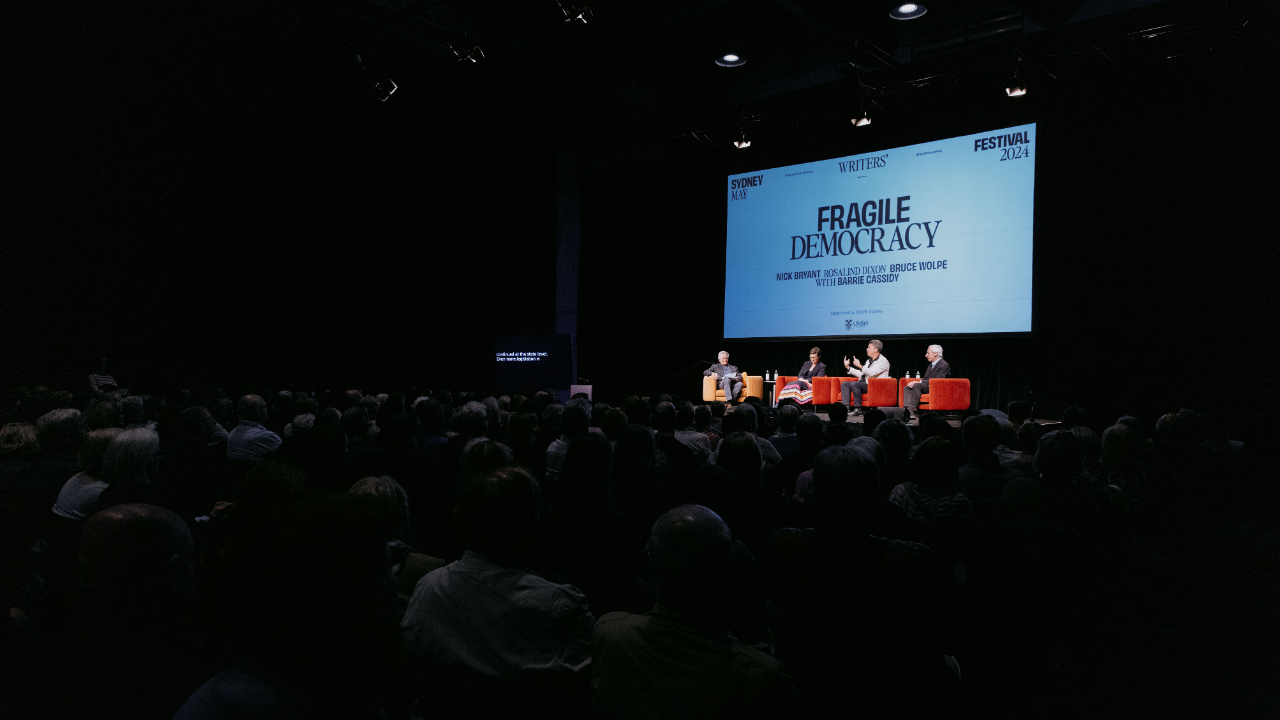
Nick Bryant | Barrie Cassidy | Rosalind Dixon | Bruce Wolpe
Australia has been a close ally of the United States since 1940, but what does this mean for contemporary politics when democracy is more fragile than ever?
Chaired by Festival favourite Barrie Cassidy, one of Australia’s most experienced political correspondents and analysts, this expert panel features former BBC foreign correspondent Nick Bryant (The Forever War: America’s Unending Conflict With Itself), UNSW Sydney Professor of Law and constitutional democracy specialist Rosalind Dixon and Senior Fellow of the University of Sydney’s United States Studies Centre Bruce Wolpe (Trump’s Australia: How Trumpism changed Australia and the shocking consequences for us of a second term).
Unpack the far-reaching ramifications of this relationship across trade, security, foreign policy and beyond.
This event is presented by the Sydney Writers' Festival and supported by UNSW Sydney.
Transcript
Barrie Cassidy: Well, welcome everybody to a discussion on the fragility of democracy, which is, it's a fascinating topic and it's an increasingly important one. Bruce will give you a very recent demonstration of why that is so in a moment.
First, I would like to acknowledge the Gadigal people, the traditional custodians of this land and pay my respects to the Elders past, present and emerging.
So the panel from the far end, Bruce Wolpe is a senior fellow at the United States Study Centre. His book, Trump's Australia, It was shortlisted for the Australian Political Book of the Year, and he takes a very close look at the consequences of a Trump victory in the United States to Australia.
Nick Bryant has seen it all from so many directions. He's a BBC foreign correspondent, both in the United States and here. His book, freshly minted, so get it while you can, you’ll get one of the inaugural copies! It's called The Forever War: America's Unending Conflict with Itself.
Rosalind Dixon, Professor of Law and Constitutional Democracy at the University of New South Wales. Her book, Abusive Constitutional Borrowing, Legal Globalisation and the Subversion of Liberal Democracy. With a title like that, it must run to a couple of thousand words.
Barrie Cassidy Laughs
Barrie Cassidy: But Rosalind is a constitutional expert and I'll be very keen to hear on some of those topics.
The Financial Review recently talked about a democratic recession, and that is a democratic recession around the world. There are more than 200 sovereign nations and how many of them are really fully functioning democracies? That is, democracies that have a universal voting system and they encourage voting and that's a very important rider on that, that they encourage voting. They have the basic freedoms, freedom of expression, free media, independent judiciary and so on. It depends on who's doing the calculations and how they calculate it, but it comes out of somewhere between 24 and 27 out of the more than 200 that really fit that category.
Bruce, just before I get you to talk, first of all, about the global situation, President Biden just said something in the last 12 hours or so that really does underline the fragility of democracy that we're here to discuss.
Bruce Wolpe: Thank you, Barrie, and it's just a real privilege and honour to be with Rosalind and Nick and you for this.
So 12 hours ago, President Biden was at West Point, the cadets had finished their service at the academy, were going into the army and he said this to them. He said, “On your very first day at West Point, you raised your right hands and took an oath, not to a political party, not to a president, but to the Constitution of the United States of America. Nothing is guaranteed about our democracy in America.” Biden said. “Every generation has an obligation to defend it, protect it, preserve it, to choose it. And now it's your turn.”
That the President of the United States has to say this shows the risk to democracy in America – we’ll talk about that – and authoritarianism around the world.
Barrie Cassidy: Thanks, Bruce.
So now we will go to the United States and then we'll talk about the pressure points in Australia because they do exist. But in the last decade or so, the battle between autocracy and democracy globally, what's the picture there? Who's winning?
Bruce Wolpe: Right now, the ascendant side is with the authoritarians. I mean, in this region, you have President Xi, you have Kim Jong-un in North Korea, then you have Orban in Hungary, you have tensions in Portugal, in Poland, other countries. And of course, you have President Xi.
And they seem to be able to act with impunity and not being punished for what they do, which is breaking up alliances that were… what they're a threat to is the post-World War II order that guaranteed security, prosperity around the world. That is now fraying and it's up in the air as to where this trajectory goes.
Barrie Cassidy: What disturbs you, Nick, about the global situation?
Nick Bryant: We're in the middle of the battle, Barrie. We are right in the middle of the battlefield right now. And it's changing day by day, week by week, month by month.
Obviously, one of the key battlegrounds is Ukraine. And the invasion of Ukraine did see a kind of mobilization in the West, a moment where the West decided, yeah, we have got to defend democracy. And it was quite inspiring to see, you know, Biden led it. He got a lot of the Western allies to sort of come to Ukraine's aid. And that helped stall the Russian advance. It helped keep Ukraine democratic.
And the narrative that took hold around that was the West fights back finally after the kind of authoritarian surge which Bruce there described. The West was finally getting back in the game. It realized how fragile democracy was.
But the problem there was a counter narrative as well. And if you looked at the votes of the United Nations at the time, look at who was abstaining from the votes condemning Putin's Russia. It wasn't just China. It was countries like Brazil under Bolsonaro. It was India. India's the biggest democracy in the world. And yet under Modi, they were abstaining.
South Africa, you know, we thought South Africa was one of the great democracy stories. You know, it's having elections now, but so many of the people in what's called the born free generation, that grew up after Mandela had been released from prison, aren't going to even vote at all.
And so this moment that we thought was kind of democracy fights back also told a very different story as well. And it spoke of how democracy is completely in peril. You speak about the AFR using the term, the democratic recession. I've been talking about it for years. I would actually go further. I think there's a democratic depression.
And I think that's the real problem right now. And where do you see it most of all? Alas, what is supposed to be the beacon of democracy, the United States of America, the beacon looks more like a dumpster fire. Indeed, a dumpster inferno.
Barrie Cassidy: We'll go to that for sure.
But Rosalind, what's your feeling globally?
Rosalind Dixon: I agree with Nick. We're right in the middle of it. And, you know, you talk to colleagues in the US who are deeply pessimistic and deeply optimistic. And I think, you know, you can tell the story in a more positive light.
Bolsonaro is no longer the president of Brazil. Modi is starting to see the need to resort to more authoritarian, hardcore tactics because his support base is crumbling in parts of India. Poland is chucked out. Law and justice is talking about democratic renewal. So that's the positive story.
And then there's the failure of constitutional reform in Ireland and Australia and Chile. And the sense that there are a bunch of European countries at the precipice of embracing the far right. And we should all be extremely worried, extremely worried about November in the United States and what it might bring. Although if you asked me to bet, I'd say we'll still see a Biden administration, but I'm increasingly worried.
Barrie Cassidy: So Bruce, January 6, 2021 was the day that probably the giant wake up call when the mob marched on the Capitol building. And it's worth keeping in mind that what they were there for was to prevent Congress from counting the electoral college votes. And then that would deny Biden the presidency. It was one hell of an event.
Bruce Wolpe: It was terrible. I worked in that building for 10 years and it was just inconceivable that Americans would attack their citadel of democracy. The Capitol dome was the most recognized symbol of democracy on the planet and disrupt the session, which was to count the electoral votes, certify the election and a peaceful transition of power.
But that the man who was at the center of it could come back from that, and be the candidate today and leading, if the election were held today, Donald Trump would win the election. And that would be leading in this again is another almost inconceivable thing, but it is all too true.
And it just shows the fraying of commonly held values and the ability of someone who is remarkably gifted in a very perverse way to be able to push the buttons on the weak points in the democratic system and exploit them.
And that the other side is not strong enough to just… he should be irrelevant to America's future, but he's front and center.
Barrie Cassidy: And yet, Nick, if you were to do a poll of key Republicans, let's say all of the elected Republicans right now, perhaps the majority of them would not give you a straight answer on the question of whether you will accept the result of the next election.
Nick Bryant: Oh, look, I remember January the 6th so vividly.
I was right up against book deadline. I brought out a book called When America Stopped Being Great. And my publisher wanted to go to press on January the 4th.
And I said, why don't we wait until we see what happens on January the 6th? Now, I did not expect.
Bruce Wolpe: You didn't… did you incite the riot?
Nick Bryant Laughs
Nick Bryant: It was unbelievable. The books, the final moments of the book publication were literally like doing an up-to-the-minute piece for the BBC.
I mean, we were right up against deadline. And so I remember it so vividly. I literally was there just hovering over my laptop, ready to put in the number of Republican lawmakers who would vote to overturn the election. I thought I was just going to be… and of course, then I just had to do this massive rewrite. But in many ways, it wasn't surprising. American democracy had been under assault for years.
America really only achieved universal suffrage in 1965 with the Voting Rights Act. African-Americans in the South could finally vote. And no sooner had the ink on that legislation dried, then the assault on democracy resumed.
The Republican Party, especially, were trying to prevent minority groups from voting. There had been an attack on democracy that had been going on for decades. And in some ways, January the 6th was the culmination of that, a very violent culmination of it.
Just six weeks after January the 6th, I went down to the CPAC conference in Orlando, big conservative conference, and Donald Trump appears. And it was an extraordinary thing to witness because what you realized in that moment was that January the 6th wouldn't be a moment of repudiation of Donald Trump. It would be a moment of further radicalization for the Republican Party.
I mean, literally, his supporters were gathered outside that conference center under palm trees. I mean, it was literally like Palm Sunday, you know? And it wasn't as if Trump was being resurrected politically because January the 6th hadn't killed him.
And it was an extraordinary moment. And you realized in that moment that the Republican Party still belongs to Donald Trump, despite what happened on January the 6th. It is his party, and he will surely emerge as the Republican nominee in 2024. And that's exactly what had happened.
And another memory from January the 6th, just to throw it in, is how many people that day were shouting 1776. They really regarded themselves as patriots, not seditionists. They really regarded themselves as modern day fighters, and carrying on that revolutionary tradition. And they saw their violence as legitimized. And that is why, even now, so many Republicans continue to support Donald Trump.
Barrie Cassidy: Yeah, Nick makes the point, Ros, that January 6th wasn't necessarily the moment when the world realized that America has problems with democracy, that there are deep-seated problems there. Just how democratic is the United States anyway?
Rosalind Dixon: Oh, imperfectly. But I was still shocked.
So I wasn't in Washington, I was on the Central Coast. And I woke up and I was like, oh my god. And one of the only times it helps to be in Sydney, Central Coast responding, is my co-author and I wrote the first piece in the New York Times of anyone calling for his removal and impeachment. And that was just the benefit of time zones. It was like, we could work when everyone else was sleeping. I was shocked.
And I think I agree with Nick because you've got to see the structural sort of fissures that create the crisis, and romanticizing the fact that America is purely democratic, ignores huge racial exclusion and systemic racism, as well as the very weird electoral college, Senate imbalance and gerrymandering that has dominated America for the last 50 years.
But it was still a shock. It was still an aberration. And I think the constitution did not fully prevail on January 6th, because all of the removal and impeachment stuff didn't do what it was meant to do.
But Pence did his constitutional job, right? He had the right to decide whether or not to certify the election as Vice President, for, at great personal cost. He did his constitutional duty. And I think that's extremely important. And I think as we think about what happens next, one of the really troubling things is there are many people in the Republican party who don't believe the Trump version of reality.
But if you've read the stuff that Mitt Romney's been saying since he decided not to run again, he's been spilling all sorts of great inside stories about Republicans who really disagree with Trump, but are too afraid to say it publicly, because it either ruins their career or puts them and their family at individual personal risk.
So I think that what you're going to see is exactly the same thing play out, which is an unwillingness to recognise results, more violence. But I do think that there are enough people in the Republican party who, if things tipped the right way, are actually in favour of democracy, the constitution and the rule of law.
Nick Bryant: What was alarming the night of January the 6th though, was that the attack continued even after the insurrectionists had been cleared from Capitol Hill and the floors of Congress had literally been wiped clean of excrement.
Rosalind Dixon: Blood and excrement.
Nick Bryant: Blood and excrement. They had to wipe the floors clean.
And the congressmen and the senators came back to Capitol Hill to basically validate the election results. And yet 147 Republican lawmakers continued to vote to overturn or challenge the election.
What they were doing essentially was the work of the insurrectionists. They were carrying on the attack on democracy. And that attack not only continued in Washington, it continued at the state level.
Even more legislation was brought in by Republican controlled state legislatures to make it even harder to vote. And we got something else as well, which was not just trying to stop people from vote. It was this idea that you could subvert the results of an election. You would no longer have to abide by the results of the election. Even after January the 6th, the attack on democracy continued and it carried on immediately. And that was what for me was so terrifying.
Barrie Cassidy: And when we talk about democracy, you mentioned the imbalance in the Senate. And Nick points out in his book, in the United States, there are two senators from every state. California has 40 million people, two senators. Wyoming has just over half a million, two senators. And this other point that you make is, half the population is represented by 18 senators and the other half by 82. It's extraordinary, isn't it?
Nick Bryant: Yeah, I mean, one of the reasons why democracy in America is so frail was the founding fathers never wanted it to be strong.
Bruce Wolpe: They also didn't know that if a president sitting in office would commit crimes /
Nick Bryant: Yes.
Bruce Wolpe: /that they'd have to be tried. And is not immune.
Nick Bryant: Yeah.
When they designed these mechanisms of democracy, they really wanted to constrain the body politic in a very intricately designed straight jacket. They didn't like the idea of mass democracy. The word democracy was actually used as a slur by John Adams, America's second president.
They came up with a minoritarian system, a counter-majoritarian system, which is why they came up with a system in the Senate where the smallest states in the country, which even then, there was a massive disparity between the populations between the former colonies. They came up with this device called the Electoral College. These were designed to be counter-majoritarian. They wanted to stop people from voting. They saw democracy as a closed shop. Like I say, it was not until 1965 that America really achieved universal democ… universal suffrage.
They love to tell the story of this wonderful democracy, but it's a false narrative. It's a myth that has taken hold. And the fragile state of democracy we are seeing now, and we are seeing some of the problems… you know we saw it in 2000 in Florida with the election there, but we're seeing it big time now.
Bruce Wolpe: But that's exactly right. And what it really reflects is a deep-seated belief among many people who feel that these times are not working for them, particularly white working class men, that the syst… it doesn't work anymore.
60% more of Americans want abortion rights, men and women. 60%, 70% want gun control, and the Supreme Court is not giving it to them, and the Congress isn't giving it to them. Blacks want more voting rights. They should have it, but Congress can't pass that.
So these democratic institutions are not delivering. That feeds cynicism and anger, and Trump knows exactly how to push that button.
Barrie Cassidy: And let's speak of the vagaries of the filibuster rules, in that you're going to have 70% that want gun controls, but you can't get it because of their ability to overrule.
Ros, President Obama said in 2016, that we are the – meaning the United States – are the only advanced democracy that deliberately discourages people from voting. Do you accept that?
Rosalind Dixon: Well, I mean, there's so little way in which the system in the US makes it easy to vote.
One of the things about Australia that is really defining, is we both have a legal obligation to vote, but it's enforced in an incredibly light touch way, by fines that if you take the trouble to write a letter, you can usually be excused from.
Most of it's about early voting, you know, postal voting, vote at the council, go and get a sausage. You know, there's a way in which the realities of working life and that people being really busy is accommodating our electoral system. And it's not only a civic duty, it's a sort of civic ritual in Australia. Of course, Judith Brett's wonderful writing about that. And I think in the US, people often line up for hours.
They're often penalised in low-income jobs. There isn't the provision and the architecture and infrastructure for voting. And then you overlay racialised exclusion in some parts of the country, particularly in the south.
And I think the former president is exactly right, but it's a critical difference between Australia and the US, which we should be proud of, but also very vigilant about protecting.
You know, one of the coalition, when it was in government, tried to impose voter ID laws. A bunch of us rallied around the country who work on election law to say, this is a solution to a non-problem that is going to disenfranchise, you know, marginalised voters, young people, Aboriginal voters in rural, remote Australia. And there was enough counter-pressure that we defeated that measure.
But we shouldn't be kind of complacent about how important, Bruce's book says this beautifully, but how important compulsory, but also socially supported civic duty-based voting is to our system's success and resilience to the far right, which exists in Australia and that attacks our constitutional norms, but hasn't gained the kind of traction we see in so many places.
Nick Bryant: Ros makes a really important point there about how the attack on democracy can take so many different forms.
In America, before the 65 Voting Rights Act, Blacks technically could vote, but when they tried to register to vote, they were given these literacy tests. They would literally be asked questions like, how many bubbles are there in this bar of soap? Try and translate for us and make legal sense of this obscure, arcane provision in the state prosecution.
Now, the 65 Act was supposed to stop that from happening, but they found other ways of doing it. You know, early voting's a great way to boost turnout. So what did Republican states do? They shut down a lot of the polling booths that were early voting. I remember in 2016 in North Carolina, we went to film at a polling station.
We saw it on the Google map. That's where it's supposed to be. When we got there, we literally couldn't find it. They had hidden the polling station! I mean, that's how far it goes.
And what's alarming is not just the extent to which the Republican Party has actually carried on this attack on democracy. It's the way in recent years, they've actually got support alarmingly from the Supreme Court.
One of the big decisions is, as Ros will be able to tell you, was what was called the Shelby decision, where they really gutted the 1965 Voting Rights Act, which is really the landmark piece of legislation. They really gutted it of many of its provisions. And that really made it even more fragile, yeah.
Barrie Cassidy: Bruce, Joe Biden is interesting all of this. The quote that you just gave us before is in part true, but in part self-serving, because it's part of his campaign pitch against Donald Trump, is that democracy is at risk.
But he's really interesting in this sense that if he was to lose, Democrat supporters are going to say, well, why did you put him up? Why didn't you give us somebody else? On the other hand, if he wins, he will be seen as the guy who stopped Trump, not once, but twice, in his tracks. And that would be a hell of a legacy for him.
Bruce Wolpe: That's right. And Joe Biden believes in full that he is absolutely capable of doing it, and will stop him again. And when he was asked last week, when are you going to Africa? He had the Kenya president at the White House, a state dinner for the Kenya president. Barack Obama showed up. It was pretty good. And he said, when are you going to go to Africa? He says, right after I'm reelected. And next February, I'll be there.
That's what he said. But he is stuck with an approval rating below 40%. Mostly it's the economy and inflation, but Trump also pushes the immigration button. We know here how the immigration button can be so effective politically, and that's hurting him. Inflation, essentially, prices are up 20 to 30% from when he took office and interest rates just like here, are at record highs. Approval rating gets low. He can't win from where he is in approval.
But the big headwind is age. I mean, he's 81. He looks old, walks old, talks old. He's not Benjamin Button. He's not going to find Cate Blanchett in the middle and have a great second term. And so the question is, can he prevail?
And Trump may have a ceiling on his, he has a hold on 75% of Republican voters. Over 70% believe Biden's an illegitimate president and that the election was stolen. They are locked in with him, but 75% of Republicans is not half the country.
And so the question is, where the Nikki Haley voters go and so forth. If he's convicted in New York in the next two weeks, where do other voters go? But Biden's problem is, because of age, it's enthusiasm. He was very popular in 2020 with younger voters, of course, Black voters, Hispanic voters, but those margins of support have diminished.
So actually the person who's going to win the election is that candidate who loses the least number of votes among those who support them. And that is going to be the tipping point next November.
Nick Bryant: It's interesting you mentioned Benjamin Button because the movie that comes to mind for me with Joe Biden is Weekend at Bernie's.
It's a guy who dies and they pretend he's alive. And I was very much in the sort of weekend at Bernie's school with Biden. I thought, even if he's dead, run him, because I kind of struggled to see a Democrat who would do better.
Bruce Wolpe: No, but /
Rosalind Dixon: Gretchen Whitmer.
Bruce Wolpe: / the deeper question here is, is he Joe Biden or is he Ruth Bader Ginsburg? And we're going to know the answer to that question on November 6th.
Nick Bryant: Yeah, and look, I'd add to that. I mean, my view of the Weekend at Bernie's thing has changed.
I mean, I do think Biden's age is really a big problem there. By definition, it gets worse every single day because he obviously breaks a new record every day he's in the White House.
Bruce Wolpe: It's just one other, there are going to be a couple of reset points of what's coming.
One is going to be the trial in New York. What happens to Trump? The debate is a month from now. And Trump believes that he can destroy Biden easily, that Biden cannot string two sentences together and is senile.
And Biden believes he can show Trump's extremism and that he is out of the mainstream of American politics and undeserving of a second term.
If Biden has a poor performance in that debate, there will be a wave of negative sentiment as to whether this guy's not going to make it. And that will set off another chain of events, which could be quite dramatic.
Barrie Cassidy: Another theme of the book – of your book, Nick – is that Trump has given voice to a disaffected electorate, but you have to keep in mind, it didn't start with Trump. That there's a long history, and you call it the unending conflict. There are deep-seated historical issues at play here, and it's not all about Trump.
Nick Bryant: Yeah, I mean, demagogues have frequently raised their heads in American politics. People like Huey Long, the former governor of Louisiana. Trump's great presidential soulmate, Andrew Jackson, the first kind of populist, the first real authoritarian president in the United States.
Trump loves him. He's my kind of guy, he said when he went to his tomb. He had his portrait in the... Andrew Jackson was actually appalling to Native Americans. Trump had a Native American event in the Oval Office, and they did the photo op in front of the portrait of Andrew Jackson. I mean, it's just the lack of sensitivity is unbelievable. The historical illiteracy is unbelievable with Trump.
Yeah, I mean, and what is surprising is not only the number of demagogues that have emerged in American history, but the number of presidents who've shown authoritarian tendencies.
It began right at the beginning with John Adams, second president, he passed his legislation to actually ban the opposition, to make criticism of the president illegal. Some of the heroes of the American story had pretty authoritarian tendencies, like Abraham Lincoln.
He suspended habeas corpus. He broke the constitution in order to save the union. FDR, you know, we think of him as a great liberal hero. And yet, he also busted a norm that was set by George Washington. It wasn't a constitutional requirement then, that he served more than two terms in office. But the point is, he was allowed to serve more than two terms in office because the American people kept on reelecting him.
They liked the strongman president. Eleanor Roosevelt said that in 1933, the line we always remember from Roosevelt's inauguration is, “The only thing we have to fear is fear itself.” Eleanor Roosevelt said that the biggest applause line was actually when he said, “Do you know what? I might have to bend the rules of the constitution to do what I need to do there.” You know, and there was this rapturous applause.
It always speaks, there is this authoritarian tradition in American politics, a demagogic tradition in American politics, that Trump actually continues. He's not the historical outlier that we like to believe he is.
Barrie Cassidy: Well, this quote in the book from an Iowa congressman, Stephen King, a Republican. And he said, folks keep talking about a civil war. Well, one side, that is his side, has about eight trillion bullets. The other side doesn't know which bathroom to use. It's, that's a chilling quote.
But Ros, it kind of underlines though, where they're coming from, that cultural issues are at the heart of so much of what dissatisfies them about their own country.
Rosalind Dixon: Yeah. I mean, I think that there's something in that about policy responsiveness, that I think Bruce highlights, which is, I think the greatest risk to Australian democracy lies in, kind of, foreign style tactics, misinformation, interference. But also if the government doesn't do the basics, if people can't find a home, if people can't afford their life in the most basic sense, they turn to strongman style politics, in ways that are understandable, but deeply destructive.
So part of it is the alienation of this chunk of America. And it's not more than 25, 30 percent of America, but it's very, very solidly alienated from the mainstream of American politics. And part of it is that America has, just below the surface so much violence. And that the kind of result of the influence of the NRA, the filibuster, the Supreme Court's decision in Heller over 15 years ago, which has now created rights in relation to possession of guns, means that the threat of full scale civil war and violence is just below the surface. And I think that that is something which again, we have to be extremely proud and vigilant about, which is, you can disagree in Australia in ways that are sometimes difficult or nasty, but there isn't that lurking sense of violence.
And I think part of what happened on January 6th was a failure of the government to call in, you know, law enforcement, a failure of the constitution until Pence did his job. But also just the lurking threat of violence that comes from that many guns with that many disaffected people. And an inability to pass any semblance of sensible gun control.
Barrie Cassidy: It couldn't be a civil war like the last one, it would have to be what, sort of a guerrilla war fought state by state.
Rosalind Dixon: Well, it would look like Noumea, right? So look what's happening in, you know, down in our Pacific neighbours. It's just full scale looting, destruction, loss of, you know, civil, kind of, control. It's a different kind of civil war, I think.
Nick Bryant: Look, few people are more pessimistic about America than I am, but I don't, I really hope that there won't be a civil war 2.0. It certainly won't look like the last one in the 1860s. We're not going to be seeing a modern day Gettysburg. There are huge differences. You know, there's not the geographic split between North and South. There's not the single issue – America's divided by a swathe of issues – not just slavery. Even in red states, there are big blue blobs. There isn't that geographic divide.
But, even though I hope there won't be a civil war, I think the problem for America right now, it won't be in a state of civil peace. And I just cannot see that emerging, either in the short term, the medium term, or even the long term, frankly, hence the title of the book, The Forever War, America's Unending Conflict With Itself.
Barrie Cassidy: Bruce, your book takes it an extra step further, and you talk about the consequences for Australia if Trump was to be re-elected. Jim Chalmers said recently, the relationship will remain strong, even if Trump gets a second term. We’ll play the cards that were dealt.
Why is it, do you think, that the major political parties, anyway, take that approach? Aren't we, at some stage, given what happened in America, entitled to have a look at their cultural position, their priorities, their morality, and make different judgments?
Bruce Wolpe: There are two classes of issues. One is day-to-day, very important, tectonic issues on the world. What's it going to do on AUKUS? What's it going to do on trade? What’s he going to do on China, Taiwan? What's he going to do to NATO? And the world that we live in, and so forth? But the existential… and that will be worked through, and Australia had tremendous success in Trump's first term. It was just really ably managed. The two ambassadors, Sinodinos, Joe Hockey, outstanding. The ties between the intelligence and military leaders on both sides, it's rock solid. And so that's there.
But they will just work through that.
But there is an existential issue posed. If Trump, just going back to what happens after the election, yeah, I think there's going to be violence in the streets. I think a lot depends on the margin by which the election is won or lost. And we'll see where that continues. But if Trump becomes president, he will, I believe he will destroy America's democracy. So it doesn't function as a democracy anymore.
In other words, Congress passes laws, he ignores them, they pass money, he ignores that, he'll put money where he wants it to be. He will not have a chairman of the Joint Chiefs of Staff who says, no, I'm sorry, Mr. President, I'm not sending troops into the streets of American cities to put down riots. He will disobey court orders. He will insist that the Department of Justice indict and try his enemies. It's going to be vengeance and retribution. And he wants to lock up the media. So Barrie, get ready.
He wants to, he's already said with Brian Roberts and Comcast, I want to put you out of business. He will give things away to important companies. He had a meeting in Miami in April talking about the future of oil and gas under his administration. He says, I need a billion dollars in cash for my campaign. And if I get that support, well, I will repeal all the energy and environmental laws you don't like.
And he has a project, the Project 2025, in which he goes, there are teams on every government agency as to what they can do on the inside to make sure the outcomes are pro-Trump.
So if the United States goes down that road and he's ignoring Congress and ignoring the rule of law, and he's prosecuting his enemies and locking up the press. Australia is aligned with the United States because we are two democracies and we share the same values of human rights, the rule of law and freedom of religion, of press, and so.
And if the United States is no longer the United States, what is Australia's democracy doing being aligned with the United States? And so if the tectonic shape around the world, so you have NATO gone without the United States, or it'll be different. The United States maybe has a deal with China and then suddenly China has completely free reign over this. Why do we stay associated with that? I hope to God we don't get there, but I think it is a problem that we need to start thinking about.
Just one other thing. I've visited with agencies in Canberra. I believe they're working very hard on every contingency for everything he might do on trade, on immigration, on energy and so forth. And I think the preparation work is very good, but this is a deeper question.
Barrie Cassidy: And on the broader question of how democracy is holding up in Australia, the government set up an organization called the Strengthening Democracy Task Force. They take advice from a range of people. One of them is Professor Larry Diamond from Stanford University, and he told them that this is how you should look at it. Australian democracy has been to the GP and the GP says good, robust, healthy, but there are some nasty viruses going around, misinformation, polarization, distrust, and there's a powerful new transmission and that is social media and the digital platforms, which will test our immunity. So we need new remedies and new vaccines.
What are they, Ros?
Rosalind Dixon: Yeah. So, I mean, obviously, there's a whole bunch of wisdom in Nick and Bruce's work and others. Social media and disinformation has to be something we tackle more effectively.
We can't do it alone in Australia because we're dealing with platforms and systems that are global, but Europe is pushing, they're pushing hard. I think there is an interest in this globally. So I think misinformation, it's part of why, you know, the voice referendum failed.
It's partly why we're vulnerable. I think there has to be a really serious push globally on that part of things. I think we have to keep, you know, Bruce interprets Biden's message as deeply concerning. I think it is, but it's also reminding us that every generation has to see the benefit of democracy. You know, in South Africa, there are kids who don't know what apartheid meant and why 1993 to 6 was such a revolutionary moment in creating a multiracial constitutional democracy, peacefully. And so not teaching that generation that is deeply troubling.
Here we have to teach every generation what democracy is, how Australia works, what it means. We're doing that work at UNSW. We love it. It's really important. But so are lots of other organisations around the country. And I think the other thing is making sure that the people who get elected look like Australia culturally and, you know, gender wise.
And so people not only see the policies that meet their needs, but they see their own community reflected in the parliament. As I said to you, you know, there's a bunch of unis across Australia running a program called the Pathways to Politics for Women program that we help run here. And just seeing the young, culturally diverse women, you know, and NB folks interested in making our democracy better and reflecting their communities, is a real point of hope.
Barrie Cassidy: But how do you persuade the major parties to pre-select them? They can't all be independents.
Rosalind Dixon: It's a... we're working on it, Barrie.
Panel Members Laugh
Rosalind Dixon: I have a lot of phone numbers.
Barrie Cassidy Laughs
Nick Bryant: Barrie, can I come in as well? Nothing makes you appreciate Australian democracy like covering American democracy for 10 years.
Barrie Cassidy Laughs
Nick Bryant: And my view of compulsory voting has totally changed. I used to look on compulsory voting as the kind of rear to curb parking of democracy. You know, Australia telling you to do something needlessly. You know, it's kind of yet another rule. You know, I thought the first compulsion of any politician is actually to persuade somebody to go and vote for them. You know, I kind of think that that's a democratic essential.
But, you know, I've totally changed my view about compulsory voting. It is your safeguard. It really is, against polarization. And what compulsory voting speaks of in Australia is this great democratic tradition you've got of innovation. It's not a story that Australia tells itself. Everybody buys the Donald Horne thesis, which was, not just that Australian politicians are second rate. It's that the Australian system is second hand.
He said that Australia's system is too derivative. You basically inherited this English model. You added a bit of American terminology like the House of Representatives and the Senate. But, you know, your parliamentary seats are green and red like they are in Westminster. You've got Hansard, you've got, you know, yada yada, all that stuff.
Australia, there's a very different story to tell about, and Ros could tell it far better than me, about democratic innovation in this country, whether it's, you know, you were the first country to allow females to actually stand for parliament. You know, you were just after New Zealand in terms of female enfranchisement, systems of preferential voting, systems of proportional representation.
Australia was way ahead of the curve. You've always been great at coming up with a really workable democracy, a non-partisan Australian electoral commission. That was something that you did before anybody else did in the world. And that is so central. That was why Dutton's attack on the Australian Electoral Commission was so frightening during the voice referendum, because that is world class. It's a global standard. And to attack that was hugely irresponsible. But you're right. I mean, Australia really does have to inoculate itself against Americanization.
When we came back from America, we were stuck in quarantine for two weeks. We're in a hotel in downtown. You know, we hear this kind of rumble of protesters early one Saturday morning. It's all these anti-lockdown protesters. You see the photos on the television later. They're all carrying Trump flags. And you think, oh, my goodness.
And often I think, did I see anything when I was covering Australia before I went back to the States that sort of indicated what we might see or sort of gave us any clues? You look at things like the Ditch the Witch rallies on the lawns of Parliament House. You look at the sloganeering, the kind of distillation of really complex issues into really sort of simple slogans. Stop the boats. Axe the tax. Stuff like that.
And I remember reading a Lowy poll. This was like 15 years ago. It showed that something like 30 percent of Australian young people thought democracy was the best model. And he thought, what? That's really, really scary. And that hints at something else, which is one of the reasons why they don't necessarily have faith in democracy is they don't have faith in an economy to deliver for them. You know, income polarization leads to political polarization. If you rip out in the middle of an economy, you tend to rip out in the middle of the politics. And all of these things, you know, we need to look at. It's looking at democracy in the whole. You need a functioning economy in terms in order to have a functioning democracy.
Barrie Cassidy: In your book, Bruce, you talked about the guardrails and you put the AEC first because it's just, it's so starkly different to the way that things are done in the United States.
Bruce Wolpe: No, it is, it is completely nonpolitical and does it in a just very straightforward way. But I agree with it. Really, it's compulsory voting, preferential voting together, which is number one. The AEC is second, but also the Westminster system. I mean, Trump is a blow in. You don't have any blow ins as Prime Minister of Australia.
The Prime Minister of Australia is the leader of the majority party and the reps. That means that person has served in parliament, has ingested, has attuned to the mores of governance and so forth, which is why when Scott Morrison arrogated unto himself several cabinet portfolios, that really struck a nerve with people. And he was censured, the first time a prime minister has been censured.
And so, with compulsory voting, which means you're going to have it's going to be center left or center right. Extremists cannot win elections with those values, with the Westminster system. I mean, you know, Gina Reinhardt will never be prime minister of Australia. Twiggy Forrest will never be prime minister of Australia. And Pauline Hanson will never be prime minister of Australia. That is a degree of comfort.
That's why it is very important to keep educating people about the values of this democracy. But I mean, we hope I hope, you leave here with more confidence in Australia's democracy. It's not going to go down the U.S. line, even if Trump goes completely authoritarian, or worse.
This country's democracy will survive. You can have Nazis standing on outside a parliament house in Victoria and carrying a gallows, like the gallows for Mike Pence in the streets of Melbourne.
Nick Bryant: 100 percent, 100 percent, but never take democracy for granted.
Bruce Wolpe: Exactly.
Nick Bryant: That's the thing.
Bruce Wolpe: And this I think what's happening, a woman, a friend of mine came out of her apartment building this morning, taking a walk. And she's got her phone on to CNN. She's saying, please tell me that Trump is not going to win the election. I mean, she's half a world away on a Sunday morning and she's worried about it.
And yes, we should be worried, in order to be stronger.
Barrie Cassidy: It was a little overlooked at the time, I think, but after the last election, Scott Morrison went to Perth and delivered a speech. And he said there that we don't trust in governments. We don't trust in the United Nations. Thank goodness. If you're putting your faith in those things, like I put my faith in the Lord, you are making a mistake.
Now, that's not exactly restoring faith in the system. But has he got a point there that politicians are fallible, whereas God is not, of course. So, or, have the politicians themselves got a responsibility to do better?
Rosalind Dixon: Yes, but we don't put our trust in individuals. As Bruce said, we're putting our trust in a system that's existed for, you know, more than 100 years in a way that's really served us. And part of what Morrison didn't really get about our system when he wanted to have all the jobs, was it's a team effort. And it's a team effort for a good reason, not just because, you know, more brains are better than one, but because, you know, a parliamentary system is about checking, you know, the decisions of each other and making sure that the collective wisdom of the cabinet gets it right and that you have the court and you have the Electoral Commission, and you have a Human Rights Commission. We have a whole bunch of institutions.
You know, Morrison's obviously himself lost a degree of faith in our traditions. He's off in the United States hugging Trump. I think that his loss of faith is to the detriment of understanding that it wasn't about him. It was about a team. And our institutions are strong. Even if we have people who inhabit those positions who are fallible, they're not having to govern the country by themselves. And that's for a reason. And that's a good thing. But it should also give a great deal of hope.
I mean, I think one of the things I thought was so positive about the experience of lockdown is Australians basically trusted the government to get it right. There were lots of mistakes, but the government usually came clean on them. There were lots of ways in which I would have changed things. I would have offered more compensation to parts of Sydney and Melbourne that were the worst affected. But I do think fundamentally the social compact held with JobSeeker, JobKeeper and public trust in science and the government to do the right thing. And so I think that Morrison's got Australia and parliamentary democracy exactly wrong.
Nick Bryant: And I think that's an absolutely essential point. One of the biggest safeguards for democracy is good governance. And it's actually one of the problems in Australia since the turn of the century. You haven't had brilliant governance. You were set up by this great reform era in the run up to the 21st century.
But since then, the reform era hasn't renewed. And, you know, you've had a politics that's really about revenge rather than reform, and personal revenge rather than policy reform. And that's been a big problem.
Barrie Cassidy: You mentioned social media and all the challenges there. But what about the mainstream media? Mainstream media seems to be becoming more polarised. It's never been easier, I think, for the public to identify the left and the right in the media.The business model is changing. It has to, because it needs to be leaner. They haven't got the money they used to have. But that means that there are fewer critical eyes. There are fewer people gathering information. I mean, you would be able to talk on this, Nick, but you spent a lifetime of gathering the information. But now there are so few people gathering it. And yet more and more people are using that limited information to put out their opinions and commentate.
Nick Bryant: Yeah, and one of the alarming things about the rise of fake news is how facts don't necessarily counter it. They're not the antidote to the poison. And that's really problematic. I mean, it's really interesting to get into this sort of stuff. We haven't got much time left. But I mean, you know, you don't kind of need to debunk stuff anymore. You need to pre-bunk it. You need to kind of get your information out there really early so that you frame the debate. You kind of set the kind of…
But, you know, there's an alternative reality out there. I mean, I covered Joe Biden's inauguration. There was a 90 second hiatus where nothing happened. Nothing happened. It was kind of this bizarre kind of silence. And you could just see all these QAnon supporters thinking, this is the moment Biden gets arrested and gets taken off to Guantanamo Bay and tried.
I mean, that is what you are dealing with now, an alternative reality, which is almost impossible to counter with traditional forms of information and basic facts. It's a huge problem.
Bruce Wolpe: Donald Trump's going to do that on January 20th, 2025.
Nick Bryant: The hilarious thing about the day on January the 20th was Trump gets in his helicopter. He's flying to Andrews to get an Air Force One to take him to Florida. He gets over the Capitol Dome. I was stood beneath it watching all this. And suddenly he turned 180 degrees and headed back to the White House.
And we thought, oh, my God, has he forgotten something? Or does he not want to leave office? And he thought, and again, the QAnon supporters would have been…
Bruce Wolpe: he wanted to pick up some more classified papers.
Bruce Wolpe and Nick Bryant Laugh
Barrie Cassidy: Ros, so just to be clear on when you were talking before about what's needed in Australia, constitutional reform is not necessarily part of that?
Rosalind Dixon: That's right. I mean, I think I was personally very disappointed about the result of the referendum on the voice. I think it would have strengthened our democracy. But I think our system constitutionally is pretty strong and it relies on a mix of entrenchment and the high court and a strong political culture.
And obviously, if our political culture dies, we should throw everything we can at the problem. And that could include the constitution. But at that point, it may be too late. I think we need to say that we have a really strong system that is, you know, a product of both design and happenstance and really understand that there's nothing defective in the way there is in the US of, you know, gerrymandering the electoral college, the Senate, the filibuster.
But we have a strong system that requires reinvestment, both in terms of personnel, in terms of education about what it does and what it means, and regulation around the edges of the extreme threats posed by foreign and domestic misinformation.
But I think our constitutional system is strong. It can always be improved. But the kind of stuff we're talking about in Hungary or you know, Brazil or the US, I think there are constitutional solutions to their problems. But I think here the constitution provides the bedrock that is sufficient for us to get on with, you know, the business of democracy and shoring it up in a range of other ways.
Bruce Wolpe: Just linking this to where we started, the decay of American democracy, America and the world and authoritarianism and democracy. The decay of American democracy meant that the Congress could not stand up and pass money needed to defeat Putin in Ukraine for 18 months. And that's where it comes together. And that's why the world is so dangerous. And that's why there's a loss of confidence and a lot of anxiety.
Barrie Cassidy: Nick, final word?
Nick Byrant: Constitutional reform, I've always believed in constitutional reform in America, but there's a problem with it. If you get away with… if you if you take away all these counter-majoritarian and minoritarian systems like two senators in the red states, if you took away that, and you took away the electoral college, the Democrats would win the presidency every single time. They've won the popular vote in seven out of the eight last elections.
If you took away two senators in all those rural states that have so many guns, what's going to happen? So you've got a situation where you can't live with the Congress as it is. You can't live with the constitution as it is, and you can't live without the constitution as it is. Again, the forever war, just goes on and on.
Barrie Cassidy: So just to sum up then, horrified about what's going on in the United States, but a degree of optimism about what's happening in Australia. We just need to be on it?
Bruce Wolpe: Oh, yeah. No, Australia is a strong democracy. And you can have two democracy sausages after you vote!
Nick Bryant: Australian democracy is a lot more impressive than Australian politic.
Bruce Wolpe Laughs
Bruce Wolpe: That’s good.
Barrie Cassidy: And that's a discussion for another day!
Well, please thank Bruce Wolpe, Nick Bryant and Rosalind Dixon.
Audience Applause
Barrie Cassidy: And thank you very much for coming. Thank you.
Centre for Ideas: Thanks for listening. This event was presented by the UNSW Centre for Ideas and the Sydney Writers’ Festival. For more information, visit unswcentreforideas.com.
-
1/4
-
2/4
-
3/4
-
4/4

Rosalind Dixon
Rosalind Dixon is a Professor of Law and Director of the Gilbert + Tobin Centre of Public Law at UNSW Sydney. She is a graduate of UNSW and Harvard, and has taught at law schools around the world – including Harvard, Columbia, the University of Chicago and the National University Singapore, and is the author of the book, with Richard Holden, From Free to Fair Markets: Liberalism after COVID. She is passionate about law and politics, and currently Director of the Pathways to Politics for Women Program at UNSW.
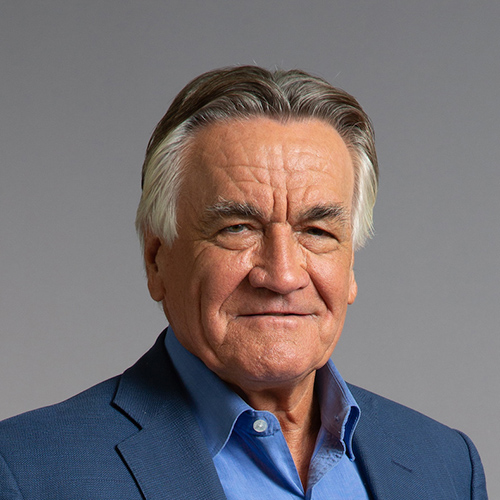
Barrie Cassidy
Barrie Cassidy is one of Australia's most experienced political correspondents and analysts. He was the creator of Insiders on the ABC, a program he hosted for 18 years.
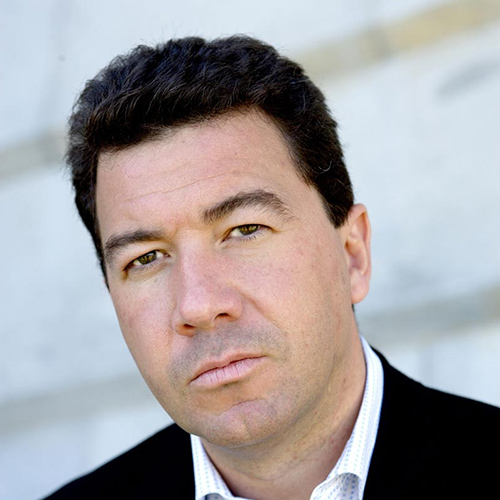
Nick Bryant
During a distinguished career with the BBC, much of which was spent covering US presidential politics, Nick Bryant came to be regarded as one of its finest foreign correspondents. He has written for The Economist, The Washington Post and The Atlantic, and is now a regular columnist for The Sydney Morning Herald and The Age. He is also a regular contributor on the ABC. He is a history graduate from Cambridge University, who holds a doctorate in US politics from Oxford University.
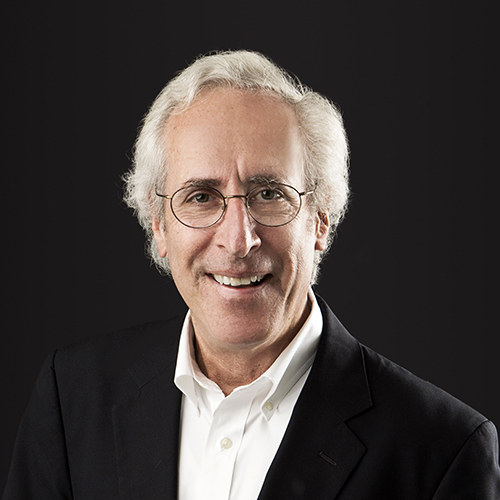
Bruce Wolpe
Bruce Wolpe is a Senior Fellow (non-resident) at the United States Studies Centre. Bruce is a regular contributor on US politics across media platforms in Australia. In recent years, Bruce has worked with the Democrats in Congress during President Barack Obama's first term and on the staff of Prime Minister Julia Gillard. He has also served as the former Prime Minister's Chief of Staff. He is author of Trump’s Australia.