
Find Out More About UNSW X AI

The UNSW AI Imposter Quiz was brought to you in collaboration with Associate Professors Oliver Bown and David White, and lecturer James Dunn.
The rapid growth of AI in the creative industries is revolutionising how art, design, and media are produced and consumed. AI tools are now capable of generating original artwork, music, and even literature, blurring the lines between human and machine creativity.
This expansion not only enhances productivity but also challenges traditional notions of authorship and artistic value. As AI becomes increasingly integrated into creative workflows, it raises critical questions about the future role of human creativity in a world where machines are collaborators, not just tools.
Did You Know?
- Synthetically generated faces are found to be more trustworthy than real faces.
- Over two million X accounts use AI generated profile pictures.
- People tend to mistake deepfakes as authentic videos (rather than vice versa).
- You’re only 20% more likely to recognise an AI generated video of someone you know.
- You’re more likely to attribute music you don’t like as being AI generated.
Learn More About AI Music with Oliver Bown
Associate Professor Oliver Bown is an academic interested in understanding artistic and musical creativity using digital technology, and its relation to society.
He has worked in the field of Computational Creativity – the study of the automation of creative tasks – since 2007, seeing massive transformations in technological capability leading up to the current explosion in AI art and music. Oliver has published articles on the subject and hosts short courses for curious minds on adapting AI in the creative industries.
Oliver Bown's book Beyond the Creative Species: Making Machines That Make Art and Music is free to download.
Learn More About AI Videos & Photos with David White and James Dunn
Associate Professor David White studies face perception with a focus on individual differences in people's ability to perform face processing tasks. These individual differences have implications for theoretical understanding of perceptual processing and social cognition. Dr James Dunn is a cognitive psychology lecturer at UNSW Sydney interested in the diverse cognitive abilities of individuals, particularly within forensic psychology, face recognition, and AI. Both David and James are driven by a passion for bridging theoretical research and practical applications especially in high-stakes environments, like in criminal investigations and forensic science evidence reports, where accurate cognitive assessments are crucial.
David, James and their team have created a facial recognition test that showcases their research in an interactive and fun way. Keen for more quizzes? Give it a go!
Take the Facial Recognition Quiz Now
Discover UNSW research in the quickly developing world of AI.
UNSW's researchers are ahead of the curve in understanding and interacting with the ever changing world of AI.
Got more questions? Take a look at these degrees.
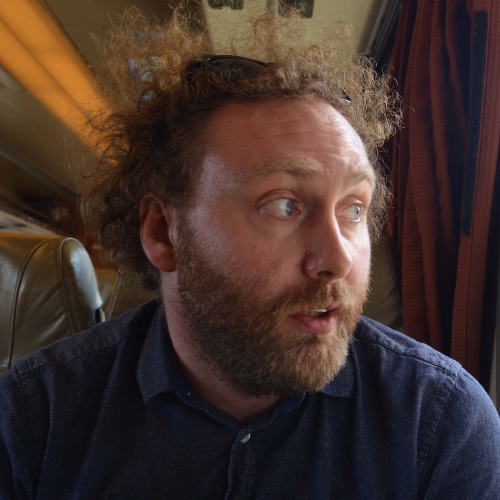
Oliver Bown
Associate ProfessorKeywords and research areas: Computational Creativity, Generative Music & Art, Musical Metacreation, Interactive Media Art & Design, Creative AI.
Oliver Bown is an academic interested in understanding artistic and musical creativity using digital technology, and its relation to society.
He has worked in the field of Computational Creativity — the study of the automation of creative tasks — since 2007, seeing massive transformations in technological capability leading up to the current explosion in AI art and music. During this time he has worked as a creative coding practitioner, making his own music improvising systems which have been featured at the London Science Museum, the North Sea Jazz Festival, BBC Radio 3, the Computer Music Journal, the New Interfaces for Musical Expression Conference, and the International Symposium on Electronic Art, amongst other venues.
As a practitioner he has also worked with other emerging media arts technologies, most notably low-cost networked computing for distributed audio and visual experience design. His collaborations with media arts collective Squidsoup have involved the development of massively multiplicitous distributed audio arrays, exhibited worldwide at venues including Kew Gardens in London, The Scottsdale Museum of Contemporary Art, Burning Man, and Salisbury Cathedral UK. He developed this work to enable rich audio synthesis over distributed networks with his HappyBrackets framework for distributed creative coding, which has been used in the commission of further multiplicitous media artworks.
Parallel to this creative practice, his research uses diverse methodological approaches to understanding technology, art and creativity, centred on a strongly social perspective on creative art and music practice. His 2021 book Beyond the Creative Species (MIT Press) summarises this body of work, applying literature on the psychology and social dynamics of creativity to questions of how we understand the creative autonomy of machines, how we design for interactions with creative AI, and how creative AI will impact cultures of creative practice. Related to this he is interested in how evolutionary theory provides a powerful framework for thinking about the dynamics of complex sociotechnical assemblages, connecting the work of evolutionary theories such as niche construction and multi-level selection theory with social theories such as actor-network theory and Bourdieu’s field of cultural production. His research methods combine creative practice research, design research and anthropological methods.
He is also a member of the UK electronic music duo Icarus, and the Australian improvising ensemble Tangents, an Australian Music Prize nominated band who have had their music reviewed in the Australian, Pitchfork, and SMH and featured on ABC radio and the BBC, amongst other media channels.
To see more of Oliver's work including his free book Beyond the Creative Species Making Machines That Make Art and Music click here.
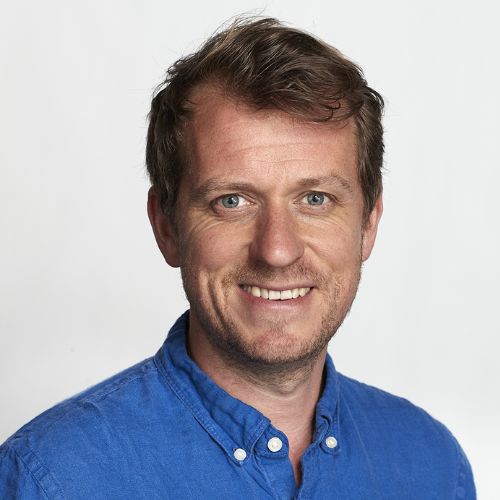
David White
Associate ProfessorI am a lead investigator in the Face Research Lab at UNSW. We study face perception with a focus on individual differences in people's ability to perform face processing tasks. Although we all look at many faces each day, we do not all share the same abilities to process the important social information that they contain.
These individual differences have implications for theoretical understanding of perceptual processing and social cognition, as well as for people's everyday lives. They are also of substantial applied interest in settings where accurate face identification decisions are critical to identity management processes, for example in government, police, private industry and courts. Errors in these decisions can have profound social consequences, such as identity theft, acts of terrorism or wrongful convictions.
Our work in this area encompasses performance testing of humans and technology. Interest in facial recognition technology is both applied and theoretical. From an applied perspective, we are interested in how people use and collaborate with facial recognition technology when making face identity judgments – for example in criminal investigations and forensic science evidence reports. From a theoretical perspective, we are interested in the potential for modern facial recognition technology – Deep Neural Networks – to model aspects of the face processing system in humans.
To find out more about David and his work click here.