
The Fading Dream
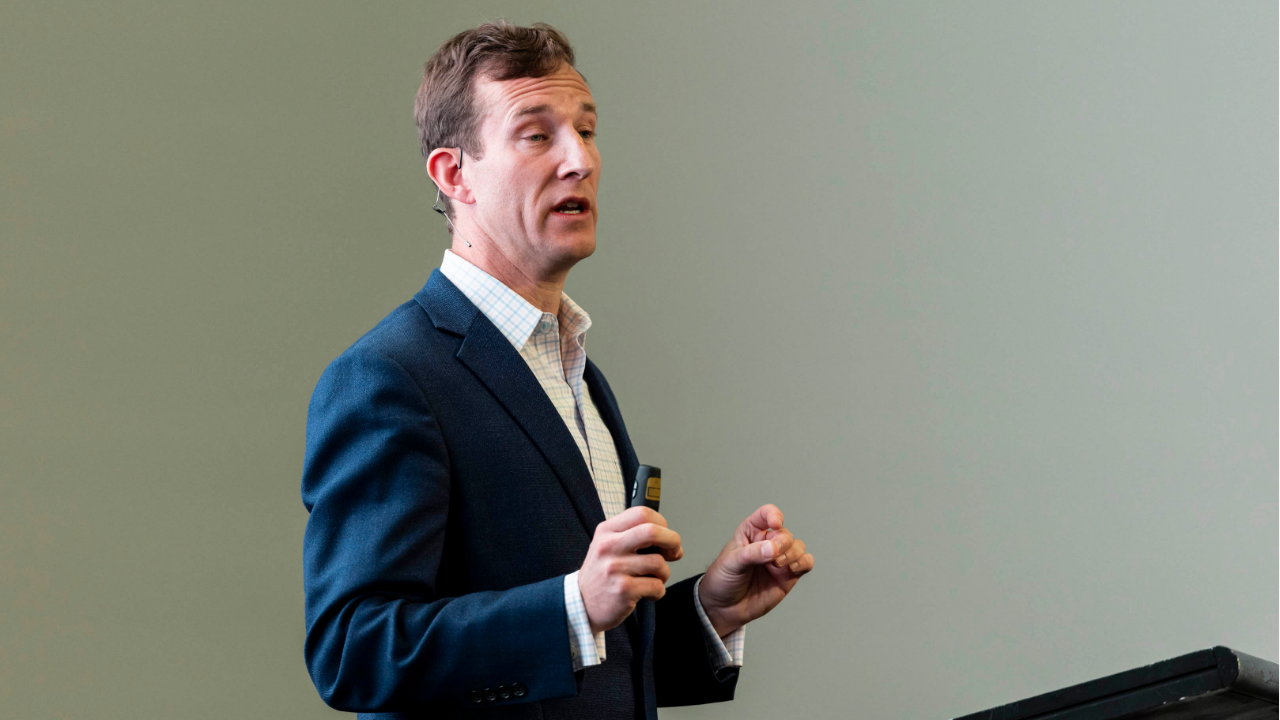
We campaign in poetry, but we govern in prose. There are hard compromises, and being willing to not sacrifice the perfect and settle on the good, and kind of make incremental progress, I think that's incredibly important for all of us.
Economist John N. Friedman has made a career researching the causes of inequality and its long-term consequences for children in the US. His findings are grim. Social mobility is in sharp decline. Where you live and go to school increasingly determines your success and future. Joining fellow economist, Richard Holden, Friedman explores how policy can harness schools, neighbourhoods, universities, and social capital to reverse this trend, and revive a fading “American Dream” of progress and social mobility. Explore what this could mean in a country like Australia.
Presented as part of The Ethics Centre's Festival of Dangerous Ideas, supported by UNSW Sydney.
Transcript
Richard Holden: Good afternoon and welcome. My name's Richard Holden and it's my pleasure to introduce my friend John Friedman this afternoon.
He is the Brigger Family Distinguished Professor of Economics and Public Affairs at Brown University where he also serves as Chair of Department. He's Co-Director of Opportunity Insights, much of the work you will see today developed by that lab. His work has appeared in the very top academic journals and it's also been extremely influential and referenced in media outlets like the New York Times and also in President Obama's 2012 State of the Union Address.
He was Special Assistant at the National Economic Council, and he is a member of the Treasury Advisory Council on Racial Equity. John and I were PhD students at Harvard together where we first met. John is a brilliant and wide-ranging scholar who's made major contributions to social mobility and inequality and he typifies the best kind of economist, bringing together theory and data to yield policy relevant insights.
Please join me in welcoming John Friedman.
Audience Applause
John Friedman: Thank you so much Richard for a very generous introduction and thank you all for coming to spend your afternoon here with us today. I'm going to talk about the fact that it has become increasingly difficult in many modern societies for children to have the dream of upward mobility and this is not just something that we feel by looking around, it is not just something that we feel intuitively, it's something that we see very clearly in the data.
So how do we see this? Well think about a very simple way to conceive of intergenerational mobility for children. It's the dream that through hard work someone can rise up and achieve a standard of living that's better one generation on than their parents lived in a generation before.
How are we doing as a society in offering children this possibility? Well we can actually measure this in data and what we find first here starting in the United States is that it's been a fading dream over time. Each dot that I'm showing you here is just a very simple statistic. It asks what share of children born in each year grew up to achieve intergenerational mobility by that very simple measure, to have a higher standard of living than his or her parents. For children born in the 1940s and 50s it was nearly a guarantee.
80, 90 percent of children achieved upward mobility by this definition. But you see as we move from the left over to the right, as we get towards more recent cohorts, I was actually born in the last dot over here in 1980 where you know my cohort had little better than a coin flip chance of achieving intergenerational mobility in this way. Now this is a particular problem I think in the United States but it's a problem that's also shared by many, many societies across the world, Australia included. So if we do the same calculation for Australia in the yellow series here, things haven't quite fallen as far as fast, but still we see that a child's chance of achieving intergenerational mobility today looked nothing like what they looked a generation ago.
What I want to now do over the next hour in our session is to try to unpack what's going on here. And the tool I'm going to use to do that is big data. Big data is going to help us understand what are the important dimensions of upward mobility, what is it that helps children escape a cycle of poverty, and what does that tell us about how we should shape policy in government, in our educational institutions, in the private sector, how we can try to reverse this decline.
The first thing that we can learn from big data is simply the vast extent to which the circumstances of your birth matter for your chances of achieving intergenerational mobility in this way. There's a lot of attention, rightly so, focused on racial and ethnic disparities in upward mobility. But what we see in the data is that it does not stop there. There are enormous disparities by socioeconomic class and even enormous disparities simply depending on the neighbourhood where you grow up.
So this map of the United States here is what we call the Opportunity Atlas. It's a map of what parts of the country children who grow up in poverty have of succeeding in escaping poverty as an adult. The deep red areas are areas where on average children remain in poverty, and they are trapped in that intergenerational cycle of poverty. The blue areas are the areas where when children grow up they have much, much better odds.
And it's not just about growing up in one part of the country or another. This is actually a very local phenomenon. So rather than looking at it across the entire United States, we can use the data to look at it literally neighborhood by neighborhood. In almost any city you'll see this same level of variation. So here is a map of New York City. The blue is the same blue as it was on the national map. Very high levels of intergenerational mobility. Red is the same very low levels where children are stuck in an intergenerational cycle of poverty. But here it's not about going halfway across the country. In often case it is literally about going from one side of the street to another, going from one block to the next.
And this too is not a problem or a set of circumstances unique to the United States. We see here in Australia the same type of regional disparities in intergenerational mobility. So this map is colored a little bit differently. The deeper red areas are still those areas with the lowest levels of mobility. And just the lighter the colors get, the greater the mobility.
There are the same type of very large disparities between regions. And again, even locally, you can go five miles in different directions from where we're sitting right here today and find some of the highest mobility neighborhoods and some of the lowest mobility neighborhoods in the entire country.
Now, this is a huge problem. There is, I think, almost nothing more fundamental to our concept of what a fair society is than the notion that a child's opportunities in life should not be circumscribed by the arbitrary circumstances of his or her birth. And so the fact that this type of enormous disparity exists is not just an economic problem, but it's a social problem. And it actually, I think, lies at the root of a lot of the political divisiveness that's arisen in so many societies in recent years.
And while big data is helpful in revealing the nature of the problem, it's also now going to be helpful in solving the problem. Because we can ask, what is it that seems to be going right in those communities that offer high levels of mobility? And what can we then take to improve mobility in those communities that currently lack it?
So let me go back to the United States map. And we simply want to ask, what's going right in the blue areas? And what seems to not be going right in the red ones? Now, when I talk about this, many people's first instinct is that it's just all about economic growth.
If we can have a local economy that's growing, that's providing lots of jobs, lots of high-paying jobs, then upward mobility for children and opportunity will take care of itself. And so we can look at that in the data. We can ask, are the American cities that have experienced the largest growth in the economies over the period where these children were growing up, are those the places where we've seen the most opportunities and upward mobility for children who are born into poverty? And the answer is no.
Here we can just, for the largest 30 cities in the country, we can look to see, are cities that are further out here on the right that have grown fastest over this period, are they the cities that have provided the best opportunity for children growing up in poverty? And you see that it's simply not the case. Why isn't it the case? It's because in places like Charlotte and Atlanta, which have been just booming economically, that growth has not been equally distributed and it has largely passed by the communities of children and then young adults who one is trying to help.
So if it's not the local economy, what is it? And what we find in the data is that it's not just about having jobs around, it's about the tight community in which these children grow up that people are working and engaged. So one of the most strongly associated factors that we see connected with upward mobility at the local level is lower poverty rates, right? It's not about the jobs, it's about the employed people that help shape the fabric of the community. And it's about this in a way that is incredibly local. You should not think about what's happening on roughly your side of the city or even in your broad neighborhood. Think about what's happening in an incredibly small radius around where a child grows up.
In the data, if you start by looking at how poverty rates connect with upward mobility, start on the very block where a child lives and then ask, how much less connected are poverty rates one block over, another block over, another block over, and you see that by the time you are more than a kilometer away, there's just no connection anymore. This is incredibly local. And so that tells us that we have to think about these things on a very, very local basis.
What else is connected with mobility? Well, in addition to poverty rates, we see that more stable families in a community are very strongly associated with mobility. And again, the key thing here is the community. So take a child who's growing up in whatever household. It's of course important what that child's household looks like, but this is about what households around that child look like. That is another incredibly important factor.
High quality schools are a factor, but in fact, by far the most important factor is social capital, the level of connectedness that we see within a community. And I think that makes sense because even when we look at poverty rates or we look at households, that too, it's about the fabric of a community and social capital is going to be one of the most direct ways of measuring that. Just to give you a sense of how tightly these things are linked, think about the map that I showed you before that's on the left.
That's the areas in blue where mobility is the highest and in red where intergenerational mobility is the lowest. If we construct a similar map for social capital, it looks almost identical. The areas where there is more connectedness, where there are children who grow up in an integrated community as opposed to isolated in islands of poverty, that is the most important factor that we see in the data to describe a situation that offers upward mobility.
So how is it that these type of connections come about? Well, part of it is just about segregation, but social capital is important in so many other ways. And it in fact explains much of the ways in which things like poverty rates and stable households connect with mobility themselves.
So think about all the different communities in the United States. The places that have more social capital are also the places that have higher incomes that have lower poverty. And we can ask which of the two connects more closely with mobility by coloring in these dots according to those same colors on the map. Blue are the same very high mobility places. The red dots are these places that offer very low levels of mobility. And what you see here, there are these bands of colors that go across the graph. What does that mean? It means if you take a given community at a given level of poverty and income, and you ask what happens when you add more social capital but don't change the underlying economics, the households go from red to yellow to green to blue, and the opportunities for children grow.
But if we go the other way on the graph, if we only change what's going on economically without providing any more connection, without providing any more social capital, that's what happens if we go across the graph here. It really makes no difference. And so while that underlying economic situation is of course important, it's all being driven by those levels of connection and social capital.
Now part of social capital is just about isolation. Part of it comes about through the segregation of neighborhoods and schools, right? Because if you're living in a neighborhood or in a school that's isolated, you're not going to be able to make those connections. But too often in the data, what we find is that neighborhoods or schools which are notionally integrated do not in fact bring more social capital.
Why is that? It's because just getting people to be physically in the same place is not enough. Because even if we integrate schools for instance, if the children are not interacting with each other across social divisions, then you're not achieving your goal. In fact if you look at some of what were the most famously integrated schools in the United States, they were notionally integrated but they were not functionally integrated.
You had one set of children taking one set of classes on one floor, and another set of children taking classes on a different floor. And you ended up with a situation like we see over here where even though everyone's in the same school, you're not forming those connections. So what can we take from this? What can we take from the data to help us craft policies that will actually improve and restore that dream of mobility? Well the data really point to three different approaches. All motivated here by the importance of connection and social capital.
The first approach really tries to directly address these problems by reducing segregation. We know from what I just told you that that's not necessarily enough but if people aren't in the same place then that makes it so much harder. And unfortunately what we see is that many neighborhoods have self-reinforcing aspects of segregation. Families living in poverty often will remain inside that isolated island because the barriers to moving out both the notional barriers and like sometimes the literal barriers are too much.
And so how can we address this? By empowering families, by trying to sweep away those barriers. Sometimes it comes through overt or implicit discrimination but often it comes simply through the challenge of moving into what is an unknown neighborhood while at the same time trying to put enough food on the table to feed your family. And what we found is that by supporting families as they make their choice, you can help to break down these barriers and help families live in a way where they are themselves choosing to live in much more integrated communities. And by there you know this doesn't have to be a top-down thing, you empower a grassroots movement to increase connection and reduce segregation.
That has its limits though, right? We're not going to fix low opportunity neighborhoods and islands of poverty simply by enabling people to move out. And so the second set of policies that these data really point to are ways to invest in very low mobility places. But the data tell us what types of investments we need to make. It's investments in the community, it's investments to help create connection, it's investments that support families and children, and sometimes that takes the form of more kind of physical plant stuff, but oftentimes it revolves more around supporting families and supporting children. So for instance, sweeping away the types of limitations on supports that can be provided can be incredibly powerful in a way that's simply building nice new apartment buildings will not.
A third way that we've seen to be incredibly powerful focuses on a new type of community that young adults begin to enter into once they leave the household at age 18 or 20, and that's the role of higher education and workforce training. We of course connect universities and other continuing education with upward mobility, but too often we don't recognize the importance of those institutions not simply as purveyors of skills but as another form of community, and one which in fact is often less beholden to the constraints and the barriers that shape our neighborhoods. And so when done in the best way, universities provide that type of integrated community where children not only get the skills they need in the classroom, but they also go into the network of their fellow students that is also incredibly important.
Now people associate this less with workforce training, but the most successful workforce training programs have been those that focus not only on teaching skills, but also on giving that broader set of social capital and connections, and not just on creating those connections, but giving young adults those soft sense of what you need to do, how to construct a resume, how to go into a job interview that people who come from some backgrounds just get naturally, but it's too often missing in other contexts.
I want to close by talking about not just the types of specific policies that we can do, but again returning to the broad imperative of increasing mobility for our societies. I think the moral case for this is clear. The value to the children whose opportunities are now expanded is without doubt, but these are a set of changes that can actually go in a far broader way to benefit all of society. And that's because when you offer children the opportunity to become the best that they can be, it helps us all.
Now let me give you an example I think that I hope will really bring this home. Think about individuals who work in creative ways that benefit us all. There are lots of different professions that look like that. Inventors, I think, are one particular segment. People who create in ways that drive growth. And you can measure that, what's nice, is by the patents that come along with those inventions. And like so many other aspects of society that we've talked about so far today, the children who grow up to create those patents disproportionately come from advantaged families. And there are disparities in all the same ways that we've talked about, but just to highlight one, children who come from the very top of the income distribution are 10 times more likely to grow up to have a patent than children from the bottom half of the income distribution.
And what's amazing is this is not just about education. Of course that's an important part of it, but even if you look among the children who all, let's say, get the very highest math scores, right, these are the people who you think we really want children with this extraordinary level of talent from all backgrounds to be able to contribute to society in this way. You see that those top scoring children from low-income families are three times less likely to grow up to have a patent than those same high-scoring children, but if only they're from high-income families.
And in fact, if you were to sweep away all of these barriers, if you were to even the rates of patenting by class, by race and ethnicity, by gender, you would quadruple the amount of innovation that happens in a society. And right, this is just one particular way in which allowing for opportunity for all is something that does not just benefit us morally, it does not just have individual benefits, but it is something that brings incredibly broad-based benefits for all of us.
So I think we've had enough data for the day. Let me stop now, and we're going to have a conversation, and I'd love to hear your ideas on this as well. Thank you very much.
Richard Holden: So I'm really struck by, you know, the New York neighborhood map, and it's pretty incredible. And that obviously, as you said, speaks to this idea of social capital, which seems to be the most important thing. And before you folks did your work, I didn't think we could measure social capital. And you've shown how we can measure social capital, but also what we can do about it.
Firstly, how did you measure social capital?
John Friedman: So in this particular analysis, my colleagues are actually using some incredible data from Facebook. And so even with what is this relatively crude measure, it's just how many folks from across social divisions do you connect with on Facebook. That, of course, misses so much of what we think is important, and yet we see how closely linked this is with upward mobility.
Richard Holden: Okay, so it's encouraging to think that we can use Facebook for this rather than just rigging elections and stuff, but that's good. So if I understood you, and correct me if I'm wrong, you know, you sort of say we could move, in principle, we could move people around, so we could try and give them some vouchers or some money or some incentives to move from those dark red neighborhoods to the blue neighborhoods. But that seems tricky for a variety of reasons. What's particularly tricky about it?
John Friedman: It turns out you don't have to give people incentives, because it's not like they want to stay in those red neighborhoods to begin with, right? You might have had a model in your mind where these families really want to stay close to other family and friends. They don't want to move too far from where they're working. But what you see in the data, when we actually go and offer them the type of supports that probably Everyone in this room had, when they last moved apartments or houses, right, just having a few hours of a rental broker's time. It opens the world to them and they, all on their own, want to take advantage of these opportunities that they simply just didn't have the experience or the time to do before.
But at the same time, you're right, that's going to be, I think, inherently limited by the fact that it's a very small set of folks who are going to be taking advantage of these types of services at any given time. And what's more, oftentimes those families who are least able to provide those connections or who are suffering most as a result of being stuck in that island of poverty, they're the ones who might not be able to take that first step to sign up for this type of program.
And so it's incredibly important to be able to bring opportunity to people no matter where they're living, right. It's not just we want to move people out of red areas on the map, we need to eliminate the red areas on the map to start with.
Richard Holden: So eliminating the red areas, I think you talked about these place-based investments, sort of make the red areas less red, make them more like blue. What do those things look like?
John Friedman: So let me give you a great example, and it's actually on the map of New York that we showed you. There's a community called the Harlem Children's Zone, which is about a 10 by 10 block part of Harlem, which is historically a very impoverished part of New York.
And an amazing man named Jeffrey Canada figured out that he not only needed to bring investment to the community in the typical sense of the word, but he really needed to invest in kids and in the families to support the kids. So he did a number of different things, and these are all a set of interlocking programs, that's what's kind of so hard about replicating this, but in this area there is a very high quality school that they've set up, but again it's a school that tries to focus not just on teaching student skills, but on solving some of the broader problems that can get in the way of learning, and in creating connections both inside and outside the community to help build up that social capital.
It's a approach that really tries to follow children all the way through the life cycle. It is not true that everything is lost if you can't fix the problem of poverty before the age of five, but neither is it true that the only important time to focus on these things are when they are older. Every year that goes by is an opportunity to tilt a child's trajectory towards or away from opportunity, and what was so effective there is that while you help children in different ways, if they are three or 13 or 23, they took on a kind of all-of-the-above approach. They have health programs focused on very young kids, they have more not just in-school but out-of-school programs for the middle-aged kids, and then they have links to not just jobs but the skills and kind of technical and soft skills you need to get those jobs for children who are older, and I think it's the combination of those effects that seems so impactful, at least in that setting.
Richard Holden: So if I heard you correctly, basically all is not lost at age five. It goes all the way up to maybe age 25. Is it mostly zero to five or is it like every year is roughly equal?
John Friedman: I think the data show that every year is almost as equal. If anything, I think the data might suggest that the teenage years are particularly impactful, but I think it's too easy to get too focused on that. To a first approximation, every year offers an amazing opportunity to turn a child's trajectory, and so we should be trying to take advantage of all of those years because these are, you know, huge disparities that we're trying to overcome, and while not all is lost if you don't get to a child until age 10, those are 10 years that you now will have to, you won't get to take advantage of that time. It's really an exposure model. Every year that you're exposed in a different set of environments, it'll change your long-term outcomes.
Richard Holden: So all is not lost, but we shouldn't wait too long in a way.
John Friedman: That's right.
Richard Holden: Like that. Okay.
I think that's really interesting in the Australian context because I might be wrong, but I think the public consciousness here is, you know, it's all about the first four or five years or not quite all about, but those are critical years, and if you miss those then you'll never catch up, and you know, not that you want to give up at that point, but that, you know, you're way behind, and therefore we've got to make sure that, you know, pre-K in US parlance is the most important thing to do. So I think that's really interesting and relevant to Australia.
And then the third one was higher education and workplace training. So as you were talking, I was reminded of this quote that Joe Biden gives, and I think I'll get it roughly right. I'm doing this from memory, but I've heard him say it like 400 times, so I'll probably get pretty close. He says something along the lines of, my father always told me, Joey, a job's about a lot more than a paycheck, and then he goes on for a while.
But it seems to me that you've got a kind of pre-Biden comment there where, and this sort of changed my view a little bit of education, that an education's about a lot more than knowledge. So what are the social connections stuff, and what can we do about that in the sort of higher education and training context?
John Friedman: Yeah, I think that's so important. Let me tell you about a very successful program, again as an example, called Year Up that's been running for about 20 years now in the States. Now, Europe is, you know, it's really well thought out in so many ways, but roughly what they do is they pull in students who tend to be in their mid-20s, but have kind of fallen out of the educational track. They might have started community college or, you know, continuing education. They dropped out after a year. Maybe they’ve had a child. They've been working low-income jobs, and they're trying, you know, they're trying to figure out how to get their lives back on track.
What Year Up does is it gives the young adults both the skills training that they need to get an entry-level professional job, so think about maybe being a like a quality control adjuster at a bank as one example, but this happens across all fields. So they have the skills to do that particular job, but also they spend a lot of time focused on the social capital part of it. They spend a lot of time making connections between the students and people who are coming from very different backgrounds who they might be interacting with in these jobs, and they do that in a very intentional way, not just by, you know, throwing everyone in a room together, but by being really explicit with people about some of those soft skills of interactions that are so important in those professional contexts, but which through no fault of their own, these young adults may just not have been exposed to previously in their life.
So it's things like, when your job starts at 9 am, you really have to show up at 9 am, or maybe even at 8:45. It's about how to advocate for yourself, whether in a job interview or in a workplace setting. It's about how to put together a resume, and again, these, I think, they can seem like such simple, trivial things to people who are coming from a background where they have learned it innately, but that understates the importance of making sure that these skills are taught in a very broad way, and I think this has been very successful in that setting.
There's really clear evidence that this dramatically changes students' young adults trajectories, but I think we've also seen something very similar apply to help young adults in many other settings. So for instance, even young adults who still are in university, sometimes trying to figure out how to go about getting that first job and get on a career path that's not just promising, but also something that they're really interested in, that is a really hard problem too, and the same type of mentoring and coaching seems to be able to help those students as well.
Even taking a further step back, helping students who are in high school think about what types of programs to apply to in university. They're gonna put them on the right track. Again, it's just a very complicated problem where if you come from a family where both of your parents went to college, all of their friends went to college, all of your friends are going to college, it's still a hard problem, but you have the resources to draw on to solve it, but if you, say, are the first one in your family to go to college, it's just gonna be a lot harder.
Richard Holden: So I guess we can never replace social capital, but we can do quite a good job of replacing what social capital gave people who had it for people who didn't have it.
John Friedman: That's right. I think we both can try to arrange schools and neighborhoods and other aspects of society to create more social capital, and then we can also try to fill in for what they've missed out on through a lack of social capital.
Richard Holden: Right.
Now, when you just went to your first map, the map of the United States, you know, these things are all about social mobility, so this isn't like a map that says, you know, what's the average income in, you know, Charlotte or anything like this. It was about social mobility.
So to do that, I guess you have to track, you know, people, not just people over time, you have to track, you know, parents and children and grandchildren potentially over time. So how the hell did you guys do that and what data did you need?
John Friedman: So that's a great question, and I think this is really where some of the new big data that's become available in the last 10 or 20 years has been so helpful. Just to take a step back, traditionally the way social scientists would try to do this type of thing would be to conduct surveys.
So maybe we survey people in one year, we try to follow up with them after a couple years, we keep doing that, and after, you know, 20-25 years maybe we've built up a long enough data set in order to do this. But there are really two problems with that. The first thing is just that it is incredibly costly to do, and as a result in the best case you're gonna end up maybe with several thousand, maybe ten thousand people in your data set, you're not gonna have the ability to have this really detailed and rich sense of where things work. Maybe it'll be enough to get a national picture at best.
The second problem is that even once you recruit people into your sample, you know, people's lives are messy, they move, things happen to them, and it can be just very difficult to keep people in the sample. And if it was just totally random who dropped out of your sample then maybe that would be okay, but of course it's not totally random, and that can lead to not just a biased picture of what happens over time, but an increasingly biased picture when you really try to study these questions of intergenerational mobility.
So now to actually answer your question, what did we do in order to study these types of problems? We used data from the federal government. It was not data that the federal government had collected specifically to answer these types of questions, it was data that they had collected over tens of years through the normal operation of the tax system, of the US Census, of many other programs in the government.
And that requires, of course, dealing with the data in a very cautious and sensitive way to, you know, protect everyone's privacy, but the reality is that in the United States and in Australia, like in so many other places, these data are collected and have been collected automatically for a long time. And so I think that's a great resource, not just to help us understand what's going on and create maps like this, but to really make policy more data-driven rather than being forced to rely on anecdote and intuition.
Richard Holden: I think, John, you're being a little bit modest there. I mean, the kind of next step beyond what you just told us is, you just managed to convince the Internal Revenue Service to give you everybody's tax return since World War II, and trust you to use those data in a responsible way.
John Friedman: Oh, trust but verify, right? There are important safeguards here.
Let me just say one other thing in terms of like why these data are so important, right? When you can be data-driven about policies, you can really try to, you know, analogy I like to use is precision medicine for society, right? It does no good if the doctors have some sense that you have something wrong with you. We actually need to know what is wrong with you, what part of you is wrong, what is the specific disease, not just do you have cancer, but what specific type of cancer, and then we can figure out what's the appropriate medicine. This allows us to not use one-size-fits-all policies because you're looking at these maps, right? What's the missing link to mobility in Charlotte may not be the same as the missing link in Phoenix, Arizona or in Montana, and so when you create these big data sets, I think you can really make sure that you have the right solution for the problem at hand.
Audience Question 1: Hi, my name is Sonya Martin. I work in Australia in spaces around homelessness and poverty, and I'm interested in your thoughts around social capital and opportunity and the impact of health equity in those spaces.
Traditionally, where we're not only working with a biomedical model but where we're infusing social determinants of health and social connection in those spaces, so what role or have you, what data have you seen where health equity encourages or influences opportunity for people experiencing poverty and precariousness?
John Friedman: Yeah, that's a really great question, and I think the links between health equity and mobility and social capital I think really go in both directions, right? You know, it's clear that if children are not well or even if they are hungry, they cannot learn to their greatest extent.
If parents are sick, they cannot achieve economic security, but it also goes in the other direction, and I think we've, in a different analysis that I have not yet talked about, we have studied how trends over time have changed not just for mobility and economic opportunity but for health, and what we see quite robustly in the United States and in many other countries is that the changes in health over time seem driven first and foremost by changes in the same underlying conditions. When communities are decaying, we see not only opportunity for children decaying, but we see health decaying as well. In the United States, we talk a lot about deaths of despair.
Deaths of despair is the term people have coined for a combination of maladies like drug overdose and alcohol overuse and suicide that has affected a particular part of the population that has really had a lack of economic opportunities. We actually see that in our data in a much, much broader way. When these communities have declining social mobility and when there's increasing islands of poverty, it's not just those particular things that seem to go wrong adults are more likely to have cardiovascular problems, they're more likely to have cancer, and so I think these environmental problems are the root of an enormous amount of the disparities that we see in health.
And while, of course, focusing on the health system per se is, you know, we would not ever want to move away from that, but we have to think much more broadly about how our policies support health equity because all these things are linked so tightly.
Audience Question 1: Thank you.
Richard Holden: Over this side.
Audience Question 2: At a bit of a risk, I want to bring politics into this. I'm particularly moved by the vertical graph that you showed about how you move. We keep getting told that America is so polarised that no one can come up with anything that appeals to all Americans. What's wrong with the idea, vote for me and your child will have a better life than you did? Is that too simplistic?
John Friedman: Well, I think what you, you're right that the notion that children from all backgrounds should have opportunity, that is one of the most broadly shared tenets that politicians seek to tap into. I think the challenge is that either people have different ideas about what policies are going to bring that about or they're going to take whatever policies they want to do anyway and try to describe them in those ways and, you know, probably some combination of the two. And so, you know, I actually think that what's important is to be able to use the data to actually show that what you are talking about as a pathway to opportunity really is something that has a basis in data.
And I must say that, you know, I don't want to, I don't want to understate, you know, the political challenges in our country or others, but we've been able to achieve bipartisan support for a bunch of different policies that have come out of this work. So, for instance, we spent a lot of money on housing vouchers in the United States. Embedding housing vouchers with these types of supports to empower families to make a more free choice of where to live, that's something that has bipartisan support. And so, I do, I think you're really onto something in terms of what's a broad basis for consensus here.
Richard Holden: Over here.
Audience Question 3: Thanks. I'm going to ask a question leaving out, like, race and ethnicity and sex and gender because you've left that out of your data, but what is the systemic solution if you're moving people out of low-income areas or low mobility areas into high mobility areas? There's a limit to that because those areas would still exist. So, what's the sort of systemic answer? Because, you know, even if you could move everyone out, poverty still exists. So, I don't know what the full rounded answer is.
John Friedman: Yeah, no, you're exactly right. And that's why I think there's a inherent limit to the ability of mobility policies to make progress. You can't move everyone out of a red area. You need to invest in that area. And that's, it's a very challenging problem. But, you know, I'll talk about another city that I think is doing that very productively today.
I talked about Charlotte as a city that's a very, you know, historically has been a very low mobility city for children growing up in poverty. And it's also a city where those inequalities overlay a lot with racial segregation, with a legacy of slavery that, you know, makes the problem kind of yet more complicated.
What have they done? They've, first of all, realized that a booming economy is not a solution to opportunity for children trapped in poverty. Second, they've brought together partners from across the community. There are community organizations, there are businesses, the government is both helping to kind of regulate the whole thing and also putting in new policies and money to support it, that are pushing along these various lines. So, they are trying to improve the pathway to the workforce for young adults. They are trying to improve the way that schools work, so that they are a more broad-based and integrated way. They are trying to invest in neighborhoods to reduce the type of barriers.
In this particular context, there are, there's a historical legacy of housing regulations where the root of it was to implicitly reinforce racial segregation. By breaking those down, by freeing up people to build different types of units in different types of places, that too is helping to create more integrated communities. And so, you know, there's, you know, the hard part is that there's no silver bullet here. These are incredibly challenging problems, but I think, you know, this is one nice example, I think, when a community that's really motivated to solve the problem can come together and really make some progress.
Richard Holden: Back over here.
Audience Question 4: So, a related question to the other guy. In your experience, and given, assuming that the politicians can actually make a difference and are empowered to do so, what are the triggers for when you have the conversations with politicians that can actually make a difference? Like, what will trigger them into action?
John Freidman: Yeah. The first thing is that we need to be really clear about the scientific basis for what we're talking about. You know, believe it or not, they actually do have a sense of what's more convincing and what is a stronger evidentiary basis. And so, as an academic, I always tell my colleagues that communication is such an important part of what we do.
And thinking about how to communicate what we're doing, not just to other academics, but more broadly to people who are in a position, whether they be politicians or, you know, many other people. Communicating what we are learning about what is helpful is very, very important. And then, the other thing I would say is that we just have to be humble and realize that, much as we might hope, the scientific guess about what's the best policy is not the only thing that's going to determine what policies get made.
We have an expression in the United States, we campaign in poetry, but we govern in prose. There are hard compromises, and being willing to not sacrifice the perfect and settle on the good, and kind of make incremental progress, I think that's incredibly important for all of us. But I think it's especially important for people who are advocating for different policies, where, you know, sometimes you're not going to get everything you want, but if we continue to move the ball in the right direction, then we're making progress.
Audience Question 4: Joseph Stiglitz was here just recently, Nobel Laureate economist, and he's fabulous. 2013, he was on Q&A, which is an ABC Australia TV program, and when asked by Tony Jones, what is it about this country that means we are not likely to end up, and I'll, you know, I lived there once, basket case, in terms of the things that you're talking about, which once upon a time weren't evident here, but increasingly are. And Stiglitz's answer was, I can sum it up in one word, Tony, unions.
And when I looked at the numbers, where it dips, it's 1948, which is the beginning of the American market capitalist economy. The year you were born was the rise of Reagan and neoliberalism, and if you get smack in the middle is the year that the person escapes me who advised Nixon that America had an excess of democracy. And that was all tied up in the capacity of workers to earn a living, to be able to be mobile.
John Friedman: I mean, look, let me just say, I think that having more broad-based economic growth is lying behind much of what's important here. I think there are many different factors that contribute to that. Unions are quite helpful in some contexts, not in others, but I think the broad thing to take away is that broad-based growth rather than narrow growth is important.
Audience Question 5: Thanks for the talk, very insightful. My question is, you know, it's often very difficult to sort of untangle the causation and correlation between data, and you made frequent reference to the term social capital. My question is, how important do you think certain cultural attributes that are often very ethnic or racial or religious group specific to the outcomes that you model in your graphs in terms of the prevalence of two married parents raising children, ethics towards education, hard work, saving sacrifices, etc.?
John Friedman: Yeah, so it's a great point about causation and correlation in these settings. There's no doubt that these things differ a lot across settings. What's the important thing is that we see when you change things in the data, things actually do respond. These are not unmalleable forces, you know, that are forever different. You can change these things in a way that you really do see helps and promotes mobility.
Richard Holden: Please join me in thanking Professor John Friedman.
John Friedman: Thank you all.
UNSW: Thank you for listening. This event is presented by the Festival of Dangerous Ideas and supported by UNSW Sydney. For more information, visit unswcentreforideas.com, and don’t forget to subscribe wherever you get your podcasts.
-
1/3
-
2/3
-
3/3
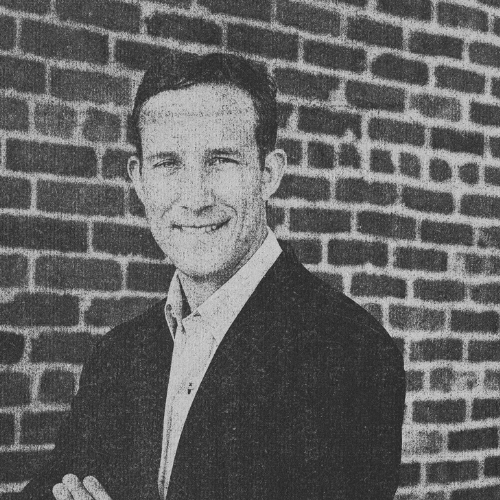
John Friedman
John N. Friedman is the Briger Family Distinguished Professor of Economics and International and Public Affairs at Brown University, as well as a founding co-Director of Opportunity Insights. His work uses big data to study the causes and consequences of inequality for kids, as well as policies to improve opportunity for children from disadvantaged backgrounds. His work has appeared in top academic journals as well as in major media outlets, has been cited by President Obama in his 2012 State of the Union Address, and has shaped policies at the federal, state, and local level. Most recently, John and his colleagues at Opportunity Insights have published work showing that the key to greater access and mobility within America’s most selective universities schools lies within their admissions process. He worked as Special Assistant to the President for Economic Policy at the National Economic Council in the White House. He is also a Research Associate at NBER and Co-Editor at the flagship journal in the profession, the American Economic Review. He currently serves as Chair of the Brown University Economics Department and is a member of the Treasury Advisory Council on Racial Equity (TACRE).

Richard Holden
Richard Holden is a Professor of Economics at UNSW Sydney and President of the Academy of Social Sciences in Australia. He was formerly on the faculty at MIT and the University of Chicago and earned a PhD from Harvard University. He has published numerous paper in top economics journals and is a regular columnist at The Australian Financial Review.