
Facts, Fictions and Critical Thinking
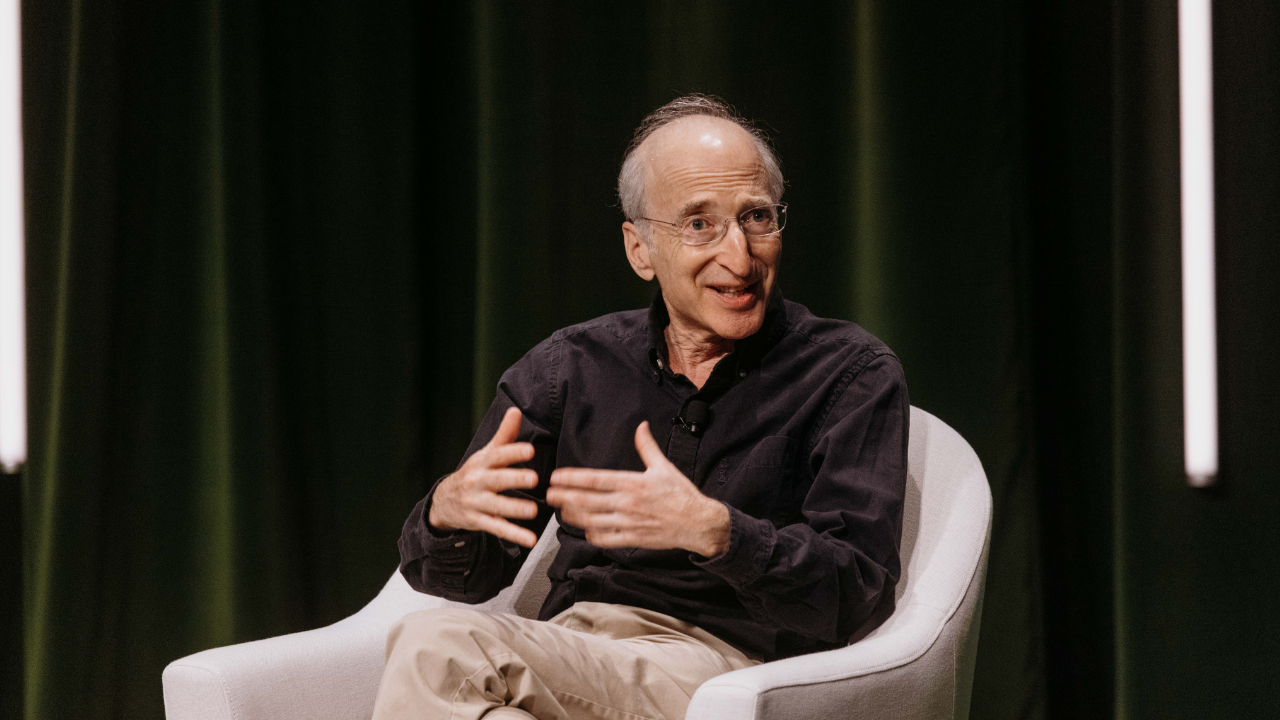
I'm not worried about almost any of the other big problems in the world because we are now very capable of solving those. But we are incapable of getting people to talk to each other in a productive, respectful but really comprehensive way and it is pretty clear that this is maybe 'the' problem of our generation.
Facts matter. The scientific process matters. The ability to think critically is essential to navigate our world, to make good decisions and to solve some of the world’s most intractable problems. Nobel Prize laureate Saul Perlmutter believes everyone can learn the skills scientists use to think critically so that they don’t fool themselves. Saul is joined by Tim Minchin, a writer, composer and fierce defender of facts and UNSW's Verity Firth to discuss the importance of collaboration, humility and critical thinking in decision-making.
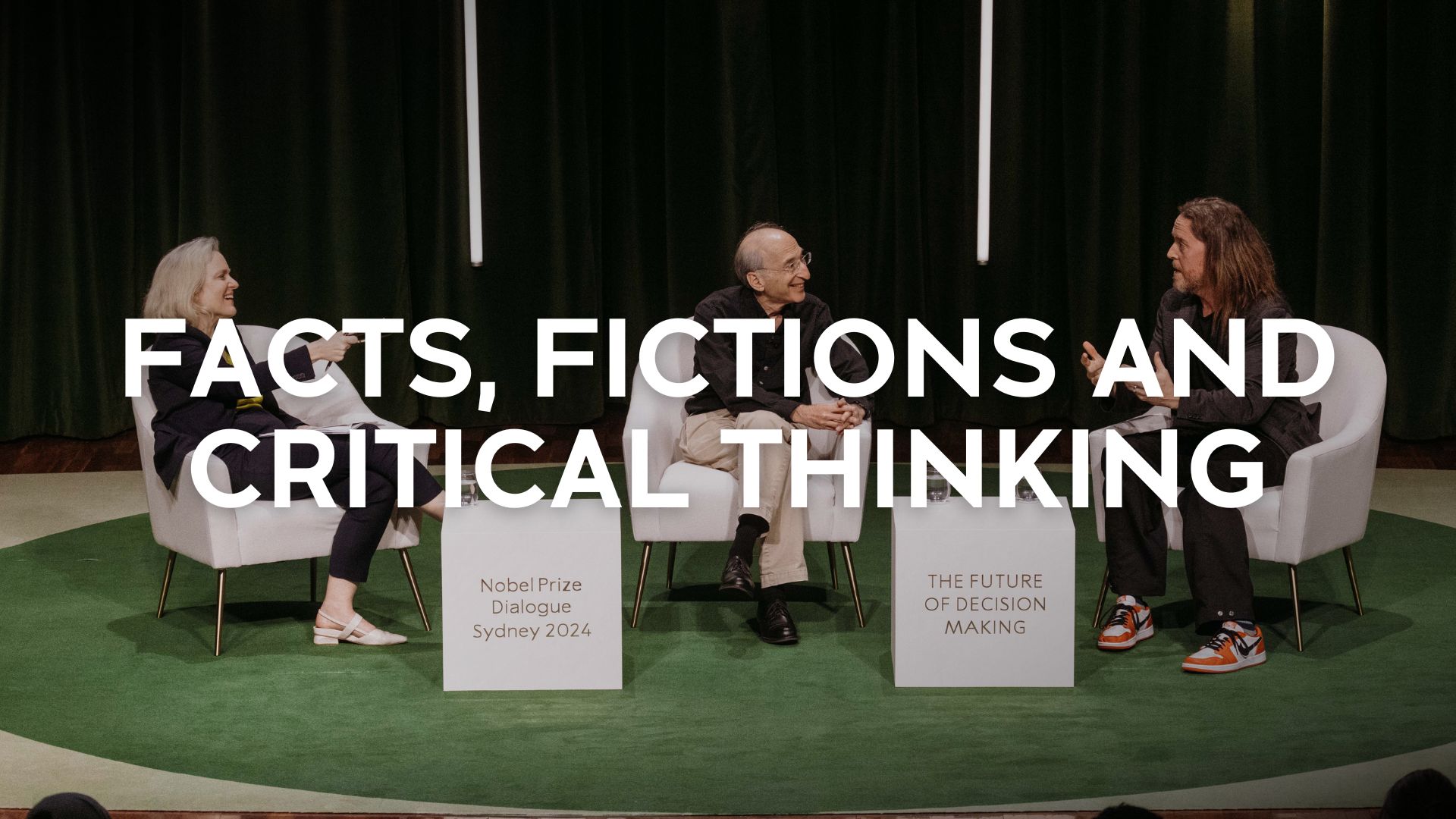
Prefer to listen on the go? Hear the full discussion below.

Podcast Transcript
Verity Firth: Facts, Fiction and Critical Thinking with Tim Minchin and Saul Perlmutter.
The ability to think critically is essential to navigate our world, to make good decisions and to solve some of the world's most intractable problems. Now I don't think our guests need any introduction, but I'll do a quick introduction.
Of course, Saul Perlmutter is the Nobel Prize laureate who shared the Physics Prize with Brian Schmidt, who you heard earlier, for the discovery of the accelerating expansion of the universe.
And Tim Minchin is a multi-award-winning writer, composer, comedian, actor and fierce defender of facts, the scientific process and logic. So I think this is gonna be a really exciting and interesting conversation.
Let's just kick it off and start with you, Saul, and then we'll open it up a bit more broadly. So, you and Brian actually both independently discovered that the universe was expanding, and the rate that it's expanding is accelerating. Whilst you're undertaking that work, did you feel that it was Nobel-worthy? You must have thought it was a bit Nobel-worthy, didn't you?
Saul Perlmutter: I think when you start those kinds of projects, you're excited by the actual science that you're trying to do. And I don't think it ever occurs to you that you'll possibly end up with a Nobel Prize result. And to some extent, it was a very exciting project. We thought we were going to be able to figure out whether we lived in a universe that was going to expand forever or someday come to a halt and collapse. And so could we find out whether the universe was going to be infinite spatially or whether it's going to last? That seemed like they were just the kinds of questions I would love to answer. And the fact that we happened to come up with a surprise and that that led to a Nobel Prize, that was just incredible. But certainly, at the time, we were just focused on the fun of the project.
Verity Firth: Yeah. OK, so in addition to your cosmology work, you've also been, just written a book, which I encourage everyone to read. I really loved it. It's called Third Millennium Thinking. And in this book, you discuss ways to apply scientific thinking to everyday life. Can you share, I suppose, a practical example of how someone might use these skills in their everyday life?
Saul Perlmutter: This particular project came out because we were... I was talking to a number of other faculty in other areas, such as psychologists and philosophers, and I was saying that, it seemed to me that the ways that scientists approach problems in the world just looked very different from the ways that we were seeing our society trying to handle problems. And it just looked embarrassing watching society do it. And we thought we should be able to do better.
So we started asking, well, where do we actually learn this stuff? And we realized that it was not taught in any science course that I knew of, no physics, biology, chemistry course. And so we started to just write down, what were these ideas that were being learned essentially by apprenticeship, by osmosis, and could we find a way to articulate them and teach them? So examples, they often had to do with ways in which science has learned over the years that we fool ourselves, and that we have to be constantly watching out for the way that we fooled ourselves most lately.
And so among them, that over the years, we've learned to do better, than is, that we shouldn't treat the world as if every factual question is something that is either true or false, and that's all you can use. That basically, we've come to understand that you almost never know whether something is absolutely true, or absolutely false, and that actually there's a huge amount of information in taking everything in between.
So being able to say, well, I'm 90% confident of this, I'm 99.999% confident of that, I would bet my life on it, and I will, I’ll get on an airplane, and I know those tons of metal will fly. But there are other things that I only have maybe 70% confidence in. And one of the reasons that's so important is because it allows you to be able to change your mind. It means that if you are putting your ego in knowing, is it 90% confidence or 99% confidence, and that means that when you're 90% confident, one out of 10 times, you should eventually change your mind, if you're going to follow the facts. And that really puts you in a much better position where you're going to talk to other people.
Verity Firth: I'm going to bring you in now as well, Tim, because one of the things I really loved about reading your book was, you talked about the role of humility, right, in good decision-making. And so part of that's curiosity, but it's also humility and having the ability to admit when you're wrong, to admit when you need to ask questions, etc. So in your book, you had this wonderful piece where he talked about how politicians aren't very good at doing this, right? So that there's a different whole set of characteristics about being a politician, which is always about projecting confidence. And actually it's the humility and when to admit that you've made a mistake that actually is so valuable to scientific learning, and to knowledge, and to good decision making.
So I wanna talk to you, how do we actually make it so that politicians and decision-makers in more powerful positions can embody that humility and the ability to make a mistake? And then I want to come to you, Tim, as well and talk a bit about that as well.
Saul Perlmutter: I mean, this is one of these things where in the end of the day, I think we actually have to educate ourselves as a community. And this is one of the reasons that I've seen this as an education project, to a large extent. Is it possible to teach this to all the students to understand that this is actually the way that you tell who's a responsible participant in the conversation, that they are going to be open to figuring out how they're wrong. And in fact, most of us are wrong a lot of the time, and we have to actually find ways to identify that.
So that means that we would be the voters someday where when we had a choice between the politician who says, you know, here's a new health care system that I'm planning. I can guarantee you 100% that it'll work versus the other politician who comes and says, I've got a health care system I'd like to propose also. I'm 78% confident that it'll work. But what we'll do is we'll keep examining it. And when it doesn't, when things go wrong, we will fix them, that you as a voting body would choose the one who's 78% confident because you know the other one is just making it up. So that’s, that's the goal.
Verity Firth: So how do you think we do this? How do we improve the humility of our leaders?
Tim Minchin: I mean, I agree with Saul on everything all the time, since I met him a few days ago, we haven't yet come to blows, but in my lesser book, I talk about humility, I talk about humility and people get confused by humility, because humility these days, the idea of humbleness is sort of overtaken by like, oh, yeah, you know, it's hard being beautiful on the internet or whatever. This sort of performative humbleness.
Humility in the way Saul's using it has a very specific thing connected to what he was talking about earlier. Really this thing that the philosophy of science, which is – I'm bad at science, but OK at the philosophy of science – I understand the functionality of a system that requires you to test your ideas against disconfirming information, right? That is the humility.
Look, I'm pretty sure I'm right, I'm 90, I'm 99.9 whatever percent sure, but still I'm going to search for disconfirming information, because until I've got all the possible disconfirming data, I can't get my p-value to where I can make a claim, you know?
And I talk about humility across all the things. So if you study philosophy or psychology or neurology or anthropology, the deeper you go, the more you find humility, you find neurological humility, you understand that your brain tricks you all the time, that your memories are absolutely shit, that if you witness, if you guys all witness the same event right now, you'll all have totally different stories, partly because your eyes are over there and your eyes are over there, but partly because of the biases you bring and because your brain, you know, prioritizes things that make you a victim or a hero of the situation.
Psychologically, we are constantly tricking ourselves to centralize ourselves in our narratives. You know, epistemologically, we have a sort of way by which we find our way through information. We have a systemic information basis that biases everything, we think, and even culturally, of course, we're biased.
And so humility is used in those senses and what Saul's actually doing, and what I bang on about doing is trying, I think you have to embed it in culture young. We have to make it kind of sexy and fun. It's nothing better than 49-year-old dudes talking about sexy fun things. Like my sexy fun shoes!
We have to make it cool again to understand that being wrong is an asset. And performing your rightness, it really, because of lots of factors, but social media being a huge one, really, performing your rightness and performing your anger in the face of wrongness has overtaken any progress we were making in the last, whatever, couple of hundred years at saying, oh no, we're all wrong nearly all the time and we have to always test our hypotheses slash our opinions against disconfirming information, which – just to see if I can land this fucking ramble – is actually not just an act of humility, but an act of empathy. I need to stand in the shoes of someone with whom I vociferously and vehemently disagree. I have to figure out why they landed there. I have to spend that. And that's another form of humility. It's like interrelational humility where you're not trying to win, you're trying to understand. And then we can start asking the politicians to do the same thing. And some of them do.
Audience Applause
Tim Minchin: I have a friend who's an MP who's the member for Curtin, which was a very, very liberal seat for a very long time and is now a teal seat. And her name's Kate Chaney and most of you know her. And I actually did one of these on-stage conversations with her. And we really talked about this because she is someone who is on the front page of the Western Australian – excellent newspaper – all the time and recently got slammed for flip-flopping on something. And she just goes, no, I didn't flip flop. I was this side of the line. Someone presented me with new information, and I changed my mind. And she just does it in the face of these ridiculous headlines. And it's really admirable and hope-giving.
Verity Firth: Excellent. Alright. Now, I'm going to dig a bit more into the artistic endeavour soon, but I'll get to that, right? Because the next question I wanted to ask was about time, right? And this I also discussed backstage, which was; I read this fantastic biography of FDR by Doris Kearns Goodwin. And it talked about when FDR had this really tricky public policy problem during just before the United States ended the Second World War. And it was how to support the UK, whilst not actually being able to by Congress. He went onto a Navy frigate for six weeks to think about the problem, and he took his policy experts and they thought for six weeks and then came up with the policy solution.
And so my question really, it's a wonderful example because they really did use probably the critical thinking methods that you're talking about, but they took the time to do it. And I just want to construct, well, now quote you to yourself, Tim, because I also read your book, You Don't Have to Have a Dream, where you have this wonderful quote where you say, “Art isn't any expression of an idea into which you have put a bit of effing effort. It is often the fast-thinking, bias-riddled, adrenalised, dehumanising part of our brain that tweets. It is the slow-thinking, contemplative, creative, self-aware, humanising part of our brain that makes art.”
So what I want to now ask both of you is looking at both art and decision making, how do we create the time to make the good decisions to create the great art to make? So how do we create the time in this incredibly fast-paced world, Saul?
Saul Perlmutter: I'm struck by the fact that I believe he had a major advantage in that time, which is that he did not have email.
Verity Firth: So what do we do?
Saul Perlmutter: I think that this whole question of how do you get people to be comfortable with the idea that not everything is going to be figured out instantly is, I think, a huge part of the story, that there's a tendency to think that we have a problem, somebody tells us how to solve it and we're done, but my sense is that almost any problem really worth its salt is something that's worth a lot of iteration and a lot of thought about.
We were, one of the things we asked our students in this course that we had invented was, we asked them, what's the second longest amount of time you've ever spent working on a puzzle or a problem? And we said maybe second longest just because we didn't want the one time they got obsessed. And surprisingly, some people said they spent hours, some people said they spent a few days on it, and I was just thinking that one of the tricks of the trade of science, as I've seen it as a culture, is that it allows people to fool themselves into thinking they can solve a problem long enough to actually solve it, because most problems take way longer than a few hours or a few days.
A really good problem, you should be enjoying it for months, years, it could take decades, but as long as you're getting a sense of iterative improvement, I think that's something that allows people to take the time to actually do something significant. And I think my talking to my friends who are in the arts, people really iterate, and they spend time on things, and it's not something that is a fast discovery in a matter of a minute. Every now and then, there's somebody who has a great insight, but I'd say that's not really how most interesting problems get solved.
Tim Minchin: Yeah, it just strikes me listening to you talk with passion about the time it takes to do something that you and Brian did, and listening to Megan talk about the time it required and deserved to make sure The Voice was sourced from all across the country, an absolute devastation. And yes, the time it takes to write a musical or to make an album, or to make a piece of art, sometimes it's just entertainment, sometimes it has ideas in it about which you really care.
But all those things then get fed to a monster that unfortunately, because of the way the monster works, it's fed into the clickbait media and the clickbait machine we call social media. And all that people care about is whether or not this piece of information firms up their identity in their tribe, which has a group of things they believe already and they'll only admit new information that buoys it, that is bull walk against the possibility of their wrongness. And it's just to hear Megan talk about The Voice then going to this referendum that was just poisoned by bullshit headlines, and yes, misinformation, but also just the system of how we talk about things now, it's fast and instant and angry, and outrage driven and clickbait driven.
I mean, I'm sure scientists put, I mean, you think about the vaccines that came out incredibly quickly in the face of COVID, but people had been working on the technology that was the basis of those vaccines for decades, decades! And then to see it like pushed through the filter of every wanker, including me, with their opinion, you know, that the opinion which has arrived at as quickly as possible, and with much verve behind it as possible. It's a significant problem that it doesn't matter how long you take with your art, you know, in the end, it's consumed very quickly and without much...
Saul Perlmutter: The other point that you had made about, you know, how important it is to be able to look at what is the people you're disagreeing with, what is it they're thinking and what are the issues in their minds, that really takes time, right? It's so hard to be able to listen and to learn enough about why is it that, you know, from my point of view, half my country is crazy, you know, but from their...
Tim Minchin: Point of view, three-quarters of your country is crazy.
Saul Perlmutter: Exactly, but from the other half, you know, I'm crazy, you know, and so there is clearly something there that needs a lot more delving than just, you know, announcing, oh, you know, these people can't be talked to, you know.
Tim Minchin: But we're doing it less and less and time is obviously one, you know, matter on the axle, but the other is, of course, bubbles and that's an hour conversation which everyone in the room can have now because we're so cognizant of how this is working, but not only... People don't feel like they need to take time because everything they think’s right there, fed through their algorithms by the people they already agree with.
So even if you want to try and figure out what the other side is thinking, A, it's quite hard to find that, well, it's not hard to find that information, but we're disinclined to find that information, and I had a B. Oh, and B, it doesn't serve you, it doesn't serve your identity or brand to challenge yourself. These days, if you possibly find out something that the other side is thinking and want to change your mind, you'll be booted out of your little micro tribe potentially. And you'll lose your mates, so you're not even motivated to do it because there's punishment.
Verity Firth: And are there solutions, like so, alright, being optimistic and we're about to talk about scientific optimism, but in terms of the sorts of solutions that exist around these sort of tech bubbles that exist and the fact-checking and some of the stuff Megan was referring to earlier, I know that you talked a bit about this at the end of your book, like the way forward. Do you have some suggestions?
Saul Perlmutter: I do think there's some very optimistic elements of the story that are out there where people have actually tried different approaches to solving some of these problems and I think there's a lot of room to manoeuvre that people just aren't aware of. This is one of these cases where it's very hard to solve a problem if you're not aware of the problem. And I think that we've really become aware of the problem in just this past five, 10 years in a way that I don't think we were before.
We kind of knew that it's difficult to get people to talk and it's difficult, but I think by now it's pretty clear that it is maybe the problem of our generation, that if we can figure out how to make this manoeuvre so that we learn how to talk to each other in a productive, respectful, but really comprehensive way, I think that I'm not worried about almost any of those other big problems of the world because we're now very capable. It's just that we aren't capable when we aren't talking to each other and we aren't able to make those kinds of ability to figure things out together.
So the examples that I found particularly exciting include some of the ones that we were just hearing a little about earlier, these things like deliberative democracy approaches. I'm struck by the fact that when you take a random sample of a population and you give them experts to work with so they can figure out the problems together. They're much, much better at talking to each other than their leaders appear to be.
And so that gives some hope that if we can use all these impossible technologies that we've come, we're so capable now to talk to each other across great distances, if we use it in those ways to empower people to take advantage of the fact that most people are much better at talking to each other than the political world would make it appear, I think we have a chance.
Tim Minchin: I agree and I love, we were talking on the radio the other day, I love hearing Saul talk optimistically and it's really inspiring, because I find it hard to get to that because I'm still trying to put my finger on the problem. But that idea that it melds with the first thing Saul was talking about, about humility and being able to change one's mind, because we did when the Arab spring rose think, oh my God, look what social media can do. And we did learn that we can talk to journalists and tell them to F off and stuff like a bear – I didn't swear that time, good Tim.
But we have learned, we now have 12 years of data since the introduction of the smartphone and the, you know, and then the like button and the retweet button and all these things that made outrage and started turning the bell curve. The bell curve of opinions on any given issue basically looks like a bell. The bell curve of what we hear about is this, basically the extremes are high and the moderates are low, but this is actually how it is in the world.
And I think we now know that it's poison, that it is very hard to do the stuff that Saul was talking about, to take the steps, to have the humility, to listen to others, to feel empathy, to place yourself in another person's shoes, which is the job of art, you know. To consider what it might be like to be one another, even if you're still gonna end up on the other place, but at least you'll be close enough to talk.
You know, the hypothesis was that we all understand as humans, I'll try to just do this little bit in 90 seconds. We understand as humans that proximity is the salve for prejudice. We need to be near each other. We need to hear each other. We need to learn. Wherever there's not proximity, wherever there's a wall or a border or different treatment or, you know, there is prejudice. We hate each other.
And we thought that social media would be a good enough sort of avatar for proximity, that it would make us more proximate, that we would hear from one another and make us a better democracy. It has turned out that the particular algorithms that we've allowed into the world do the opposite. They are dehumanising mechanisms and extremification robots. And now we know that and everyone's starting to stomp and even idiot long-haired musos are starting to say like, this is terrible. I do think it's a health hazard, and it's a hazard to democracy.
So something, talk about accountability. One of the things we have to hold accountable is that these algorithms have been proven to be a hazard to democracy and health, as well as having advantages. But we can keep the advantages and get rid of the outrage bifurcation machine. And I think it's gonna happen. I know it sounds like free speech suppression, but I don't think it's that. But that's another 90 seconds.
Verity Firth: Yeah.
I think that's spot on. I really do.
So, Kelly Ni submitted a question.
Kelly Ni: Thank you so much, Professor Saul and Tim for your talk. So you all mentioned a variety of disciplines that you all work in. Saul you mentioned philosophy, physics and psychology. And I did start reading your book, although I did not finish it on the train today.
Kelly Ni Laughs
And Tim, you mentioned this idea that, you know, we have to make being humble and this idea of humility being sexy again. So putting that all together, my question for you was... for you both was, in this rapidly changing world that we have, how do you both believe that we can integrate these ideas at a foundational level? And what I mean by that is, do you believe that this critical thinking and this interdisciplinary critical thinking should belong in early classrooms? And if so, how can we nurture that so that we can bring that forward into our next generation?
Saul Perlmutter: I think the first thing I do is I would just get Tim to go to every classroom as a starting point, just by himself. He would do the job!
But I just mentioned that, well, one of the reasons I'm actually here in Australia as well, is that the course that we started developing with the psychologist, the philosopher and myself, the physicist, is of course that we were trying out at the university level.
We thought, why don't we just find out whether we can teach some of these ideas that aren't usually taught? And we found that it seemed to work well. But of course, really, your point is right, that you want it to be taught much younger.
So we’ve thought, well, we worked with the group that we had, but then we start working our way down. And so now we've been developing a high school version of the course, and for the whole group four years younger, and working with educators who develop high school programs, and they've taken all the same material and tried to figure out what works well at this younger generation. It's being field tested at schools actually around the world right now, these various units, and we've been doing it with the Nobel Prize outreach group, because they managed to reach students and teachers all over the world every year with their material. And so that seemed like a likely starting point. And then we've been talking to OECD and UNESCO about the other school systems in the world that might be able to adopt this.
So this is definitely one of these quixotic hopes that we get somewhere in the next, what, 15, 20 years, we have schools all over the world seeing this as just a standard part of an education, that they learn how to think about problems with this kind of intellectual humility and with many specific elements that we are teaching about, what is it that you look out for, like, you know, that you shouldn't be fooled by random numbers looking to you as if they're patterns, all these different ways that we know that we can fool ourselves. But also the ways in which we know that we have to be able to find other people to help us recognise when we're going wrong, and that the best people to help us do that are the people we disagree with. So I definitely feel like embedding this into our culture in these ways could be a big part of the answer.
Tim Minchin: I have sort of talked about this in public, and I have, just to acknowledge that sometimes I get a bit of like, mate, we're literally educators, like, get out of our turf, sort of stuff, which I completely understand. So you have to be very, I don't want anyone to think that I'm going, education's crap, you need to change it.
However, I have come to the opinion that critical thinking is probably the most important topic to teach at all. You know, five years ago, I would have said, isn't it unbelievable, we're still teaching religion at schools, we should be, religion's a personal thing that you can get at home, you should be getting comparative religion and critical thinking at school, you know, now I would say, whatever it takes! Get rid of maths! You know, like, whatever, like, I don't really think that.
But what I mean is, I don't see why learning to pass information, and educators are getting onto this, but they're doing a lot of, like, online health, you know, online critical thinking, which is good. But I think there's this foundational thing that is actually more fun, like, to teach in school about the birthday paradox, and, you know, fallacies of causation and correlation, you know, you have a dream, and you wake up, and you dream that your friend had a car accident, and your friend had a car accident, what are the odds?
Well, the odds are probably one in a hundred million, and one in a hundred million things happen all the fucking time, because there's so many things happening all the time, and this is just one, you didn't remember the dreams you had that didn't cause a car crash. All this stuff is fun, and awesome, and confirmation bias, and just nerd stuff. But it's funny, and fun, and I reckon. And then from that, you can go, and by the way, look at the confirmation bias that the robots are doing. Look at how you're making, you know, you're thinking fallaciously in a digital environment. So, I mean, yeah, Saul and I have talked about this a bit over the last couple of days, but I think middle school, but I think you think maybe year five and six, I don’t see why not.
Saul Perlmutter: Yeah!
Tim Minchin:18-month-olds, like, confirmation bias blocks, I don't know, as long as I can get some kickbacks from the money.
Saul Perlmutter: A mobile from the crib!
Tim Minchin: Yeah!
Verity Firth: And there's definitely something in the fact that in a world where information is able to be downloaded immediately, these are the sorts of skills you need even more than ever, right?
Saul Perlmutter: Absolutely, and you know, and I've noticed that now, you know, my, the students that we watch are often teaching themselves lots of big content. That's stuff that you can usually find! It's much harder to find, you know, really thoughtful people talking to each other and showing how that works.
Tim Minchin: And when I was like cool and hip, I mean, not only do I find this stuff exciting, obviously, as does Saul, and maybe we were talking the other day also, I think there's just a wiring thing, like I'm wired to like this stuff, and other people are like, that is so boring, I want to die. But I also think it's about what we get cred for, and this is a lot further down the track, but people get cred at the moment for being sure, and being declarative, and that's good, and certainly in activism, that can be very, very important, and it can create good change. But it's mostly not at the moment, mostly it's causing tribalisation. And so the idea that what a cool thing to be sure about is your unsureness, what a cool thing to be knowledgeable about is how hard it is to have absolute knowledge. I don't know how to do that, but it feels accessible to me if you get them young enough.
Saul Perlmutter: And does feel like we've often gone the other way, where we're teaching essay writing that can show how you give your arguments to prove your point, or a debate course where it can feel too much like the goal is to win, rather than to try to figure out how you're wrong, and what you could learn.
Verity Firth: Yeah, I love that. Thank you very much, that was a brilliant question.
Arnav Bansal was the next question. Thanks, Arnav.
Arnav Bansal: Hi, thanks for that. So we heard about the importance of critical thinking, but my question was, in a world with constant upheaval, how do you envision humanity's creativity and critical thinking itself changing within the next 50 years? So as a whole, do you believe our critical thinking and decision-making ability will gradually be undermined, or will our minds evolve and adapt with an increasing affinity to discern information? How can we ensure it's the latter and not the former?
Tim Minchin: I know, I'm kind of, I'm 30 years and then it's all rest for me, I reckon. I'm just hoping to get out unscathed.
I mean, I am optimistic humans with many, many missteps do adjust to their threats. So far we have. I feel like this moment is... I was going to say existential, it's just, it's a big moment. And I think I'm buoyed by the fact that people are engaged with it. When we look back at the first, well, the first 25 years of this century, or even maybe the first 20 years of smartphones in our pockets, news being fed at us all the time in clickbait fashion, algorithmic bubbles and stuff. When we look back on it, it might not feel very long. I feel like it's turning now. And I've been talking a lot, and I don't want to get too much into this sort of sound like an old ranting guy on a porch, but about how until I got... I've managed in the last, I'm a year clean, I'm off social media and I'm off, I don't let the news tell me when to read it. And I think, I deserve a clap, it's really hard. All my self-esteem was attached to the likes!
But it's about agency. It's about, and my kids seem to get it because we've instilled it, but I think parents are now very anxious, so that this next generation of kids are growing up understanding that our generation have discovered it to be wanting at best, and dangerous at worst. And so I talk a lot to my kids about agency. You choose when you're gonna read the world news, don't have the news read you. You choose when you wanna go look at a cat video. Don't get fed a cat video in the middle of your work.
And so I feel like it's as simple as that to get through this bit where we're being bombarded by digital information that we have no agency in consuming, and then hopefully get back to this place where we can start going. Let's undo some of that with really trying to instil these values of humility. I mean, it all sounds very highfalutin, but it feels urgent enough that we need global cooperation on big issues at the moment and it feels like we're so far from that, but it is amazing how quickly humans can turn.
Saul Perlmutter: I feel actually relatively optimistic about this, I'm saying this all the time, but I think we're good at this kind of thing. It's just that we're not instant at this kind of thing. And this is just another big set of problems that we've come to recognise as sets of problems. And I think we keep discovering new ways that we fool ourselves and new ways that we learn not to speak to each other. And I think that our goal is to constantly catch them and then trying to figure out new ways out of it to do better. It's just that we shouldn't feel demoralized if it takes us more than, as I was saying, a couple of hours, a couple of days, in this case even several years. I think we'll figure it out, but then we have to just keep on it and we can't rest on laurels ever, because we'll constantly get undermined in some other new way and then we'll have to figure out a new way to solve it.
Tim Minchin: We are intuitively... we intuitively other the other, and we need to… and culture is about building systems that undermine our intuitive, I don't think we're evil and I don't think we're good. I just think we have evolved to fear things we don't understand, and fear other people and these things, which we thought would bring us together, are sending us apart. So we need to get through this little backward step. I see it as a backward step, to get back to thinking globally about how we get along better, so that we can together deal with the big ones, with AI and nuclear proliferation and climate change. Which are things that need global solutions by one group of humans, called humans. And I don't know, but one step at a time I guess is the answer.
Verity Firth: And that is a perfect segue for what's going to be my last question and it was a question that Saul wants me to ask, so it's completely rigged. But one of the things I really loved in your book is you talked about how do these scientists stay optimistic when it takes like 30 years to discover whatever the great discovery is.
And you actually talked about there's this inbuilt scientific optimism, which is about the iterative process and the sort of excitement of the day. And we were talking about how deadening it can feel at the moment at this point in history, like people don't feel, everything just seems so bad that people almost lose the momentum or that they feel that change is not possible, and so we want to talk a bit at the end about scientific optimism and lead off with Saul and then with Tim.
Saul Perlmutter: So we've already mentioned a little bit about what I was describing as scientific optimism, this culture of thinking that problems are worth solving and that you can actually get there iteratively over time.
The other element that we're talking about here is that, it also comes along sometimes with this extra sense of a can-do spirit and the ability to imagine growing the pie so that people are not in a zero-sum game where they're fighting over every last little thing they have to hang on to, but that instead we try and build things for each for everybody so that everybody can thrive in a world together.
But what I think that may sometimes people may miss because our news feeds are so relentlessly showing us every possible thing that went wrong in the world yesterday, and is going wrong in the world tomorrow but they're very poor about showing us the steady building that people working together around the world for years have managed to take what Brian was showing us of a world where two-thirds of the world we're going to bed hungry every night to a time when it's a much rarer thing. Those things are important for people to be aware that we are actually good at solving problems, and I don't think we feel that way.
So although at times we look at global climate change, we look at wars, we look at poverty, and all these situations it feels like, I think most people have this feeling it's the worst of times, but I think it's also important for people to realize that in some ways it could be the best of times. That this, I think this is the first generation in history that in prehistory that could with a straight face look at each other and say, we now know how to fix a climate. We really know how to feed the planet. We could actually be the generation of people who once we managed to learn how to talk to each other, could actually make a world that we all were just proud to live in.
And I think that's not something that most people recognise, that they that we live at a really unusual time, that it could be a really scary time, but it could be a time that we felt like we were the generation that got to see the beginnings of a world that you could look around and you wouldn't feel heartbroken to watch what was happening in different parts of the world. You would feel like, we live in a world that looks nice for people.
And I think that would be something that would be motivating, if people were able to recognise that that was also part of our reality, not just all the fears .And both those things are things that we can only manage if we then take this one step of figuring out how to engage with each other and how to talk and solve problems together.
Tim Minchin: I think that's right.
I didn't know why I said yes to doing this panel except that was a huge honour to be asked, but I realise now that God sent me Saul to make me feel better. I mean it has been great meeting Saul, to be reminded of that potential, and I think the thing that I say that I think I get in a bit of trouble for, is because it appears that I'm criticizing my tribe, progressives and arty lefties and stuff. But I think I am quite critical of us, if we're us I'm not assuming anyone's politics but let's say no one in the room's voting for Trump, you know, like not allowed to, wrong country, you know what I mean. Like there may be someone is and that would be cool, and I'd love to meet you afterwards if you're voting for Trump's. I'll punch you in the face no, no. I’d Listen, listen, I'm gonna listen.
But I think that's because it has to start in our own community, you know, that there is protest and defiance and battles being fought by very serious people, and brave people. Most of us are just living our lives and getting distressed online. And I think the first step in what I do think is a possibly optimistic, very exciting couple of generations coming up. The first step is to look to the self and to one's own community. So rather than going, those populist right-wing arseholes, which is one thing, how am I? How is these mechanisms of division working on me? Where can I have a real look at where… because it is. It is working on the left and on the… it's a bullshit false binary. But you know what I mean. It's working on both ends of this thing.
And so I've been trying to check what I'm missing, and then just checking what you can do within your community. What can you fix? If you are very distressed by the world but you're not doing anything about it, maybe lower the amount you're getting pulled into that unless by watching it it's making you donate more or act more. If it's just making you stressed take some of the time where you're engaging in the difficult stuff in the world, and try to turn that time into something positive. And I mean oh, the lady down the streets struggling with her bags. I mean I know that sounds unbelievably trite but when you're looking at your phone you're not in your community, you're not.
I noticed I wasn't being as good a dad. I mean that was the thing that just made me go mate, if there's one thing you can do for the world is put good kids into it. And when I'm upset by some arsehole going at me online or reading something absolutely horrendous that I, I'm not going to do anything about, if I'm honest or have no field, no power over, I could be... so it has to start with our own intellectual humility and our own understanding that we're having our attention and our love and our capacity for empathy stolen, and we need to take it back.
Verity Firth: And that's the end of the panels!
So another big round of applause for Saul and Tim.
Audience Applause
UNSW: Thank you for listening. This event was presented in partnership with Nobel Prize Outreach and UNSW Sydney. For more information, visit unswcentreforideas.com, and don’t forget to subscribe wherever you get your podcasts.
-
1/4
-
2/4
-
3/4
-
4/4
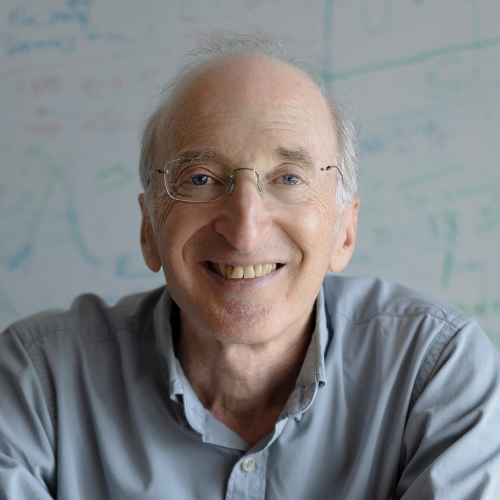
Saul Perlmutter
Saul Perlmutter is a 2011 Nobel Prize laureate, sharing the prize in physics for the discovery of the accelerating expansion of the universe. He is a professor of physics at the University of California, Berkeley and a senior scientist at Lawrence Berkeley National Laboratory. He is the leader of the international Supernova Cosmology Project, founding director of the Berkeley Institute for Data Science, and currently serves as a member of the U.S. President's Council of Advisors on Science and Technology. His interest in scientific-style critical thinking led to the development of the interdisciplinary courses “Physics & Music” and “Sense and Sensibility and Science,” which he has been teaching to undergraduates for more than a decade—and which is the origin of the new co-authored book, Third Millennium Thinking: Creating Sense in a World of Nonsense. An author of hundreds of articles on cosmology, Perlmutter has also written popular articles and appeared in numerous PBS, Discovery Channel, and BBC documentaries. In addition to other awards and honorary doctorates, he is a member of the National Academy of Sciences and the American Academy of Arts and Sciences and a fellow of the American Physical Society and the American Association for the Advancement of Science.
More about Saul Perlmutter and the 2011 Nobel Prize in Physics
Photo: Christopher Michel.
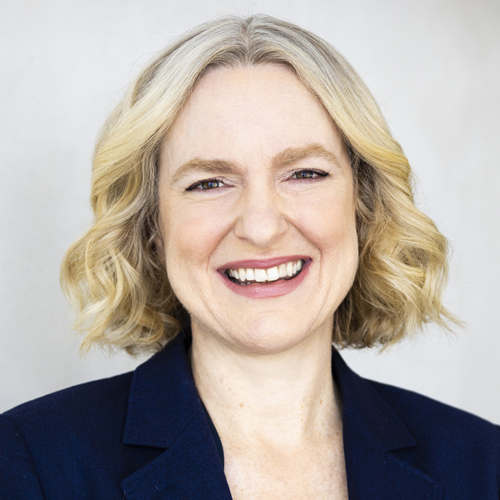
Verity Firth
IntroductionVerity Firth is the inaugural Vice-President Societal Impact, Equity and Engagement at UNSW Sydney. She has over 20 years’ experience at the very highest levels of government and education sectors in Australia. Prior to her role at UNSW, Verity was Pro Vice-Chancellor Social Justice and Inclusion at UTS (2015–2023), CEO of the Public Education Foundation (2011–2014) and NSW Minister for Education and Training (2008–2011). Verity is a member of the Commonwealth Government’s Implementation Advisory Committee for the Universities Accord.
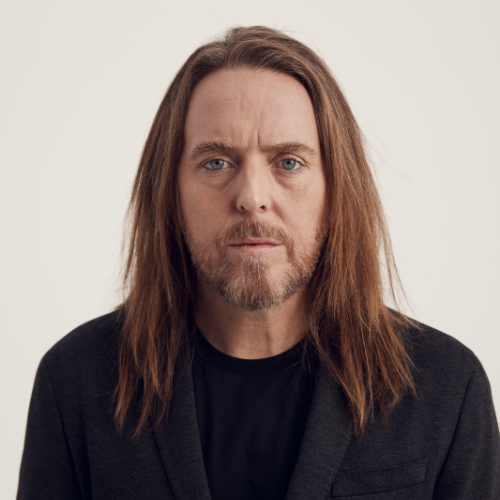
Tim Minchin
In addition to two decades of award-winning live performance and multiple recorded specials, Tim Minchin is the composer and lyricist of smash-hit stage musicals, Matilda and Groundhog Day. He is also a screenwriter (of the award-winning Upright, in which he stars alongside House of The Dragon’s Milly Alcock), and a screen actor, (Atticus Fetch in Californication, Friar Tuck in Robin Hood 2014, Darius Cracksworth in Disney's The Artful Dodger). He is a public speaker, and a book of his commencement speeches, You Don’t Have to Have a Dream, was recently published.
Stage roles include his acclaimed Judas in the 2014 UK / Australian Arena Tour of Jesus Christ Superstar, and Rosencrantz in the Sydney Theatre Company’s Rosencrantz and Guildenstern Are Dead. His 2020 studio album, Apart Together, peaked at #2 on the ARIA charts.
Among many accolades, he has won two Olivier Awards for Best Musical, a British Composers Award for Best Score, a Logie for Best Supporting Actor, an ACTAA for best TV comedy performance, an Edinburgh Comedy Award for best newcomer, a What’s On Stage Award for Best Actor in a Musical, the Richard Dawkins Award for Science Communication, and an Order of Australia for Services to the Arts and the Community. He has been nominated for some Tonys and a Grammy.
Photo: Damian Bennett.