
Democracy Reimagined: New Thinking for the 21st Century
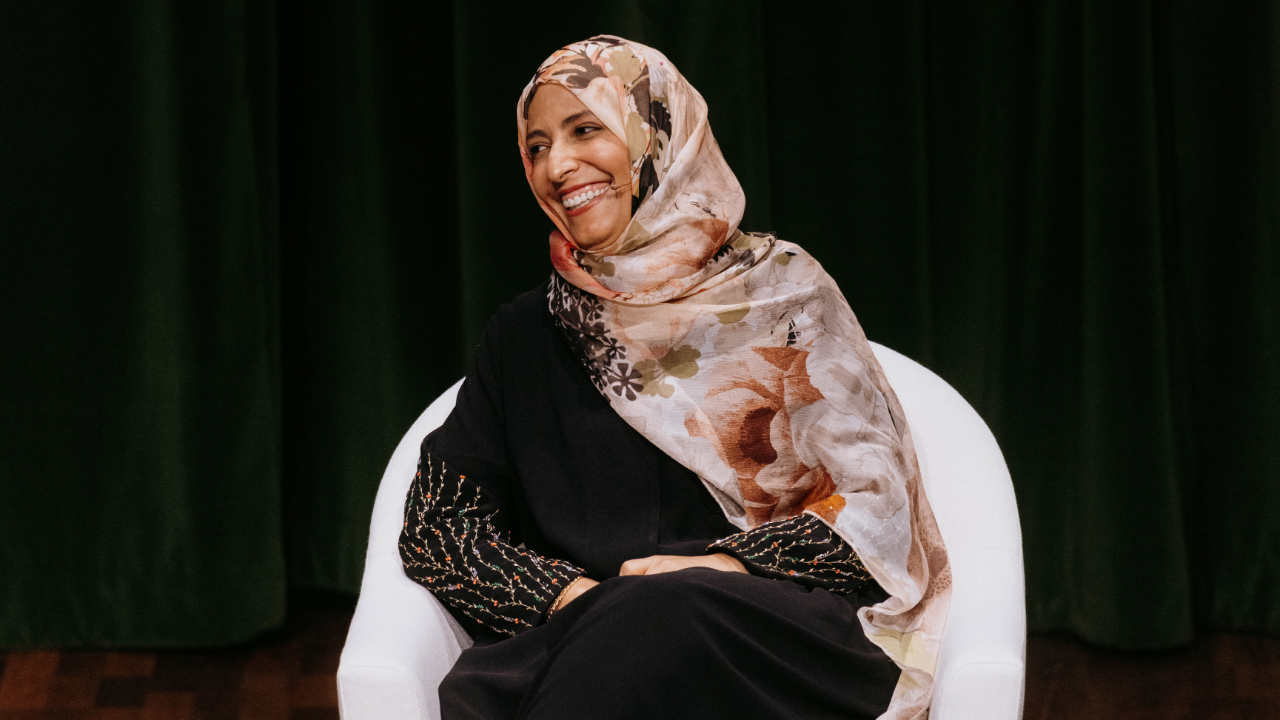
We have to teach our people how to be skeptical of disinformation. How to read resources, how to search for tools, how to not accept anything as the truth. Let [technology] be our tool, for spreading peace, for fighting corruption, for fighting for human rights...
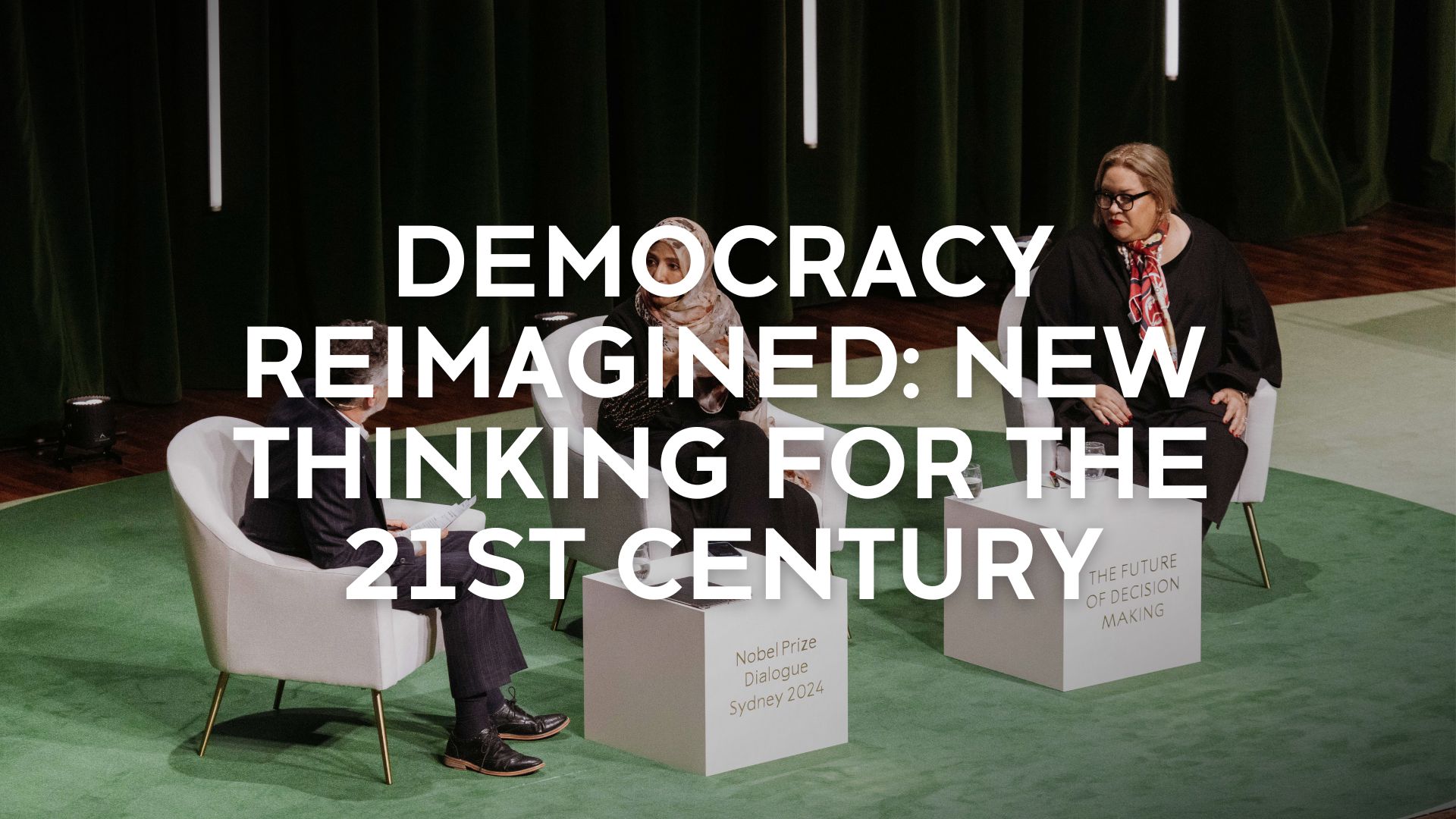
Cooperation is our superpower, and democracy is a foundation of human progress. But we take them for granted at our peril. In some of the strongest democracies, democratic principles are being undermined while many voices are ignored. In this conversation Nobel Prize laureate Tawakkol Karman tells her story of her determination to bring peace and democracy in the Middle East. Tawakkol is joined by Megan Davis, a constitutional lawyer who is committed to greater indigenous representation in Australian democracy and Nobel Prize Outreach Chief Impact Officer Owen Gaffney.
Prefer to listen on the go? Hear the full discussion below.

Podcast Transcript
Owen Gaffney: Thank you both for joining us. Megan, you're a leading voice in the push for constitutional recognition. We're going to have a conversation first with Tawakkol, and then we'll come to you. But feel free to jump in whenever you like on anything. So, now, Tawakkol, you were the first woman from the Arab world to receive the Nobel Peace Prize for helping catalyse the Arab Spring back in 2011.
You're from Yemen. You're a journalist and activist, a force for nature. And your cause is peace, democracy, women's rights and freedom of expression. And you know, what you've done is just absolutely incredible. But now we're going to, and we're going to go straight in at the deep end here. Because you always said the Arab Spring was the start, not the end, of the road to democracy in the Middle East, and now when you look at the Middle East today, and it's hard to even describe the pain that we're all feeling for what is happening there. What do you think needs to happen? And where do you see hope that we can stop the violence, have peaceful dialogue and make progress?
Tawakkol Karman: OK. Hi, everyone. Salam alaikum. Peace be upon all of you. I'm so happy to be here in Australia, this very beautiful country. And I am really fall in love with this country, really, especially with the old trees. And I will start answering this question as a mother, of four kids, and as a woman.
To say that we women, and we mothers know how much it's pain when you give birth to a child. So, what we are witnessing in Arab Spring countries, it's the same pain of giving birth to a new countries. So, this is, this pain, it is a result of our dream, our brave, our courage to demand and to call for freedom, justice, democracy and rule of law in an absolute dictatorship system in our region.
And in Arab Spring countries, we are surrounded by the monarchies, and that led the Counter Revolution and other countries authoritarian, such as Saudi Arabia and Emirates, and other authoritarian regimes like Iran.
So, those three countries who led the counter revolution doesn't want democracy in our countries, doesn't want democracy in the region. So, they don't want the democracy as a value, because it will be a good example. And they are afraid for the revolution itself.
So, when we dare to dream and when we dare to sacrifice, and when we dare to create that peaceful revolution, we win in the first step of the revolution. First step, which is every evolution has a very, very, many, many, many, many steps. And the first step of the revolution is step down the dictator. And this is what we did! We forced seven dictators to leave the authority during just less than 12 years! Imagine that!
So, we have a very important victory in this step. Now, there is the second step, which is an absolute destiny for every revolution around the world, every, from all the history, every nation, every revolution faced by counter revolution. So, the counter revolution caused all this chaos. And I can, anyone who really study the Arab Spring, he will say that during the transitional period, we did a great progress in writing constitutions that guarantees the values and principles that we were talking about in guaranteeing freedoms to everyone in our countries, in all the Arab Spring countries. And also to guarantee also to provide also economic stability. It's during three to four to five years of the transitional period. There was mistakes. Absolutely there was mistakes, but it was just the mistakes of the people in the power committed through during the transitional period.
But who did the crime? The failure that you say now, it is not the result of the revolution, it's the result of the counter-revolution who ruled now. The leaders of our countries who are result of military coups, or militias, or the remain of dictators. They are the ones who wage wars, who make civil wars, who support terrorism, etc, etc.
So, this pain is absolute destiny for any great change. Will we give up? Will we just cry? Will we say this is the ultimate result? No! The result is that we are now still in the revolution. We are still sacrificing for freedom and democracy and justice. And absolutely we will win this battle. Absolutely.
We didn't give up and we will not give up. And you from Britain and you, for all the people here in Australia, and in the West. Do you think that you make revolutions or change and democracy come at one year? One year? And you tell us that in Arab countries, OK, what is democracy? What is democracy? You take decades, hundred years to reach to democracy and lectured us, where is democracy? You fail! No, we didn't fail! We are there and we will win this battle.
Owen Gaffney: The Nobel Prize in economics this year went to three academics for looking at how the institutions created by Europeans around the world in the colonial, you know, in the colonies, how those institutions are affecting the possibility for success and failure today. It's long lasting. It goes on for centuries, the impact of these institutions that have been put in place.
Tawakkol Karman: I absolutely agree. I absolutely agree. Do you know the dictators itself in our region and in all Africa and you know, in Latin America is the result of the colonial system. Is the result of them. When they left, when they didn't think that this country is belong to them, they make the heritage, is with the collapsed institutions.
And this is one of the reasons why you see Africa is a country that suffer from poverty and tyrannies. And in Latin America, people are suffer from tyrannies. And here in Australia, for example, as a, it's one of the strong nations that has that heritage, the stable institutions. Why? Because those colonial say so to the Australia as their own country. They settle here as their own country. So, when they left it, they left their own country. They didn't left the others countries.
So, it's, yes, we are suffering from Western betrayal, Western colonial and from the authoritarian regimes. But again, people around the world give up from all this mess. So, we are, and because of that, now you see a lot of people in Africa, and this is a very big dilemma, making, you know, there's a military coup inside Africa now, starting with the Congo and other countries.
And those army said that, OK, now we are on the fight for sovereignty because those dictators have the lines and they are agents of the colonial powers. While we shouldn't put people in this to choose between military coup or dictatorship. No, sovereignty means democracy. So, there is no that, you know, collapse. The one thing who give this message is the colonial power.
Owen Gaffney: So, what do we need to do now that is going to make a difference? What do you think is your drive now to keep that pressure on, to push for democracies in the Middle East? And how can the international system, you know, the United Nations and elsewhere, like support that?
Tawakkol Karman: We have many things to do. First, we as people, we in our Middle East and people around the world shouldn't give up our dream, shouldn't give up our hope, and shouldn't give up our belief in the victory. This is very important. And we have to unite ourselves in front of this unification of authoritarian regimes. Because in the current situation now, all authoritarian regimes are united. There is a unified camp of the authoritarian regimes, while the democratic regimes are becoming more divided and weaker than, you know, before.
So, first, it's for us, from us as a people, we shouldn't give up. Second, and this is what I'm always focusing about, about the rule of the democratic countries. Democratic, why I'm focusing on the democratic countries, because those democratic countries, they are the ones who put themselves as the one who protect democracy, and as the one who protect human rights, while they are really the real attackers against democracy, and you know, human rights, when they make alliance with dictatorship in our countries and when support corruption. And at the same time, when they give up their values and principles of human rights, of equality, of justice, etc.
And that is put them, these countries put them in a real danger. Now, the danger, the democracy is in decline, not in our countries only, while we are suffering and struggling for democracy. But it's really in a real decline in the Western country, in the democratic countries. And they have to protect their democracy. They have to protect their democracy by reforming their policy, by returning to the values, and by, as I said, stopping supporting dictators.
You know, dictators, they are causing the destabilisation in the global peace in general, and also in the national interest of those countries. The flee of, they are the one who caused the flee of refugees. And you know, the, you know, the (inaudible) of the immigration and refugees. And those far right extremists use those flee, this, I’m going to call it as, you know, refugee crisis, while the crisis is injustice, is corruption, is tyranny. But they use this, the hate against refugees, the xenophobia, they used it as a tool for them to rise and to take the power, and to undermine the democratic institutions.
And so, it's very important for democratic countries to stop their bad policies toward other, you know, other countries and to spread, you know, coexistence, acceptance, inclusion, and to stop fear from the others, to stop using refugees and you know, immigrants as umbrella to, you know, as a slogan for their elections (inaudible). Any one of those politicians used immigration or refugee or hate speech, he should be held accountable.
So, accountability is very important in our countries and in your countries. For example, in the US, while it's very big, big, you know, decline in democracy, we see it with the accountability. A president like Trump, who is accused by, you know, corruption, by sexual harassment, by, etc, etc, by attacking the capitol, until now, he couldn't have any kind of accountability.
And he, you know, George Bush, the one who invaded Iraq and did a very biggest disinformation in the world that Iraq has chemical weapons, until now, there is no accountability. While he admits that they were lying.
So, this is very important thing. So, what we need? We need from those countries to reform their policies. And we need a very important thing. We need the reforms in the United Nations and Security Council. This is a very important thing. If we really want to protect not just democracy, to protect the security, the global security, to protect… to protect the climate. And also to distribute the wealth, we need the real good and justice, you know, distribution of the wealth between rich countries and poor countries.
What we need in the United Nations? We need, at least, we need to remove the veto of the P5 countries. This veto, they used it to collapse nations. They used it just for the interest of these P5 countries. Now, the genocide in Gaza, if there is a real just international system, this genocide will be stopped.
Owen Gaffney: Yes.
Tawakkol Karman: Or before the genocide in Rohingya, etc, etc. So, this is what we need if we really want to protect democracy and global peace.
Owen Gaffney: Yes, absolutely. Leaders can just act with complete impunity at the moment. And this has to change. We're not going to make progress without it. And we'll come back to this.
And I'd like to bring Megan Davis into the conversation. And again, your point on, you know, on so-called strong democracies, you know, how they're working, how they can be improved. Democracy is not an end point, it's always a work in progress. But you're a leading voice in the push for constitutional recognition of Indigenous Australians, and have played a crucial role in shaping the national conversation on this issue.
Now, here in Australia, you've just been through a major national referendum, and you may need to explain this to the international audience. But why did Aboriginal peoples choose the Voice, as it's called, a more enhanced role in democratic decision making?
Megan Davis: Yes. So, I mean, for your international audience, from about 2010 to last year, there was quite a lengthy process of what we call constitutional recognition.
So, seeking to recognise First Nations people in the Australian Constitution, that was important because the Australian Constitution, from its, kind of, enactment in 1901, excluded Aboriginal people from the constitutional order. It was corrected in 1967 at a referendum, but that referendum, kind of, reversed the exclusion. But it didn't empower Aboriginal people or recognise them in any particular way.
And so, there was multi-party support among the political parties in our democracy for the recognition of First Nations people. And in 2010, they sought to set up a process. And that process, there were multiple processes, I think something like eight processes, and ten or eleven reports over a decade, quite a lot of public policy work to get the nation to constitutional recognition. So, that's the kind of backdrop to, you know, the referendum last year, you know, 12 years of work.
And your question is, why did Aboriginal people seek a Voice? So, when the nation or the leaders came to First Nations people in 2010, 2011 and said, you know, we want to recognise First Nations in the Constitution, what does that recognition look like? The first process didn't actually go out and talk to Aboriginal communities and ask them what they wanted as a form of recognition. And so, about five years later, another process was set up to go out and ask people what they wanted.
And that was the process I was involved in, which was a deliberative democratic process that ran a series of dialogues across the country, engaging a selection of representatives from different regions in a conversation about constitutional recognition. And in that process, what became very apparent was that people sought, I guess, for want of better words, a more enhanced role in democratic decision making about their communities and their lives. And that's where the voice effectively came from.
I mean, it's not new, novel or original. So, I mentioned the 1967 referendum, which reversed the exclusion of First Nations peoples from that constitutional order. Since 1967, governments have always set up some sort of mechanism because they knew, and when I say governments, I should say the federal Constitution, the federal Commonwealth government, has always set up some sort of mechanism so that they could get the opinion of First Nations people on laws and policies since that time. And this particular process, and the advocacy for the Voice was something where First Nations people said, look, we think our voice in Australian democracy is really important. We're obviously a very small number in a very large population, and for many parts of our population, very vulnerable communities as well. And so, we would like some space in the Constitution to say, actually, when laws and policies are made about your life, we will ask you what you think. Which was effectively what the voice was.
You know, there are some, not all, who were surprised that it wasn't something like a treaty agreement. You hear a lot of people talk about treaty. But treaty was not ranked as highly as this. I think that's probably because the people who participated in the dialogues came from communities where their lives are just so incredibly subjugated by bureaucracy. And the decisions that are made about their lives and the autonomy that they have to make decisions about community resources, where those resources go, and how to address and solve the problems that are endemic in their communities, those decisions aren't generally made by them. And that was at the core, I think, of the Voice. It was First Nations people saying, actually, we want a permanent and durable role in democratic decision making in the Australian system. And, but the answer from the Australian people was no.
Owen Gaffney: And then how are you feeling now about that process and the role of, you know, people talk a lot about deliberative processes and citizens assemblies and these other ideas to bring them into democracy and obviously referenda as well, you know, combined. How do you think about these processes now, what's your reflection on the result, which is, you know, clearly very disappointing?
Megan Davis: So, my view on the process that led to First Nations people choosing a Voice is that the process was a really exemplary process based on a lot of work and research around what deliberative democratic processes had worked in other parts of the world, including in Australia.
And what we wanted to do in that process was allow, so we've just gone through about five years of the Commonwealth, just asking experts what they wanted in terms of recognition and not communities. And what we wanted to do, given that the Constitution had had such a negative impact upon our mob people for so long, we wanted to design a process that allowed people to feel like they were in control, that it wasn't top down, but it was bottom up.
And so, every single aspect of the design process, and we took probably just over 12 months to design it. And I remember at the time, in particular the Murdoch press saying, why are you taking so long? Why are you taking so long? But we had to travel around the country. We had to talk to mob, like, our people and say, we're going to run this process.
We know you don't trust government. We know you don't trust the process. But constitutional recognition is an offer on the table from the Australian people via their representatives. We need to ask our mob what they want, what they think meaningful recognition is, because the most minimalist form of recognition… well, the dictionary meaning is acknowledgement, right?
So, when, in the early days when you talk to Australians, what does recognition mean? They think acknowledgement. Which is like a statement in the Constitution or what we call a plaque, something that just says, "Hey, they were here, they're still here." But a little bit more elegant than that.
But our people said they didn't want that form of recognition, because it doesn't do anything to empower communities. It doesn't compel the government to do anything. It doesn't prevent the government from doing. It doesn't do anything other than provide poetry. And they didn't want it. And at the time, the research showed Australians agreed. So, Australians were like, yeah, you don't want to go all the way to a referendum to have something that's not meaningful, that's not going to make a difference.
And so, we designed the process. We selected the regions, we engaged each of the regions so that they could choose the people who participated. So, we were very hands off on that. So, we would definitely involved to the point that we engaged with the opposition leader and the Prime Minister about what forms of recognition we could take to communities. But we chose the regions. We engaged those leaders in those regions because we thought it was really important that our people had people they trusted and knew, people who knew their names, people who worked amongst them. You know, these were not dialogues that involved, you know, what you would call, I guess, elites in our community.
This involved people that never, you never see in the paper, who never get to talk, you know, or express their view. We wanted to make sure it was the people who don't have the fancy passes to get into Parliament House and lobby. It was the people who never get to have a say. And that was really critical for us, for this process. And that's what happened across the country. And through that process, those people chose the Voice as, or the Voice to Parliament, a more clear and durable role in Australian democracy as what they thought was meaningful recognition to them.
Tawakkol Karman: It’s really, it's shocking me that still people, Indigenous people here in Australia are still struggling for just the right of recognition in the Constitution. That is shame, really, that until now you didn't have this right and keep struggling for that. Don't give up on this.
Audience Applause
Tawakkol Karman: And this remind me also the, how the Indigenous people, you know, really, really suffer from governments in general and from the multinational corporation.
I visited Indigenous people in Henduras and Guatemala… in Honduras and Guatemala. I saw how, oh my god, how they suffer from this multinational corporation that, first, steal their land, second, create great pollution to them, and to the water, to the air and to everything. And the… so we need accountability. We need really, I think the most important solution that we need in this world is accountability.
Those who attack climate, who attack our, you know, planet ecosystem and biodiversity should be held accountable. Those who invade lands and you know, perpetrate violence against people, they have to face accountability. The war criminals have to face accountability. So, in addition to the recognition, let's make it also, I don't want to say that, but we have to apologise to Indigenous people in those countries.
Owen Gaffney: Now we’re going to go to the audience for question and answers in a second. But I'll ask one question to both of you. And Brian has already raised it on misinformation and disinformation and the digital revolution. And this is a big topic, a favourite topic. It's a big question. It's making a mess of so much and ripping apart so much that is good in democratic societies. Where do we go?
Tawakkol Karman: Look, we are, this is also one of the challenges that faces the humanity now. This technology that should be served in a good way, now it will be used in a wrong way. So, while it's, yeah, we can, it's a very important. It's a very, it's the bless that give, it's all generation that we in this, you know, in this age, you know, benefit for, from. So, but with this disinformation, with the misinformation, with the hatred, hate speech, instead to the disinformation and misinformation. And also because of the big tech companies that they seek just to the profit more than, you know, spreading, you know, the expression rights and the peace and love between people.
If they really focus on how to use these platforms to be for people to live with each other, they will make a very important methods to fight disinformation, misinformation and hate speech. But they don't, but they don't. The things that they make with their logarithms, I'm sorry for my English, so it is just something that just increased their profits than increase the knowledge and increase the peace and the coexistence. This is number one.
And number two, which is very important with the technology. And now the technology became a tool of the oppressors. Now, the authoritarian regimes use this technology to attack their opponents and also have a relationship with those, you know, big tech companies and make spies, you know, programs against those people. So, this is one of the disadvantages of these platforms.
But at the same time, we have to teach our people, our, you know, young people ourselves how to be sceptical of this information, how to read many resources, how to search for truth, how to don't accept anything to come with us as something, you know, as the truth. We have to be sceptical and we have to work for that very much. And we have to use it. It must be our tool. Let it be our tool for spreading peace, for fighting corruption, for defending human rights, for fighting climate change, for our issues. Not only the tool of the authoritarian regimes or the oppressors.
Megan Davis: Oh, I mean, where do you start? I mean, I think you're right. You know, social media is such an important tool. I mean, just the fact that you can, you know, go on and tell a journalist what a terrible article they've written, and how it's not factual, you never had that in the old days, right? You've got that ability to advocate for that and other people see it. And it has a huge impact on how people read things and read policy and understand the world.
But obviously it has taken a, you know, more sinister turn in terms of misinformation and disinformation. I mean, I think for our referendum, I was really gobsmacked by just how much the media was a conduit of the misinformation that the No Campaign for the referendum was able to execute. And how little Australians were able to seek out information that would, you know, provide a more factual, balanced approach.
For our referendum, there was some major narratives and messages that still the Australian people haven't, they haven't been corrected yet. Things like that majority of Aboriginal people didn't support it, which was not true. And our research pre-referendum had stood up in the post-referendum environment, something like over 80% of Aboriginal and Torres Strait Islander people supported the Voice. In territories, like the Northern Territory, I think it was something like 19 of the 20 ballot boxes all voted yes. It was something our people supported.
Things like, it would disrupt our democracy, I mean, I remember very early on, before the referendum even started, the No Campaign started just pushing. They set up on Facebook, a referendum news site that people used as the legitimate news source, not knowing who it came from. And they just started churning out material saying the referendum was divisive. And before it was even called, media was saying, so, you know, how do you feel that it's so divisive? And I'm like, hasn't even started. You know, the opposition leader attacked the integrity of our electoral commission, which is one of the best, if not the best in the world. It never stops the misinformation.
I mean, I think one of the reasons it lasts probably is because of the lack of bipartisan support, but that doesn't explain it entirely. Misinformation had a huge impact on this referendum. And there were no experts, no lobbyists, no one within the system who was in that space with us could provide us with any information on how to combat it, or how to deal with it themselves. We tried to get some regulation brought in to, you know, for example, the referendum pamphlet. We asked the government to allow it to be fact checked, so that the No case couldn't just send out lies to every single Australian letterbox. They didn't. They wouldn't. But they're regulating for their own, they're going to regulate for their own election. And the Queensland government's regulated for their own elections. So, we suffered that, but the regulation is going to kick in now because they don't want it to impact their own electoral fortunes.
Tawakkol Karman: Please, let me jump in the regulation because this is a very important... Yeah. Very quickly, very quickly.
I absolutely, absolutely, absolutely, I have very big talk, very big opposition about the disinformation and what is happening now in the social media platform. But it's very important when we talk about disinformation and misinformation and regulation to be careful, because now they use this regulation to limit the expression rights.
Now, there is a deterioration in this field. So, governments, including Europe, do something, some regulated, some laws that really, really will lead to the attacking the expression rights under the umbrella of disinformation, fighting disinformation and misinformation.
And we see that in India, now they have, and we have a lot of examples on that. So, we have to be careful when we talk about regulations that we don't want these regulations to, you know, to be the tool of governments of practising censorship, very strong censorship on the expression rights. Fighting disinformation and misinformation and hate speech is something else than putting limits.
Megan Davis: Yeah. I mean, we're not talking about censorship, we're talking about fact checking.
Owen Gaffney: Yeah.
Tawakkol Karman: Yes.
Owen Gaffney: So, if we move to questions.
Audience Question 1: Hi! I'm Ella. I'm a law student, so it's really lovely to speak to you. You vaguely touched on this, Megan, but I wanted to ask a question about the voice to Parliament.
So, we saw in the voice to Parliament No Campaign. There were constantly coming out with some catchy slogans like, if you don't know, vote no. And obviously saying no is much easier than facilitating change. So, I wanted to ask you if you think it's possible to create space for nuanced debate and conversations around major Democratic issues.
Megan Davis: It's a good question. It's a really good question. And I think one of the things around deliberative democracy is that many nations are trying to introduce different forms of, kind of, citizen publics and other things to allow for that. And I think that's really critical. And certainly for our own mob and our discussions at the First Nations dialogues, we don't all agree, and not everyone agreed on what the direction was. But the way we set up the dialogue enabled us to come to a historic consensus on what people wanted.
And so, I think the Uluru Dialogues are a really good example of a deliberative democratic process that worked. It's just going to take some time, I think, for the nation to really understand what happened. And that, you know, the Voice wasn't a politician led thing, but actually it came from a pretty incredible Australian innovation that the nation doesn't quite get yet.
Or mainly because I don't know, right? The research now shows that they don't know what the Uluru Statement was. They don't know what the First Nations Dialogues were, and they don't know that the voice didn't come from politicians, that it came from mob and communities. So, the research shows that people, the fundamental facts of what led to the Voice to Parliament, a lot of people don't know. And that could be because we didn't have enough time. Maybe it should have been a second term referendum, to educate Aussies on the facts. It was a bit of misinformation, but like lots of reasons.
But I think it's an important question because of how critical it is to be able to have citizens participate outside of just, you know, the ballot box mechanism, right? We're told that our, mostly our participation is at the ballot box every three or four years. But what you're seeing clearly in Australia, and definitely around the world, is citizens saying, that's not enough. And we can see that the primary political parties have an allegiance to other stakeholders that might not be citizens, that we're not privy to, that we don't get to see. It's not transparent. There's not a lot of accountability. So, I think increasingly, you'll see, and in Australia, mechanisms set up so that citizens can do that, and have those respectful spaces that you're talking about.
So, and just on Australia, we're working with the 6.2 voted yes, to have those conversations with the people who didn't vote yes. But we won't be doing them in a way that has, it'll be quiet in 151 electorates where we have those conversations. And the next iteration of the movement is not one that we allow politicians to destroy.
Audience Question 2: Thank you. First of all, assalam alaikum, Tawakkol. Thank you for all that you do and all of your advocacy. I can only hope that one day I can be as brave and as bold as you.
I am an Afghan refugee and asylum seeker. I arrived to Australia by boat from Indonesia, where my family migrated to. I have lived here for over 12 years, almost, yet I find myself without a voice in our political and democratic system despite studying, living and working alongside everyday Australians.
I do not have the right to vote because I am classified, quote, unquote, as an illegal maritime arrival. I represent the voices that often go unheard. My question to you is, how can we create or improve our democratic system to include more voices and also rebuild trust in democracy?
Tawakkol Karman: Just continue. This is, continue rising your voice. Be brave. And really, the democratic countries really need a great reforms.
I don't talk about authoritarian regimes because I am in a very direct battle with them. Starting from Putin, until the smallest dictator in the world. I have that direct, and I promised myself and my people that I will stand in front of any dictator around the world, until I or their people put an end to them. This is my first battle.
Now, the second battle is with the democratic countries, and here, your people, you have a very big responsibility, because you have to protect this democracy. If this democracy fail, everything around the world will fail. Democracy is the solution for all the crisis. Don't think that the democracy is the problem. And anyone said the democracy didn't give us the solution or it is a weak tool. No, they don't know the real democracy. What is practiced now, even in the well known democracy, it is not the full democracy that all people look for.
Democracy means freedom of expression. Democracy means accountability. Democracy means freedom of gathering. Democracy means the division of institutions. Democracy means the independence of judiciary. Democracy means a lot of things. Democracy means justice, justice, equality.
And now this deterioration in the democratic camp, because they give up. They give up their values and demands. So, don't think that if you're silence that you give a benefit for you or your family, no! You are participating in destroying this very important thing that will save the world.
So, it's very important for all of us, and everyone here, you have to take this responsibility. Don't make people, don't allow people to, how can I say it in English? (speaks Arabic). Don't let people think that the problem is with democracy, no! The problem is with the lack of democracy. We should work together to protect democracy. And with this unified voice, we will be able to face all, you know, other deterioration, and especially the dictatorship camps.
Owen Gaffney: Ladies and gentlemen, Tawakkol Karman, Megan Davis.
UNSW: Thank you for listening. This event was presented in partnership with Nobel Prize Outreach and UNSW Sydney. For more information, visit unswcentreforideas.com, and don’t forget to subscribe wherever you get your podcasts.
-
1/5
-
2/5
-
3/5
-
4/5
-
5/5
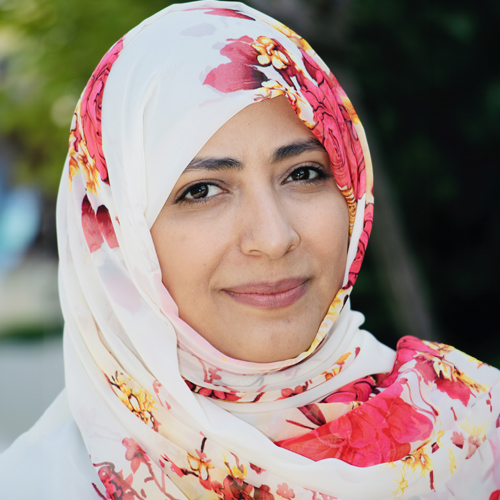
Tawakkol Karman
Tawakkol Karman, a Yemeni journalist and human rights activist, is the first Arab woman to win the Nobel Peace Prize. Known as the “Mother of the Revolution”, “The Iron Woman”, and “The Lady of the Arab Spring”, Karman led hundreds of protests against Yemen’s dictatorial regime, advocating for democracy and freedom of speech. She founded Women Journalists Without Chains and the Peaceful Revolutionary Youth Council, facing imprisonment and persecution for her active engagement in these causes. She played a pivotal role in pressuring former Yemeni President Ali Abdullah Saleh, who ruled from 1978 to 2012, to relinquish power.
Karman came forward as a courageous leadership figure during the Arab Spring in 2011 and was praised for her efforts against tyranny in the Arab world and for promoting reconciliation between Shia and Sunni Muslims, countering terrorism, and fostering dialogue between Islam and other religions. Karman's extensive influence is recognised globally. TIME Magazine listed her as one of the 17 Most Rebellious Women in History and one of the most influential women of the past century, featuring her on the cover of their 100 Strong Women in the World issue as a 'Torchbearer of the Arab Spring'. She is also recognised by Foreign Policy magazine as one of the FP Top 100 Global Thinkers and named among the most powerful women by many international media outlets and organisations such as CNN, BBC, and Reporters Without Borders.
Karman continues her struggle against tyranny, wars, and terrorism worldwide and advocates for expression rights, democracy, and development. She was appointed by the former UN Secretary-General to the High-Level Panel of Eminent Persons on the Post-2015 Development Agenda. She serves on the boards of several key international institutions and organisations, including the Nobel Women’s Initiative, Democracy for the Arab World Now (DAWN), and the Facebook and Instagram International Oversight Board. Her Tawakkol Karman Foundation plays an important role in development by building schools, fighting poverty, and supporting health institutions in Yemen.
More about Tawakkol Karman and the 2011 Nobel Peace Prize
Photographer: Abdullah Al-harazi.
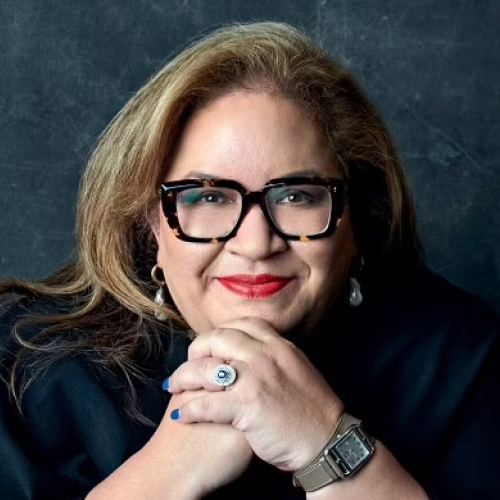
Megan Davis
Megan Davis is the Pro Vice-Chancellor Society at UNSW Sydney, holds the Balnaves Chair in Constitutional Law and the Whitlam Fraser Harvard Chair in Australian Studies at Harvard University and is a Visiting Professor at Harvard Law School. She is a renowned constitutional lawyer and public law expert, specialising on Indigenous peoples and the law, the constitutional recognition of First Nations and democracy.
She has been the leading Australian lawyer on constitutional recognition of First Nations peoples for two decades and designed the Referendum Council’s deliberative process that led to the Uluru Statement from the Heart. She is the co-chair of the Uluru Dialogue – the group of First Nations leaders who led the Uluru Statement from the Heart work. She is a globally recognised expert in Indigenous people’s legal rights and was elected by the UN Economic and Social Council as an expert member of the United Nations Permanent Forum on Indigenous Issues (2011–2016), and was also appointed by the United Nations Human Rights Council to the Expert Mechanism on the Rights of Indigenous peoples twice (2017–2022).
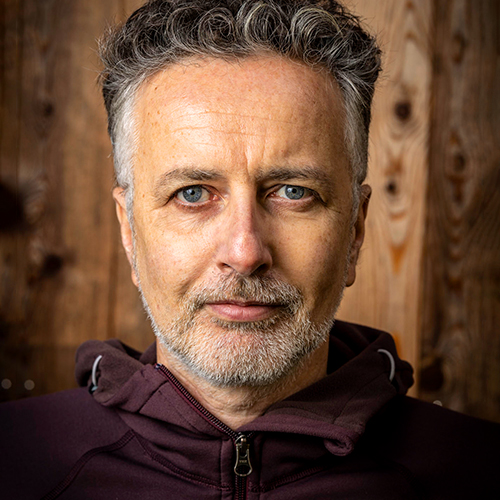
Owen Gaffney
Owen Gaffney is a writer, analyst and strategist. He is Chief Impact Officer at Nobel Prize Outreach. Owen co-founded the Exponential Roadmap Initiative and co-leads the Earth4All initiative. He has held positions at the Potsdam Institute for Climate Impact Research, Stockholm Resilience Centre, Future Earth, Global Commons Alliance and the International Geosphere-Biosphere Programme.