
Deborah Lawrie: The Fight to Fly

There were 29 candidates and I was the third highest scoring candidate. So they actually said, 'we're going to give you a [job as a pilot]'... But when Reginald Ansett heard what had happened — and he owned the airline — he reversed that decision.
Over 40 years ago, Deborah Lawrie broke barriers to become Australia’s first female commercial airline pilot. Her path wasn’t easy — she battled a landmark High Court case to challenge gender discrimination in employment and prevailed, all while facing blatant prejudice and unapologetic misogyny.
Deborah’s determination didn’t just open cockpit doors; it helped pave the way for equal opportunity across male-dominated industries, opening economic doors for women Australia wide.
Hear Deborah Lawrie in conversation with journalist Sarah Malik, on her story and how we can accelerate action for gender equality through education, allyship, and the dismantling of systemic barriers.
Presented by the UNSW Centre for Ideas and supported by UNSW Aviation.
Transcript
Sarah Malik: My name is Sarah Malik. I'm a journalist and writer, and I'd also like to begin by paying my respects to the traditional custodians of the land on which we are on today, the Bidjigal people, and to all Elders past and present. And I'd also like to extend this respect to any First Nations people present. Always was and always will be Aboriginal land.
I'm so thrilled to be interviewing Deborah Laurie today, Australia's first female commercial pilot. Deborah won a landmark high court discrimination case in 1979, which paved the way for women to become pilots in Australia. And she is currently, I think this is correct, Deborah, that you're the experienced female airline pilot in the world.
Deborah Lawrie: That's correct.
Sarah Malik: That deserves a round of applause!
Audience Applause
Sarah Malik: Incredible.
So Deborah, I guess I'm wondering if you could take us back to the beginning. As a child, you loved watching your dad fly in his light aircraft at Victoria's Moorabbin Airport and you made a deal with him, I think it was 1969, your sixteenth birthday. Can you tell us what that deal was?
Deborah Lawrie: Well, he made the deal with me rather, but I didn't really have aviation on my radar when I was younger. I was very, as a child, very competitive. I liked to, and I was the eldest, so I wanted to prove to my father all the time that I could, you know, run the fastest, swim the fastest, overcome any challenge. It was always something that I did with my father.
And when he took up flying lessons, he had had a lifelong ambition to do that. He did that when I was fourteen years old. And I helped him learn checklists and other things that he had to do at the time. And when I was doing that, I became interested in meteorology and aircraft performance and all those sort of things, just as a byproduct of what he was doing. And I used to go to the airport with him while he took his flying lesson.
And I think as payment or repayment for that loyalty, the instructor said, would you like to sit in the back seat? So I did that one day. And then the next time he went, I sat in the back seat again. And the instructor eventually turned around and said, do you want… you should learn to fly! And I thought, okay, good.
Audience Laughs
Deborah Lawrie: Still only fourteen, of course. And my father said, okay, I'll make a promise. I'll buy you… I'll give you two flying lessons for your sixteenth birthday. So by the time I turned sixteen, I had the, I went to Moorabbin for my first lesson, and absolutely hated it.
Audience Laughs
Deborah Lawrie: Because sitting in the aircraft in the front seat, even trying to adjust the seat mechanism, which was here, somewhere, and I had a dress on, which made it even more embarrassing. It was a lot harder in the front seat than looking from in the back seat.
However, because I needed to prove to my father that I could go solo, I stuck with it. So I did the first two lessons. He didn't buy me any more lessons, I had to pay for them myself. So I did things like washing cars, mowing lawns, babysitting, all those sort of chores. And I scrimped and saved over the next eleven months, and finally flew my first solo flight when I was seven… sorry, sixteen. So just before I turned seventeen.
Sarah Malik: And Deborah, you've written in your book, I think that was 19 April 1970, where you went on your first solo flight up there. And you wrote, “It was one of the greatest days of my life. I was on top of the world and hooked on flying.”
Deborah Lawrie: Yes.
Sarah Malik: Can you tell us about that day?
Deborah Lawrie: Yeah, well, it was funny, because the instructor had been pushing me a lot. And I had to do a lot of work at home because I was only having one lesson a month, which wasn't ideal. And on this particular day, which was a very calm autumn day in April, because you always want good conditions when you fly your first solo, he cut the lesson short. And I was a little bit disappointed with that. I thought, well, that's not really fair. And he all of a sudden, just without warning, opened the door, jumped on the wing, said to me, just do one circuit, and I'll be here when you get back. He closed the door and walked off.
Audience Laughs
Deborah Lawrie: And yeah, so I was like, shaking there. And thinking, no, I have to do this. I have to, I have to make sure I do it well, and do it properly, and all the words that he taught me over those months, were all echoing in my head when I did that first circuit at Moorabbin.
And then when I landed, I was just like on top of the world. I thought, what a great achievement that was. My poor mother used to have to drive me to the airport because I didn't have a, you weren't allowed to drive then. And she was waiting for me reading her novel in the car, which she always did. And when I told her what I had done, she just about fainted!
Audience Laughs
Deborah Lawrie: Because she thought I was, it was just a phase that I would get over. She didn't really consider that I was ever going to fly an aeroplane by myself.
So yeah, that was, that was the beginning of it.
Sarah Malik: I found it so interesting that you could actually… you flew before you could drive!
Audience Laughs
Deborah Lawrie: Yes.
Sarah Malik: Which is incredible.
Deborah Lawrie: She did try to teach me to drive the manual car. That was harder than the aircraft.
Audience Laughs
Sarah Malik: And so you were 17 doing your first solo flight up there. And over the years after that, you kind of began clocking up hundreds of hours at Moorabbin airport, eventually becoming a private commercial pilot, as well as getting your teaching degree.
But look, this was back in the early 1970s. The world you were in wasn't super supportive. And even the guy you were dating at the time wasn't super supportive. And this is what you write in the book. You wrote, “When I told John that I wanted to get into commercial aviation, he dissuaded me. Other people patted you on the head and said, don't be too disappointed if you get a lot of knockbacks. The aviation game I realized was male dominated, and they weren't keen on having women in their ranks. However, I decided whether they liked it or not, I was staying there.”
Now, gosh, when I hear that, I think for a lot of us being in environments where you're not made to feel welcome, hearing those kinds of things, it can make it really hard to want to stay. What made you so determined?
Deborah Lawrie: Well, I did do, I went to university and I got a, I became a secondary school teacher. And that was because my father said aviation is so not friendly towards what you want to do. You know, there's not opportunities for women that he, he insisted that I would have a backup career, even though I was still heading in the direction of wanting to be full-time in aviation.
So I started teaching in high school. I was a flying instructor at the same time. So I flew on weekends at Moorabbin and at afternoons after school, and sometimes at night. So I was basically seven days a week, 365 days a year doing just work, work, work. And being in that environment at Moorabbin, we had an aero club there, which, which has a bar that you collect in. We gathered there after work or after flying, and what have you, and exchanging stories and what, so on. It was obvious to me that the guys were getting, moving forward in this industry and going towards the airline jobs. And to me, I had trained some of the people that were going into the airlines.
So I thought, well, if I'm good enough to train them, I'm good enough to get there myself. I was told at the time, you're ahead of your time. You know, just, just be grateful with what you've got here, instructing, doing charter flying and things like that.
But for me, that wasn't where… I didn't want to settle for that. I wanted to really aim for, for that position in the airlines. And so, I kept going and much to everyone's sort of saying, you're wasting your time. I still put my application into Ansett and to TAA as it was known at the time.
Sarah Malik: Yeah, we'll get to that in a bit. I guess one thing that also stood out for me is that, you know, this was a feeder school, like Moorabbin was a feeder school for all the airlines, but in order for you to be taken seriously, it felt like all the goalposts kept shifting all the time.
You know, like people told you, get your commercial pilot license, and then get your instructor's rating. And so it felt like there was harder hurdles for you to, kind of, be taken seriously.
Deborah Lawrie: No, those things were necessary, really basic requirements for the airline positions. So it wasn't that they were creating more goals or sorry, more criteria, if you like, but what they were doing was stalling me, because there was a 27 years age limit. So as soon as you turn 27, they threw your application in the bin. So that was what they were on about at the beginning.
So I applied when I was 23, and they were just stalling me until I turned 27.
Sarah Malik: 1976 February, you're 23 years old. You apply for a position at Ansett and, you know, these were the qualifications that Ansett wanted at the time. They wanted a leaving certificate, and you had a bachelor's. They wanted a commercial pilot license, and you had a commercial pilot license. They wanted a Morse code rating of 10 words per minute, and you had a Morse code rating of 15 words per minute. They wanted 500 flying hours and you had clocked up 1688 flying hours. So in a way being underestimated served you because you were clocking up everything that you needed.
So yeah, so there was this limit of when you're 27, you get kicked out, but there was all these delays in your application. Tell us about the application, the interview, the process and going through it.
Deborah Lawrie: Well, the idea was it's different today, of course, you know, everything's done online and things like that. But back in those days, you wrote letters.
So every month or so I'd write a letter and say, Dear Ansett, you know, I have got, now I've got this many hours and now I've got this particular qualification, and they would write back and say, yes, that's very nice. Keep us informed, you know, and so on. And this would go backwards and forwards for quite some time.
And eventually they said, look, let's just bring her in, check her licence, logbook and all that sort of stuff, just process it and maybe we can, you know, get rid of her, whatever, off the books.
So I went in, presented my documents and so forth. And then they made the decision to progress me to the next stage, which was called the second interview in front of a big panel of captains from all over Australia.
That was quite interesting. That was about a 45, 50 minute interview with those guys, including asking me things like, how many children I was going to have, and how I was going to look after them and all that sort of stuff. However, at the end of that process, they gave you a score out of a hundred, which was based on criteria such as your age, hours and things like that, but also that interview, the results of that interview. Then they sent you off for a psychological test.
Now there were 29 candidates and I was the third highest scoring candidate. So they actually said, we're going to give you a job. They put me down as accepted, in a group of 14 pilots. But when Reginald Ansett heard what had happened.
Sarah Malik: And this, he was the head of Ansett at the time.
Deborah Lawrie: He owned the airline. Yeah. He reversed that decision. Yeah.
Sarah Malik: And, you know, for those of you don't know, Reginald Ansett was a notorious misogynist dinosaur. Um, and I think that he said, his parting words about you was, that bloody pilot lady or something.
Deborah Lawrie: Yeah. It was, it ended up being a bit personal battle.
Sarah Malik: Yeah.
Deborah Lawrie: It definitely was. And, and there was a lot of cartoons in the newspapers at the time, and the cartoonists always depicted him and me in the same picture, and in some sort of battle mode. Sometimes it was in a boxing ring and sometimes, uh, yeah, it was, they were quite funny. They were very non-PC, but they were, um, they were quite funny cartoons at the time.
Sarah Malik: So after you got the rejection, um, you know, it was devastating and, you know, you write in the book, you weren't inclined to pursue the matter because you thought, you don't know why they rejected you. Um, but your partner at the time, Peter Wardley, he insisted that you get a copy of your psych report and all your reports, which you had scored top percentile, superior skills, average higher than everyone else. And he wrote, “I knew she was better than all of them. So I thought, why not make a fight of it?” So he urged you to go to the equal opportunity commission, arguing you had been discriminated against on the basis of sex.
So in 1978, that kicked off a really long protracted court battle. What was that like at that time going through that?
Deborah Lawrie: Well, perhaps I'll start with the Equal Opportunity Commissioner who was a lady. She was the… so the Victorian equal opportunity law had just been enacted only a year earlier, I think. And Fay Marles, who happens to be the current Deputy Prime Minister's mother, um, was the first commissioner for equal opportunity in Victoria.
So we went off to see Fay Marles and her job was to first of all, hear what my complaint was and then call or speak to the, to the person I was complaining about, or the company I was complaining about and see if she could negotiate some sort of a settlement that way.
Now the response she got from Reg Ansett left her in no doubt that they had actually, they were guilty of what I was trying to say they were guilty of. And she then said she had to recommend this case to the equal opportunity board for a hearing.
Now, when Ansett discovered this, they decided they would try to get exempted from the act. So he used some of his political mates, at the time, to put pressure on the Victorian Government, the Hamer Government, who was in power at that point, to get it, to get an exemption from this particular law for Ansett Airlines. And when the commission heard that, they rejected them within, I think it was 10 minutes or something. They just… because their arguments were basically quite ridiculous.
In any case, so they were not exempted. So then they had we had to go to the board, first board hearing. Unfortunately, they didn't do the process correctly. They pre-empted a decision. So that board was disqualified and a new board had to be reconstituted.
And then there was a second hearing. And after that hearing, four orders were handed down. One of which was the most important one, was that I was to be employed on the next intake of pilots in Ansett. Then Ansett went off to the Supreme Court to get injunctions against the board. And it went on and on and on and on and on. And eventually it became a constitutional law.
So Ansett said, we've discriminated. We agree. We don't care. We'll do it again. But now we're talking two different laws. We're talking the federal Pilots Award, which was a federally constituted agreement and the Victorian Equal Opportunity Act, which was state law.
So they said, and the pilots agreement said, you could fire anyone for any reason within the first 12 months. And they said, and that's what exactly what we'll do. If you make us employ her, we will fire her immediately under this federal award.
So the Supreme Court said, well, this is now a constitutional matter. We're handing it to the High Court. So that's where the case ended up at the end of 1979. And it was the full bench of the High Court…
Sarah Malik: Yeah.
Deborah Lawrie: And they switched it around.
Sarah Malik and Deborah Lawrie Laugh
Sarah Malik: I mean, you became… taking the audience back to this time, this was the 1970s, and you know, the aero club, you know, as, as they call it, like the department of transport and the government airlines, it was all filled with these ex-military types.
Deborah Lawrie: Yep.
Sarah Malik: So it was a very macho world. Uncle Reg was, was a bit of a dinosaur. And, and some of the arguments that he used in the case were astounding. And they kind of remind me of things that we hear even today, like we have to go slowly, and the time is not right. And the industry is safer with men. It's traditional for airlines to operate with men as pilots. The time is not right for women to be pilots. And surveys show that people like to fly with a father figure.
Audience Laughter
Sarah Malik: Right? So, I mean, I want to ask you a question because, you know, we always talk about how to make change and, and what's the polite way, but do you think that all these powerful bodies would have changed had they not been forced to?
Deborah Lawie: A very good question. Maybe eventually.
Sarah Malik: Yeah.
Deborah Lawrie: But, certainly there was a, you know, social injustice here. And, and that was what my barrister argued about mainly, but I'll just go back to that statement where they said that it was, they didn't, they considered it would be unsafe if there was an aircraft flight deck in which the sexes were mixed. Okay? That's their exact words. They said, it's a safety issue to have a male and a female flying together. And the chairman of the board at the time was very forward thinking.
And he said, excuse me, to the Ansett barrister. And he said, would it be okay if they were all women?
Audience Laugh
Deborah Lawrie: So he was, so he was way ahead of his time really. Yeah. So there were lots, there was, there were lots of little things like that that happened throughout the case that caught with much the amusement of the press who started scribbling very quickly after that.
Sarah Malik: Oh my God, it was unreal. There's so much in the book and there's so much you can say about a lot of the media coverage.
I also just loved Pamela Graham, the Channel Seven female reporter who said, I can't report on this objectively, because it's a rights issue. I thought she was amazing. And she supported you.
Deborah Lawrie: She was amazing because she, she was with Channel Seven, and she went to her boss and said, could I please report in support of this case, which was the start of journalism, not necessarily, you know, having to tow the middle line there.
And, and she went out on a limb. And she was really good to me because it was a very frustrating period of time. And there was many times when I was so angry about things, and she would turn up to do an interview and she would allow me time to stamp my feet and swear my head off. And then she would say, are you ready now?
Audience Laughter
Deborah Lawrie: And I'd say… and I got my composure and then she would interview me.
Sarah Malik: Yeah. And I think it's just balanced, because at the time the press was so male dominated and some of the rhetoric against you was insane. But you did become a national media figure and the toll on you financially, personally, professionally, it was immense.
You've said before giving up was not an option. Why was it not an option?
Deborah Lawrie: Because I had put my toe well and truly into the water. And if, if I was going to pull out, or stop, or give up, I was never going to be, I would never known, if I would have been able to achieve what I really set out to do. But also there was a feeling that I'd been labelled as a troublemaker, and maybe even getting a job in another area of aviation might've proved to be difficult because they would have said, okay, no, you're the one that caused that trouble.
We don't want you working for us, or what have you. So it was a sort of a catch 22 in a lot of ways, but there was no, I just was not going to give up, because I wouldn't have been fair to myself. It wouldn't have been fair to the people who had supported me.
And it was what I really wanted to do. And I knew I could do it. So why should they stop me? If that makes sense?
Sarah Malik: Yeah. Round of applause for that one guys.
Audience Applause
Sarah Malik: I guess, one thing that resonated with me is that, you know, whether you're a woman or a minority, you know, we don't, we just want to do our jobs. You know, we don't necessarily want to be activists or crusaders. We don't want to educate people about gender or race. Like you kind of want to get that out of the way, so you can just go about and do your job, you know?
And, and you wrote, “If I wasn't so determined to succeed in my career, I might've given up by now. Some people accused me of being a women's liber, but I wasn't. I do understand what women in other professions have to do to improve their careers now. And I do have a genuine concern for working women, but I must be honest. I have done this all for myself. No one else. It's all very well to fight battles for others, but there comes a time when you have to do something for yourself. And if other people benefit, that's great. I love flying and it's all I ever wanted to do.”
So was that a burden for you becoming this symbol?
Deborah Lawrie: Um, no. Well, yes and no.
Sarah Malik: Yeah.
Deborah Lawrie: Um, there was one, so you've got to understand the seventies were quite a dynamic decade in terms of women's lib, liberation and Germaine Greer, era of her battles and so forth. But it was also a group of the, these women who were the bra burning ones, and, uh, they were… and anyway, they had a meeting one night and, um, I was invited along and I felt like I had to go because they were pushing me forward as their hero, and their symbol and all that sort of stuff. And that was fine. Now I'm quite happy for them to do that, but I'd certainly didn't want to be burning my bra along with them.
Sarah Malik Laughs
Deborah Lawrie: And, and I remember one of them sidled up to me and she, “You know, you're one of us, you're one of us.” And I went, “Oh, I don't think so! You know, I, I just want to fly airplanes, but you know, if you guys want to come along with that, that's fine.” And I was also under strict instructions from my barrister not to open my big trap, and say something that would affect the case.
Sarah Malik Laughs
Sarah Malik: I think the funniest moment for me was when Ansett decided to give flowers and gift cards to female passengers to improve their PR image during the case.
Audience Laughter
Sarah Malik: And I was like, maybe just let women be pilots, you know, that, that could work!
Deborah Lawrie: No, there was a good reason for that though, because as the case gathered momentum, the, there was a kind of a girl-cot, if you like, and a lot of women's groups, the Women's Electoral Lobby, um, the Australian… I think Australian Women's Working Group, I think they were called something like that. They encouraged all their members to boycott the airline. And because a lot of those women had roles as secretaries. and they were booking tickets for their bosses…
Sarah Malik Laughs
Deborah Lawrie: You know, there was a lot of, and it was very noticeable. They, they, their market share dropped because of this, um, boycott. And so Ansett were very worried about it. They were more worried about it than they let on. And so the spring posy thing for the women passengers…
Sarah Malik Laughs
Deborah Lawrie: Was a gesture to say, oh, we actually really, uh, think we, we, you know, we like women.
Sarah Malik Laughs
Deborah Lawrie: We, we, you know, there's a lot of them working in our company.
Sarah Malik: We like you, we just won’t hire you.
Deborah Lawrie: Well, they said we've got a lot of women working in our company, just not as pilots.
Sarah Malik: Yeah that’s fascinating. And boycotts work everyone! Boycotts work.
Yes. Um, so look, eventually there is a legal order in your favour, forcing Ansett to hire you as a trainee, which Ansett appeals, but you know, there's a whole process, but you eventually get to start at Ansett in their training theory school.
So you're now in this place that resisted you for so long. What was going through your mind at the time on your, on your first day at training school, Ansett training school?
Deborah Lawrie: Right. Well, I turned up, and I might've mentioned before there were 14, supposed to be 14 of us. Eventually there were 16 in that class. And I turned up on the first day. I knew some of them, you know, from general aviation and so forth. But I chose a desk down the back, and cause I just wanted to be able to see everything and have safety down the back type of stuff.
And just before this class started, three guys in suits came to the door of the classroom. They were obviously the management of the training school. And they did this to me. And I just, my heart dropped and I thought, oh, okay, I'm gonna be booted out before this even starts.
And they said to me, please, if you don't mind, there's a lot of press outside. And would you mind just saying a few words with them so we can get rid of them? And I said, well, yeah, sure, sure, sure. So that's what I did.
And so the people in the training school were actually very supportive of me. It was the upper management in the airline that were doing Reg's little handiwork that were in the background, desperately trying to find ways to get rid of me. But the people that were teaching me were very, very kind and very generous.
Sarah Malik: Yeah. I mean, that's something I think a lot of us can relate to when you're the first, you're in the minority, that pressure to be perfect, that pressure that if you get it wrong, the stakes are really high because you represent so many other people. And that feeling terrified that every time there's a meeting, maybe I'm gonna get fired, because it takes its toll on your nervous system, that feeling.
And you also wrote, “I was still very nervous about doing the slightest thing wrong, such as being seen on TV without a hat.” I think that was a thing back then.
Deborah Lawrie: Still am a bit.
Audience Laughter
Sarah Malik: Or saying the wrong thing. So how did that impact you?
Deborah Lawrie: I learned very quickly how to deal with the press. I grew up in a lot of ways, far quicker than I would have normally, I think. I became quite good at doing it, I suppose, but very careful. I mean, always being so, so careful of what you said. When you work in an airline, you have to get permission to speak to the press anyway.
So that's what I think these days is what I do. I never speak without getting permission to do so. But it's just something that you're always very aware of. I think the other thing too was not failing any exams, not showing any form of weakness, like, being emotional about anything. So just completely guarding those emotions until you're out of sight. That was another thing that I used to do.
And in some ways, it has rubbed off a bit in later life, in my career as well. I find it more difficult to let go, I think, than other people do, because I'm still a little bit conscious of being watched, or something that stayed with me.
Sarah Malik: Yeah, that scrutiny and surveillance and feeling ever vigilant.
Thank you so much for everything that you've done! Yeah. Thank you.
Audience Applause
Sarah Malik: Look, eventually you get to live your dream. And on the 16th of Jan, 1980, you become the first woman in Australian aviation history to co-pilot a flight on a major Australian airline. Ansett Flight 232 from Alice Springs.
Can you tell us about that flight and that day?
Deborah Lawrie: Well, first of all, I had to fly up from Melbourne to Alice Springs on a Boeing 727. Just as a crew member, deadheading or positioning, is what they called it. And my training captain was waiting for me in Alice Springs with the F27, Fokker F27, which was my first aircraft. And he was a wonderful training captain. He was looking forward to working with me.
And when I arrived in Alice Springs, of course there were more press there, right? They wanted some photographs and he took my bag off me and said, I'll put this up on the flight deck and you deal with them. And when you're done, we'll get going.
And they always want you to stand here, do this, do that. So they said, can you lean up against that wheel, right?
Sarah Malik Laughs
Deborah Lawrie: And so one of the struts on the landing gear, so I leant up there and then I had grease from here to here, on my very first day. And yeah, I was so frustrated.
But when I got on, got rid of them and got into the aeroplane and sat down with him and he was quite amused when he saw this, he made me feel very comfortable. And once we got going, it was a case of, this is just another aeroplane. So just has 50 people on it, or whatever, but it was another aeroplane and I really enjoyed it. I was in my comfort zone, if that makes sense? Yeah.
Sarah Malik: It was what you're meant to do.
Deborah Lawrie: Yeah.
Sarah Malik: It was funny. I remember reading, people were asking you for your autographs on the plane and the senior instructor said, oh, very Aussie, when the media fuss is over, it'll just be like flying with a bloke.
Sarah Malik Laughs
Sarah Malik: Which I thought was funny.
I also love that two weeks after you won your case, the first two male hostesses were hired. So that's fantastic.
Deborah Lawrie: Yeah.
Sarah Malik: I love that.
Now, one woman among, was it 800 or so pilots, you know, male pilots. So nothing catered to you. It was a world where there was, you know, hello gentlemen in meetings and correspondence, all the regulations were written for men.
I guess on the plus note, you had your pick of bathrooms.
Sarah Malik Laughs
Deborah Lawrie: Not initially. That's one of the excuses they used. They said, oh, no, no, no, we can't, because where the simulator is, there's only male toilets.
Sarah Malik: Wow.
Deborah Lawrie: Yeah, so of course that was bullshit, right? But yeah, but I did go to a function after I was four years in the airline.
So what the company had, they had a group of flight engineers who organised an annual dinner, retirement dinner, for all the pilots that had retired throughout the year. And it was strictly men only. No wives, no girlfriends, no nothing. Just men only.
And the reason for it was because they wouldn't be able to tell their war stories and, you know, the affairs that they'd had over the years and, you know, all that sort of stuff. So they just wanted to keep it all boys talk. And I'd been in the company for four years, and this committee of flight engineers invited me to this dinner.
And yeah, it was funny. It was funny. Anyway, and it was full on black tie. So they were all in their suits and everything. I wore a long dress. And they said, you are allowed to come because you are one of us. And that was the most amazing recognition of being accepted. And when I did go into that dinner, they always had big tables, you know, and all that sort of stuff. And all these old guys that had been retired for many years, insisted that I sit at their table because they said, we never flew with anyone as good looking as you.
Audience Laughter
But that was a case when I did have all the bathrooms to myself, all the toilets to myself, yeah.
Sarah Malik: Yeah, wow. I can't imagine. That's just amazing.
You know, what I loved was that even though you were in a very male dominated space, you still wanted to be authentically yourself, like a woman. And just because you were in a male dominated profession, it doesn't mean you wanted to be a man, you know, and you made the job your own.
And early on you decided you wanted to redesign your uniform, which was, you know, it was very baggy. There was ugly shoes. So why was that important for you?
Deborah Lawrie: You know, once you've got to where you want to be, and you're doing it every day and coping and managing and all that sort of stuff, you then have time to think about other things.
And I suddenly became conscious of being surrounded by very glamorous cabin attendants, flight attendants, you know, beautifully dressed, all that sort of stuff. And here I was in this daggy male uniform, with blue shirt and a tie and an ill-fitting hat, and a jacket that was all wrong, and the pants and all that sort of stuff. And so I started getting a little bit self-conscious about my image. And that's when I asked if we could modify the uniform. And they agreed to that. So it still wasn't all that good, but it was a lot better than it was. And certainly I can say, in where I work now in Virgin, it's a much nicer uniform.
Sarah Malik: I love it. Yeah, I just lol’d when I read that Air France had the best pilot uniforms that you loved.
Deborah Lawrie: Yeah, yes.
Sarah Malik: I was like, oh yes, very French.
Another thing that I really enjoyed reading was that, you know, you were in this space, but you wanted to do it your way, you know, be yourself. And you wrote… there was a kind of seminar on engine failure or something. And you wrote, “I was positive about what I was doing, but I was not barking commands like the others. This played on my mind. I was concerned my colleagues were developing certain qualities and I was missing out. And I asked, you know, do I do things differently from the boys? And the instructor said, yes, but it doesn't matter. As long as I could achieve the same standards without having to change my personality, I was happy. I look back now and think that the manner the guys adopted was as much an indication that they thought they had to prove themselves too. And once again, fears of confusing my identity with the career I had chosen were dispelled. And I was satisfied I had to assume no masculine qualities in order to be successful.”
Deborah Lawrie: Yeah, that was one particular event. It was a training drill on this, by this time I'm on the Boeing 727, which is a three crew flight deck. And we had to go down to Avalon and we were with a Czech captain and five of us first officers.
And we had to run through the engine fire drill in that aircraft in the circuit area. And it meant, you know, doing, taking a lot of positive actions and calling out memory items and doing all this sort of stuff. And I stood back while the others each took their turn. We just had to rotate through the right-hand seat the whole time. And all these guys were doing the macho, you know, pull that and twist and all this sort of thing. And I was thinking, oh my God, you know, I don't actually do it that way.
Sarah Malik: Yeah.
Deborah Lawrie: So I had this dilemma, do I try and mimic what they're doing, or do I just do it the way I do it myself, which is a little bit more calmly. And anyway, I did that. And I said to this Czech captain, I said, I do it differently, don't I? You know, like, oh. And he goes, yes, and it doesn't matter.
And that was, so I was getting the same result just in a different way. And I think that was really important to understand because it allowed me to be who I am, for the moving forward from that point.
Sarah Malik: I love that so much, that story, because I think in conversations about diversity, you know, there is this feeling that having that confidence in yourself that you don't need to replicate the behaviour of the status quo or the men around you to be good at your job. You know, you can bring a different approach that's actually not wrong at all, but could be better.
Deborah Lawrie: Yeah.
Sarah Malik: You know, so I love that.
Now, today you're called an aviation legend. And there's even a flyover named after you. That's got to feel good.
Deborah Lawrie: That is, I have to say, amazing.
Sarah Malik: Yeah.
Deborah Lawrie: When Sydney Airport called me to ask permission to name this particular structure after me, I thought it was a hoax call.
Sarah Malik Laughs
Deborah Lawrie: I thought, who is this person on the other end of the line? The beautiful part about this was Sydney Airport, the flyover itself is owned by New South Wales Roads, but Sydney Airport had the, were given the opportunity to name it.
So then they had a big meeting about that, and they chose to name it after me because they said they've got nothing else in the airport named after any women at all. But what they were particularly chuffed about was that the flyover goes right over the top of Sir Reginald Ansett Drive.
Sarah Malik: Yes!
Audience Laughter and Applause
Sarah Malik: That's poetic justice. I love that.
And you are in your 70s and still flying with a career spanning over 40 years. That deserves a round of applause too.
Audience Applause
Sarah Malik: Amazing, amazing.
So if you could look back, you know, to your younger self who did all of that to get you here, what would you say to her?
Deborah Lawrie: I would probably say, I would say to buy more clothes, because I thought the court case was going to be just one day and I'd probably go, just take a little bit more attention to the wardrobe. But I'd also probably say not to worry as much about the outcome.
I mean, it's hard to say because you know what the outcome is, but there were a lot of people, particularly my barrister who was very clever and very confident in the end that we were going to win that case. But yeah, to try to be less worried on the daily basis, but that's hard because that's all in hindsight. But yeah, otherwise I would say, you did the right thing, you stuck at it, and I would do it again.
Audience Applause
Sarah Malik: Love it. So we do have time for questions. Deborah, a question we've got, if you could give one tip to young women who would love to get their foot into male dominated industries, you know, what would you say? What would you say to them?
Deborah Lawrie: Just fit in. Don't be entitled, okay? If you go in with this attitude that you'll need to be treated differently or what have you, you'll antagonise the whole situation. It's about just fit in, blend in and eventually you'll earn their respect.
Sarah Malik: Yep, question.
Audience Question One: Hello, Debbie. I'm sorry if I call you Debbie, but I'm probably one of the older members of the audience here today and I lived through your saga. And I remember you as Debbie Wardley.
I was a young fellow when Reg Ansett started his airline and built it from nothing, and I had great respect for Reg Ansett. However, your saga completely destroyed that respect. And I know that there will be many women here today who will be feeling, oh yeah, those terrible misogynistic men and so on.
But there are also a lot of men who find misogyny repulsive. So there are a lot of men too, who are rooting for you.
Deborah Lawrie: Thank you.
Sarah Malik: So I think the question is, Deborah, for you, you know, getting that support from others, male allies as well, was that really important for you?
Deborah Lawrie: Very important. Yeah. Very, very important.
And I'm very grateful to hear what you've just said. The younger guys in particular in the airline were very supportive. It was just the old air forcey guys that were a bit... Yeah, but anyway, I think you were going to say something else?
Audience Question One: Yes, my recollection of your story is that Reg Ansett was a total...
Deborah Lawrie: Pig.
Sarah Malik Laughs
Audience Question One: And his standing, in my view, was destroyed completely. Whereas on the other hand, if the story is correct, another man's profile, in my view, was uplifted. I believe that you were the instructor of a relative of Rupert Murdoch.
Deborah Lawrie: Correct.
Audience Question One: And when Rupert Murdoch and Peter Ables took over the airline and they heard what Reg Ansett was doing to try to stop you getting onto the flight deck, straight away Rupert Murdoch said, that's not on. Give the girl a job.
Deborah Lawrie: I already had the job, but what happened was, I taught Rupert Murdoch's brother-in-law how to fly. And I didn't know the Murdoch connection there, but in that December, when I started in the ground school, the Ansett empire was crumbling because there was a lot of takeover bids, and Rupert Murdoch and later on Peter Ables actually gained control of the airline. And at that time, they were busy trying to keep me out of the aircraft.
They weren't going to let me go past the training school. And I rang John Calvert-Jones and I said, I think this is what they're up to. He said, let me have a word with Rupert. And then the following week, after that weekend, Rupert Murdoch issued a memo to say, she has to be treated exactly the same as the guys and based on her merit and achievements only, nothing else. So I had to be treated as equal with the guys and promoted in a way, according to what I was able to demonstrate that I could achieve. And that was a huge breakthrough.
Audience Question One: I must say that my respect for Rupert Murdoch has totally gone.
Deborah Lawrie and Sarah Malik Laugh
Deborah Lawrie: Well, he was nice then.
Sarah Malik: Thank you so much for that question.
Audience Question One: I'd just like to congratulate you, Debbie, on a magnificent career. And I'm sure that even if you did it for yourself, you would be an inspiration to so many people, not just the women who've been knocked back and knocked back, but the men who support women's rights.
Deborah Lawrie: Yes, thank you very much.
Audience Question One: So three cheers for you.
Audience Applause
Sarah Malik: A question from here.
Audience Question Two: I have two questions. Did you ever have a life-threatening event? And second, given how adverse you were to training others, did any of the simulations change because of things that you implemented?
Deborah Lawrie: Okay, that's a complicated question. At one stage, no, I haven't. I've got my top 10 most scary aviation events, but the only time I thought my life might've been under threat, was, I put it in my own head that it would be easier for them to get rid of me. So I convinced myself that that's what they were gonna do. And one day I was coming out of the front of the house and a car backfired in the street and I almost hit the deck. I thought that's them shooting at me. But then I said to myself, don't be so stupid, because everyone would know who did it.
Sarah Malik Laughs
Deborah Lawrie: So, yeah, that was the only time for that.
And the other question was a bit more complicated about has anything training changed because of women?
The only thing I would say is that when I was instructing in general aviation, and also later on in the airlines, sometimes I was given particular candidates, because I could manage them better for whatever reason.
So in terms of training, that's a far more complicated question. I'd have to give that a bit more thought. So if you'll pardon me on that, not answering that completely, at the moment, but there's definitely times when certain situations, it's preferable to have either a guy doing it or a girl doing it.
And I think it's important that we recognise that because it's not about the person training, it's about the trainee, what they're trying to achieve, or what the outcome of that should be, so.
Sarah Malik: I think we have time for one more question maybe? Yep, just there.
Audience Question Three: In your experience in the cockpit, did you find crew resource management was handled a bit differently by you as a female in the cockpit versus just an all-male?
Deborah Lawrie: I'm really glad you've asked that question because crew resource management never existed when I started. Yes, I can see you look on your face. All right, and I'll tell you when it's came into vogue.
Okay, it was after KLM and Pan Am crashed at Tenerife. And they started talking about the cockpit gradients, the steepness of the cockpit gradient, and that it was not desirable because first officers couldn't speak up, and the captain was always right, and all that sort of stuff.
So crew resource management started to develop after that time. And it was the single most empowering tool for a female on a flight deck. I can tell you right now.
Sarah Malik: Deborah, what is crew resource management?
Deborah Lawrie: It's the way in which the crew members work together.
Sarah Malik: Right.
Deborah Lawrie: And how they interact with other people on the aircraft such as cabin crew, ground crew, all that sort of stuff. But it's essentially the way the two of them work together. And it gave you the power to call out inappropriate behaviour, because sometimes their behaviour, I flew with some real assholes, I can tell you. And in those days prior to CRM, they got away with it. But they don't get away with it now. So that’s a really good question.
Sarah Malik: God, we need some crew resource management in every industry, I think.
Deborah Lawrie: Yeah.
Sarah Malik: Oh, I love that. One more question, yeah.
Audience Question Four: I don't actually have a question. I just want to thank you. I was the 26th woman to join a national carrier as a pilot and it wasn't easy. And everything you've said today resonates so strongly with me, but you actually made it easier for me to get that role. So thank you very much.
Audience Applause
Sarah Malik: I just want to thank you so much, Deborah. You're an inspiration to us all. And I loved hearing your stories and taking us back to a time that actually was not that far away. You think 1980, that wasn't that long ago. So thank you for reminding us how far we've come. And maybe also how far we've got to keep going. Thank you so much to the audience and the questions too. Thank you.
UNSW CFI: Thanks for listening. This event was presented by the UNSW Centre for Ideas and supported by UNSW Aviation. For more information, visit unswcenterforideas.com and don't forget to subscribe, wherever you get your podcasts.
-
1/4
-
2/4
-
3/4
-
4/4
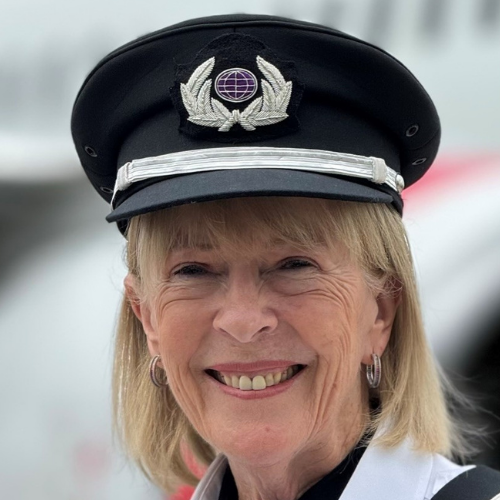
Deborah Lawrie
In 1979 Deborah was the subject of the first contested equal opportunity anti-discrimination case in Australia. After fighting for more than a year she won the battle against Ansett in the High Court. She joined Ansett Airlines to become the first female airline pilot for a major airline in Australia and in 1992 published her book Letting Fly.
After the Pilot’s Dispute in 1989, Deborah relocated to The Netherlands to fly with KLM Cityhopper. She held the position of Flight Safety Manager for four years and was the Chief Flight Safety Investigator for eight years. Deborah was chair of the European Regions Airlines Association Air Safety Working Group from 1998 –2004 and she was a member of the IATA Aircraft Accident Classification Working Group.
Deborah currently flies the B737 with Virgin Australia. Deborah was inducted into the Victorian Honor Roll of Women in 2001. She received an award as Master Air Pilot in 2017 and was appointed as a Member (AM) in the General Division of The Order of Australia in June 2019 for significant service to aviation as a commercial pilot, and to women in the profession. She was inducted into the Australian Aviation Hall of Fame in 2022 and in November 2023 Sydney Airport named a flyover that connects the International and Domestic terminals in her honour.
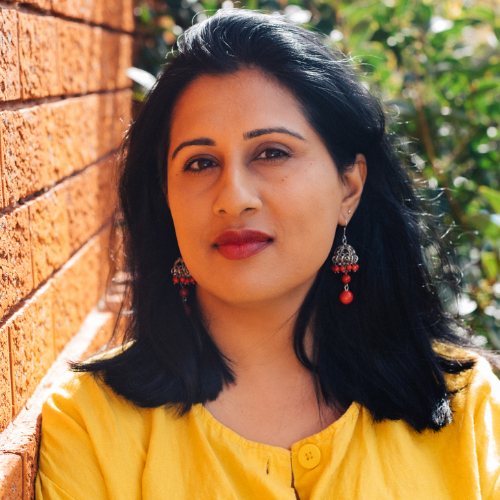
Sarah Malik
Sarah Malik is a Walkley Award-winning Australian investigative journalist, author, and TV broadcaster. Her work explores asylum, surveillance, technology, and their intersection with gender and race, with a focus on domestic violence, gender inequality, and migration. Sarah graduated from the University of Technology, Sydney, with degrees in Law and Journalism, and has taught journalism at Monash University.
She published her debut memoir, Desi Girl: On Feminism, Race, Faith and Belonging in 2022, and her second book, Safar: Muslim Women's Stories of Travel and Transformation, in 2024. Sarah co-hosted and co-produced award-winning SBS podcasts, including Let Me Tell You (Gold Best Arts/Culture podcast at the 2022 Australian Podcast Awards).
Her writing has appeared in outlets like The Guardian, The Sydney Morning Herald, The New York Times, and The Saturday Paper. Sarah has also contributed investigative stories for The Guardian and The New York Times, including the long-running case of Egyptian asylum seeker Sayed Abdellatif, which led to his release after nearly 12 years in detention. She’s worked on high-impact investigations such as the use of spyware in domestic violence and the challenges faced by Muslim women in accessing religious divorce in Australia.
In 2019, Sarah co-executive produced In My Shoes for ABC Radio National, examining racism and the challenges of representation, and also worked on the Majnoon and Kismet podcast series. She has presented documentaries exploring white supremacy and hate in Canada and was awarded three Walkley awards in 2018 for a series on domestic violence and faith communities.