
The Business of Beauty
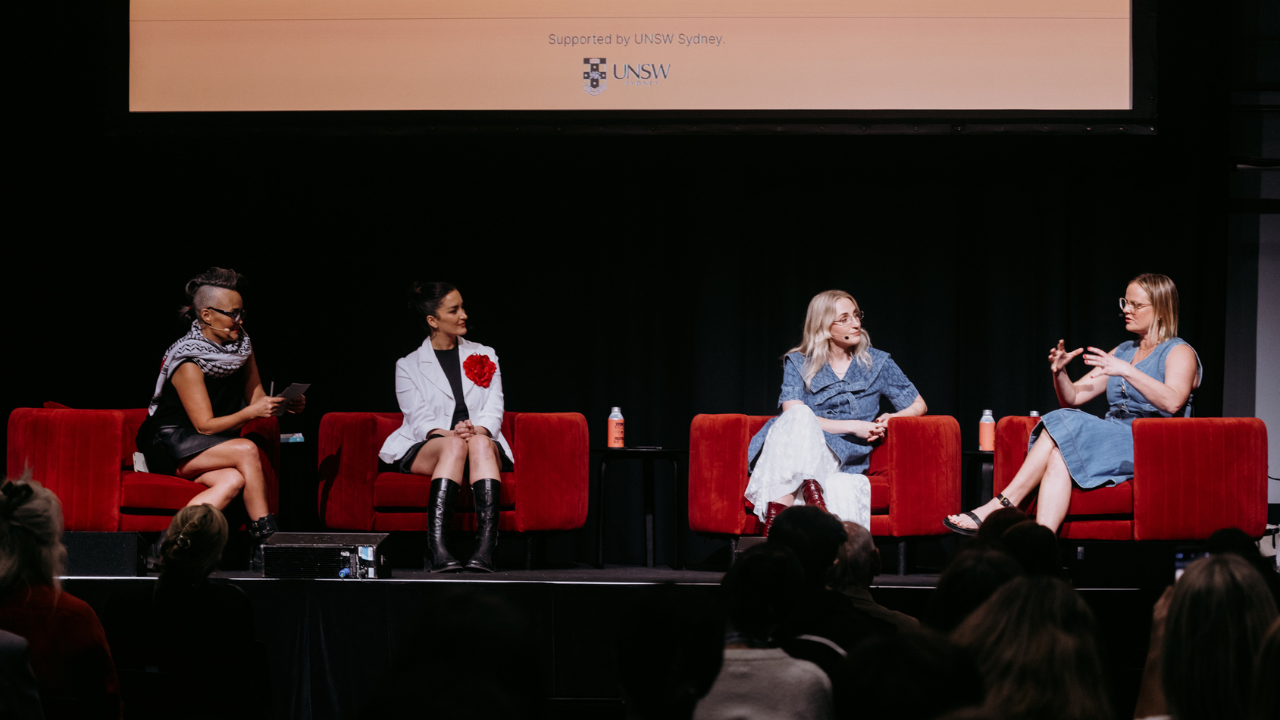
With cults, real cults, it's often the language that's used to get people to buy in and I think with these cosmetics companies and wellness brands, it's always the language of, 'you're not buying a product, you're buying an identity'. And that can be quite dangerous.
Women’s bodies are a battleground for beauty capitalism with a constant pressure to reach unachievable beauty standards.
Writer, presenter and entertainer Lucinda Price (aka Froomes) spent 30 years striving to fulfil those standards, which she unpacks in her debut memoir, All I Ever Wanted Was To Be Hot: Self image, beauty ideals and desirability. Nutritionist and lecturer Rebecca Reynolds teamed up with mental health author Bev Aisbett to write Beyond the Body Bully: How to love the body you’re in to improve the way we think about our bodies. And writer and researcher Chloe Elisabeth Wilson satirises the cult-like world of beauty by turning it into a real cult in her debut novel Rytual.
Lucinda, Rebecca and Chloe discuss how they are helping to rewrite women’s relationships with beauty and their bodies, in conversation with Yumi Stynes.
This event was presented by the Sydney Writers' Festival and supported by UNSW Sydney.
Please be aware this podcast discusses eating disorders and body image issues which may be distressing for some people. Resources and support can be found here.
Transcript
UNSW Centre for Ideas: UNSW Centre for ideas.
Yumi Stynes: Hello everybody. Hi. My name is Yumi Stynes. I'd like to introduce our guests. We've got Lucinda “Froomes” Price,
Audience Applause
Yumi Stynes: Chloe Elizabeth Wilson,
Audience Applause
Yumi Stynes: and Dr Rebecca Reynolds, and today we're talking to you about the business of beauty.
Who here is beautiful? Please raise your hand. Thank you.
Yes, yes, the same, same, same, same.
My name is Yumi Stynes. I'd like to acknowledge the traditional custodians of this unceded land on which we have the immense privilege of meeting on today, and as we tread the ground of your country. Can we please take just a few moments to picture those original owners and storytellers and pay humble respect to elders past and present.
And a thank you to our sponsor, UNSW Sydney.
All right, who's ready to talk about beauty? Only the beautiful people or the ugly people as well, because it's big business, right? I wanted to talk to you because you've all got varying experiences in being beautiful and in talking about beauty and what it means to you.
So how have your bodies been battle grounds for beauty capitalism? It's a big question. Do you want to start us off, Lucinda?
Lucinda Price: Oh, straight off the bat,
Yumi Stynes: Yeah, go.
Lucinda Price: Oh, my God, that's like the title of the session. We're just getting straight into it a battleground, hey, well, I don't even know where to start. Yumi, I guess maybe I could say about the first time that I realised that being beautiful, not being beautiful, was very important, and it would win you in year four.
If anyone here has read my book, it's kind of how I start the book. And it was Pussycat Dolls for me. They were the first ones that I realised that's it, but they had abs. There were five of them, which was never going to work on one person.
But that's when I realised, oh, that is what it's like to be hot, beautiful and powerful. And even now still, I see beauty as power very closely.
Yumi Stynes: Wow. Okay, what about you, Chloe?
Chloe Elisabeth Wilson: Well, this isn't the first time that I kind of realised that, but what we were we were speaking in the green room. I have these acrylic nails on right now, and the reason that I put them on is because I had these gel X nails that I wore, like back to back, and I got them removed. And now my natural nails are so fucked that it's like I was like, the thought of signing books and people seeing my tiny stumps of nails was horrifying. So I paid money to buy these and glue them on.
And it's just like, an interesting thing when you find yourself, like, sitting in a hotel room in Sydney, you know, knowing that when I pull this off, it's going to be horrendous, but I'm doing it anyway. I guess that's, you know, that's capitalism.
Yumi Stynes: So your fingernails are a battleground right now.
Chloe Elisabeth Wilson: It's a battleground, yeah. They're winning right now, but the loss will be later. Yes, it will be in private.
Yumi Stynes: What about you?
Rebecca Reynolds: I mean, I think it's an ongoing battle for me with ageing and societal expectations or opinions about ageing and beauty. And yeah, I think there's all the societal problems, but then if that infiltrates into your family, which it did for me, and then there are beauty and body pressures within your family, I think that is even harder to deal with as a kid when you don't you know, you know what's going on.
Yumi Stynes: And just to give some context, Dr Rebecca Reynolds is adjunct lecturer at UNSW. Co-authored with Bev Aisbett the book, Beyond the Body Bully, which is a lot about that inner voice, isn't it, Doctor?
Rebecca Reynolds: Doctor.
Audience Laughter
Rebecca Reynolds: I'm not a medical doctor. If anyone has a heart attack…
Chloe Elisabeth Wilson: Can you fix my nail?
Rebecca Reynolds: I can tell you maybe what to eat for breakfast....
So, yeah, the body bully is something that, unfortunately, most of us have in our heads, which berates us, tells us we're too fat. Don't go swimming because, you know, you look awful in that cosi and so Bev Aisbett did some awesome illustrations of the body bully, and we came up with someone to try and quieten the body bully, called the body champion, so we can talk a bit more about those two voices today.
Yumi Stynes: Look, I want to ask you so context for Chloe Elizabeth Wilson is author of the book Ritual, which is, what was that review on Goodreads?
Chloe Elisabeth Wilson: Oh, I posted this on my Instagram the other day. Someone had given it four stars, and all they wrote was, “hey, quick question, What the fuck?” And I was like, that's actually my ideal review. So if the Guardian's here, just write that.
Yumi Stynes: So it's a novel set in a beauty wellness brand, a little bit like an Aesop or something, but very culty, with a charismatic leader, and all women's staff, and there's mayhem and fucked up shit ensues. So that's the context.
The question is, about that voice, the voice that keeps us going back to these wellness brands, to these beauty brands, and keeps us spending money,
Chloe Elisabeth Wilson: I guess it's, it is like a vicious cycle, isn't it? Because it's, it's kind of like, once you buy in, it's really hard to get off the the roller coaster, I guess.
And I think we were kind of saying this before as well. There are some things in the like, beauty, fashion, wellness, in all of those spaces, there are some things that can really, like, enrich your life and can make you feel beautiful, and, you know, make you feel really great about yourself.
But I guess there's that weighing up, like, how much does it cost? Like, how much are you paying and how much are you getting? Like, what's the exchange that's happening.
And I think with Ritual, I definitely wanted to explore, I mean, not explicitly, you know, the women in the book, they work for this company, and kind of, along the way, things escalate. And as the reader, you might think, “oh, okay, oh, she's still there, she's still participating, she's still working there”.
And I guess it's that question of, like, what would it take for you to buy in? And often it is, like a charismatic figure who embodies everything you believe to be beautiful. I guess that can be really powerful.
Yumi Stynes: But isn't it also sort of selling the idea that it's not just skincare, it's virtue, definitely, and
Chloe Elisabeth Wilson: it's a whole lifestyle. And I think it's interesting that you mentioned that brand that starts with an A before that I personally have no experience working for, but I did work for a cult beauty brand, and they were very great to me. There was just a lot working there that I was really interested in the like kind of theatricality of working there.
And, you know, they speak people speak a lot about with cults, real cults, it's often the language that's used is what they how they get people to buy in and I think with these cosmetics companies and wellness brands, it's always the language of, you're not buying a product, you're buying an identity. And that can be quite dangerous, I think.
Yumi Stynes: And can you just elaborate on the theatricality? What did you mean by that?
Chloe Elisabeth Wilson: Well, the brand that I worked for is a very serious brand, and I, you know, I'm not known for being a super serious person all the time, but it was more that, you know, there were all of these little rituals, you know, not to make a pun, but there were all of these things that we did in the office or in the store that seemed quite funny and quite absurd, but they were done with this level of seriousness that was very Interesting to me as a writer.
Yumi Stynes: And were they public facing, or was that just within the culture
Chloe Elisabeth Wilson: Some of them were some of them people who would definitely recognise, you know, if you shop in one of their stores, there are certain ways that people will speak to you, and they will take your hand and, you know, massage it in certain ways, and they'll hand your credit card back to you with two hands and a lot of eye contact and but there's a lot more kind of behind the scenes, I think, that people don't know about.
Lucinda Price: It has that, can I just interrupt the store that you're possibly talking about? But it's not confirmed anyway. It reminds me of a gallery in that you step in and then you start, like, going really slowly, and like, totally like that.
So yeah, from a consumer POV, I totally see that.
Chloe Elisabeth Wilson: Thank you.
Yumi Stynes: Yeah, it works in that you you've sort of a reverential once you've entered.
Chloe Elisabeth Wilson: That's actually the name of one of their products is reverence…
Audience Laughter
Yumi Stynes: Okay, so listen,
I wanted to talk about brands with you, because your personal brand is taking the piss and taking the piss out of yourself in a really joyful way. You know, it's fun, but is that a way to get permission into this conversation about caring about how you look?
Lucinda Price: Yeah. Well, I guess for me, I've always felt that I could take the piss. Yeah, about myself, because I was never my looks were never really like ridiculed.
And I know that for a lot of women comedians, people like to say women aren't funny, but I think of myself as an alien, so I kind of like like to transcend that title. But I say this all to say that I think when people don't like women and don't think they're funny, the first thing they do is pick something about the way they look and ridicule them. It's so obvious online, but it happens in real life as well.
And I remember growing up and calling a woman, it's probably the same, it's probably come back, but calling a woman fat, oh, you're fat. It's like, even when you're fighting with your sister, you'd be like, “you fat bitch”.
Like it was always the thing that is that shuts a woman down because you can't say yes or no to that. It's kind of like the worst thing a woman can be. And so I had an eating disorder, and it was one where I was restricting and making my body smaller.
And part of that working in this career was that when I'm online and I'm being ridiculous, I'm talking about poo, I'm being disgusting. It doesn't matter, because my body isn't disgusting all in quotation marks, I should say, and I had to unlearn all that in recovery. But yeah, it's about guarding myself and making myself as polished and presentable as possible, so I have the liberty to behave like a man.
Yumi Stynes: Wow, that's big. I like that a lot. Rebecca, do you want to talk about eating disorders? Because it's something that we've talked about. A lot, your book addresses that as well, but it's such a big topic.
Rebecca Reynolds: Yes, that's why I exhaled, because it is like it's another world, because it's so common. So eating disorders, I think, affect about 4% of Australians. That's over 1 million people, but that's diagnosed eating disorders. I think, in reality, it's probably a lot worse than that. So people who don't seek help or don't have eating disorder symptoms that reach threshold and therefore don't get diagnosed.
So, yeah, it's just, and society encourages disordered eating and eating disorders, it's just, you know, it's normal for us to not be happy with our bodies, and poor body image is a risk factor, a strong risk factor for eating disorders.
So there's a term called normative discontent, which refers to how it's normative, normal to be discontent, unhappy with how you look and it is, it's normal.
And for those of you don't know, I suffered with bulimia in my late teens and early 20s, and when I was reading Lucinda’s book, I she was going through a model by Carolyn Coston of stages of recovery, and stage 10 is fully recovered. And the definition is you have no thoughts or behaviours that are disordered. And I thought, “oh shit, I'm not fully recovered, because I still have disordered thoughts”.
Unfortunately, I feel like for most people in the room, particularly if you've had an eating disorder and you have that scar, sometimes, the body bully and my head will be like “You look disgusting. Look how fat you are,” you know. But I notice that I'm mindful, and it doesn't translate into behaviours. So as per her definition, Carolyn Coston, I'm not fully recovered, but I would say I am as recovered as I ever will be, because I will always have a little asshole of a body bully that sometimes I need to be like, “Shhh stop, please”.
Yumi Stynes: I thought the sentence was going to say was going to end it. Sometimes I have a little asshole. I was like, I think we all do.
Rebecca Reynolds: Don’t speak about my child that way.
Yumi Stynes: I'm curious about this, and I don't know if which of you have a theory about it, but why does business benefit from our disordered eating?
Chloe Elisabeth Wilson Well, then,: well, I guess with disordered eating, it's like, you know, we've kind of, you know, in the early 2010s it was about cutting out sugar or carbs and things like that. And, you know, skinny me tea and like, you know, now we've transformed it into wellness, and there are so many disordered eating like practices that now can be seen as looking after yourself. And it's like, well, it's not at all. So I think that's really interesting.
Yumi Stynes: And you've had experience with disordered eating, Chloe?
Chloe Elisabeth Wilson: Well, yeah, when I was at uni in my, you know, very early 20s, what I had was more orthorexia, which is like, kind of this obsession with everything that is healthy, which ties into the wellness industry, and looking at your day and kind of eliminating, like, not wanting to partake in anything that you thought was unhealthy.
And, you know, being obsessed with exercise and all of that, which, back then that I don't even think that that was really that word was only just starting to kind of trickle into the conversation about it. It was all about anorexia or bulimia. But there's so many different ways to have disordered eating, you know.
And Chloe, did you find that that consumed a lot of your thoughts?
Chloe Elisabeth Wilson: Oh, all of yeah, my Yeah, it was, it was everything for sure.
Yumi Stynes: Rebecca, you you had the same experience where it's like churning up your brain space.
Rebecca Reynolds: Oh, absolutely, it takes over your life. And Lucinda describes that well with her experience with anorexia and her book about how, yeah, it takes over your life. It's always there. It's like the monkey on your back.
Yumi Stynes: Yeah, yeah. Lucinda's book won the ABIA for small publishers adult book of the year just like a week ago.
Audience Applause
Yumi Stynes: I’ve just got to say, it's a sold out room tonight. Thank you so much for getting tickets and for being here and agreeing that this is how you're going to spend this one hour. But for authors, it's really like a lot of time alone on a laptop or a computer, and not many times for you to receive your flowers. So I would like our three authors to please receive their flowers.
Audience Applause
Yumi Stynes: It's a really big deal to write a book, and there aren't many moments in the long, long, long process where people are like, “You did a good thing. You did and you did” so I really want to just emphasise that they made something happen. So congrats, Lucinda, that's fucking awesome.
Lucinda Price: Twins. You got one the other year?
Yumi Stynes: Yeah, the last year, but you don't get to give a speech. Yeah. I was like, I just won an award, and I don't give a speech. But I. I'm very verbal. Don't worry, I work on the radio. I've given this speech eight times since then, but I just like, I really like everything that you do because you're so frank about, like, just loving being sexy and hot. Are we allowed, like, Are we allowed to say that now?
Lucinda Price: have I ever said that? Oh, I guess the only and the thing about so much, the title of my book, is all I ever wanted was to be hot. And I think the girl, it's kind of a thing where the girls that get it get it. For instance, I was out last Friday speaking to a gentleman, like, not in a sexual way, just FYI, because he was kind of like, gross. But anyway,
Yumi Stynes: When you say, when you say, gentlemen, it's like, Were you at a strip club? Why was he a gentleman? Anyway, yes, you're speaking to a guy.
Lucinda Price: No, he was opposite, exactly. And he was like, to me, “Oh I like your book, though you you are hot. Were you ugly as a kid?” I was like, You are so not getting it. Like, I get I get it, that it's I wanted, it to be a provocative title, and for people to go, “Oh, that is something outrageous to say”. But at the same time, it was just an honest admission, want, want, not that I am, but that it's something that I wanted.
And it was something that I realised through writing the book, because it goes through eating disorders and then plastic surgery and kind of all this time and money that I'd syphoned into this desire, and it was something that just was in my head all the time. So for me, the cost and the business of beauty is the time that it takes out of you. And we can go into theories of why people want women to be smaller and have eating disorders because it takes away your brain space to put towards other things. But I will just say this on my mind. My favourite thing nowadays is like how they say women have eating disorders and men have body hacking or biohacking it's such a thing, and it is funny seeing how, like, run clubs and this insistence on eating protein every meal, and this and that it is all to do with that piousness.
Yumi Stynes: Definitely
Lucinda Price: And the moral kind of like what it looks like to be moral and to be good is to be thin and ripped and young.
Yumi Stynes: Rebecca, you've got something to say on that.
Rebecca Reynolds: Well, underlying all of it, are we all just scared of getting old and dying?
Chloe Elisabeth Wilson: Definitely, yes, yes. Does everyone know? We're gonna die.
Rebecca Reynolds: you know, and not fitting in, and not like, being part of the pack, yeah. I mean, orthorexia, I think, did you have that as part of orthorex? Yeah? Worried about, definitely,
Chloe Elisabeth Wilson: yeah. But I do think it's like, kind of all of it comes back to that wanting control, like, that's, that's yeah, like, and yeah, obsessing over Yeah, yeah. Actually
Lucinda Price: wanted to die, because then I'd be 25 and hot, and everyone would remember me that way. It's that demented. It's like, why don't I don't even want to the worst thing would be to be old and to be not really skinny. So it's dark.
Chloe Elisabeth Wilson: When I read that in your book, it was so like, it just like, hit me square in the chest. And it was like, “Yeah”, I it just was, like, incredible to read that, because I don't know that I've ever heard someone yet just voice that it was, yeah, amazing
Yumi Stynes: wanting to die and preferring to die than to not be hot.
Are you hot right now?
Audience Member: Yes.
Lucinda Price: Well, I feel like, for instance, I took like, an hour to do my makeup this afternoon with a ring light, no less. And I really enjoyed that I love doing that, because it's like I've always loved art, and I like putting it in the right spot. I mean, I don't know if it's working, but I feel good. And so I feel, I do feel, I do feel hot, but in a way that is kind of to explain it when I had an eating disorder and I was restricting, it was kind of like the opposite of hot.
Because, like, I couldn't go out and get drinks with people. I wasn't, like, magnetic I wasn't I was like this surface shellac level of hot, but didn't have any of a life.
Like to me, hotness is about being open and going with the flow and being magnetic, and they're all kind of things that you can only do if you're living in your body and you're not kind of putting on a veneer.
Because I think it's more obvious than you realise when you're really struggling, like sometimes I have friends, or even if I'm like, dating someone, if there's someone who's really rigid about their eating or their food. It's not that I'm judging them, but it's just that I see that as, like, this insecurity that you just want to shake them out of, because it's like, it's not making you, it's making you harder to be around. It's making you less magnetic,
Yumi Stynes: Yeah
Lucinda Price: But survival technique for a lot of people as well.
Yumi Stynes: And you'd have an antenna up for that, because you've lived it,
Lucinda Price: Of course, yeah.
Yumi Stynes: What about you, Chloe? Feedback about your hotness when you're when you're in in a disordered state, well,
Chloe Elisabeth Wilson: So I went to performing arts university, and there was such a massive focus on looks, obviously, because if you're an actor, that is, like so much of your work, is the way that you look, which is, you know, it. When you're that young, I think it's interesting looking back now, I'm 32 and I was, you know, 19, 20, 21 when that was all happening. And it's just so interesting to me how porous I was and how much of other people's feedback, how much of their opinions I just absorbed, and perhaps didn't consciously think about taking on but my behaviour was so infected by that.
And I distinctly remember when I was, like, my smallest I was wearing a backless leotard one day, and someone was like, “Oh, my God, your back looks amazing”.
And that was something that just stuck. And I was like, “great, I have to stay like this, so my back will be amazing”. And, like, it was just, it was just pointless, like, it's so silly that, you know, that's what you hold on to. I'm like, Who cares what my back looks like? Like, I want to be funny and interesting and all of that.
Yumi Stynes: You can't even see your own back.
Chloe Elisabeth Wilson: I know that's actually so true.
Yumi Stynes: That's really interesting too, though, because that's the perception of others looking at you and literally looking at a part of yourself that you can't really see.
Chloe Elisabeth Wilson: Yeah,
Yumi Stynes: Versus how you're feeling embodied.
Chloe Elisabeth Wilson: Yeah.
Yumi Stynes: So tell me about when you feel hot. When do those moments come?
Chloe Elisabeth Wilson: Well, it's exactly what Lucinda said. It's it's often, I think it's actually when there's, like, a, there's something really sexy about like, I want to say being gross, but that's not quite what I mean. But like to be human is actually to inherently be kind of gross in a like a normal way.
And I think just having your feet on the ground and being really in your body, like you said, that's when I feel the sexiest. That's when I feel the most me. But it's interesting when things get in the way of that and and, yeah…
Yumi Stynes: I think that the gross thing we need to unpack. And it would be very helpful if someone in the audience could rip a massive fart right when there's a pause between sentences about women being gross, and then we'll just go, we'll just wait 10 points for that.
I think that that's very contentious, because women are not allowed to be gross, are we.
Chloe Elisabeth Wilson: yeah
Yumi Stynes: Which is a damn shame. I mean, we can be gross while immaculate, or we can be gross but unfuckable, but I don't know if we can be gross and fuckable.
Chloe Elisabeth Wilson: yeah
Yumi Stynes: Just want to get to you, Rebecca, about being hot and embodying that. Are there times in your life when you're closer to that?
Rebecca Reynolds: I mean, God, I could talk about this topic all day. I have had acne for a lot of my life, and so I actually struggle with feeling hot sometimes if I've got acne lesions happening, so when they're not so bad, and that would be from people judging me right, because, like, acne is not considered hot or beautiful.
So when I don't have that many acne lesions happening, and I'm really calm and I have a little smile on my face, I think, actually, yeah, feeling peaceful and in my body, that's probably when I feel beautiful, when I'm feeling loving and lovable. And, you know, not based on how, actually, I just was about to say, not based on how I'm looking, but then I mentioned acne at the beginning, but yeah, I guess I just answered my own question.
I actually feel most beautiful when it's nothing to do with how I look, when it's on an in my body and I'm feeling calm and lovable and loving. But when I'm thinking about how I look externally, I find it really hard to feel beautiful if I've got acne.
Yumi Stynes: Yeah, sure.
One thing I think that we need to talk about, and we will get to women being gross and feral, because that excites me, you know, because we talk a lot about feedback from society, and it's sort of this amorphous, invisible fog.
But a lot of the time it's within the family home, and a lot of the time the feedback comes from our parents. Rebecca, you said something to me that I wrote down. “I have so much hatred for my parents for what they did to me.”
Rebecca Reynolds: Hopefully I won't cry because my brother's in the audience, and I specifically asked my parents not to come. And they are wonderful parents. I love them and they they did their best, but they were both attractive enough people who got positive feedback for their looks. My brother and I were attractive enough growing up to get attention from the opposite sex, which we wanted.
And yeah, I guess I actually think being attractive enough can be a total curse.
So I think my parents really valued physical attractiveness. And when I was about 17, my dad said to me, “Oh, you've got a bit of a tubby tummy, haven't you?” And I love my dad, and he's a great dad, but he's also not a great dad. Like, why would you say that to a 17 year old?
I've always been a bit of a Labrador body type, you know? I've always had fat in my stomach no matter how skinny I am, and that just really hurt.
And my mum, you know, she would put chocolates in a container and label it “bad” and hide it away.
I would diet. I was dieting when I was a teenager, counting calories, and she thought that was fine. And I think Lucinda has mentioned it in her book, the absolute addiction and the feeling you get when someone admires how you look physically and you have a hole in you that you want to fill.
So I lost weight by accident. When I went to India, came back and people were like, “Wow, you are amazing. Look how skinny. Look at your arm”. My mum said your arms, you don't look like you. All beautiful.
Yumi Stynes: Wow, like you don't look like you, yeah, come up beautiful.
Rebecca Reynolds: Well, she's, I don't think she said beautiful after it, but she said, “You don't look like you”, yeah, awesome, yeah. And I, you know, I just thought, “This is awesome. I'm going to stay this way so I get loved by everyone all the time and feel secure and in control”.
Chloe Elisabeth Wilson: The not looking like you thing is, is really interesting, because I think often when we do, you know, when we put on makeup, when we, you know, wear clothes that we really like, we're only ever really trying to look like how we view ourselves from the inside.
Do you know what I mean? There's this sense of like, oh, I look like me, but then being told from someone else, like, you look so beautiful, you don't look like you. That's so damaging. That's so upsetting.
Rebecca Reynolds: yeah, wasn't great.
Yumi Stynes: Do we have a perspective in the panel here of why a parent might say something like that?
Lucinda Price: I think because everyone knows that if you look a certain way, you're treated better, and parents want you to have the most success that you could have, I think. And I try and tell myself, I'm like, I'm never going to criticise my I mean, in my book, I talk about my parents, but I'm never going to go hell for on my dad, necessarily, until I have a kid and I understand how hard it is, because it's super easy in your early 20s to be like, You did this and you did this and bad, and then you are a parent. And you're like, “oh, fuck, this is really hard. I'm just imagining that it's hard”. But, yeah, I think they're just wanting you to have the best chance as at success. It's like I had a shaved head for most of my early 20s, when I was really skinny, because I was like, that's a cool and I've spoken to you about it before, because you were like, a Channel B presenter, and you had cool hair. And I thought, I want to be cool like that. My dad would always say to me, oh, Lucinda, you can't shave your head again. What are you doing? Every time I shave it? He and now that I've got longer hair, he's like, “I was pivotal in that decision. Wasn't I” like, he's like, every, every time I see him, he goes, your hair looks good. Listen, now, was I pivotal in that decision? Always with the pivotal, but he kind of, he kind of was like, as much as I like…
Yumi Stynes: he really was validating this. Now, sadly,
Lucinda Price: I think, I think I am, like, I am still a sucker for, in a lot of ways, conventional attractiveness,
Yumi Stynes: but you spent so long with the shaved head and then the bleached blonde hair for so long I wrote down what you said, terminal uniqueness.
Lucinda Price: Yes, yeah, well, and that's, all the same side of the coin of I think what we're talking about is like, yeah, it wasn't. It kind of was for the male gaze, because I was like, “Look, I am so skinny and so young and so as close to the beauty centre as I can be, that I can have a shave head and you still want to have sex with me”. It was a full power, like I'm a psycho. Was crazy. Do you know, it sounds wicked to say out loud, but
Chloe Elisabeth Wilson: The crazy thing is that it doesn't that's that, I guess, the recognition that you're like, it's, yeah, I found the experience of reading your book to be like, I said, it was so impactful, but it was also just, just so many people struggle with this, like so many of us have the same experience, like, it's such a shame, you know, like
Yumi Stynes: When I read that Kate Moss thinks thought in her the peak of her modelling career, she thought she was disgusting. I was just like, “Well”, honestly, it actually set part of me free. I was like, “well, if fucking Kate Moss thinks that Kate Moss is an ugly mole, what hope do the rest of us have? Maybe we should all just down tools on that particular self perception and just let it flutter off out the window. Go fuck yourself.”
I want to come back to because I think that idea of what the parents do and the way that they can infect your brain, it could sound on the one hand, Rebecca, it's so innocuous, you know, Tubby tummy, so fucking what? Shut up, dad. Go fuck yourself, dad.
But on the other hand, this thing, and it's a very vulnerable brain, a 17 year old's brain, a 47-year-old woman's brain, might be less spongy.
So did that have a knock on effect that led to to the surgery that you had?
Rebecca Reynolds: Definitely if, I mean, if anyone said that to me now, I'd be like, seriously, I just walk away.
But then, I mean, I'm not that kind of person to be like, you know? I was like, “Oh, my God, he's right. I do have a fat stomach. I'm gonna have to do something about it”. And then I lost all that weight and got all this positive feedback from him and my mum and they moved across the other side of the world, and I was out of control of all sorts of things. And I was like, “Yes, I can control how I look and how I'm loved by everyone because of how I look”.
And yeah, I think it being in your family they meant, you know, you always, as you were saying for your dad, you always want your parents' approval, even if they're not very nice, or they're not doing very nice things to you, or if they abuse you, or whatever, you know, you always still want them to love you and approve of you.
And we actually, we want everyone to like us, really in life. And what I love about getting older is that I am more at peace with knowing that not everyone's going to like me and I'm not going to like everyone, and that's okay, and I love getting older and that wisdom, but I hate becoming invisible as an older woman to the opposite sex. So that kind of answers your question about family. But then went off on a tangent.
Yumi Stynes: The invisible thing's interesting, because I love being invisible to the opposite sex. I get horny from being invisible to the opposite sex. But you were talking you were talking about your fear of ageing.
Tell us about that, because you've sort of, I feel like you've arrived at this point of acceptance of who you are and your body, which is after huge amounts of work. I mean, like the therapy work and the surgical work and whatnot, but huge amounts of effort have gone into that, and now over the horizon comes ageing towards you.
Lucinda Price: Yeah, it's funny for me, like I'm freaking out. I turned 30 this year, shock, horror, terrifying.
And for me, realising that I'm starting to worry about it and obsess over it, and obsess over it. It's clear to me that I just am someone who's always had anxiety, and I'll find something to latch on to that is very, very difficult to change, and perhaps this is my final boss, because I don't think I can fix getting older.
But you also get it like I went out to Club 77 on Friday night, and everyone there's like, 18 to 24 and I was sitting the bus stop afterwards, waiting for an Uber, I will say, not the bus. And this young, 24-year-old guy started talking to me, and it's so funny.
Whenever I go out now, they like, come and ask for wisdom. And he looked at me, he said, “In another life”, as if, like, I'm so much older than you. If I was his age, I'm like, I'm like, five years, probably older than you might, like, that's crazy, but I guess in a situation like you can't even be mad, because then you look bitter and old and mad.
But I don't, I don't know how I feel about it. I even feel embarrassed saying that it's something that I'm concerned about. But I think it's just because for so many years, even though I'm better now, with my experience of an eating disorder, I still have this idea that a woman's I know that other people think that a woman's value is her youth. I don't believe that, but I know other people believe it, and I don't like that I'm losing that power in the minds of these people that I don't even really like. It's confusing.
Yumi Stynes: Chloe, I see you nodding.
Chloe Elisabeth Wilson: Oh yeah. Just I agree 100% Yeah. I think it's really interesting because of this, you know, discussion, like, we have been having it for so long, and particularly, like, as women, it is the thing of, like, you become invisible as you age. But it's so interesting in the last five years, I'm like all of the women that I now am obsessed with and look up to in like, career sense, but also, you know, the people I just think are the sexiest and the most beautiful are women from their 40s to 60s and beyond. You know, like, I think a lot about, you know, like Rachel Weiss, like Nicole Kidman, all these women that I'm like now, they're in the prime of their careers.
They're making these, like, amazing, creative choices. It's just interesting that I feel in my corner of the internet and in my corner of pop culture, that's happening, but that's not the experience of everyone, right? That's not the algorithm everyone else has.
It's still very youth obsessed. Whereas I'm like, the thought of speaking to a 21 year old, no offence, but I just am like, I feel so like, it's interesting when you see people who are dating people who are, you know, that much younger than them. You know, in some cases, like, obviously it works, and there's a beautiful connection.
But you know, when I was in my early 20s, I dated someone who was, like, 10 years older than me, and even that is not a massive, massive age gap, but now that I'm the age that he was when we were dating, I'm like, what, what did you see in me? And was it just the power of age? So that's very interesting to me.
Lucinda Price: I had a similar experience, and I was looking at old photos the other day, and when I was dating someone much older than me, at the same age, I like, cut my hair into a little bob, and I started wearing peplums, and I started trying to draw started trying to dress really corporate, because I thought they liked me for my personality, so I better start looking like them. And I feel like going back and shaking myself. I'm like, Babe, he doesn't want you in the peplum. He wants you because you're in your teens. Something is a miss. So you don't know what you don't know when you're that age,
Chloe Elisabeth Wilson: You really don't. And like I said before you like, I felt I was so porous and I was so influenced by other people's ideas of me. Like, I think what you were saying before about being, was it perpetually unique or…
Lucinda Price: Terminally unique?
Chloe Elisabeth Wilson: Yeah, yeah. It's like, I think in my early 20s, someone at drama school told me that I was like, kooky, and then I spent, like, years becoming kooky. And I'm, like, I'm actually really normie, like, like, I'm really basic. And that is interesting that you mould in, you know, like a sunflower, you grow towards, not necessarily the light. You grow towards other people's opinions,
Yumi Stynes: yeah, and their feedback. And if it's positive feedback, you'll grow towards that for sure. I just, can I just say you've coined a phrase Froomes peplum regret,
Lucinda Price: I know, but they're coming back. You mean, we're gonna be kidding.
Yumi Stynes: I'm not doing that. All right, wondering a peplum.
Rebecca Reynolds: I don't even know what peplum is, cuz I'm 40
Yumi Stynes: It has a little scoopy thing, little that pops out there. It's pointless.
Yumi Stynes: Okay, we've talked about ageing, and it's been fairly negative, no positive wisdom. Yeah. Well, I was gonna go to you, Rebecca, tell me about the positives of ageing.
Rebecca Reynolds: I just realised I didn't answer your question about surgery that yeah for because I have a tendency to waffle and have lots of like work sentences in my head at any one time, so it's very hard.
So my dad's comment, just briefly about my stomach and always having that body type where I just will always have a bit of fat in my stomach. I had liposuction on my stomach twice, and it was a mistake. I would never, ever do that again now and
Yumi Stynes: Help me understand why. Why was it a mistake?
Rebecca Reynolds: Because I really appreciate what my body does for me, now. I've had two kids. I eat and sleep and walk and function. I don't know. I just think the human body is phenomenal, and to me, liposuction on my stomach was the biggest sign of disrespect to my body for the most vacuous, awful reason.
You know, I just Yeah, I would never do it now.
Yumi Stynes: You did it twice. Was there a payoff after that first?
Rebecca Reynolds: I did it twice because, I mean, this is desperation when you have body image issues. I borrowed money off a friend. Didn't tell my parents.
One of my best friends in the room was like, “hey”, tapped me on the shoulder and went, “I'm bit worried about you sure you should be doing this”. I was like, oh, yeah, I'm fine. Was very convincing when I wanted to be it's fine. Like, I've had an eating disorder so and I'm studying nutrition, which is, you know, those two things, yeah. And so I'm, I've got a bit too much fat for health reasons, and I can't diet because I had eating disorder. So liposuction is the only other answer. So I'll just borrow some money because I haven't got enough, and then I'll go to Parramatta, where it's cheaper, and then, you know, I'll get it done, and then I'll get a little infection there. And that's all All right. But anyway.
It was quite lumpy afterwards, and so I don't regret the second one, because that was kind of like restorative, like it went wrong. You've got money now you're gonna it wasn't as invasive. It was just a bit of smoothing. But I did, I say I didn't regret that. I probably do regret that as well. I regret them both. But anyway, the second one wasn't as charged. I felt more like healthy to do it.
Yumi Stynes: We'll get to ageing. But just on the topic of just having people cutting into your body and sucking the fat out, there's a perception, and this is among my peers, people who are highly educated, and I think TV has a lot to do with it, that you just go in and it's painless and it's sort of quite austere and immaculate and sterile, and everything comes out great. There's no leaky pussy wounds, there's no desperate pain, there's no shitting yourself. It's really quite a lot messier than what we're led to believe.
Yes, and Lucinda, when you've gone in for chats, is it true? You get up sold by surgeons?
Lucinda Price: Yes, I started getting up sold when I was in year five. I went to get my teeth braces, and I got a plate because I had an overbite. And he was like, “You're a cute girl, but you'd be a lot cuter if we, like, broke your jaw and brought it forward”. Yikes. Anyway, I can't believe I can't leave I didn't do it.
Chloe Elisabeth Wilson: I hope he's in jail.
Lucinda Price: Yeah, literally. And then I started getting, I got lip filler when I was I was 19, and I went in and the guy was, like, he, I won't say his name, but in Melbourne, he did the most injections in one year. He had the record. It was 40,000 I'm pretty sure. Like, it was obscene, obscene.
Yumi Stynes: That can't be, that can't be right
Lucinda Price: 40,000 anyway. It was something crazy. And he was like, “What do your parents look like?” I was like, normal. He's like, “because you've got really sunken cheeks here, so you might need to look into filler,” at 19.
And it just happens again and again. I've got a friend who I write about in the book, who went into a surgeon for a boob for breast augmentation, breast augmentation, and
Yumi Stynes: that's menopause,
Lucinda Price: Yeah, Yumi, Yumi. Peri-menopause, hon, and, and he was like, oh, no, I think she actually had a nose job instead, and she got both. So I think this is the. Is trouble when we're trusting they are doctors, but like, I think sometimes we put too much trust into someone when they've got the title of doctor. No offence, Rebecca, I know you are a doctor. We trust you.
And particularly sorry, male surgeons.
Every male surgeon I've gone to, it's happened. I've gone and spoken to another surgeon, a woman, because I have breast implants, and they've been in for 11 years, and I want to get them out. And I've chosen to go to a woman called Olenka. And I went into her surgeon surgery, and I said, “I want this, this, this”. And she was like, “yeah, we can, like, do the everything, but you don't need to do it right now”. Obviously I have to, because I've got implants, and you have to, at some point get them in or get them replaced. But she didn't put that urgent cell on me that she could have because, I mean, I was probably not vulnerable enough to get the hard sell and do it, but I felt no urgency, or no sense that it was something that I was missing that would materially improve my life.
Yumi Stynes: Wow. And so do you mind if I ask what the plan is for the boobs?
Lucinda Price: Yes. So this is another thing. Is got them when I was 19, so ostensibly, I should probably get them out kind of around this time, but then I want to have kids. And it's kind of like, do you get them out before you have kids? Because then you boob change again, but I don't want to get a third surgery. It's kind of this whole, I'm like, in a waiting game, which I also hate.
Yumi Stynes: Yeah, you're in a standoff with that invisible person that you're going to partner and have children with?
Lucinda Price: Not yeah, maybe…
Yumi Stynes: Perhaps. But Rebecca, let's get back to ageing. What are the benefits of ageing?
Rebecca Reynolds: Not getting plastic surgery?
Yumi Stynes: Yep.
Rebecca Reynolds: For example, I mean, is Botox plastic surgery?
Yumi Stynes: No.
Lucinda Price: In the realm though, is it not? It’s augmentation
Rebecca Reynolds: It’s a taste test
Yumi Stynes: No, I just did an episode. It's not plastic surgery because it's an injectable. So if they're not using a scalpel, it's not plastic surgery.
Rebecca Reynolds: Okay. So I guess, to me, though I love that I don't want to get plastic surgery anymore. I love that I have wisdom. I think it's incredibly powerful. And I think I said to you on the phone when we chatted, I sometimes see older women walking up the street, and I just want to run out and go, please help me. Tell me what to do with my children. You know, like I just assume the age with age comes wisdom. And I think that's incredible and lovely, and I love focusing more on more inside than out.
However, I'm realistic and open, I still struggle with not feeling good enough, or like I look good enough, especially because I'm getting older, and in the last five years, I've felt like I've just turned invisible to men, whereas before that, I would always like look to see what man was looking at me or whatever.
Yumi Stynes: You say that like it's a bad thing. Dr Rebecca, I don't understand it. But can we just get to this is something that you and I both wanted to hit. Was there something that we could give to the audience, that they can put into practice today when they get home, or even right here in the room, if they want to.
Lucinda Price: Yes, Keagle’s. Kidding.
Rebecca Reynolds: So yeah, whether you're male, female or whatever. We can all do this to ourselves because we've all got a bully in our heads, whether it's to your body, to your personality, to whatever, we can all be our harshest critic and something called self-compassion can be incredibly powerful, and it's not airy-fairy wishy-washy as it some people think when they hear those words, it means self kindness, being kind to yourself. And my book, my book has loads of exercises in it, but you know, you can just Google self-compassion, and you'll go to a website which has loads of exercises, but we'll do one now. Or you can do it at home, where basically just put your hand on your heart or close your eyes and then just say to yourself, “I am enough”.
Yeah. Or you can do either you can do either.
So I am enough, and I couldn't say that 20 years ago without crying, you know. And so you can do that in front of the mirror as well, particularly if you have body image issues, doing it in front of the mirror might be really helpful, because if you start crying or you can't say it, that might tell you something. So, yeah, I think I am enough is being kind to yourself. And also, if you're having a hard time, particularly with body image, you can say, this is hard. This is a hard time for me, and that's been kind to yourself, but it's also for me, I find it's reminding me that I'm not alone. Everyone finds life hard, sometimes. Everyone's an asshole to themselves in their head, sometimes, whether it's about your body or whatever. So those two things can be really helpful in your life,
Yumi Stynes: And they can be in a really material way. I know it sounds Woo, woo, but one of the things that you were explaining to me, Rebecca, was, if you get your frown lines Botoxed out, it actually makes a difference, because your brain knows you're not frowning.
And similarly, my dentist gave me Botox in my jaw to stop me grinding, and for three months, I couldn't smile and I felt sadder. So I can, I can verify, you know, the experience of being able to move your face in a certain way, it does affect your body. Can we just try that one more time? I think it's really important for you to just give it a practice so that you can take it home and give it to the people around you, where you put your hand on your chest, you can shut your eyes, you can keep them open.
But why don't we try saying it out loud, just for funsies. Okay, because we're at the Sydney Writers Festival. It's 2025, ready on three. We're gonna say I'm enough on three. Ready, 123,
Audience: “I am enough.”
Yumi Stynes: How'd that feel? Pretty good. Do you feel like you're enough? It's a bit cheesy, but it does work. Yeah, it works. It's worth trying.
Now, before we run out of time, Chloe Elizabeth Wilson, will be signing copies of the book, Ritual, outside. Something that happens in your story and something that you've written in other works of yours is women going feral, yes.
Now tell us about that, and tell us how that sort of upends, this whole idea of beauty.
Chloe Elisabeth Wilson: Well, I think I'm always really interested in stories where, I mean, I find it so depressing to read, watch, listen to a story where a man is doing bad things because I'm like, that is happening every day. It's like, that's not interesting to me. But I think still, I find it so fascinating, you know, diving into a story where women are just constantly making the wrong decision and, you know, going feral and all of that.
So I think in Ritual, as I was writing, I really I wanted to create a story that starts in a somewhat believable, grounded, like naturalistic place, and kind of ends up somewhere quite bonkers. And kind of along the way, as I was plotting it out, and as I was writing, I was trying to think of like, okay, this is the logical next step. But is there something more interesting? Is there something more feral? Is there something unexpected that I could, you know, we could take the path this way instead of this way? And I think that is really rich territory, I think, for writing, particularly writing female characters.
Because I think for so long, like when I was a teenager and when I was a kid, I don't remember ever watching films or reading books that I felt had truly authentic representation of women being humans. I think there were just so many movies that I watched where I was like, “Okay, well, you have to have big boobs and be really thin and just kind of be a prop. And that's, that's what it is to be a woman”. And I think when I ended I did a master's in Screenwriting at the VCA, and while I was there, that was kind of, I guess it was like, I'm thinking of like Lady Bird came out that. And that's not necessarily a movie where anyone goes feral or by any means, but these stories that portrayed like girlhood and womanhood in unexpected ways, and that felt quite authentic, that was like a breath of fresh air. So I think I'm always trying to explore that.
Yumi Stynes: And one of the examples that came to mind was the black mirror episode “Nosedive” with Bryce Dallas Howard. We spoke about this. Yeah, has anybody seen that episode where she's going to the mate's wedding across the other side of the country, and just at the end, there's a complete loosening of the grip that society's expectation has on her. Definitely. That's the kind of feral that you want to see. Yeah,
Chloe Elisabeth Wilson: 100% Yeah, absolutely. I actually, I mentioned Rachel Weiss before, and there was this series remake of Dead Ringers, which is a David Cronenberg film from the late 80s, and Rachel Weiss executive produced this series remake of that. I think it was two years ago, and not enough people watched it. So I feel like every press event I'm doing, I'm like, everyone go to Amazon Prime and watch this series. It's really amazing. It's they've kind of taken the stories about these twin gynaecologists in New York, and in the original film, they're both men, and they, one of them falls in love with one of their patients, and it sends the other twin mad because they're codependent. They have this really toxic relationship.
And when I watched the original film, I was like, “oh, yeah, this is interesting”. And then I watched Rachel Weiss playing both of the twins going absolutely batches insane, and I was like, “This is it. This is the thing”.
Yumi Stynes: Yeah, yeah. So that's how we upend the beauty expectation?
Chloe Elisabeth Wilson: Yeah, I didn't really answer your question. I just, like, gave a recommendation, but I think, yeah, I think just looking at, like, you know, people of all genders are humans. Like, it's, you know, wanting to tell stories that are about being human and complex and contradictory and like, yeah, messy and disgusting, like, that is always interesting to me.
Yumi Stynes: Lucinda as a closing question, how can we upend all the expectations put on us to be beautiful.
Chloe Elisabeth Wilson: You're on your own, babe.
Lucinda Price: All I can say is I try and I love feeling things. I love eating things. I love anytime I can try and get back to the physical is when I feel good. And I think it's easy to forget that, and easy to try and take things away, but it's better to add things and then keep adding and then… You know, I love Yeah. Does that make sense or not at all? Do you kind of get it?
Yumi Stynes: You're nods, I'm saying lots of nods. And Rebecca?
Rebecca Reynolds: I think, like embrace ageing, actually, because it's going to happen to everyone, and it comes with really beautiful things, like going being okay with going more feral and being yourself and filling up your own hole.
Audience Laughter
Chloe Elisabeth Wilson: That is a perfect note.
Yumi Stynes: And on that note. I think we should wrap it up. Could you please thank our amazing panel for tonight? Lucinda “Froomes” Price, Chloe Elizabeth Wilson, Dr Rebecca Reynolds, we'll see you out in Bay 21. My name is Yumi Stynes. Thank you so much for being part of Sydney Writers Festival, 2025 yay.
Audience Applause
UNSW Centre for Ideas: Thanks for listening. This event was presented by the Sydney Writers Festival and supported by UNSW Sydney. For more information, visit UNSW Centre for ideas.com and don't forget to subscribe wherever you get your podcasts.
-
1/4
-
2/4
-
3/4
-
4/4
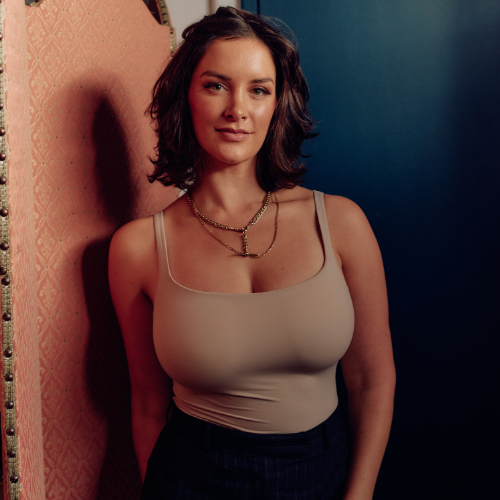
Lucinda Price
Lucinda Price is the CEO of Froomesworld, an international one-woman business specialising in scripting, producing, presenting and editing original content. She has amassed a cult following online and earned an AACTA nomination for Best Digital Creator of 2022. Her writing work has appeared in The Guardian, The Sydney Morning Herald, ABC and Pedestrian, alongside her weekly newsletter with over 12,000 subscribers. She has also written for the 2021 ARIA Awards and ABC’s Question Everything and been a host on MTV Australia. Formerly the co-host of radio show and award-winning podcast Flex and Froomes, she has also hosted multiple limited series podcasts including Where Are All The Baby Pigeons for Nova. As a seasoned MC and entertainer, she’s appeared at some of Australia’s largest live events and stages, from Beyond The Valley to the Opera House, Ability Fest and Fed Live. Her sold-out debut show at the 2023 Melbourne International Comedy Festival was rated five stars by The Age. With a passion for taking the piss across multi-platform media, Froomes is a one-of-a-kind creative powerhouse.
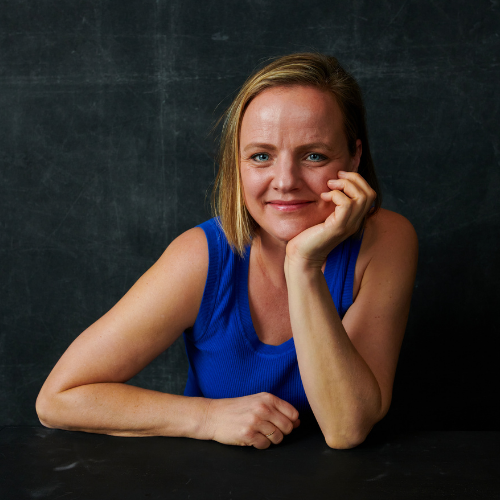
Rebecca Reynolds
Rebecca Reynolds PhD is co-author of the self-help book, Beyond the Body Bully, a registered nutritionist with the Nutrition Society of Australia, a meditation teacher (provisional member with the Meditation Association of Australia) and an adjunct lecturer and researcher at the School of Population Health, UNSW Sydney.
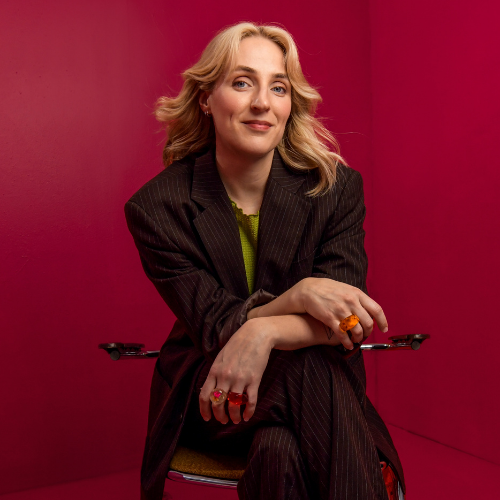
Chloe Elisabeth Wilson
Chloe Elisabeth Wilson is a writer, former horse girl and avid Nicole Kidman fan based between Los Angeles and Naarm/Melbourne. Chloe graduated from the Victorian College of the Arts with a Master of Screenwriting (First Class Honours) in 2019. Since graduating, she has had projects shortlisted for the Stan & VicScreen Comedy Fund and longlisted for the AWG Monte Miller Awards. Chloe participated in the VicScreen Originate Writers’ Seminar and the Australian Writers’ Guild’s First Break Victoria program and was a 2022 AiF Charlie’s resident in Los Angeles. Her work has been published by Refinery29, The Guardian and ABC Everyday. She currently works as a researcher for Shameless Media, where she assists in scripting some of Australia’s most popular podcasts. She also runs a monthly-ish newsletter called tall tales. Rytual is her first novel.
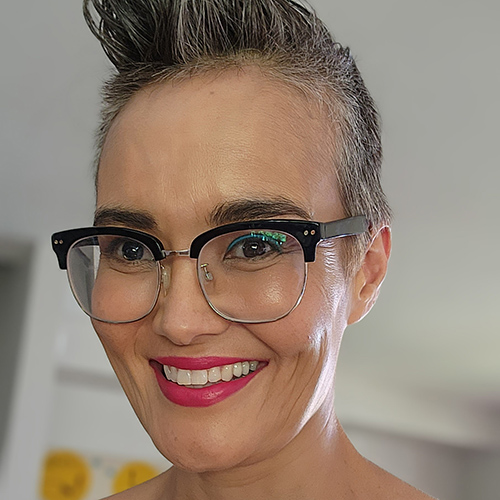
Yumi Stynes
Yumi Stynes hosts a national radio show on the KiiS network, The 3pm Pickup, and has written a series of guidebooks, including Welcome to Consent, which was recently named one of the New York Public Library's top 50 books of 2021. In spite of her history of TV presenting, Yumi is now best known for Ladies, We Need to Talk, which has been a cult podcast since it first dropped in 2017, spawning its own book and numerous ‘book’ clubs where women get together and unpack what they've heard after each new episode. If she dies tomorrow, she'll be glad that she got to co-write the definitive guidebook on what to do when you get your period.