
Arian Prabowo | AI and Urban Progress
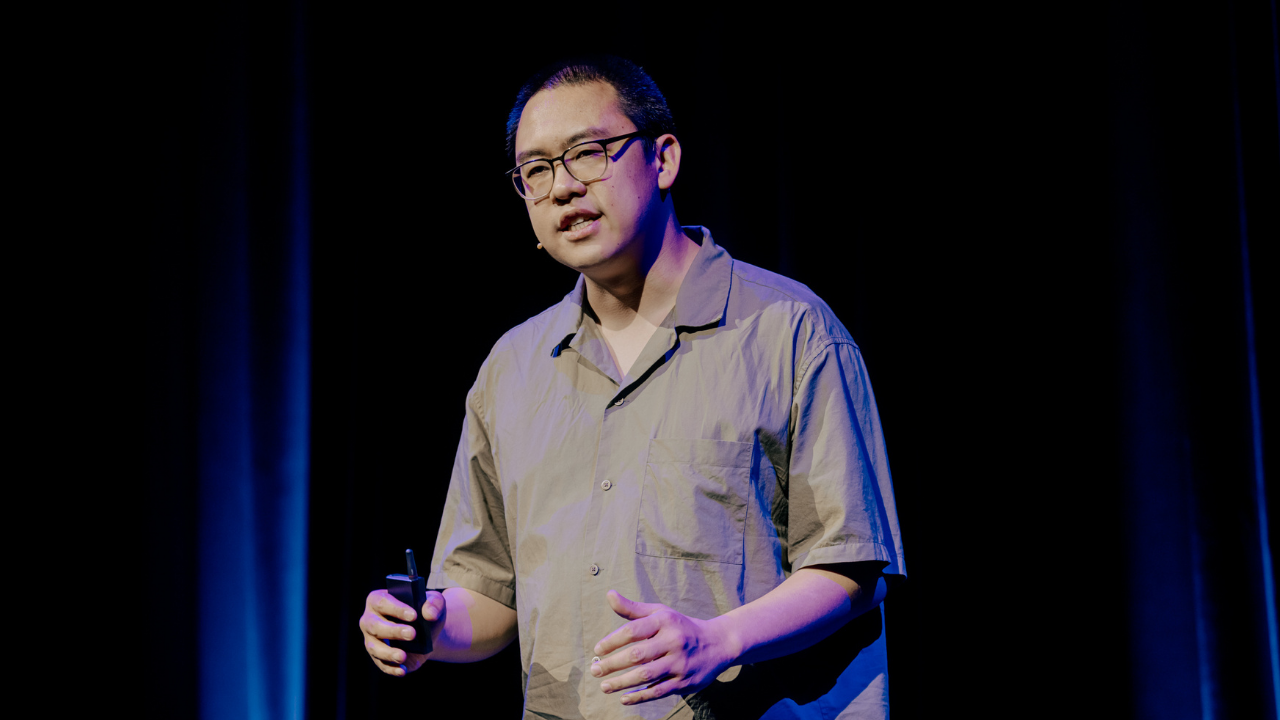
Now we are at the peak of the Information Age where silicon chips are the new forge. As the cybersmith of this new age, we must ensure our creations serve humanity's highest ideals, not its basest instincts.
In a world where urban congestion and traffic delays plague our daily lives, Dr Arian Prabowo examines how artificial intelligence can transform urban progress. He delves into practical solutions like improving traffic flow through AI-powered traffic lights and real-time navigation systems that adapt to changing conditions. Prabowo also tackles the critical issue of AI systems' vulnerability to errors in new and unexpected situations, emphasising the need for more explainable algorithms. By exploring the potential of explainable AI, Prabowo envisions a future where transparent algorithms optimise city transport, making our commutes faster and more efficient while ensuring equity and fairness.
Hear more from Dr Arian Prabowo as he envisions a future where algorithms optimise city transport, making our commutes faster while ensuring reliability.
Podcast Transcript
Rob Brooks: Welcome to 'Progress? Where Are We Heading?' a mini-series from the UNSW Centre for Ideas, where we'll explore the ideas shaping our future. Today we are heading into the future where AI is no longer just in our devices, but in our streets, our homes, even in the air we breathe. Imagine waking up tomorrow and finding that every movement, every choice you make, is observed and acted upon by artificial intelligence. Well, you don't have to imagine, because that's already happening. But here's the big question. Will AI bring order or chaos to our cities? Today's guest is Arian Prawbowo, a researcher who has been digging deep into the role AI plays in urban progress. Arian, welcome.
Arian Prawbowo: Thank you, Rob. Good job pronouncing my name.
Rob Brooks: Well, I'm pleased. I didn't ask you, actually.
Arian Prawbowo: That was perfect.
Rob Brooks: Thank you.
Arian Prawbowo: For sure.
Rob Brooks: I appreciate it. Arian, your recent research on AI and urban progress is both fascinating and a bit unsettling. You take us through the idea of AI being this invisible force guiding, monitoring every aspect of city life. It's exciting, but it also raises a few eyebrows. Can you start by telling us in simple terms how embedded AI is in our daily urban routines?
Arian Prawbowo: I'm not sure. And I guess, in a sense, nobody knows, right? Like, these are not... I guess it also really, really depends on where you are, which city you are. Well, I was raised and born in Jakarta. I guess the answer is, maybe not very much. Maybe Google Maps is as deep as it gets. I spent a few weeks interning in the governor's office, like, a few years back. A while back, actually. And I talked with some people in the smart city. So, it's nothing fancy. It's just, we even don't call it AI anymore these days, right? Because it's, like, pre-programmed. If you count the cars, and then you use that number to decide when the light turns red, when the light turns green. And that's only on, like, what, a fraction of the intersections across the city because the technology is expensive. But however, I imagine, and this is based on what I heard, just like from casual conversations, so completely unqualified for this. But it seems that some cities in China might be extremely on the advanced stage. Also, maybe in Singapore where they deploy, like, the whole city, the whole public space is under some sort of CCTV. Like, a mix between, like, private and public, right. They have like, it's a city state, they have lots of buildings and maybe the CCTV in the buildings are managed privately by the building owner. There's also public space. But then if you think about it that way, I'm not sure what kind of AI power do they run on the back end. Here in Australia, I'm sure there are AI running at the back end of, like, some CTV because I've spoken with some of the people who work on those. Yeah.
Rob Brooks: OK, so, some places are very sort of early on, some places are fairly advanced. Sydney's somewhere in the middle of those things.
Arian Prawbowo: Somewhere in the middle. I think it's only at the extent of, like, using AI to, like, automatically count how many people at every... Yeah. Yeah.
Rob Brooks: But I guess you're really focused on the future. You're building the future. One of many people building the future. And in this future, various different types of AI are going to quietly track us through our day, from our sleep cycles to how long we park our cars, what kind of electricity we're using, and when, etc. Is this something we should celebrate for its efficiency? Or should we be a bit wary about it?
Arian Prawbowo: I think we should do exactly both. I don't think it's like either, or. It's just like, every new changes, every big changes in the world, every new technology, we have to make sure it's being done in a good way, right. Just like aeroplanes, there's, like, commercial aeroplanes these days, right? And there's also the fact that the US Air Force can't eliminate sensitive targets in less than two days anywhere in the world because of their Air Force capabilities, right. I think the same thing is going to be happen with AI. We can like, do many, many great things and some actors, or maybe us, can misuse it. Some can abuse it, some can use it in a way that we might not agree with.
Rob Brooks: So, there's obviously, I mean, there's so much conversation about things that can go wrong with AI, but let's not go there right now because there's so much discourse about it. You're a guy who's actually building AI for cities. You've said things like that AI can help us reach our net zero target for 2034 by optimising, optimising everything. So can you give us a bit of an idea of the practical ways in which AI might be deployed to manage renewable energy in city services, towards that kind of an end.
Arian Prawbowo: OK. So maybe I'll just say something and you can, like, stop me and then ask more questions if I'm going too far away. So, I'm working mostly on traffic, and I've talked with a lot of people in traffic. And for better or worse, the AI for smart transportation, intelligent transport system, those AI for traffic are not very much implemented yet in most part of the world. Definitely not in Australia, I think. Like, not the super advanced, the cutting-edge AI. And I think it might be for good reason this time. The reason is, like, some of the most advanced stuff, especially the stuff I'm working on, these are like black boxes, are very unexplainable and as a result, city government or, like, state governments, are very reluctant to get them on board. And as a result, consulting firms, or like tech firms, are having difficulties in selling these products to city governments. So...
Rob Brooks: Because they can't explain why it works or how it works.
Arian Prawbowo: Yes. And like, nobody can, in a sense, right? Yeah. It will just spit out a number. And then we're like, it's just like, it's just a number. Of course, there are, like, some tools that you can do to, like, try to figure out this or that, but like, nothing that satisfies us, nothing that satisfies people who make big decisions and put their names on it and their career and livelihood. Yeah. So, I guess, that's a reassuring thing. On the plus side, that's a reassuring thing that we are, that the governments are taking it slow and the responsible approach. The annoying thing means that whatever bounty harvests we can reap from AI, it's going to get slowed down. And I think the onus is somewhat on me as a researcher to start making AI that is equally good but is explainable. But then, I'm just a postdoc in the rank of academia. I'm like at the entry level at the bottom. And so, I guess... Yeah. I'll always go, hey, I'm like, it's classic, I mean, it's cliche as an academia, someone in academia, but like, if there is more funding on, like, making AI explainable, I think that would go a long way into making it being adopted responsibly by the government, at every level, and make this a reality. Yeah.
Rob Brooks: So, you've got this great example of emergency situations like floods. Very unpredictable. They don't happen all the time, etc. And that's, first of all, I guess, the traditional AI that what people might call the black box AI, has a bit of trouble with those rare events. So, can you give us a bit of a sense of why it struggles with those rare events, and then why your preferred approach, which is explainable AI, is going to be an improvement on that.
Arian Prawbowo: So, I'll go one step back and say, like, the traditional approach is actually a white box approach where you basically make a simulation. If you play a game like a SimCity or something like that, it's like, basically, a fancified SimCity, right? You have a fancy simulation of, like, the weather and then the city and the transport system, and that's, like, the first generation, right?
Rob Brooks: Pre-AI or early AI.
Arian Prawbowo: Like, some people, like, back then that might be the AI back then. Like, AI is one of the things that meaning always change.
Rob Brooks: OK.
Arian Prawbowo: It is said that as soon as something is doable, it stops becoming an AI. And AI is the next undoable thing. Right? So, there's that, I'll just say, the first-generation approach. Right? A simulation. And then come the... So, there's like completely model based, you know, people make a simulation. The second approach is a completely data driven. We just approach this as pure statistics and pure numbers. That's how, that's like, basically, the entire of my PhD, and I'm just, like, following the footsteps of the people before me. And at the same time, and I was like, riding the waves. At the same time, there's, like, at least hundreds, if not thousands of other researchers who's also doing a very similar approach. Basically, they're just coming up with like, cooler and cooler and sometimes just complicated, not necessarily cool, algorithms and statistical models to make better and better forecasting. But these models have no idea of, like, what cars are or, like, they sometimes, interestingly, it is even more helpful to not have the map, like, just to get rid of the map of the road. You can, like, program in the map of the road, but if you remove them, they tend to have better accuracy for one reason or another.
Rob Brooks: People's phones and GPS's, etc, will redraw the map for you because it's where people are going. Is that right?
Arian Prawbowo: No, not even that complicated. So, let me get into the nuts and bolts. What the data I'm using is basically just the traffic loop detector, which is just basically a ring of metal you bury underground. And if a big metal object moves on top, like a car, it will induce an electric current. And then by doing that, you can count the cars, you can measure the speed. And you do put, like, hundreds, thousands, 10,000 of that all across the... The data I was using is from LA Interstate. So, you do that and then just, by using those numbers. So, we don't even use GPS. Some other people use, but I didn't. I don't even use GPS or anything else. Just by using that, and then try to forecast what's the traffic for the next hour. And we can get, like, pretty good accuracy, like 90% accuracy. And the compute is not, like, too much. You can do it. It can definitely be done in, like, most top of the range laptop now or even top of the range laptop, like, five years back. Right. So, it's not crazy amount of compute. And it's definitely way more accurate, to the best of my knowledge, than the first-generation traffic simulations where you actually give the physics, this is the car, this is the maximum speed. And then you model how human drive, how they change lanes and what not. So, an algorithm that just knows this, it's literally an Excel file. It's literally an Excel file. That's the only thing the algorithm sees. An Excel file with, like, many rows and then they just try to predict what is the next row. They have no idea what is, where these numbers coming from. They have no idea if it's cars or if it's weather, or if it's climate, or if it's, like, stock market. Just literally an Excel file. And then they just try to guess the next one.
Rob Brooks: So, it's the ultimate sort of black box abstraction of a city.
Arian Prawbowo: Exactly, exactly. Just like... Yeah. Yeah.
Rob Brooks: And so, that approach is really powerful, but it leads to certain problems.
Arian Prawbowo: In terms of accuracy, yes, in terms of accuracy, yes. It's very powerful. But because of the nature of that approach, yeah, it leads to a certain problem. It leads to many problems. One of the things is because it learns from the data it's given. If it's given, like, a situation that technically a distribution, right, a situation that's outside of that Excel file, we have no idea how it will perform. It might perform great. It might perform not. One of the funny thing is, I used the exact same approach, but for electricity forecasting. Electricity forecasting for, like, ten different buildings in Melbourne CBD. And fortunately for research, but unfortunately for the rest of the world, COVID happens. Something that, you know, a situation that was never in any data before. And so, we all asked the same question, what if we train an AI during the normal period and then stop the training and then just testing it? So, no more learning from data, just, like, let it run during COVID lockdown and opening. And this is from Melbourne, and, you know, Melbourne is, like, notorious for, like, the place with the strictest COVID lockdown in the world, right. Maybe second from China. But, like, at that time it was the strictest. So, what I discovered was very interesting. During lockdown, it actually gets more accurate. And it took me by surprise, but diving a bit more deeper into the data, I figured out it happens because during lockdowns everything just becomes more constant and more stable. There's no weekdays, there's no weekends. Everything is just flat. So, it's super easy to forecast.
Rob Brooks: OK.
Arian Prawbowo: The challenge happened in the first few weeks during the opening when the lockdown stop and then things start to open and then how it goes, how things goes back in the next few days, few weeks, towards the new normal. That is very, very challenging to forecast. Yeah. And I imagine a simulation might be able to forecast this one better than the one who don't understand what this is. Just numbers on an Excel sheet. Yeah.
Rob Brooks: So, this is a new kind of simulation that both takes what we've learned from AI in the last, what, five, ten years?
Arian Prawbowo: Oh, no. What I meant was, in those situation, the old simulation might actually perform better, right? Yeah.
Rob Brooks: So, now, tell us about your new proposed approach, which combines aspects of knowing what we know about the city, knowing what we know about physics and, you know, all of these data.
Arian Prawbowo: Yeah. So, I'm not sure, I never tried to condense this, but let's give it a shot. Well, the idea is AI, with this architecture, the basic idea is that there is a spectrum of how much, we call it bias, but it means different things in this field, how much preconceived notions, I guess. In a sense, that's what bias is, like, a preconceived notion you want to give to this AI. On the extreme end, this is just an Excel sheet. There's, like, zero bias and just pure data. And on the other end is just, like, pure simulation. We just make assumptions, what time people wake up, what time people sleep. What is people ideal temperature for the room and stuff like that. And you have zero data and it's all literally just assumptions, right? 100% bias, zero data. What I'm wondering is, maybe somewhere in the middle, hopefully we can get the best of both worlds instead of the worst of both worlds. We can get the best of both worlds where we can, like, where we can make a simulation but then don't make the simulation based on, like, random, don't just make the simulation based on, like, our assumptions of, like, how humans behave, but let all of this assumption be backed by data that is AI powered, right? Because it's very, very hard statistic work to look at data and then figure out what this number should be. I guess it can be done, but it's extremely difficult. But I think that's, like, where AI could fit in. And I think, like, somewhere in the middle, we already have a success example-ish. And that is from weather, actually. We know that most of the time weather forecasting is being done on a pure, like, it's a fluid dynamic simulation basically, right. It's a complete white box. But at the same time, just like in the last few years, one of the latest AI for weather forecasting is competitive with the white box one, with the simulation one. And so, I think, if you go to the European Weather Agency, you can select which forecast you want to pick. Do you want to pick the AI one, or do you want to pick the traditional one?
Rob Brooks: Alright. So, I'm going to give you a magic wand. Not that you need a magic wand, because you've got AI, and everyone thinks that's a magic wand already. But I'm gonna say we've got the kind of data you've spoken about with, you know, embedded in the roads, and we've got cameras, and we've got smartphones and all that kind of thing. What data would you most like to have that you don't have right now?
Arian Prawbowo: Very good point. I think... This is for transportation, I suppose. Let me think.
Rob Brooks: Well, yeah. For a city-based project that you're working on.
Arian Prawbowo: Very good point. I think it's just maybe... Oh, I know, sorry, I know the answer. It's the indoor movements. We already have, like, a lot of good data of, like, movements of peoples and cars outdoors. Yeah. I mean, like, in the city, right. But one of the hardest things to model and gather data on is, like, indoors, right? We don't know what is human behaviour and human activity is indoor. And therefore, it will be very beneficial to, like, forecast their energy use. And yeah, and mostly energy use. But then I'm also very aware that tracking people activity and movement indoors, it's very hard to do it without breaching privacy. But yes, I think that's the first thing that comes up to my mind.
Rob Brooks: And yes, I guess that privacy stuff is obviously in the background, is something that people are really, really worried about. How do you ensure that the data for those kinds of things, even outdoor movements, but especially, like you say, indoor movements, how can we make sure that it's used responsibly and not for harm?
Arian Prawbowo: I guess the responsible answer is, I don't know. It is a completely separate topic. It's quite related to AI, but I think there are people way more qualified than me, and who knows way more than me, who can't even answer, like, I can't even answer a very basic question confidently. Something like, is it even possible to do that, to give someone part of the data, to modify the data so that someone can use it for good use but cannot use it to backfires on you? So, I have read many papers saying, we can do this and that, and I've read some papers saying, all of those techniques, yeah, we found a way to go through them. So, yeah, we are in a Wild West at the moment, and we shall see.
Rob Brooks: Yeah. It always worries me when people say, well, we need to sit down and think about what the data is going to be used for before we release it, because of course, you know, very smart people like you are working with the data that's available to them. And then they say, OK, can we use this to do anything useful? And in many cases, the answer is no, or not right now. And sometimes the answer is yes, absolutely. And then suddenly you realise, oh, my goodness, but this has privacy implications, and it has security implications, etc. It seems to me that the notion of sitting down and imagining what could go wrong all the way into the future is kind of a little bit misguided. Would you agree with that?
Arian Prawbowo: Yeah. Yes and no. I guess, like, a good analogy that I always use is, and I'm sure some people already use lately, if you look back, like, 20 years back, everyone's imagination of AI is like, "I am a robot. I can walk and do and replace all of human manual labour." But then humans are left with all the creative stuff, and now it's the complete opposite. ChatGPT will write poem, prose. They make movies, they make videos. Generative AI do, like, images. But we can't even make a robot that, like, walk and, like, walk and lift boxes at a scale that people would buy.
Rob Brooks: So our greatest freedom is in our manual labour.
Arian Prawbowo: Our greatest... Oh. Yeah, yeah, yeah, it's...
Rob Brooks: I don't know that that quote is gonna survive.
Laughter
Arian Prawbowo: I hope it doesn't. I'm not sure. I don't know. Yeah.
Rob Brooks: So, Arian, before we wrap up, I'd love to hear your thoughts on what the next ten years look like for AI in cities. Will we see fully automated smart cities, or are there still too many challenges to overcome?
Arian Prawbowo: I think it will look like... It will really get back to what, which city you're in. I think some city will go crazy with it. Some other city will go crazy in a different direction. Like, hopefully. I mean, like, hopefully. Unfortunately, maybe some cities will go crazy on the surveillance state, and hopefully, some other city will go crazy on, like, renewable energy and saving the planet. And some city will not, like, touch it because of bureaucracy. Some city will not touch it because of they just can't afford it. So, it could be a very healthy, like, laboratory of democracy and tech at the same time.
Rob Brooks: So, there was this talk by Michael Muthukrishna who has, sort of cultural evolution guy, who speaks about innovation and diversity, etc, and he has this idea of Startup Cities. He's saying the city is the perfect experimental laboratory for experiments in democracy and economics and etc, etc. And of course, the use of AI and that different cities will learn, you know, will figure out different ways of regulating this. And then you can go, OK, who's flourishing and who isn't? So, my question to you would be, with your crystal ball, with respect to AI, what kind of a city would you most like to be living in, in ten years, do you think?
Arian Prawbowo: I think the one where most of the AI are grassroot. Not like someone coming from the outside saying, I have big tech and I'm going to solve your city." But like, it's people living in the city building something, like, it's like, people in the city, they built something small and somehow there's, like, enough funding in the city in order to scale it in that city so that they can, you know, and then people in that city, the citizens of the city, have like, you know, like, vote with their money or vote with their wallet, vote with their subscription, consumption, and then that way, figure out which AI solutions grow or doesn't. I guess, that's where it comes in. You need some funding and some social capital in order to make that grassroot movement happened.
Rob Brooks: Well, I think growing it from the ground up, it sounds like a very sane thing to do. Arian, it's been absolutely fascinating talking with you today. We've explored how AI is already shaping our cities and the roads that we're headed down, both literal and metaphorical, and whether we are going into greater efficiency or deeper ethical dilemmas. So, Arian, thank you for joining us and for shedding some light on how AI might transform the urban spaces that we live in.
Arian Prawbowo: Thank you, Rob, for having me here.
Rob Brooks: And to our listeners, remember, while AI might be smart, it's up to us to make sure it works in the right way for the right reasons. Until next time, keep exploring and stay curious.
-
1/3
-
2/3
-
3/3

Dr Arian Prabowo
Dr Arian Prabowo is a postdoctoral fellow in Machine Learning at the School of Computer Science and Engineering at UNSW Engineering. Prabowo specialises in bespoke AI models for spatiotemporal data to achieve tangible real-world impact. The applications of his work include intelligent transports and smart buildings. He holds a PhD from RMIT University and is currently involved in the Digital Infrastructure Energy Flexibility project as a member of the CRUISE research group led by Professor Flora Salim. Prabowo was part of the team that won first prize at FuelHack organized by Linfox and his traffic data plots were also nominated for the Beautiful Science Award.