
Anne Summers: 50 Years of Damned Whores and God's Police
Whatever I wrote, or however I expressed it, people recognised the world that I was describing because it was the world that we were all living in, and we knew it wasn't making us happy. I mean, we weren't happy. What I was describing was true.
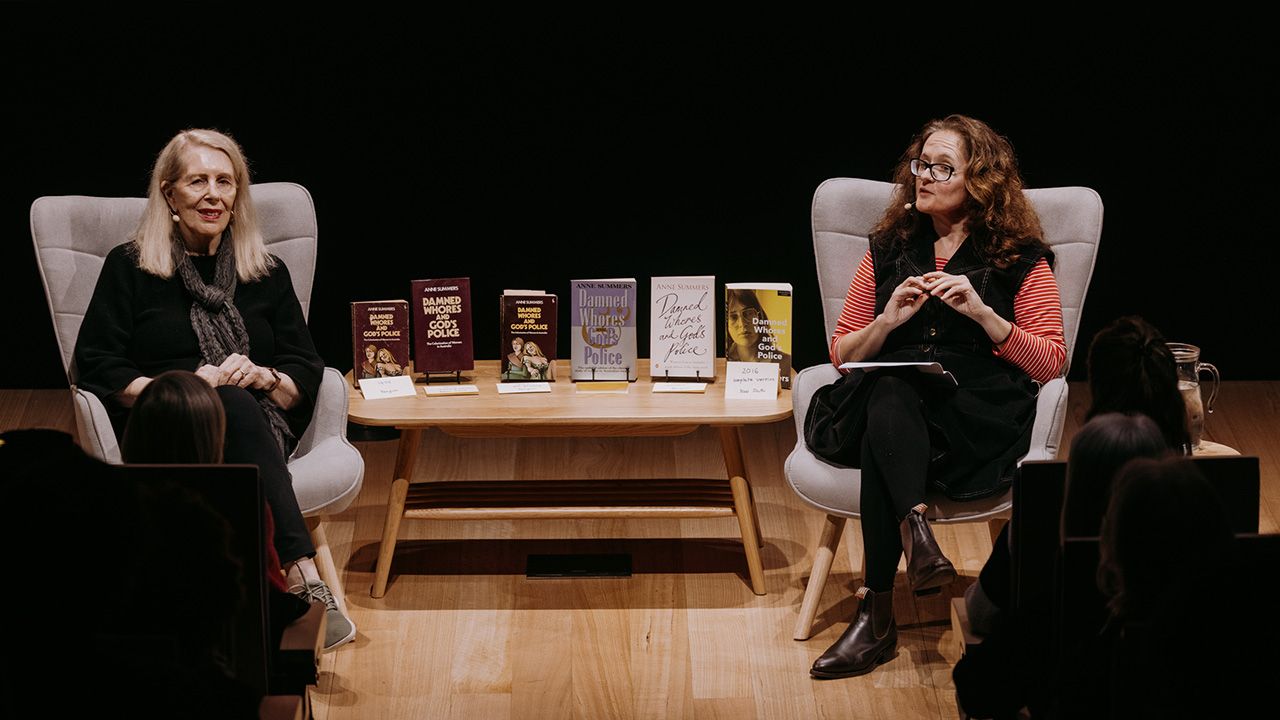
Anne Summers’s Damned Whores and God’s Police was first published 50 years ago – a time when sexual harassment, domestic violence and date rape were unnamed and often ignored experiences for women in Australia. It would be another nine years before the introduction of the Sex Discrimination Act 1984. Hear Anne as the bestselling and multi-award-winning writer and journalist – also an Officer of the Order of Australia and inductee to the Australian Media Hall of Fame – reflect on her groundbreaking book, what she has done since and what she is doing now with host Zora Simic.
This event was presented by the Sydney Writers' Festival and supported by UNSW Sydney.
Transcript
Zora Simic: Welcome to this session of the Sydney Writers Festival. A wonderful session Anne summers, 50 Years of Damned Whores and God's Police. What an achievement.
I'd like to begin today by acknowledging I'm on the unceded lands of the Gadigal people of the Eora nation, and to pay my respects to elders past and present and to any First Nations people in the room.
So my name is Zora Simic, and I'm an associate professor of history and Gender Studies at the UNSW, which is one of the major sponsors of the Writers Festival. At the moment, I'm working on a history of domestic violence in Australia with Anne Curthoys and Cath Kevin, which is a project that has given me, you know, an even deeper appreciation of Anne's work and her contributions to Australia society.
So Anne is currently the professor in the UTS Business School, where she was appointed in 2021 as a Paul Ramsey foundation fellow to undertake original database research to cast a new light on the incidents and nature of domestic violence in Australia. And she's already released two agenda setting reports from this project.
So the first The Choice: Violence or poverty, which was released in July 2022 and more recently, The Cost of Domestic Violence to Women's Employment and Education with Thomas Shortridge and Kristen Sobek, which was published in February this year. And that's just what Anne's been up to recently. So a proper introduction would take the whole hour.
Among the many honours bestowed on her is the 2011 Australian legend postage stamp. As a writer and publisher, she's been an award-winning journalist, editor in chief of MS magazine and of Good Weekend, author of nine books, including her terrific memoirs, which many of you may have read, and the groundbreaking book we're here to honour today.
Damned Whores and God's Police, first published in 1975 and in print ever since, including in several revised editions, which are all here today. And our conversation is kind of going to go with the flow of the different editions of the book. So Anne was barely 30 when she published this hefty tome, but she'd already been a part of Australian women's liberation in Adelaide and Sydney and helped set up ELSIE, Australia's first feminist refuge. She'd been shortlisted too for the role of women's advisor to Prime Minister Gough Whitlam, a job which eventually went to Elizabeth Reid, which well… more on her in a moment. And Anne would eventually, however, become the head of the Office of status of women in the Hawke government, and an advisor to Paul Keating as well.
So congratulations, Anne, on the 50th anniversary of a book which still deservedly attracts readers and attention. So two sessions at the Sydney Writers Festival. I don't think any other book has got that honour. So I thought Anne, I'd begin by asking about the significance of events like today. So last year there was a big conference to mark the 50th anniversary of ELSIE, which was a terrific conference. And this year is also the 50th anniversary of International Women's year, 1975 and of course, the publication of Damned Whores and God's Police. And it's really important that we honour these you know. So ELSIE started the feminist refuge movement, and damned halls is considered the first sort of feminist history in Australia. But you've hardly retired and are still in the thick of public life.
So before we go deeper into the book and its significance, I thought I'd ask you to reflect on what these kinds of events are good for, beyond historical commemoration.
Anne Summers: Well, it's a good question. One of the great things about the ELSIE conference last year was that something like 700 people attended, and they were the range of people in terms of age, of background, of work experience, just who they were, was such a diverse representation of women that it seemed to me that it showed that the women's movement had grown in ways that we hoped it would, but could never really have been sure what that would happen back In 1974 when ELSIE started. And one of the great things about it, in particular, was the number of really young women there.
So this movement, as I write in the book about the well, we can talk about this to the letter to the next generation, our fear that perhaps we were going to be the last of the of the feminists, and that the younger generation were just so disdainful of us and so contemptuous of us that they would not keep it going. Was a real fear. Now that fear has not been realized, thank goodness. And in fact, if anything, the rise of feminism amongst young women today is one of the defining moments of this, not just of this generation, but of this era. And there's the militancy around now amongst young women, which I don't think we've seen since the 70s. And I think that's terrific. So if we have events like this that provide an occasion for people to come and sort of fly the flag and say, “Yeah, we're part of this”. I think that's great.
Zora Simic: Yeah, there's obviously a great interest. The ELSIE conference was terrific, one of the best conferences I think I've ever been to.
So to prepare for today, I went back to read Ducks on the Pond, your autobiography, which covers the first 30 years of your life, where you recall receiving your first copies of the book in hardcover and paperback, and you wrote, “the book was fat”. You wrote “more than 200,000 words and 494 pages of densely packed type. It looked weighty, solid. I could not believe I had managed to write it. As I held the book in my hand, it seemed like a miracle”.
So take us back to the origins of the book in the early 1970s and you're still a postgraduate student at the time, amazing to me.
Anne Summers: Pretending to be.
Audience Laughter
Zora Simic: and you pitched the idea to John hooker, who is the chief editor at Penguin Books. And what sort of book did you, did you hope or plan to write?
Anne Summers: Sort of to go back to that time, I guess it was about 1972 and I had been in Sydney. I come from Adelaide. I'd been in Sydney for about a year, and I was had become friendly with Anne Curthoys, and John Docker, and I don't know if they might be here. Can't see but if they are, I'm very glad to see them. Lyndall Ryan, who sadly died last year, but another feminist historian. I became friendly with them, and Humphrey McQueen is somebody else I should mention, who was a labor historian.
And I was astonished to learn the kind of writing they were doing. They were looking at Australia through different eyes, and they were rewriting the history of Australia through the labor eyes of the labor movement, or through the eyes of the treatment of Aborigines, or through perspectives that had just not informed the whole the received wisdom of Australia as it was written. So I was encountering that way of writing history at a time when I was absolutely caught up in the revolution of women's liberation, the way in which our lives absolutely turned upside down. Every single assumption that we had about being a woman and what a woman was and what women should, should and could and ought to do, was under the microscope, and we were angry and we were happy and we were just raging, and we were exploring.
And these two things sort of came together, in my case, in the early 1970s when I had the realization that we're reading all these terrific books that were coming in from the US. Like probably the first and most influential book I read was by Kate Millett, who wrote Sexual Politics, which was an extraordinary book of feminist analysis of some of the great, formerly great, male writers of his time. There was Robin Morgan's Sisterhood, this powerful anthology. There was a book by Shulamith Firestein, who probably no one anyone remembers anymore, but she wrote a fantastic book. There are books from England.
What we were reading was, it was the feminist reenvisaging of those cultures. The American women were reexamining who they were through the way they lived then, but also through their history and through the writings. Looking at the writings of Henry Miller, or looking at the writings of Norman Mailer, you know, the great, revered writers of the day, and realizing they were just sexist pigs who treated women like shit.
Audience laughter
Anne Summers: That was, that was a huge revelation. My God, who would say that about Norman mail? Oh, my God. Well, actually, there was the evidence it was true. And I realized that we didn't have that kind of writing here, that we didn't have a book or books that explained to us the specific Australian ways in which sexism, or we didn't really use the word sexism back then, it was male chauvinism. But the ways in which women were oppressed, I guess, women denied opportunities, the specific cultural ways, the history they were based on, and why it was they were so entrenched. So then I started to think, well, we need our own story.
And when I went to see John Hooker in 1972 and I was actually a student in University of New South Wales, remember, we met in the refectory, and we sat there drinking cups of tea and smoking cigarettes, I think, for about five hours.
Audience Laughter
Zora Simic: Those were the days
Anne Summers: Indeed. And I persuaded him that what Penguin needed to do was to hire me to write a book about women and mateship. Because I thought mateship was the problem, that if I could only understand mateship and reexamine mateship through through women's liberation eyes, that would help us understand why we were the way we were.
And he thought it was a fabulous idea, and he signed me up on the spot for this fantastic advantance. So I think it was $1,500 I couldn't believe I had so much money. Off I went, and I said I'd write it in six months, easy.
Audience laughter
Anne Summers: But then I started, and I spent a lot of time in this building, in the Mitchell Reading Room and reading manuscripts and reading our history, and reading both secondary sources, but also a lot of primary sources, and realising the story kind of was bit more complicated than I'd thought.
To cut to the chase, because I was spent all day telling you this, but I mean, where I ended up was realising that I had to analyse not just our history, but also our current day existence.
So the half, first half of the book is about contemporary culture and about sport and about art and literature and all the rest of it. And I realised the framework under the mateship wasn't an adequate framework. It wasn't big enough. It was part of it, but it wasn't but it wasn't enough. And instead, it was everything. It was more than mateship. It was everything.
And so the most exciting things for me when I was doing the research were coming across those two phrases. One was “damned whores” from the diaries of Lieutenant Ralph Clark, who was a Marine on the First Fleet, who used that term to describe the female convicts. And the second was “God's police”, used by Caroline Chisholm, who used to run a female immigration society, bringing respectable girls from England to marry the wild colonial boys and calm everybody down and create a nice little bourgeois society that we still enjoy.
Audience Laughter.
Anne Summers: It seems to me that those two terms, those two essentially Australian terms, were a perfect way to encapsulate the story of Western civilisation, which is that women have always been seen as either Madonnas or whores, good girls or bad girls. And I reframed a story to tell Australia's story through that framework. Sorry, long, long answer, but that's how it happened.
And then I had to ring Penguin and said, for a long time the book was called God's Police. And then I came across “damned whores”. And I rang it up and said, “you can publish a book with the word damned whores in the title?” And they just screamed with excitement, “Of course”.
Audience laughter
Zora Simic: I love it, but don't think your mum was happy with it.
Anne Summers: She well, no, what was even funnier as well, I went back to my old school many years later. I was educated in Catholic confident in Adelaide, and one of the very old nuns said to me, “You know, we've got your book in our library”, which I was amazed to hear. And she said, “You know, it's the only book we have that has a swear word in the title”.
Audience Laughter
Anne Summers: And I thought she was referring to the word whores. She was referring to damned
Audience Laughter
Zora Simic: That’s great. So it definitely turned out differently than you had anticipated.
Anne Summers: It sure did.
Zora Simic: But thinking back to your life back then, how active you were politically, how did you find time to write it? I mean, it's quite…
Anne Summers: It was very, very hard, and it's also the story of my life. This, this, this way in which I'm torn between activism and scholarship and writing. I mean, I love both, and I kind of need to do both, but it was one of the things that was a huge problem for me when I was involved with ELSIE, because I'd be, you know, very involved in the activism of trying to get ELSIE started, and then we eventually got it started. And then we went to, like, get work the roster and be there. And I said, “Sorry, I've got to go home and work on my book”. And there wasn't a lot of sympathy for that, because people thought that was just, you know, wasn't the real work that we were meant to be doing.
And so that contradiction between activism and really doing things that change the world, and maybe writing something that might change the world, that there might be sort of contradictory impulses that I've had to sort of organize myself around all my life.
And so how did I manage it? Well, one, two ways it happened. One is the book took four years, not six months.
Audience Laughter
Anne Summers: And secondly, I was extremely fortunate to have in my life Professor Henry Mayer, who was the professor of government at the University of Sydney, and he was my PhD supervisor, and so he used to have to sign something once a month that said I was doing my PhD. And so I got a little check that kept me alive.
And he said to me, he said, “I can't tell you how many books, how many PhDs are gathering dust on shelves in libraries around the world and how much we need this book”.
And so he used to sign that thing, knowing full well, I wasn't writing a thesis.
Zora Simic: But you got to submit it.
Anne Summers: So the deal was that once the book was out and published, he said, “Well, okay, now, now it's my turn”. And so we submitted it to the University for a PhD, and the Sydney University said, “Well, really?”
I mean the cover, that was a bit of a… for those who are sitting at the back, and perhaps this is the original cover. It does have pictures of damned whores and God's police on it. It was not the way, not a picture, not the way a PhD thesis was normally submitted in those days, probably not today either.
Audience Laughter
Anne Summers: So they suggested I have it retyped and bound, and I just got a job in the National Times. I’d just become a journalist. So it's really exciting. I just said, “no way”. And I said, “In fact, there's also a hard cover copy of the book” because what was Penguin doing? They published 1000 copies of the hardcover, which was they called a library edition, and it was for libraries. So it never was on sale in bookshops, but it was sold to libraries. So I said, “How about I give you that one? Doesn't have that horrible picture, and it's, you know, nicely typed and everything”.
And they said, “But it's still got the words on the spine, you know, of damned whores of gods police”.
I said…so I think in the end, we pasted something on top of the spine, or something stupid. But they finally did accept it in the printed form and asked that I do a little bit of supplementary work. Had to write a couple of essays on blah, blah, blah, and accepted it.
Zora Simic: Great.
Anne Summers: And so Henry, Henry got his PhD. He was happy about that, and I didn't have to retype the whole thing.
Audience Laughter
Zora Simic: You've had many honorary degrees since.
Anne Summers: Even from Sydney, I got one. I said, “Don't you realize I've already got one?”
Audience Laughter
Anne Summers: And they said, “Oh, this is different”.
Audience Laughter
Zora Simic: So now for the book itself, starting, of course, with the title, Damned Whores and Gods Police, and the original subtitle, the colonisation of Australian women, and together, they painted a pretty bleak picture of Australia as a distinctly sexist society, or to quote the title chapter “man's own country”. I remember writing an essay with that title as an undergraduate.
So everywhere you looked in the book the past the present, there was evidence everywhere, not only of sexism, bit of misogyny. So how bad was it? And it's a big question, and how far have we come?
Anne Summers: Well, I think some of the - if I may be so bold, I observed at least some members of this audience, probably about my age, and probably can remember what it was like, right?
Audience Agreement
Anne Summers: So did I lie? I don't think the book would have done as well as it did if it hadn't hit a chord, if people hadn't picked it up. And I mean, people come up still got to her dates. A woman came up to me today, actually, at the cafe, in the cafe, somewhere in the room and said that she read the book as a mature age student at uni, and it completely changed her life. And I have had so many women and men say that to me over the years, all that.
And it happens, a lot happens. It happens even now, 50 years later, that people say that to me, and it's because whatever, whatever I wrote, or however I expressed it, people recognized the world that I was describing because it was the world that we were all living in, and we knew it wasn't making us happy. I mean, we weren't happy. What I was describing was true.
We were expected to do all the work. We weren't allowed any of the opportunities. I mean, when I, I eventually go to university, but even when I left university, I remember I went to apply for a job at the ABC, and the jobs, you know, printed in the paper, then job ads, and so were the salaries and the salaries. There were two salaries, one for men and one for women. And what got me was that the salary for a female graduate was lower than for a boy who had only had a high school degree.
Audience Murmurs
Anne Summers: And I mean, that's just one example. It was legal back then to pay women 75% of the male wage. That was the law. We had no anti-discrimination laws. I mean, you know you were, you had to, you had to resign from a job as a teacher or a bank or in public service if you got married, you. Yes, not only if you got pregnant, but got because you got married.
So there were just all these ridiculous restrictions on women, and those restrictions that our mothers had kind of chafed at but accepted. The hypocrisy of them exploded with women of my generation, because many of us had the advantage of university. So we had some education, which gave us further ambitions. We had the contraceptive pills, so we had more control over our fertility, not total, but more and we realized that we wanted to do things with our lives. And here were these people saying, “No, you can't”. I mean, it's just stupid things.
Like, you know, if you went to the races. I used to go to the races a lot when I was late. I remember being at Randwick once, and I, you know, walked into what I stepped over, an invisible green line that only men were allowed to go in to bet. And a man, a man in livery, came up to me and said, “Madam, you will have to move”. I said “Why?” He didn't feel that it was his job to explain the way in which I had transgressed.
That's just a stupid example, but there were just so many things that we couldn't do and it was legal. It wasn't even conventional. It was lega. Before it gets into conventions.
And there definitely was this thing about good girls and bad girls, from when I was growing up, you know, my mother was determined that I was going to be a good girl, not a bad girl. I think later on in life, she was probably quite glad that I did end up being a bad girl, because it was more fun, but that's the way it was.
And I mean, the fact that that I wrote it, and so many people said, “yes” and responded, and that things started to change, and the laws started to change. And you know, when Gough Whitlam was elected, we were so thrilled and just fantastic. There wasn't a single woman in his government. What were we so thrilled about? Right?
Audience Laughter
Anne Summers: We learned to get joy out of other people's success.
Zora Simic: Yeah, a variation on that question has come from the audience, which is 50 Years of changes and generations. What are the wins we can celebrate in that time?
Anne Summers: Well, just on politics now, 57% of members of parliament are women. I mean, I spent many years working in Canberra in Parliament House, and when I first got there, there were very few women.
What was noteworthy about the women, as they started to come in during the 80s was that they were all older women, that they were all women who'd already had their families so that they didn't have family responsibilities. And the idea of a young woman coming in and having a baby while she was a member, feeding, breastfeeding in Parliament House. Oh, my God. I mean, you remember the first time that happened? I think it was in Victoria, and she was kicked out.
There was a lovely story, actually, during the recent election campaign, Sarah Hanson young saying that she had been had her little baby with her must have been 18 years ago in the Senate. I don't think she was breastfeeding, but she was there that was a breach of Senate rules or something. So she was kicked out, and that little girl voted for the first time this election.
Zora Simic: Yeah.
Anne Summers: So, I mean, that has been a huge change, not just that there are more women, but they're different type of women. Young women and young women who are representing their constituencies, who are like themselves. So rather than having only having older women, there nothing older women, nothing at all.
Audience Laughter
Anne Summers: We've got to stick up for ourselves but to see so many young women going in, I mean, I think the youngest is, you know, early 20s now, so that's, that's one phenomenal change, which I think is very significant. Now, the changes at the top are still not, you know, pace Susan Lay and good luck girl.
But you know, you're talking about the leadership of the Labor Party, there's only four people in the leadership team. Only one is a woman, and that's the fact that the majority of the cabinet is female. So there's a bit of balancing needed there, but it is nevertheless a phenomenal change from…
Zora Simic: A good marker
Anne Summers: 20 years ago, 40 years ago, 50 years ago.
Zora Simic: Yeah. Now, going back to the book, I re-read it for today, and I was struck like how unique it is. It's both a history and a sociology. It's about the past, but it's resolutely about the present. The way I was first introduced to the book, and I think lots of other people were, especially if you've gone through university and do history, is that it's one of the first feminist histories in Australia, along with Miriam Dixon's, The Real Matilda and Beverly Kingston's, My Wife, My Daughter and Poor Mary Ann.
So I was wondering, did you relate to this cohort? Did you think you were writing a feminist history?
Anne Summers: I was actually quite annoyed when I was grouped…but I mean, but Bev and Miriam - I'm not sure Miriam’s still alive - but I knew them both very well. Our friends think their books were terrific, but I didn't regard my book as a history book.
I mean, it was partly a history book, of course, and a huge amount of of history in it, and a huge amount of reinterpretation of Australian history in it, and that was one of the key elements of the book. But as you say, it was that was half the book. The other half was about contemporary Australia. And so what I tried to do in the opening line of the book, “this is a book about Australia”, not “this is a book about women”, or “this is a book about the past”, or “this is a history book”.
This is a book about Australia, and it's about the Australia of today, 1975 and the past. And I was trying to learn from our past why we were the way we were in 1975 so that was the that was sort of the overall project, if you like, or mission, or whatever word we'd use today. So I felt that people who grouped me with Bev and Miriam's books misunderstood what I actually had tried to do that they only got half of it, not the whole thing.
Zora Simic: And they would review you as though you were historian. But…
Anne Summers: Yes, I'm a bit of an historian. But I'm, yeah,
Zora Simic: Well, now you're canonisers…
Anne Summers: A bit of a few other things too.
Zora Simic: So I was wondering who your imagined audience were? Did you did you have one at the time, or fellow…
Anne Summers: Well that was, that was a really good question, because I used to when I when I was writing the book, and it was very, very hard to write, and I really, really struggled, and I really, really didn't think I would finish it. I just couldn't see how I could do it. I thought I'd taken on something that was too big, and I was too precocious in thinking I could take on the great men of Australian history and the great men of Australian literature. And, you know, here was me attacking Patrick White and attacking Manning Clark and attacking all these gods of our culture, and who was, I a 26 year old girl living in cockroach castle in East Balmain on strawgrass matting.
Who did she think she was?
So it was hard, and I really doubted whether I could do it. And so one of the things that I did a lot of was to read books by people about writing, and I talked to Humphrey McQueen about this a lot too, about what it's like to take on the sacred cows. And how do you do that, and who do you think is going to care about what you say, and why should they?
And I can't remember now what some of the books were, but I did read some books that were very helpful for that they were, they were books that basically taught you to, one sense, not care, but in another sense, just to have a fixed idea in your head of the changes that you wanted to see and just to write them and just assume that you weren't the only person in the world who felt that way. As of course, I wasn't.
I mean, I was going to women's groups all the time. I was hanging out with all sorts of people. We all felt the same way. Just we just needed to see it written down.
Zora Simic: Yeah.
Anne Summers: So I didn't know for sure who was going to read the book, but I assumed that there would be an audience for it, if only I could find the gumption and the stamina, I guess, the emotional stamina, to finish writing it.
Zora Simic: Of course you did. So on the fifth of November, 1975 so just a week before the dismissal, the book was published, and you wrote in Ducks on the Pond, “My life changed forever”. So the book was big news. It was an instant bestseller. It was reviewed everywhere, including favourably by big name men of letters, such as historian Manning Clark.
Anne Summers: Yes, that was amazing.
Zora Simic: And of course, many of your readers were women, and they rushed to buy and read the book. But some of your harshest critics were other feminists, among them Elizabeth Reid in the Bulletin and remains as you write in Ducks on the Pond, one of the most hostile reviews ever written.
Anne Summers: Not one of, the.
Audience Laughter
Zora Simic: I did read it, it was very nasty.
Anne Summers: “This book was devastating, devastatingly bad” was the opening line.
Zora Simic: Yeah.
Anne Summers: I remember somebody rang me up. I won't say who it was, but very well known man rang me up and said, he said, “I just want to say that that review in the bulletin is just devastating”. He said, “I really wanted to express my sympathy and say that was a really horrible thing to do”. I said, “Oh, thank you. Thank you very much”. I said, “I hope you enjoy reading”. He said, “Oh I'm not going to read it.”
Audience Laughter
Zora Simic: Just read the review. Were you surprised by maybe, perhaps not that one, but by critiques, the stronger critiques were coming from feminists.
Anne Summers: Well, I was a little bit hurt by a couple of them. And I mean, I can see that they were meant to be friendly critiques, not hostile critiques. And that's what you want to be treated seriously enough to attract the friendly critique.
I remember Jill Rowe wrote a review that was pretty tough, and I was disappointed by that. I thought Anne Curthoy’s review was a bit tough, but I probably, probably I just at the time I was feeling so vulnerable, I expected, or hoped that every view would just be ecstatic, you know. That everyone would say the book was perfect and that would be that. And what else would you possibly have to say about it. Yeah, but obviously they were doing me a favour by writing, writing proper critiques.
Zora Simic: Yeah, yeah. And when you're charting new waters, there's a lot of expectation about what people want the book to be.
Anne Summers: Yes, yeah,
Zora Simic: I imagine. And as you, as you and others have noted in some respects, that Damned Whores was very much a product of its time. So for instance, there was little attention paid to Aboriginal or non-Anglo women. But by the time of the next edition, this one in 1994, you dropped the subtitle colonisation of Australian women as a subheading. But it's also had a lot of staying power.
Obviously, we're here today, and you've described it as a living document. And with that in mind, let's fast forward to this edition, the 1994 edition, which was by this point, you'd been a journalist run the office of the status of women in the first Hawke government, been editor in chief of MS magazine in the US, before returning to Australia to work as a political consultant in the office of Prime Minister Paul Keating.
And indeed, Paul Keating launched the new audition in 1994 as a fellow baby boomer. He's identified himself in his speech. He’d just recently turned 50. For some reason this was shocking to me. He noted that in his speech and he and he also described himself as a fellow fervent pragmatist, adding that now these are words that Anne never would have uttered not so many years ago, but he was proud to have you
Anne Summers: True. Yeah. Some would say sell out.
Zora Simic: So apart from your can-do pragmatism, Keating also praised your great sense of humor. Said there are enough bores in the world, and shared that he was touched in reading the new edition how you say “it is logical that the generation which launched the movement will have to see it through.”
And perhaps in this spirit, the 1994 edition included a letter to the next generation, which, back then, was me, those of us born after 1968 the daughters of the Feminist Revolution, as you described us.
Now, some of you may recall, this was also the time of Helen Garner's The First Stone, which is very controversial. And at the time, there was a perceived gulf, experienced, felt, perceived gulf between the second and third wave feminists, which seemed to grow bigger and bigger every day.
So we third wavers, it appeared, were a huge disappointment with a bad sense of history, although I exempted myself from that as a history student
Audience Laughter
Zora Simic: And a poorly developed sense of activism, who were more “concerned with running to the cops”, to quote Helen Garner “When groped against our will,” than taking to the streets.
Now, maybe it's because I'm now the same age you were when you wrote the letter, but I went back to it yesterday, and it seems very reasonable now, as well as depressingly prescient.
So you noted that violence against women was increasing, that abortion rights needed to be protected and defended. So I was wondering, what do you recall of this time in particular, about the generation?
Anne Summers: Well, there is a story to this, and it's, I'm really glad you've raised it, because I think it's an important one. I mean, that letter to the next generation was first published a year earlier in Good Weekend, and I was the editor of good weekend at the time, so of course, I could publish what I liked.
Audience Laughter
Anne Summers: And for our International Women's Day edition, I published this letter, and I re read the letter myself this week in the book form, and I had read not so long ago because I'm trying to put together some of my writings for a collection, and I want to include that letter to the next generation in the book, I had re read the Good Weekend version, and what I realized that the Good Weekend version was much more confrontational, much more and much more hostile.
And I think I remember ending the essay by saying, you know, “I know there's a lot of women out there who say they're feminists, and they say they're going to change the world”. I finish up by saying, “I wish, I just wish they'd get it bloody well, get on with it”. And this provoked quite a reaction.
Audience Laughter
Anne Summers: I received at least 300 letters. I mean letters. People used to write letters back then, so actual letters and. From angry young women of your generation who told me, in no uncertain terms, how wrong I was and in many ways in which I was wrong and how I didn't know what was going on and all the rest of it. And I thought this was fantastic. I mean, I was really pleased to have generated this response because it meant that the passion was there, the urge to reform was there. And my argument was that it was invisible, that we didn't know about and if you weren't part of it, you didn't know about it, whereas in our day, we made sure everybody knew about it. And so we still continued to have a bit of an argument.
But one of the things that was so impressive about this is it generated a number of books. One of the books it generated was a collection of essays on feminism. I think it was called Generation F, and it was edited by Kathy Bail, who is the publisher of this issue. She brought Damned Whores back into print in 2016 so forever changed.
Zora Simic: DIY feminism was her book.
Anne Summers: DIY, that's right Virginia Trioli, the two of them on the cover of good weekend together with their books, get them mixed up. But anyway, Kathy was one of the one of the women. She didn't actually write to me because she was editing Rolling Stone at the time. She was a bit busy but, but she certainly shared the anger, and she she was one of four or five books came out pretty much in direct response to the letter.
But the other thing that was so impressive was, and I can't remember all the names now, of all of the 300 women who wrote, but a lot of them are very, well known at the time and even more well known now. And the one that sticks in my mind was the letter I got from Tanya Plibersek.
Zora Simic: She wrote to you?
Anne Summers: She certainly did.
Audience Laughter.
Zora Simic: You've kept all these?
Anne Summers: All in the national library.
Zora Simic: Yeah, great. Thank you, Ann, you're getting there's a lot of questions coming in about feminism, so maybe I'll pause from some of mine and ask…
So someone asked, “in the context of contemporary feminism, especially online activism and global movements like me too, what role does Australia play?”
Do you have any answers, or even reflecting on contemporary feminism?
Anne Summers: I don't know that whether Australia has a specific role in the global, global feminism. I mean, I when I lived, I lived a long for a long time in the States, and while I was there, I was very critical of the American women's movement, but compared with the Australian movement, because I thought the Australian movement was far more pragmatic, and we had a much more pragmatic attitude towards politics, working with governments, getting things done.
We got the Sex Discrimination Act. They're still waiting for the ERA they'll never get it, because we were prepared to compromise. We accepted the Sex Discrimination Act with a whole lot of exceptions, which the purists of the day are outraged by and so how could you possibly have a Sex Discrimination Act that didn't include maternity leave, that didn't allow women to fight the defense forces that exempted insurance companies, so on and so on, so on. And the argument was, well, we get the basic law in and we fight for the changes. And that's what's happened. And all of those exemptions are gone.
And in fact, a whole lot of new things have been added to the Sex Discrimination Act, including things like sexual harassment and the idea of gender so we've been able to use that as a living reform tool, if you like, whereas the American women are still trying to get the states to ratify the ERA.
But I think that you know, our own distinctive brand of feminism, which is what I've always kind of liked about Australia, the fact that we did come up with ideas like women… Well, we didn't actually invent women to have refuges, that was done in the UK, but we did create a big movement of refuges. We have created a movement of services for women run by feminists, which I think is one of the distinctive things about us, and we continue to do so. In fact, it's grown, and the need for it's growing even more, and if we get time to talk about domestic violence, we might get into that.
But I think that the thing that's that's interesting about Australian feminists is our pragmatism, is our willingness to go out there and sort of fight for things openly. And I'm not quite sure I haven't really thought about how we stand globally, so I can't really say anything useful there.
Me too has been different here. We haven't had the string of scalps, if you like, laws as well they had in the States, but we had different laws. In fact, sexual harassment was included in the Sex Discrimination Act 1984 and there have been huge numbers of prosecutions under that act that aren't made public for people don't know about. So that's only a very famous cases like the guy from David Jones and people like that, that we know about, but there's a lot more success in that area here. But it's just not public.
Zora Simic: Thinking about just another question that's popped up here, thinking about Australia in relation to international feminism, someone asked, “Did Germaine Greer's Female Eunuch have any influence on your thinking?” There's a book that came before your one.
Anne Summers: Oh, of course. I mean, it was, she came out 1970 but it was a very different sort of book. I mean, hers was much more a book about sort of cultural issues, the culture of women's oppression, and it was a global book. It wasn't a book about Australia. I mean, she, I mean, I can't even remember if she talked about Australia. So it wasn't, in any way, the sort of book that I thought we needed for the purposes that I was I set out to try and address. But it was no doubt that it was a book that changed so many people, so many women's lives, and it had an absolutely revolutionary impact
I remember going to a seminar the WEA, when it used to be back in down in Goulburn street, or somewhere years ago, 1970 and it was a one-day seminar about the Female Eunuch, because all these women were there, desperate to talk about this book. And I ran into a woman I didn't know. I started talking, and she said that she had the book wrapped in brown paper and she used to keep it hidden among her shoes because her husband had forbidden her to read it.
Audience Murmurs
Zora Simic: Maybe your book was also wrapped in some brown paper.
Anne Summers: Well, I certainly… back in the early days, I used to have a lot of men come up to me and not very friendly either, and blame me for the breakups of their marriage.
Audience Laughter
Anne Summers: Yes. My fault.
Zora Simic: Now we'll move on to the 2002 edition, which is, which is here, and where you added a timeline with the checklist or barriers we've yet to reach positions of power that have yet to be occupied by women.
So in 2002 that list included that there was, as yet, no female prime minister, which of course, changed in 2010 when Julia Gillard became the first prime minister, unleashing the misogyny of Alan Jones, Tony Abbott and their kind and partly inspiring your 2013 book, The Misogyny Factor.
And so by the time of the 40th anniversary edition came out in 2016 Gillard was gone, but the backlash remained. And you argued in the new introduction that the Damned Whores and Gods Police stereotype remained in force. And that's a few variations of that question have popped up.
How do you think the core dichotomy Damned Whores and Gods Police manifests today, especially in media portrayals of women and online discourse. And you also thought that the stereotypes were internalised as well, so it's not just in terms of representations, but in women, you know, as an obstacle to our own self-realisation.
Anne Summers: Well, I think it's quite a challenging question, and there's no generalisations here, because, I mean, we are, one of the good things about the women's revolution is that we're now much more able to be ourselves, and we are all very different selves. You know, we used to just be like cookie cutters had to all basically be the same, and that's no longer the case.
So we're not, we don't all want the same things. We don't look the same, we don't dress the same, all that. But I do think that the idea of God's Police is internalised by a lot of women, not all women, but a lot of women still believe that that is their rightful role, and that is to be the moral guardians of society and of their families.
And I think the the idea is manifested not so much at the moment, because there is a big, I think there's quite a profound change going on amongst young women in their 20s and their attitude to having children. It's quite extraordinary. I think the extent to which women are thinking, maybe I won't, and that is new.
You go back another 10 years or so, to the era of the Yummy Mummy, and there was such hostility exhibited between women who weren't working and women who were working in the home, well outside the home, and the Yummy Mummy kind of personified it. She was the good girl. She was the gods police, and she was the one who was raising her children properly, and she was going to instil the values, whereas the other woman who was busy at her job and didn't even have time to do tuck shop duty. I mean, she was the bad girl so that, I mean, that kind of thinking was certainly around 10 years ago, whether it's quite the same now, I'm not sure.
I haven't been looking at it lately, but, you know, we've got the Trad wives phenomenon. I'm not sure how big that is in Australia, but that's certainly retrograde, in my opinion. The idea that that women go back to that fully domesticated role.
Of course, you know, if you look at what's happening in the United States, I mean, there is an entire government seemingly determined to do that to women. I mean, the right to abortion has now been taken away in the United States at the federal level, and it's only up to individual states as to whether or not you can obtain abortion.
The extreme states that ban abortion are also banning contraception. They're trying to control the mailing of non-medical, non-surgical forms of abortion. There are women being charged with murder for having miscarriages. I mean, the things that are happening there at the moment are so horrifying, and the end goal for the people who are pushing this stuff is that women be breeders and nothing else.
Now that's not the same thing as God's police, because God's police, it's more about women being social guardians, moral guardians, of society, not just breeders, but breeding is obviously a very significant part of that. But I think the there is some pretty horrifying signs in the United States, and there's a lot of pushback going on. I just hope that the right side wins.
Zora Simic: We've got only 10 minutes left to go, and I thought we would bring the discussion to domestic violence, because I know that's what you're working on now.
And then, I'll also wrap up with some of the comments and that we've got. There's so much interest we could I have a whole day on your book, and everyone wants to know what you think about everything, and it's fabulous now to bring us into the present the issue of domestic violence, and it's an issue that we're both working on. Me as a story, and you as the head of a research team on how DV intersects with poverty and employment. And I was really struck that poverty was a big theme in Damned Whores and God's Police as well. And when you wrote Damned Whores, you noted that terms like domestic violence, sexual harassment, date rape, did not exist. And you wrote about ELSIE never once used the word violence, let alone domestic violence. And later, when you returned to work for the government, the extent of domestic violence was freshly shocking to you, having had some time away from the issue, and now it is your main job. So the statistics remain shocking and confronting, but also routine. As we all…
Anne Summers: they're getting worse. They're getting much, much worse, getting worse.
Zora Simic: So I was, I was going to see if we could end on a helpful or hopeful note. I'll ask a question that I know is so difficult to answer, which is, what will it take to end or significantly reduce DV?
Anne Summers: I think, well, it's a it's a hard question, because I think it needs to be framed in a certain way. And when we talk about domestic violence, it's no longer pointing out what we what we meant back in the days of ELSIE, was a domestic was, you know, the husband coming home from the pub on Friday night and building his wife, and that was basically it.
I mean, we now know that it's much more complex than that, and not only because we know more, but because the forms of violence are changing quite, quite rapidly. Things like just straight out physical violence is actually declining, particularly amongst older women, that was, it's, it's still very high for younger women.
One of the things that's very alarming to me is that all forms of violence against younger women are increasing very, very steeply and this is, this is terrifying, what's happening with young women. But just to speak in more general terms. You know, we've got physical violence, we've got sexual violence, we've got emotional abuse, we've got financial abuse, we've got technology facilitated abuse and other forms of abuse. We've got some of these sort of packaged together, if you like, in what we now call coercive control, which is where a man tries to basically control a woman's movement. He might never use physical violence against her, but ends up killing her and her three kids in a fire in a street in Brisbane. I mean, so the forms of violence that we're now dealing with are more complex. They're more different, and they each require different responses. So there's no one thing you can do.
I was part of a team that the government put together last year. It was called a rapid review response, and we put together a report for the government of rapid reviews to prevent violence. And it's a it's a very, very good report, if I say so myself, and it did come up some very comprehensive and complex measures for how we can end certain types of violence, and we do it by understanding where they come from and what perpetuates them, and how each type of type of violence requires different types of responses.
So I would urge people to you can go to the Prime Minister department's website and get that report. It's free, and it's called the Rapid Review Response to Domestic Violence.
And so there's no easy answer to this, but and the other thing that I think it's important to say is that we, and I find this myself, and I'm still trying to raise money for my work, that it's quite hard to raise money for research, because that's very abstract, and people think, “Well, what's research?” Actually, the research that I have produced, particularly my first report, the choice, where I was able to demonstrate something like 60% of women who are now single mothers are single mothers because of violence, not because they're sluts and having babies for big TVs and all that stuff, that those women were basically living in poverty because they had no income but government support. And under the Gillard government, that government support was for a single mothers was cut.
Now, fortunately, the Albanese government changed that restored it. So research does help direct impact. Very direct impact there. And I hope my most recent report, which shows two things, one is there's an employment penalty. Something like 13% of women who have experienced domestic violence less likely to be in employment than those who haven't. And amongst university students, something like 10% of university students are unlikely to finish their degrees because of domestic violence than others. And we all know that if you don't, you start off with a degree, you don't finish it, or a lifetime's, I think it's 41% less earnings than somebody who has gone to university. You might still have a HECS debt. You know, it's just horrendous stuff that, again, can be addressed by universities.
Universities have programs for staff experiencing domestic violence, but not students. And I guess it's clearly thought and I didn't think domestic violence and students, I didn't was not something I associated with students that was my bad. I mean, so we're learning a lot as well, but I think the thing to bear in mind is that we concentrate a lot on victim survivors and the escaping violence and the need to have refuges and the need to spend more money, much more money, on making keeping women and children safe. We have to do that, but we have to do more than that. And unfortunately, the public view is that we have to help the women and kids, and they don't sort of realise that there are other things we need to be doing as well that will help the women and kids, possibly by preventing .
One of the big things we can do because so much of this violence is transmitted intergenerationally, that very high percentage of people who experience or commit violence have experienced or witnessed violence themselves as children, so that one of the most urgent things we can do is to intervene with the children who experience violence now and ensure that they get the kind of help that will not… will try to prevent them getting Going on the same trajectory as their parents.
Zora Simic: Yeah, as is in Jess Hill's recent essay,
Anne Summers: yes. Well, I urge everybody to read Jess Hill's essay, Quarterly Essay called Losing It. It is a devastating piece of work, absolutely devastating,
Zora Simic: As someone wrote in the audience, I'm a young woman working in politics and a pragmatist who often feels like a sell out.
How have you dealt with change always happening slowly?
This is we've taken a long view today. We've seen many great things happen in that time. But you've also, you know, learnt that pragmatism is well…
Anne Summers: Things can happen quickly. I mean, the I know, the Paul Ramsey Foundation, they were astonished that the government changed the law within weeks of my report, absolutely astonished. That was unusual, I know, but and a fairly unique circumstance.
But sometimes change can happen very quickly. And I think what it is that we need to be aware of what we need and what we want, and to seize opportunities when they arise, or create opportunities where we can and go for it and really force the issue. And we shouldn't be just sitting back and hoping somebody else will do it. If something needs to be done, we should be doing it.
And we're entering a very extraordinary political situation in this country now, and I have no idea what's gonna happen. We've got a government of 93, members, and what an opposition of 28 and we've got a coalition, or former coalition, the country party sitting out there on their own. I mean, I don't know that the TEALS were elected to be on the… everyone thought they'd hold the balance of power and keep everyone sane. Well, they’re gonna have no influence at all. So, you know, we've got a very, very weird political situation. It's also the government can take a lot of risks. They can do anything, because they have such a huge majority, and that majority, it's a left wing government. The leadership mightn't be but these always put people, and most of them are women who were elected a couple of weeks ago.
So I think there's tremendous opportunities to work with those women and to put pressure on and say, you know, okay, we want this. We've wanted them for 20 or five years, and this is the year we're going to get it and go for.
Zora Simic : Watch this space, and we can see the spirit with which you wrote Damned Whores and God’s Police just identify the problem. Just go out and do it. Thank you so much Anne, thank you so much.
UNSW Centre for Ideas: Thanks for listening. This event was presented by the Sydney Writers' Festival and supported by UNSW Sydney. For more information, visit unswcentreforideas.com and don't forget to subscribe wherever you get your podcasts.
-
1/3
-
2/3
-
3/3
Anne Summers
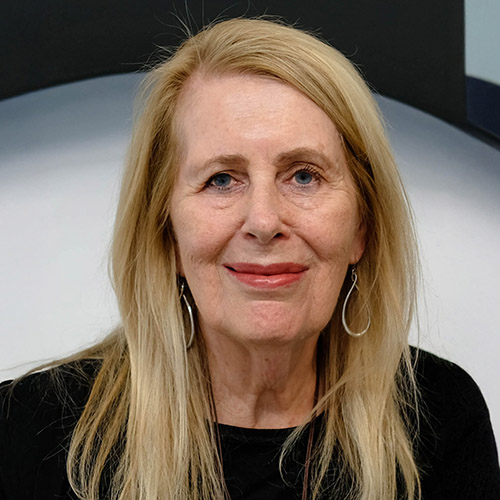
Dr Anne Summers AO is a bestselling author, journalist and thought-leader with a long career in politics, the media, business and the non-government sector in Australia, Europe and the United States. She is author of eight books, including the classic Damned Whores and God’s Police, first published in 1975.

Zora Simic
Zora Simic is an Associate Professor of History and Gender Studies in the School of Humanities and Languages at UNSW Sydney. She has published widely on past and present feminisms and is currently completing a history of domestic violence in Australia with Ann Curthoys and Catherine Kevin. She is also an essayist and book critic.